
Can dogs eat grapes?
Can dogs eat grapes? This is a common question from dog owners. This article will explore why dogs shouldn't eat grapes, the dangers of raisins and sultanas, whether dogs can eat seedless grapes, advice for Yorkie and French Bulldog owners, and what to do in case of poisoning. This article will cover everything briefly and include practical recommendations.
The short answer is: can dogs eat grapes? No. Even just one or two grapes pose a risk of acute kidney injury, which is why veterinary organizations worldwide classify grapes and raisins as prohibited foods for dogs. The mechanism of toxicity is being studied, but it is currently believed that tartaric acid and its salts may play a key role, and reactions vary greatly among individual animals, making it impossible to predict a safe dose.
Content
- 1 Why dogs can't eat grapes
- 2 Can dogs eat seedless grapes?
- 3 Raisins, dried grapes and "as much as you can"
- 4 Symptoms and timeframes: what to monitor at home
- 5 What to do if a dog ate grapes
- 6 Breeds and sizes: Yorkies, Spitz, and French Bulldogs
- 7 How to Replace "Forbidden" Treats: Safe Treats
- 8 Frequently asked questions from owners
- 9 A quick cheat sheet for the kitchen
- 10 Result
Why dogs can't eat grapes
Grapes are dangerous for dogs because they can cause acute kidney damage with development renal failure within 24–72 hours after ingestion. In some animals, the first symptoms are vomiting and diarrhea, followed by lethargy, food refusal, abdominal pain, thirst, and decreased or cessation of urination. This product is toxic to dogs regardless of variety, origin, or color: red, pink, or green—the risk is the same. Puppies and small breeds are at increased risk: they gain weight more quickly from a "small" dose per kilogram of body weight.
Scientific data indicates that reactions vary from dog to dog: one dog may show no symptoms after eating a few berries, while another may experience serious consequences after eating just two or three berries. Therefore, the only strategy is to never give grapes.
Can dogs eat seedless grapes?
A common question from owners is, "What if they're seedless?" Seedless grapes are still toxic. Kishmish berries and any seedless varieties are just as dangerous. It's not the type of seed that matters, but the substances in the pulp and skin of the berry. The same applies to grape products: raisins, raisin-based baked goods, muesli, sauces, homemade compotes, pulp, and even fallen berries at the dacha are all potential sources of toxins.

Raisins, dried grapes and "as much as you can"
Raisins (including golden sultanas) are more dangerous than fresh grapes due to their higher dry matter content per gram. A minimum "safe" dose has not been established; severe cases have been reported in small dogs after ingestion of just a few raisins. Therefore, a rule of thumb for a dog's diet is to avoid feeding fresh grapes or raisins "in small amounts," and to prevent accidental access to bags of dried fruit.
Symptoms and timeframes: what to monitor at home
Symptoms may develop gradually. To make it easier for owners to navigate, we've summarized typical symptoms in a table.
| Post-eating period | What to look out for | What could this mean? |
|---|---|---|
| 0–6 hours | Vomiting, salivation, restlessness, berry residue in vomit or stool | Early gastrointestinal irritation, onset of absorption |
| 6–24 hours | Diarrhea, lethargy, refusal to eat, abdominal pain | Increased intoxication |
| 24–72 hours | Increased thirst, frequent/infrequent urination or anuria, ammonia-like odor from the mouth | Acute renal crisis, risk of renal failure |
Any of these signs is a reason to act immediately, and not “wait until tomorrow.”
What to do if a dog ate grapes
When the clock is ticking, the algorithm should be simple and feasible at home before visiting a doctor:
-
Consider the time. If no more than 1-2 hours have passed, the chances of passing the berries before absorption are higher. However, self-inducing vomiting should only be done on the advice of a veterinarian and in the absence of contraindications (seizures, depression, pregnancy, foreign objects, or peptic ulcers).
-
Contact the clinic. Briefly: "The dog ate grapes, approximately... amount, body weight..., when this happened." Ask for instructions: the doctor will tell you whether and how to safely induce vomiting, calculate the dose of absorbent, and when to arrive.
-
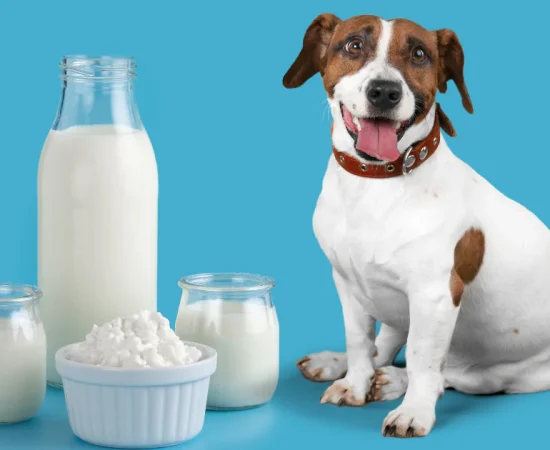
Don't give "antidotes" from the internet. Milk, butter, "eye absorbents," and saline solutions won't help and can be harmful.
-
Gather the remaining evidence. A package of raisins, a photo of the pile on the table, the type of berry—any information will make the specialist's job easier.
-
If possible, take the patient to the clinic for observation and infusion therapy. There, they will perform lab tests (urea, creatinine, electrolytes), prescribe intravenous fluids, and, if necessary, antiemetics, gastroprotectors, and sorbents. In severe cases, diuretics, catheterization, and hemodialysis are used.
A quick tip for your refrigerator:
— Call the veterinary center immediately.
— Do not force-feed or force-drink.
— Don’t waste time: the kidney “doesn’t wait.”
Breeds and sizes: Yorkies, Spitz, and French Bulldogs
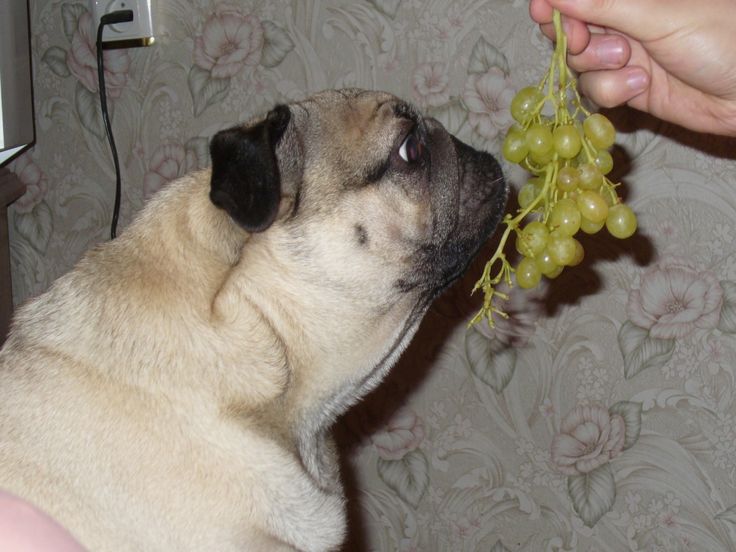
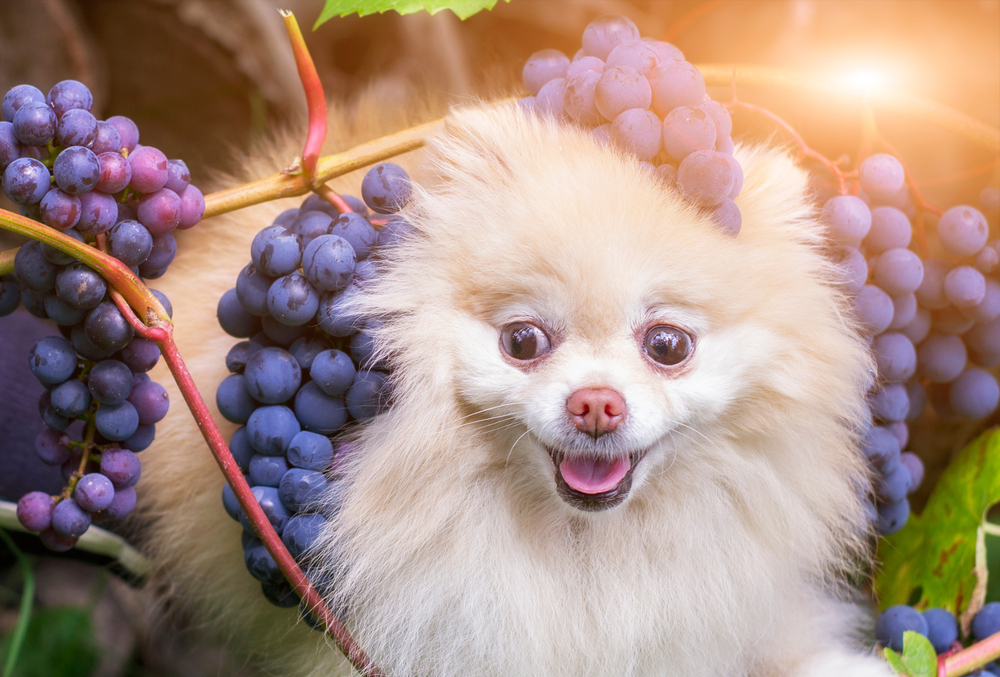
Grapes are equally dangerous for all breeds, but small dogs are more likely to suffer more severely due to their low body weight. Therefore, even one or two berries can cause a significant dose per kilogram for Yorkies and Pomeranians. French bulldogs are also at high risk: they often pick up food during walks and at home, and excess weight and underlying medical conditions can exacerbate the toxicity. If your pet is prone to picking and begging at the table, teach them the "No/No" and "Drop it" commands in advance, keep dried fruit out of reach, and supervise guests and children.
How to Replace "Forbidden" Treats: Safe Treats
If you really want to treat your dog, use approved fruits and vegetables as occasional treats and only in small amounts, which count toward your dog's daily calorie intake. Cucumber, zucchini, carrot, seedless apple, and blueberry pieces are all good choices. Sweets and excess fructose are undesirable. In any case, introduce new berries or fruits gradually, monitoring their stool and skin.
Comparison: What is definitely not allowed and what can be replaced
| Prohibited product | Why not? | A reasonable alternative |
|---|---|---|
| Grapes, raisins, sultanas | Risk of toxicity and renal failure | Blueberries, apple (without seeds), melon in small amounts |
| Chocolate | Theobromine - Cardio-neurological toxicity | Special dog treats |
| Avocado | Persin, possible gastrointestinal disorders | Cucumber, zucchini |
Frequently asked questions from owners
What if you “wash out your stomach” at home?
No, not on your own. The risk of aspiration and mucosal burns is too high. Safe and effective decontamination requires a doctor.
Why do people write on the internet that “my dog eats grapes and everything is fine”?
Individual sensitivity varies. Some pets may tolerate a single dose, but it's impossible to predict in advance which ones will be "lucky." Experimenting with your pet's health is a bad idea.
Is it dangerous if a dog swallows a grape seed?
The danger lies not in the seed itself, but in the berry itself and its juice. However, large seeds in small dogs further increase the risk of intestinal obstruction.
Is it possible to feed dried food "natural plus grapes"?
No. Grapes should not be included in any diet, whether natural or super-premium.
A quick cheat sheet for the kitchen
These rules are worth printing out and posting in a prominent place, especially in families with children:
— Do not give grapes and raisins at all.
— Baked goods with raisins, muesli, cottage cheese casseroles and Easter cakes — keep out of reach.
— At the dacha, clean up fallen berries and don’t let the dog into the vineyard.
— Ask guests in advance if they are going to give the dog a treat from the table.
Why it's not allowed: due to the risk of acute kidney injury; what to do: call a veterinarian immediately and go to a clinic; can seedless grapes be eaten? No; raisins and fresh grapes of any variety and color are dangerous foods; giving "a little bit" is not allowed.
Result
Grapes are toxic to dogs, with unpredictable doses capable of causing acute renal crisis. The only safe strategy is to completely eliminate them from the diet, keep grape-containing foods out of reach, and have a plan in place in case of an accident. The sooner veterinary treatment is initiated, the better the chance of avoiding serious consequences.
Read also:



Add a comment