
Can I take my dog on the metro? Transportation rules
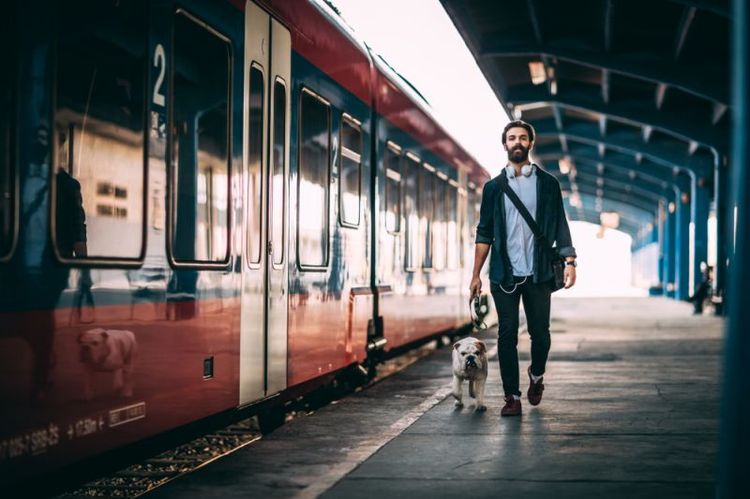
Any trip on public transportation is stressful for a dog. Whether it's a small or large trip, the animal will be anxious. The reasons for going out in public vary (hospitals, guests, the countryside), and it's best to transport your pet by car or taxi, but this isn't always possible.
Speaking of specific cities, like Moscow and St. Petersburg, due to heavy traffic, the fastest way to travel is the subway. Only by subway can you get to your destination on time without traffic jams or other obstacles. But the question immediately arises: can you take a dog on the subway, and what are the rules for transporting one?
Content
Small breed dogs
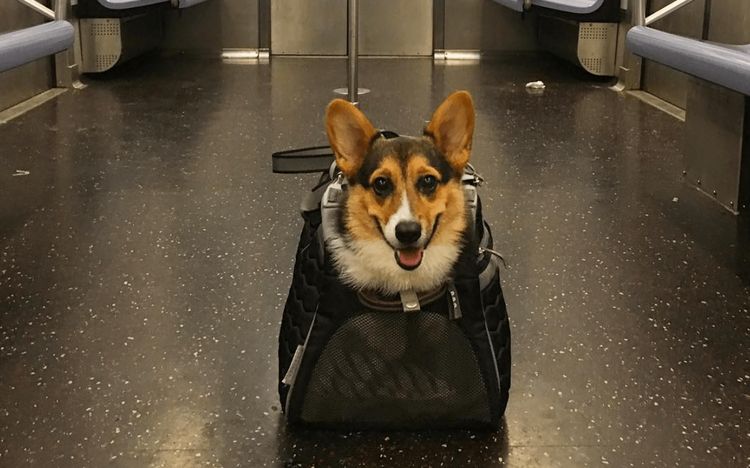
Only small dogs are permitted to travel on the Moscow Metro, and they must be carried in a special container bag. Depending on the bag's size, a fee may or may not be charged.
- If the total area of the cage does not exceed 120 cm, then travel will be free.
- If the container volume varies between 121-150 cm, you will have to buy a ticket at the box office.
- Bags larger than 150 cm are not permitted for carriage.
Similar requirements exist in other large Russian cities: St. Petersburg, Ufa, Volgograd, Samara, and Krasnoyarsk.
Requirements for containers for transportation
The basic rules are as follows:
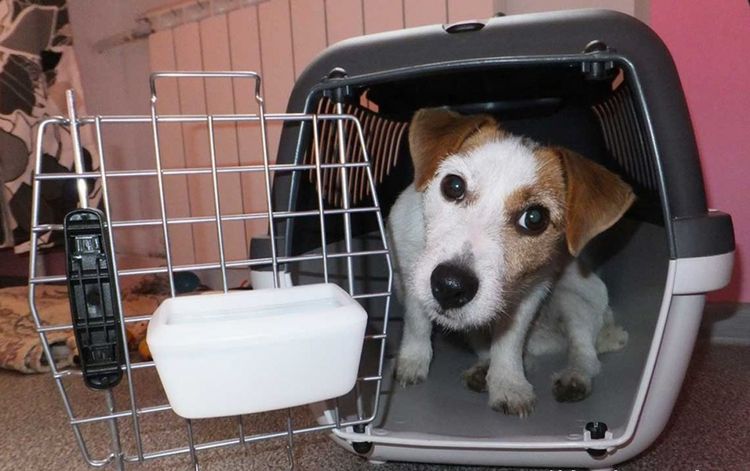
- The dog should be as comfortable as possible inside the crate. It should be large enough to stand up and lie down, stretching out to its full height.
- The shape of the carrier should be comfortable to carry in your hands, without sharp corners or nicks, as well as convex fittings that could potentially injure the dog or people passing by.
- The material used must be wear-resistant and high-quality, and the structure itself must be as durable and easy to operate as possible.
- To ensure sound insulation, it is necessary to place a soft bedding on the bottom of the box.
- Care should be taken to ensure that ventilation openings are always open to allow unimpeded access of fresh air.
Large breed dogs
If the animal is large and doesn't fit in a separate cage, it will likely be turned away from the metro. At least, official regulations prohibit this. Metro employees often make exceptions, turning a blind eye to large dogs and their owners, but under certain conditions:
- the pet must be on leash and in a muzzle;
- travel is carried out outside of rush hour, when the flow of people is free;
- there is a valid reason for the trip - for example, a dog show taking place nearby.
The biggest danger for pets on the subway is the escalator. While small dogs can be easily picked up, larger pets are at risk. While the escalator is moving, a dog's paws or tail can be injured by the teeth of the escalators, which can have dire consequences. This is why many ticket inspectors refuse to allow dog owners onto the subway. If they do allow their dog onto the subway, the owner is solely responsible for its life and safety.
Exceptions
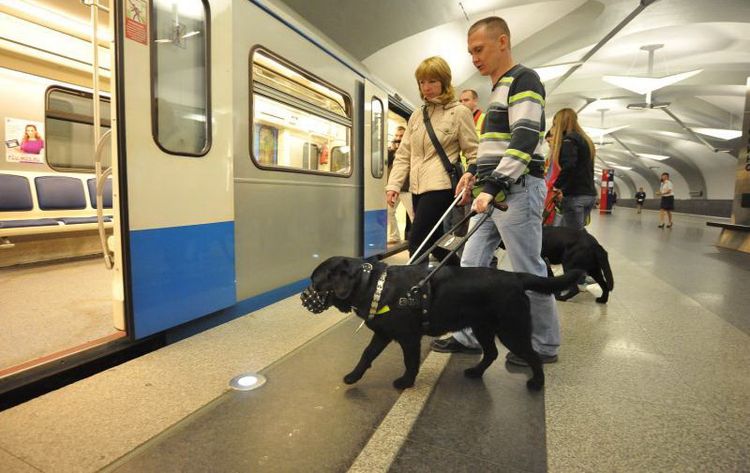
The rules for transporting dogs on the metro do not apply only to guide dogs, which are intended to accompany people with disabilities. These animals undergo special training for "working" in the metro. After training, they are trained to navigate turnstiles, ride escalators, and are well-adjusted to their surroundings, even during rush hour. Passersby should remember that they must not distract the dog while it is performing its "job"—the lives and well-being of those in need of assistance directly depend on it.
Read also:
- Dog carriers: what types are there, how to choose one, and where to buy one?
- How to choose a dog without making a mistake
- Why are commuter trains called dogs?


1 comment
Elena
People fight more often on the subway, steal, and act out, yelling, and are ready to eat each other, but they don't get put on the subway. And that's a shame. I trust dogs more than...
Add a comment