
Can I wash my cat with regular shampoo?
Should I wash my cat with regular shampoo? Should I do it occasionally, or should I never? Every owner has asked this question at least once in a while, and for good reason. Cat shampoo isn't a marketing ploy, but an objective necessity, based on the unique needs of a cat. So what should you do if you don't have a specialized product on hand?
Content
Why are veterinarians against it?
Doctors say that the pH of cat and human skin differs, so it's not advisable to wash your pet with human shampoo. This will ultimately lead to a deterioration in the appearance of the coat, which will lose its shine and smoothness. The skin will become irritated and dandruff.
Another reason is the strong fragrances in human shampoos. Cats have a very sensitive sense of smell, and a strong odor is not only unpleasant but also dangerous. Some cats begin marking their territory after such a procedure to ward off the irritating scent.
If there is no suitable shampoo
If you absolutely must bathe your pet and have no other option but human shampoo, you can still use it occasionally. In this case, you can wash your cat with baby shampoo or use an adult shampoo, but keep the following factors in mind:
- the smell should not be strong;
- the product must be thoroughly washed off;
- choose a shampoo with the least amount of surfactants.
Important! Do not apply shampoo directly to your pet's fur. Before washing, prepare a solution and follow a few guidelines.
Before bathing your cat with regular shampoo, dilute it. One tablespoon per liter of water is sufficient. You can add a little hair conditioner to prevent the cat's thick and fine fur from matting and tangling. Rinse the solution at least three times. It's important to completely remove all chemical particles from your cat's fur, as your cat will lick itself after bathing.
If your cat is indoors and only goes indoors, limit bathing to once every 3-4 months. After bathing, thoroughly dry the cat's fur with a dry towel.
You don't always need to wash your cat with shampoo. Sometimes, simply wiping your pet's fur with a damp towel is sufficient.
When you shouldn't wash your pet at all
In some situations, the animal is not washed at all. This occurs in the following cases:
- The pet is elderly. Older animals are more susceptible to stress, and bathing can harm its nervous system.
- A surgical operation was performed, after which little time passed.
- The apartment is cold and drafty. Your pet will be uncomfortable, shivery, and may catch a cold.
Cats are clean animals and are capable of maintaining their own fur. Therefore, owners should avoid interfering with this process unless absolutely necessary. Some owners worry that hair getting into their pet's stomach could harm them. To prevent this, special products have been developed. vitamins, feed and wool-removing pastes.
Which shampoo should I choose for my cat?
There are as many shampoos for cats as there are for humans. Each one serves specific purposes. Cleaning solutions are divided into several categories:
- For daily use. These herbal-based products are non-irritating and only serve to remove dirt and eliminate odor.
- Show products. These contain dyes to enhance the vibrancy of the color. They are used to add beauty and shine to pets participating in competitions.
- To reduce shedding. Used in the off-season. Sometimes hair loss is so intense that additional products are used to slow the process.
- Medicated shampoos. Used as directed by your veterinarian. They help relieve irritation and disinfect the skin.
In addition, many products have been developed that take into account the characteristics of different breeds. You can find a shampoo for both a Sphynx and a Persian.
If your cat refuses to bathe or the stain is minor, you can use dry shampoo and apply it only to the soiled area. This product is a powder that's applied to the fur and then thoroughly brushed out.
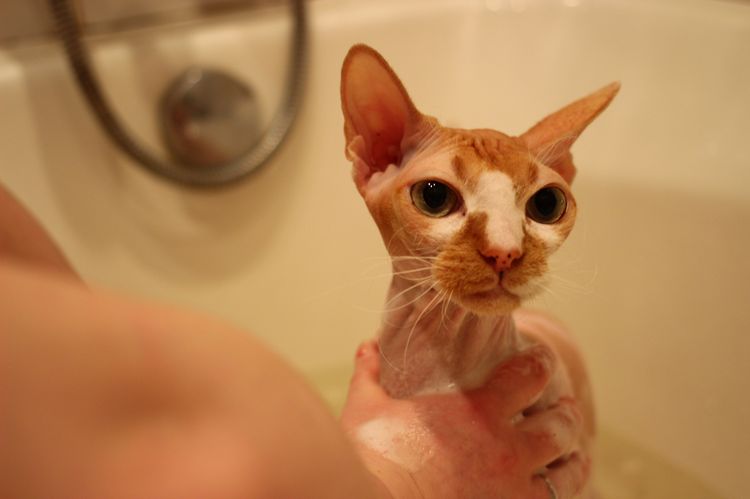
Bathing is stressful for a cat, and if the cat actively resists the process, it's stressful for the owner as well. Therefore, preparation is essential. It's best not to feed the pet for a couple of hours before the bath. Long claws are trimmed, and the fur is brushed. The bathtub should be filled in advance. The water should be warm and not reach the cat's ears. After the bath, the fur should be dried as much as possible with a towel.
Read also:


Add a comment