
Can I feed my kitten cat food?
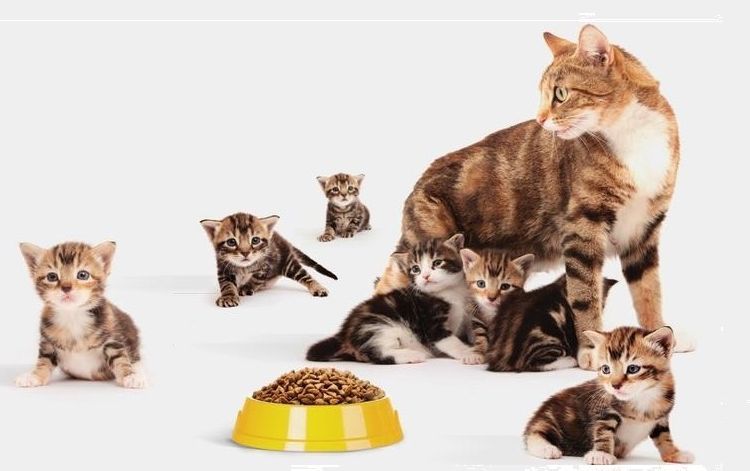
Often, when a kitten arrives in a home with an adult cat, owners don't consider the need for a different diet. As a result, both the young and old end up eating the same food. However, this can lead to unpleasant consequences.
Content
Arguments against
First, it's important to understand the differences in feeding patterns between adult and newborn kittens. Adults eat less frequently but in larger portions, while newborns, on the other hand, eat small amounts every couple of hours. However, don't jump to the conclusion that you can simply fill a bowl with food (the same stuff you feed to larger kittens), place it under the kitten's nose, and expect it to grow into a healthy, beautiful cat.
During periods of active growth, pets require high-calorie food; otherwise, they won't have enough energy for play or proper development. Mature individuals don't need so many calories, so cat food is relatively low in nutritional value. Feeding a kitten such food can lead to developmental and growth delays.
Moreover, small animals require a large amount of macro- and micronutrients, as well as vitamins. A deficiency can lead to developmental delays. Cat food, however, lacks the required concentration.
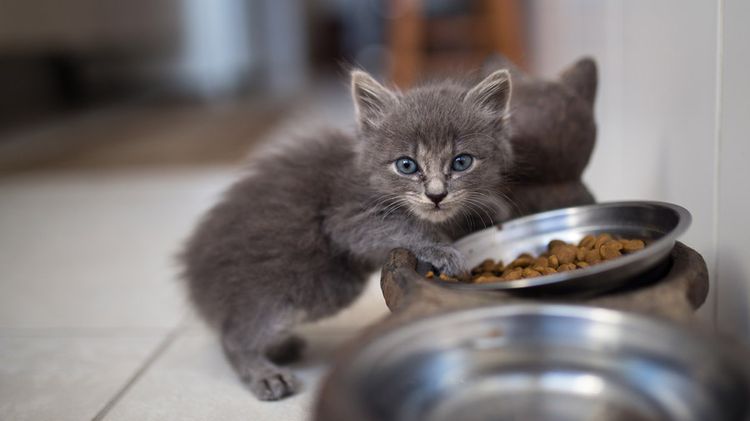
Additionally, kibble sizes vary. Adult cats can easily chew and swallow large pieces, but kittens risk choking.
What to feed a kitten
Now that you know you shouldn't feed your kitten cat food, the obvious question is, "What should you put in his bowl?"
Up to 3 weeks
At this age, mother's milk is usually sufficient for the kitten. When the period of active growth begins, new foods can be introduced into the diet. Special kitten milk, low-fat cream diluted with water, crushed quail eggs, and baby food are excellent first foods. For information on what to feed a 1-month-old kitten, see read here.
1.5 months
A one and a half month old needs to be fed At least six times a day. The daily portion size is up to 150 grams. From this point on, milk consumption should be limited and the baby can be gradually transitioned to dry food. During the first meals, it should be soaked and mixed with meat-based baby food. Frozen beef and boiled chicken fillet can also be included in the diet.
3 months
Enough to feed Four times a day, being careful not to overfeed – the maximum daily portion should be no more than 240 grams, a quarter of which should be meat. The menu can include high-quality canned and dry food, pre-frozen beef, boiled chicken breast, and cooked cow or chicken heart. It's crucial to ensure that your pet receives all the necessary vitamins and minerals at this age.
Half a year
From 6 months, kittens should be transitioned to three meals a day, increasing their daily intake by just 10 grams. While their food preferences remain the same, boiled chicken gizzards can be added to diversify their diet.
After 10 months
From 10 months (although some felinologists say 8 months), you can transition your puppy to adult food. Keep in mind that a sudden change in diet can stress the gastrointestinal tract, so introduce foods gradually. Two feedings per day are sufficient, with a daily portion of no more than 200 grams. The menu remains the same, with the only caveat being that you can occasionally treat your pet to raw chicken necks and heads.
Which food to choose?
Today, pet stores offer a wide selection of kitten food, from budget to premium. What's the difference?
Economy
They're made from cheap ingredients. They typically contain by-products, soy, preservatives, colorings, and various flavor enhancers. Therefore, feeding pets this type of food regularly is highly undesirable, even though they'll happily devour it. The vitamin content is minimal, so supplemental vitamin and mineral supplements will be necessary.
Cheap pet foods contain addictive substances. As a result, the animal, like an addict, refuses to consume a quality product and experiences a form of withdrawal.
Premium
The cost of this type of cat food is slightly higher due to the inclusion of real meat. However, the ingredients still include by-products, vegetable protein, preservatives, and colorings. While some beneficial nutrients are present, it's still worth periodically supplementing your pet's diet with vitamins and minerals.
Super premium
Only meat is used in the production process. The product is perfectly balanced, containing everything a growing body needs. It contains no flavor enhancers or artificial flavors, and the only preservative is vitamin E, which offers nothing but health benefits. Due to high demand and high prices, counterfeit products are common, so buy only from trusted sources.
Read also:
- What to feed Persian kittens, cats, and male cats
- What to feed kittens at home?
- How to feed a newborn kitten without a mother cat?


Add a comment