
Can dogs eat cherries?
Can dogs eat cherries? This is a question many owners ask. In this article, we'll explore in detail whether cherries are safe for dogs, whether pitted cherries can be given to dogs, the risks for Yorkies, whether French bulldogs can eat cherries, and what to do if they accidentally eat them.
Content
- 1 Can dogs eat cherries? General answer
- 2 Why cherries and sweet cherries are dangerous for dogs – in detail
- 3 Symptoms of poisoning and when swallowing a seed
- 4 What to do if your dog ate a cherry or swallowed a pit – a step-by-step guide
- 5 Table - a quick guide to situations
- 6 Can you give cherries to a dog? Nuances and exceptions
- 7 Can Yorkies and French Bulldogs eat cherries?
- 8 What should not be given at all
- 9 What can I use instead of cherries?
- 10 Frequently asked questions from owners - in brief
- 11 Prevention in the family and at the dacha
- 12 Results
Can dogs eat cherries? General answer
Cherries are fruits that are best completely excluded from a dog's diet. The main problem isn't the berries themselves, but rather the fact that their pits contain cyanide, a toxic substance that can cause poisoning. Even chewing on just one pit can cause digestive upset, abdominal pain, and, in severe cases, serious complications. Furthermore, the skin and pulp of these berries can cause allergies, especially in dogs with sensitive digestion, such as Yorkies and French bulldogs.
It's important to remember that even pitted cherries are not a healthy food for dogs. Unlike some other fruits, these berries don't contain any essential nutrients, but the health risks remain high. Regular consumption can lead to bowel problems, increased gas, and inflammation of the stomach lining.
Owners think that giving just one or two berries won't cause any harm. However, veterinarians note that even this amount can cause vomiting or diarrhea in small dogs. Therefore, the correct and safe answer is that cherries and sweet cherries should not be given to dogs, even in small doses. It's better to include truly healthy fruits in their diet that don't contain dangerous seeds and won't harm your pet's health.
Why cherries and sweet cherries are dangerous for dogs – in detail
Cherries and sweet cherries are considered stone fruits. The danger stems from three main factors:
-
Chemical risk: The seeds contain compounds (such as amygdalin) that can release cyanide when broken down. Cyanide interferes with cells' ability to utilize oxygen and, when intoxicated, causes shortness of breath, reddened mucous membranes, and weakness.
-
Mechanical risk - Swallowed whole bones or bone fragments can cause intestinal obstruction or injury, especially in small dogs.
-
Additional problems include sugar, acids, and possible preservatives in compotes or baked goods, which can lead to stomach upset, pancreatitis if consumed frequently, and weight gain.

Symptoms of poisoning and when swallowing a seed
If your dog has chewed or eaten a cherry with the pit, watch for the following signs:
-
vomiting, diarrhea, increased salivation;
-
lethargy, weakness, refusal to eat;
-
difficulty breathing, rapid breathing;
-
abdominal pain, lack of bowel movement (possible obstruction).
If you notice any alarming symptoms, contact your veterinarian or animal poisoning hotline immediately.
What to do if your dog ate a cherry or swallowed a pit – a step-by-step guide
If a meal has occurred, it is important to quickly assess the situation and act accordingly—the animal's safety is more important than "self-cleaning the stomach," etc.
-
Estimate the quantity and time. How many berries are there and how much time has passed since they were eaten.
-
Don't give pills or "home" remedies without consultation. Some folk remedies are harmful.
-
Call your veterinarian or the ASPCA/Pet Poison Helpline immediately and provide the dog's weight, the approximate amount eaten, and any symptoms.
-
If your veterinarian recommends it and there are no contraindications, the following may be necessary: inducing vomiting (only as directed by your veterinarian), hospitalization for intravenous fluid therapy, x-rays to assess for the presence of bones, and monitoring kidney function.
Table - a quick guide to situations
| Situation | What to do immediately | Risk |
|---|---|---|
| Pulp eaten without seeds (small amount, large dog) | Observation, call to the clinic for consultation | Low/medium |
| Pits or many berries have been swallowed | Call the veterinary clinic immediately, they may come | Medium/high (obstruction, cyanide) |
| Vomiting, altered breathing, and lethargy appeared. | Go to the clinic/call an ambulance for the animal | High (urgent intervention required) |
Can you give cherries to a dog? Nuances and exceptions
Some sources note that pure pulp without pits, stems, and leaves can theoretically be tolerated in very small quantities by large, healthy dogs, but this is not a recommendation for regular inclusion in the diet. For most owners and pets, it makes sense to completely eliminate cherries from treats, as there is a risk of mechanical and chemical damage.
Can Yorkies and French Bulldogs eat cherries?
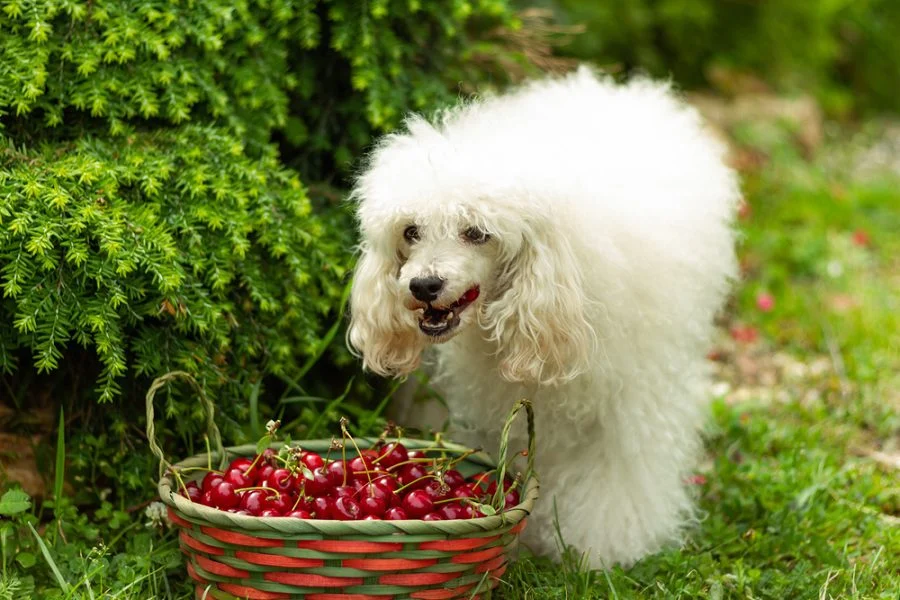
Small breeds (Yorkies, Spitz) and breeds with special body types (French Bulldogs are brachycephalic) have an increased risk: in Yorkies, even one or two bones can significantly strain the gastrointestinal tract and cause obstruction; in French Bulldogs, there's a risk of aspiration when vomiting, as well as breathing difficulties that complicate emergency treatment. Therefore, for Yorkies and French Bulldogs, the answer is clear: do not feed.
What should not be given at all
Below are a list of foods and plant parts that you should absolutely avoid giving to your dog if you value its health:
-
pits and seeds of cherries and cherries;
-
stems and leaves (contain cyanogenic glycosides);
-
compotes, preserves and baked goods with cherries in syrup;
-
fermented or fallen berries (may contain alcohol and mycotoxins).
What can I use instead of cherries?
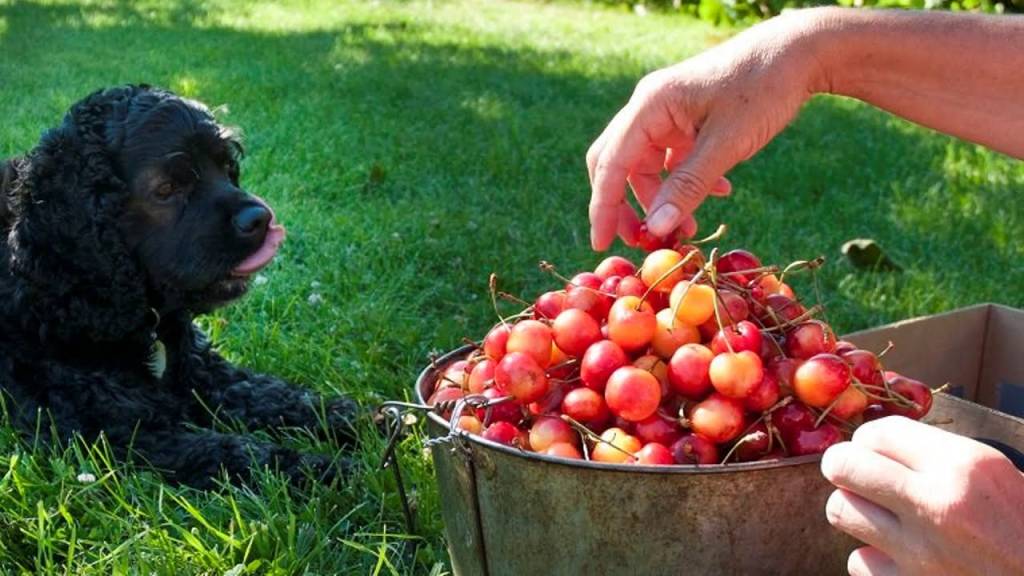
If you're looking to treat your pet with a fruity treat, choose safe options and give them in small amounts, considering their overall diet. Here's a list of safe alternatives:
-
apple without seeds and core;
-
cored pear;
-
blueberries (in moderation);
-
cucumber or zucchini as a low-calorie treat.
Frequently asked questions from owners - in brief
Question: Can I give pitted cherries?
Answer: It is better not to give it: the risk of accidentally swallowing stone fragments and high sugar content make this fruit undesirable.
Question: If a dog ate a couple of bones, should I panic?
Answer: Don't panic, but call your veterinarian immediately and report the weight and number of eggs; the vet will tell you whether a visit to the vet, an X-ray, or observation is necessary.
Question: Can you give frozen cherries to your dog?
Answer: Frozen cherries are also unsafe—they retain the pits, and the cold berries can irritate the stomach. If the berries are seedless and in very small quantities for a large dog, the risk is lower, but it's better to choose a safer alternative.
Question: Can I give my dog cherry compote, jam or baked goods?
Answer: No. Canned and sweet foods contain a lot of sugar, preservatives, and pits; they cause gastrointestinal upset and increase the risk of pancreatitis. Cherry baked goods should definitely be avoided.
Question: Is it possible to feed a pregnant bitch or puppy cherries?
Answer: No. Any extra strain on the body and the risk of obstruction are especially dangerous for pregnant women and puppies. The diet of the mother and puppy must be strictly balanced, and cherries should not be included.
Prevention in the family and at the dacha
To minimize the risk:
do not leave berries and dishes with cherries available;
remove fallen fruits from the area;
warn guests and children that they should not feed cherries to dogs;
If you have a fruit tree, control your dog's access to the garden.
Results
Cherries are potentially dangerous for dogs due to the risk of cyanide (if the pits are damaged), mechanical obstruction, and digestive upset. The best strategy is to eliminate these berries from your pet's diet, especially for small breeds, puppies, Yorkies, and French bulldogs. If you suspect ingestion, consult your veterinarian or a poison control line immediately.
Read also:


Add a comment