
Can I give deworming medication to a pregnant or nursing cat?
For every responsible cat owner, mating is a signal to take preparatory measures. Deworming your pet is a mandatory procedure. However, in some cases, the animal becomes infected after mating, immediately raising the question of how to deworm a pregnant cat and what to do in such a situation. These questions are not without reason, as a pregnant cat is not the best time to administer toxic medications.
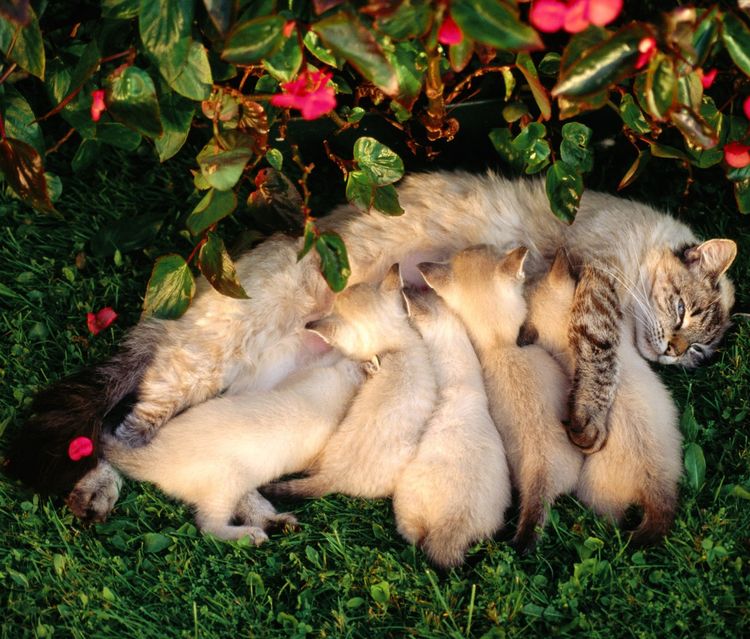
It's clear that the less medication a pregnant animal receives, the better the health of the future offspring will be protected. But in some cases, this is a necessary measure that justifies itself. This also applies to deworming pregnant cats. In this situation, the key is choosing the right time and the most appropriate medication.
Content
When deworming a pregnant cat is a necessity
Pregnant cats should be treated for worms If the presence of parasites is interfering with the pet's ability to live and raise future offspring, the following dangerous signs of infestation are noted:
- no appetite;
- there is a noticeable deterioration in the animal's condition;
- The presence of helminths can be detected in the feces.
If your pet appears healthy and alert and is eating well, it's best to hold off on administering deworming medication. This can trigger a miscarriage, and if the kittens are born, they may have congenital deformities.
But while antiparasitic medications are dangerous, if the animal has a lot of worms, it's not worth considering whether to deworm a pregnant cat. This type of disease is unacceptable for a cat, and especially for kittens.
However, the last trimester of pregnancy is a time when even a heavily infected cat should not be treated. During this period, the toxic effects of medication and dead parasites will be most detrimental to the fetus.
As already mentioned, anything can happen, and an animal can become ill while pregnant. But these are rare cases, and if deworming is carried out periodically for preventative purposes, deworm cat before mating, then this problem will most likely be avoided.
Important tip! If you have a purebred cat and are looking for a suitable stud, be sure to check that the chosen partner is also parasite-free.
Deworming medications for pregnant cats
Not every anthelmintic medication is suitable for a pregnant cat. This is primarily due to the toxic effects of certain medications on embryos. For example, medications such as Caniquantel Plus Poliverkan"Prazitel" is prohibited for deworming pregnant cats, as these drugs have been shown to have teratogenic and embryotoxic effects, causing developmental disorders and death of embryos.
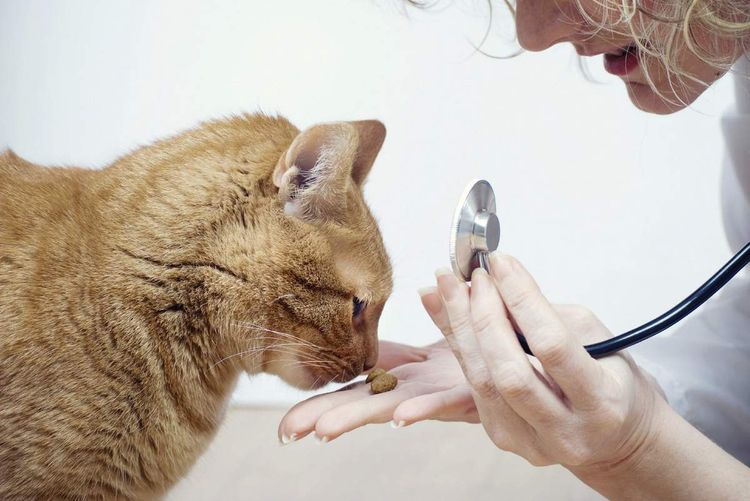
Some means, like – Drontal And Dirofen permitted for use in the second half of pregnancy, but no later than six weeks after mating.
Profender - this drug can be used to deworm a pregnant cat from the very beginning of mating, but no later than three weeks before lambing.
To ensure the best possible health for a pregnant cat and her future kittens, it's best to consult with a veterinarian regarding the use of deworming medication. Deworming itself is best performed under a veterinarian's supervision. However, if you decide to deworm your cat yourself, pay particular attention to the instructions.
Is it possible to deworm a nursing cat?
Your cat recently gave birth and is now actively nursing her kittens. All is well, but it turns out she has worms. What should you do, and is it possible to deworm a cat while she's nursing kittens? Let's start with the most important thing: recently born cats should never be given antiparasitic treatment. You should wait at least a month after giving birth, and ideally six weeks. And even then, this should only be done if the number of parasites in the animal's body directly affects the cat's health.
But even in this case, don't rush to deworm a nursing cat. It's best to consult with your veterinarian first.
You can also ask our website's staff veterinarian a question, who will answer them as quickly as possible in the comments box below.
Read also:


89 comments
Catherine
Hello, I found a heavily pregnant cat. She's due any day now. She has a lot of thick worms in her stool. What should I do?
Daria is a veterinarian
Hello! It's time to deworm the mother and her kittens. There are some products available (quite gentle) that can be used on both lactating queens and kittens aged 2-4 weeks. In any case, even if you had dewormed the mother and kittens the day before the birth, they wouldn't have all been eliminated at once. The mother would have infected the kittens during the birth and nursing process. She would definitely need to be dewormed again in two weeks, as would the kittens, otherwise there's a high risk of their death. This way, you can kill two birds with one stone. Treat both the mother and kittens with one product, and repeat the treatment 10-14 days later to completely clear them of parasites.
Natalia
Good afternoon! My cat gave birth three days ago. She is nursing her kitten.
I found long white worms in my vomit. What should I do? What can I use to deworm them?
Tatyana Shmonina - veterinarian
Hello! My cat and kittens need deworming. Choose an anthelmintic that is safe for nursing cats and their offspring. Read the instructions carefully!
Larisa
Hello! Newborn purebred kittens, two days postpartum. There are three in the litter. Two have loose stools—their tails are dirty, their tails and back paws are also wet. Their diapers also look like they're stained with furacilin. They're stooling quite a bit in the evening, even though I changed their diapers this morning. The kittens are active, eating well, responding to my handling, not lethargic, and their tummies are calm. I didn't notice this in the previous litter. The vet isn't answering the phone. Please help me figure out what to do in this situation. Thank you in advance.
Daria is a veterinarian
Hello! Is the third kitten showing any similar changes? You should monitor the kittens' weight gain and the frequency of loose stools. Was the mother cat dewormed before mating? Were any vaccinations given before mating? What is the mother cat fed? How does a nursing mother have bowel movements? Keep in mind that what a nursing mother eats also affects the kittens' stool (some of it gets into the milk). If the kittens are not dehydrated or lethargic, are active, eat well, sleep, and squeak occasionally (not constantly vocalizing or completely silent), and are gaining weight, there's no need to worry. If their stool remains bright yellow and/or watery after a couple of days, then contact a vet (or better yet, have a vet make a house call to avoid bringing the kittens to a clinic where infections are common).
Catherine
Hello! My Scottish Fold cat gave birth to six kittens 5.5 weeks ago. Everything seemed fine, but one of the kittens periodically has runny eyes and seems to cover them. All of them have large, round eyes, as if he just woke up. I treated them with furacein and tetra eye ointment, but they still haven't fully opened. I'll take them to the vet next week, but now I'm reading here, I think it might be worms. The mother cat also vomits foam once a week and has a little diarrhea the next day. For a day, then everything is fine, then again a week later. I haven't noticed any parasites in either her or the kittens' feces. Could you please tell me if I should deworm them? If so, what should I use, and how should I deworm them all at once? And do we humans need to take anything too? If so, what? Thank you!
Daria is a veterinarian
Hello! Before blaming worms, you should consider whether the mother was vaccinated, how recently, and with what vaccine. Was the father vaccinated? Has he been in contact with other cats, especially unvaccinated ones? If you plan to deworm, deworm absolutely everyone in the house/apartment (animals and people). However, self-prescribing tetracycline ointment at this age to a kitten could do more harm than good! It's a strong antibiotic. Regarding deworming, the choice depends on what's available in pharmacies in your city/region. Deworming is most often done at 8 weeks, but at younger ages, the choice of medications is significantly smaller.
Gulnara
Good afternoon. I picked up a cat and her kittens from the street. The kittens are probably 3-4 months old. She's breastfeeding and eating food. This morning, the mother cat vomited, and there were long white worms in it. How can I deworm her and the kittens? Thank you.
Daria is a veterinarian
Hello! 3-4 months are big kittens! They can be dewormed from 8 weeks onwards. Mom can do it too. Everyone can do it at the same time. If there are other animals in the house, they should do it too. All family members (humans) should also be given deworming medications on the same day, as there's a risk of infection from whiskered pets.
Tatiana
Hello! Our cat is 2 years old. She gave birth to kittens, who are 3 weeks old. She lived at the dacha, but we brought her home and noticed she had loose stools twice a day. She has become restless and constantly asks for food. She was dewormed 4 months ago. Is it possible to deworm her now?
Daria is a veterinarian
Hello! Parasites aren't the only cause of loose stools in animals. A systematic approach is needed: what the animal is fed, what vaccinations were given and when, any systemic illnesses (chronic or acute), any stress, any sudden changes in feeding, any changes in the kittens' stool, etc. Avoid treating parasites when diarrhea occurs. We stop the diarrhea first, and then address the parasite issue. There are gentle anthelmintic medications that can be used by both pregnant and nursing mothers (but the risk and benefit are always weighed, which is higher). Therefore, the cause of the loose stool must first be determined, and infection and eating disorders must be ruled out.
Elena
Hello, should I deworm my nursing cat and kittens? The kittens are three weeks old and haven't noticed any worms.
Daria is a veterinarian
Hello! If there are no indications, then wait until the kittens are 8 weeks old. Then, treat both them and the mother as a preventative measure. This isn't necessary. Although there are medications for nursing cats and for younger kittens, just make sure the mother is dewormed regularly and don't skip treatments.
Masha
Hello. Please tell me what to do?
The cat is nursing, and her kittens are two weeks old. She has a white worm coming out of her butt and in her stool. During pregnancy, we gave her half an Envair tablet, but it didn't help. The kittens were born normal. I gave her an Envair tablet today to treat the worms. I read a lot of bad reviews. Now I'm worried about what will happen to the mother and the kittens? Will she lose her milk? Will the kittens die?
Daria is a veterinarian
Hello! Half a tablet is given for a 2 kg animal. That's why it didn't help during pregnancy. The tablet won't cause milk loss, but the medication will definitely get into the milk. There are other medications approved for nursing mothers! Why didn't you consult a veterinarian first before giving the animal this dewormer? Will the kittens survive? No one can give a 100% guarantee. Death is extremely rare, only if the mother's dosage was too high and the kittens were severely weakened. But no one can tell you now whether any side effects will affect the kittens in the future.
Margarita
Hello! Our cat gave birth; we found her. The kittens are 9 days old. A week after giving birth, she started having severe diarrhea and vomiting, and she even vomited worms once.
The vet prescribed her Kanikvatel Plus (a quarter) and Selafort for ear mites.
The doctor told me to feed the kittens formula, but they're not eating it well and are screaming like crazy. The cat is screaming and her breasts are very swollen.
I can't breastfeed them for another 5 days...
I couldn't resist and gave my breast to the kittens.
What could be the consequences? They're nine days old. They've been nursing for almost an hour now, and they can't stop…
What is the best course of action?
I'm afraid my milk will run out... and I'll have to feed them for up to a month, and that means every three hours (I'm pregnant myself now). It's not easy.
Daria is a veterinarian
Hello! Why did you give caniquantel if the doctor knew the cat was nursing? They could have just given praziquantel. It's safe for pregnant and nursing mothers. Yes, it's slightly weaker than caniquantel due to only having one active ingredient, but in this case, it would have been safer. The kittens could have screamed. This is because you didn't massage their bellies after feeding, as they are not yet capable of urinating or urinating on their own. In nature, a mother cat licks her bellies and anal area to stimulate urination and defecation. There's nothing you can do now; you've fed the kittens. All you can do is wait and see. There is a risk of side effects, but not a significant one.
Inna
Hello, could you please help? My cat gave birth on March 20th, and the kittens died. One died immediately, and the other died the next day. She didn't even go near it. We adopted two month-old kittens for her. She accepted them and started nursing them. Two days ago, I noticed worm larvae in her stool. I was wondering if it's safe to give a nursing cat deworming medication.
Daria is a veterinarian
Hello! Yes, both lactating and pregnant cats can be treated for parasites if the risk of infecting kittens outweighs the harm from the medications. There are also "gentle" medications, such as praziquantel. Your veterinarian will offer medications to suit any budget.
Tasha
Hello! My cat has ear mites and suspected worms. She's nursing, and the kittens are just over a month old. How can I treat them?
Daria is a veterinarian
Hello! Both pregnant and nursing mothers can be treated for parasites. There are "gentle" medications that won't harm the mother or kittens. You can also find medications for kittens over 6 weeks old. Treat not only the mother, but the kittens as well. Treat the ears after the kittens have transitioned to solids or are less likely to nurse. All kittens will need to be treated at the same time, as they can transmit mites to the kittens. First, you need to make sure there are ear mites. There are also ear drops that can be applied to the withers, which will help against both external and internal parasites. You can also apply just a drop in the ear if there are mites. It's a bit more difficult with babies, as there's a risk of overdosing (you'll need to know the exact weight of each animal).
Vasilisa
Hello, can I give medicine to a nursing cat if the kittens are 3 weeks old and the others are 2 weeks old?
Daria is a veterinarian
Hello! Yes, you can, but you need to choose the right medication. There are "gentle" ones that are suitable for nursing mothers and even kittens of this age. It all depends on the selection at your local veterinary pharmacy and your budget. Is it possible to wait another week or two? Is deworming really that urgent?
Alena
Hello. We found a kitten and took it to the vet, where they said it was a male cat. A day or two later, we dewormed her, and two days later, our male cat gave birth! (There were five kittens.) Four of the kittens died in four days. One survived. He's now four days old! We don't know how to save the kitten's life, and we don't understand why the others died. They were eating well (the female cat didn't leave them), and we created excellent conditions for them (we put a box under the radiator, put a pillow inside, and a flannel blanket on it). Please tell me how to save the kitten's life!
Daria is a veterinarian
Hello! What exactly did you use to deworm them? Tablets, suspensions, or injections? Did you choose the medication yourself or was it recommended by a doctor? The kittens needed to be examined. They may have been premature or had other medical conditions. Not all medications are suitable for pregnant animals. Alternatively, the medication could have triggered the birth (it's possible the kittens were born prematurely, their organs weren't fully formed, or their lungs weren't fully developed). It's also possible that the cat is a carrier of the virus (has had or is currently suffering from a viral disease), and the kittens became infected and died. In this case, everything needs to be thoroughly investigated.
Lida
Hello, our cat just gave birth. She has worms, she was vomiting, and the worms were coming out of her mouth. The kittens are two weeks old. What medication should she be dewormed with? And when can this be done? We will definitely deworm the kittens.
Daria is a veterinarian
Hello! Well, the kittens are already weeks old, so you can choose from the selection of anthelmintics based on pyrantel and praziquantel from the veterinary pharmacy. When purchasing, check what is needed for a nursing cat and young kittens. Not all brands are suitable for lactating mothers and young kittens. However, there are also "gentler" medications that can be used for deworming. Much depends on the veterinary pharmacy in your area. There are prazicide, dirofen, azinox, drontal, prazitel, febtal, and many others. Tablets and suspensions – decide what is most convenient for you.
Arina
Hello, my cat recently gave birth and she has lost her appetite. I think she has worms, but it has only been 14 days since she gave birth. Can I deworm her?
Daria is a veterinarian
Hello! Yes, you can prescribe a deworming medication for nursing cats, too. There are "gentle" deworming medications that can deworm intestinal parasites even in pregnant cats, let alone lactating ones. Look for medications containing the active ingredient praziquantel. It can also be given to kittens over three weeks old. So, if you wait a couple of days, you can deworm both the mother and kittens at once. And don't forget to repeat the deworming treatment after 10-14 days to completely cleanse your pets.
Tatiana
Hello. We have three female cats and a male cat. The cats are 18 and 16 years old and have started losing weight. I know they need deworming, but I don't know which medications are safe for them. Milbemax was recommended, but I'm not sure.
Daria is a veterinarian
Hello! Why are you hesitating? It's a good product, and quite safe. It's given once (it can be given again if parasites are detected in the feces, then repeat). Give it to ALL animals in the house at the same time.
Anna
Hello! I dewormed my cat a month before mating. The groom had been courting her for a long time, so a month passed. Then she became pregnant and has now given birth. So, it's been four months since the deworming. The kittens are now three days old, and the cat has started vomiting and has diarrhea, but no worms have been detected. Should I deworm my cat?
Alina Veterinarian
Hello! You should wait at least a month after giving birth, and ideally six weeks. This should only be done if the number of parasites in the animal's body directly affects the cat's health.
Catherine
Good evening! My cat is about 1 year and 3 months old. Her kittens are 3 months old. We found her when she was small, covered in fleas. We cleaned her and got rid of her. But, with the arrival of spring, she was constantly walking outside (at our house). I didn't deworm her. Then she got pregnant, which was also not recommended. Now she's nursing kittens. I saw three week-old fleas on them, so I bathed them with flea shampoo. I don't know if they all died or not. Tomorrow they will be a month old. I bought Prazitel today. I want to give each of them a dose. Is it possible? My cat often had diarrhea, I bought powder with bacteria, and her stool improved, but a couple of times there was blood and worms. Can I give her and the kittens Prazitel? And then I'll take the cat to the vet.
Daria is a veterinarian
Hello! The kittens are 3 months old first, then a month old =) Regarding Prazitel, it can be used on both 3-week-old kittens and nursing cats (with caution, if the risk of deworming is less than letting the situation unfold). Deworm, but remember to repeat the procedure after 10-14 days. However, Prazitel only treats intestinal parasites; it has no effect on fleas. You'll have to wash your pets. You can buy collars against skin parasites at your veterinarian, which are suitable for both nursing cats and small kittens (the "gentle" products are practically safe). Don't forget to thoroughly clean your house to get rid of fleas, otherwise they will attack your pets again.
Evgeniya
Good afternoon, I have a question about my three cats. They need vaccinations and deworming beforehand, but one of them just gave birth recently, and she's been nursing the kittens for two weeks at most. What should I do about deworming? After all, if she's not dewormed, the others might not respond to the medication if they're all in close contact.
Daria is a veterinarian
Hello! Lack of deworming is not a contraindication for vaccinating animals. It's merely a recommendation to help the immune response develop. This means you can vaccinate a nursing mother without deworming if you're really desperate. You can wait about two weeks and then give a medication containing pyrantel. It's safe for both pregnant and lactating mothers, but after about two weeks, the kittens will be on solid food as well as breast milk (by the way, you didn't consider that the kittens may already be infected with worms).
Daria is a veterinarian
But it's also important to note that if you deworm everyone except the nursing cat (you can choose a single-use product for this purpose), then even if the male cats do catch something, the worms won't have time to develop (they'll be in the larval stage). So, decide for yourself whether to wait for everyone to be treated with a strong product, or use pyrantel for the nursing cat, or leave the nursing cat alone and vaccinate her without deworming. Ideally, vaccinations should be given before mating (even if there's still time left before the annual vaccination), so the kittens have antibodies to the infection (they'd get them from their mother's milk).
Alena
Hello! My cat is getting worms coming out of her anus. She's pregnant and about to give birth. Could you please tell me what medications I can use to deworm her?
Daria is a veterinarian
Hello! In this situation, the risk of harming the animal in this case is significantly lower than leaving things as is. The most common and readily available anthelmintic approved for use in pregnant cats is praziquantel (also known as Prazitel). There are also topical drops approved for pregnant cats. Definitely deworm! Otherwise, there is a risk of harming the kittens.
Marina
Hello. We found a pregnant cat, she gave birth, and the kittens are a month old. The cat also has worms. The veterinarian advised us to give her Profenderm. What should we do with the kittens? Should they also be dewormed, or is it enough for them to get the worms they need from their mother's milk? The kittens are a month old, and the cat is nursing them. Please advise, we are very worried about them.
Daria is a veterinarian
Hello! I wouldn't recommend drops, as both the cat and the kittens could lick the treated area, causing intoxication. I prefer to treat endoparasites with "internal" medications (tablets, or less commonly, suspensions). There are anthelmintic medications that can be given to kittens starting at 6 weeks of age. Since everyone in the house needs to be dewormed at the same time (including all humans in the house; if there are other pets, they should be dewormed as well), it's best to postpone the cat's deworming for a week or two, so that it can be done at the same time as the kittens (especially since some of the medication will enter the milk, even if applied topically).
Natalia
Good afternoon! How long before mating is it recommended to deworm a female cat?
Daria is a veterinarian
Hello! Ideally, it's best to start parasite treatment a month before the expected mating date. This will allow for two treatments, 10-14 days apart, as prescribed. Deworming with a broad-spectrum anthelmintic suitable for a single dose (for example, Drontal, Milbemax, Caniquantel, Caniquantel Plus, and other similar products) can be done two weeks beforehand. However, I still recommend doing it a month beforehand. Furthermore, when the kittens are already two months old, the mother will have her scheduled deworming, and the kittens will be at an age when they can be treated as well.
Svetlana
Hello, my cat is mating tomorrow. Can I deworm her today or is it too late and should I have taken care of this earlier?
Daria is a veterinarian
Hello! Ideally, this should have been taken care of earlier, so that the cat would be fully treated for mating (this applies not only to deworming but also to timely vaccinations). Firstly, the female cat will be the mother, and an untreated cat could infect the kittens. Secondly, contact with the male cat could also "reward" the cat with something, which could lead to problems with the cat's owners.
But since it so happened that you delayed, then give a broad-spectrum anthelmintic today, which is suitable for a single use and does not require repetition after 10-14 days (Drontal, Caniquantel, Milbemax and others)
Zarina
Hello. My cat is 2 years old. She gave birth on February 19th. She has worms. Could you please advise me on what to do in this situation? The parasites are visible in my cat's stool, and recently I've noticed blood in her stool. What should I do?
Daria is a veterinarian
Hello! Deworm your cat as prescribed, using any medications readily available at your veterinary pharmacy. It's been two months since she gave birth. Even kittens can now be dewormed as a preventative measure (and at the same time, prepare them for the upcoming infectious disease vaccinations).
Dina
Good afternoon! A couple of days ago, a stray cat went into labor on the steps of a store in the chilly wind. We brought her home. She gave birth to three kittens. It's only been two days, the kittens are alive, and she's nursing them. Today, I saw a worm crawl out of her anus and go about its business, the little bastard. Is there any medication I can give the cat, maybe a partial dose, to help with the worms? The cat herself has loose stools and gas.
Daria is a veterinarian
Hello! Generally, it's not recommended to treat nursing cats, as the medication enters the bloodstream and then into the milk. You can only apply drops to the withers of Strongold, Inspector, or Frontline (the safest). However! Kittens will need to be separated from the mother for at least 24 hours and fed with cat milk replacer (available at veterinary pharmacies). Tablets and suspensions are not allowed. Anything containing pyrantel as an active ingredient is strictly prohibited. Kittens of this age should not yet be treated with anything.
Nikita
Hello, is it possible to skip deworming before mating if they were dewormed six months ago?
Daria is a veterinarian
Hello! What do you mean by not deworming? Firstly, deworming is done QUARTERLY, that is, every 3 (!) months. And you say you dewormed six months ago. Secondly, you are bringing your cat together with another animal. What if the other pet "picks up" parasites (especially if the animals spend several days together). And then, when the babies are born, they will be infected by their mother. Babies can be dewormed from 6-8 weeks (sometimes you can find medications that can be given from 4 weeks). But even in this first month, the babies will gain weight poorly, and if the infestation is severe, they may even die. So, DEworming is ESSENTIAL! And then repeat the procedure every 3 months.
Tamara
Good evening! My cat is only 1 year and 5 months old. She gave birth to kittens. April 12th will be a month old. For the last 2-3 days, I've been hearing a really loud rumbling and gas in her stomach, it's really loud, but I can't figure out what's causing it. This evening, she ate liquid food, and this morning, she threw up the food, but it had some yellow in it. What should I do? Her stool seems normal, but the color is brownish-yellowish. Could you tell me if she's taking some vitamins? When her tummy rumbles, she looks at me and meows as if asking for help.
Daria is a veterinarian
Hello! What exactly are you feeding your cat? What brand of food is it? Do you feed it from the table? Does your cat not have access to the outdoors? Did you deworm her before mating? Were her age-appropriate vaccinations given? Did you take her temperature? Stool and vomiting clearly indicate gastrointestinal problems (a yellowish tint may indicate liver problems). However, rumbling in the stomach can also be caused by bacterial infections, so you should see a doctor (they'll prescribe a course of antibiotics). Vitamins won't help here. A more comprehensive approach is needed. Perhaps you could try amoxiclav, liver support medications, enzymes (pancreatin or Creon), or a prebiotic (FortiFlora), but I still recommend taking her to the vet for a checkup first (or having her come to your home).
Elena
Hello. I have a question: we were given a 1.5-year-old British shorthair cat. She was in very poor condition, very thin, and shedding a lot. I immediately dewormed her with Helminthal syrup. This was two weeks before she became pregnant (we also have a male cat, and they quickly became friends). I was afraid to go into detail the second time because she was already pregnant. So, when I delivered the kittens, I found parasites attached to one of their bladders, which didn't seem alive. Firstly, this is important, and secondly, the cat is very thin after giving birth, and it's been five days since she gave birth. She eats well, but sometimes, for some reason, she vomits. Her stool is mushy; I haven't noticed any parasites in her feces. What do you recommend? When should I deworm them all? What can I give her to fatten her up?
Daria is a veterinarian
Hello! Firstly, you could have given the anthelmintic a second time in 10-14 days. The period is still too early (a few days to a week). The anthelmintic wouldn't have caused any harm, as deworming was indicated. Secondly, there couldn't have been parasites in the amniotic sac. The helminths are intestinal, and the kittens emerged from the uterus. The organs are not connected. The birth canal and intestines are not connected. You can only fatten up the cat after complete deworming (much depends on what you're currently feeding her—increasing the portions or feeding more frequently—a lot of calories are spent on milk production). While the cat is nursing, you won't be able to eliminate the parasites (unless you bottle-feed the kittens), but if the symptoms don't resolve within the next week, you'll have to deworm the mother (the benefits outweigh the harm). You just need to choose a gentler medication.
Olga
Hello. I have a mixed-breed cat that lives only indoors (she never goes outside). I mated her with a male cat. A few days after the mating, I found worms in her feces. When can I get rid of the parasites, and how? Thank you.
Daria is a veterinarian
Hello! Firstly, if you suspect your cat is to blame, I have some bad news for you: the cat's eggs couldn't have developed into mature eggs and passed them in the stool within a few days. Secondly, a cat doesn't necessarily need to go outside to become infected with a parasitic or infectious disease. You do go outside, and visitors come to visit. You're not moving through the air, but rather on the ground where other animals (sick or recovering from illness) defecate. You're also bringing pathogens (pinworms, bacteria, viruses) into the house on your shoes. Your cat sniffs or licks the soles or floor where your shoes were. This is how they become infected. Deworm as soon as possible, before pregnancy is confirmed. Choose wormers that can be administered once (without repeating after 10-14 days). And a general cleaning of the house with thorough washing to prevent re-infection after deworming (parasite eggs are extremely resistant in the external environment)
Catherine
Hello! Sorry, this question has probably been asked before. The kittens are two months old, eating dry food, but they're still nursing. The cat has soft, smelly stools (I'm not ruling out the food, even though she's been on it for a year). I want to deworm the kittens. The cat was dewormed before mating. Is it necessary or appropriate to deworm them at the same time, and what's the best product?
Daria is a veterinarian
Hello! It's okay if you've already asked a similar question (sometimes identical questions are asked within a day). Yes, deworming is possible. From 8 weeks of age, almost all medications are approved (it all depends on your budget). Deworm both the kittens and the mother (since they were dewormed before mating, that means the pregnancy period plus two months after birth; since the kittens are already this age, it's definitely over 3 months). Deworm everyone on the same day. It's best to choose a broad-spectrum medication (Drontal, Milbemax, for example), or you can also use a tapeworm-only medication (Praziquantel and similar products). Your veterinary pharmacy will recommend it. Avoid using drops on the withers for now, as the mother will lick the kittens, and they will poison each other. Tablets are preferable to suspensions.
Svetlana
Hello! My cat gave birth two weeks ago. The birth was difficult, and we had to take her around. During the ultrasound, they thought she had retained the placenta. It turned out the uterus was clean, but she had a cold. So, we gave her a course of injections and pills, which allowed her to feed the kittens. Now she's feeling well, caring for her kittens, eating well, and purring. The kittens are also gaining weight, and their eyes are already opening. However, another problem has emerged: her belly has become distended, mostly on the right side. She looks like she's pregnant again. She doesn't go to the bathroom often, but the bloating doesn't go away afterward. Her belly is very hard. Could you tell me what to do?
Dasha is a veterinarian
Hello! Go get another ultrasound! Urgent! If you have x-rays, be sure to get them done too. If the cat isn't of breeding quality, spay her as soon as she recovers and wean the kittens. What's her body temperature? How are she going to the bathroom (what do her stools look like—are they too hard, like they're compressed)? What are you feeding her? Check her mucous membranes and see what color they are.
Evgeniya
Good afternoon. My cat is due to give birth in 3-5 days, and we have a problem: worms. We noticed it early in her pregnancy, but the vet told us not to deworm her until she gives birth. But then she gives birth, she'll infect the kittens, so treatment will be delayed for at least another month and a half. Now another problem has cropped up: we've also contracted parasites. It's a vicious cycle, since everyone needs to be dewormed at the same time, and delaying it is dangerous for us too. Is there a treatment I can give my cat before or immediately after she gives birth?
Dasha is a veterinarian
Hello! Do not deworm during pregnancy. It is also not recommended for nursing cats. Feel free to deworm yourself, repeating every 10-14 days. Then, when the kittens are 4-6 weeks old, you can choose a gentler product for both mother and kittens. Wash your hands thoroughly after handling the cat, change the litter box immediately after she has a bowel movement, preferably wearing gloves, and rinse the litter box with boiling water or disinfect it to kill any worm eggs. Wet clean the house daily (also wearing gloves). Kittens will not become infected in utero, nor will they pick up parasites through milk. Maintaining good hygiene around your cat will minimize the risk of infection in the kittens.
Marina
Hello! My cat gave birth to three kittens, and they are two days old. She peed and found a long, white, round worm in her stool, with something black inside. It wasn't moving. We've never seen worms in her stool before. Could you tell me if worms can affect the kittens through milk, and when is the best time to deworm my cat and kittens?
Dasha is a veterinarian
Hello! Your cat should have been dewormed before mating. Now, wait until the kittens stop nursing. Otherwise, you'll deworm her, and any residual amounts will be passed on to the kittens through her milk. This amount won't be enough to deworm them, and if you give them the medication, the "additives" from the milk will lead to an overdose. There are "gentle" medications for pregnant and nursing cats, and for kittens aged four weeks and older. It's not recommended before that.
Olga
Hello! My nursing cat has had diarrhea for several days. The vet prescribed diluted rehydron and enterosgel every hour. Can she nurse the kittens now? (There are four of them, they are 5 weeks old, and they are not purebred.)
Dasha is a veterinarian
Hello! I wouldn't recommend it. Firstly, the cause of the diarrhea is unknown (what if it's an infection?). Secondly, toxins are likely accumulating due to digestive problems, and they will leak from the blood into the milk. Then the kittens could start having diarrhea (there's a risk). Therefore, you should switch the kittens to a kitten milk replacer and gradually introduce solid foods. And in the cat, you should look for the cause of the upset stool: infection, parasites, poisoning, simple digestive upset, or other causes. Then, you should ADDITIONALLY supplement the therapy. The prescribed treatment alone is unlikely to help.
Olga
While feeding five kittens, the cat meows pitifully, then jumps up screaming and runs away. What's the reason? The kittens are three weeks old, I'm feeding them formula, and they're gaining weight at a healthy rate.
Dasha is a veterinarian
Hello! Examine your cat. Specifically, examine her mammary glands: are they firm, red, hot, or painful, or is there any unusual discharge coming from them? Take a good look at the tissue. Perhaps the kittens have injured her with their claws or teething. How is your cat acting? Is she lethargic or has a fever? It's important to rule out mastitis, edema, and any trauma to the nipples or skin of the mammary glands.
Alla
Hello, when can I take my cat to breed after her antiparasitic vaccination (in Turkey, they give the vaccination every three months and apply drops to the withers)? How long should it take?
Dasha is a veterinarian
Hello! Do they vaccinate every three months??? For what? Why? It's an unnecessary burden on the immune system. Vaccinations are given according to a schedule (after weaning, during adolescence, and annually for adults). I'm still puzzled by which disease should be vaccinated quarterly. Deworming is done quarterly—this is the recommended practice worldwide. It's advisable to wait about two weeks, and then introduce the pet to other animals at least two weeks after deworming and treatment.
Anastasia
Hello! My cat is almost a year old, she's a first-timer, and she doesn't go outside. I didn't think about deworming her, but my cat does go outside, and I've had him dewormed. While I was deworming my cat, my cat gave birth to kittens. She's lost a lot of weight and is crawling around on her bottom. I think she's picked up worms, but I haven't seen any obvious signs. The kittens are already 20 days old. Is there a way to deworm the kittens and my cat? We don't have a veterinary clinic nearby. We also don't have any cat pills. Maybe human pills would work? Please tell me what to do.
Dasha is a veterinarian
Hello! How did you deworm your cat if there are no cat tablets available? "Human" medications are not suitable for cats (and especially not for kittens). One tablet is usually enough for a cat weighing 20 kg. How would you split it up to give it to your cat? You can find dewormers in many pet stores (or even pet food stores), you can order them, or ask friends who travel to nearby larger cities. Only buy and administer dewormers designed for cats and kittens! Kittens should only be given dewormers after they reach 6-8 weeks of age (depending on the product you choose and the instructions).
Zhenya
Hello!
My cat is pregnant, there are a lot of worms in her poop, her butt is inflamed and bleeding, she has been carrying for about a month, is it possible to deworm her, I'm waiting until autumn!! (Thanks!
Dasha is a veterinarian
Hello! Why didn't you deworm your cat before mating? There are anthelmintics that CAN be used on both pregnant and lactating cats, but you should first see your cat in person to assess all the risks (the vet will select the safest medication and dosage for your pet).
Zhenya
Thank you, Doctor! I dewormed her! Maybe she caught it from a stray cat!
We don't have veterinary clinics for cats, only for dogs, and the only deworming medication they give is Drontal Plus for dogs, we divide it and give it to the cats!
Can I give Drontal plus Potvesa?
Ivan
Hello, the problem I encountered seems to be quite common, but I couldn't find any information about it online...
An active and seemingly healthy cat is nursing three kittens, all of whom are showing no signs of distress. The kittens are barely a month old, and I don't want to wean them off their mother and switch them to a different diet.
Just about a week ago, barely noticeable white round worms were discovered in my cat's stool. As far as I understand, the likelihood that the kittens have them too is quite high. Therefore, both the cat and the kittens need to be dewormed, fortunately, there are suitable medications for the latter's age.
And here are the questions I need help with: should the cat and kittens be dewormed at the same time? How do I choose the right combination of medications and adjust the dosage, given that the kittens drink the cat's milk and the cat licks their stools? I purchased Milbemax (red) for the cat and a parasiticide suspension for kittens, but I'm not sure this combination is correct, and I can't get to the vet anytime soon.
Dasha is a veterinarian
Hello! One of the active ingredients is the same, so giving it to both a nursing cat and kittens (under 6 weeks of age, assuming you don't plan to wean them) is risky, as the kittens could overdose. Some of the active ingredient in the anthelmintic will be excreted in the milk.
But you need to deworm both the mother and kittens simultaneously (this will minimize the risk of reinfection). You should begin feeding the kittens gradually. Deworming is recommended now if the infestation is severe (very many parasites). If the situation isn't critical, you'll have to wait a couple of weeks, and then deworm both the mother and kittens (especially since Milbemax is available for kittens).
Ivan
Thank you very much for your answer!
I don't know when the cat was last dewormed, but I have difficulty detecting worms in her stool, so the infestation probably isn't very severe. So, I'll wait until the kittens are six weeks old and deworm them along with the cat, each with their own Melbemax. Could you please clarify if a repeat deworming session will be necessary 10-14 days after the first one? The veterinary pharmacy said this isn't necessary with Melbemax, but I have serious doubts about that... Is it even possible to neutralize all the worm eggs without waiting for them to mature?
Alexander
My cat has a lot of small worms. They're drying out—3 mm. The kittens are a day old. How should I treat the cat? There are up to 20 visible worms in the stool!!
Dasha is a veterinarian
Why wasn't the animal dewormed before mating? Bring the animal's fresh stool to a veterinary lab for a stool test to determine the type of parasite! After a stool test, veterinarians will not only determine the type of parasite in the cat but also prescribe an anthelmintic to kill the worms. Based on your description, the cat has a severe worm infestation and urgently needs the attention of a veterinarian. It's not advisable to randomly administer anthelmintics. Don't worry about the kittens. In this case, the benefits of deworming outweigh the risks, so treatment is necessary.
Anastasia
Hello!
I have a nursing cat, on January 29 the babies will be a month old….
Recently, I discovered a long, nasty substance in my cat's feces.
Is it possible to deworm a cat? And what's the best way?
Before mating, the cat was treated….
Dasha is a veterinarian
Hello! The feces needed to be taken to a lab for a stool test to determine the species of the "nasty stuff." Are you sure it was a parasite, and not a swallowed thread or matted fur from licking? Wait a week or two and deworm them. Kittens will soon be weaned, and they can be dewormed from 6-8 weeks of age (just check the labels in your region to see what's suitable for kittens). There are also deworming medications for nursing mothers, but for prevention, the kittens should also be treated. It's best to treat them all at once, then repeat after 2 weeks.
Elena
Hello, please tell me, my cat is 3 weeks pregnant, I found ascaris in her feces, can I give her Dirontal?
Dasha is a veterinarian
Hello! I wouldn't recommend giving a pregnant cat an anthelmintic (wait until she gives birth and nurses at least a little). It's better to treat both the mother and the kittens later (there's a good product for kittens, too, but the dosage is tailored specifically for babies—Milbemax). Are you sure it's roundworm? There are plenty of parasites, many of which look similar. Therefore, choose a broad-spectrum anthelmintic (but only after she gives birth). Especially since there's not much time left before she gives birth.
Irina
My cat gave birth to three kittens three weeks ago. She's nursing, but constantly asks for food. What's wrong? Maybe she's not getting enough milk? She's been feeding seven times a day, and we're giving her milk.
Dasha is a veterinarian
Hello! Check her diet. Perhaps her food isn't nutritious enough and isn't replenishing her energy. Remember that a nursing mother requires a much higher calorie diet than a regular cat or dog. Are you feeding her natural or commercial food? If natural, what exactly are you feeding her? If commercial, the question is the same (what brand of food is it). How are the kittens eating? Maybe they're also crawling up to her often and eating a lot. Perhaps she's not producing enough milk? Or maybe she's producing too much, so the nutrients are quickly being lost. It's best not to give her milk. Replace it with fermented milk products. Avoid completely low-fat (it's low in calories). But avoid high-fat (it's low in calcium). Based on your milk production and how often the kittens nurse, consider what you're feeding.
Add a comment