
Can a person infect a cat?
The weather is quite changeable right now, making the topic of colds more relevant than ever. All caring cat owners have a reasonable question: can cats catch a cold from humans?
It's clear that people can catch certain diseases from their pets, but is it possible to infect your pet with an unpleasant illness? Is it possible for an owner to transmit a disease to their pet, and if so, how can you protect your pet from it? We'll answer all your questions on this important and relevant topic.
Content
Do cats get colds?
Cats, like all animals, are susceptible to colds, but they manifest themselves completely differently than in humans. The most well-known illness, which has symptoms similar to a cold, is rhinotracheitis in catsFurthermore, if a cat becomes ill, the owner should pay attention to a number of factors that could have led to it, as cats normally have fairly strong immune systems and successfully resist colds.
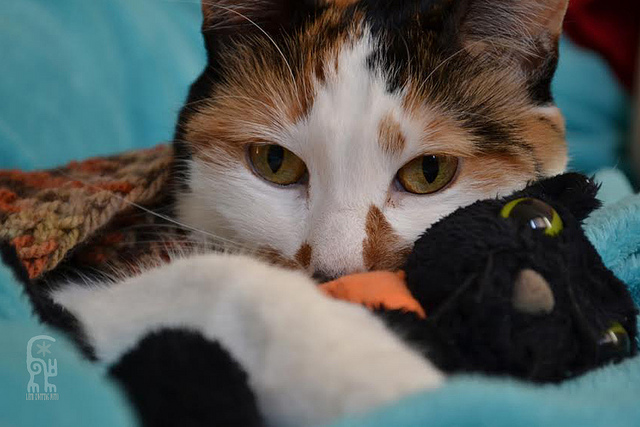
Some of the most noticeable symptoms of a cold include:
- weakness: the cat gets tired quickly, avoids playing and tries to sleep as much as possible;
- dry nose: this symptom indicates an increase in your pet’s body temperature, which often accompanies a cold;
- Watery eyes: A common symptom of a cold in cats is watery eyes;
- runny nose: a discharge from the nose of clear or greenish fluid, with which the body removes pathogenic organisms;
- Sneezing and coughing: Just like humans, cats sneeze and cough to clear their lungs of accumulated mucus.
If you notice these symptoms in your pet, take them to the veterinarian immediately, as these symptoms are common not only with a cold but also with more serious respiratory illnesses. If your cat doesn't receive qualified medical care, the illness can be very severe, and no one can predict the ultimate consequences.
What diseases are common to humans and animals?
Zoonoses These are infectious and parasitic diseases that pose a danger to both animals and humans. The pathogens that cause these diseases can be transmitted by direct contact, bites, animal products, or the environment.
The most well-known zoonoses include the following diseases:
- Anthrax is an acute infectious disease affecting farm and wild animals, as well as humans. It is caused by the spore-forming bacteria Bacillus anthracis. The disease can manifest as cutaneous or septicemic infections, and intestinal and pulmonary forms also occur in animals.
- Brucellosis is a zoonotic bacterial infection transmitted from infected animals to humans. It is caused by bacteria of the genus Brucella. The disease affects the nervous, cardiovascular, reproductive, and musculoskeletal systems, and is accompanied by fever, chills, and general weakness.
- Rabies is a viral disease that affects the central nervous system and is almost always fatal without prompt treatment. The main sources of infection are wild and domestic animals—dogs, cats, and predators. The pathogen belongs to the Rhabdoviridae family.
- Glanders is an infectious disease caused by the bacterium Burkholderia mallei. It is transmitted to humans from equids—horses, donkeys, and camels. It is characterized by lesions of the skin, mucous membranes, muscles, joints, and internal organs and can be acute or chronic.
- Bird flu. A viral infection of domestic and wild birds that can be transmitted to humans. The disease is characterized by general intoxication, swelling, hemorrhages, and damage to internal organs. It is caused by the influenza A virus.
Is infection possible?
Can a person infect a cat? Because the symptoms are so similar, many people assume that a cat's cold is the result of a virus contracted from a human. But can a cat become infected from a human? The answer is simple: in most cases, this possibility is excluded, since humans and cats have completely different pathogens that cause colds, and even if your whole family is sick, your pet is most likely safe.
It's a different story when the cause of the illness isn't a viral one, but a bacterial one. In this case, your cat could theoretically become infected with pathogenic bacteria that could cause a cold. However, the chances of this happening are slim.
Recently, the emergence of various, atypical strains of the influenza virus, affecting both humans and animals, has become more frequent. These diseases are no joke: there is a risk of transmission from cats to humans, as well as from humans to cats. Moreover, many forms of influenza do not yet have a cure, as scientists simply cannot keep up with the mutating pathogens and are behind in developing an effective treatment.
In such a situation, the answer to the question of whether a cat can catch the flu from a human isn't so clear. Most likely, it can, as not all the properties of the new pathogen have been studied. However, this is only possible with new, insufficiently studied strains, and is completely out of the question with the common flu, which affects the vast majority of people.
If infection has occurred
What should you do if your cat contracts the flu? The first thing you should do is immediately consult a veterinarian to rule out more serious illnesses. If a common cold is confirmed, simply follow your veterinarian's instructions, and your pet should recover within a week. To prevent the disease, or rather, to minimize the theoretical possibility of its occurrence, simply follow a short list of essential tips:
- Provide your cat with a balanced and nutritious diet. A lack of vitamins and minerals can weaken the immune system and lead to illness.
- Protect your cat from drafts. Something as seemingly harmless as a draft can cause significant harm – if your cat gets cold without even noticing, it's highly likely to catch a cold.
- Protect your pet from fungi and dampness. These factors can cause serious harm to humans, let alone the tiny body of a domestic cat.
- Maintain proper temperature control. In the summer, the cat's room should be kept at 18-20 degrees Celsius, and in the winter, at 22-24 degrees Celsius. These temperatures will ensure your pet feels most comfortable.
- Take your pet to the veterinarian regularly. Preventive checkups can help prevent latent chronic illnesses that can significantly weaken the immune system and trigger colds.
That's all there is to say about colds in our furry pets. If you're concerned about whether your cat can catch a cold from a human, follow all the rules for caring for your pets, and the disease is guaranteed to stay out of your home.
Any questions? You can ask our website's staff veterinarian in the comments below, who will answer them as quickly as possible.
Read also:


6 comments
Olga
Hello! My cat often has loose stools. We had a stool test done, and all the results are normal except for cocci++++ and bacilli++++. Initially, we gave him metronidazole, but the results remained the same. Now he's been prescribed the antibiotic Sunulox, but the results are still weak. Could you tell me if this is dangerous and what causes it? He's an indoor cat, not a stray.
Daria is a veterinarian
Hello! A cat doesn't necessarily need to go outside to become infected. You bring so many germs home from the street on your shoes (and the more stray cats/dogs in your yard, the higher the risk of infecting your pet). E. coli is an opportunistic pathogen that most often becomes active when the immune system is weakened or in unsanitary conditions. Another possibility is that the cat ate something containing coli or cocci. Perhaps they were fed raw meat, maybe homemade milk or sour cream, or maybe they scavenged something from the trash. In any case, they were infected through food (water, food, or even by licking your shoes). Did you test the cat's microflora for antibiotic sensitivity before treatment? This would have helped you choose an effective treatment right away.
Olga
Hello!
If a family member gets pneumonia and I'm given a cat to foster, I have a small child, can't the cat be a carrier?
Daria is a veterinarian
Hello! It all depends on the specific type of pneumonia the person in that family has. If it's viral or bacterial, there's a risk. The cat itself may not be sick, but it could still have bacteria or viruses. However, with this type of pneumonia, it would be admitted to an infectious diseases hospital; it wouldn't be at home. If the pneumonia is caused by a severe cold, bronchitis, or something similar, there's no need to worry. There's a much greater risk of a child catching the infection from strangers than from that cat. First and foremost, get the cat dewormed; that's far more important. And have the clinic issue a certificate stating that the cat is free of fungal infections (ringworm).
Alena
Hello, we have a Donskoy velour piglet. Is it necessary to vaccinate them?
Daria is a veterinarian
Hello! It doesn't matter whether your pet is a purebred or of "noble" blood, or whether it goes outside or not, vaccinations are essential. This protects your pet from potential infections. You don't live in a sterile world. It's easy to bring a pathogen into the house on your shoes, your pet sniffs or licks them, and voila—they're infected, even without going outside or having any face-to-face contact with other animals. If you plan to breed your pet, vaccinations are MANDATORY.
Add a comment