
Can a cat become infected with coronavirus from a human?
In early 2020, as COVID-19 began spreading rapidly around the world, the question of whether cats could be infected with the coronavirus from humans was actively discussed. The World Organisation for Animal Health (OIE), the World Small Animal Veterinary Association (WSAVA), the Agency for Animal Health Safety (ANSES), and other international organizations joined the study.
Content
Types of coronaviruses
The Coronaviridae family comprises 43 species of RNA viruses. These microorganisms can infect mammals, birds, and even amphibians. Coronaviruses get their name from their characteristic shape, with spike-like appendages reminiscent of the sun's corona.
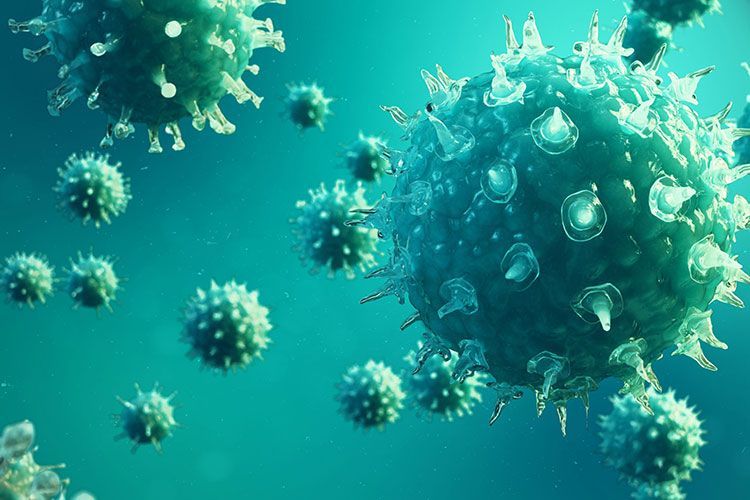
Seven types of coronavirus can cause disease in humans, one of the most dangerous and previously unknown is the SARS-CoV-2 virus, which caused the COVID-19 pandemic. Animals are affected by other types of coronavirus, but none of them are dangerous to humans. Two strains of this infectious agent are found in cats: FCoV and FIPV. The former causes intestinal diseases, while the latter (which is much more dangerous) causes infectious peritonitisAs it turns out, the "human" coronavirus SARS-CoV-2 can also infect animals.
Animals and COVID-19 statistics
According to data provided by the Smorodintsev Russian Research Institute of Influenza, many mammals are susceptible to the SARS-CoV-2 virus. These include felines (cats, tigers, lynxes, pumas, cheetahs, and panthers), mustelids (minks, martens, otters, ferrets, and badgers), as well as small rodents (mice, rats, and hamsters), and bats.
These findings are confirmed by many international scientists. In April 2020, a tigress at a zoo in New York was diagnosed with COVID-19. When staff tested for SARS-CoV-2 antibodies, a caretaker who fed the tigress and cleaned her cage tested positive. The caretaker was unaware of the disease, as she was asymptomatic.
Another case of human-to-animal coronavirus transmission has been recorded by experts at the Faculty of Veterinary Medicine in Liège, Belgium. A cat whose owner had coronavirus was found to have COVID-like symptoms, and testing confirmed SARS-CoV-2 infection.
In Italy, veterinarians tested approximately 300 cats whose owners had COVID-19 or had a positive PCR test to determine whether humans could infect cats with the coronavirus. The tests showed that one in four cats had antibodies against SARS-CoV-2. The presence of antibodies in the blood indicates that the animal has recently recovered from or is currently ill with COVID-19. Further studies on animal susceptibility to COVID-19 and the possibility of infection from humans are currently underway in Germany and Canada.
Numerous studies have led to a clear conclusion: animals, cats in particular, cannot infect People with coronavirus. No cases of domestic animals becoming infected with SARS-CoV-2 have been recorded.
Diagnostics
To detect viral diseases in cats, special research methods are used:
-
complete blood count
-
polymerase chain reaction (PCR) - allows you to detect DNA fragments in rectal swabs or blood
-
Enzyme-linked immunosorbent assay (ELISA) is used to determine antibodies and antigens in a biochemical blood test and is considered more informative, as it allows one to estimate the number of viral particles
-
protein electrophoresis
-
ultrasound examination of the abdominal cavity
-
cytological examination of exudate fluid (exudate or transudate)
Abdominal, pleural, or pericardial fluid, which accumulates during peritonitis, is also used for analysis. This test helps differentiate between coronavirus infection, cancer, and immunodeficiency.
How cats become infected with coronavirus
A cat can become infected with COVID:
- from a person, by airborne droplets;
- from another cat, dog, ferret;
- through the urine or excrement of an animal carrying the virus;
- through cat food;
- through the mother cat's milk (intrauterine infection of kittens is considered impossible);
- Rarely, but infection is possible through dirty shoes, clothes, and bags of the owner.
The disease in cats, as in humans, can be mild or severe. Unlike in humans, in cats, the SARS-CoV-2 virus most often causes enteritis rather than pneumonia. When a cat is diagnosed with COVID-19, they are typically prescribed medications to relieve symptoms and support their immune system, including antibiotics, antivirals, and immunomodulators.
Security measures
To protect your pets from COVID-19, you should first prevent them from coming into contact with other animals and their waste products (urine, excrement).
If you test positive for SARS-CoV-2 antibodies, limit contact not only with other family members but also with any pets in the house. This means avoiding handling, petting, or personally feeding your cat. Entrust another person with the care of your pet for the time being. If you are the only one who can feed your pet, wear a mask when in close contact with your pet.
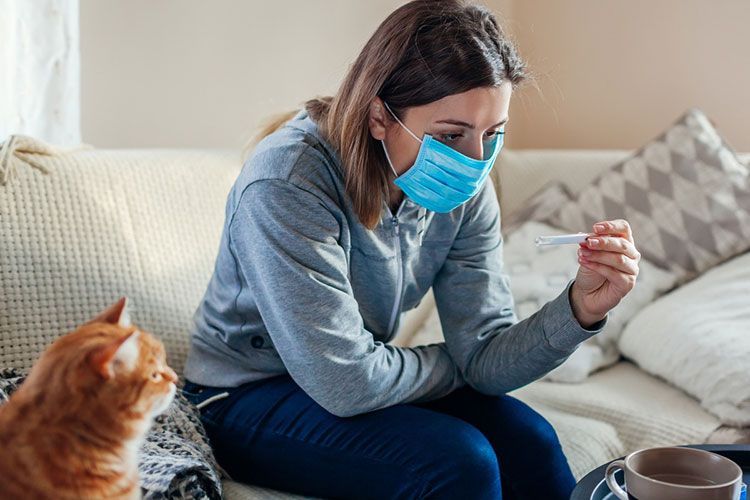
If your cat is sick with COVID-19 and there are other animals in the house, be sure to isolate the sick cat. Keep it in a separate room, feed and water it from a separate bowl, and provide a separate litter box. Cats remain carriers of the virus for one to two months after recovery.
Read also:


Add a comment