
Can dogs cry?
The presence of tear ducts in dogs proves that they can cry. However, this reaction is simply a physiological response to stimuli and is not a consequence of a psycho-emotional state, as in humans. Tears in pets are caused by disease or mechanical damage to the cornea. Only a veterinary clinic can accurately determine the cause of excessive fluid leakage.
Content
Why does the dog cry?
Canines have tear glands that secrete a fluid essential for the eyes. Tears are needed to moisturize and cleanse the cornea, and their secretion is closely linked to the nasopharynx. Most zoologists believe that crying in pets is not a way to express emotion. An increase in tear production should be considered a sign of a physiological problem requiring a visit to the veterinarian.
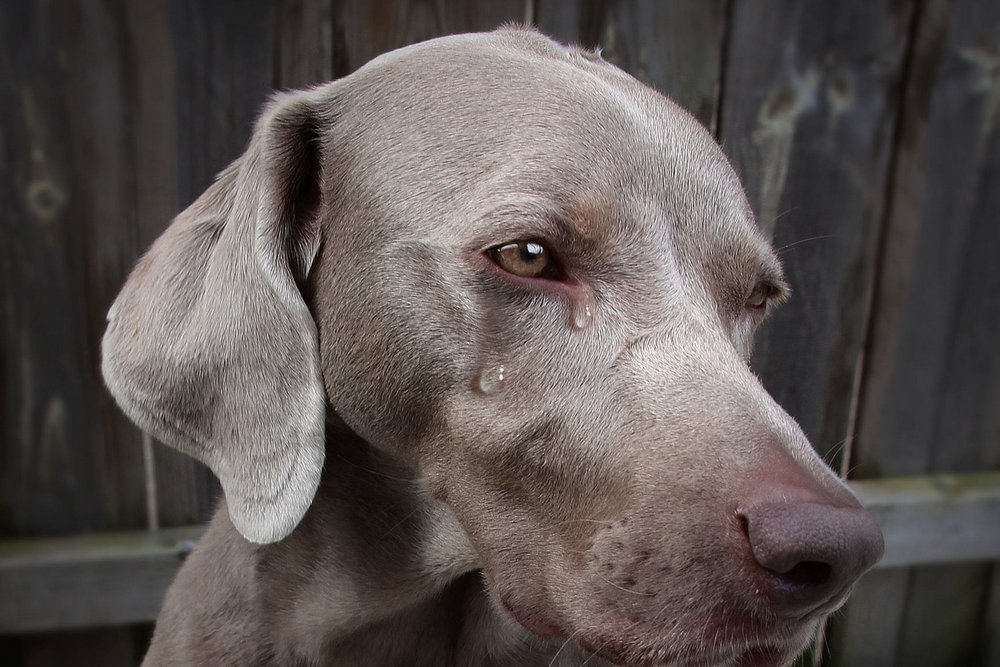
Contrary to this opinion, the journal Current Biology published a scientific study conducted by researchers from Jichi and Abazu Universities. The scientists placed special strips of paper under the lower eyelids of animals and measured the amount of moisture produced by the glands in three conditions:
- the dog stays at home for a long time in a calm environment;
- the pet meets the owner after several hours of loneliness;
- The dog communicates with familiar people.
The experiment revealed that in the first five minutes after a pet is reunited with its loved one, canine glands produce several times more moisture. This increased activity was not observed when the four-legged friend was reunited with a regular acquaintance.
Scientists believe that increased tear duct secretion is triggered by oxytocin, a hormone responsible for the formation of a social bond between pet and owner. Hormone levels rise sharply when an animal experiences emotional upheaval. Therefore, even gentle affection can sometimes trigger a particularly emotional dog to cry. However, research is still insufficient, so it's impossible to say for sure whether dogs cry like humans.
Reasons for crying
Despite the almost complete lack of evidence, owners believe that pets can cry as a sign of emotion. Therefore, dog breeders distinguish two groups of causes for excessive tear production: psycho-emotional and physiological.
Psycho-emotional
Animals naturally express emotions through sounds and body movements. However, they are quick learners, quickly imitating their owners' habits. As a result, many pets can "cry," while also whining like dogs when sad, or spinning like gyrate gyrates when happy.
What animal feelings can be accompanied by tears:
- Melancholy and depression occur with prolonged loneliness, separation from the owner, or relocation. The problem can be recognized by characteristic signs: apathy, prolonged sleep, and loss of appetite. The tail and ears are usually pressed close to the body, and sadness leads to whining or howling.
- Resentment is expressed in similar ways, so it can be difficult for owners to understand what their dog is feeling. It's possible that tears and apathy are caused by a punishment the animal considers unfair.
- Joy is a powerful emotion that often leads to tears. But such a reaction can indicate a pet's overdependence on its owner's presence. The animal will suffer when the owner is not around. It's best to resist the urge to cry and wait until the emotional tension subsides before petting the dog.
A crying dog evokes a response from its owner in the form of remorse, happiness, and affection, and pets skillfully exploit their owner's weakness to obtain indulgences—a treat, permission to lie on the owner's bed, no punishment for tearing a blanket, etc.
A puppy recently separated from its mother often whines in its sleep due to a longing for its mother's warmth. This reaction is a natural, innate reflex. Crying tearfully in public is simply a habit acquired through interaction with people.
Physiological
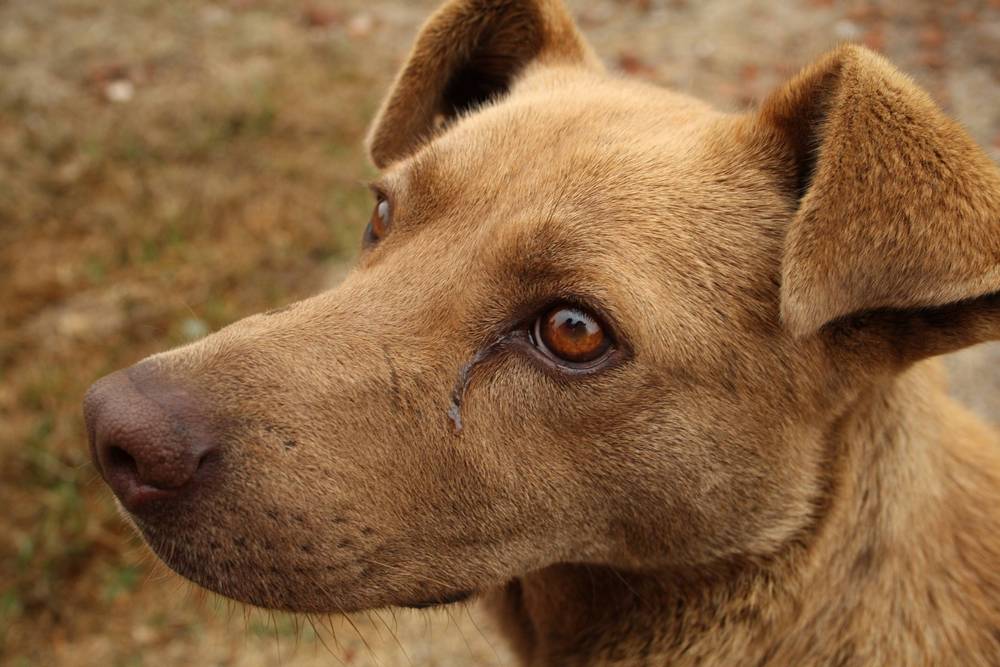
Excessive tearing can be caused by external factors. For example, when driving with a pet, the driver often opens the side window. The headwind dries the dog's iris, causing the tear glands to overwork, which can cause spots to appear. tear tracksBut more often, flowing tears are caused by health problems:
- Pain caused by a foreign object in the eye. To flush out dirt, dust, or sand, secretion production increases. The lacrimal system can usually handle small particles, but larger ones require rinsing the eye. It's best to have a professional handle the procedure, as they can remove even a fairly large and sharp object without damaging the cornea.
- Mechanical irritation of the mucous membranes, accompanied by inflammation and redness of the delicate skin. Small, protruding-eyed dogs like Chihuahuas, pugs, and French bulldogs are prone to eye diseases such as keratitis, eyelid prolapse, entropion, and canaliculitis, which causes inflammation and pain in the eyelids and leads to the production of large amounts of tears.
- An allergic reaction to pollen, food, cosmetics, or household chemicals. In addition to crying, symptoms include facial swelling, a runny nose, a skin rash, and severe itching.
- Infection with pathogenic microorganisms or viruses. Signs that a dog is unwell and crying from pain or discomfort include purulent discharge from the duct, with a yellow-green or brownish tint.
The appearance of tears is a reason to undergo an examination at a veterinary clinic. A number of infectious processes can lead to partial vision loss or complete blindness. Antihistamines and antibiotics are often necessary for treatment. Only a veterinarian can prescribe effective medications in the correct dosage.
What to do when a dog cries
If it seems that the amount of tear secretion is too high, you should pay attention to the presence of the following symptoms:
- apathetic behavior and lack of appetite;
- redness of the eyelids and cornea;
- color and consistency of the liquid – turbidity, traces of blood, purulent discharge;
- severe itching, in which the animal scratches itself intensely;
- swelling of the face;
- photophobia;
- rapid breathing.
If several of these symptoms appear, along with excessive tearing, you should immediately consult a veterinarian. Self-treatment can lead to life-threatening consequences for your pet.
If tears are dripping without any signs of illness, don't fall for your pet's tricks. It's enough to know that such habits usually develop in the absence of training. The pet begins to feel like the boss of the house and can actually control people. The intelligence level of an adult dog approaches that of a 5-7-year-old child. Therefore, it's easy for an animal to manipulate people, evoking associations with a child overly spoiled by its parents.

Dogs experience emotions and are therefore capable of crying. However, this occurs in accordance with animal reflexes—depression, happiness, and resentment are accompanied by whining and characteristic movements. A pet may jump in excitement, turn its head away in frustration, or press its ears back in anger. However, lacrimation is only a physiological factor, indicating the normal or abnormal state of the visual system. If your pet has excessive or purulent discharge from the ducts, along with other symptoms, you should immediately consult a veterinarian.
Read also:
- Why do dogs have watery eyes?
- My dog has red eyes: why and what to do
- Dry Eye Syndrome in Dogs: Causes and Treatment


Add a comment