
Do cats take revenge?
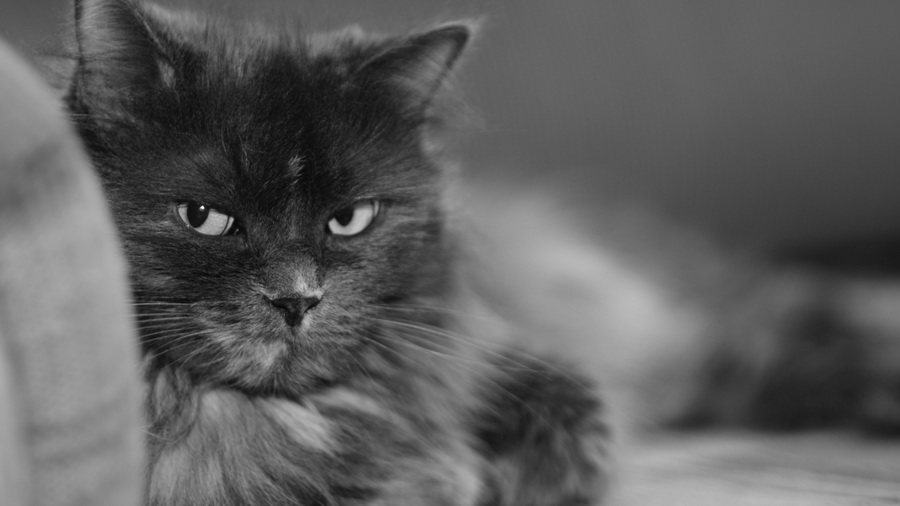
I've often noticed my cats turning their backs on me with a haughty glare when I don't do something the way they want. Hmm, is it really true that the animal is upset? Actually, when a cat turns away from you, it's a sign that it's afraid of your anger and is trying to alleviate its fear by not running away. But won't the cat's vengeance overtake you the moment you turn your back?
Turning away, your pet doesn't meet your gaze, and so her fears gradually subside. Indeed, my pets adopt this arrogant stance when I scold them or raise my voice. It's like they're ashamed to run away, but afraid to stay! If you dig deeper, they behave similarly in their "feline" relationships as well.
Content
The offended cat and instincts
Dominant males and females always stare intently at their subordinates, who in turn avert their gaze. Therefore, a "resentful" cat is a sign that you have made some kind of threat.
There is another interesting fact: when cats hunt birds, if the eyes of the "victim" are fixedly fixed on the animal, it will not attack, but will attack when the bird's gaze disappears from view.
A good owner knows their pet's habits. But those who've never had a cat don't know how to properly interact with one.
Many cats avoid being touched by strangers and may even scratch them. This shouldn't be interpreted as empty aggression; more likely, the cat simply doesn't like the stranger. Moreover, before attacking, a cat will warn the intruder, for example, by flattening its ears, growling, or hissing. However, cats greet people they already know in a special way: they approach them, purring, and seeking affection.
.jpg)
Cats mark their own in both sorrow and joy
But many are surprised when, after petting, their pet licks itself thoroughly, as if washing off the person who petted it. Some believe this is a sign of resentment, as if the animal is indicating they did something wrong, for example, didn't pet it enough or didn't pet it correctly.
This idea is completely false. When cats rub against their owners, they mark them with their own scent and also memorize the human scent. To further enhance this process, they begin to lick themselves after these "hugs." Quite often, after an owner punishes a cat for some misbehavior, they forgive them and try to pet them, but the cat begins to lightly nibble their hand. Are they offended? Are they taking revenge? Absolutely not! In this way, the pet communicates that, despite the difficulties, the owner remains a friend and thus performs an act of marking.
Do cats take revenge?
Is cat revenge really real? What are the reasons for this behavior? purring mustachioed ones?
Possible reasons
We've established that cats can't take offense. But can they take revenge? It's not uncommon for cat owners to discover gifts in the form of a small pile on the bed, an unpleasant "surprise" in their shoes, and so on. That's revenge! Moreover, cats are so vindictive that they can even retaliate for someone raising their voice.
However, they don't take revenge without reason, so when you discover a cat's surprises, it's important to first determine the cause of this behavior. Why is your pet taking revenge? What motivates them? Most often, feline revenge is a result of a lack of attention, such as when a new pet or child arrives in the house. If you're renovating your home, it's not just your neighbors who may be taking revenge, but your own cat as well.
The fact is that cats have a very sensitive sense of smell and absolutely cannot stand unpleasant odors such as paint, wallpaper glue, etc. A pet may also protest if its litter box hasn't been cleaned for several days, or if you've closed off the room it loves to roam in.
Revenge or hooliganism and what the owner should do
Cats have incredible senses, and it's said they can see into the other world. Therefore, your pet will immediately determine your attitude, and if you're negative or indifferent to your furry homebody, you can expect gifts.
There's no point in scolding your cat for doing something inappropriate; they won't understand. If you catch them doing it, a proper lecture is definitely in order. Also read about how to properly punish a cat. Cats often misbehave because they're sick, and this is their way of communicating their illness to humans. Pay attention to your cat's behavior, including lethargy, unstable stools, vomiting, and other abnormalities. Better yet, take them to the vet for a thorough examination.
If you don't want a vengeful and insidious enemy in the form of a cute, fluffy cat in your home, give the animal attention, love it, keep an eye on its litter box, change its water bowl, feed it delicious food, and then you will receive in return the devoted and sensitive love that only cats can give.
Read also:
- Why do cats poop in their beds?
- The best litter boxes for kittens
- What to do if a cat marks in the apartment?


Add a comment