
Miniature Bull Terrier
The Miniature Bull Terrier is similar to the Standard Bull Terrier in every way except size. It is just as energetic, playful, affectionate, and stubborn. It requires very careful training. For this and other reasons, the breed is not suitable for everyone.
Content
 History of origin
Bull terriers were developed in the 19th century by crossing the Old English Bulldog and the now-extinct White Terrier. Early bulldogs were very different from those seen today. Attention to their appearance and head shape began in the early 20th century.
The history of large and small bull terriers is inextricably linked. From the very beginning of the breed's development, litters produced medium and small dogs. There were also very small dogs called toys, but they weren't very popular and often suffered from numerous health problems. By 1914, they had completely disappeared, leaving only medium and miniature dogs (but not smaller than 8 kg).
The Miniature Bull Terrier is a smaller version of the Standard Bull Terrier, while retaining all of its physical qualities and temperament.
Unlike the Toy Bull Terrier, miniature Bull Terriers were always distinguished from the larger breeds only by their size; they also enjoyed good health and a beautiful build. Fans of these "mini" versions put considerable effort into developing the breed on its own. There are reports that, to stabilize their size, they were infused with Fox Terrier or Jack Russell Terrier blood. In 1938, the first Miniature Bull Terrier Club was founded. Its founder achieved official recognition of the breed by the English Kennel Club in 1939. Since 1988, crossbreeding has been carried out between these breeds. standard and miniature dogs were banned. The breed was finally recognized by the FCI in 2011.
Appearance
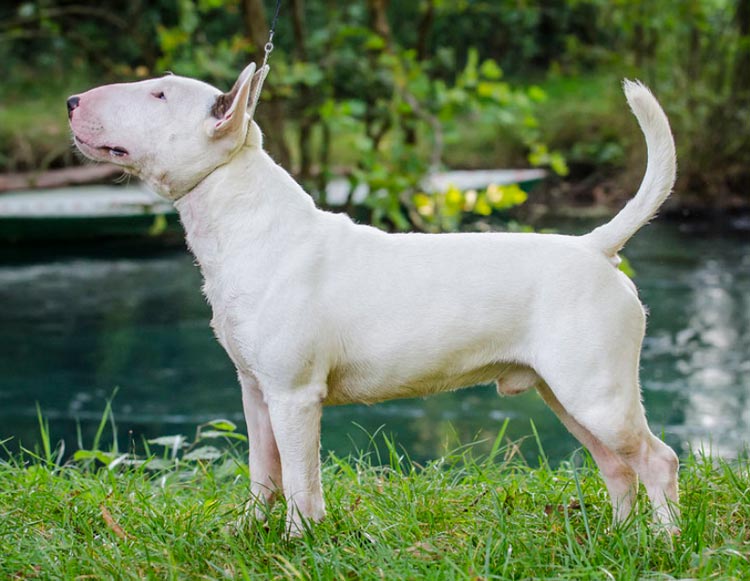
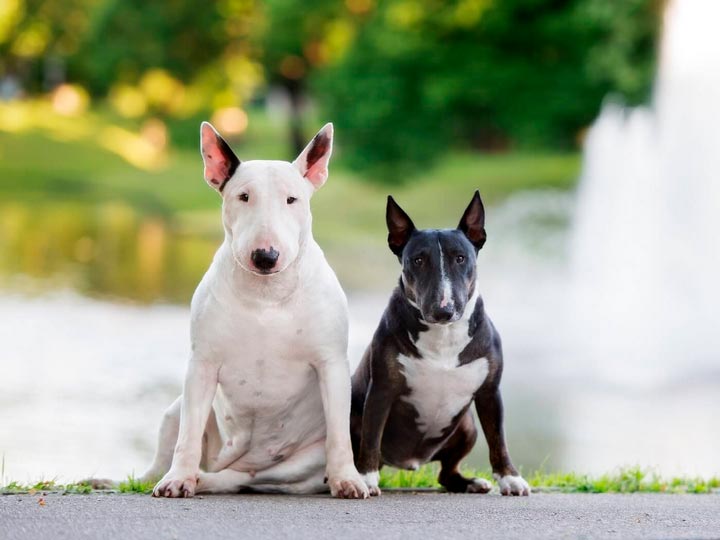
The Miniature Bull Terrier is a small, muscular, strongly built, and balanced dog with a unique head shape. Sexual dimorphism is pronounced. It is important for males to appear masculine and females feminine. The height at the withers should not exceed 35.5 cm. The standard doesn't specify a weight. The dog's primary concern is its proportional appearance.
Despite its small stature, the Mini is a true athlete, strong, quite heavy, stocky, and firmly standing on its paws.
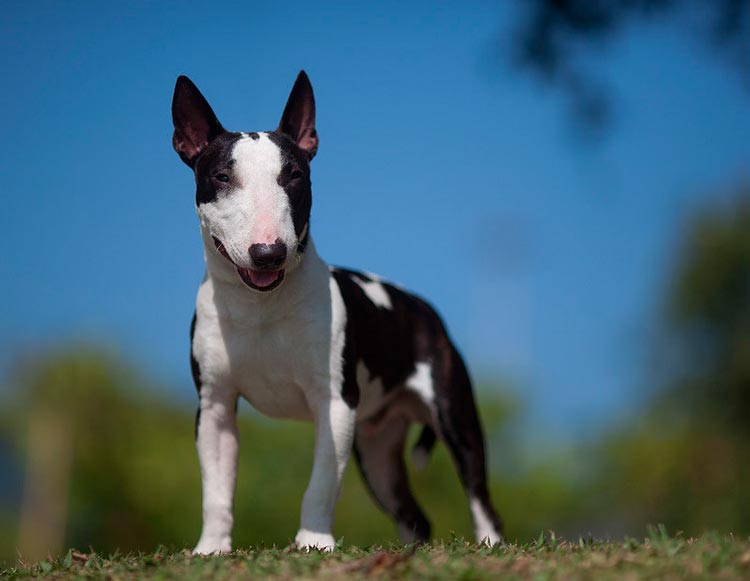
The head is long, ovoid, and well filled out under the eyes. The top of the skull is almost flat. The bridge of the nose is downturned and curved downward. The bite is scissor-like. The eyes are small, deep-set, triangular, and as dark as possible in color. The ears are thin, triangular, and set upright. The neck is muscular, long, arched, and tapers toward the head.
The body is strong. The belly is slightly tucked up. The back is short and strong. The loin is broad. The chest is broad. The tail tapers to a point, is short, and is carried horizontally. In adult dogs, the length of the forelegs is approximately equal to the depth of the chest. The paws are rounded, compact, with well-arched toes. The hind legs have muscular thighs and are well angulated.
The skin is tight-fitting. The coat is straight, short, and shiny, with a harsh feel. In winter, a soft undercoat grows. Colors:
- solid white;
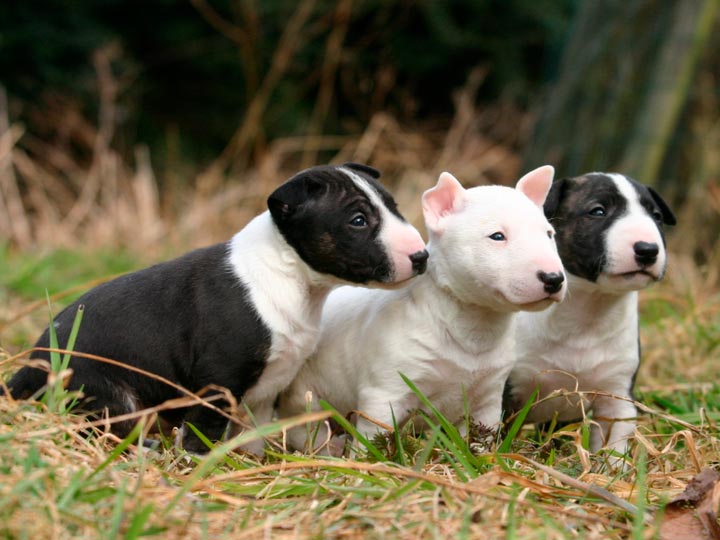
- completely white with spots on the head;
- solid color of any color (blue and liver are highly undesirable);
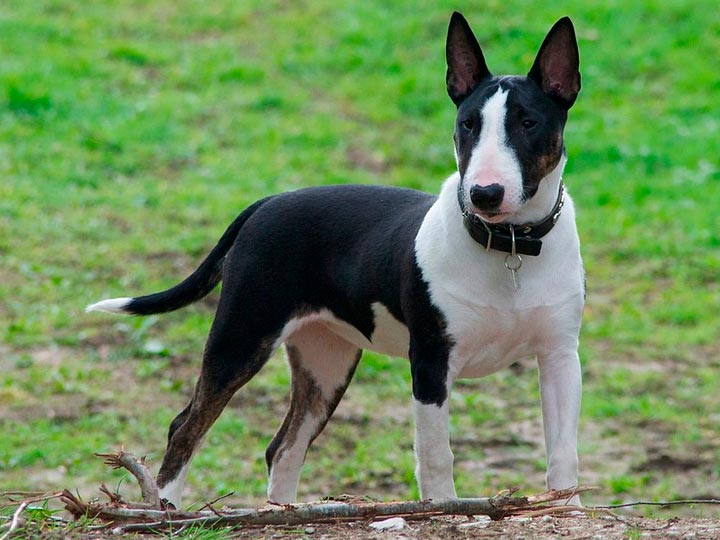
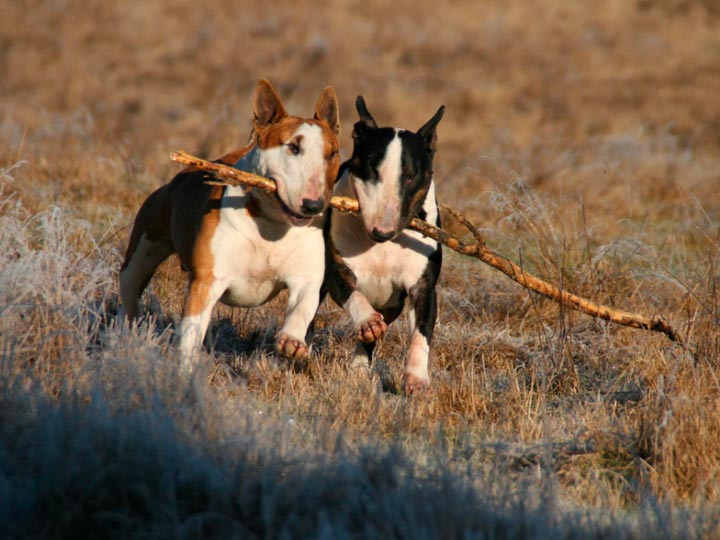
- two-colored (usually white with spots of any color and location);
- tricolor;
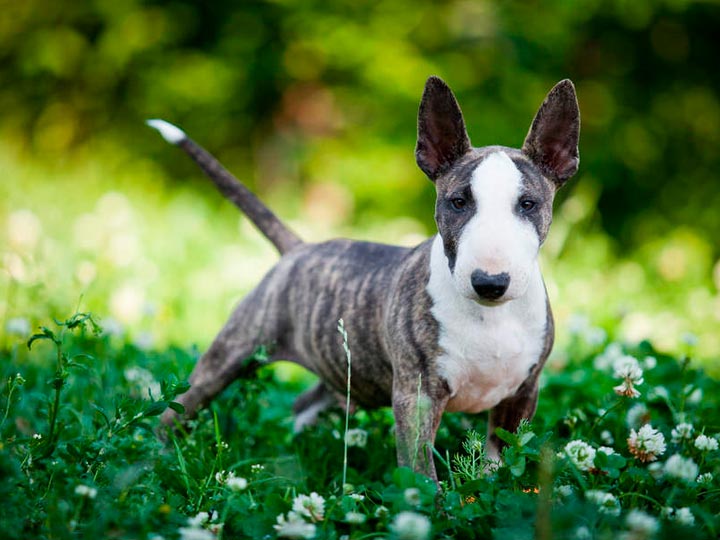
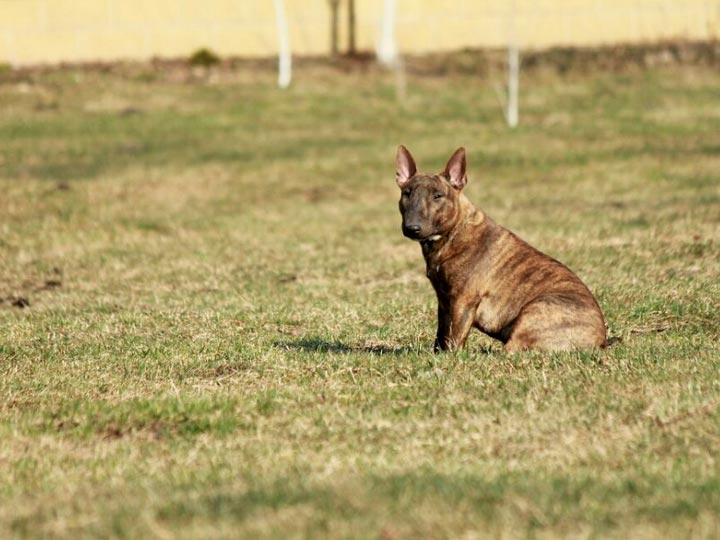
- brindle.
The Miniature Bull Terrier breed standard No. 353 is identical to the Bull Terrier standard No. 11 in everything except the height requirement.
Character and behavior
Owners say there's never a dull moment with a Miniature Bull Terrier. This independent and intelligent dog is always full of energy, enthusiasm, and positivity. By nature, the Miniature Bull Terrier is incredibly affectionate, affectionate, and curious, constantly striving to explore, dig, and retrieve. Very sociable, it genuinely craves companionship and can sometimes even be a bit annoying when asking to be held.
The Miniature Bull Terrier is a very multifaceted personality, combining enormous willpower, courage, a bright temperament and a sharp mind.
At the same time, the Miniature Bull Terrier is a very self-sufficient and strong individual with a strong opinion, self-confidence, and self-assurance. It has a tendency to chase any moving object. Without proper training, it can perceive smaller animals as potential prey, and this applies not only to lizards and rodents, but also to cats and miniature dogs. A well-socialized Bull Terrier will enjoy walks with other dogs, but often prefers a human with a ball. It can also be aggressive toward negatively disposed dogs. It gets along well with animals it has been raised with in the same household. Conflicts may arise between males.
A Miniature Bull Terrier should not be acquired by those who are unsure of the correct choice, do not have sufficient time and funds, are getting a dog for the first time, or are not prepared for the long process of education and training.
The Miniature Bull Terrier is highly territorial and can be a bold protector, but this should not be encouraged. Furthermore, this is a very loving dog that becomes very attached to its owner and other family members and can sometimes be jealous. It gets along well with children if it is introduced to them from an early age. It makes a tireless playmate for older children, but should not be considered as a babysitter or a child's dog.
Education and training
The Miniature Bull Terrier is a highly intelligent, energetic, and stubborn dog, yet highly trainable. It can achieve remarkable success in obedience training if motivated to perform tasks. It requires competent, consistent training and a dominant owner. Training begins very early, with a strong focus on socialization.
Minibulls' stubbornness often complicates interactions between owner and dog, although it is crucial to achieve unquestioning obedience without the use of physical force.
The trainability of miniature bull terriers is evidenced by the fact that they can be seen competing in various disciplines: obedience, agility, tracking. Without proper training or improper upbringing, a Mini Bulldog can grow up willful, disobedient, or even dangerous.
Content Features
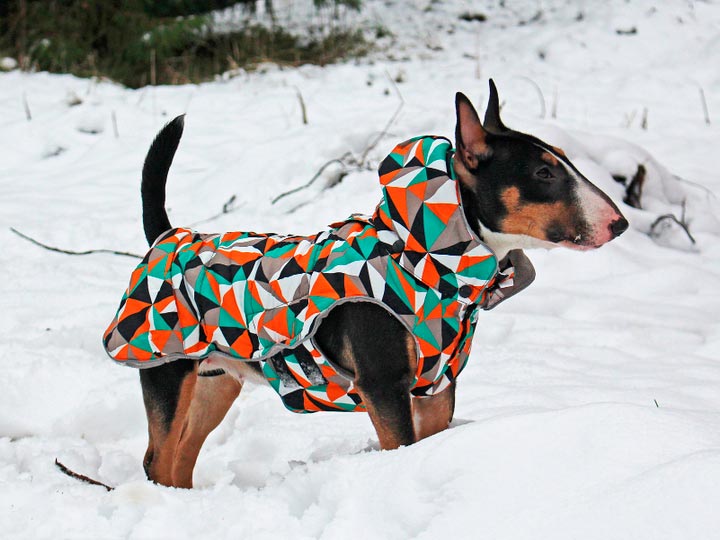
A Miniature Bull Terrier is happiest as a family member; it's not suited for outdoor living, much less year-round outdoor living. In cold weather, it requires clothing appropriate to the weather. White Miniature Bull Terriers are prone to sunburn in the summer.
Miniature Bull Terriers sometimes suffer from allergies and are almost always prone to obesity, so their diet must be strictly controlled.
A Miniature Bullterrier can live even in a small apartment, but this doesn't mean it will lie quietly all day; it will expect its owner to take it for a short walk, maybe 5-10 kilometers. A Miniature Bullterrier is very energetic and resilient. Left unattended for long periods, it will start to destroy things and get into various troubles. Living alone will kill its intellect and zest for life, and will irreversibly damage its character.
Care
The Miniature Bull Terrier doesn't require extensive grooming. Shedding is moderate. Occasionally, the coat should be brushed with a special mitt or a brush for short-haired dogs to remove excess hair. Bathing is usually required every three months. It's best to inspect the ears once a week and clean them as needed. Weekly teeth brushing is also recommended. Nail trimming is necessary if they don't wear down naturally during walks.
Health and life expectancy
Miniature Bull Terriers are generally healthy dogs. Life expectancy is 11-13 years. However, there are a number of diseases that current and potential owners should be aware of:
- ophthalmological (primary lens dislocation, cataract);
- heart problems (heart valve defects, atrial fibrillation);
- kidney problems (polycystic kidney disease, hereditary nephritis);
- congenital and acquired deafness;
- dislocation of the patella.
Choosing a Miniature Bull Terrier Puppy
The advice for choosing a Miniature Bull Terrier puppy is the same as for any other breed. There are plenty of breeders available, so you can find a dog of your desired gender and color relatively close to home. A good breeder always carefully selects pairs based on temperament, appearance, and health, and ensures their dogs are kept clean and properly fed. They also prioritize training and socialization from an early age.
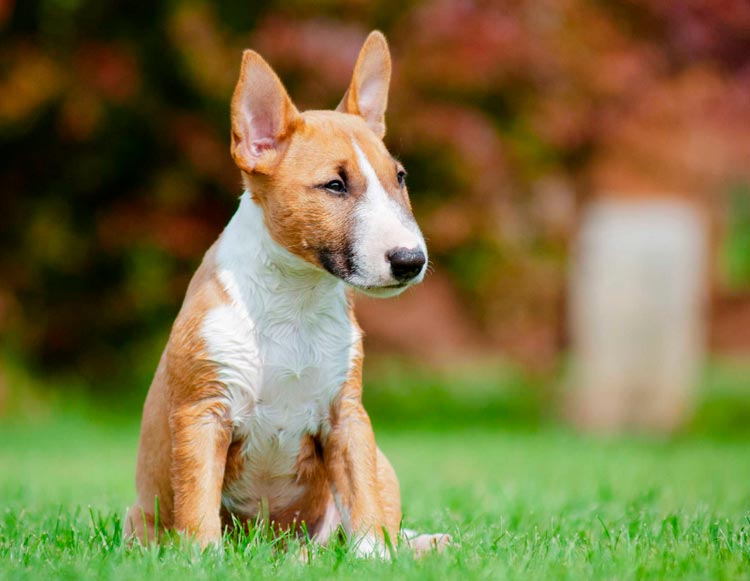
Before purchasing a puppy, especially a white one, it should be tested for deafness.When choosing a puppy, pay attention to its compliance with the standard and its health. As for temperament, it's best to trust the breeder, who has known the puppies since birth and can advise which one is best suited for a particular family.
It's worth keeping in mind that miniature bull terriers sometimes outgrow the standard's permitted size limit, and given their build and weight, you might end up with a very hefty dog, not a miniature one.
Taking the smallest puppy from the litter in the hopes that it will grow up small is pointless. Dogs develop unevenly, and the smallest ones can soon outgrow their littermates.
Price
The price of a Miniature Bull Terrier varies widely, from 20,000 to 100,000 rubles. Promising puppies from kennels with titled parents are more expensive. Miniatures without papers usually sell for no more than 25,000 rubles.
Photos and videos
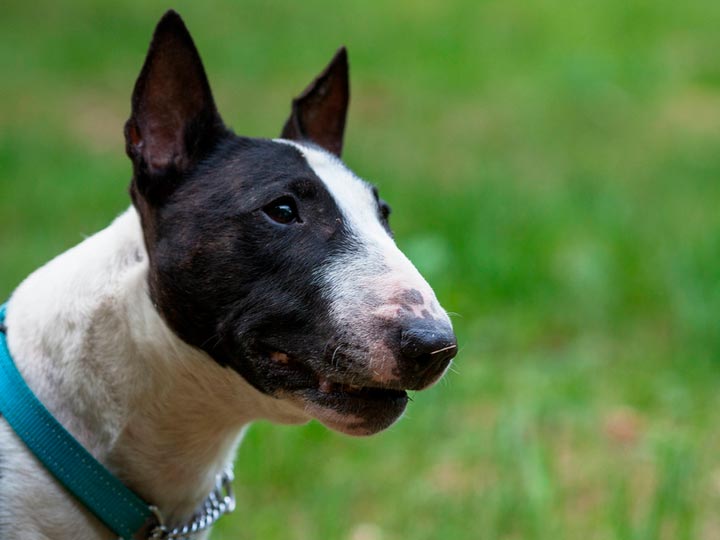
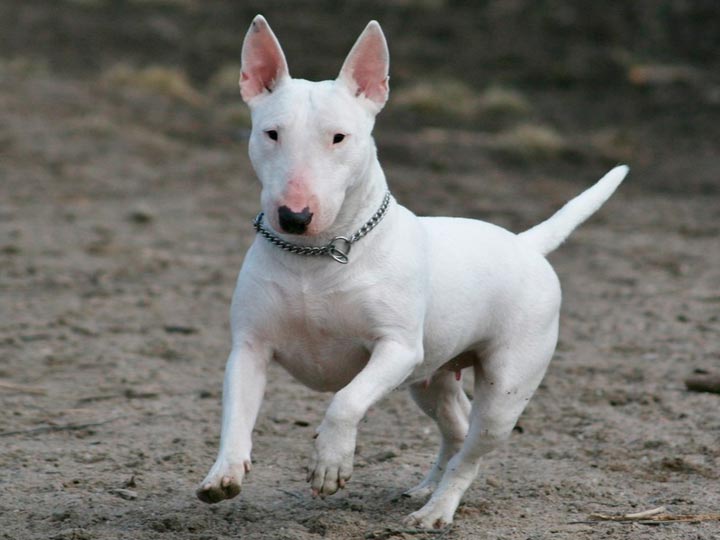
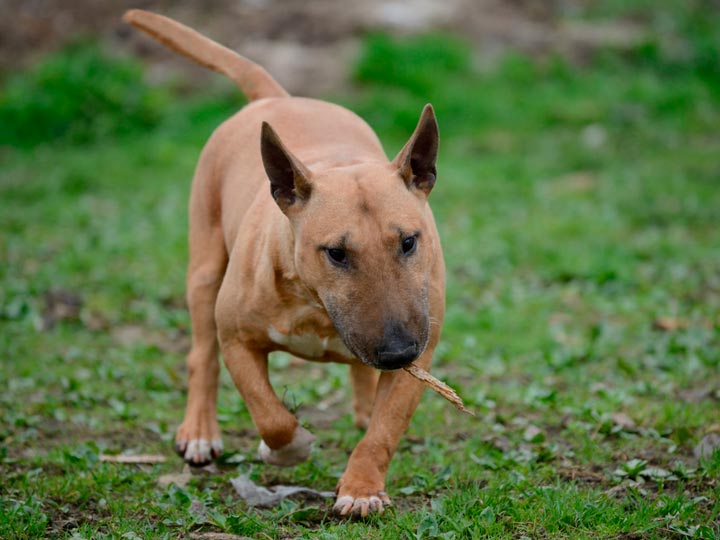
This gallery features photos of Miniature Bull Terriers. The images feature dogs of different genders, ages, and colors.
Video about the Miniature Bull Terrier dog breed
Read also:


Add a comment