
Microsporia in dogs: symptoms and treatment
Dermatological diseases caused by pathogenic lower fungi are considered among the most unpleasant. They affect many animal species and humans, and treatment requires long-term and highly specific therapy, which can sometimes lead to relapses. Dermatomycosis Characterized by inflammatory processes in the skin and damage to the hair root cells, resulting in alopecia areata (hair loss in patches). These conditions include trichophytosis, microsporia, and mange. In dogs, trichophytosis is the most common, and it most often affects young animals.
Pathogen and routes of infection
Microsporia is caused by fungi of the genus Microsporum. In dogs and cats, the most common culprits are believed to be the species Microsporum Gypseum and Microsporum Canis. Dermatophytes affect the animal's skin, hair follicles, and nails.
Fungal spores are quite resistant to environmental influences: they can remain viable in infected hair for up to 2 years, and in soil for 2 months. However, alkaline solutions, acids, antiseptics, or bactericidal quartz lamps kill them within 15-30 minutes, and temperatures above 100°C kill them within 5 minutes.
Microsporia infection occurs through direct contact with an infected animal, as well as through contact with objects contaminated with skin flakes or fur from an infected animal. The incubation period ranges from a week to 1.5 months. After recovery, the dog develops immunity to microsporia, which lasts for approximately two years.
Symptoms
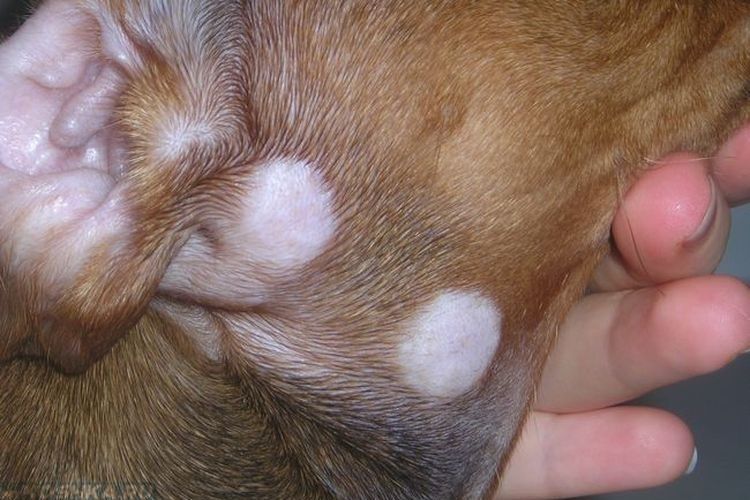
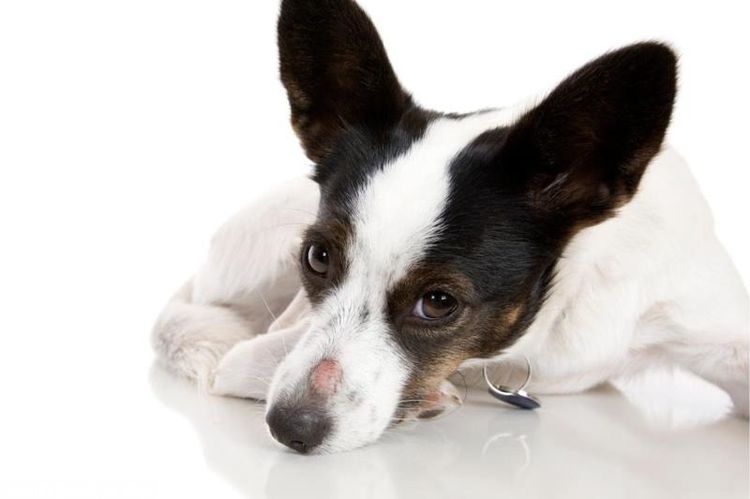
The disease begins with redness and flaking of individual patches of skin, usually on the neck, face, base of the tail, and between the toes. The fur in these areas then becomes brittle and partially falls out. This looks like a cigarette burn or a "bald head," hence the other name for microsporia. ringwormHairless, rounded areas several centimeters in diameter are clearly defined and covered with dry scales—this is clearly visible in the photo.
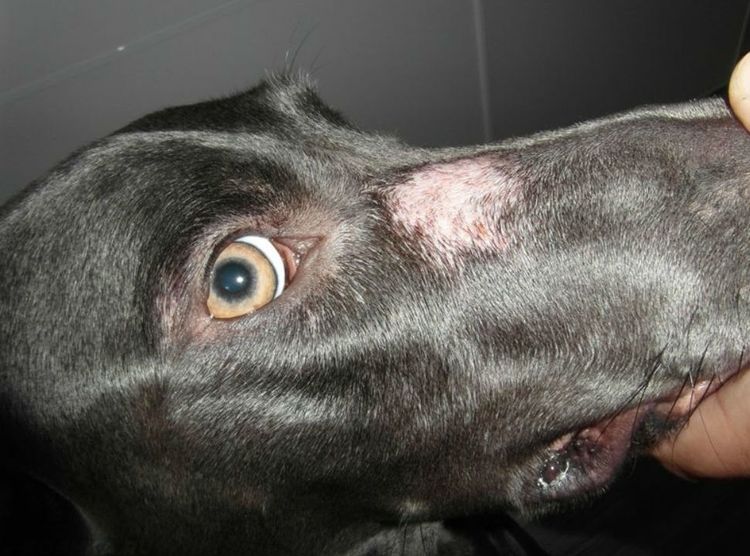
Itching isn't always present with microsporia in dogs, but if the animal scratches the affected areas, pathogenic microorganisms can penetrate the damaged skin, causing secondary infections, including abscesses. With a strong immune system, the dog's body can fight the infection on its own, and spontaneous recovery is possible. However, even with adequate treatment, hairless patches may persist for a long time.
Diagnostics
Despite the very typical clinical signs of microsporia detected during the initial examination of the dog, a diagnosis is made after a series of tests. This will allow the pathology to be differentiated from allergic dermatitis. scabies, hypovitaminosis A, and especially from trichophytosis and scab, which produce similar symptoms but are caused by other types of fungi.
To determine the nature of the disease, a veterinary laboratory performs a microscopic examination of hair and skin scrapings taken from the affected area. The fungal species is determined by culturing the sample in a nutrient medium, identifying the pathogen and its species. A Wood's lamp fluorescence test is considered an effective method for diagnosing microsporia. This method eliminates the need to take scrapings: the dog is placed in a dark room and exposed to a thin beam of UV light, which causes the spores of the Microsporum fungus to glow green.
Treatment
Regardless of whether the disease is localized or generalized, treatment for microsporia is based on killing the pathogen with topical fungicidal agents. These can include ointments, gels, sprays, and aqueous and alcohol solutions. Before applying the medication to the affected dog's skin, the treatment area should be trimmed, including a 1-2 cm section of healthy skin.
Important! Any clippings, bedding, collars, and other items that may contain fungal spores must be burned. Handling a sick pet should only be done while wearing disposable protective gloves. Failure to follow these guidelines may result in the entire family having to undergo treatment for fungal spores.
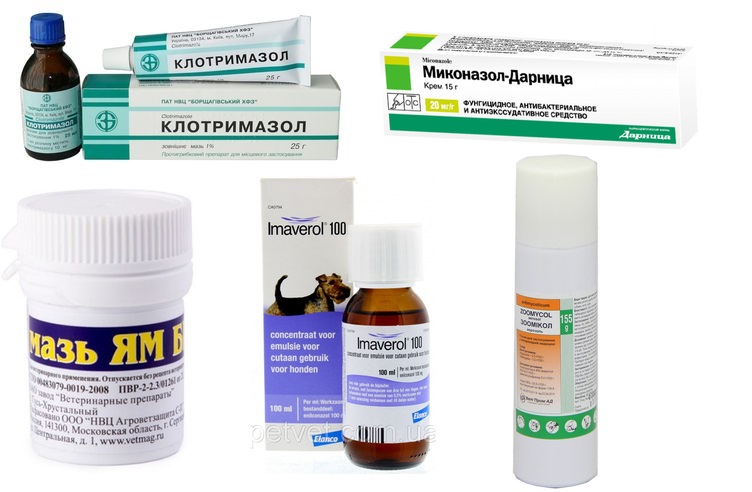
The most commonly used medications for the treatment of microsporia in dogs are:
- 10% salicylic acid solution or salicylic ointment. These preparations have a fungicidal and keratolytic effect (promoting softening and removal of the epidermal layer damaged by fungus). Apply once daily.
- A 10% salicylic acid solution in a 5% iodine alcohol solution. Can be used 2-3 times daily.
- Clotrimazole (solution or ointment). A medication based on the active ingredient of the same name, applied to the affected areas of skin 2-3 times daily.
- Miconazole. A cream containing the fungicide miconazole nitrate. Apply 1-2 times daily.
- Mycozolone ointment. Provides antifungal, anti-inflammatory, and anti-allergic effects. The active ingredients are mazipredone and miconazole. Apply 1-2 times daily.
- Yam Ointment. Sulfur and zinc oxide, which are included in the ointment, have fungicidal, antiseptic, and keratolytic effects. Apply the ointment 1-2 times daily.
- Juglon ointment or liniment. A potent fungicidal preparation based on the extract of the Juglandis nigrae nut fruit. Apply to the skin affected by microsporia once every two days.
- Imaverol. A veterinary drug containing the fungicide enilconazole as its active ingredient. Available as an emulsion or shampoo.
- Fundiderm Aerosol. A combination medication with antifungal and anti-inflammatory action, the active ingredients are clotrimazole, beclomethasone dipropionate, and gentamicin. This product can be used 2-3 times daily.
- Zoomikol Spray. A combination product containing nitroxoline and thiabendazole as active ingredients. It has fungicidal, antimicrobial, and antiparasitic effects and is used every few days to treat skin infections of microsporia.
Important! Many topical medications contain toxic substances. Therefore, precautions should be taken to prevent the dog from licking them off the skin. Special collars and muzzles are available for this purpose.
In severe cases of the disease and large areas of skin lesions, a veterinarian may prescribe oral medications such as griseofulvin (an antibiotic active against Microsporum) or ketoconazole (a broad-spectrum antifungal agent). The duration of treatment and dosage will be determined by the veterinarian. Multivitamins (Multi Vit-Adult, Tetravit, Trivitamin) may be prescribed as supportive therapy.
Prevention
A sick animal should be isolated until fully recovered. The room where it is kept should be regularly treated with disinfectants (formaldehyde or sodium hydroxide are recommended). The disinfectants should then be rinsed off with water. A quartz lamp can also be used for disinfection.
Preventive measures for microsporia in dogs include:
- Compliance with hygiene rules.
- Prevent contact with sick animals.
- Maintaining strong immunity and good health.
Vaccination is a reliable way to protect dogs from fungal diseases. The best vaccines against microsporia are considered to be Vakderm, Mikolam, Microderm, Polivak TM.
Read also:


Add a comment