
Herniated Discs in Dogs: Symptoms, Treatment, and Recovery
A herniated disc is considered a serious musculoskeletal disorder in dogs, and is the most common cause of hind limb paralysis. According to statistics, this condition is most often diagnosed in small-breed dogs, primarily those over 3 years of age. Chondrodystrophoid breeds are genetically predisposed to the condition: beagles, corgi, Pekingese, spaniels, dachshunds, and Shih Tzu. In large breed dogs, herniated discs are less common and progress more slowly.
Content
Mechanism of development
The vertebral column, the load-bearing element of the skeleton, consists of small tubular bones connected by disc-shaped cartilaginous layers. The intervertebral discs act as shock absorbers and prevent displacement of the vertebrae. The discs consist of a nucleus pulposus and a dense annulus fibrosus.
When the nutritional status of an intervertebral disc is impaired, it loses elasticity, its nucleus shifts, and a bulge (herniation) develops between the vertebrae. This herniation compresses the adjacent nerve roots, causing the dog to develop various neurological disorders, including pain and motor impairment, including paralysis of the limbs.
Symptoms and stages of development
The first sign of a herniated disc in a dog may be pain in the back or neck. While the animal may not "complain" of the pain, it can be detected by its behavior: your pet may become lethargic, uncommunicative, avoid touching the sore spot, be unable to lie down comfortably for long periods of time, whine, and constantly shift positions.
Other symptoms of a herniated disc depend on the region of the spine where it's located. If it's in the lumbar spine, the dog may lame in the hind legs, and walk slowly and cautiously. In severe cases, disruption of nerve impulse transmission can lead to urinary and fecal incontinence. If the disc is in the cervical or thoracic spine, the dog may limp on all fours, hunch its back, avoid turning its neck, and constantly hold its head down. Severe pain can cause the dog to refuse food.
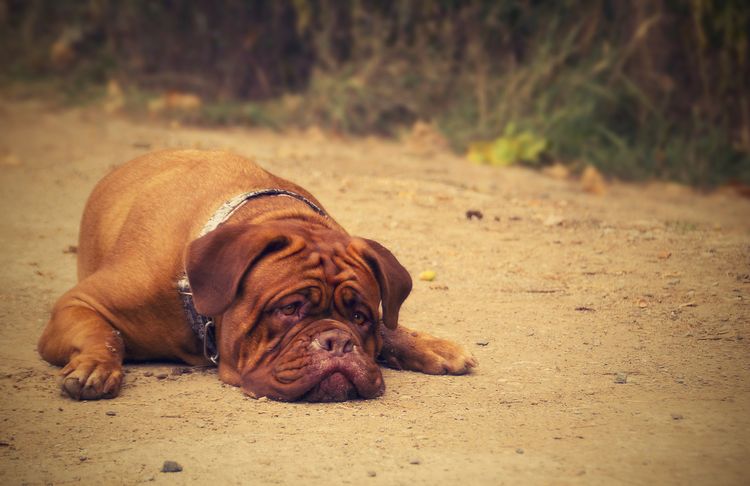
Clinical manifestations also depend on the severity of neurological impairment. There are several stages of intervertebral disc herniation:
- Stage 1: Stiffness in movement and an unsteady, wobbly gait are noted. Moderate pain is present.
- Stage 2: proprioceptive disturbances appear (loss of sensitivity), paraparesis may develop (increased muscle tone and tendon reflexes).
- Stage 3: paraparesis is clearly evident and the ability to move is partially lost.
- Stage 4: The dog develops paralysis (complete lack of voluntary movement), but pain sensitivity remains.
- Stage 5: maximum proprioceptive impairment (complete loss of sensitivity in the paralyzed parts of the body).
Attention! If you notice your dog has become less active, has difficulty going up and down stairs, or has a stiff or unsteady gait, make an appointment with your veterinarian. If your pet suddenly loses the use of their legs, a visit to the vet is essential. A paralyzed animal should be transported to the clinic on a flat, hard surface, such as a wide board or a sheet of plywood.
Diagnostics
A diagnosis of a herniated disc in a dog is made based on a medical history, neurological examination, and imaging studies. The medical history includes information about previous illnesses or injuries, any symptoms observed, their duration, rate of progression, and intensity. During the examination, the doctor determines the approximate location of the herniation and the extent of neurological impairment.
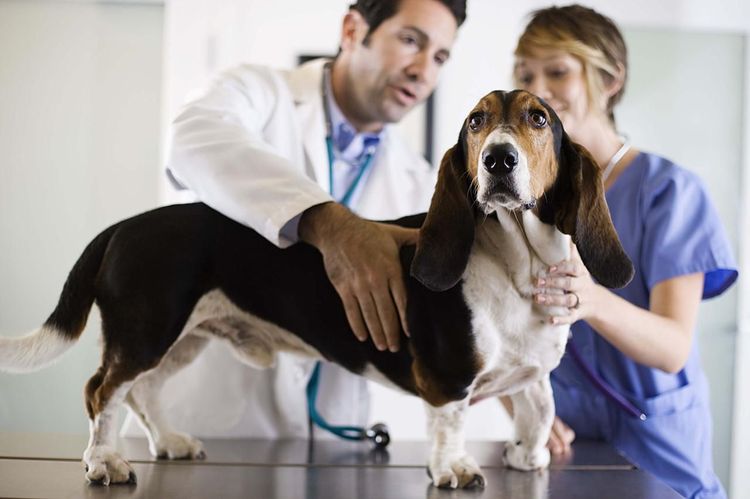
Hardware-based diagnostic methods can determine the precise location of the intervertebral disc herniation, its size, the presence of disc protrusion or extrusion, the condition of the spinal cord's cerebrospinal fluid pathways, and detect osteophyte growths. These include:
- radiography;
- magnetic resonance imaging;
- myelography with the introduction of a radiopaque substance into the subarachnoid space of the spinal cord (the cavity between the arachnoid and pia mater).
Treatment
Non-surgical treatment for herniated discs in dogs is only effective in the early stages of stages 1 and 2. The animal is prescribed medications that relieve pain, reduce inflammation, and reduce swelling of the tissues around the spinal cord. The following medications are commonly used:
- painkillers (Drotaverine, Amantadine, Gapabentin);
- nonsteroidal anti-inflammatory drugs (Ketorolac, Dexamethasone, Carprofen);
- a remedy for the restoration of intervertebral cartilage tissue "Volmar Vitamin" (Wolmar Pro Bio L-Collagen).
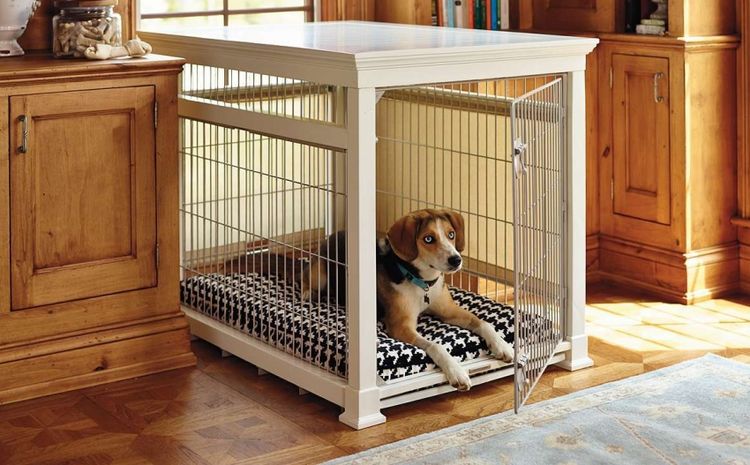
During the period of drug therapy (usually about one and a half months), the animal is restricted in movement and kept in a small room or small home enclosure.
Stages 3, 4, and 5 herniated discs require surgical treatment, as restoring normal blood flow to the spinal cord without removing the deformed disc at these stages of the disease is impossible. Discectomy surgery is performed under general anesthesia and, depending on the severity of the disorder, can last from 1 to 3 hours.
Forecast
The prognosis for treating herniated discs in dogs depends on the type of herniation and its stage. Dogs diagnosed with stage 1 or 2 cervical disc herniation have the best chance of a full recovery. Regarding recurrence, while a herniation in the operated vertebra is unlikely, destructive changes to other spinal discs are quite possible.
A dog's recovery from a herniated disc surgery takes at least several weeks. The animal is treated in the clinic's inpatient department for 5-7 days: its condition is monitored, the incision is cared for, and a course of antibiotics is administered. Afterward, the sutures are removed and the animal is discharged.
Further postoperative rehabilitation is aimed at restoring motor function. This includes specific physical exercises, swimming, massage, and short, leisurely walks. To reduce strain on the dog's back and neck, it is recommended to take it on a harness for walks. To make it easier for your recovering pet to climb onto a sofa or chair, you can install special steps or an inclined board.
Read also:
- Ligament rupture in dogs: symptoms and treatment
- Dislocation or sprain of the paws in dogs: symptoms and treatment
- Discopathy in Dogs: Symptoms and Treatment


Add a comment