
Interdigital Dermatitis in Dogs: Causes and Treatment
Dermatitis is a skin condition characterized by inflammation and, in some cases, rashes. One type of this condition, interdigital dermatitis, affects the folds between the toes, nail beds, and sometimes even the paw pads of dogs. Statistically, the following dog breeds are most susceptible to the condition: Shar Pei, shepherds, labradors, bulldogs, bull terriers, Pekingese.
Types and causes of development
Interdigital dermatitis in dogs can be caused by a variety of external or internal factors. Therefore, the condition is usually divided into several distinct types:
- Traumatic. Dermatitis is caused by mechanical damage to the skin (bruises, scratches, wounds, exposure to irritants).
- Allergic. Occurs as a result of exposure to an external or internal (including food) allergen.
- Bacterial. The inflammatory process in this case is most often caused by Staphylococcus intermedius or the yeast-like fungus Candida.
- Parasitic. This type of disease can be caused by the subcutaneous mites Sarcoptes canis and Demodex canis, as well as the intestinal nematodes Uncinaria stenocephala and Ancylostoma caninum.
- Psychogenic. This type of dermatitis is diagnosed in animals with sensitive nervous systems: some dogs have a very difficult time coping with travel, new environments, and separation from their owner.
- Secondary. In this case, interdigital dermatitis develops against the background of other diseases that have weakened the immune system—autoimmune, inflammatory, infectious, vascular, and tumor-related.
Symptoms
Typical clinical signs of interdigital dermatitis include:
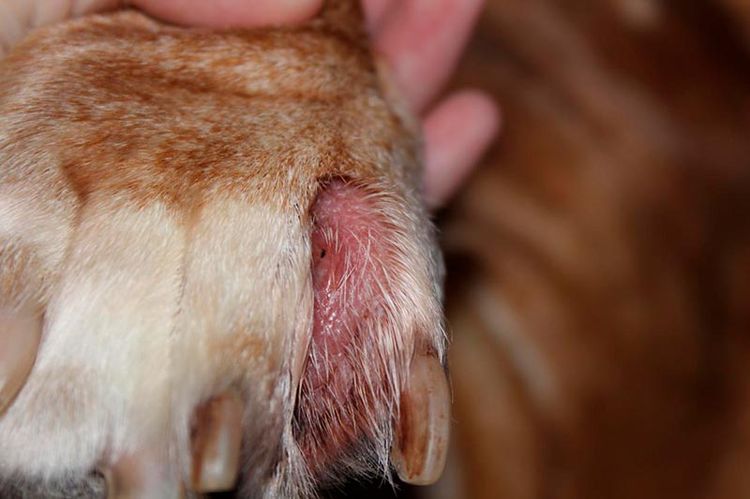
- Inflammation and redness of the skin between the toes and on the pads of the paws, as seen in the photo below;
- Swelling of the fingers or lower limb;
- Formation of blisters, ulcers or pustules at the affected areas, accompanied by redness;
- Pain upon palpation, limping.
- The dog becomes restless and often licks its paw pads due to severe itching.
Diagnostics
A veterinarian makes a preliminary diagnosis of interdigital dermatitis in dogs after examining the animal. However, determining the cause of its development is essential to choosing a treatment method. Therefore, the veterinarian carefully reviews the animal's medical history (diet, presence of concomitant diseases, heredity, etc.). Then, a series of laboratory tests are prescribed: blood, feces, urine, swabs, scrapings, or aspirates taken from the affected area. This allows us to identify possible pathogens (infectious agents, fungi, or subcutaneous parasites).
To clarify the diagnosis, it may also be necessary to conduct hardware studies (tomography, radiography) or consult specialists in related professions - an orthopedist, oncologist, or allergist.
Important! To ensure a thorough diagnosis, do not treat your dog's paws with anything for 2-3 days before your veterinarian appointment. Otherwise, the conclusions drawn from the examination may be inaccurate.
Treatment
Each type of interdigital dermatitis requires a different approach to treatment.
- For traumatic dermatitis, the main goal is to accelerate the healing process of damaged skin. For this purpose, zinc ointment, Chemi spray, Cubatol spray, or Baldecchi wound-healing zinc powder can be used. The animal's affected paws should be protected from water.
- If stress is the cause of the disease, the signs of dermatitis usually disappear on their own after the dog has been treated with sedatives such as Vet Expert Calm Vet, Antistress Bifar, NoviPet, and Sanal.
- Pododermatitis, caused by subcutaneous mites, is treated with antiparasitic drugs. In veterinary medicine, Ivermectin or IvermectinThese medications are toxic, so they are not prescribed to pregnant or lactating dogs. If these medications are used externally, care must be taken to prevent the dog from licking the medication off its paw.
- The allergic form of the disease is the most difficult to treat. It's crucial to completely eliminate the animal's exposure to the allergen. If the allergen is food, the dog must be placed on a hypoallergenic diet for 2-3 months. Chlorhexidine, Cubatol, or tar shampoo are used for symptomatic treatment.

- Bacterial dermatitis (pyoderma) develops when damage occurs as a result of a secondary infection. Treatment requires long-term antibiotic therapy, sometimes several at a time. Veterinarians typically prescribe medications containing the active ingredient enrofloxacin, such as Baytril, Enroxil, Enroflon, and Enroflox. To promote healing and relieve itching, they prescribe products with drying, antiseptic, and anti-inflammatory properties, such as Baldecchi zinc powder, Canina wound-healing balm, or alum solution.
Important! During treatment, ensure conditions allow the affected skin to heal unimpeded. The skin surface should always be clean and dry. It is also important to prevent the dog from licking its inflamed paws. A special protective collar is recommended for this purpose.
Preventive measures
To prevent the development of interdigital dermatitis, it is recommended to provide your dog with a high-quality, nutritious diet, ensure a comfortable mental state, and ensure regular moderate exercise. After each walk, be sure to thoroughly wash and dry their paws, and treat any minor skin lesions with antiseptic. Owners should ensure that their pet does not have access to harsh chemicals used at home.

To prevent infectious and parasitic diseases that can cause dermatitis, the best means are regular vaccinations and treatment with insecticidal and anthelmintic drugs.
Read also:
- Flea Dermatitis in Dogs: Symptoms and Treatment
- Pink lichen in dogs: causes and treatment
- Rolf Club 3D for dogs





Add a comment