
Small dog breeds
We've compiled a list of the top small dog breeds, with photos and names, of the most popular in our country. It's well known that some dog lovers get dogs to protect themselves and their homes from intruders, choosing serious service dogs. Others are avid hunters and prefer hunting breeds. Still others prefer small breeds that don't require three walks a day, despite snow and mud outside.
Pocket-sized dogs are incredibly popular among city dwellers, thanks to the wide selection available today, which allows for a companion to suit every taste. This article provides a list of the most popular small dog breeds with photos, names, and links to detailed reviews of each breed, if you're interested in all the details. small dog breeds, then we recommend visiting the relevant section on our website.
Content
Chihuahua
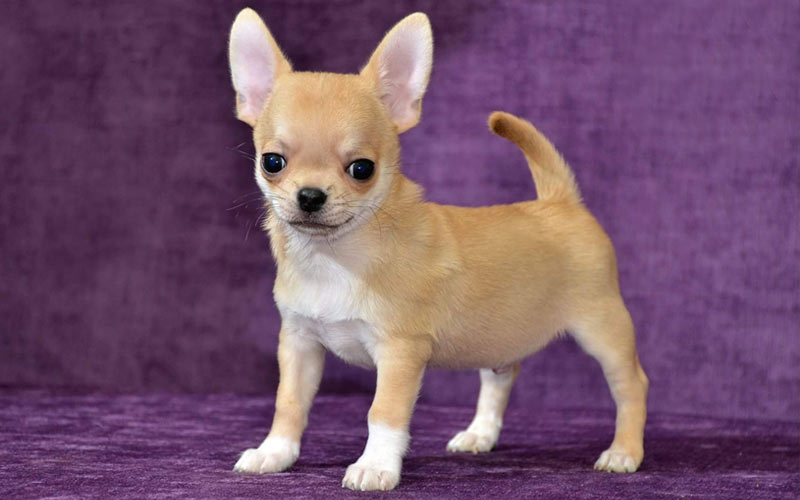
Considered the smallest dog, weighing up to 2.7 kg (6.7 lbs), a Chihuahua puppy can fit into a wine glass. The Chihuahua originates from South America, from where it was brought to the United States via Mexico in 1898, and later conquered Europe. There are two varieties of the breed: smooth-haired and long-haired.
Judging by the picture below, you can tell that this dog has a small, graceful head, large, round, wide-set eyes, elegant paws, and a high-set tail, usually carried high over the back—these are the main characteristics of the breed. Despite its modest size, the Chihuahua won't be intimidated by even a larger dog; however, it will feel more comfortable in the company of other dogs of its own breed.
Yorkshire Terrier
The breed was developed on the basis of Maltese, Skye Terrier and Manchester Terrier in the late 19th century in Yorkshire (hence the interesting name).
Yorkies are considered a miniature breed. They stand no more than 18-20 cm tall and weigh between 3-6 kg. As with other breeds, there are significantly larger specimens (not standard), so it's best to only buy a miniature puppy for show from a reputable breeder.
The breed is prized for its cheerful, sociable nature, excellent communication with children and other pets, and its unique coat, which is similar in texture to human hair. Due to the lack of an undercoat, Yorkies shed virtually nothing, minimizing the risk of allergies. For this same reason, in cold weather, clothing for these dogs is not a fashion statement, but a necessity. Yorkies often receive stylish haircuts. With proper care, the coat of show dogs can grow very long (to the floor). However, be prepared for this breed to only display its luxurious appearance on show days. The rest of the time, the extra-long coat is wound with soft curlers to ensure comfort and prevent tangling.
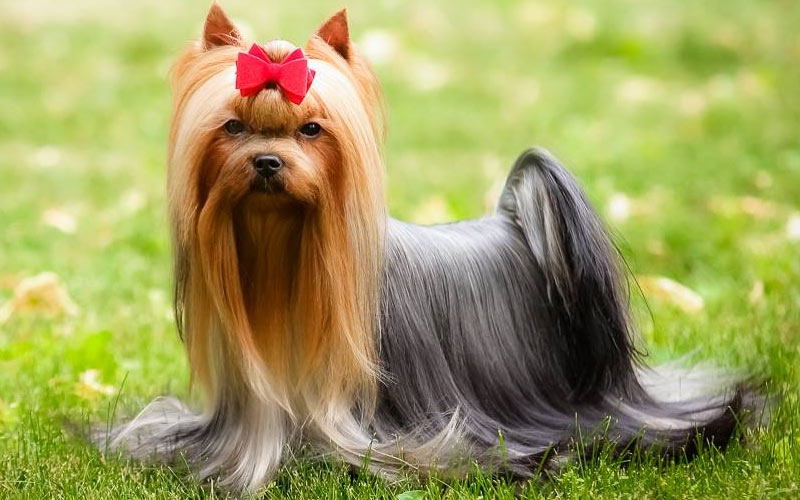
Yorkies come in standard and exotic colors. However, it's difficult for an inexperienced person to predict what a puppy will look like, as the coat color changes dramatically during the first months of life.
Toy poodle
Unlike its rather large brother, toy poodle It is miniature in size, standing approximately 23-25 cm at the withers and weighing up to 5 kg.
The breed is relatively new, as miniature poodles were developed in the 20th century, but today they are as popular as Yorkies or Pomeranians. Poodles have voluminous, soft, and long coats, so getting one requires regular grooming visits. However, with a striking haircut, miniature poodles are simply stunning!
Breeders note the following advantages of the breed:
- excellent learning ability;
- cheerful disposition and friendliness;
- the absence of a strong odor in the wool.
- a wide variety of colors.
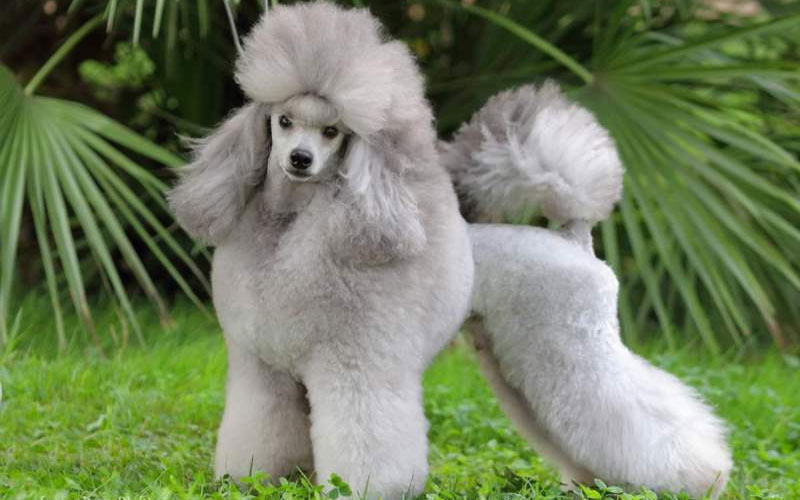
The standard specifies the following shades of wool: white, black, apricot, silver (ash), red (rich fiery red).
Chinese Crested
Representatives of this breed amaze not only with their extravagant name, but also with their very unusual appearance. Crested dogs have a striking and majestic appearance. Most of their bodies are hairless, while their scruff, paws, and tail are covered with long, silky hair. However, this most common description applies only to one, the most exotic variety, although in fact there are three:
- bald (the dog's body is completely hairless, or with very sparse hair in the head and tail area);
- pony (the most common description, given above);
- Powderpuff (long-haired, whose body is completely covered with sparse, long, silky fur).
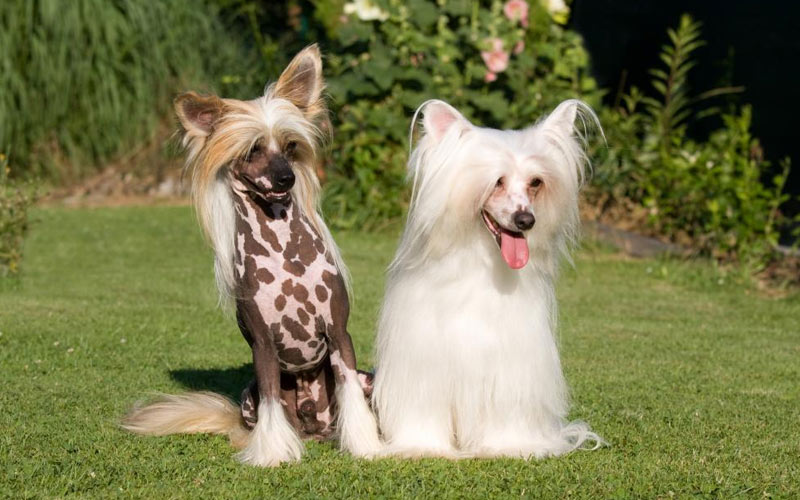
The color of these babies can be almost anything, which gives each representative of the breed a bright individuality.
Crested cats are excellent companions, adapting easily to their owner's lifestyle. However, hairless varieties require particularly careful grooming, especially during the colder months.
Bichon Frise
Snow-white soft curly fur is the hallmark of a purebred Bichon Frise, or French lapdog, as this breed is commonly called. An adult dog stands 15 to 30 cm at the withers and weighs up to 6 kg. This breed is suitable for those who like playful, cheerful dogs that are great with children.
The main advantage of this breed is its hypoallergenic coat, which has no undercoat, so asthmatics and allergy sufferers can safely get a Bichon Frise without fear of health problems.
The only problem that can arise with a Bichon is also related to its coat: without an undercoat, the fur can become matted, tangled, and tangled, so regular brushing is essential. If not, the matted fur will need to be clipped or professionally groomed.
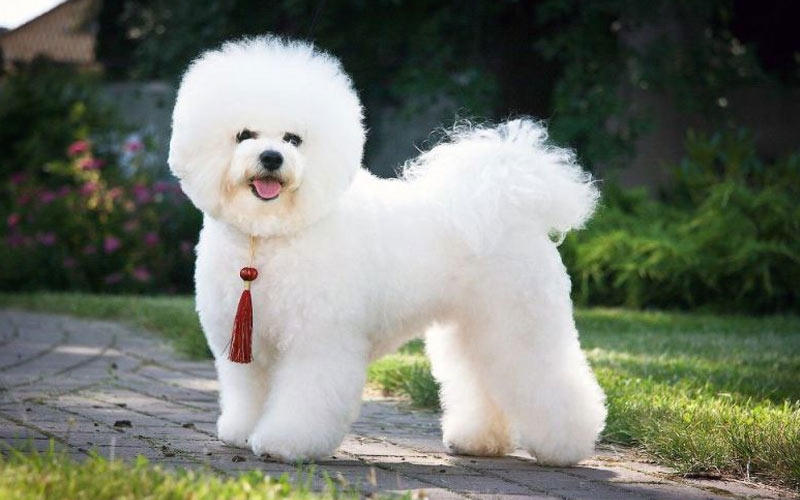
There's no need to take a Bichon Frise for walks; they get by just fine with a litter box. Furthermore, they tire quickly on long walks, so you'll have to carry them home.
Pug
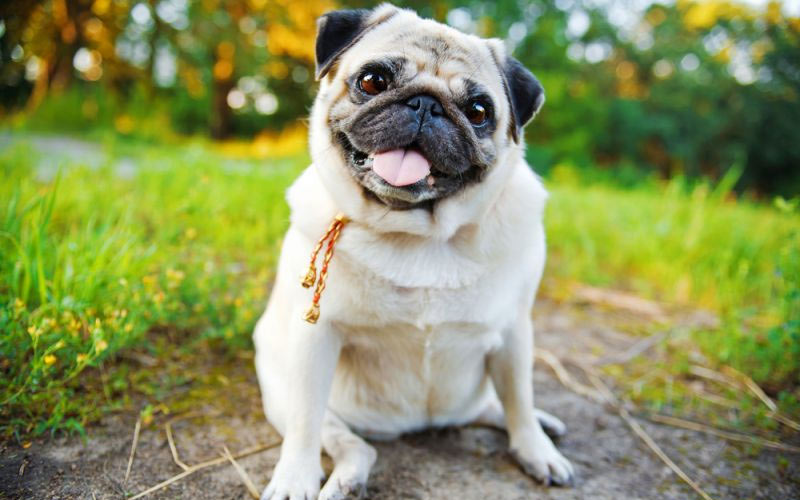
A very interesting and ancient small breed, the Pug has a history spanning over 2,000 years. It is known that these sweet and charming pugs were developed in ancient China during the Han Dynasty. For many centuries, these dogs occupied a privileged position in imperial palaces. They were granted not only their own apartments but also their own servants.
Today, the breed is very popular, as in addition to their cheerful nature and striking appearance, pugs are an excellent choice for apartment living. They are a short-haired breed, but the coarse coat of a profusely shedding pug can sometimes cause a lot of trouble for owners.
The standard pug stands about 25-28 cm at the withers and weighs between 5 and 8 kg. However, if you indulge your pug's treats, they can easily exceed the 10-kilogram mark.
Brussels Griffon
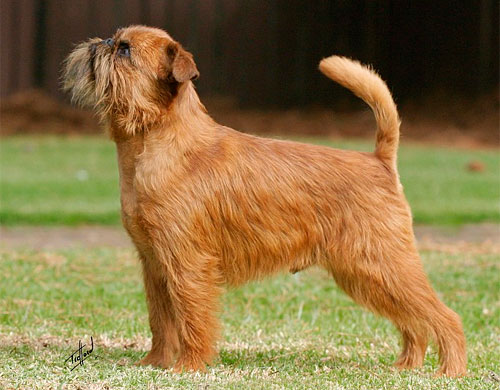
Remember the funny little dog that mimicked Jack Nicholson's character in the movie As Good As It Gets? Brussels Griffon: intelligent, lively, playful, with a charming expression on its shaggy face. The standard breed size is 3.5 to 6 kg, making the Griffon a small guard dog and a wonderful companion. It is a wire-coated dog with a reddish coloring, with black streaks in the mustache and beard permitted.
The term "wire coat" refers to its structure: a long outer coat with a short undercoat. In reality, it's quite soft to the touch, wavy, and requires little grooming and sheds very little. Griffons need to be trimmed, or plucked, several times a year. This is easy to learn, and any professional or breeder can teach anyone wanting a Griffon how to properly trim their pet.
The Brussels Griffon gets along well with other pets, including cats. It's affectionate, curious, playful, and friendly. Despite its short muzzle, the Griffon doesn't snore or wheeze, as is common with pugs or bulldogs. This is another advantage of this breed, along with its easy care and training.
Italian Greyhound
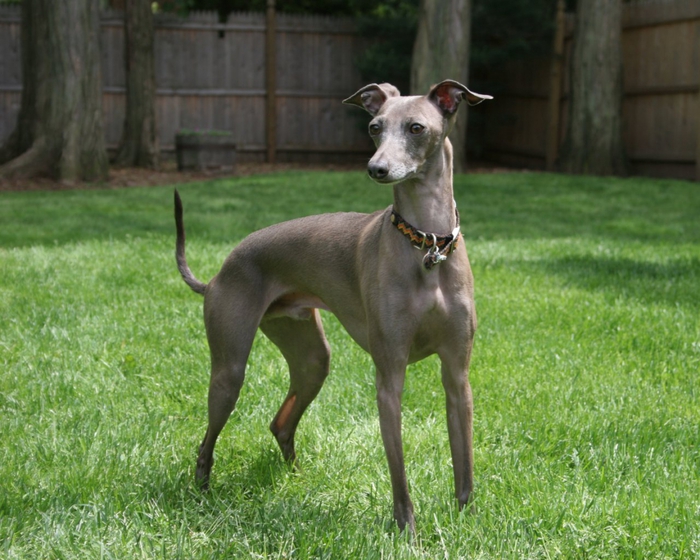
When you hear the name "greyhound," you picture a large, graceful dog with a distinctively arched back. However, there is one sighthound that is not particularly large. This is the Italian Greyhound, or Italian Greyhound—the first dog breed specifically bred for domestic use. This graceful, refined breed was a favorite of royalty and nobility for many centuries, and it gained particular popularity in Europe in the 16th-18th centuries. Dutch masters painted paintings of the time depicting European kings surrounded by these dogs, such as "Anne of Denmark" by Paul van Somer, 1617.
This small dog breed, weighing from 3.5 kg, is known for its use in hunting hares and rabbits, hence the name: "lievre" is the French word for hare. These brave dogs are no longer used for hunting; they are intelligent, playful, and cheerful creatures with a natural sense of tact, making them ideal family pets. Italian Greyhound Suitable for families with children, the dog will be a wonderful playmate and will not create problems for an elderly person.
The Italian Greyhound is a short-coated dog that's easy to groom. However, be sure to buy appropriate clothing, as the warm-loving Italian Greyhound will get cold during walks in our climate.
Maltese
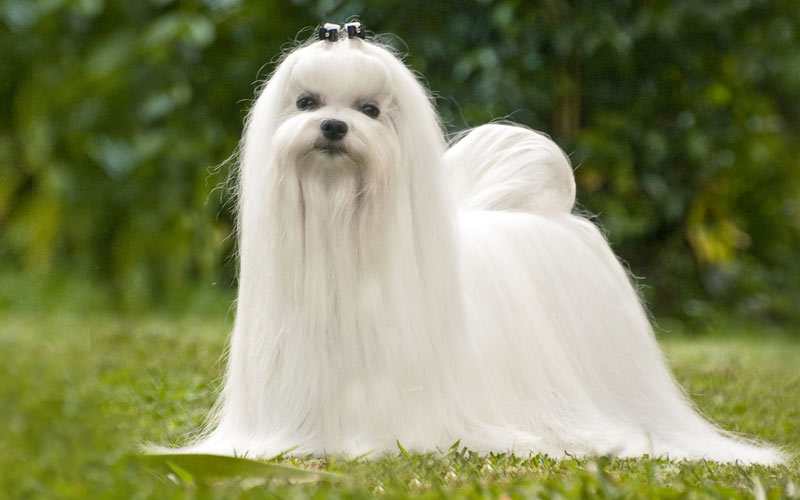
As its name suggests, this breed originated in Malta. It is known that the Roman ruler of Malta owned a similar dog as early as the first century. It is one of the oldest breeds: figurines of similar dogs were found in Egyptian tombs dating back to the 13th century BC. Roman legionnaires brought lapdogs to Great Britain. In the Middle Ages, the breed was a favorite of European nobility, and its popularity has remained strong to this day.
Loving and obedient, yet strong-willed, Maltese are wonderful lap dogs and reliable watchdogs. They are easy to train and enjoy doing funny tricksThe Maltese's calling card is its long, silky coat, which requires careful grooming. Heavy rain and extreme cold are not recommended for the Maltese, as wet fur can lead to pneumonia.
Pomeranian
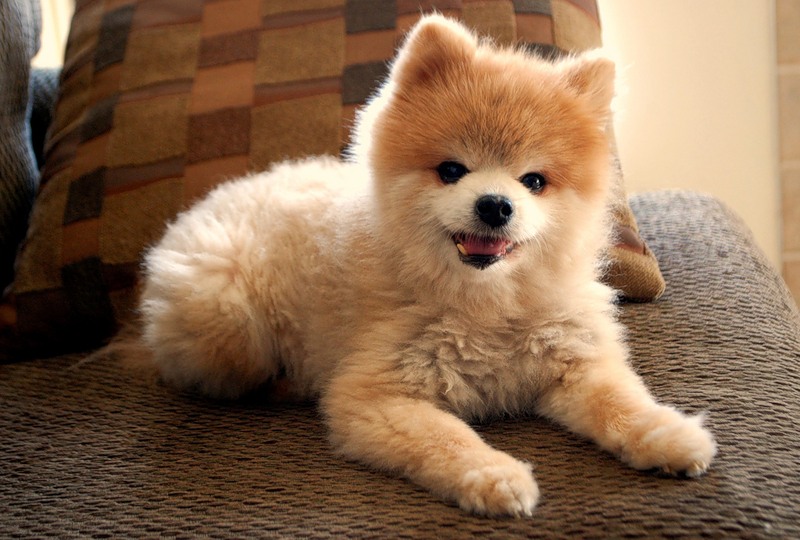
Perhaps no other dog evokes such endearment as the Pomeranian. Small—weighing just 1 to 3 kg—this fluffy bundle of fur with a sly little face resembles a stuffed animal. But don't be fooled: these are fearless little dogs, and they'll attack even a larger dog, accompanying their attacks with a loud bark. To prevent your Pomeranian from causing you, your family, and your neighbors a nuisance with their loud barking, it's essential to properly train them in good manners while they're still a puppy.
Thanks to its small size, the Spitz is ideal for indoor living, but it also enjoys outdoor walks. If your pet doesn't expend energy on long walks, it may indulge in a frantic scurrying session around the apartment.
The Spitz's coat requires careful care: daily brushing and regular washing with a mild shampoo, as the dry skin of this breed is prone to flaking and dandruff.
Pekingese
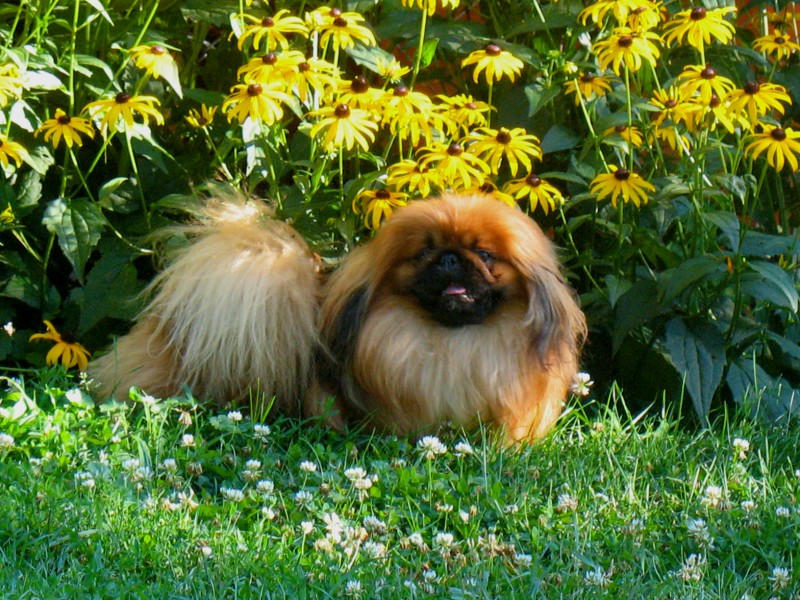
Among toy dogs renowned for their friendships with aristocrats and royalty, the Pekingese is a recognized leader. The breed is renowned for once being a sacred animal to Chinese emperors: these dogs were believed to ward off evil spirits. Stealing a dog in ancient China was punishable by death, and the Pekingese of the deceased emperor was sacrificed to the gods of the underworld.
The breed came to Europe after 1860, when a Pekingese was presented to Queen Victoria of England as a trophy captured by the Royal Guards during the Opium War in Beijing.
Pekingese are brave, pugnacious, and loyal dogs. They can truly be called pocket dogs: courtiers of Chinese emperors carried these dogs, accustomed to luxury, in their wide sleeves. For their resemblance to lions, they were also called lion dogs, and for their sunny red coat, sun dogs.
Japanese Chin
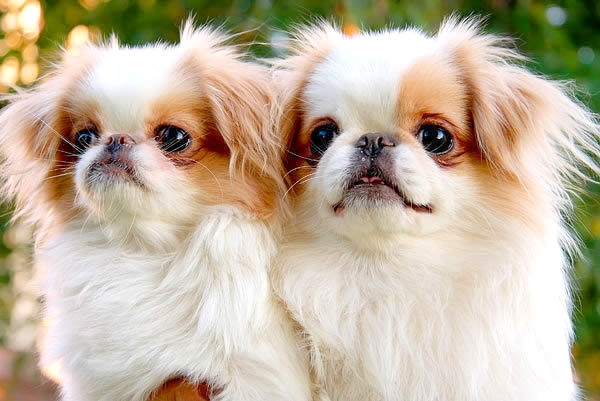
Despite their name, these dogs also originate from China and owe their origins to ancient Tibetan spaniels. The breed's history spans over 2,700 years, since the first specimens were brought from China to Japan. At the court of Japanese emperors, these dogs were often kept in hanging gilded cages, like rare birds. They arrived in Europe and America in the second half of the 19th century.
Japanese Chin The Japanese Chin weighs between 1.8 and 3.2 kg. This very active, loyal, and playful animal has excellent manners and loves to be the center of attention. The most popular coloring is black and white. An adult Chin has a luxurious tail with abundant, long hair, curled over the back and hanging to one side. Wide-set, slightly bulging eyes—the most recognizable characteristic of the breed—give the Japanese Chin a somewhat puzzled appearance.
Papillon
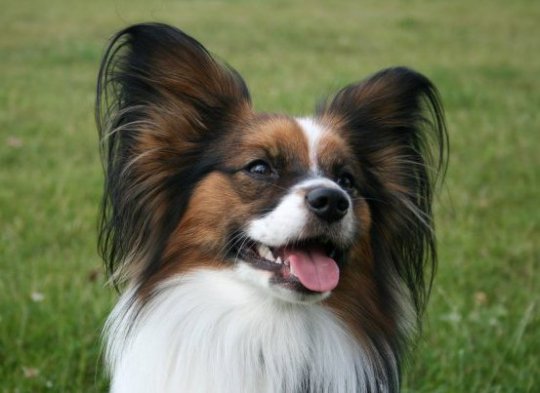
This charming dog has a French name meaning "butterfly." The breed is so named for its erect ears, which resemble the spread wings of a butterfly. The original variety with drooping ears is called the Phalène, meaning "moth," in French. The breed has been known since the 16th century and is considered one of the oldest European breeds.
Papillons are friendly, intelligent dogs, more robust than they might appear at first glance. Although they are perfect for indoor living, they love long walks. Some can be jealous of their owners and intolerant of strangers, which they demonstrate with loud barking. Papillons get along well with other animals in the house, but socialization should begin at a very early age, literally from the first days of life.
Because of the tail held high above their back, Papillons are called "squirrel spaniels." Another name for the breed is the Continental Toy Spaniel.
King Charles Spaniel
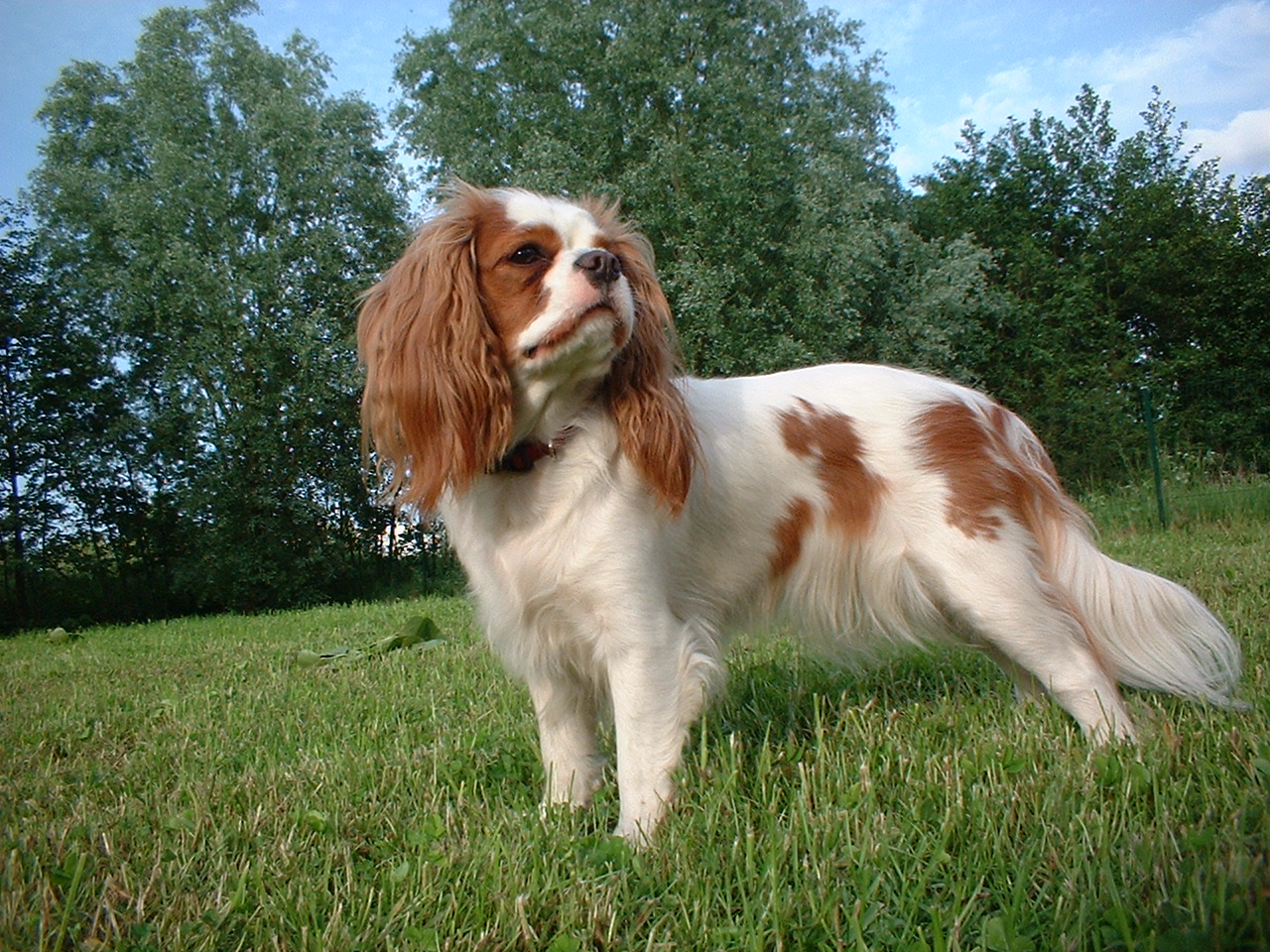
This is perhaps the most "royal" of all breeds. It is known that during the execution of Mary Stuart, one of the executioners saw a small dog hiding in the folds of her dress, and it was only driven out by force. The name "King Charles Spaniel" recalls King Charles II's love for this breed: the king was so engrossed in playing with his pets that he would completely neglect matters of state.
The breed originates from China or Japan and arrived in Europe in the 16th century, first in France and then in Britain. In France, they were used as hunting dogs, but during the selective breeding process, hunting qualities faded into the background, giving way to decorative qualities.
These loyal, even-tempered dogs stand 26-32 cm tall and weigh from 3.2 kg. Their coat is long, glossy, silky to the touch, and slightly wavy. They get along well with children and other dogs. They often choose one person within the family to whom they become especially attached.
They make excellent companions for seniors. This breed is sedentary, and long walks and physical activity are not ideal for them. They are typical "couch potatoes," so they are not suitable for those who prefer long walks with dogs.
Alaskan Klee Kai
This small dog breed is also known as a miniature husky. The Klee Kai is one of the top amazing breeds developed in the last 100 years. This small pet possesses an incredible number of positive qualities and characteristics that can be found in dogs. The animal got its name from the Eskimos. In their language, Klee Kai literally means "little dog."
Small dog lovers appreciate the advantages of the small husky. This miniature pet is not only easy to cuddle but also easy to carry around. Moreover, it's a loyal companion who will brighten up its owner's life in every way.
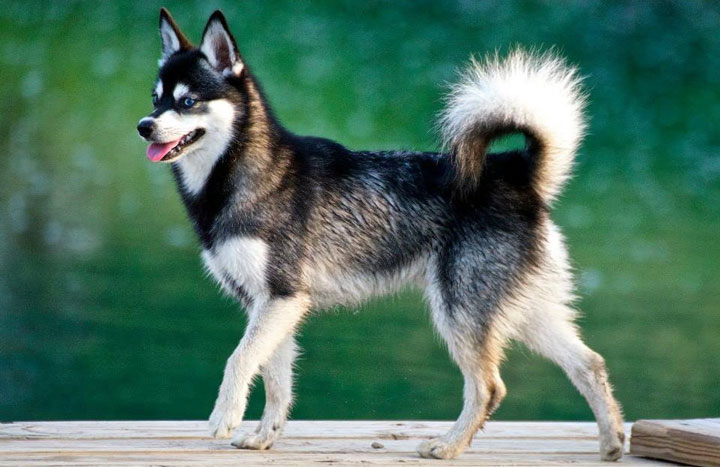
It's no coincidence that the Alaskan Klee Kai is called a miniature Husky. They are very similar, especially their large, intelligent eyes. But as similar as the dogs are in appearance, they differ greatly in personality. This small representative of the breed is distinguished by a gentle, kind, yet playful and cheerful nature.
Beagle
This dog breed has a long history. Beagle The breed appeared during the early days of the English aristocracy. It was developed for hunting.
Beagles stand approximately 40 cm tall and rarely weigh more than 12 kg. They are ideal for urban living. They are a sociable breed that easily connects with people of all ages, making them a popular pet for children.
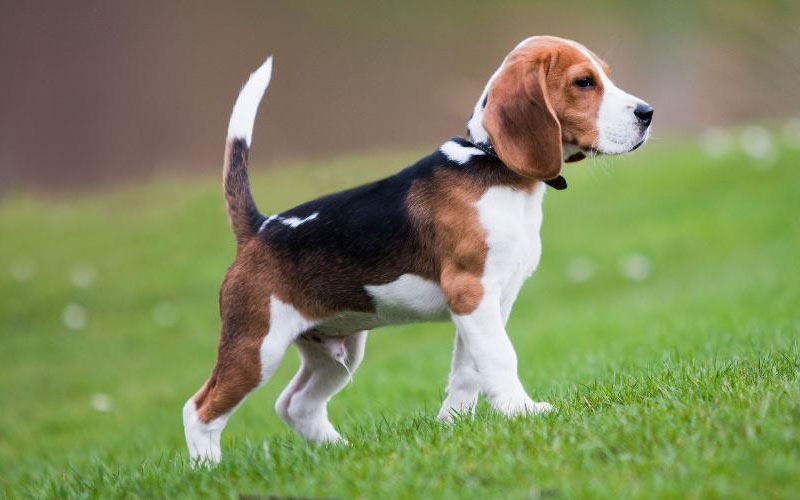
Although a small breed, the Beagle is a determined and active dog. Therefore, training a pet must include measures to teach correct behavior. A lonely and/or untrained Beagle is a ticking time bomb. Therefore, Beagles require early socialization. Their lifespan is up to 15 years.
Dachshund
The dachshund is a dog breed native to Germany. Weight miniature dachshunds does not exceed 5 kg, standard individuals – 12 kg. Animals are well suited for apartment keeping.
This small dog breed can be described as gentle and energetic. Their behavior can be so bold and proud that it borders on recklessness. But given their cheerful nature, they get away with a lot.
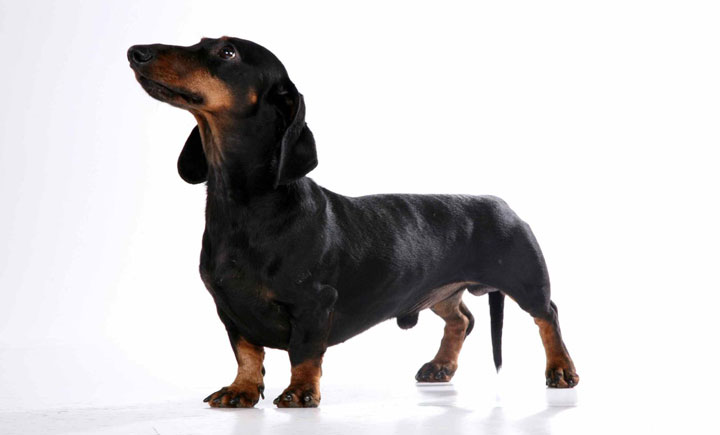
Dachshunds are devoted to their families, get along well with children, and travel well. These small dogs typically get along well with other pets, but if they're not given enough time, jealousy and irritation are inevitable.
Dachshunds are difficult to train, and they also love to bark with or without provocation. Professional dog breeders have noted that wire-haired dachshunds are more social, while their long-haired counterparts are known for their calm disposition.
Although the dachshund is small, it will always stand up for its owner, and the dog is not lacking in intelligence.
Welsh Corgi
These are very beautiful and charming small dogs with an elongated, dachshund-like body, large ears, and a distinctive fox-like coat. A typical breed representative stands 25-30 cm tall and weighs approximately 12-15 kg.
Story corgi The breed's history dates back over 3,000 years. Elizabeth II's incredible love for the breed is well known.
Corgis have a friendly nature. They are cheerful, playful, and great with children, as they were originally herding dogs. Corgis are also highly trainable, quickly grasping commands, and enjoy interacting with their owners.
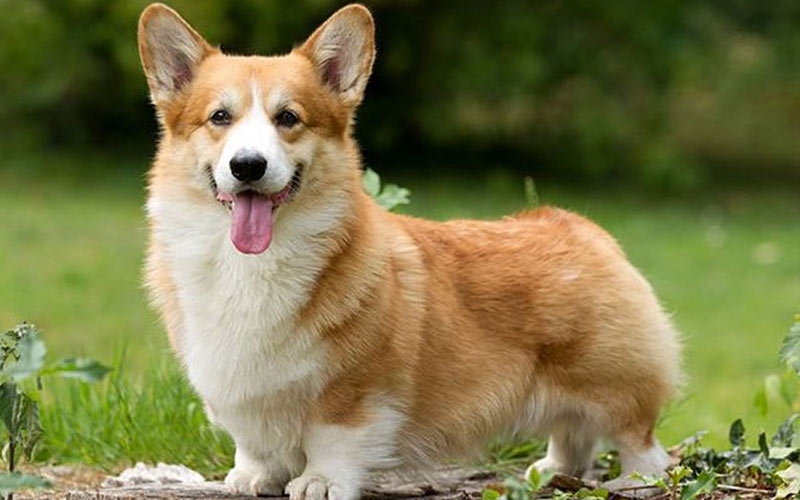
Today, the following standard colors of corgis are distinguished:
- Pembroke;
- cardigan;
- tricolor.
The only unacceptable color for a corgi is a solid color.
When choosing a mate for your beloved corgi, please keep in mind that different colors cannot be crossed with each other.
Wire Fox Terrier
This excitable pet is like a perpetual motion machine, always eager to play, making it a perfect companion for active people. Despite its small stature—about 40 cm—and weight—about 8 kg, caution is advised when handling the Fox Terrier. Although small, the breed is prone to dominance, and if left unchecked, it can become unruly.
Wire Fox Terrier A great lover of digging, the animal seems to care little about its lack of digging. This personality trait, like its desire to dominate, is not to everyone's liking. Anyone who decides to get a fox terrier should be patient and, even better, experienced in dog training.
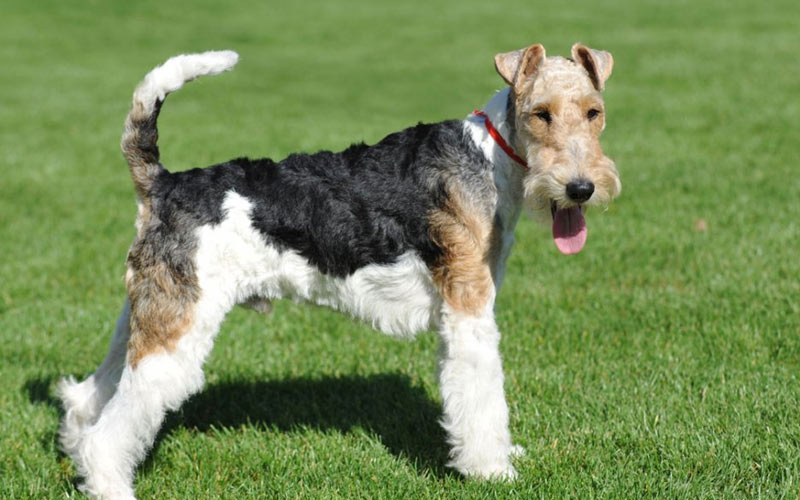
Among other things, this small animal loves to bite if it's upset. Therefore, despite its playful nature, it's best not to leave it alone with small children. Fox terriers are also known for their tendency to bark. Their excessive talkativeness can drive anyone, especially neighbors, crazy.
Given all these reasons, you should think carefully before getting a Wire Fox Terrier. However, if properly trained, this small animal will become a wonderful companion for the entire family.
Basenji
This native of Central Africa amazes with its grace. People even compare Basenji with a miniature gazelle. The average dog weighs 10-12 kg and stands 40 cm tall.
Basenjis have beautiful almond-shaped eyes and pointed, high-set ears. Despite being a small breed, they have an athletic build, giving them a deceptively menacing appearance.
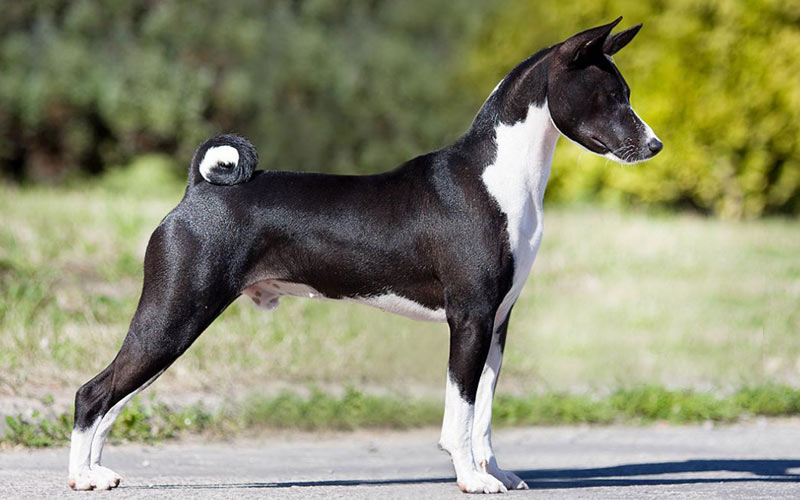
The animal is known by many names. There's even an epithet—creature of the bush—or the more acceptable Nyam-Nyam Terrier. This small dog breed boasts a long history, dating back over 5,000 years. Basenjis have several distinctive characteristics. First, they don't bark, but instead make a distinctive purring sound, and only when excited. Second, they have a hooked tail.
By nature, this is a mischievous animal, not without a sense of humor. They are generally indifferent to strangers, but become very attached to their owners. This is a clean breed, a fact appreciated by those who love home comforts.


Add a comment