
Mastitis in a cat
Mastitis in cats isn't a common occurrence, but it's still something to be prepared for. What should you do if it does happen? Today, we'll tell you about all the possible causes, symptoms, and home treatments for mastitis in cats.
So what is mastitis in cats? It's an inflammatory process that develops in the animal's mammary glands, accompanied by severe pain, high fever, and a long list of other symptoms.
Content
Causes of mastitis in cats
Mastitis in cats is often caused by pathogenic microorganisms "inhabiting" the mammary glands. These microorganisms cause inflammation. However, this is far from the only reason for the development of this life-threatening condition.
Lactostasis
Due to excessive milk production or because kittens consume only small amounts, milk stagnates in the mammary glands. This causes blockages in the ducts, where bacteria begin to proliferate. Along with the inflammation, pain increases. The affected mammary glands become very hard. If not treated promptly, edema can progress to mastitis.
False pregnancy
This occurs due to a psychological "glitch" in the animal. This condition can also develop in a spayed pet. This is due to the animal wanting to conceive, but fertilization has not occurred. Some scientists believe that the tendency to false pregnancy is hereditary. Furthermore, it often recurs from heat to heat. If a cat is not spayed, she may develop serious complications, including cancer.
In addition to the psychological trauma, the cat's hormonal balance changes. The brain signals the endocrine glands, which begin producing hormones specific to pregnancy. As a result, the mammary glands produce milk. Of course, there are no kittens, and no one drinks milk. This causes the breasts to become overfilled with milk. This milk stagnation leads to mastitis in the cat.
Weak immunity
Once the immune system weakens, numerous pathogenic microorganisms begin to multiply in the body. Inflammatory processes can develop in any organ or organ system. The mammary glands, however, offer ideal conditions for bacterial proliferation: warm, moist, and nutritious. During their life cycle, these microbes release toxins that cause milk to curdle, increasing inflammation. Pus often appears in the milk.
Nipple injuries
Trauma can result in abrasions and scratches on the skin. These scratches, like a gateway, allow bacteria to enter the animal's body. The further development of these scratches depends on the immune system. If it is able to fight the infection, inflammation may not occur.
Symptoms
Many owners don't immediately notice the symptoms of mastitis in their cats. It's not because they're subtle.
The reason is that It's rare that a pregnant or recently delivered cat will allow you to touch her nipples. She won't allow you to touch her belly. That is why the initial stage of mastitis usually goes unnoticed.
So, the main signs of mastitis in a cat:
Inflammation of the gland
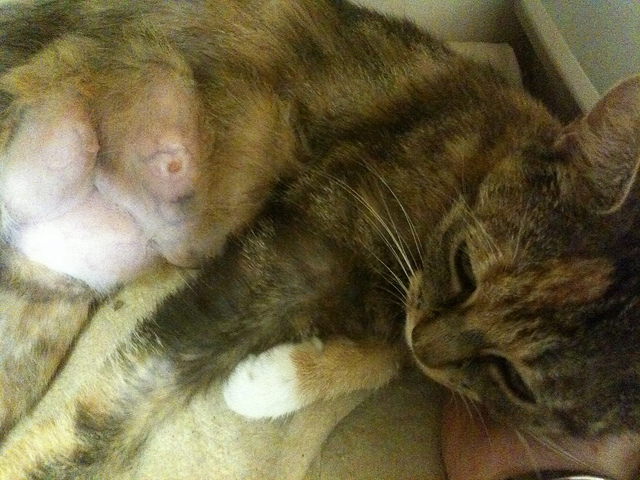
When the mammary glands become inflamed, the nipples become swollen, red, and hot. Touching them can cause intense pain. The mammary glands become hard, and the skin cracks. Because milk flow is obstructed (due to inflammation, the milk ducts become smaller in diameter, and the milk curdles, becoming "thick"), the cat's "breasts" become hard. The skin on the nipples may crack due to intense tension as the glands swell.
General reaction of the body
Beyond the mammary glands, the entire body reacts. A fever (high temperature) develops, appetite virtually disappears, and lethargy sets in. The mother may avoid the kittens because they are drawn to the nipples, causing severe pain. Furthermore, such "purulent" milk should not be fed to newborn kittens.
Cat treatment
Before discussing mastitis treatment in cats, it is important to understand that only a doctor can make a diagnosis.If you suspect your pet has mammary gland inflammation, be sure to seek help from a veterinarian. Don't neglect mastitis treatment in cats. This condition cannot be left unchecked. Otherwise, sepsis (blood poisoning caused by pus and bacteria entering the bloodstream) can develop.
Do you need veterinary help?
You can avoid veterinary treatment only in the early stages of the disease, when the nipples aren't yet severely swollen, milk flows freely, and there's no pus. You can place the kitten on such a nipple to help it suck out the milk. You can also gently express milk by hand, but the cat will likely refuse this. As long as the milk remains unaltered and free of pus, it won't harm the kitten. And no one else can do a better job of "sucking out" stagnant milk than a kitten.
Some owners mistakenly believe they know how to treat mastitis in cats without seeing a veterinarian. They use warm compresses, which in turn only accelerate the growth of bacteria. This leads to increased pus in the glands, causing the nipples to become even redder and larger.
Once mastitis progresses to the second stage, when the glands become enlarged and hardened, a treatment plan for mastitis in cats should be developed by a veterinarian. In addition to gentle milk expression, medication will be required. Inexperienced owners also confuse gland inflammation with tumors. A veterinarian will conduct a differential diagnosis, rule out conditions with similar symptoms, and prescribe the necessary medications.
Recommendations for home treatment
We have prepared a list of recommendations for treating a cat with mastitis at home.
- If there are only a few kittens in the litter, the best solution is to remove moisture from the diet: water, milk, and wet food. This will reduce milk production.
- It's a good idea to bandage the nipples. The cloth should be fairly tight. It's a good idea to steam it with an iron to reduce bacteria. Over time, the glands will stop producing milk if bandaged. Just make sure the bandage doesn't interfere with your pet's movement. If you're worried about causing pain or aren't comfortable bandaging a breast, it's best to ask a cat breeder or veterinarian for help.
- In case,If pus begins to flow from the nipples along with milk, it is forbidden to put kittens to the catDue to the high concentration of bacteria, all kittens will become seriously ill, which in most cases leads to the death of the furballs. Therefore, all nipples must not only be bandaged but also hidden under a blanket to prevent the mother from dislodging the bandage and the hungry kittens from "breaking through the barrier." The kittens will have to be bottle-fed (using a special cat milk replacer).
- No massage or warming up!
If necessary, the veterinarian will open the affected glands, remove pus or some of the inflamed tissue, and prescribe antibiotic therapy. Without it, it will be impossible to overcome the disease. If the pain is severe, the doctor will perform a novocaine block. Once this is done, the gland contents can be expressed and an antibiotic-containing medication can be injected into the nipple. The gland is then bandaged.
Prevention
It's important to know not only how to treat mastitis in cats but also how to prevent it. Below, we've prepared a list of helpful tips for you:
| Monitoring your cat's fluid intake | If there are few kittens, then limit the amount of liquid the mother cat drinks. |
| "Manicure" for kittens. | Also, be sure to trim the kittens' claws. They can scratch their mother's nipples while sucking. This can introduce bacteria into the mother's mammary glands. |
| Diet for a pregnant and lactating cat | Be sure to discuss the diet of a pregnant or nursing cat with an experienced veterinarian. Some foods (cottage cheese, mineral or vitamin supplements, and others) stimulate milk production. |
| Maintain your pet's hygiene | Dirty bedding, floors, and litter boxes can lead to bacterial contamination of the nipples. If necessary, wash the skin with oak bark decoction or a very weak solution of potassium permanganate (just a crystal per half liter of water). If you notice cracks, be sure to apply cream. |
| Avoid injuries | Place the animal's bed away from drafts. |
| Deworming, preventative treatment against fleas and ticks | Deworm your cat regularly (parasites significantly weaken the immune system). Don't forget about ticks and fleas. They not only weaken the body's defenses but also cause itching. As a result, the cat scratches itself, thereby opening the door for pathogenic bacteria. |
If you have any questions about mastitis in cats, please ask them in the comments—we'll do our best to answer them!
Read also:


Add a comment