
Mastiff Neapolitano
The Neapolitan Mastiff is a striking dog with excellent guarding qualities and a striking appearance, which has led to many beautiful photos and videos of Neapolitan Mastiffs online. If you're thinking of buying a Neapolitan Mastiff puppy, we recommend learning more about the breed's characteristics, care requirements, current standards, and breeder recommendations.
Content
Breed characteristics
- original title – Mastino Napoletano;
- origin – Italy (Ancient Rome);
- weight – K(60-70 kg), C(50-60 kg);
- height – K(65-75 cm), C(60-68 cm);
- life expectancy – from 9 to 11 years;
- appointment - service (security).
Based on owner reviews, we have come up with the following characteristics of the Mastino breed:
|
Low level |
Intermediate level |
High level |
|
aggressiveness 2/5 activity 2/5 noise level 2/5 tolerance of loneliness 2/5 |
health 3/5 training 3/5 molt 3/5 friendliness 3/5
|
security qualities 5/5 maintenance cost 5/5
|


Origin
The Neapolitan Mastino is a dog with a long history, dating back to ancient Rome. The Mastino's ancestors were true fighting dogs, used to hunt wild animals and also compete in arena fights, which were often held in those days. The Mastino Napoletano's closest relatives are Cane CorsoScientists believe that these breeds have much in common, most notably their origins as gladiator dogs.
Descriptions of these large, powerful, and fearless fighters can be found in historical sources. However, in ancient times, the mastiff's ancestors did not live under rulers and did not hold a special place. Their owners were ordinary people who, if not using the animal in fights, kept it to guard personal property. Even today, many centuries later, guarding qualities remain the main virtue of the Neapolitan Mastiff breed.
The breed's modern history begins in 1946. The first eight dogs, introduced then by Italian Pietro Scanziani, formed the basis of the modern line. They also inspired the breed standards, which were subsequently amended several times as changes occurred. dog exterior.
Exterior (external data)
The breed standard gives the following description:
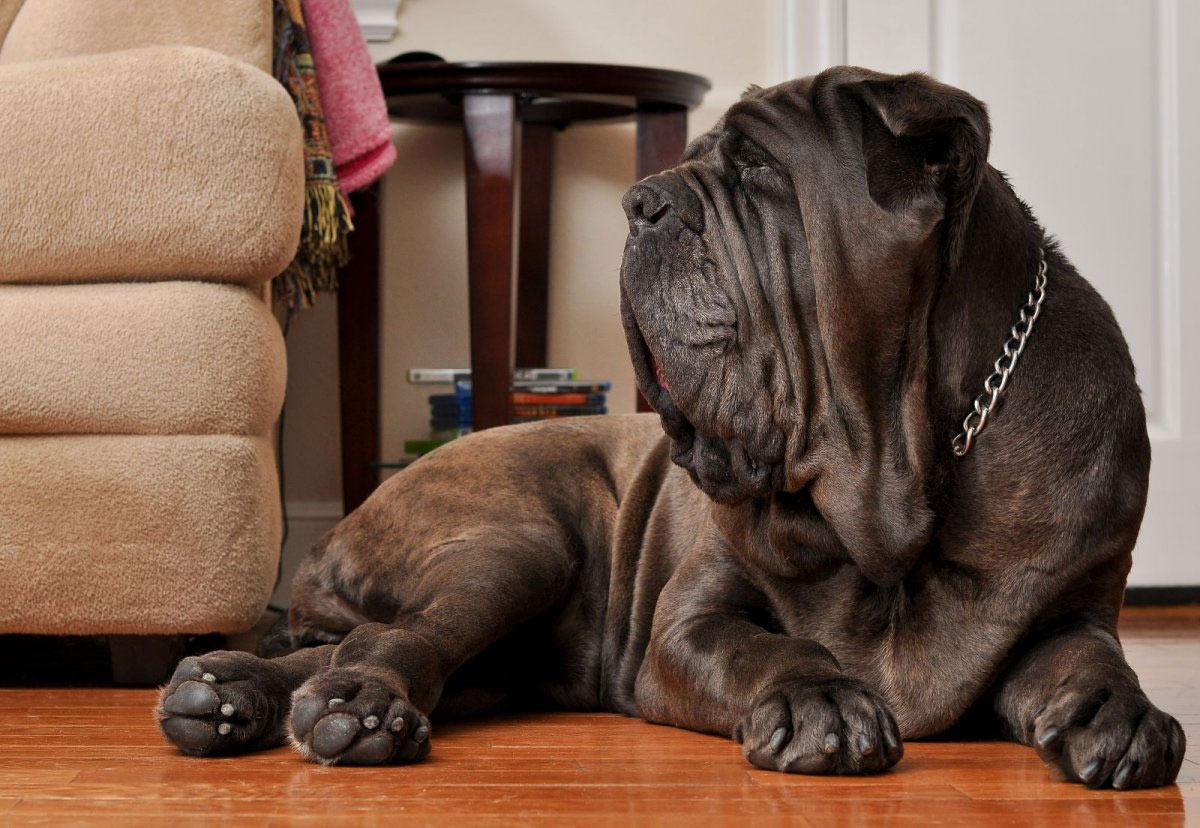
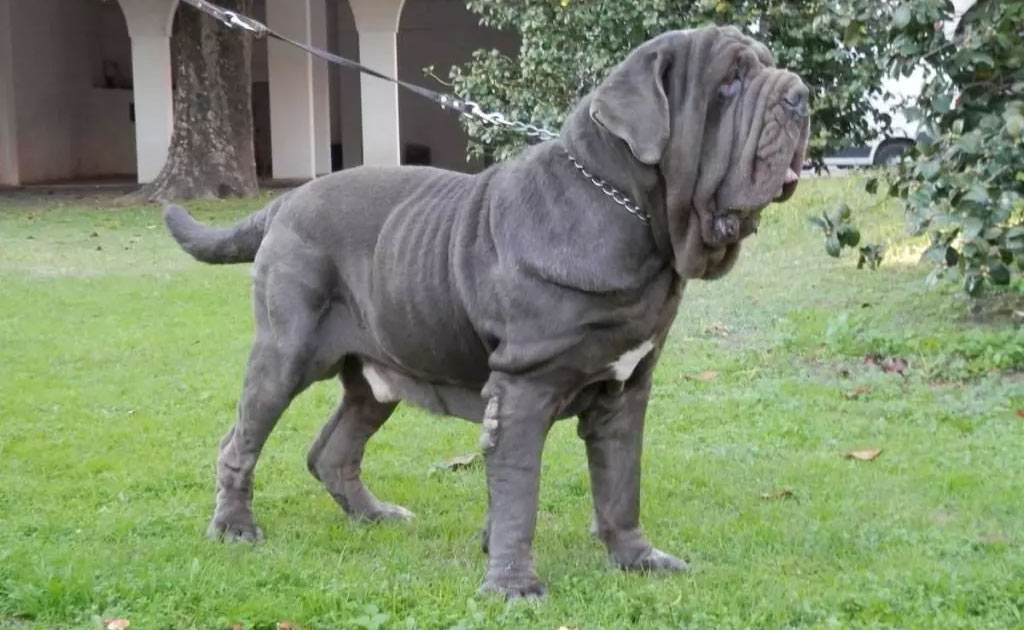
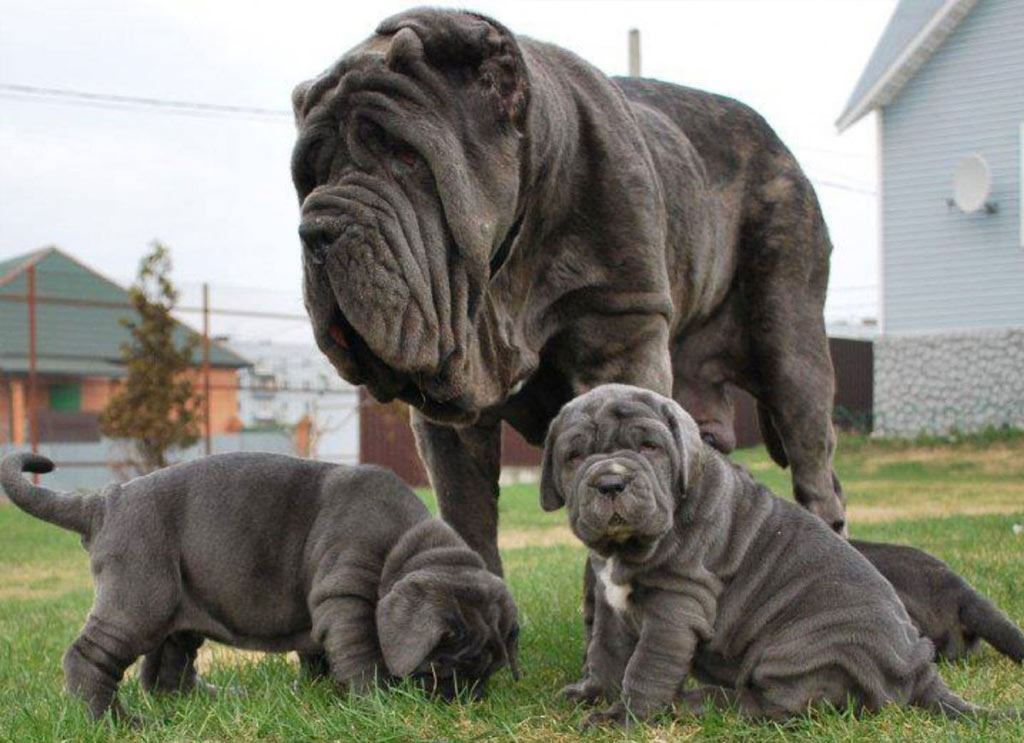
A large, brutal-looking dog with well-developed muscles and strong bones. The head is massive, with a broad skull, a thick neck, and folds of skin that form a distinctive pattern. A dewlap along the lower part of the Neapolitan Mastiff's body is mandatory, which is always visible in photos of show dogs. The saber-shaped tail is thick at the base, gradually tapering toward the tip. Triangular cropping of the ears and quarter-cropping of the tail is acceptable, but today it is more common to see mastiffs with undocked tails and ears.
The coat texture can vary from soft to quite harsh. The standard recognizes the following color variations:
- black;
- grey;
- blue;
- mahogany;
- Isabel;
- brindle.
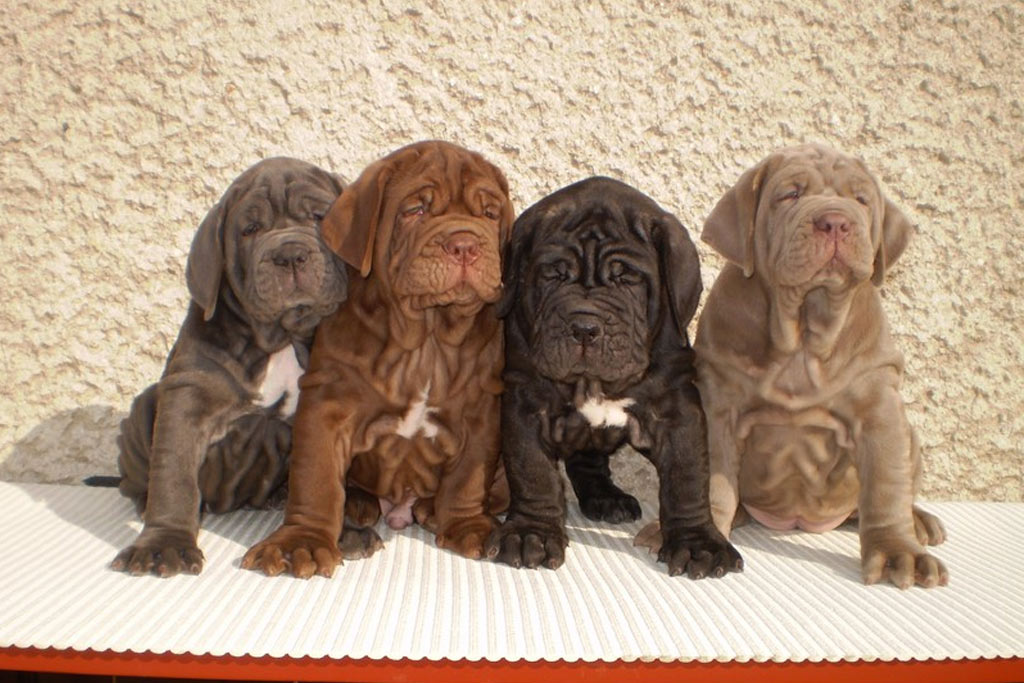
The presence of small white spots located on the lower part of the paws (on the toes), chest, stomach or in the pelvic area is considered acceptable.
The brindle color is dominant and can appear in any of the listed shades.
The most popular breeds currently are the gray mastiff and its most striking variant, the blue mastiff. These breeds have a beautiful, deep coat color, giving them a particularly luxurious appearance.
Character
Despite its intimidating, brutal appearance, the Neapolitan Mastiff is not a breed prone to uncontrolled aggression. The vast majority of these dogs have a balanced temperament and are easily trained. Although the breed's characteristics classify it as a "service" or "guard" dog, the Mastiff can make an excellent companion.
This breed is a "one-owner dog." A mastiff will simply "accept" all other family members. There are also reports that adult dogs have a very difficult time separating from their owner and have difficulty adjusting to a new family.
To strangers Representatives of the breed are wary. It will take a new person some time to gain the dog's trust, even if the introduction takes place in the owner's presence in a friendly atmosphere.
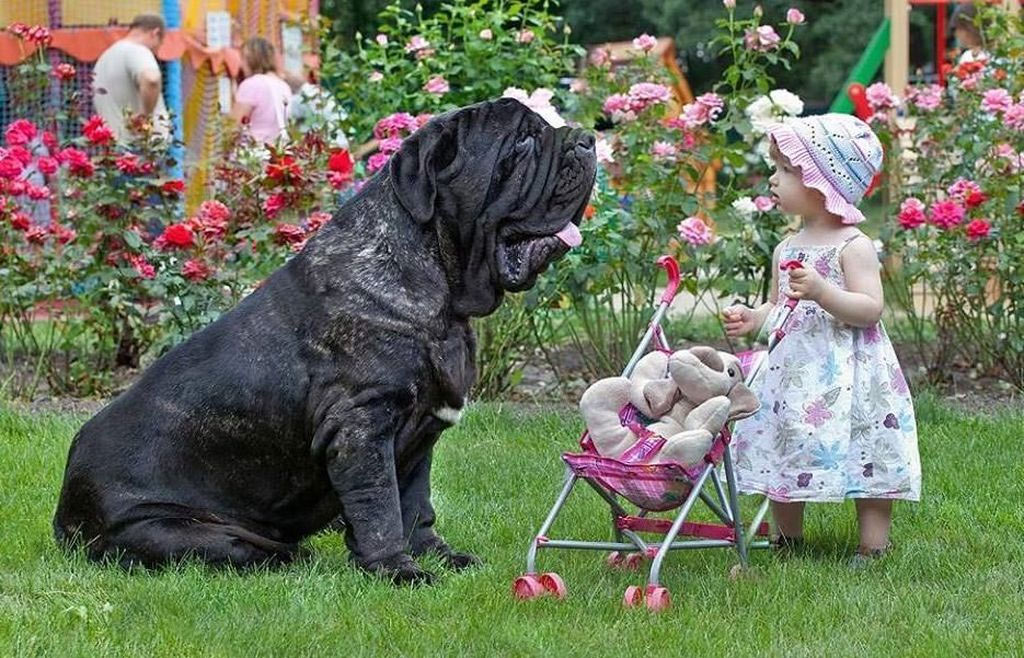
Attitude towards children The Napoletano family is well-liked. They will happily participate in active games and also guard their little owner outside.
It's important to understand that the dog's size poses a potential hazard to small children, so the Napoletano is not recommended for families with children under 12. Also, the dog should never be left alone with other people's children.
Naturally, as with other breeds derived from fighting dogs, aggressive individuals do occur. In most cases, this behavior is not due to genetics, but to improper upbringing and psychological trauma the puppy experienced at an early age.
Important! This breed is officially listed as potentially dangerous! A large, aggressive Mastiff can pose a danger to others and their owner, so it's crucial that the dog receives not only attention and love from others, but also proper training from the very first day of its life.
With other animals Mastiffs rarely get along. Jealousy is the most common cause of conflict. A reluctance to share the owner's attention, combined with the dog's size and physical capabilities, clearly poses a danger to those who "fall out of favor."
Content Features
If you really like the Neapolitan Mastiff pictured, you should carefully weigh the pros and cons before buying this cute, plush puppy. Since the Mastiff is a fairly large pet, it will require plenty of space to live comfortably.
Keeping such a dog requires:
- professional training!;
- long active walks;
- balanced nutrition;
- periodic combing (2 times a week);
- additional care for skin folds (daily wiping);
- regular eye care.
The ideal home is a private home with a sufficient outdoor area or a spacious enclosure. Mastinos can also be kept in city apartments, but this comes with a number of challenges. Owners most often report issues with their coat and excessive salivation, which is common in many breeds of this type.
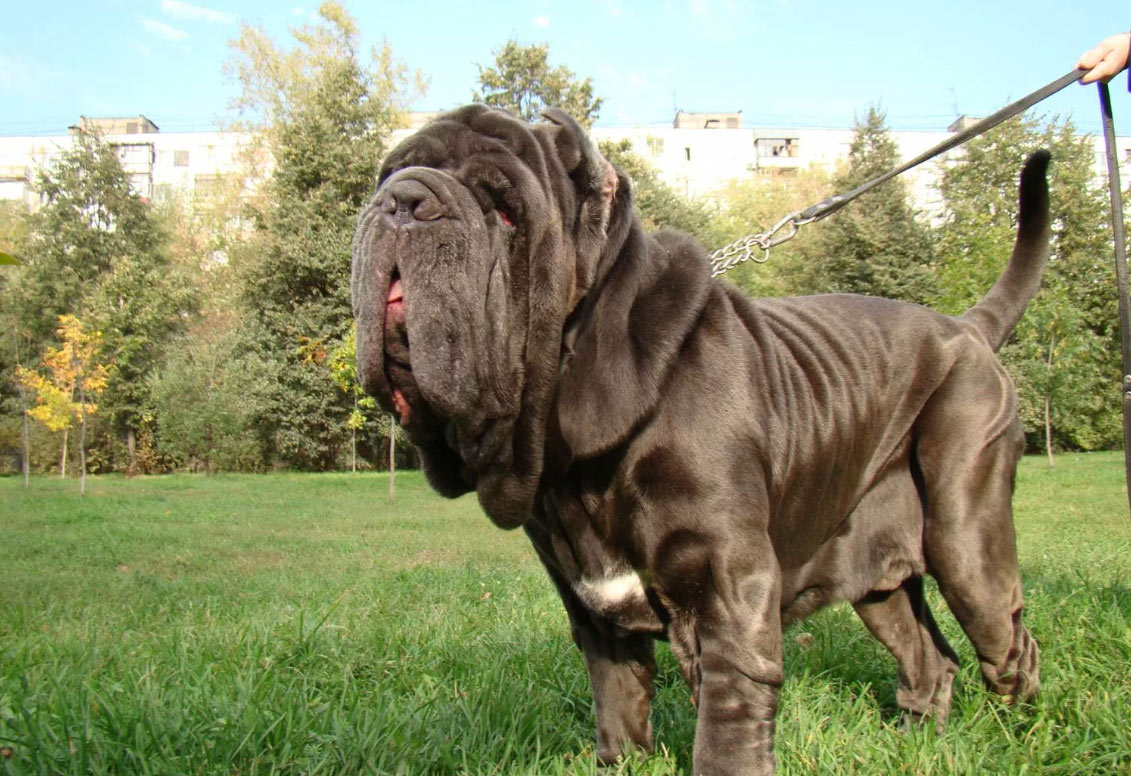
Some people complain about mastiffs being sloppy and clumsy. In reality, this is due to owners' unpreparedness for the reality of living with a very large dog. While a pet can accidentally bump into or damage something while moving around the apartment, this simply means the dog is feeling cramped in such a home. Their "messiness" while eating is due to the specific structure of their muzzle. This problem can be corrected by choosing ready-to-eat dry food and special "spill-proof" drinking bowls.
Health
In general, the Neapolitan Mastiff is not very susceptible to genetic diseases, but if you see a beautiful puppy in a photo, it is worth inquiring about the health of its ancestors when visiting the kennel.
Among the most common genetically transmitted diseases in Mastino are:
- dysplasia (elbow and hip joints);
- various types of allergies.
As a result of improper nutrition and inadequate care, dogs often suffer from:
- obesity;
- cardiomyopathy;
- fungal skin infection.
One of the common problems with this breed is difficult labor. Typically, Neapolitan Mastiff puppies have large heads, which creates certain difficulties during labor. Veterinarians often have to resort to surgical intervention and deliver the puppies via Caesarean section. Incidentally, this is another reason why the price of Neapolitan Mastiff puppies is higher than that of some other guard breeds.
Where to buy a puppy
At first glance, buying a baby Eeapolitano Mastiff is easy—just visit any pet portal and you'll get a multitude of results in the "photo and price" format. However, experienced breeders recommend looking outside of specialized breeders, as only planned matings guarantee:
- breed and compliance with exterior standards;
- absence of genetic diseases;
- Proper nutrition for the mother and puppy, which lays the foundation for the future dog's health.
Currently, the price of Neapolitan Mastiff puppies ranges from 70,000 to 200,000 rubles.
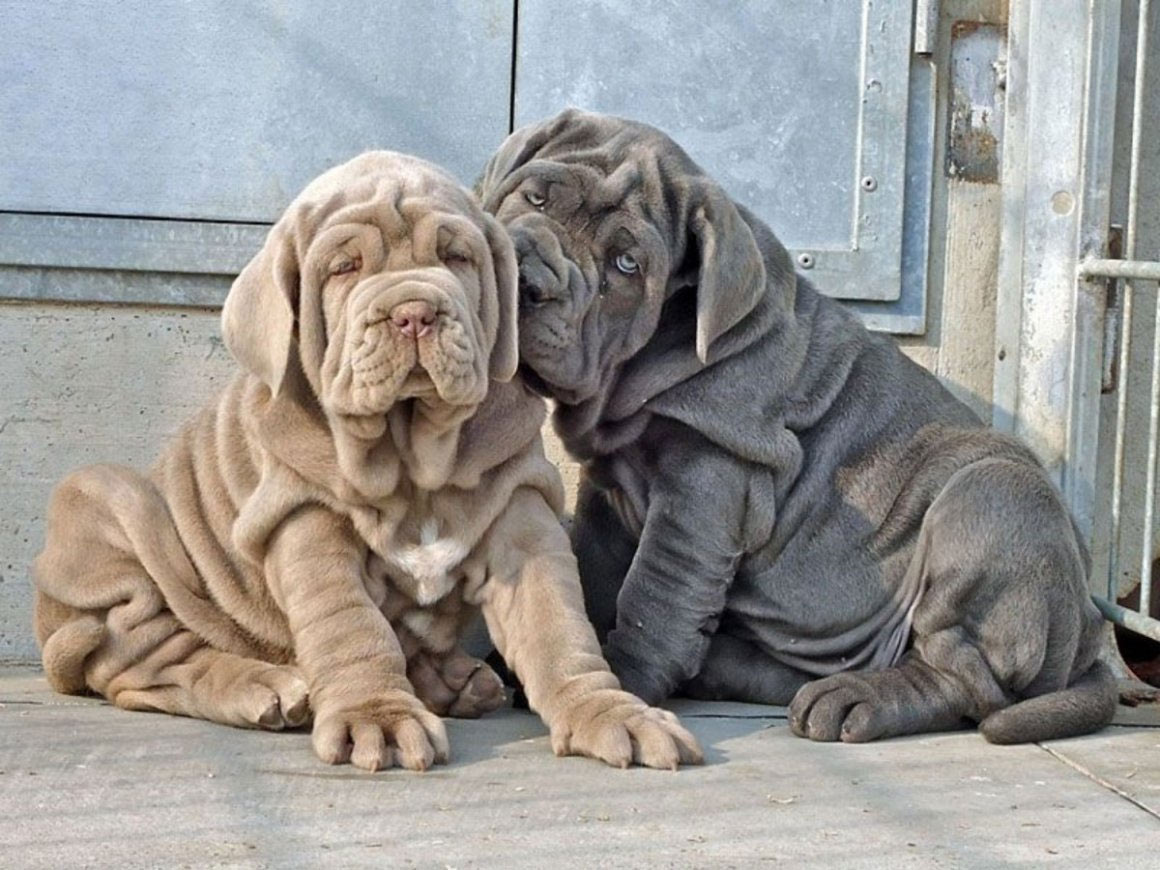
It's worth noting that the price of a Neapolitan Mastiff puppy depends on many factors:
- presence of pedigree;
- parents' level;
- presence/absence of defects;
- color;
- age.
To find out the price of a baby in one of the nurseries specializing in breeding Mastino Napoletano, you can contact the following Russian nurseries:
- Grande Stella (Moscow);
- ANVIRE (Saint Petersburg);
- Heart of the Ocean (Vladivostok);
- Mastino Classic (Mineral Waters);
- SHANKOR (Nizhny Tagil);
- Drevlyans (Volokolamsk);
- Vartdiv (Nizhnevartovsk).
Photos
If you're determined to buy a baby Mastino, we suggest you choose a color by looking at photos of what an adult dog that meets the accepted standard will look like.
Black color
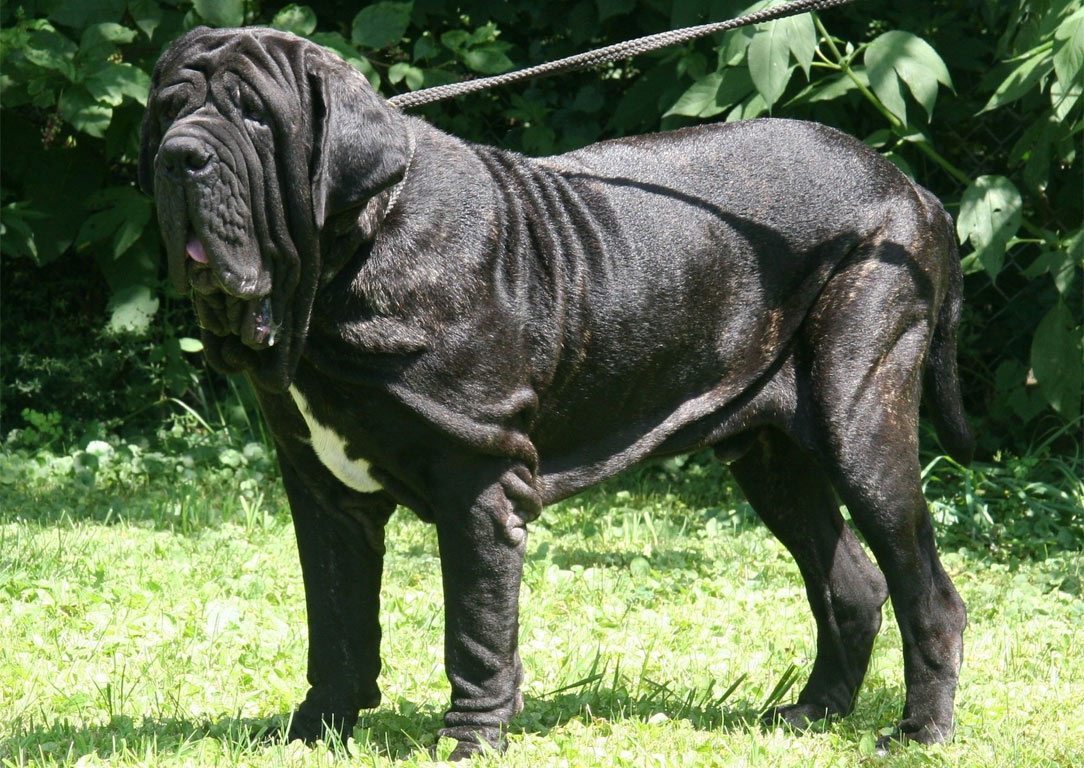
Gray
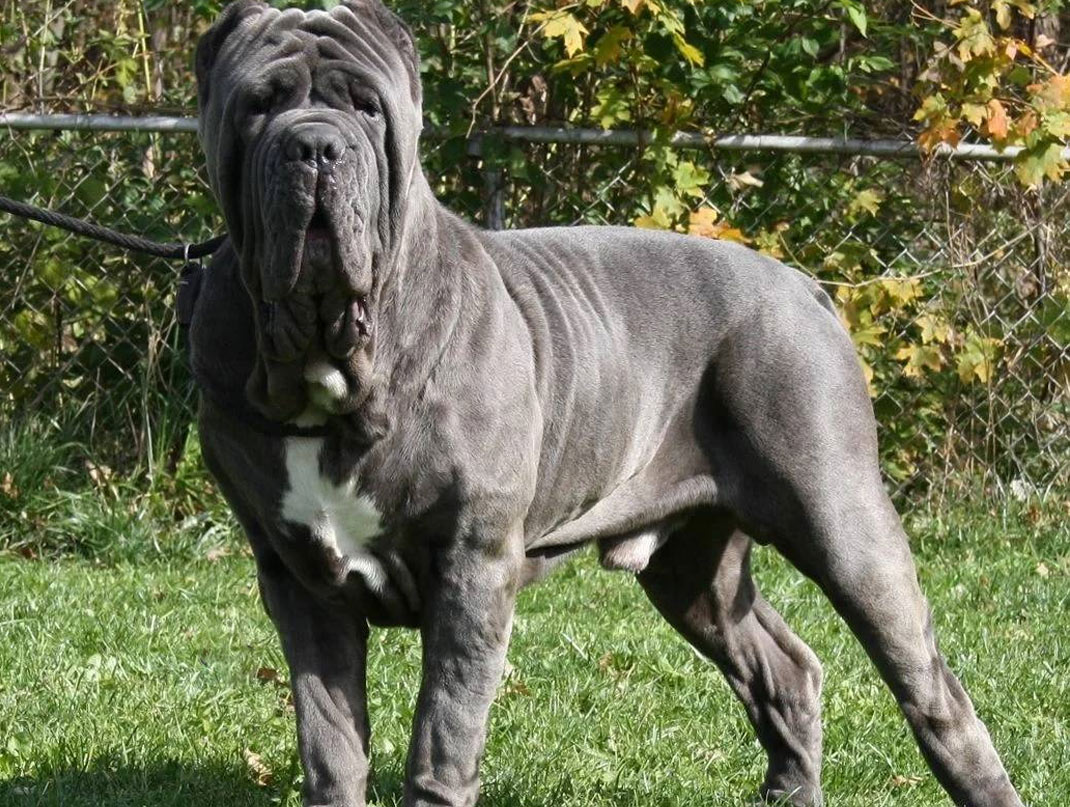
Gorgeous blue Mastino
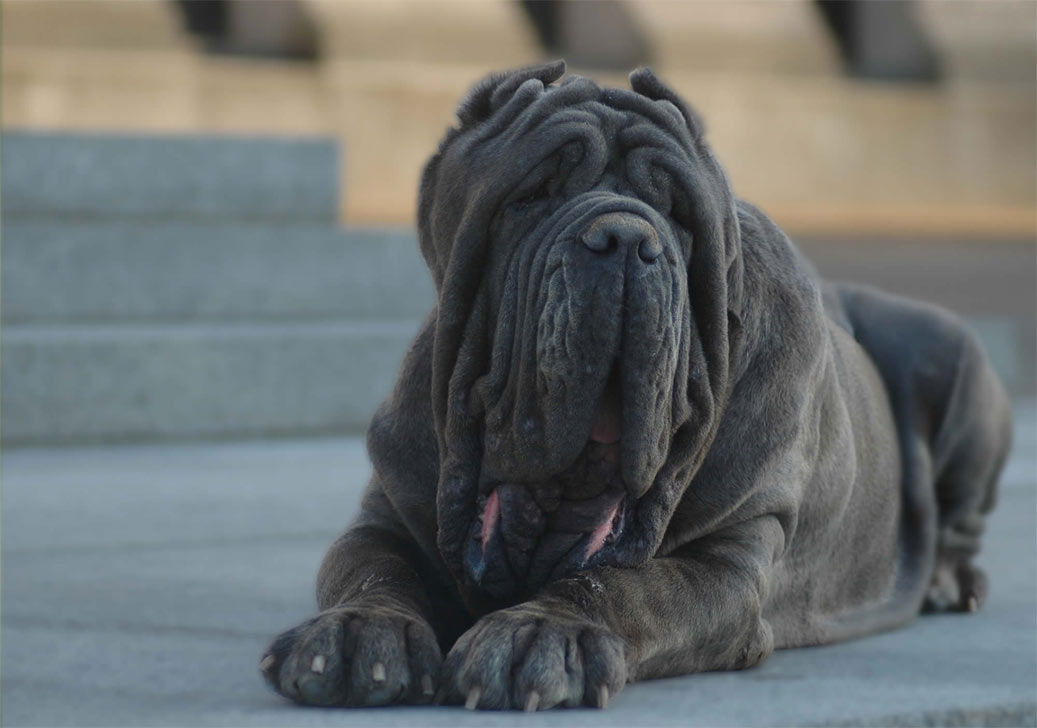
Luxurious mahogany
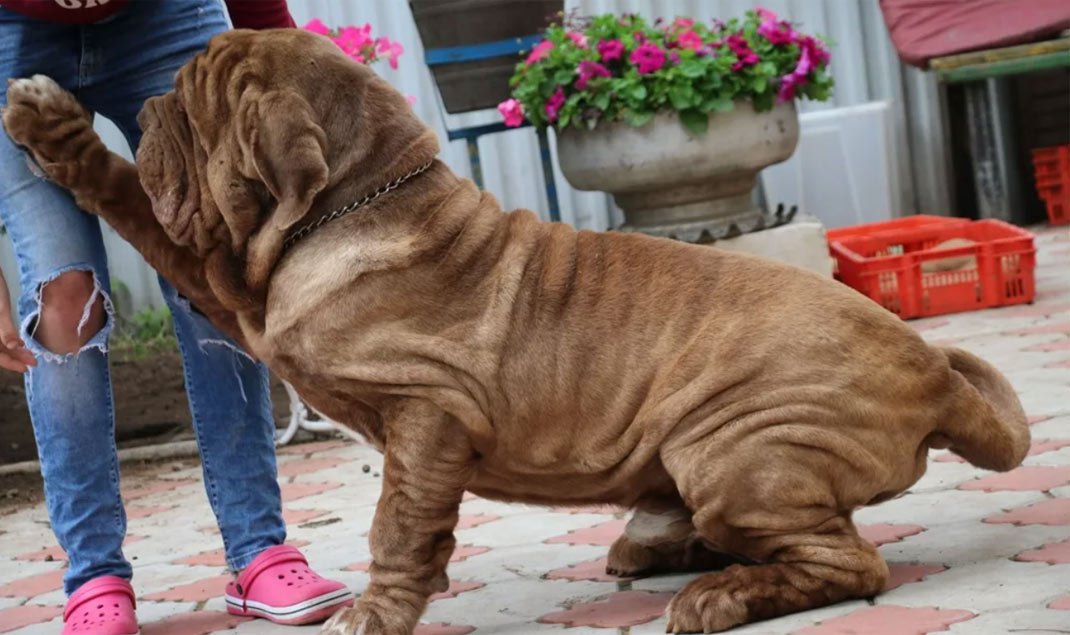
Isabella color
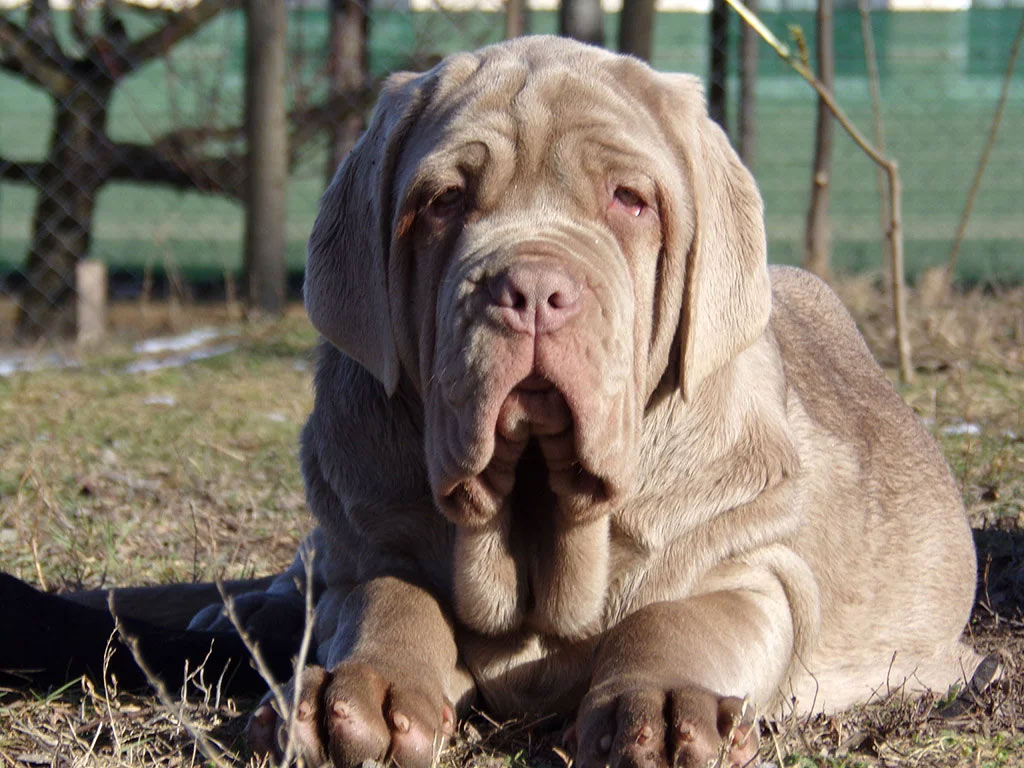
Tiger Napoletano
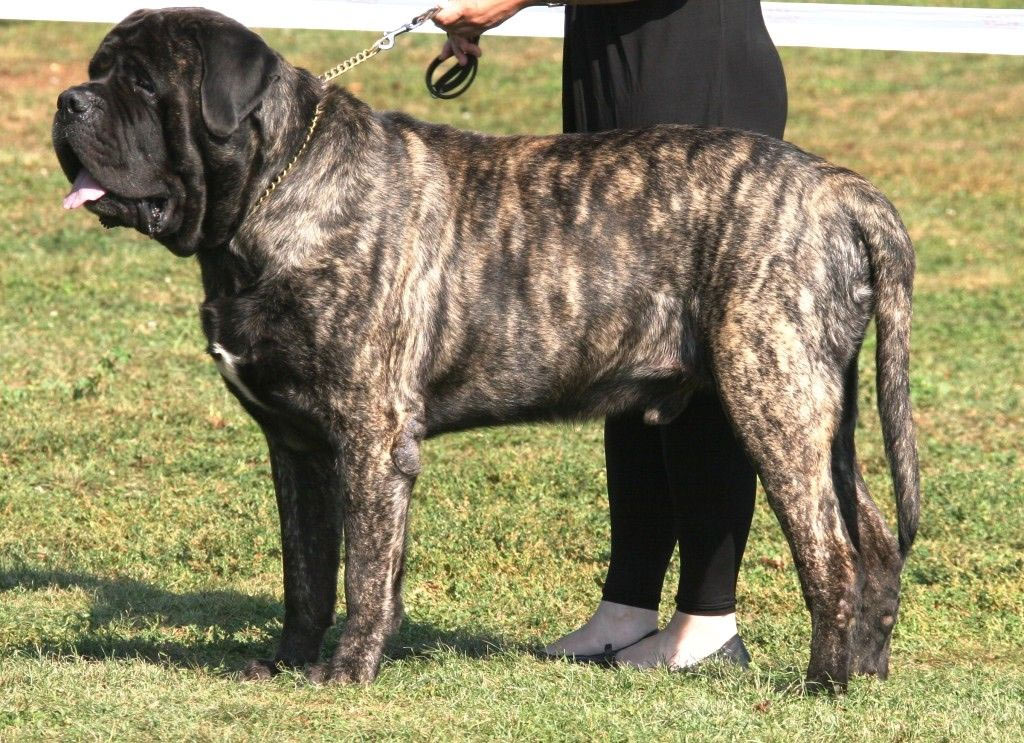
Mastino puppies
Video
We also recommend watching a video about the care and training of the Neapolitan Mastiff:
Read also:


Add a comment