
Munchkin: cats and kittens
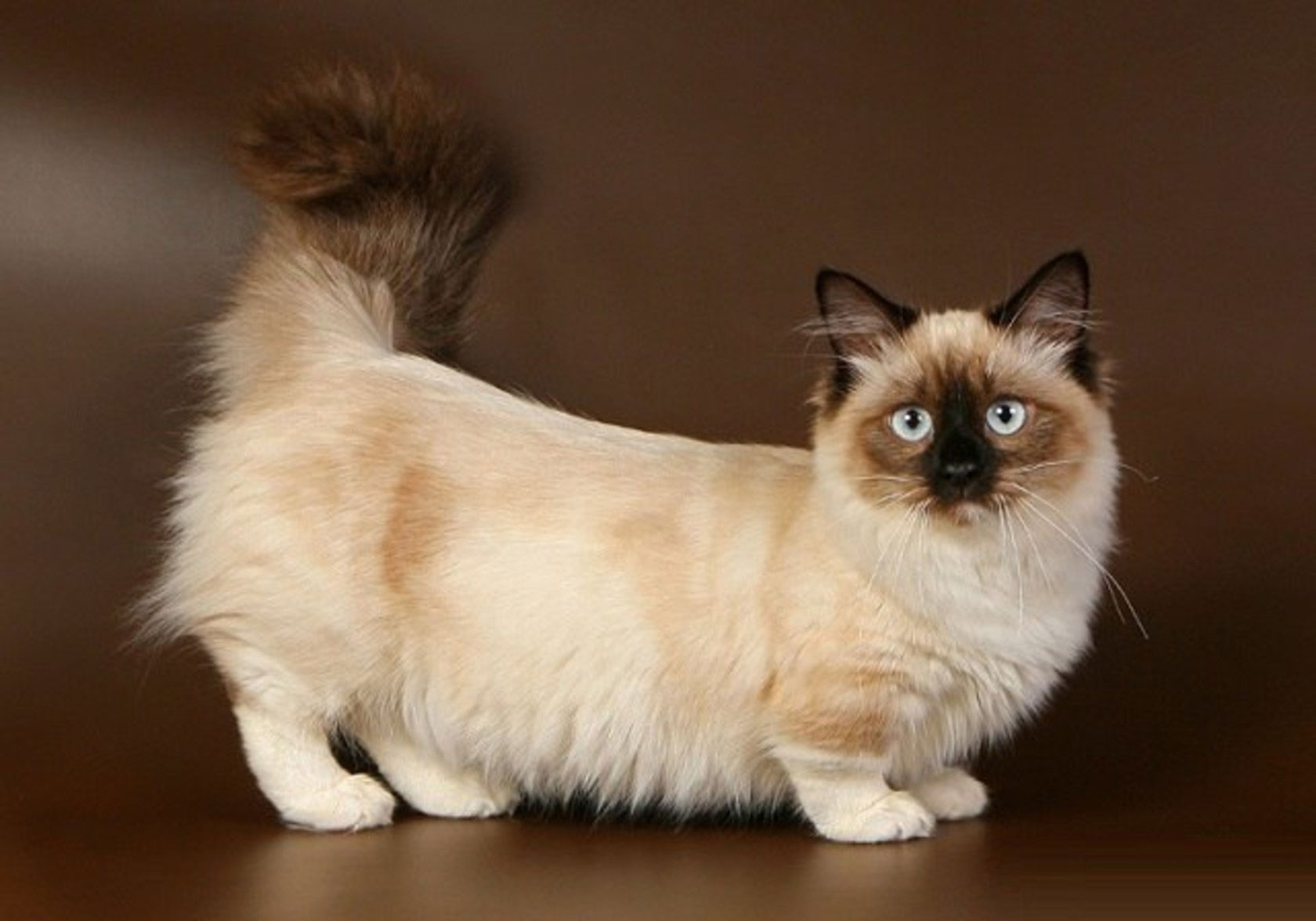
Munchkin cat breed Munchkin cats are one of the most discussed and controversial in the entire feline kingdom. They are unmistakable thanks to one distinctive feature: their short legs. In fact, because of them, the breed boasts the greatest number of nicknames, including short-legged cats, dachshund cats, and kangaroo cats. Owners and breeders of Munchkins claim that their mutation is not associated with any disabilities and does not interfere with their full lives. They are curious and energetic animals with a gentle and friendly disposition.
Content
Breed characteristics
Munchkin – charming and gentle pets who know how to give love to their owners and establish friendly relationships with both children and other pets.
|
Original title |
Munchkin |
|
Country of origin |
USA |
|
Weight |
2.2-4 kg |
|
Height (at withers) |
12.7-17.8 cm |
|
Life expectancy |
13-16 years old |
|
Kitten price (with pedigree) |
45,000 – 65,000 rubles |
|
Kitten price (without pedigree) |
from 5,000 rubles |
Based on the assessment of experts and breeders, the following approximate characteristics of Munchkin cats can be drawn up:
|
Parameter |
Level |
Points |
|
Size |
|
2 out of 5 |
|
Intelligence |
|
3 out of 5 |
|
Playfulness |
|
5 out of 5 |
|
Health |
|
3 out of 5 |
|
Picky eating habits |
|
2 out of 5 |
|
Activity |
|
2 out of 5 |
|
Friendliness |
|
4 out of 5 |
|
The need for communication |
|
4 out of 5 |
|
Molting |
|
3 out of 5 |
|
Attitude towards children |
|
5 out of 5 |
|
Attitude towards strangers |
|
3 out of 5 |
|
Cost of maintenance |
|
3 out of 5 |




History of the breed's origin
Short-toed cats were already being talked about in England as early as 1930, where four generations of these cats were born. Unfortunately, World War II took its toll on their numbers, and Munchkin cats virtually disappeared from human sight.
The modern history of Munchkins began in 1983. Sandra Hochenedel, an American woman from Louisiana, once adopted a black-and-white pregnant cat with short legs. She named her new pet Blackberry. Blackberry had taken up residence under an old abandoned camper and, out of habit, led a semi-feral life. She assumed the shortened legs were the result of an illness and a difficult childhood. Otherwise, she was quite healthy and active, and her reproductive abilities were apparently fine.
Blackberry had a litter, and Sandra was surprised to see short-legged kittens among the others. She gave one such kitten, named Toluus, to her friend, farmer Kai LaFrance. The kitten grew up, and within a year, he and a normal female had a litter of short-legged kittens. Some time later, numerous dachshund cats had settled on the ranch. Today, it's safe to say that all modern Munchkins are descended from Blackberry and Toluus.
The Munchkin cat breed was officially registered in the United States in 1985. It soon gained popularity in Europe, but cats of this breed only reached Russia in the early 21st century. Interestingly, the breed's name derives from the diminutive magical people described in The Wizard of Oz. They were referred to as Munchkins in the book.
Munchkins are already officially registered by many felinological organizations, including WCF and TICA.
Based on the experience of American, South African, and Japanese clubs, a surge in Munchkin popularity can be predicted. The breed's exotic appearance, compact size, and vibrant temperament are attracting ever more fans. On the Russian-speaking internet, the looming epidemic has been dubbed "Munchkinomania."
Appearance and standards
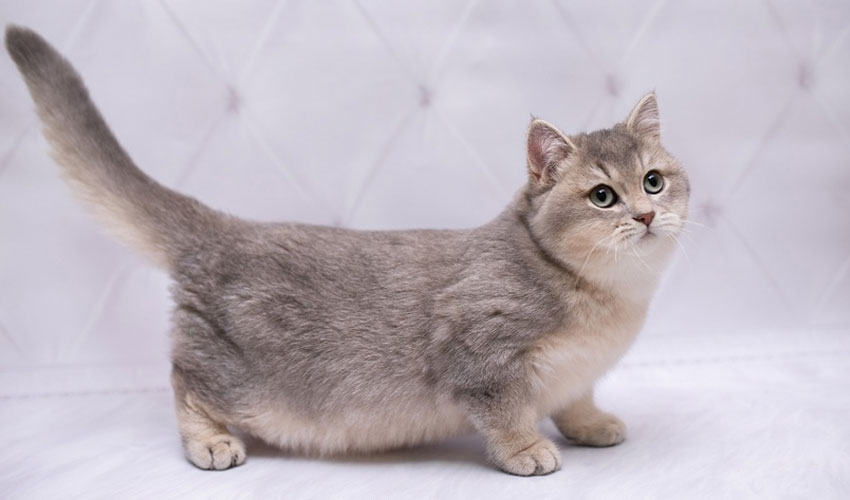
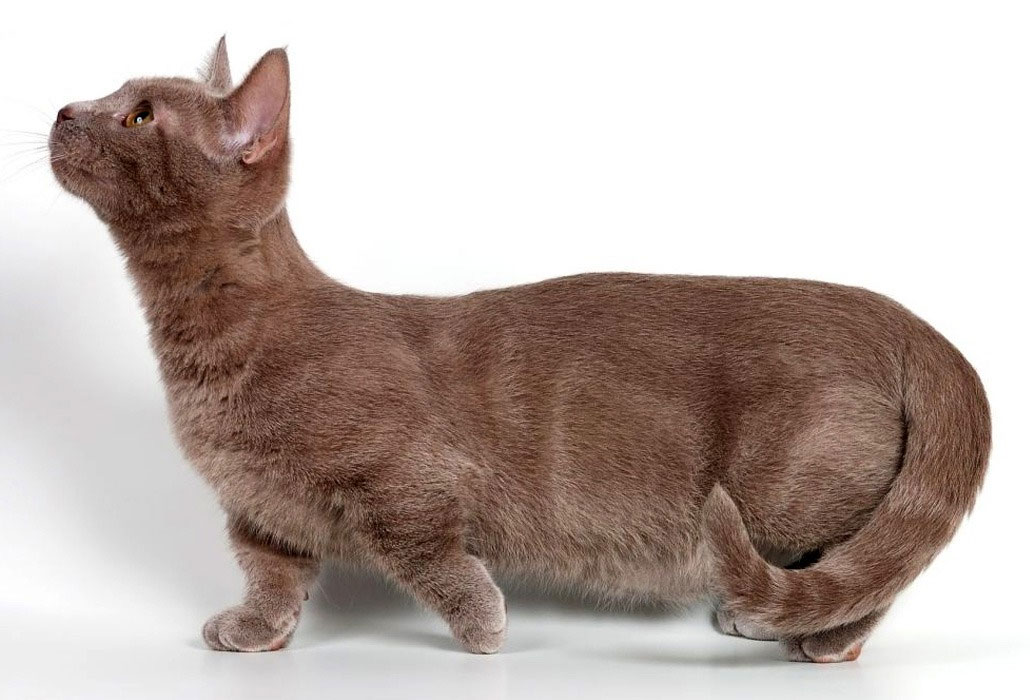
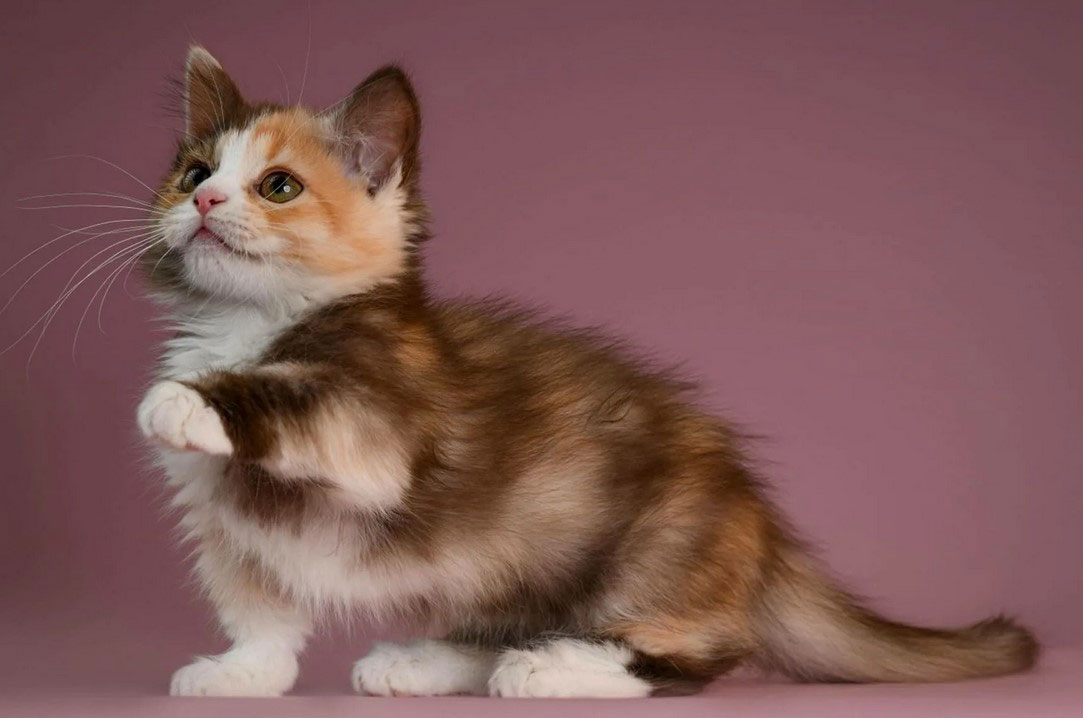
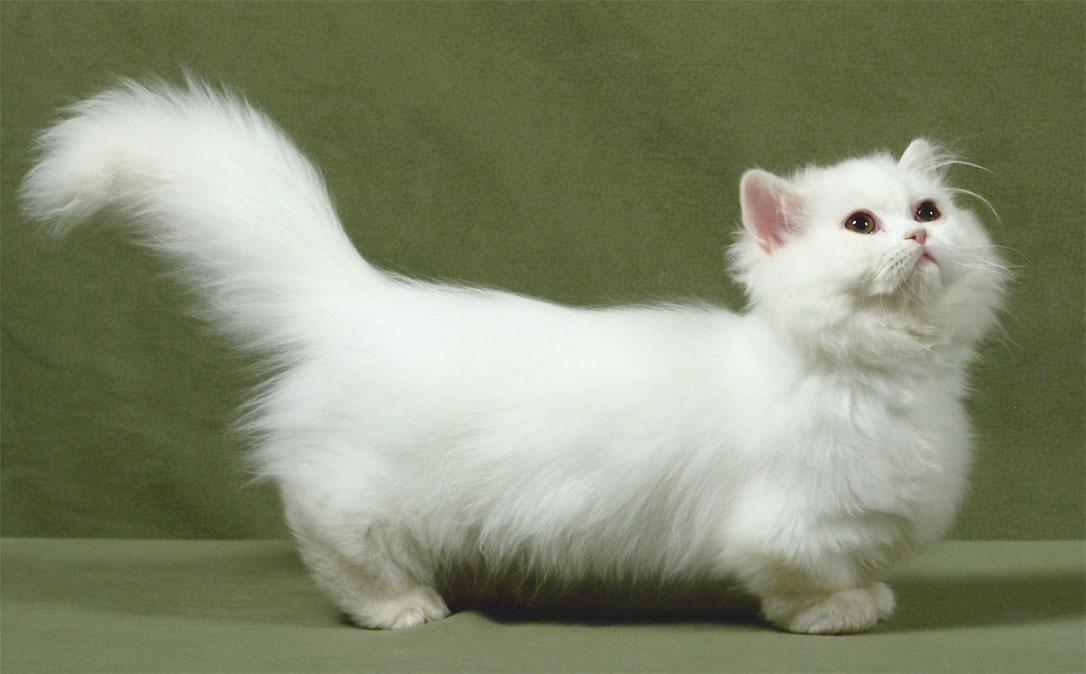
In appearance, Munchkin cats are very reminiscent of dogs of the breed dachshundTheir short legs make their body appear elongated, despite being the same length as a typical cat. Munchkins typically weigh no more than 4 kg. Female Munchkins are much smaller and more graceful than male Munchkins.
Head and muzzle
The head is a modified wedge with smooth contours; its size should be proportionate to the body. The muzzle is rounded. The transition from the flat forehead to the nose is moderately pronounced. A slight dip in the nose is acceptable. The cheekbones are moderately pronounced and high. The chin is fairly wide, but should not be excessively strong or protruding. The ears are small to medium in size, proportionate to the head, set high and well apart. The ears are wide at the base, the tips slightly rounded, and have noticeable fur. The eyes are walnut-shaped, or may be almond-shaped, fairly large and expressive in relation to the muzzle. They are set wide apart at a slight angle to the base of the ears. A rich, even color is preferred; there is no connection with the coat color.
Physique
The Munchkin's body is medium-sized, elongated, yet feline-like in its grace. The musculature is moderately developed. The chest is rounded. The thighs are level, but there may be exceptions. The tail is proportionate to the body, tapering to a point. When moving, it is usually carried vertically. The front legs are of equal thickness along their entire length. The hind legs have approximately equal thigh and calf size.
The hind legs are slightly longer than the front legs, which results in a slight rise from the withers to the croup.
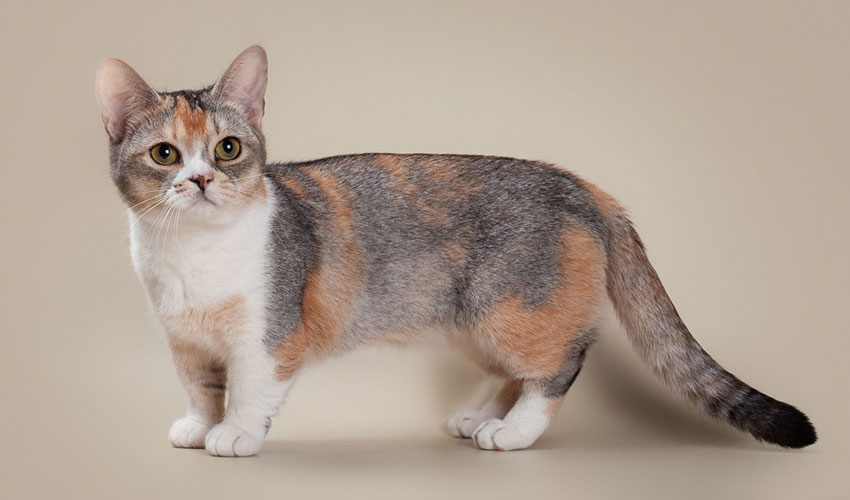
In proportion to the body, the legs appear somewhat more powerful. A slight inward curve of the front legs is acceptable. The paws are rounded and compact.
Separately about the length of the legs
According to the standard, Munchkins are divided into three types depending on the length of their legs: non-standard, short and super-short.
- SuperShort – cats with very short legs; they can be almost half the normal length. These cats are often considered show cats. The front legs lack defined shoulders and forearms. SuperShort Munchkins are typically small in size, weighing no more than 2.5 kg.
- Short Legs – Most Munchkins fall into this category. Their legs are approximately 1/3 smaller than normal.
- Longlegs, or non-standard Munchkins, are cats with normal-length legs, born from one or two Munchkins. They do not carry the dominant gene for short legs, and therefore are inexpensive and valuable only to breeders.
Due to their unique shape, Munchkins have a rather amusing gait: their hindquarters sway noticeably from side to side as they walk, as the bulk of the weight is transferred to their shoulders. Yet, they seem to exude grace and dignity: their chins are held high, and their tails are cocked!
Coat and colors
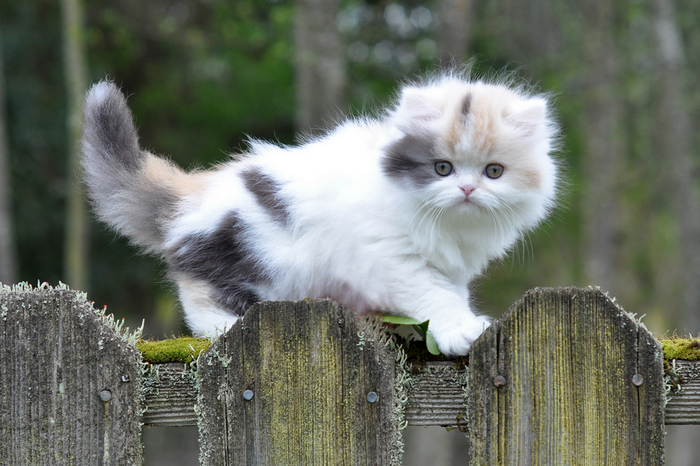
Munchkins come in shorthaired and longhaired varieties.
- The short coat has a plush texture and good protective properties. It is elastic and shiny. The undercoat is moderately developed. If the cat is a solid color, the coat may feel somewhat denser to the touch.
- Long hair with a medium-sized undercoat has a smooth, silky texture and good protective properties. It can be longer on the legs, tail, and neck.
All colors are allowed without exception, including combinations and markings.
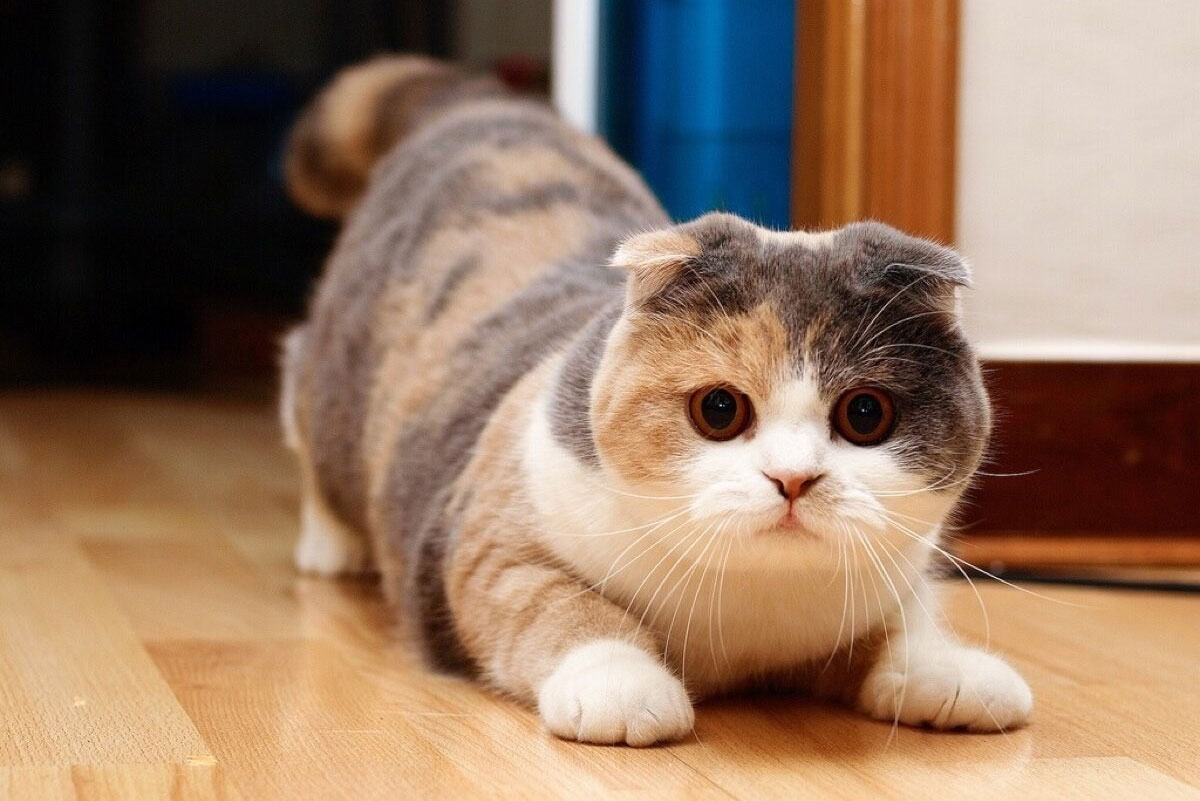
Lop-eared munchkins
Fold-eared short-legged cats do exist, but they are not supported by the Munchkin standard and are not yet a separate breed.
There's a group of enthusiasts officially breeding yet another cute breed with short legs and floppy ears, but feline organizations are reluctant to accept them, citing potential health problems often associated with mutated genes. In this case, both Munchkins and the Scottish Folds with whom they are bred are at risk for developing skeletal abnormalities.
Recently, lop-eared munchkins were given the status of an experimental breed and their own name – Folmax.
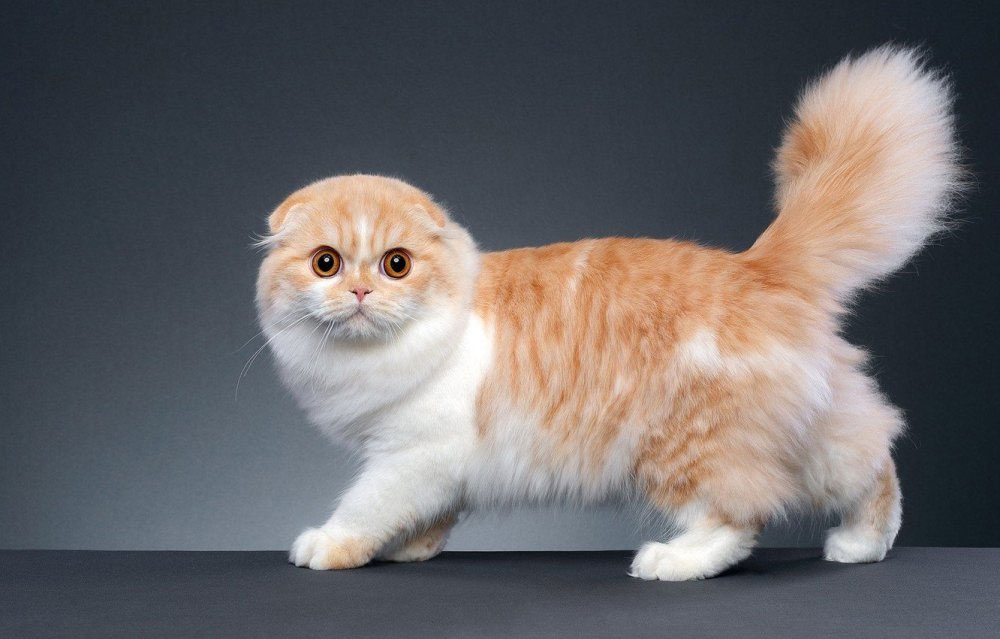
The Folmax breeding program involves a careful selection of animals and offspring under the supervision of RSA specialists. These kittens are offered for sale and are quite expensive. This does not apply to fold-eared Munchkins, which were born from accidental matings between amateur cat lovers.
In an attempt to obtain a new breed, Munchkins are crossed with many others, for example, with Curls, Sphynxes, Exotics, Siamese and others.
Character
Munchkins are sociable and good-natured by nature, characterized by curiosity and self-confidence. They can easily adapt to new environments, but typically form strong bonds with one owner.
Munchkins are clean and tidy. They are generally very quiet, meowing rarely and quietly. They prefer to communicate with their owners through soft purring sounds or simply to show what they want.
Cats of this breed are affectionate, intelligent, and loyal. If you decide to get a Munchkin, you'll gain a wonderful comforter and a pleasant companion.
It's also worth noting that many dachshund cats have a "magpie complex," often hiding objects they find attractive, especially children's toys. Therefore, try to keep your little one's toys in closed boxes that are difficult for your pet to reach. Besides playing indoors, they enjoy leash walks, climbing trees, and hunting. Some Munchkins are even trainable and quickly learn to obey various feline commands.
Munchkins are true pacifists; it takes a lot to provoke them into aggression, as they avoid conflict at all costs. Children are always delighted with them, as their kind nature and patience allow them to actively play with them, petting, cuddling, and giving them "childish" hugs. They also enjoy playing ball with them and chasing objects thrown to them by children.
If you read reviews from Munchkin owners, you can easily create a portrait-characteristic in which these cats emerge as man's most gentle, intelligent, kind, and charming friends.
Content
Munchkins are designed for apartment living. They are clean, compact, and not mischievous. However, it's best to remove fragile or valuable items within their reach. Also, make sure there are no poisonous plants on windowsills if your pet shows interest in them. A litter box for a Munchkin should be purchased with low sides or high ones with an open entrance. Any type of litter can be used. And of course, your pet will need bowls for food and water.
Munchkin activity
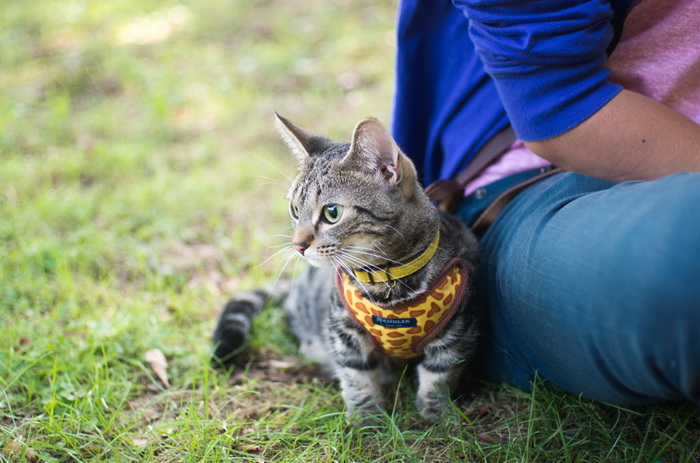
This breed remains active throughout its life, so it will need a variety of toys, and if possible, a play structure should be installed. It's a good idea for the cat to have its own sleeping area in a secluded corner. Munchkins can be walked on a harness, but don't overload them. They should be fully vaccinated and treated against external parasites before going outside.
Short-legged cats are much more agile than they might seem; they are agile and energetic. It's often believed that Munchkins can't jump, but this is greatly exaggerated. They are quite good jumpers, and while they may not reach the heights of many other breeds, they make up for this with other skills. They can successfully jump onto sofas, chairs, and tables, climb curtains, and can stand upright for long periods of time, earning them the nickname "kangaroo cats." They are also dexterous runners during play.
Cohabitation with other pets
They are generally very friendly with other pets. Munchkins are well aware of their territorial boundaries but will not aggressively assert their dominance. A Munchkin will likely quickly become friends with another cat. Relationships with dogs are more difficult to predict; everything depends on the dog's personality and its ability to accept a cat as a companion. They may be calm toward fish, small animals, or birds, even with some indifference or casual interest, but leaving the pair alone is not recommended.
Care
Despite their unusual appearance, munchkins do not require any supernatural care.
Grooming
Grooming is slightly different depending on whether you have a long-haired or short-haired pet.
Shorthaired Munchkins While their coat doesn't require extensive grooming, their appearance will certainly benefit from regular brushing and combing, along with subsequent polishing with a chamois cloth to give their coat a special shine. For brushing, it's best to use short-bristled natural bristle brushes, fine-tooth combs, or special rubber gloves. Once a week, or twice a week during the shedding season, is sufficient.
Longhaired cats You can brush your cat's fur every day, but two to three times a week is essential. Brushing will prevent matting, reduce the amount of hair swallowed while licking, speed up shedding, and, of course, improve its appearance. Various tools are used for brushing long-haired cats: massage combs, slicker brushes, rubber gloves, combs, furminators, and natural bristle brushes. Owners usually choose the most convenient method.
Munchkins shouldn't be bathed frequently; bathing should be done only as needed, usually two or three times a year, when their coat becomes greasy and requires additional washing, and after shedding. Munchkins aren't big fans of water baths, but are generally quite calm. After bathing, it's best to blot wet fur with a towel and let it air dry. A hair dryer can be used when the coat is almost dry. Otherwise, over-dried hair will become dry and brittle. Furthermore, vigorous drying can negatively impact the skin.
Bathing Munchkins is not recommended more than once every 5 months, but their fur can be brushed regularly. Hygiene products, shampoos, and conditioners are selected based on the cat's coat length.
Oral, eye and ear hygiene
It's great if you can get your Munchkin used to having his teeth brushed from an early age, and brush them at least once a week using special veterinary toothpastes and a soft toothbrush. Brushing will prevent plaque and tartar buildup. Their eyes and ears should be regularly inspected for dirt and cleaned as needed.
Trimming claws
This is a case-by-case basis. If your cat is accustomed to a scratching post and doesn't destroy things or scratch, she doesn't need a manicure. If necessary, her claws are trimmed with special clippers to just 1-2 mm. Keep in mind that claws grow back very quickly and become sharp even faster; the procedure will need to be repeated after 1-2 weeks.
Munchkin cats are low-maintenance and can handle this task on their own. As mentioned above, they are neat and clean. However, be sure to give your cat your love—she will reward you with her devotion.
Diet
Munchkins can be fed both natural foods and commercially prepared foods. It's important to note that natural foods don't include table scraps, porridge, soup, or fried potatoes. They should be fed separately prepared food, with lean meat as the main ingredient. Additionally, the cat should eat fermented milk products, porridge, vegetables, and fish and eggs once or twice a week. The optimal diet, in percentages, is: meat – 60%; vegetables – 30%; grains – 10%.
Feeding commercial pet food is much simpler; simply choose a ready-made premium or super-premium diet. When choosing food, it's important to consider several factors: the animal's age, its physiological state, and its activity level. Avoid prescribing therapeutic or preventative foods to your cat unless they're absolutely necessary.
Munchkins are big eaters, so one of the main responsibilities of owners is to ensure their diet is balanced and regulated. The optimal option is portioned feeding on a schedule.
Health and life expectancy
Overall, Munchkins are a healthy and robust breed. No hereditary diseases associated with the short-legged gene have been identified. However, one common condition that should be mentioned is lordosis. It manifests itself as a weakening of the muscles that support the animal's spine. As a result, a sagging spine can be observed. This condition also affects the cardiovascular and respiratory systems. Severe lordosis can be fatal. Therefore, take your pet to the veterinarian regularly and be sure to supplement their diet with vitamins that can support muscle tone.
Munchkin owners should pay attention to their behavior. If a cat begins to experience back pain, it will lie down more often and move cautiously. At the slightest suspicion, consult a veterinarian.
Also, don't neglect routine vaccinations and treatments for internal and external parasites. With proper care and a balanced diet, cats rarely get sick. The average lifespan is 12-14 years.
Genetics and breeding features
The Munchkin's short legs are caused by a mutant gene, which is dominant. This means that when these cats are mated with a long-legged cat of any breed, about half the kittens will inherit the mutation and be born with short legs. The remaining kittens with long legs will not be carriers of the gene.
To make it easier to navigate, let's look at a small table in which:
- Mn -Munchkin;
- nn – normal genotype of a cat with long limbs.
| M | n | |
| n | Mn | Mn |
| n | Mn | nn |
So, from the table we see that the result of crossing a normal cat with a short-legged cat is that half the kittens will take after their father, and half after their mother. Some of the litter will be standard munchkins with the Mn genotype and short legs. They are marked with the abbreviation in the pedigree. SL (Short leggings). The remaining kittens with long legs and the nn genotype are called non-standard munchkin and are marked LL (LongLegs)They are very similar in appearance, but lack the main characteristic of the breed.
Now let's see what we get if we cross two normal Munchkins.
| M | n | |
| M | MM | Mn |
| n | Mn | nn |
In this case, we see that another MM gene variation has been added. Ideally, a cat with two dominant genes should be short-legged and pass this trait on to all her kittens, but this is not destined to happen.
Embryos with the MM genotype are reabsorbed early in development. As a result, a litter of two standard Munchkins will always produce fewer kittens than in the previous example.
It is this feature that forces breeders to use non-standard munchkins in their breeding program.
Many clubs allow Munchkins to be crossed with long-haired or short-haired domestic cats that do not belong to any breed.
Choosing a kitten and price
If you're seriously considering buying a Munchkin kitten, the first big decision you'll have to make isn't the baby's gender or coat color. The first decision will be what you really want: a high-quality, purebred Munchkin kitten, guaranteed to be born from reputable parents, or just a short-legged cat.
Many people will say, "Why do I need paperwork? I just want it for myself." Well, pets for the soul also come in two forms: those with a good pedigree from a breeder, but not for breeding. This means the animal will have to be spayed or neutered, which is usually stipulated in the contract. Or it could be an inexpensive puppy from amateur breeders, purchased without paperwork or verification of the parents' qualities.
How to choose a purebred kitten
If you're looking for a Munchkin kitten, choosing one will be a challenge. Find a cattery—if you're lucky, they'll have kittens for sale; if not, you'll have to wait for a planned litter. When choosing a kitten, first consider the parents, their personality, appearance, and pedigree, and then look at the kitten and its living conditions. The kitten should be active, have a good appetite, and not shy or aggressive.
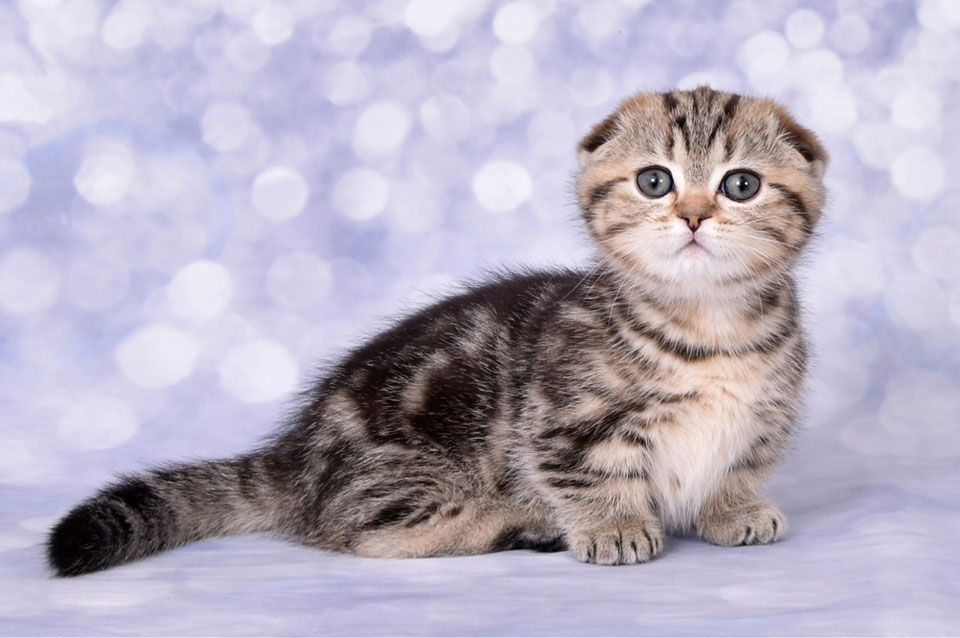
Before choosing a cat, be sure to read the breed standard. While it's harder to discern adult traits in a kitten, certain characteristics will still be noticeable. For example, the standard requires round and expressive eyes. If they are slanted and set close together, it's worth considering the cat's ancestry.
And as is often the case with new breeds, there are a multitude of unscrupulous "breeders" who put commercial interests above improving the breed. Without regard for the consequences, they conduct harmful crosses with other breeds and half-breed hybrids.
The cost of Munchkin kittens
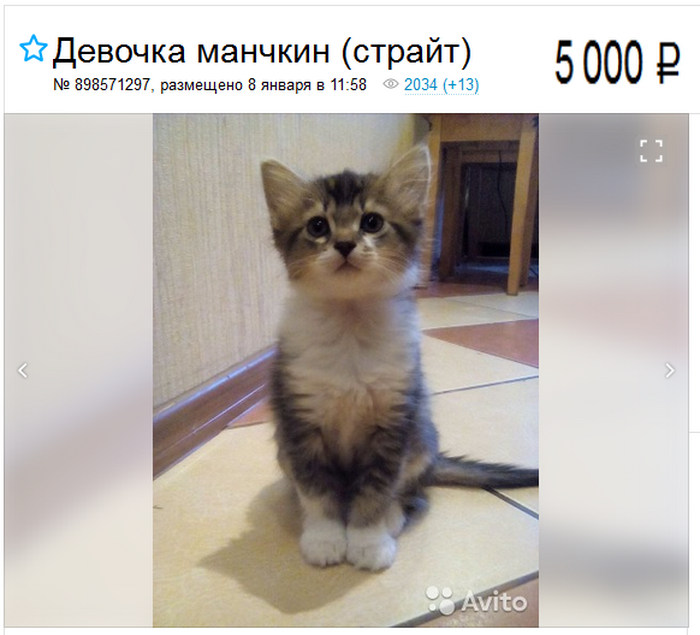
Munchkin kittens born to amateurs are sold for prices starting from 5 thousand rubles.
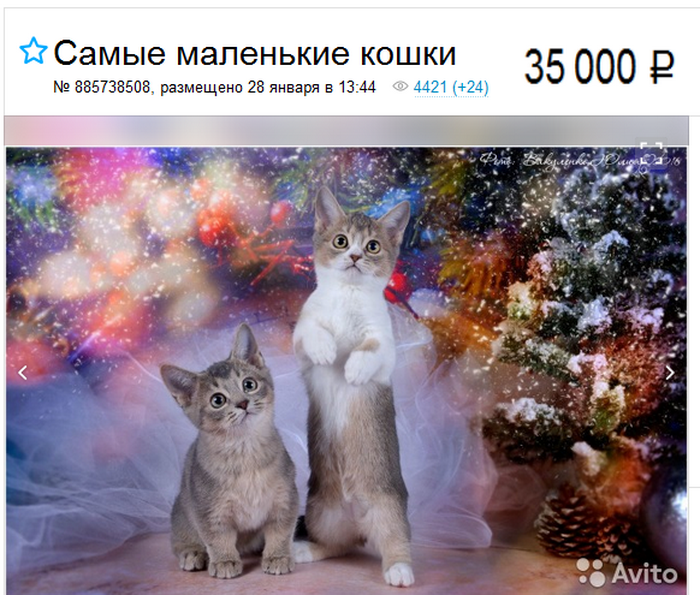
The price of a Munchkin kitten from a cattery varies widely. This is because the price is influenced by many factors, including the status of the cattery, the quality of the males, and the characteristics of the kittens. A Munchkin kitten with a pedigree but no show potential starts at 35,000 rubles, while a promising kitten costs between 45,000 and 65,000 rubles.
Long-legged Munchkins are inexpensive, up to 5,000 rubles, depending on color, type, and pedigree.
Photos of Munchkin cats
Video review of the Munchkin cat breed
Read also:


Add a comment