
Small Munsterlander
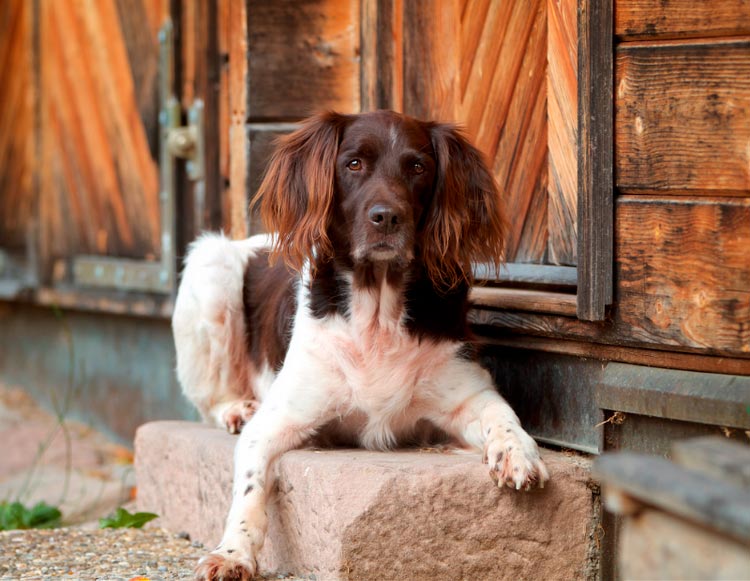
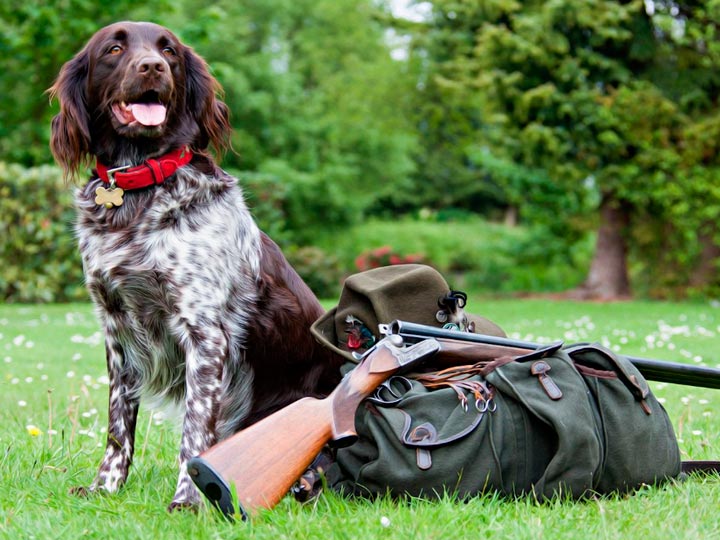
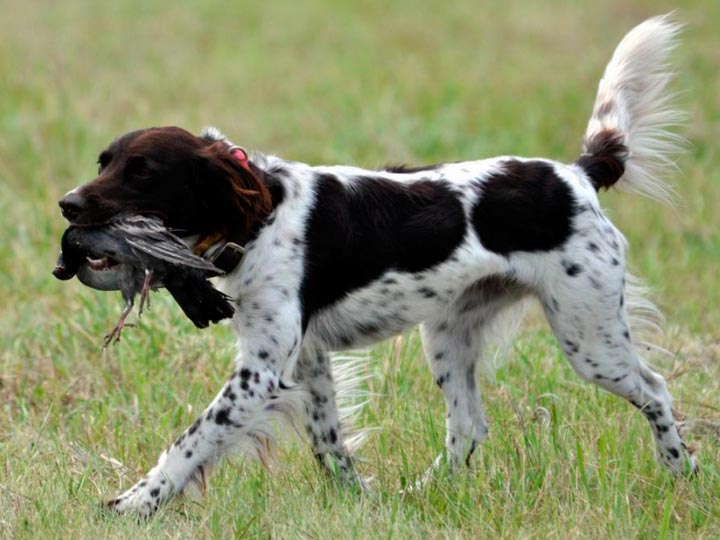
The Small Münsterlander is a hunting dog breed that developed in the 19th century in the area around Münster, Germany. It is the smallest of the continental pointing dog family. It is considered a versatile gundog. It is capable of hunting on land and water, both feathered and fur-bearing game.
Content
History of origin
The breed's official development began in Münster, northern Germany, in 1870. Various hunting dogs, primarily spaniels and pointers, common at the time, were used in the breeding process. Some cynologists believe that the founders of the breed were Breton Spaniel And WachtelhundIn 1912, the Small Munsterlander Association was founded to preserve and promote the breed. At the same time, work was underway in Munster to develop a larger pointer, which was named Large Munsterlander.
Despite the similar name, the Small Munsterlander and the Large Munsterlander are not related breeds.
Usage
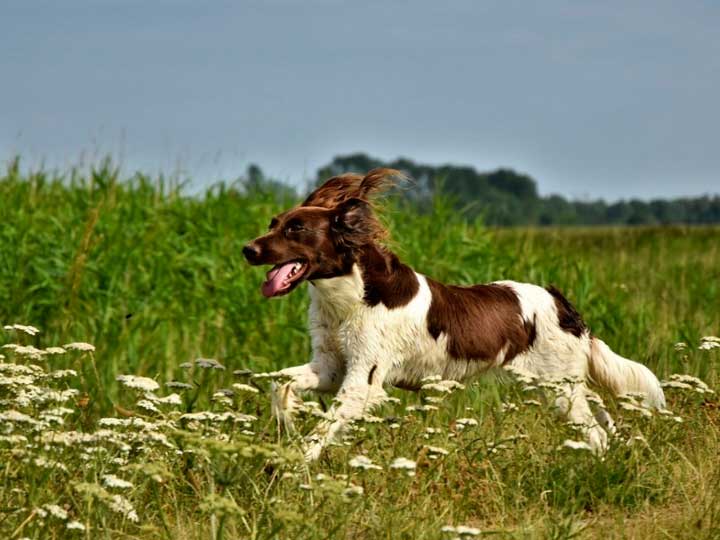
The Miniature Munsterlander is a versatile hunting dog. It adapts quickly to various hunting environments, possesses excellent scenting, passion, and a persistent search, though slightly slower than other continental pointers due to its small size. It works on all types of feathered game, as well as on the scent of small fur-bearing animals and ungulates.
Training and coaching a Münsterlander requires a lot of time and a serious, competent approach. The infusion of hound bloodlines has induced the ability to stand in a stand. This skill must be "awakened" and then reinforced through practice. Otherwise, the dog will only pause briefly, like a spaniel, or will rush at the game without even a pause. Only then is it recommended to begin training it to search with a voice.
Appearance
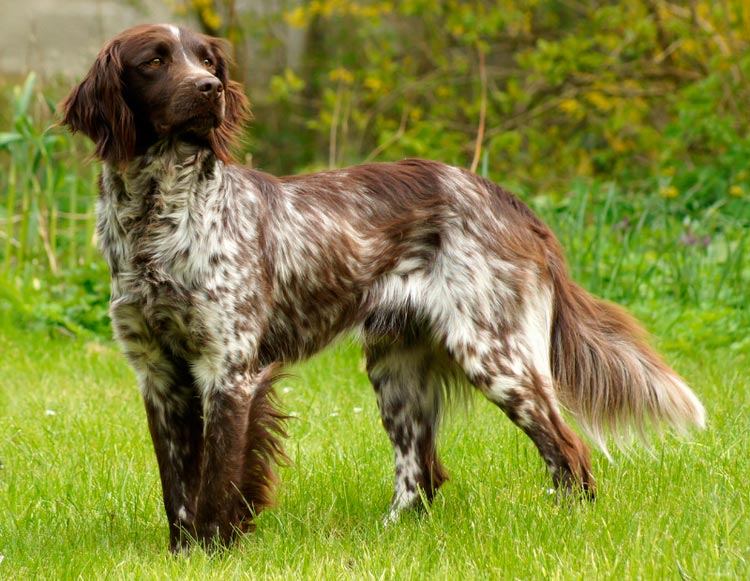
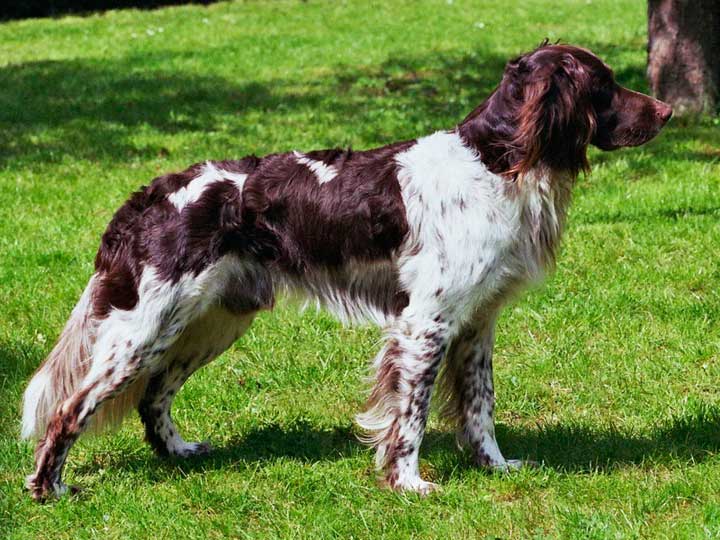
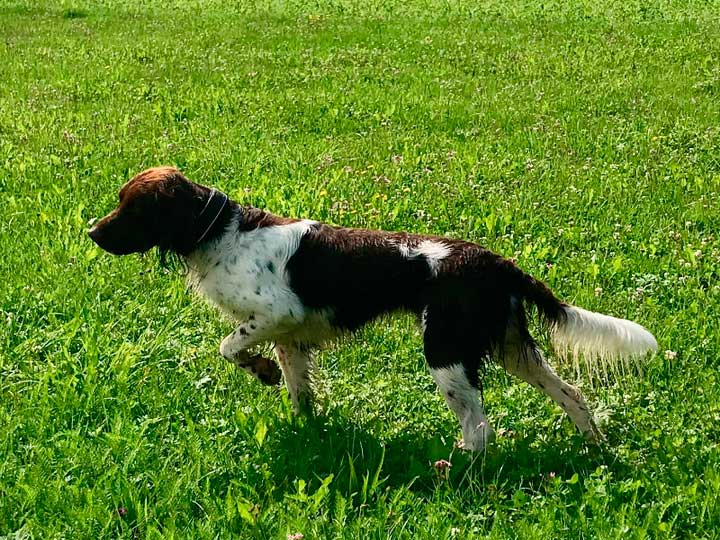
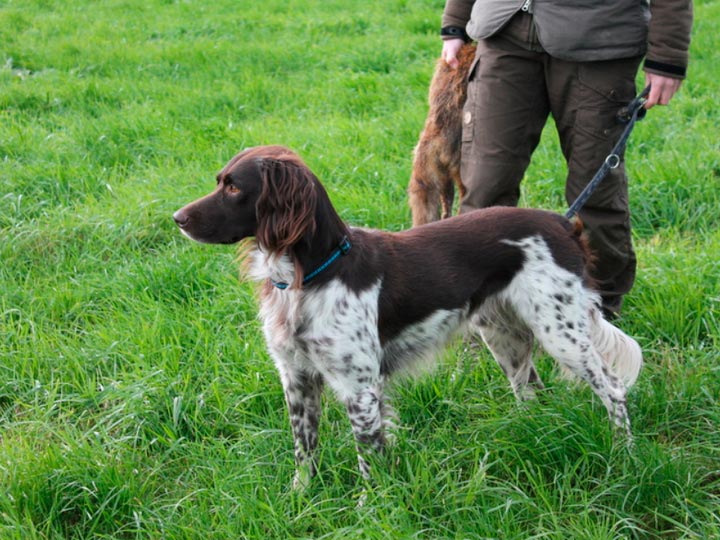
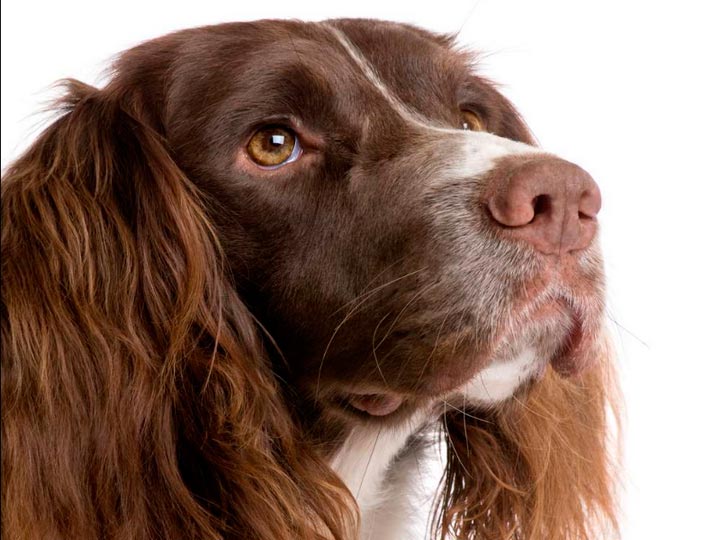
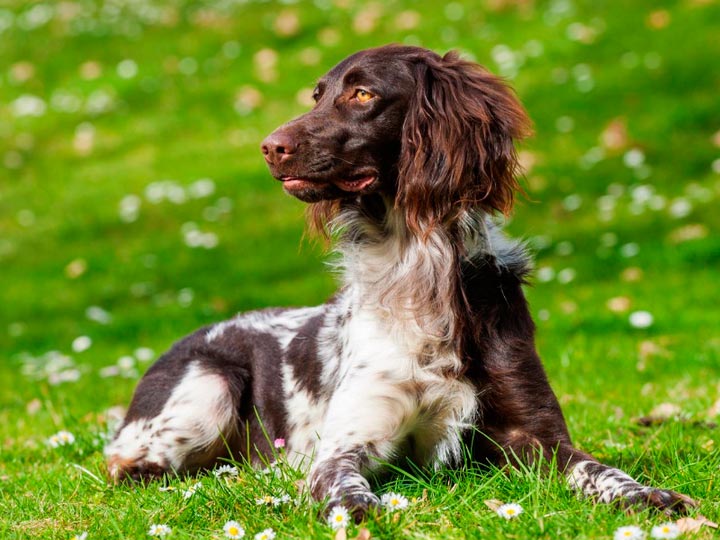
The Miniature Munsterlander is a well-proportioned, medium-sized dog with a strong, harmonious build. It combines balance and elegance. Sexual dimorphism is pronounced.
- Height at withers: 50-56 cm.
- Weight: 18-22 kg.
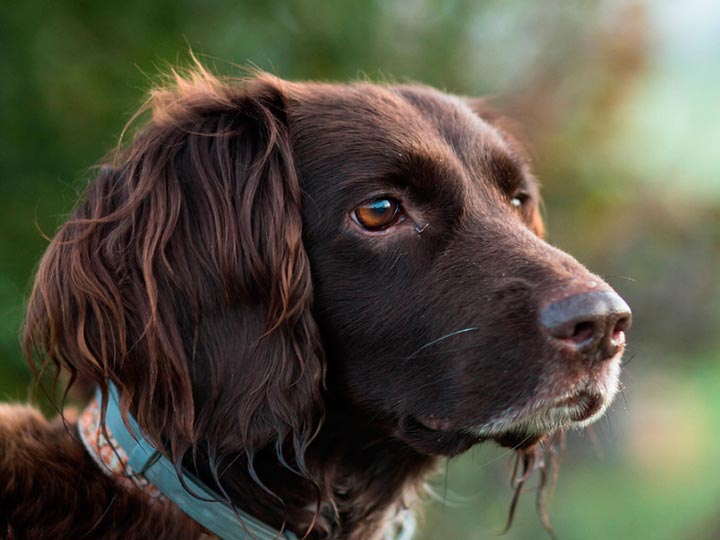
The skull is flat or slightly domed. The muzzle is long, powerful, and straight. The lips are brown and tight. The bite is scissor-shaped. The dentition is complete. The eyes are medium in size and as dark as possible. The ears are wide, set high, and close to the head. The neck gradually widens toward the body, and the occiput is slightly convex.
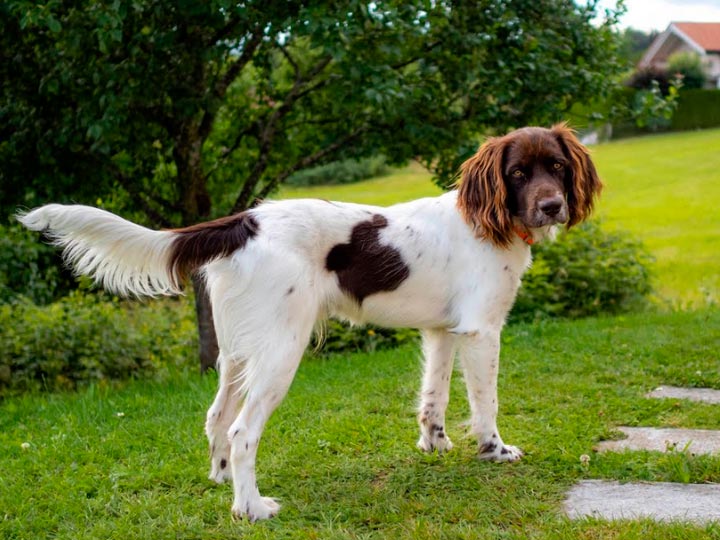
The length of the body slightly exceeds the height at the withers, with a ratio of approximately 1:1.1. The distance from the elbow to the ground is approximately equal to the distance from the elbow to the withers. The topline is slightly sloping. The croup is long and broad. The chest is deep rather than wide. The ribs are well sprung. The underline is slightly tucked up. The tail is set high, with a long flag. The limbs are strong, medium in length, and well muscled. The paws are rounded and arched. The front legs are thickly feathered, while the hind legs are breeched.
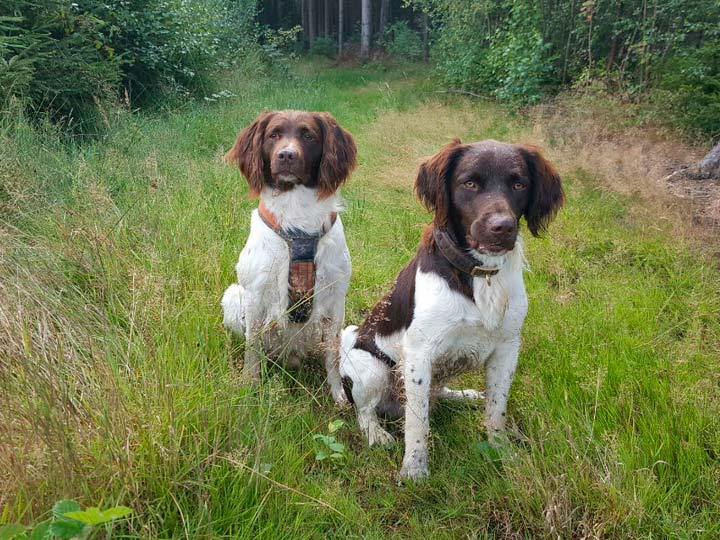
The coat is shiny, straight or slightly wavy, dense, and not too long. The color is white and brown with speckles.
The Small Munsterlander is the smallest of all pointing dogs.
Character and behavior
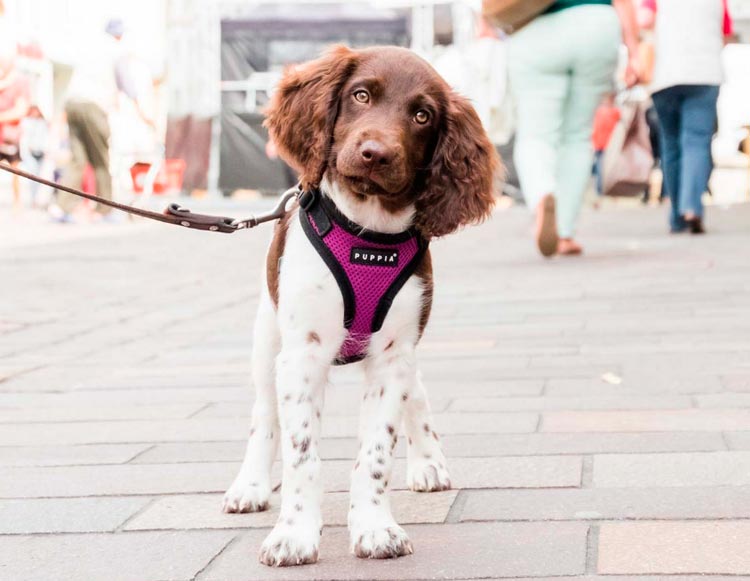
The Miniature Munsterlander is energetic, playful, and curious, passionate, and intelligent. It has a balanced temperament and a stable psyche. It maintains close contact with its owner and exhibits a distinct social nature. It is alert and wary of strangers. As soon as it sees that a person has good intentions, it becomes friendly. It is not aggressive and gets along well with other pets in the household.
Requires early socialization and persistent training. They do not tolerate yelling or physical violence. Handling the Munterlander requires gentle, patient, and consistent handling, without provoking conflict.
Content Features
The Miniature Munsterlander is suitable for living in an apartment, house, or spacious enclosure, but never chained as a yard dog. It's crucial for him to have the opportunity to go for regular walks with a companion, interact with his owner, explore the world around him, and occasionally go out into the field. Without this, the dog will wither and its character may be irreversibly damaged.
They don't require complex grooming. Their coat should be brushed occasionally and bathed as needed. Given their tendency to ear infections, breeders recommend listening to their ears after swimming, including in bodies of water. It's also important to monitor their eyes and teeth. Any white hairs that appear on brown spots should be plucked by hand. The feathering is sometimes trimmed for convenience.
Health and life expectancy
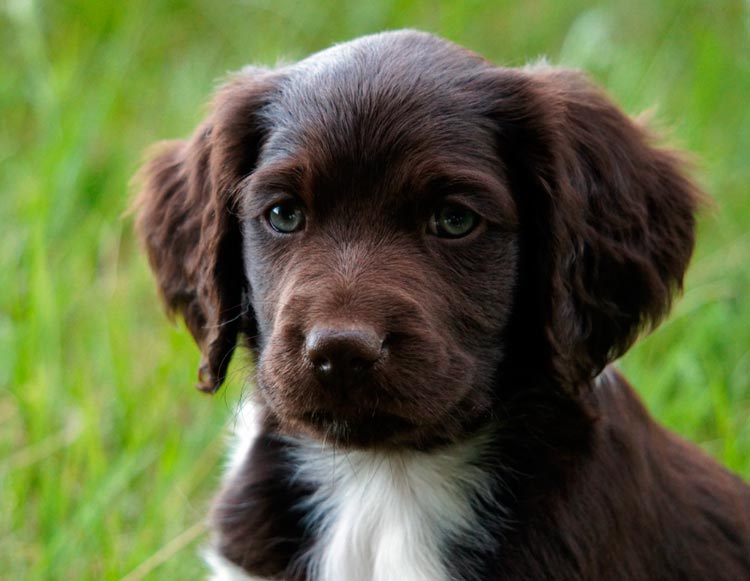
This dog is considered a healthy breed. Most breeding programs are selective, so cases of congenital and genetic diseases are extremely rare. Skin problems are more likely in cold climates. Life expectancy is 12-14 years.
Buying a puppy
They are most common in Germany, Belgium, the Netherlands, the Czech Republic, and Denmark. Breeders favor hunters, and demand for these versatile gundogs often exceeds supply, making them rare among companions. To be approved for breeding abroad, dogs must be screened for hip dysplasia, pass a temperament test, and obtain working certificates.
There are several breeders in Russia, but the breed remains small. Advertisements for puppies for sale are rare. The average price for a Miniature Munsterlander is 20,000 rubles.
Photos and videos
Large photographs of the Small Munsterlander breed are presented in the gallery.
Video about the Small Munsterlander dog breed.
Read also:


Add a comment