
Hairless Cats: Photos, Breed History, Care, and Maintenance
If you're drawn to the unusual, alien-looking hairless cats, we suggest learning about the history of hairless breeds and their characteristics, as well as getting advice from veterinarians and breeders on how to properly care for and maintain these pets.
Content
Story
The lack of hair is the result of a change at the chromosomal level.
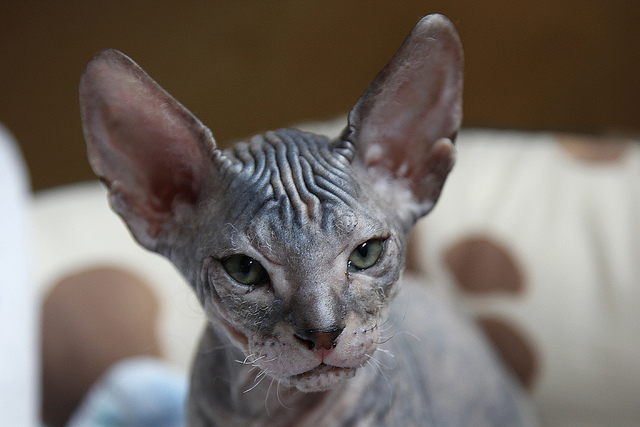
That such cats were born in ancient times is evidenced by various drawings and figurines dating back to the heyday of Ancient Egypt. The rarity of such cats can be judged by the fact that they were worshiped and considered deities.
The first hairless kittens were officially registered in Mexico. The owner acquired a pair of these unusual animals from local Native Americans. While many detailed records remain of the cats' lives, they never produced any offspring. Why didn't the breeder try to produce unique kittens? There are two possible reasons:
- both animals were from the same litter;
- The lack of hair was perceived more as a disease than as a feature.
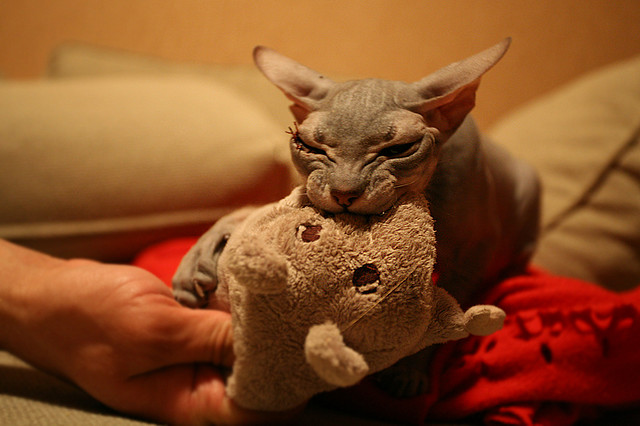
Successful attempts to create a new breed were made much later. For example, in 1938, a common Siamese cat gave birth to hairless kittens, and in 1948, three unusual alien-looking kittens were born in France. Geneticists became interested in this mutation and discovered that it occurs spontaneously. Breeders in various countries attempted to cross-breed closely related animals to produce offspring with stable traits shared with their parents.
Hairless cat breeds emerged through spontaneous "mutation." These kittens appeared in America, Canada, Australia, and France. Occasional Sphynxes appeared here and there. At first, they were perceived as something alien. But gradually, Sphynxes began to be recognized as a new breed.
Hairless cat breeds
Most people associate the phrase "hairless cat" with the Sphynx breed, but few know that there are several varieties (Canadian, St. Petersburg, Donskoy). Furthermore, hairlessness is characteristic of the breeds. Ukrainian Levkoy, Elf, and Devon Rex. Each breed is unique in its own way and, despite some common traits, has its own distinct characteristics.
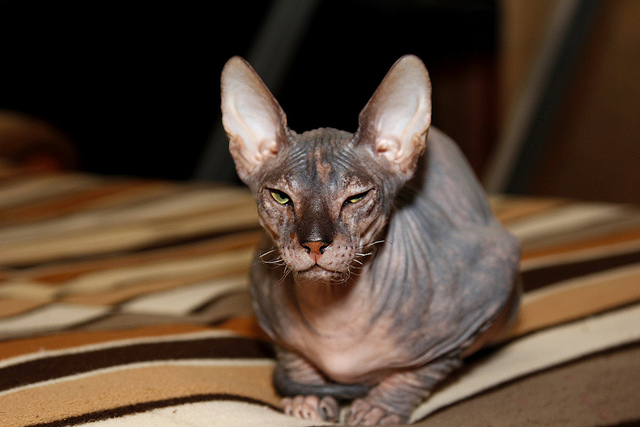
Canadian Sphynx
The distinctive features of this breed include a muscular yet graceful body with a broad chest, long toes, and a whip-like tail. It's worth noting that the breed standard specifies a small tuft of fur at the tip of the tail as normal. These folds add a particularly charming touch to the kittens.
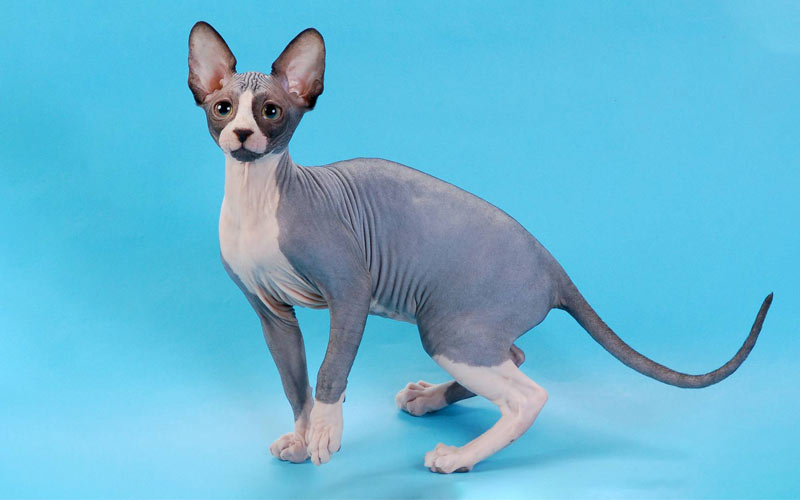
Canadian Sphynx The breed has a wedge-shaped head and large, wide-set ears, giving it a distinctive expression. The skin is virtually hairless, but some members of the breed may have a small, almost invisible, downy coat. The color can be almost any color.
The character is affectionate, lively, loving.
Don Sphinx
The breed is considered one of the youngest. It was developed in Russia in 1987. Breeders from Rostov-on-Don noticed a semi-hairless female cat, who subsequently gave birth to completely hairless kittens.
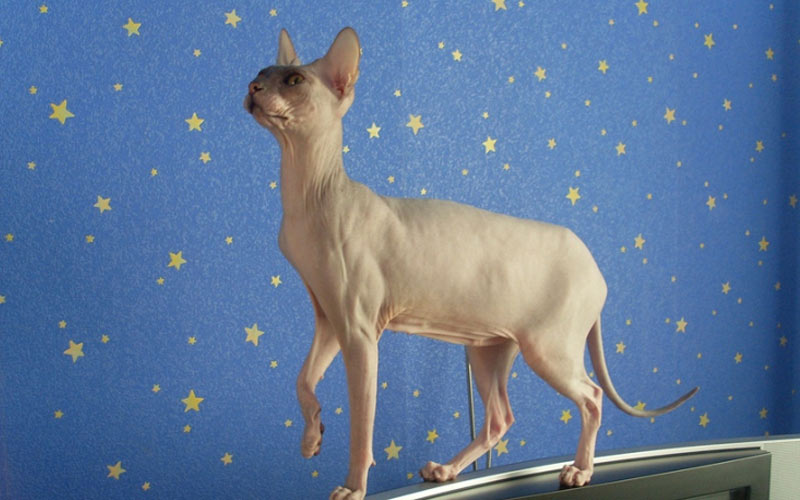
These cats are similar in appearance to Canadians, but have a more willful and unyielding nature. Owners often notice their pets exhibiting behavior more typical of dogs than cats. Their body color may vary, but there should be no fur. By the age of two, any downy fur should disappear.
Peterbald (St. Petersburg Sphynx)
A young breed that was officially recognized in 1996. As the name suggests, Peterbald The breed was developed in St. Petersburg. Felinologist Mironova produced these unusual hairless kittens by crossing a Don Scythian and an Oriental cat.
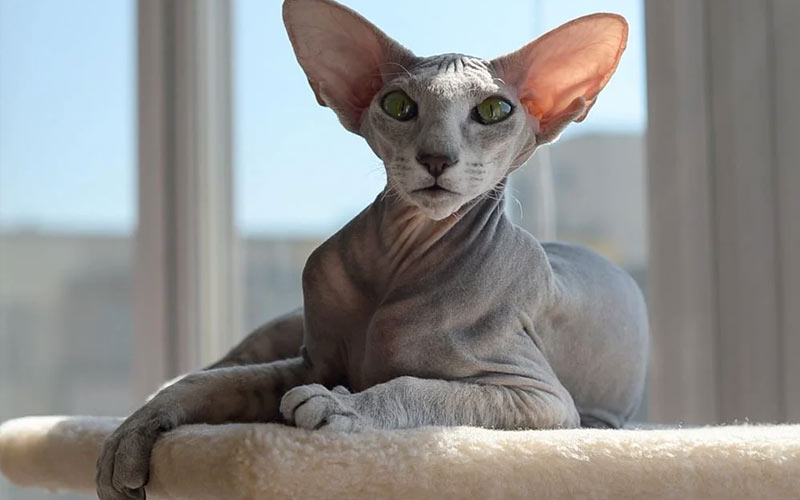
This breed is distinguished from previous representatives by:
- elongated body;
- narrow, elongated head with a large number of folds (the absence of folds is considered a defect);
- a very long and thin tail, even at the base (necessarily bald);
Ukrainian Levkoy
Very unusual hairless fold-eared cats, which appeared only in 2004 (although genetic work had been underway since 2000). Among the Levkoy's ancestors is the hairless Don Sphinx and Scottish Fold with a dominant gene for fold ears.
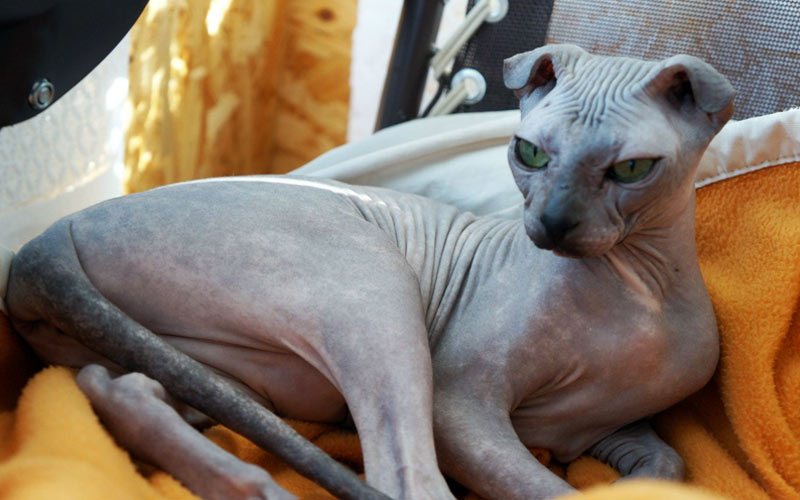
Among the exterior features it is worth noting:
- lop-earedness;
- wedge-shaped head with widely spaced ear bases;
- almost flat forehead with wrinkles.
Elf
This breed was developed in the United States relatively recently. Breeders Karen Nelson and Kristen Ladom registered it in 2006. The ancestors of these unusual cats were the classic Sphynx and the American Curl.
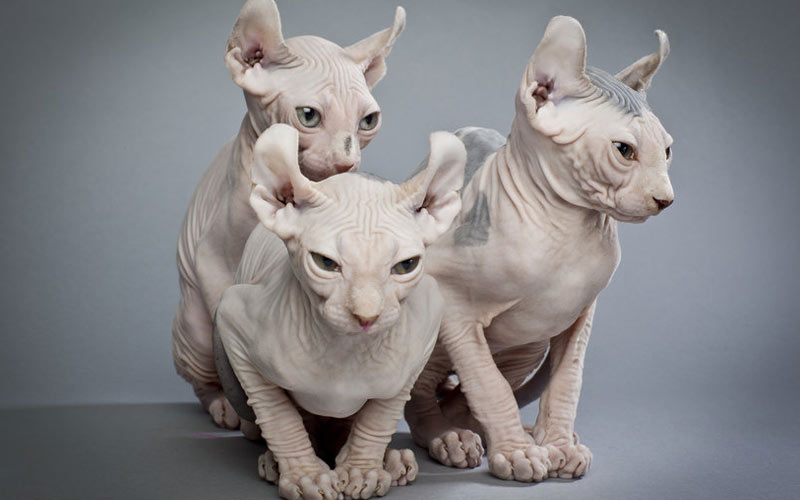
The main feature is the wide-set, curved ears at the top, which give the animal’s face a resemblance to fairy-tale elves.
Devon Rex
Unlike the previous breeds, which are completely hairless, the body Devon Rex Covered with short, wavy hairs, although still lacking a guard hair, this characteristic gives these cats a distinctive, recognizable appearance and a special charisma.
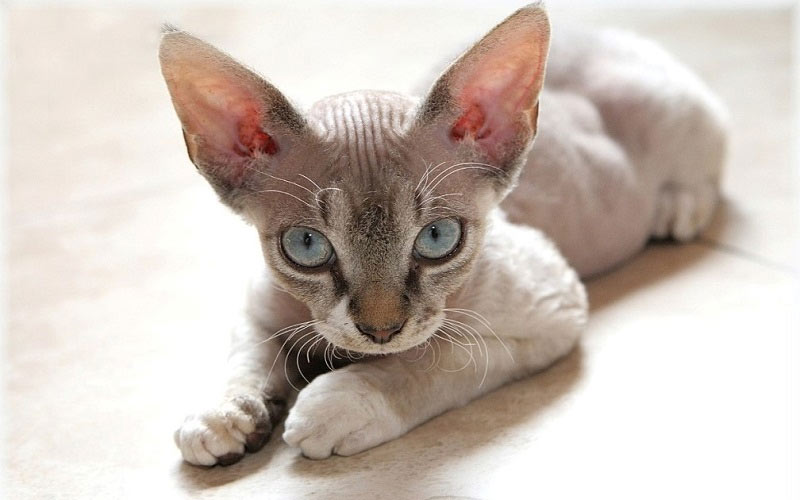
Colors can be very varied, including acromelanic.
It's important to note that the degree of fur coverage can vary, but it's always uniform from muzzle to tail. Bald patches on the animal's body are considered a defect.
Keeping hairless cats
The biggest problem is related to skin care. Even though cats are hairless, a brownish "film" accumulates on their skin. This secretion from glands combines with dust and oxidizes. It must be removed, otherwise, the pet will develop an unpleasant odor and may also develop acne and inflammation.
Important! You don't need to bathe your Sphynx every day. Wiping it with a cloth soaked in a special lotion every day or two is sufficient. Bathing it with cat shampoo once a week is sufficient.
Pay attention to the area behind the ears and near the claws. This is where most dirt accumulates. Don't forget the folds. Don't rub the skin vigorously, as this can damage it. Pat dry with a soft towel. If you let your cat out wet, they can easily catch a cold, which can lead to pneumonia.
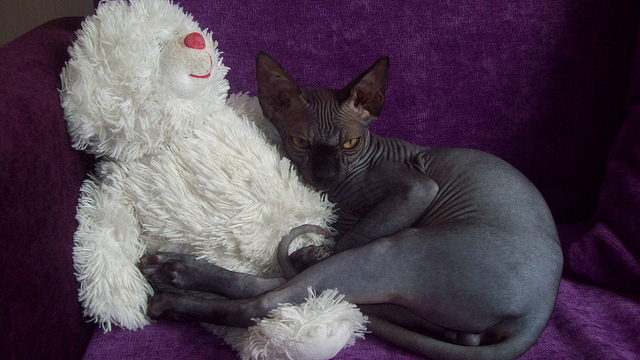
Hairless breeds should also avoid exposure to scorching and direct sunlight. Their skin is unprotected, so even short exposure to the sun can cause severe sunburn. It's also important to protect your pet from wind and frost, as they lack a warm coat. If you plan to take your pet outside, be sure to purchase special clothing.
Important! During the cold months, Sphynx cats can get cold even in an apartment.
Ears and eyes also require special attention. Get your cat used to grooming from a young age. Use cotton swabs or pads. Trim their claws regularly.
The diet for these special animals also differs. Hairless cats have a faster metabolism, so they need to be fed more frequently and with higher calorie intake. Vitamins and minerals are used up very quickly, so it's important to maintain a balance of these vital elements in their food.
If your cat has started growing fur, it's a sign that the indoor climate isn't conducive to it (it's too cold) or that its diet isn't nutritious enough to support its metabolism. Fur is a protective response to keep warm. Reviewing your pet's living conditions and diet will help its appearance return to normal.
How to choose the right kitten
A hairless kitten, which can cost between $400 and $1,500, must be chosen carefully, paying attention not only to the cost but also to the living conditions of the kittens and mother. If the owners don't take good care of their pets, the kitten you choose may have health issues. Proper care and nutrition during the first months of life are crucial for developing a strong immune system.
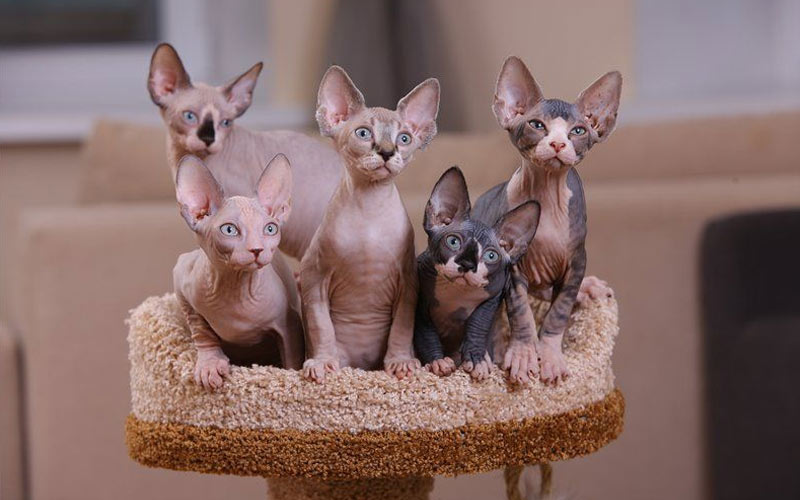
It's essential to research the kitten's pedigree. It shouldn't contain any suspicious relatives, even in the distant past. It's a good idea if the owners provide detailed health information about the kitten's parents (ideally, grandparents as well). This will allow you to be prepared for any potential illnesses that the kitten may develop if they are predisposed to them.
Before giving a kitten to a new family, good breeders always take care of such things as:
- registration of a veterinary passport;
- preventive deworming;
- primary vaccination.
Important! Never adopt lethargic or passive kittens, no matter what the breeder's explanation for this behavior. Healthy kittens are always inquisitive, sociable, and active. Also, avoid adopting kittens that are too young; it's best to wait until they are 2-3 months old, allowing them to gain strength and become independent.
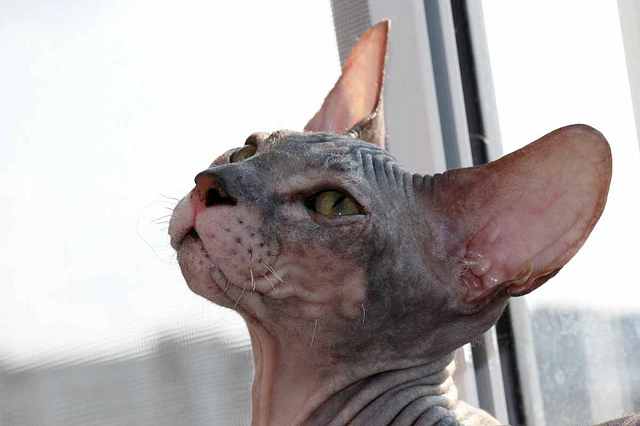
Familiarize yourself with the breed standards for your chosen breed in advance, and use the list of characteristics as a guide when choosing a pet. Be sure to get the owner's business card and inquire about their club membership. Reputable breeders will always be accommodating.
- They will help you with advice, even if you have already bought a pet and some time has passed;
- they will recommend a good veterinarian to whom they themselves turn;
- They will tell you what food is best to feed, what to wash and how to care for it.
Important! Refrain from purchasing if the owner is evasive, doesn't provide advice, doesn't have a passport, or hasn't had any preventative treatments at its age.
Predisposition to diseases
Like many other breeds, hairless cats have their own frequently diagnosed health conditions. These include:
- shortened lower jaw;
- Microphthalmos is a group of diseases that lead to either decreased visual acuity or complete blindness;
- congenital entropion;
- curvature/softening of the last vertebra;
- nipple hyperplasia - most often it is recorded in kittens with blue eyes and a bluish color;
- hyperplasia/cyst of the mammary glands;
- acne and pustules;
- dermatitis, vasculitis (inflammation of the vascular walls);
- underdevelopment of the thymus (congenital), or “kitten sleep syndrome”;
- gingival hyperplasia.
Also watch more interesting facts about hairless cats in the video:
Read also:


Add a comment