
False pregnancy (pregnancy) in dogs
Symptoms of pregnancy and subsequent lactation in dogs are not always related to the actual pregnancy itself. In veterinary medicine, there is a term for false pregnancy—a condition associated with hormonal imbalance.
Content
Causes of pathology
Theoretically, a false pregnancy can occur in any sexually mature female dog, including spayed ones (if their ovaries haven't been removed or the surgery was performed incorrectly). It's associated with a malfunction in the endocrine system. Four to eight weeks after estrus (the metaestrus period), the corpus luteum forms in the dog's ovaries. This temporary gland produces a hormone (progesterone) to prepare the uterine walls for embryo implantation. If conception doesn't occur under normal conditions, hormone production ceases, and the gland itself shrinks. If shrinkage doesn't occur for some reason, the corpus luteum continues to actively produce progesterone, and later the pituitary gland triggers the production of prolactin, which is necessary for lactation. This is how the female experiences the sensation of carrying a baby, even though she's not actually carrying one.
Among the reasons that lead to the development of such a condition:
- Mating with a sterile or castrated male.
- Disruptions in the functioning of the ovaries (including after removal of the uterus) due to infectious diseases, tumors, and hormonal imbalances.
- Hereditary predisposition (transmission to female offspring from a female).
- Keeping them with other pregnant/lactating females leads to the so-called gregarious phenomenon, whereby animals in a pod tend to become pregnant at the same time, and thus non-pregnant individuals also experience the feeling of impending "motherhood."
- Stressful situations, lack of attention from the owner, or long separations.
- Stimulation of lactation (attempts to feed other people's puppies by a non-pregnant individual)
False pregnancy occurs in approximately half of unspayed female dogs. For some breeds (dachshunds, beagles, and hounds), this figure rises to 75%. Moreover, after such a diagnosis, the chances of its recurrence increase. In some females, pseudopregnancy develops after each estrus cycle if mating is unsuccessful.
Symptoms of pseudopregnancy
The duration of a false pregnancy can only be estimated—in most cases, no more than four weeks. During this period, various symptoms may appear, which are roughly divided into two groups:
- Behavioral – are usually the first symptoms of a false pregnancy. The animal becomes weak, lethargic, restless, and unwilling to play. At the same time, it attempts to prepare a place for the offspring and carries various objects in its mouth (for example, stuffed animals, imagining puppies in their place). Aggressive behavior as a defensive reaction is also possible if these objects are taken away.
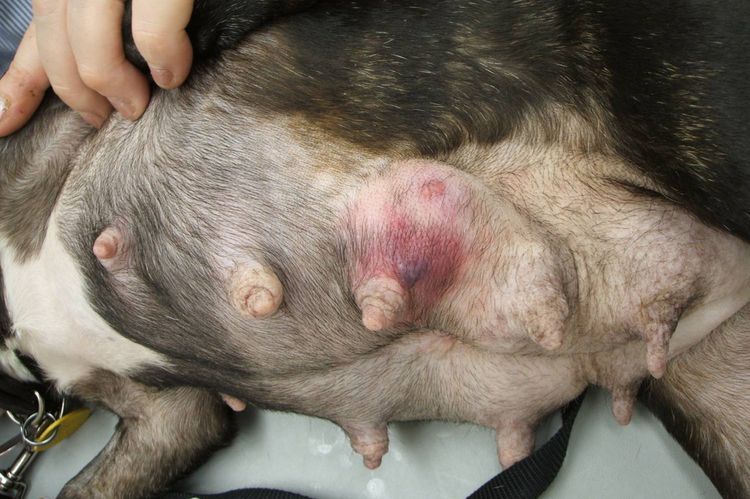
- Physiological – cause visible changes in the body and usually develop in later stages. Possible signs include: intermittent vomiting or diarrhea, abdominal distension, swelling and discoloration of the nipples, and vaginal discharge. A loss or increase in appetite and fluid retention are often observed. The dog begins licking her mammary glands, which stimulates lactation.

A false pregnancy can manifest itself in a combination of the listed symptoms, or individually. If you notice even a couple of them in your dog, it's time to consult a veterinarian.
What should the owner do?
For inexperienced dog owners, distinguishing a true pregnancy from a false one can be challenging, as the symptoms are virtually identical. However, the following factors should be considered:
- no planned matings or random matings during walks;
- previously diagnosed pseudo-pregnancy conditions;
- During a real pregnancy, the female will not try to look for a replacement for the puppies in the form of toys, and in the area of the nipples there is hair thinningto make it easier for the offspring to suck milk.
Only a veterinarian can make a definitive diagnosis. This requires an ultrasound and X-ray, a physical examination, blood tests, and information about the animal's health and lifestyle (age, history of planned and unplanned matings, births, contraceptive use, etc.). Treatment will depend on the symptoms identified and the extent of the condition.

First aid
If the physiological symptoms of false pregnancy are not present or are minimal, the following steps are often sufficient to alleviate your pet's condition:
- Do not stimulate lactation. To achieve this, limit fluid intake and eliminate dairy products. It's also important not to express milk or allow the animal to lick the nipples. In the latter case, a blanket or special bandage can be used.
- Stick to a diet and reduce portion sizes. When feeding natural food, reduce the amount of meat and cereals, focusing on cooked vegetables. When feeding dry food, switch to "Light" diets, which are considered low-protein.
- To distract from imaginary concern for non-existent offspring. Long, active walks, playing with a stick or ball, etc. will help here. Toys and objects that the dog thinks could be suitable for the "role" of puppies should also be removed from its reach.
- To alleviate the condition. If your breasts become swollen, apply compresses (for example, cabbage leaves). However, camphor oil is not recommended due to the risk of allergic reactions.
These measures also help prevent hormonal imbalances in females, so they can be performed starting 9-10 days after the end of estrus. This way, the hormonal system will perceive these conditions as unfavorable for the birth of offspring.
If the above measures do not help to get rid of the symptoms of false pregnancy in a dog, treatment with special medications is prescribed.
Drug therapy
Treatment for false pregnancy is determined only after a preliminary examination of the dog. This is based on individual characteristics (breed, age, hormonal balance, reproductive system), the severity of symptoms, and future mating plans. The veterinarian may prescribe:
- Drugs to reduce prolactin levels and the lactation process- "Lactostop", its French equivalent Galastop. Usually prescribed in a course of 5-10 days.
- Sedatives – to reduce anxiety and aggression. Typically, gentle medications based on herbal extracts (Kot Bayun, Stop-Stress, Feliway, Fitex, etc.) are prescribed.
- Homeopathic medicines – have few side effects but require longer-term use. They help restore hormonal balance and the menstrual cycle, eliminating behavioral changes caused by false pregnancy. Possible options include injections. Ovariovit or "Ovarium Compositum", Fitoelita Cytostat tablets, injections or drinking solution "Gormel".
- Hormonal drugs – carry a certain risk for the animal, have many side effects (from local irritant action, vomiting, loss of appetite to the development of endometriosis and pyometra) and contraindications. To correct the menstrual cycle, treat and prevent false pregnancy, Kovinan, Nonestron, Naloxone, and Bromocriptine. The last two are particularly difficult for dogs to tolerate and require prior antiemetic therapy.
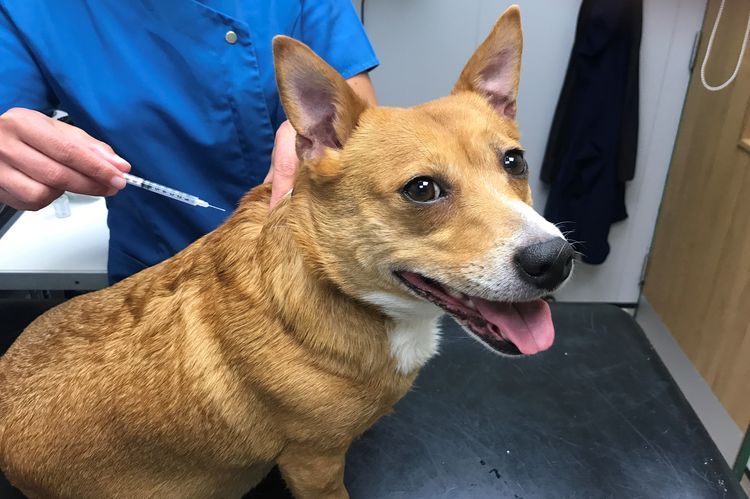
Constant veterinary monitoring is required throughout the entire course of drug treatment. No one can guarantee the complete absence of side effects (even from homeopathic remedies), and it's important to promptly identify them and prevent further development.
The only guaranteed way to protect a dog from false pregnancy is radical spaying (with removal of the ovaries and uterus) if the owner does not plan to breed. For females already diagnosed with this condition, the surgery is performed after all symptoms have resolved (behavior has returned to normal, lactation has ceased). Otherwise, the risk of false pregnancy remains due to the artificial interruption of the natural hormonal cycle.
Read also:
- Shortness of breath in a dog after giving birth
- Dog pregnancy in detail, day by day
- How do dogs give birth?






14 comments
Julia
Hello! We've had a very unfortunate situation: our dog had her second heat 1.5 months ago (the first had gone well and she wouldn't mate with males), and without any qualms about false pregnancies, we decided to have her spayed. For some reason, the clinic didn't warn us about the possible consequences. The surgery took place on July 30th, and on August 2nd, while cleaning the incision, we noticed swelling of the mammary glands and drops of milk. Her behavior has also changed, and at first we blamed the surgery, but it seems to be the same thing: she's restless, can't find her place, whines, eats less (even though she always ate like crazy before), and is showing aggression toward the other dog. I've read that the combination of false pregnancy and spaying is very dangerous! Now I'm very worried about my little girl.
What exactly are the consequences of this? What should we expect? When we asked the doctor, the answer was, "Nothing needs to be done." Is that true? I also read that the dog needs to be physically exercised, but that's impossible after surgery. I took away all the toys except the one she already "adopted." Should I take that away too? Or will that cause her significant psychological trauma? Also, when she peed on the diaper yesterday (we used to go outside), we noticed a small brown clot in the puddle. I read that this can happen with a spoon, but we had everything removed? Or is this a consequence of the surgery, and the false pregnancy has nothing to do with it? In short, we've regretted taking her to surgery a hundred times over, but now there's nothing we can do. Please tell us what we can do to avoid the consequences of such an action, if possible!
Daria is a veterinarian
Hello! Wait, was the animal spayed (having had her tubes tied or her ovaries removed) or neutered? If the uterus was removed, what kind of false pregnancy are we talking about? An ultrasound should have been done to check the animal's condition! If the uterus was left in place, it's essential to have it checked. If a false pregnancy is confirmed, treat the animal, and once it's recovered, completely remove the uterus (otherwise, pyometra is just around the corner). Take away toys, distract the animal with games and attention. "Spooning" is a psychological problem. If the animal is "busy," it's easier to "pull" the pet out of this problem.
Julia
The doctor said they removed everything—both the uterus and the ovaries. But, as they explained, the process had already started before the surgery, since milk came in two days after it.
My dog had been leaking milk from her lower four nipples for about five days. She hasn't had any milk for the last two days (it's been a week since she was spayed). Her temperature is normal at 38°C (100.4°F). After a clot was found in her urine, we only managed to get her to urinate on her diaper yesterday (she was used to going outside and was stubbornly holding it in). There was a white, translucent lump on the diaper, the size of a small pea (like raw chicken egg white).
We're afraid to put too much physical strain on the dog until the owl heals. Outside, she seems to forget about herself and act active, but then she seems to remember her "motherhood" and no longer needs anything, whining and begging to go home. At home, she's started sleeping a lot, won't let the other dog into the room, whines sometimes, and can't find a place for herself in the apartment. She has an appetite, but not like before, and sometimes doesn't finish her meal, whereas before, she could eat until she burst.
In 2 days we'll go and remove the stitches, I'll clarify again what and how was removed.
Please tell me why spaying during a false pregnancy (as happened to us) is so dangerous? How can it affect the dog's health and mental state?
Daria is a veterinarian
Hello again! How did they even start spaying during false pregnancies? When they removed the uterus, didn't the doctors notice that it was enlarged? Weren't they bothered by this? Don't worry about the psychological effects or consequences. Animals experience even worse (that's what animals are for; they recover quickly, not like humans). However, you'll definitely have to wait 2-3 weeks for the hormones to subside. While pregnancy hormones are being produced, the symptoms won't go away. It's good that they completely removed everything. Because false pregnancies tend to recur from heat to heat.
Julia
Thank you so much for your answers! The stitch has healed, and my condition seems to be back to normal. I've almost forgotten about the "puppies" and am jumping around like a goat.
Daria is a veterinarian
You're welcome =) The hormones will gradually subside. In a couple of weeks, everything should be completely back to normal. The milk will also disappear over time (don't expect the mammary gland to return to normal right away). Keep an eye on your pet anyway. And give her as much attention as possible now.
Elina
Hello, I have a Rottweiler, a first-timer, 66 days have passed since mating, there is no colostrum, even this spoon?
Daria is a veterinarian
Hello! The only way to be 100% certain whether a pregnancy is a false pregnancy or a true one is through an in-person examination. First, by careful palpation (at this stage, the puppies can already be felt). Second, for the most accurate diagnosis, an ultrasound is recommended. This allows you to see the contents of the uterus and assess the overall condition. Even auscultation (listening) can help determine whether the puppies are present or not (at this stage, in addition to the mother's heartbeat, the puppies' heartbeats will also be audible). Colostrum may appear immediately before or even a couple of hours before birth (less often after, in isolated cases), as the mammary gland is not yet familiar with this process.
Tatyana Thomsen
Please, I really need a response! I live in Denmark, and my beloved 4-year-old Chihuahua died nine days ago. Last November, I discovered developing periodontal disease. I began actively treating it myself, and the progression was slowed down within a week of intensive applications, giving Vetom, etc. I also discovered tartar on her teeth. She showed no signs of any health problems. She was a happy dog, we went for a lot of walks, and she was frolicking as always. I decided to go to a veterinary clinic for a laser teeth cleaning.
I curse that day... They removed 16 teeth. It took her three days to recover from anesthesia, and on the fourth day she started to die. She's not a small dog - 4 kg. Can we say there was an anesthesia overdose? She couldn't stand up for the entire three days, but kept banging her forehead against the walls as if she were blind. It was the weekend, so on Monday we rushed to the clinic. The vet said the wounds were clean and her temperature was normal. He gave her an anti-nausea shot, and I told her she'd vomited that morning. A couple of hours later, she started going through real agony at home: convulsions, spasms, glassy eyes... We were treated at the clinic, and she stayed there for a day. The vet said it was due to sudden blood poisoning. Afterwards, I continued giving the vet (immediately after the tooth extraction) LOXICOM suspension 1.5 mg/ml, as prescribed to me, and after those 24 hours, they added 1/2 tab. BAYTRIL vet. 50 mg.
We went to the clinic every other day to give blood. This whole saga lasted from the surgery on December 6, 2018, to December 21, 2018. At the last visit, they said she was healthy, all her tests were good... In January, she seemed to have fully recovered. Only on walks did she start urinating more often, like a male does... From January 15th, she started drinking a lot and urinating very often (never at home), even when I picked her up, it seemed like she was leaking urine. She lost her appetite. On the very first working day, we went to the clinic again, the doctor did an ultrasound and said that urgent surgery was needed to remove all her reproductive organs because the uterus was significantly enlarged and inflamed. I took her in for surgery. The next day, February 19th, they gave her back to me.
Alive, but not responding well. The incision is small and noticeable, with some pinpoint hemorrhaging on either side. They gave her another bottle of Loxicom suspension to take with her. They told her to give it for 7 days, along with Baytril again. She didn't want to eat for a couple of days; I only forced the medication down her throat with liver pate and drank water. On February 22nd, she even asked to go outside. I picked her up just to get some air, then let her out for 5 minutes to urinate, then picked her up again. That evening, she asked for food. She sniffed it, then refused. She only ate her favorite pepper. On the morning of February 23rd, I gave her more medication, and during the day she started tossing and turning, unable to find a place for herself, moaning occasionally and drinking water. We drove to the emergency clinic 45 km away. There, they tried to revive her for about an hour. They were unsuccessful... Could you give your opinion based on what I've described? Was the medical care provided professionally enough? I have invoices for all procedures performed, listing the medications used, but the type and amount of anesthesia are not listed. Your opinion would be greatly appreciated! Sincerely, Tatyana Thomsen
Daria is a veterinarian
Hello! Regarding the anesthesia, was a cardiac ultrasound performed before the surgery to ensure it could withstand the strain? It's also possible that you simply had an intolerance to one of the anesthetic's active ingredients (a type of hypersensitivity). Regarding the medication, a nonsteroidal anti-inflammatory drug (Loxicom) and an antibiotic (Baytril) were prescribed. It's unclear what diagnosis was made that necessitated a hysterectomy. Endometritis? Pyometra? Oncology? What about the blood? Are there any abnormalities? And the heart—maybe it couldn't handle it either. Was an autopsy performed?
Olga
Hello! What should we do? My dog has a false pregnancy. She was spayed a year and a half ago. What should we do?
Dasha is a veterinarian
Hello! I need to get to the doctor right away! I'm embarrassed to ask what they did during the spay. Did they just tie my tubes? Did they not remove my uterus? Did they keep my ovaries? Go to the clinic. Let them eliminate the pregnancy with hormones, and then immediately perform a NORMAL castration with complete removal of the ovaries and uterus, so that such situations never happen again.
Olga
Hello, my Jack Russell/Mongrel mix is experiencing a false pregnancy. While grooming her "puppy" (a stuffed animal), she tore up furniture while making a nest. We read on other forums that it's best to remove the toy the dog is grooming. We did just that, but her milk isn't coming in, and her belly isn't rounding out. After removing the toy, she started acting very awkward with her rear end and the noose, constantly licking and grabbing her side as if it were a puppy, and she's leading herself back to her place. It's not a pleasant sight! What should I do? Maybe I should give her the toy back, and after a while, it'll go away?
Dasha is a veterinarian
Hello! Do not return the toy, otherwise she will begin to experience maternal feelings again and the milk will start coming in. This will only make things worse. Take the animal to a vet (ideally an ultrasound) to assess the animal's condition and check the uterus (whether there is a lump of mucus or not). The veterinarian will prescribe medications (mostly prescription) to help the animal cope with the false pregnancy. Once the animal has recovered, it is imperative to spay it. Firstly, the problem will recur from heat to heat. Secondly, even if the female dog does give birth after mating, there is a high risk that the resulting females will have the same problems in the future.
Add a comment