
Lithuanian Hound
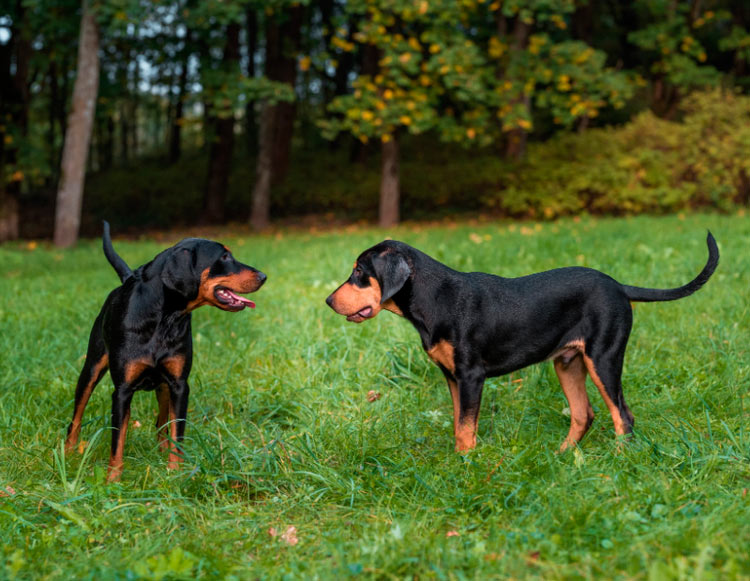
The Lithuanian Hound is a hunting dog breed that was revived in the mid-20th century from the few specimens found throughout the country. It is a strong, well-built, short-haired dog with a black and tan coat. It is not recognized by the FCI, but is recognized only by the Lithuanian Kennel Club. It is used primarily for hunting large ungulates.
Content
History of origin
It is known that hounds were used for hunting in Lithuania as early as the mid-16th century. These included a wide variety of dogs, both local and imported. The first written mention of Lithuanian hounds appears in the 1876 journal "Imperial Hunting." Cynologists were able to find the next fairly accurate description of these dogs in Włodzimierz Korsak's book "The Hunter's Year" (1922). Among other things, it states that no selective breeding was conducted on the breed, which is why the Lithuanian hound is on the verge of extinction.
The Lithuanian Hound is the only dog breed bred in Lithuania.
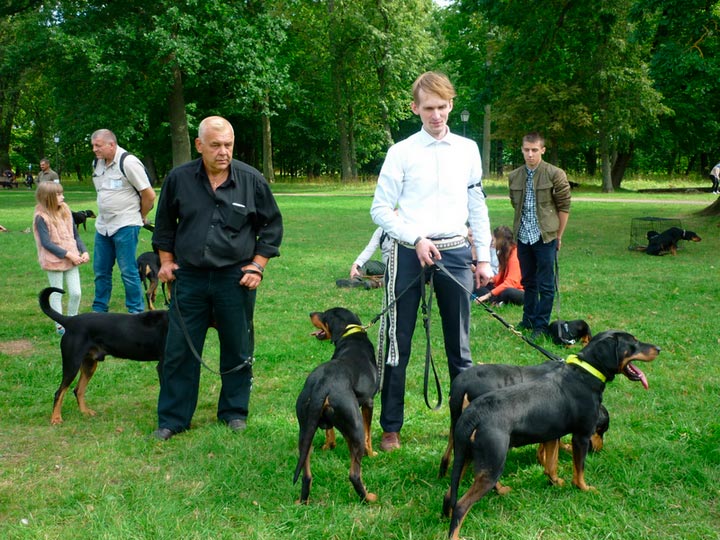
In the mid-20th century, cynologist Zigmas Goštautas began restoring the Lithuanian Hound population. He managed to find dogs that belonged to hunters. Their bloodline wasn't significantly diluted by other breeds. The first Lithuanian Hound show was held in 1981, with 62 dogs participating.
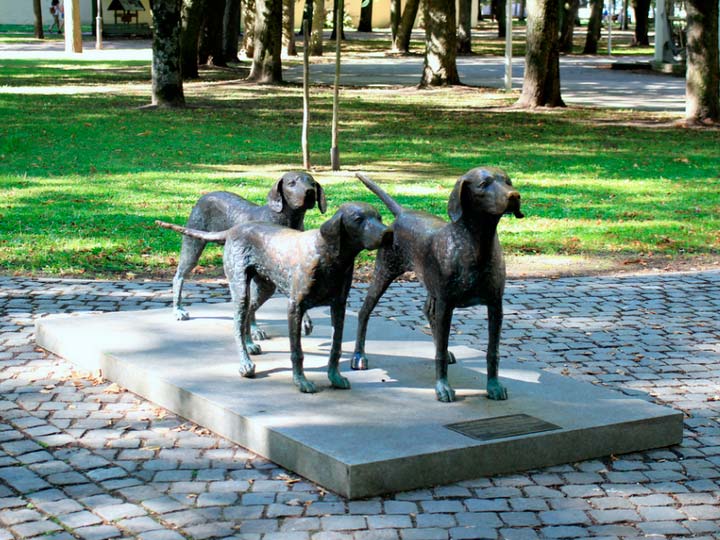
In May 2015, a sculpture dedicated to Lithuanian hounds was erected in Vilnius at the initiative of the municipal department. Photos of the monument can be seen in the gallery.
Currently, the breed is endangered and survives only thanks to enthusiasts. The population is estimated at 400 dogs.
Lithuanian Hound on the hunt
The Lithuanian Hound is used primarily for hunting large ungulates (wild boar, elk, roe deer, etc.). It has an excellent sense of smell, endurance, and courage. The dog locates its prey and, with a bark, drives it back to the hunters' line.
According to the rules of the Lithuanian Breed Club, a hound can be bred only after receiving good marks in two shows and two field trials. This is how breeders try to preserve the best qualities of their dogs.
The voice is loud and piercing. The Lithuanian Hound works both alone and in a pack. With proper training, it can hunt small animals (hare, fox) and locate wounded game by following a blood trail.
Appearance
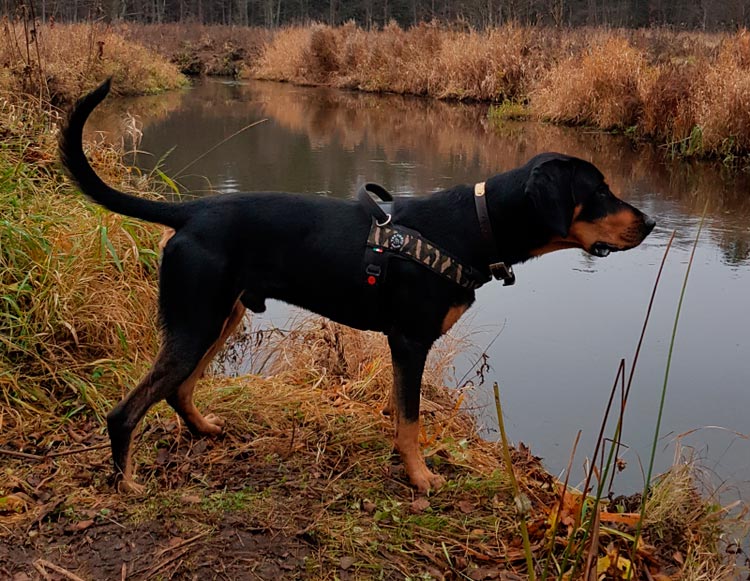
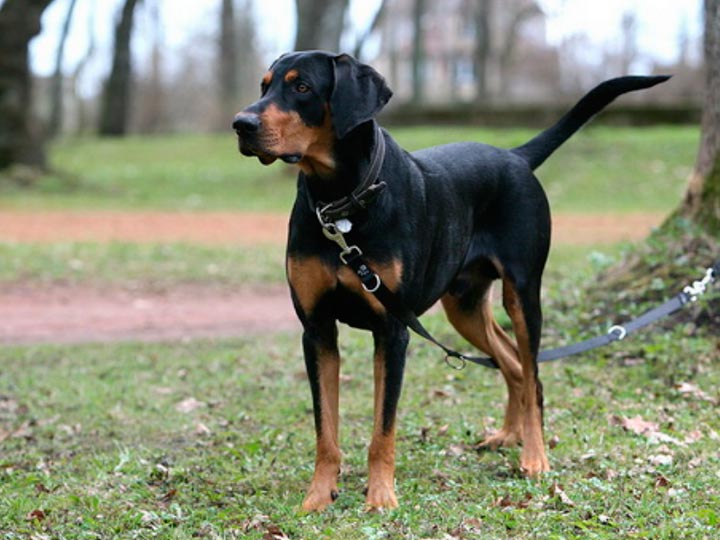
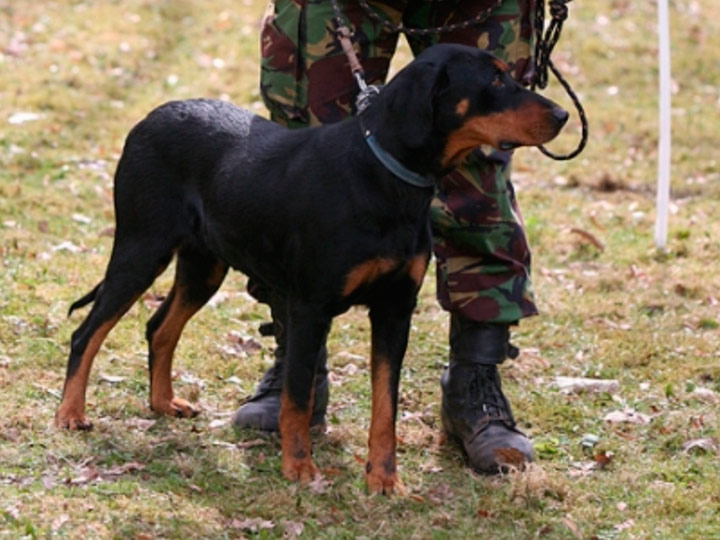
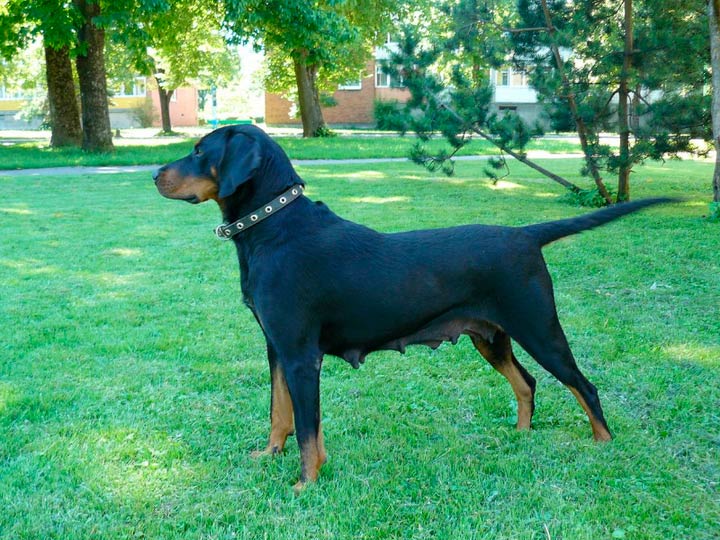
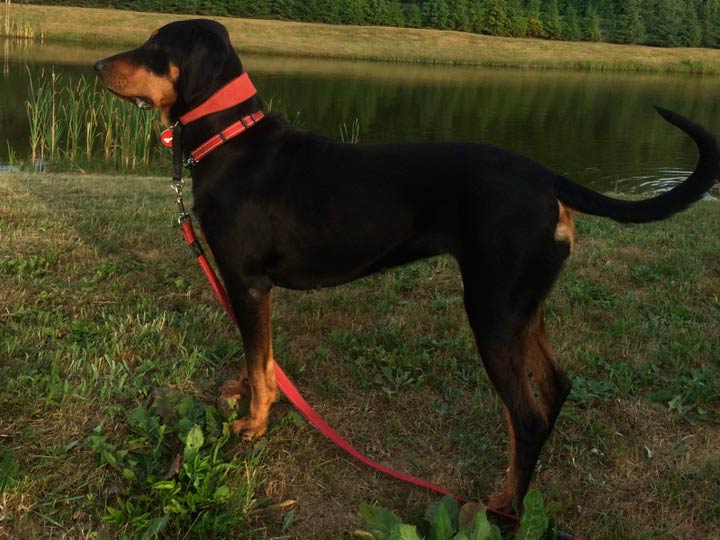
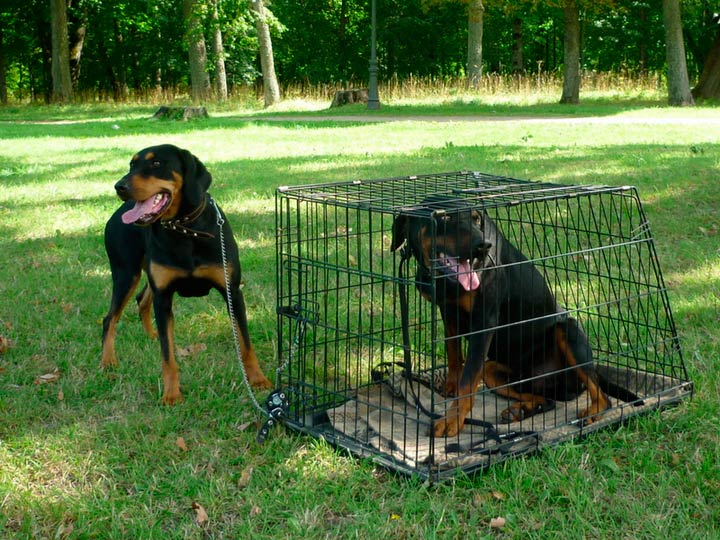
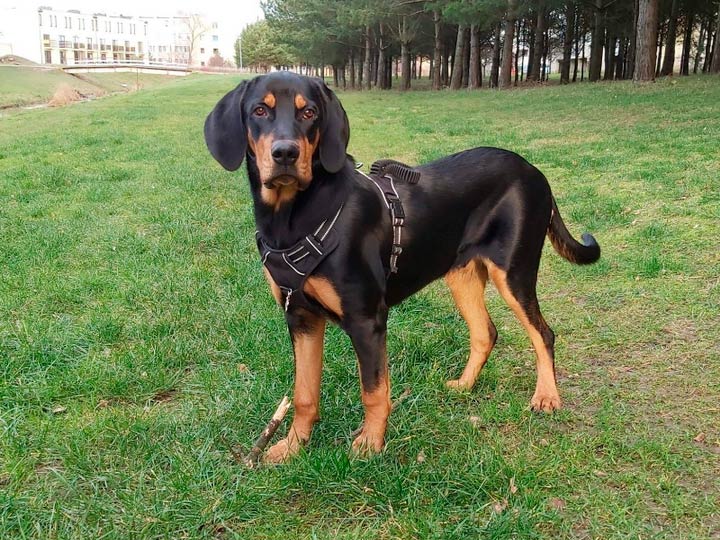
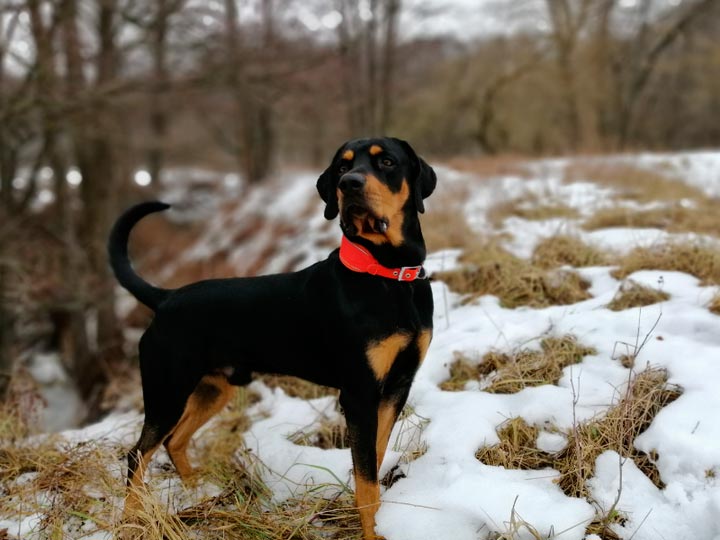
The Lithuanian Hound is a strong, muscular dog with short, black and tan coat. Its appearance resembles Polish houndSexual dimorphism is expressed.
- Height at withers: 52-60 cm.
- Weight: 20-30 kg.
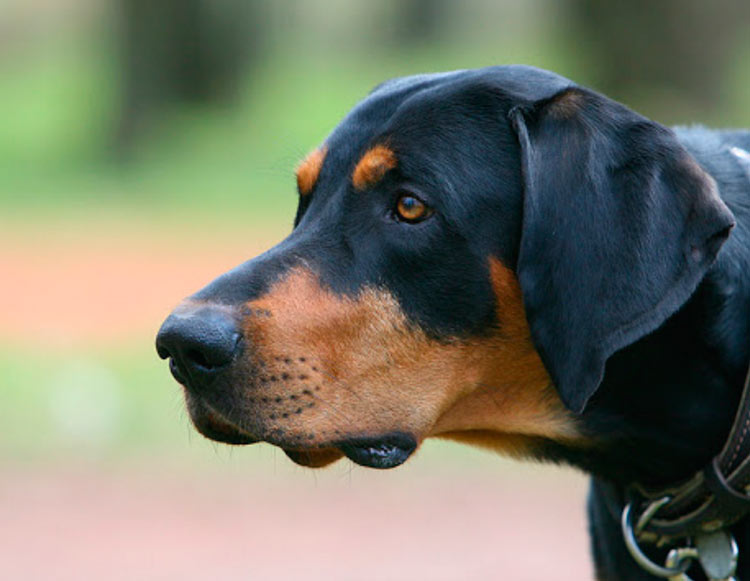
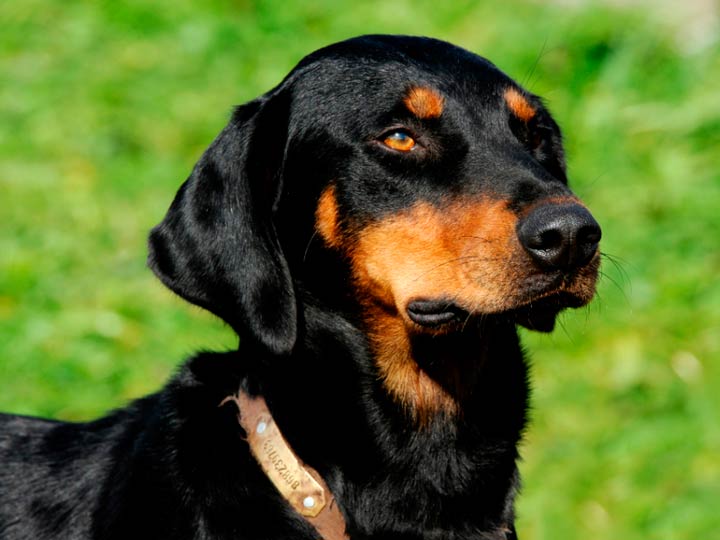
The head is medium in size and wedge-shaped. The forehead is broad. The ears are of medium length, set close to the cheeks and rounded at the tips. The muzzle is of medium length. The lips are slightly pendulous, but not excessively so. The eyes are oval in shape and set slightly at an oblique angle. The earlobe is of medium size. The neck is moderately long, strong, and without dewlap.
The skeleton is medium, the muscles are very well developed. The topline is straight. The chest is deep and wide. The legs are medium length, very strong and muscular. The toes are compact. The tail is long and saber-shaped.
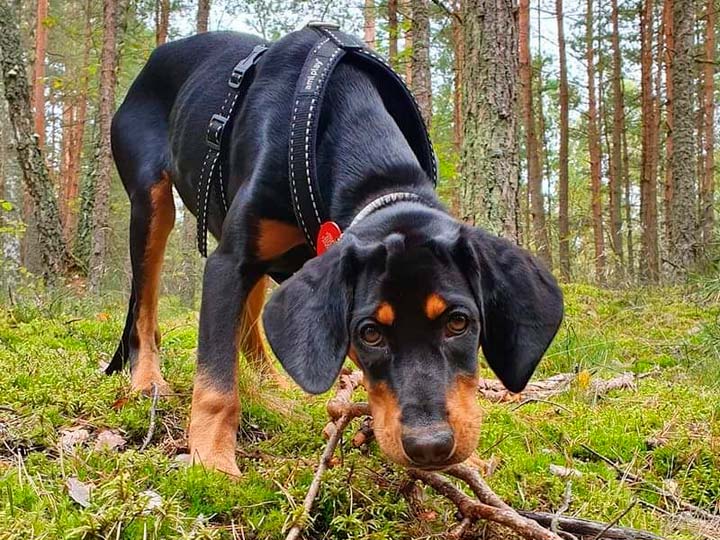
The coat is short and lies close to the skin. It reaches 3-5 cm on the back. The skin is elastic, resilient, and does not form folds. The coat is black with bright brown markings on the muzzle, chest, legs, and at the base of the tail.
Character and behavior
The Lithuanian Hound is a friendly, energetic dog that requires significant exercise and enjoys long walks in the forest or field. Upon returning, it rests peacefully. It is a suitable companion only for those with an active lifestyle. It gets along well with children and is responsive and affectionate among family members.
Hounds are intelligent and responsive, but also quite independent and self-sufficient. Their upbringing and training can be challenging for inexperienced owners.
It's rare to find an aggressive or unpredictable Lithuanian Hound. They are all excellent watchdogs, always alerting you to the arrival of guests but unlikely to attack.
Maintenance and care
Lithuanian hounds are suitable for both indoor and outdoor living. They require ample exercise and the opportunity to run freely in forests and meadows. Well-trained dogs usually return promptly to their owner's call.
They don't require complex grooming. They shed seasonally twice a year. The owner only needs to brush their pet occasionally and monitor the condition of their eyes, ears, and teeth. They are bathed as needed, usually several times a year.
Health and life expectancy
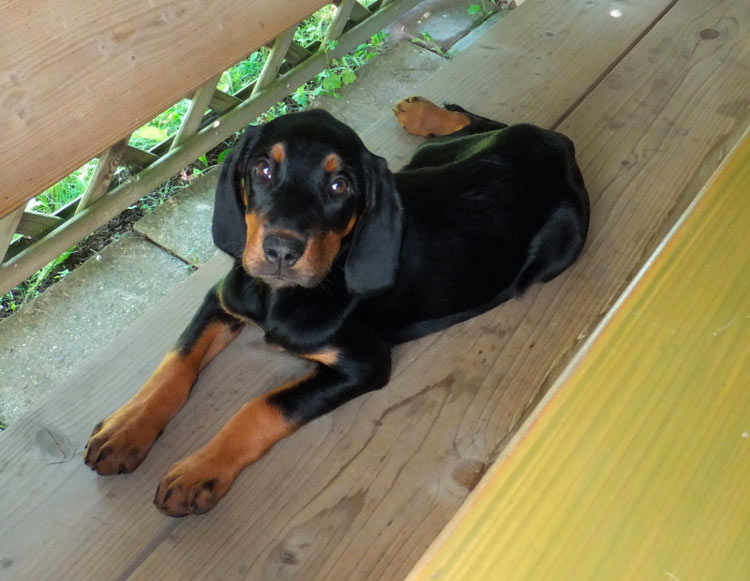
Most Lithuanian Hounds are generally healthy. There is no evidence of hereditary diseases, but this may be because this issue has not been sufficiently studied. Life expectancy is 10-12 years.
Choosing a Lithuanian Hound Puppy
Even in Lithuania, these hounds are a rare and relatively uncommon breed. They are even rarer outside the country. As of 2015, approximately 200 specimens of the breed live in Belarus, 15 in Canada, 8 in Russia, 5 in Ukraine, 4 in Germany, 2 in Ireland, and 1 each in Austria and Norway. The main problem with tracking Lithuanian hounds is that a quarter of them lack pedigree records.
There are just over 10 Lithuanian hound breeders registered in Lithuania.
Today, there are several clubs and communities that unite Lithuanian Hound owners and breeders, regulate breeding, and help those wishing to purchase a hunting dog find a puppy.
Price
In Lithuania, the average price of a puppy is 300 euros. You can find a hound for less, but its working qualities and appearance may not meet the requirements. Kennels don't sell their best puppies for less than 500 euros.
Photos and videos
The gallery contains more photos of Lithuanian Hound dogs.
Video about the Lithuanian Hound breed
Read also:


Add a comment