
Ringworm in dogs
Ringworm in dogs is a dangerous infectious disease of fungal or viral origin that affects the skin and can lead to various complications. Today, we'll explain in detail what ringworm looks like in dogs (with photos of the signs, including early stages), as well as all the home treatment options.
Content
Introduction to Ringworm in Dogs
Your dog can become infected with this dangerous disease:
- During a walk, when in contact with another sick animal;
- If combs or other devices that were previously used to treat the fur of a sick animal were used to groom the fur;
- Moreover, some animals can carry ringworm even without being sick, that is, without any outward signs of skin lesions.
Your dog can get into almost anything, but the most important thing is that the ringworm pathogens are very resilient: some types of fungi can remain active in the environment for up to 18 months. Some types of ringworm in dogs are highly infectious to humans. People with weakened immune systems, children, and the elderly are especially susceptible to ringworm infection.
There are several main types of ringworm in dogs: lichen planus, ringworm, pityriasis rosea, and pityriasis versicolor. We'll discuss each type in detail, including how to treat ringworm in dogs in each specific case.
A general video about the disease with an explanation of the main points:
Ringworm in dogs
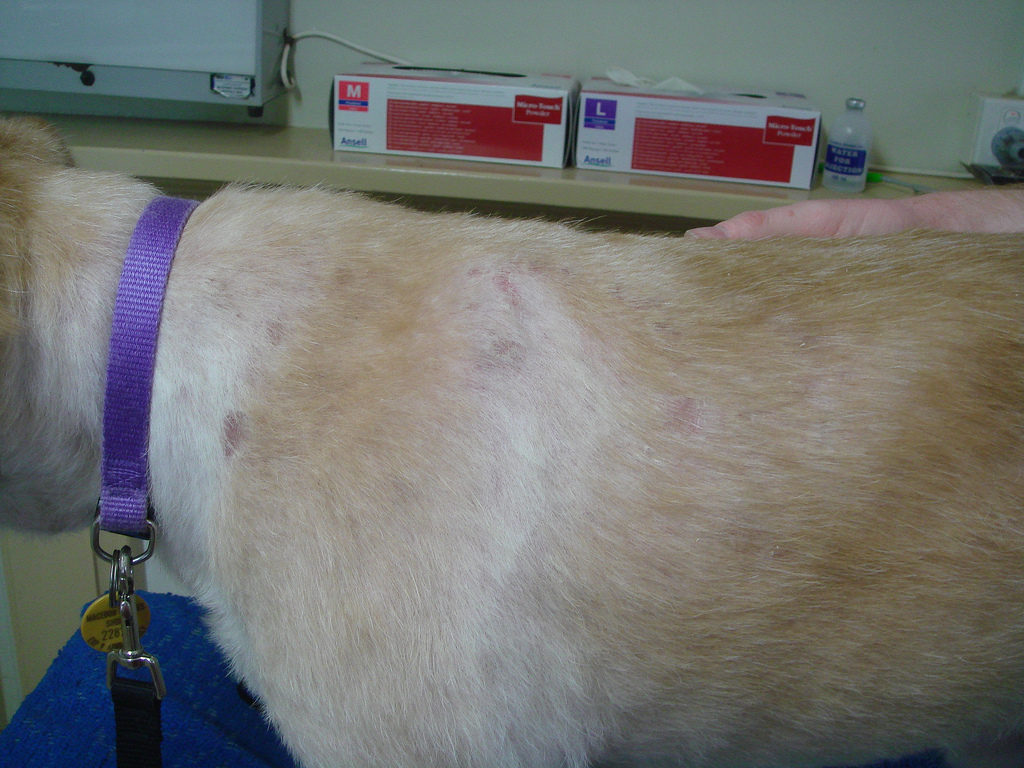
What does it look like? ringworm in dogs? It is believed that This is the most common and most dangerous form of this disease.Typically, symptoms of ringworm in dogs include small, pink or brown spots (up to 2 cm in diameter) with a clearly defined border, which most often appear on the paws and at the base of the dog's tail. This type of disease is characterized by complete hair loss in the affected areas. The spots are intensely itchy, causing excruciating discomfort to the animal. If left untreated, ringworm in dogs quickly spreads throughout the body and can be fatal. The disease is infectious and is caused by fungi of the genus Microsporum or Trichophyton.
Ringworm in a dog in the initial stage in the photo:
Caution! Ringworm is transmitted from dogs to humans.Some statistics:
- Children are most susceptible to this disease.
- Boys get sick 5 times more often than girls.
- Among adults, women are more susceptible to ringworm than men.
- People with red hair are extremely rare in this condition. So, if you're a redhead, you're definitely lucky. 🙂
Due to the risk of infection, as soon as you discover ringworm in your dog, you should immediately limit contact with the animal, if possible, giving it a separate room. Floors and furniture where the dog has been should be thoroughly cleaned with a disinfectant.
Treatment of ringworm
How do you treat ringworm in dogs? If you notice the first signs of the disease, you should immediately contact your veterinarian and undergo appropriate tests. If visiting a veterinary clinic is not possible, you can begin treatment at home. The area around the affected areas of skin should be carefully trimmed, washed with warm water, and treated with an antiseptic. Antifungal medications are recommended for subsequent treatment. ointments (Miconazole, Clotrimazole). Yam BK ointment is also suitable for treating ringworm in dogs. There are many veterinary products containing clotrimazole (Sanoderm, Fungin). Imaverol has proven effective in treating fungal skin infections in dogs.
Miconazole ointment Miconazole is a synthetic medication with potent antifungal and antibacterial activity against a broad spectrum of pathogens. Apply a thin layer of miconazole to the affected areas of the dog's skin morning and evening. Treatment for ringworm in dogs is continued for 3-6 weeks until complete recovery. No side effects have been observed when used correctly. Allergic reactions are possible in cases of individual intolerance to the components of the medication.
Clotrimazole ointment Clotrimazole is an effective synthetic medication designed to treat various types of mycoses, including ringworm, in dogs. Clotrimazole is applied 2-3 times daily to the affected skin area and continued for 4 weeks or more until complete recovery. No side effects have been observed when used correctly. Allergic reactions are possible in cases of individual intolerance to the components of the medication.
Sanoderm Sanoderm is a combination veterinary medication based on betamethasone, gentamicin, and clotrimazole. Betamethasone has a potent antihistamine and anti-inflammatory effect, gentamicin is a broad-spectrum antibiotic with bactericidal action, and clotrimazole is an antifungal component. Sanoderm is applied in a thin layer to the affected areas of ringworm 1-2 times daily for 2-4 weeks. Continued use is not recommended if treatment is not improving. Use with caution in dogs with liver or adrenal dysfunction. Sanoderm is quite strong and toxic to dogs. Consult a veterinarian before use.
Fungin Fungin is an antifungal veterinary drug based on clotrimazole with the addition of glycerin and propolis. Glycerin and propolis, included in this drug, not only enhance the antifungal effect of clotrimazole but also relieve irritation and have a beneficial effect on the affected skin, promoting restoration and healing. Fungin is available as a spray, which is applied to the affected areas, or as a bandage soaked in the solution for 1.5-2 weeks. Fungin is non-toxic and therefore the preferred treatment for ringworm in dogs.
Imaverol – a substance containing enilconazole as the active antifungal component. This medication is available in liquid form and is recommended for use diluted at a ratio of 1:50. Dissolve 10 ml of Imaverol in 500 ml of warm water. Apply this solution to the affected areas of the dog's skin at intervals of 3 days. A total of 4 treatments are required. The diluted solution is rubbed into the affected skin; the dog can also be gently immersed in the container containing the active substance. This emulsion is used in the same proportions to treat the area where the affected animal is located.
https://www.youtube.com/watch?v=CHCDebhuGy4
Weeping lichen in dogs
Weeping lichen in dogs it has the following signs (plus photos):
- This is an inflamed, gradually expanding balding patch that is hot to the touch. Initially, the patch resembles a burn.
- Then the affected area becomes covered with small pustules and a rash.
- After some time, the small blisters begin to burst, releasing purulent fluid. By this point, the hair in the affected area has completely fallen out, and the skin becomes covered in purulent mucus. Subsequently, crusts consisting of the dead upper stratum corneum begin to form.
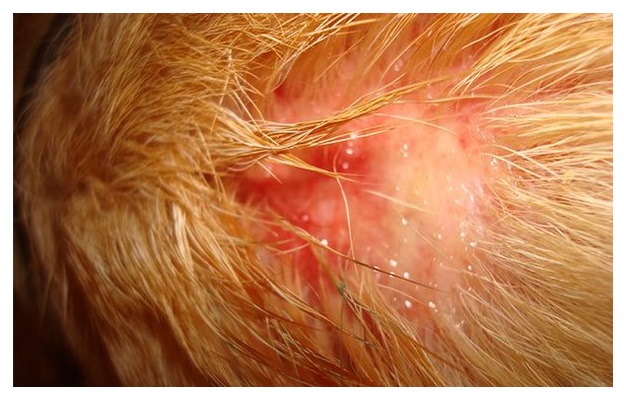
Without proper treatment, ringworm infection can quickly spread and progress throughout the dog's body. The animal may scratch or lick the affected areas. Ringworm infection in dogs is not contagious to humans.
Generally wet eczema It cannot be called ringworm in its full form; rather, it is an inflammatory skin disease caused by hygiene problems, improper care of the animal, or a decline in immunity due to stress or an endocrine disorder.
Treatment of weeping lichen
How to treat eczema in dogs? At the first sign of the disease, consult a veterinarian who will prescribe a course of treatment. It's important to note that eczema in dogs is very difficult to completely cure. The slightest deviation from the treatment plan can cause the eczema to spread again. Therefore, the treatment approach for this condition must be comprehensive and supervised by a specialist. As a general rule, the allergen that triggered the eczema in your pet must first be identified.
| Cause of the disease | Treatment approach |
| If the problem is related to hygiene or parasites living on the animal's body. | The animal should be thoroughly washed, de-fleaed and kept clean until recovery and after to prevent relapse. |
| If the problem is related to power supply. | It is necessary to review the animal's diet, eliminating fatty and starchy foods; it may be necessary to adhere to a therapeutic diet for some time and take vitamin and mineral complexes for four-legged animals. |
| In parallel with establishing the cause and eliminating the allergen, the use of external agents is recommended. | Damaged areas of the skin can be treated with ointments (YAM BK ointment, zinc ointment, ichthyol ointment, sulfur-tar ointment). |
Yam BK ointment YaM BK is a natural, non-toxic, and highly effective combination antifungal preparation based on salicylic acid, zinc oxide, sulfur, tar, and turpentine, with the addition of lysol, coal tar creolin, and lanolin. It is recommended to apply YaM BK ointment to the affected area 1-2 times daily for 1-1.5 weeks. Typically, after a course of treatment, the skin at the site of inflammation is completely restored, and active hair growth is observed. YaM BK ointment can be combined with other medications. No side effects are observed when used correctly.
Zinc ointment 10% Consists of zinc oxide and petroleum jelly. Zinc oxide is known for its drying and antiseptic properties. When applied to the eczema area, it creates a protective barrier against irritants, thereby accelerating healing. Zinc ointment is applied to the affected area 1-2 times a day for 7-10 days until the skin is completely healed. Zinc oxide is non-toxic and does not cause side effects in the recommended doses.
Ichthyol ointment 10% and 20%. The main active ingredient of the product is ichthyol, a byproduct of the processing of sulfur shale oil, which consists of the remains of algae, fossilized fish, and shellfish. It has pronounced antibacterial, anti-inflammatory, and antifungal properties. Ichthyol ointment is applied to the affected area of skin 1-2 times daily for 7-10 days. Ichthyol ointment is a completely natural and safe product that is well tolerated by animals. It has a broad spectrum of action, suppresses overactive sebaceous glands, and reduces flaking and irritation of the skin.
Sulfur-tar ointment This natural remedy consists of sulfur, tar, salicylic acid, zinc oxide, lysol, lanolin, turpentine, and petroleum jelly. Sulfur has a pronounced antifungal effect, while tar has a disinfectant and antiparasitic effect. Combined with other ingredients, the ointment's active ingredients effectively combat pathogenic microorganisms and restore damaged skin. Apply a thin layer of sulfur-tar ointment to the affected area 1-2 times daily until complete healing. This ointment is completely natural and safe for use on dogs.
Pink lichen in dogs
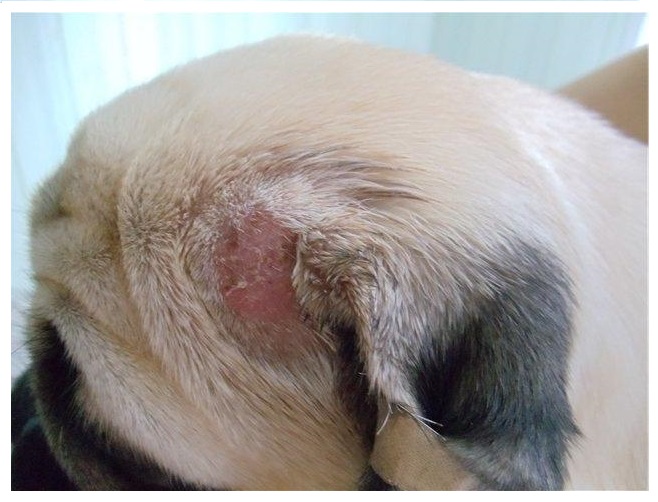
What does it look like? pink lichen In dogs, it appears as a pink spot no more than 3 cm in diameter that flakes and itches, causing your dog significant discomfort. Over time, the spot becomes covered with a crust of dry skin that is easily damaged. Smaller, similar pink spots may appear near the site of inflammation, which also flake and itch.Pink lichen does not pose a danger to humans.
The appearance of pityriasis rosea is usually associated with a weakened immune system, as the disease primarily affects puppies and weakened or elderly dogs. Pityriasis rosea is believed to be caused by the herpes virus (there is currently no definitive scientific data on this). This is the only type of pityriasis that can spontaneously resolve within 2-3 months without any treatment. However, general recommendations for feeding, hygiene, and care for a sick dog should be followed, as these factors influence the immune system and, consequently, the speed of your pet's recovery.
Pink lichen in dogs in the photo:
Pityriasis versicolor (tinea versicolor) in dogs
Ringworm in dogs is a very common type of ringworm caused by a yeast-like fungus. This condition begins gradually with the appearance of a small pinkish spot on the dog's body or head. As the fungus spreads, the spots can appear all over the body and range in color from yellow to brown. The spots may also flake, causing discomfort to the dog.Pityriasis versicolor can be transmitted to humans.
If signs of this disease are detected, consult a specialist for the necessary tests and examinations. Ringworm in dogs is also treated with antifungal ointments (YAM BK, miconazole, clotrimazole, and others).
Since the disease is highly contagious in most cases, be sure to take precautions when handling an infected dog: wear medical gloves and wash your hands thoroughly after handling. Regularly clean the dog's area with a disinfectant or special antifungal agent.
Treating ringworm in dogs at home
As you already understood from the first section of our article, before beginning treatment for ringworm in dogs at home, you need to do two things step by step: consult a specialist and obtain an accurate diagnosis. Once you understand the type of disease you're dealing with, begin treatment. However, there are times when consulting a doctor isn't possible. Then (and only then) we take the following steps: ensure that the dog's ringworm symptoms fully correspond to one of the types described, including the examples in the photos. Then, at your own risk, you can begin treatment.
General recommendations for treating ringworm in dogs are as follows:
- We determine the cause of the infection and fight it first;
- At the same time, we alleviate the symptoms of ringworm in dogs using the ointments listed above.
Prevention
To prevent ringworm in dogs, you should follow these recommendations:
- Do not allow the dog to play with sick or stray animals;
- Keep the dog clean and wash it when it gets dirty;
- Avoid contact with other people’s bedding, toys, and collars;
- Provide complete and balanced nutrition containing essential vitamins and minerals;
- Get vaccinated annually;
- Provide walks of sufficient duration.
It's important to remember that ringworm most often affects animals with significant health issues and older pets due to weakened immunity. The primary route of infection for dogs is through contact. However, if a dog's immune system is functioning at full capacity, even direct contact with a carrier will prevent it from becoming infected. Therefore, the most important defense against ringworm and other diseases is a strong immune system and a healthy body.
When it comes to vaccinations to prevent ringworm in dogs, the Vakderm vaccine has proven itself effective. To completely protect your pet from fungal skin infections, a yearly vaccination is sufficient. The Vakderm vaccination course consists of two doses of the vaccine, administered 1.5-2 weeks apart. The vaccine contains inactivated dermatophyte fungi, which in most cases cause fungal skin infections in dogs. If the dog is completely healthy, no side effects are observed after vaccination. If the dog has already been infected with ringworm, but no skin symptoms have yet appeared, ringworm may appear in areas of infection after vaccination. However, after a repeat injection, 3-4 weeks later, the animal usually makes a full recovery. We recommend reading the article about vaccinations for puppies up to one year old.
In conclusion, if your dog does develop ringworm, don't delay a visit to the veterinarian. Sometimes ringworm doesn't require complex treatment and may resolve on its own. However, serious cases often require a particularly responsible approach to treatment and specialist monitoring. Therefore, even if your pet appears healthy but ringworm is suspected, it's best to immediately contact a veterinarian. A veterinarian will conduct the necessary tests and examinations, and if the condition is detected, will diagnose it and prescribe the appropriate treatment.
Any questions? You can ask our website's staff veterinarian in the comments below, who will answer them as quickly as possible.
Read also:
- Subcutaneous mites in dogs: symptoms and treatment
- Acanthosis Nigricans in Dogs: Symptoms and Treatment
- Dermatomycosis in dogs: symptoms and treatment


20 comments
Veronica
Hello! Three weeks ago, I noticed that my Yorkshire Terrier puppy had very little hair on his head and ears. We went to the vet today and found a spot on his belly. It's only visible under a lamp, so it's not visible otherwise. We got a Vakderm shot and a Vetoclean tablet, and were told to treat the dog. I've read reviews that say vaccinations shouldn't be given when a dog is sick. Is this true?
Daria is a veterinarian
Hello! Simply shining a lamp on the skin isn't enough. There's also the concept of "false glow," like for dandruff, dermatitis, or cosmetics. You need to take a scraping and examine it under a microscope. Vakderm hasn't been injected for ringworm for many years (although the trichophytosis vaccine is a single vaccine that's administered not only for prevention but also for treatment). It was proven long ago that after such vaccination, the carrier of the spores persists (just like after a normal infection), and antifungal medications are still necessary. The vaccine is administered three times, 10-14 days apart, and the antifungal medications are given for a month. So, whether you administer the vaccine or the medication, the recovery time is the same! So why stress the immune system? It's better to "feed" it, it will cope on its own and produce antibodies =) Use antifungal ointments, bathe in antifungal shampoo, carry out treatment at home - and you will be happy
Anya
Good afternoon. Please tell me. My Staffie has a wet lichen behind his ear. He always has allergy problems. The vet prescribed Sanoderm and Tavegil. We stopped giving him chicken. Everything went away. Then it started again. Now we've stopped giving him buckwheat. It seems to be getting better too. We feed him turkey. Beef. Oatmeal, rice, and corn porridge. And vegetables. He's got a rash again. I don't know what to do anymore.
Daria is a veterinarian
Hello! There's no such thing as wet lichen. You most likely meant weeping dermatitis (lichen is a fungal infection that causes crusty, non-weeping patches on the skin). Yes, the symptoms are similar to atopic dermatitis (commonly known as diathesis). Inspect the groin area, armpits, paw pads, and under the jaw for any redness or rashes.
You're still feeding allergens (cornmeal is generally forbidden for dogs; it's hard to digest, oatmeal isn't so harmless, and poultry isn't given to dogs with allergies). As a tip, switch to a natural diet. Hill's has a special line. Start with Hill's z/d for 2-3 weeks, then switch to d/d. For the first few days, you can give ¼ of Suprastin twice a day (for no more than 3 days!)
Angelica
Can ringworm be transmitted from a dog to a person?
Daria is a veterinarian
Hello! Ringworm (a collective term for dermatomycoses, i.e., fungal infections that cause hair loss) is a zoonotic disease. This means it can be transmitted from animals to humans and vice versa. Therefore, a person can become infected from any other animal with ringworm (be it a dog, cat, calf, or even another person). However, if your immune system is strong, the disease may manifest itself as just one or two spots. Therefore, it is important to be extremely cautious when in contact with stray animals and animals with suspicious signs (such as patchy hair loss, dandruff, scabs, or other skin lesions).
Vetch
Good afternoon! Maybe you can help us…
Here's the problem. My Yorkie has a small, round, slightly pinkish, hairless spot on her head, where she gets her hair shaved. We scraped it, but it showed nothing. The spot isn't going away, and it even seems to be getting bigger. For some reason, I'm inclined to believe it might be ringworm.
The dog is scratching this spot. We're upset and wondering what it could be and how to treat it...
Daria is a veterinarian
Hello! Have you used a Wood's lamp (a special violet light to rule out microscopy)? However, if ringworm had occurred, not just one spot would have been present, and other areas (face, paws) would have been affected by now. What do you feed your pet (natural food, commercial food, a mixture of both)? Are they treated for parasites (intestinal and external)? Have you had a blood test or biochemistry panel? A biochemistry panel will tell us if the animal has an allergic reaction. A biochemistry panel will also tell us if there are any problems with the internal organs. Hormones may be out of whack.
Irina
What kind of antifungal antibiotic is this? Our mongrel has pityriasis rosea.
Is it possible to cure with waste oil?
Daria is a veterinarian
Hello! An antibiotic is an antibiotic, an antimicrobial drug. An antifungal drug only "works" against fungi and does not kill bacteria. These are different classes of medications. Why treat your pet with waste when there are much safer and more effective methods? Topical clotrimazole ointment, oral itraconazole (prescription required), shampoo (an antifungal one available at a human pharmacy), or antifungal spray are all options. Everything is readily available, not in short supply, and, most importantly, it works. No need for vaccinations; the body will cope without them (improve the diet and supplement with vitamins to strengthen the immune system).
Antonina
My dog has spots on his face near the corners of his mouth and one on his nose, and a spot on his paw above the pad. He licks his paw. The spots are small and hairless. What could it be?
Daria is a veterinarian
Hello! Please come to the clinic for an examination! We'll have a Wood's lamp, take scrapings, and rule out fungal infections (simply ringworm). It could be an allergic reaction, or dermatitis. But it looks more like ringworm, since the spots are so scattered and hairless, especially if they're growing in diameter and have scales or crusts inside.
Vetch
Does ringworm have to itch? I have a small spot under my dog's front paw, but it doesn't bother me. Could it be ringworm?
Dasha is a veterinarian
Hello! It doesn't necessarily mean it's itchy. Sometimes owners only notice the spots after they've grown to a huge size, but there was no itching at all. To get a diagnosis, you only need to visit a veterinary clinic with at least a microscope and a Wood's lamp. This is the simplest and most readily available equipment, available at any clinic, even public ones. The diagnosis is straightforward and takes just a couple of minutes. It'll immediately tell whether it's ringworm or not.
Zhanna
I had a dog during the Soviet era. Pharmacies didn't have the medications they do now. My dog had ringworm. They took a scraping for culture, and they suggested euthanizing him. We refused and went to another doctor. The doctor also confirmed the ringworm suspicion, said it wasn't that bad, and gave us 10% iodine. Within 7 days, there was no trace left. When the vets arrived with a positive ringworm test, they were extremely surprised that we were able to handle the problem. So, iodine isn't as scary as you're making it out to be.
Olga
Hello! Our dog has what looks like ringworm. We can't get to the vet, and we can't figure out what kind of ringworm it is. It looks like both pink ringworm and oozing ringworm.
The veterinary pharmacy recommended Yam ointment based on the symptoms and is giving vitamins. We don't have the money for expensive treatment. What else can we do?
Dasha is a veterinarian
Hello! So, you were able to visit a veterinary pharmacy, but you can't get an in-person examination? Or do you not want to spend money on an examination and diagnosis? Understand that if you diagnose the condition yourself, prescribe treatment, and buy medications and administer them to your pet without supervision, you'll waste a lot of time (there won't be a recovery, the situation will worsen) and money (selecting medications will be quite expensive). Yam ointment and vitamins won't help cure ringworm. The treatment is complex: immunostimulants, antifungal tablets (up to 30 days), topical sprays and ointments (on the affected areas), and home treatment. But maybe it's not ringworm? Maybe it's weeping dermatitis (eczema)? In that case, the treatment plan would be different.
Alena
Help, our dog has ringworm, it's covered in sores! We tried iodine, but it's not helping, and his fur is falling out even more! The doctor recommended bathing him in Imaverol. But we can't find it anywhere. It's not in pharmacies. I found a VKontakte group that costs a whopping 5,000 rubles!
Dasha is a veterinarian
Hello! Who advised you to apply iodine to your dog's skin? Firstly, iodine and brilliant green are prohibited for use on dogs. Secondly, this is the most pointless treatment for ringworm. Neither iodine nor alcohol have any effect on the fungal spores that cause the disease; they only dry out and burn the skin. Specific therapy with fungicidal agents is the only solution! Vaccinations, antifungal medications, and vitamins—all in a course and strictly according to the prescribed regimen. This is the only way to cure the animal. Yes, the therapy is not cheap. But if the animal has ulcers, you will also need to administer antibiotics (bacteria can enter through the wounds). Be careful when buying online, as you can easily buy counterfeit products. Buy only from reputable stores (ask your veterinarian where to find this product).
Nastya
Alena, that's a very strange way to treat ringworm in dogs—smearing it with iodine. You could even burn the skin! I don't support self-medication at all; anything serious—run to the vet. Regarding Imaverol, I agree that there are some unscrupulous sellers online. But we've ordered from imaverol.ru for the shelter several times now. They have the real product, and the price is much lower than you indicated.
Add a comment