
Hepatic lipidosis in cats: symptoms and treatment
Lipidosis in cats is a pathological condition in which large amounts of fat accumulate in liver cells. This tissue degeneration leads to fatty degeneration, with more than half of the liver cells containing fat. As a result, the organ is unable to cope with the strain, functions intermittently, and eventually completely loses its functionality.
Varieties
In veterinary practice, the disease is classified as:
- Primary hepatic lipidosis. It appears with equal frequency in animals suffering from anorexia and obesityWithout proper treatment, the cat dies.
- Secondary – occurs as a complication and requires treatment along with the underlying disease.
Reasons
Fatty liver disease is associated with various causes. It often develops as a result of infectious diseases, toxic poisoning, and cancer.
In recent years, veterinarians have increasingly diagnosed lipidosis in animals previously diagnosed with:
- diabetes mellitus;
- cardiac pathologies;
- renal failure;
- urogenital pathologies;
- hyperthyroidism;
- avitaminosis, especially B12 deficiency;
- pathologies of the respiratory organs;
- pancreatitis;
- diseases of the neurological group;
- autoimmune disorders.
In every second case, the exact cause cannot be determined, so in half of the cats the diagnosis is “idiopathic lipidosis.”
Risk group
The primary risk group is mature cats, regardless of gender, kept in apartments without free-range access. Cats that live permanently with humans lead a sedentary lifestyle and often overeat. In the wild, they are forced to hunt for food. Being active prevents fat accumulation.
Cats that experience prolonged stress are also at risk of developing this condition. Stress can be caused by a change in environment, the arrival of another animal in the apartment, changes in their usual diet, or lengthy renovations.
Lipidosis in cats can develop against the background of another disease, so during its treatment, it is important for owners to pay attention to symptoms characteristic of liver damage and any changes in the pet's behavior.
Symptoms
The first thing that catches your eye is the animal's sickly appearance. The cat is aging rapidly, visibly deteriorating, and losing weight. Its fur is dull, breaks in places, and its skin condition worsens.
This is important! Owners of long-haired breeds need to be especially vigilant. A sudden weight loss isn't immediately noticeable under the thick coat, but when palpated, you'll clearly feel vertebrae and protruding ribs.
You can also suspect liver lipidosis in cats based on other symptoms:
- Lack of appetite for 10-14 days.
- A state close to lethargy.
- Vomiting, bowel disturbances.
- Inhibition.
- Depressed state.
- Increased salivation.
Even one of these symptoms is a serious cause for concern. You should immediately contact a veterinarian if your pet has lost more than ¼ of its body weight in a matter of days or if it becomes unresponsive for any length of time.
In the initial stages, characteristic signs may not appear, as the disease progresses gradually. Later, cats develop symptoms of jaundice: the whites of the eyes take on a yellow tint, and a yellow coating appears on the tissues of the oral cavity.
This condition indicates severe liver damage and is often accompanied by increased salivation and impaired blood clotting.
Important! The chances of a full recovery without serious damage to the animal's body are high if the disease is recognized early and qualified treatment is prescribed. The liver is a special organ; its cells and tissues are capable of self-healing and renewal.
Diagnostics
Diagnosis of hepatic lipidosis is performed clinically. A veterinarian listens to the owner's complaints, examines the cat, and prescribes a series of laboratory and instrumental tests:
- complete blood count;
- general urine analysis;
- biochemical blood test;
- aminotransferases AST and ALT;
- bilirubin.
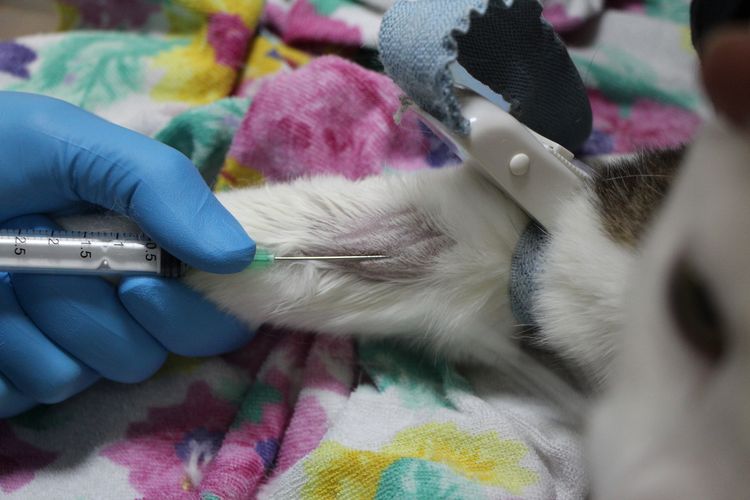
The test results allow us to assess liver function. Ultrasound or X-rays are prescribed to visualize any damage. These studies provide insight into the organ's structural changes and the severity of the changes.
A biopsy allows for 100% accurate diagnosis of pathology. The cat is anesthetized, and a small sample of the organ is removed for examination. The sample is collected using an aspiration needle. The sample is then examined under a microscope, the cell contents are determined, and a definitive diagnosis is made. In advanced disease, sebum will replace normal cells.
Caution! There is a risk of internal bleeding when collecting the sample, as perforation of a large blood vessel by the needle cannot be ruled out. To prevent this, the animal is administered vitamin K 12 hours before the biopsy.
Treatment
Treatment for feline lipidosis is performed in a hospital or outpatient setting. Inpatient treatment is recommended for severe cases, complications, or surgical interventions.
Outpatient therapy is prescribed for animals experiencing severe stress. It's easier to overcome stress in a familiar home environment, but it's necessary for medical reasons, as stress exacerbates the disease.
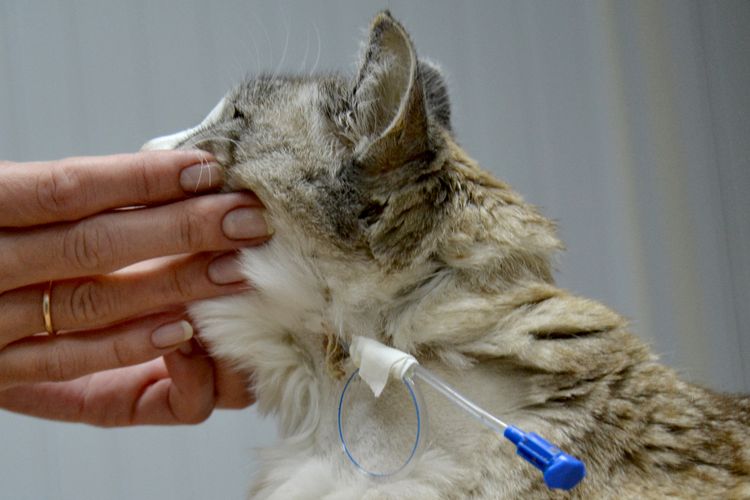
During treatment, it's important to restore normal nutrition to the pet. Special commercial diets are used for this purpose. If the cat is averse to food, a feeding tube is inserted through which liquid food is slowly introduced. Sometimes feeding through a feeding tube lasts for a month or more until the animal begins to eat on its own.
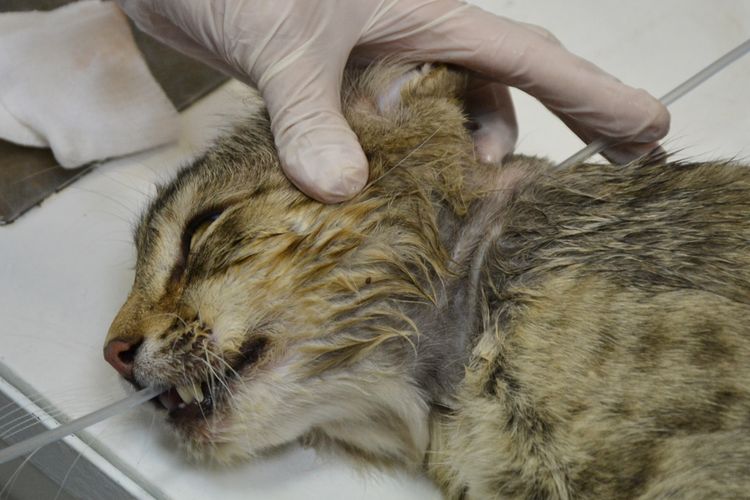
Cats with fatty degeneration are prescribed intravenous fluids to maintain and restore fluid balance. The composition of these fluids is determined by the veterinarian based on laboratory test results.
Treatment also includes antiemetic medications and, in cases of severe liver damage, vitamins. Vitamins are essential because liver problems can cause hypovitaminosis in cats, which can complicate the course of the disease.
The veterinarian prescribes medications, dosage, and duration of treatment on an individual basis. For animals with weakened immune systems, antibiotics may be prescribed to prevent complications and the development of infectious diseases.
Forecasts
If the condition is detected early and treated promptly, the prognosis is favorable. Severe lipidosis is fatal in 30% of cases, even if the animal receives intensive care.
The recovery period is long, taking 1.5-2 months. The owners will have to keep their pet on a strict diet and feed it through a tube or intravenously during this time.
Like any disease, lipidosis is easier to prevent than to cure. To prevent the disease, cats should eat a balanced, high-quality diet. Cheap or expired food is prohibited.
The food should contain sufficient protein, but not be high in calories. Owners should monitor their pet to prevent obesity. If the pet refuses food for two days, seek immediate veterinary attention.
Read also:
- Black plaque in my cat's ears: causes and treatment
- My cat has a swollen chest: causes and what to do
- Drooling in Cats: Causes and Treatment


2 comments
Tatiana
Hello! My kitten's pussy is very inflamed due to athexia, and he can't control his urination. I've been washing it, but it's no use. Could you please tell me how to treat it?
Daria is a veterinarian
Hello! If your kitten has been diagnosed with ataxia, hasn't a neurologist prescribed treatment? Regarding incontinence, there are many medications available, but it's extremely difficult to determine the right dosage for a small kitten. For example, Livial at a dosage of 2.5 mg is given at 1/10 of a tablet per 10 kg of body weight; imagine how much you'd have to crush for a kitten. Propalin (due to the small amount of the required substance and the huge content in 1 ml of the drug itself, it's only prescribed for dogs), Driptal (amitriptyline 0.5-1 mg of active ingredient per 1 kg of body weight orally once a day), and Ovestin are also difficult to dose. Use baby diaper rash creams (Bepanten, Panthenol, etc.) on the inflamed tissue. What's the cause of the ataxia? Is it a previous injury or congenital? It's easier to treat the ataxia, and the incontinence problem will resolve itself.
Add a comment