
Lykoi (Lykoi, werecats)
With the appearance of cats Lyca have created a sensation in the world of felinology. They are not the result of a genetic experiment, as one might think. Lykoi cats are the result of natural mutations in short-haired cats. In character and behavior, they are no different from ordinary pets. Breeders claim that, despite their outward resemblance to werewolves, the cat will definitely not transform during the full moon.
Content
History of origin
Lykoi cats aren't the product of a crazy experiment; they're the result of a natural mutation. In 2010, Patty Thomas, a Virginian, discovered that his stray shorthaired cat had given birth to unusual kittens. By the time they were a month old, they had developed bald patches, revealing pink skin. Exhaustive visits to veterinarians, various tests, and investigations for health problems followed. Meanwhile, the kittens grew up and developed completely normally. The experts' verdict was: they were completely healthy. Thomas later became one of the founders of the breed, giving it its name.
In 2011, Johnny Gobble discovered a second pair of animals with an identical mutation in Tennessee. Kittens from these two litters formed the basis of a program to increase the Lykoi gene pool, which also included regular black shorthaired cats. During its development, the breed underwent more DNA testing for various diseases than any other. Similar mutations have been reported before, but no one considered preserving them.
The breed's name, Lykoi, was chosen deliberately. In Greek, lykos means wolf or werewolf.
In 2011, the first kitten was born from a Lykoi pair. The breed began to develop rapidly, and within a few years, catteries were opened in other states: Missouri, South Carolina, Texas, and California. The werewolf cats began to spread across various countries and continents. In 2012, they were accepted into the TICA New Breed Registry, and in 2016, they received championship status and the right to exhibit.
Not only does their creepy appearance not hinder these creatures, it actually contributes to their growing popularity and the demand for kittens, which is hundreds of times greater than the supply.
Video about the Lykoi cat breed:
Appearance
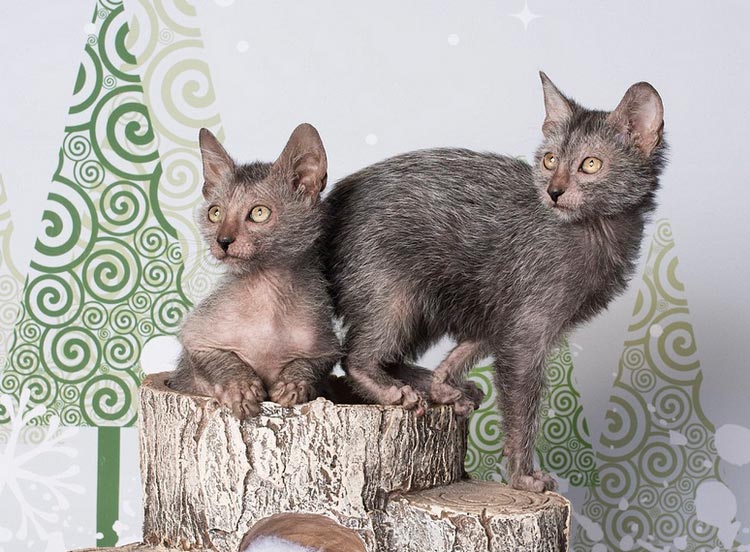
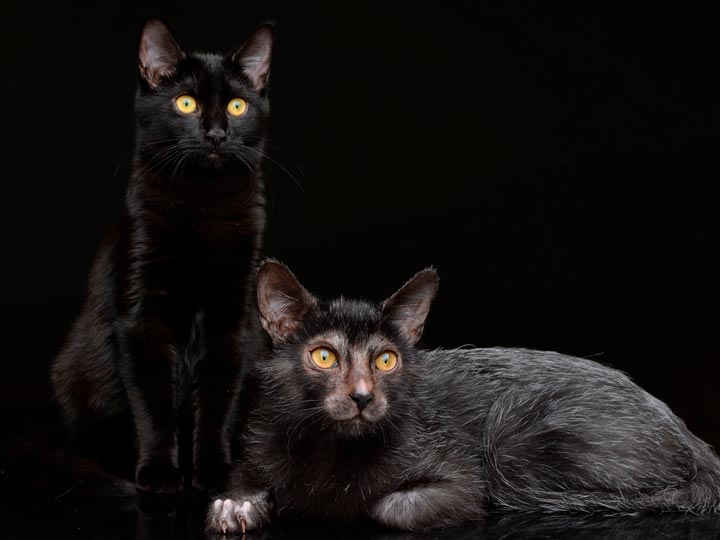
It's amazing how quickly a breed with such a striking appearance has become popular among cat lovers worldwide. Lykoi are partially hairless cats with a unique coat pattern consisting of a combination of black and white hairs. There's a noticeable difference between male and female cats, even visible in photographs. Males are noticeably larger and heavier, typically weighing between 4.5 and 6 kg, while females weigh between 2 and 3.5 kg.
The Lykoi mutation is individual, which is confirmed by comparative DNA analysis with sphinxes And Devon RexesThe Lykoi cat's baldness gene is recessive. Further DNA analysis showed that their coat color is not a tabby variation.
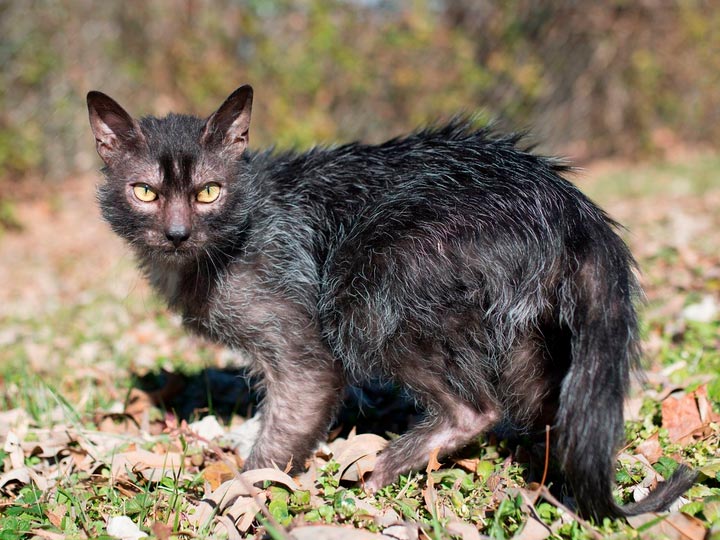
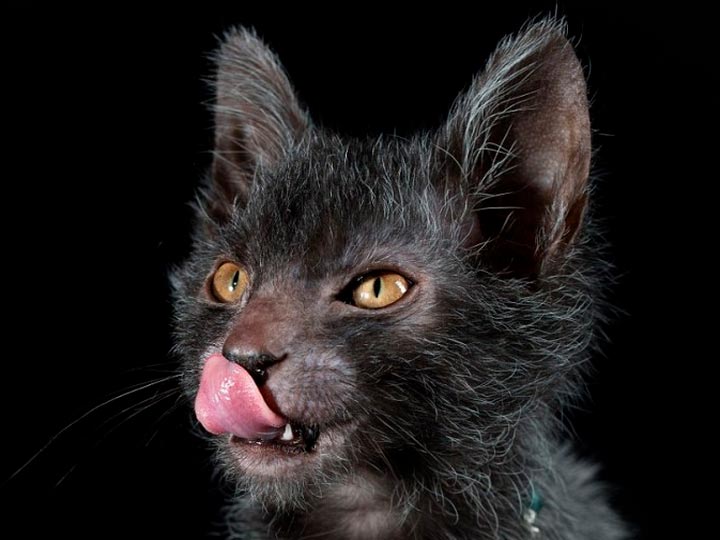
The head is medium-sized and wedge-shaped. The stop is not pronounced. The nose is wide and slightly humped. The neck is long. The ears are wide at the base, high, and slightly pointed. The distance between the ears is not great. The eyes are round and expressive, and their color can be yellow, gray, green, or blue. The hairless muzzle gives the Lykoi its striking, easily recognizable werecat appearance. The body is compact, not overly powerful, but not thin either; it is athletic, slightly elongated, and flexible, with a broad chest. The legs are medium length, and the tail is medium in size.
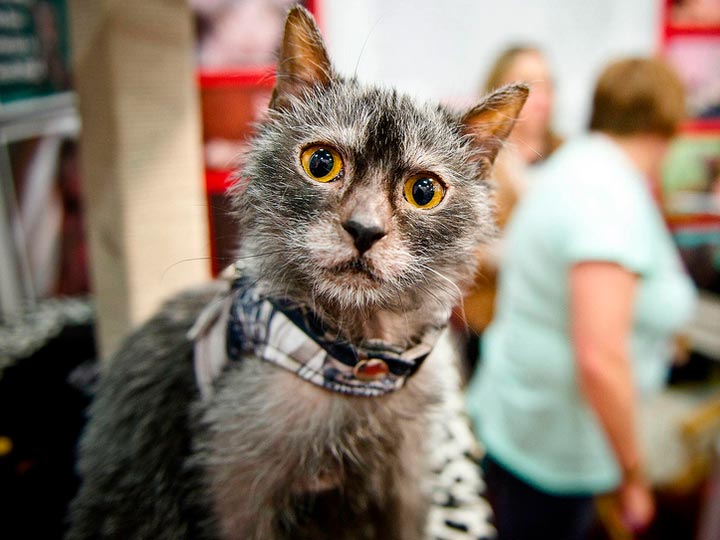
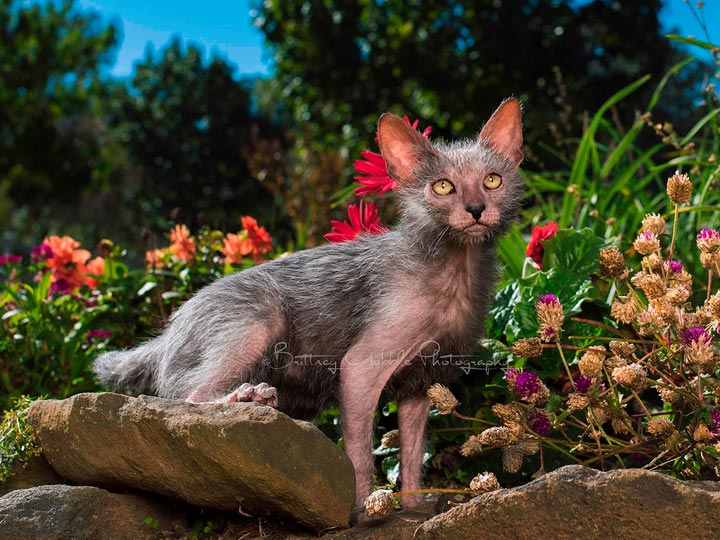
Bald patches are located around the eyes, on the wiry pads, on the chin, and on the bridge of the nose. Almost all representatives of the breed have sparse hair on the front and hind legs, chest, and belly.
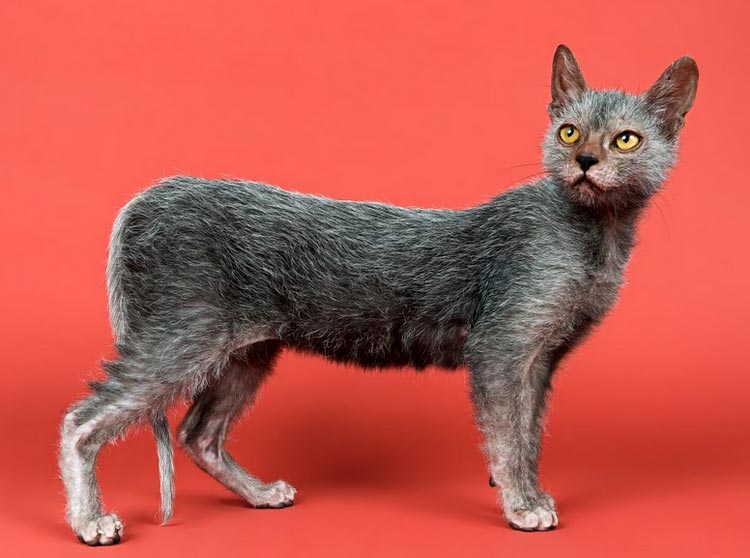
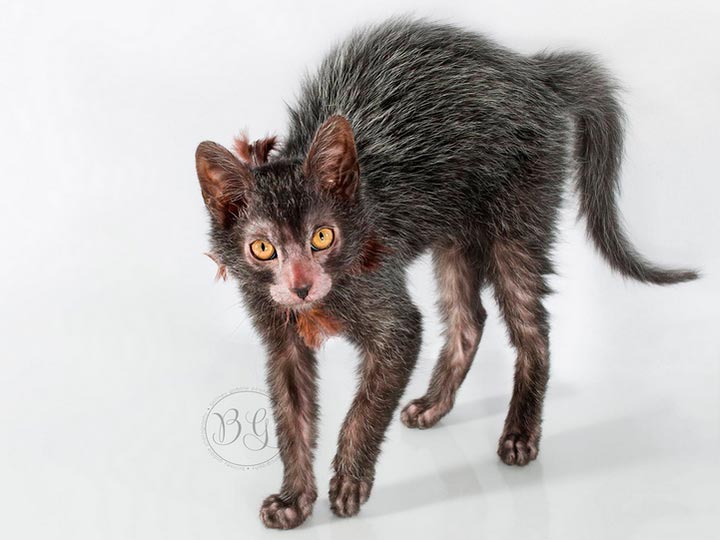
The Lykoi cat's coat is very soft, short, and sparse. It consists solely of guard hairs; the undercoat is completely absent. The degree of hair loss varies from cat to cat; some cats may be virtually hairless, while others are distinguished only by a moth-eaten muzzle. Another distinctive feature is the original roan color. Among cats, it is found only in the Lykoi. The skin is pink and tans quickly in the sun, like other cats. bare rocksThe most popular color is black and white, a distinct roan, but cats can also have lighter fur, even light gray, which, combined with white hairs and bare patches, makes them appear very light.
Character
Lykoi cats are very intelligent and inventive, sociable, friendly, active, and playful. They enjoy playing with people, and when alone, they entertain themselves with a toy or any other small object that catches their attention. They enjoy walking outdoors easily and selflessly, and they defend their territory with zeal. This behavior is especially pronounced in male cats.
At home, they are curious and very energetic. They rarely sleep for 20 hours at a time, preferring to be the center of activity, eagerly exploring new toys and surroundings, and craving close human contact and new experiences. When first encountered, they are cautious, carefully introducing any new object, person, or pet to ensure there is no danger or threat. Owners note that many Lykois enjoy sitting in a gopher pose and actively use their front paws in play and everyday life. Lykois exhibit strong hunting instincts during play, and outdoors they happily hunt beetles and butterflies, rarely pursuing larger prey.
Content Features
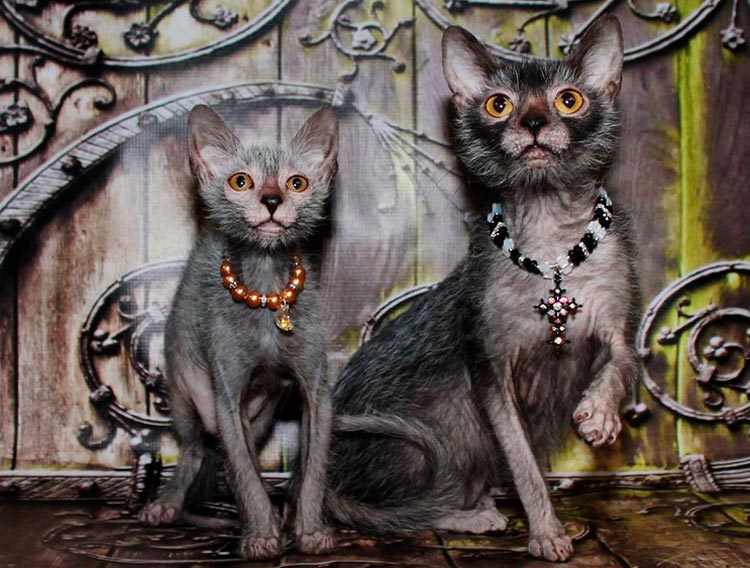
Lykois are well-suited to apartment or house life, adapting quickly to new surroundings, bonding with all family members, and being neat and clean. Contrary to popular belief, they are not hypoallergenic. Like other cats, they shed hair, the amount of which depends on the season, the amount of hair on their body, and the climate. Their fur is very soft to the touch, their naked body is warm and velvety, and their nose, as expected, is cool and moist.
Lykoi are very friendly, so they get along easily with other pets, cats, dogs, small rodents and birds, anyone who does not mind their company.
The effects of heat and cold on bare skin are more pronounced than in furry breeds. During cold weather, it's advisable to choose clothing appropriate to the weather, and in summer, protect them from excessive direct sunlight, which can cause sunburn. Given their high activity level, a play structure is recommended.
Care
Grooming is an important part of Lykoi care, and it's not difficult because they have little hair. For bathing, we recommend using a mild, natural, hypoallergenic cat shampoo. The frequency of washing varies from cat to cat and depends on their skin type. Some Lykoi need to be washed once a month, while others need to be washed every six months. Periodically, the cat should be brushed or mature hairs removed with a damp hand. The ears should be cleaned regularly. A characteristic of the breed is the accumulation of a brown sebum in the ear canal and around the claws, which should be carefully removed about once a week. The claws should be trimmed regularly. Like Sphynx cats, a brown sebum accumulates around the claws, which is rarely a sign of illness and is easily removed.
Feeding
There are no special feeding recommendations. Like other cats, Lykoi require a balanced, healthy diet. Most breeders prefer wet or dry commercial food. Lykoi are suitable for small and medium-sized domestic cat diets. Avoid foods below super-premium. While it's possible to provide Lykoi with a complete natural diet, this can be challenging, given that they are often picky eaters.
Health and life expectancy
Breeders' experience and multiple tests have shown that the hairlessness gene is not associated with any pathologies or hereditary diseases in the breed at this stage. Lykoi cats can have any feline health problems, but they are usually caused by improper care, maintenance, or nutrition.
The Lykoi were tested for selected skin, heart, thyroid, and blood diseases, as well as some infectious diseases, as well as common feline hereditary kidney, liver, and digestive tract diseases. All results were negative, indicating robust health and favorable genetics.
Lykois require the same vaccinations as regular house cats, as well as regular treatment for external and internal parasites. Standard veterinary medications are used. Breeders claim to have never observed any allergic reactions to veterinary medications, food, or cosmetics.
Where to buy a Lykoi kitten
Purchasing a Lykoi kitten is now easier than it was in the early years of their introduction, but the number of kittens available for sale is still very limited. As of 2017, just over 200 standard Lykoi cats with the characteristic coloring and bald patches, as pictured, were registered worldwide. Catteries can be found not only in the United States but also abroad, particularly in Russia and neighboring countries. Some companies ship kittens with documents directly from the United States.
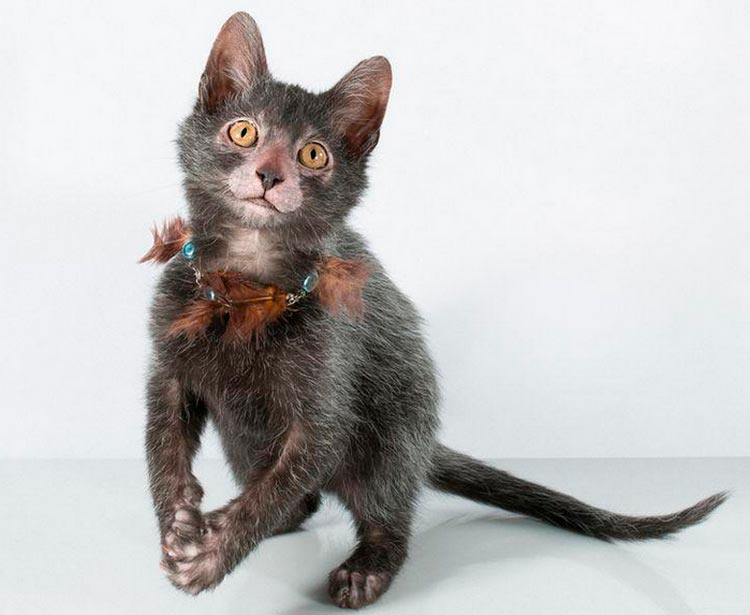
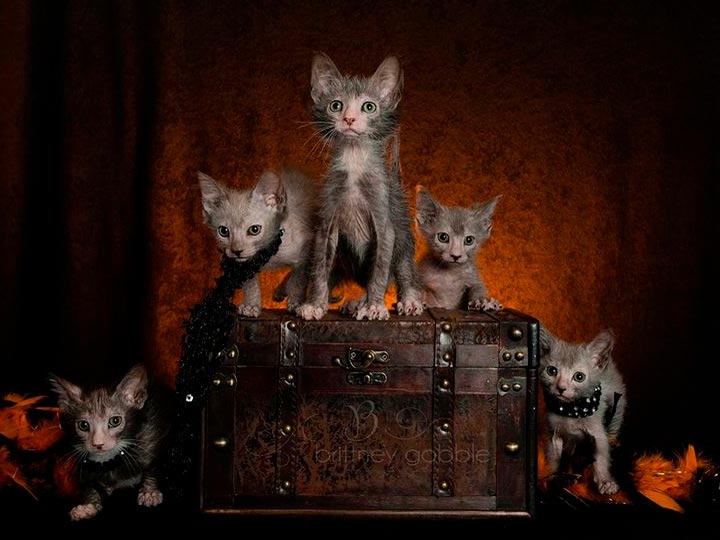
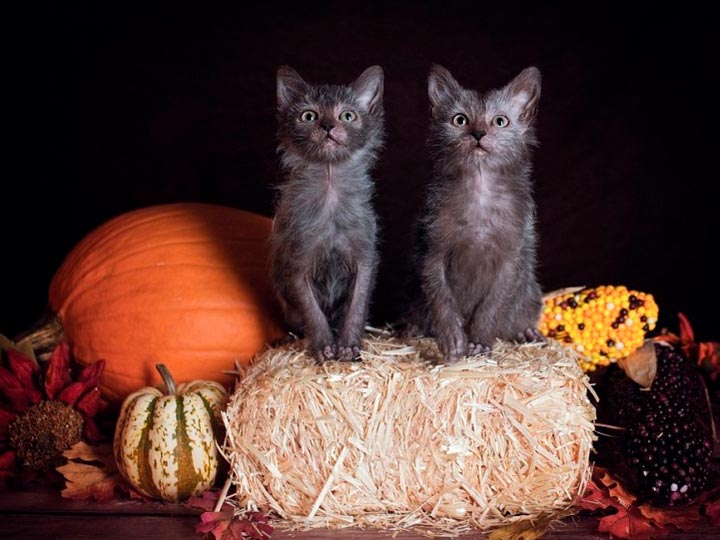
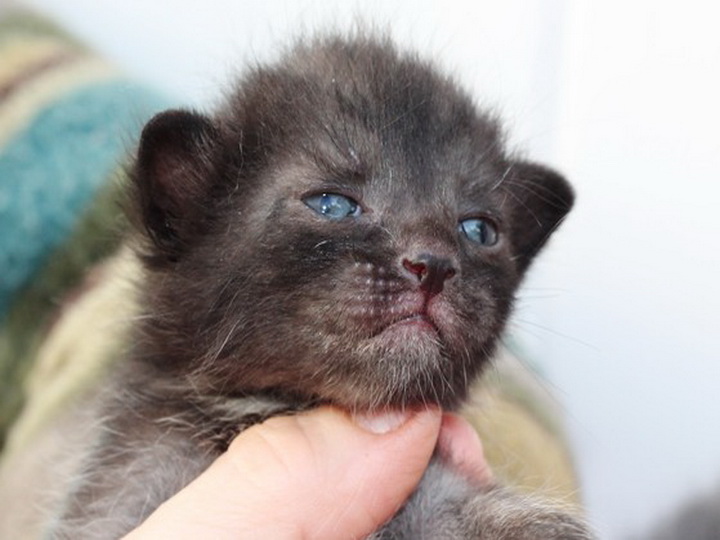
Newborn kittens differ from adults in that they have a uniform, solid coat and no bald spots. As they age, more and more white hairs appear, and some areas of fur begin to fall out. By 1.5 months, they have acquired a fully developed roan color, which they retain.
Price
The average price of a Lykoi kitten in the US is $2,000. Naturally, we're talking about kittens with documentation of origin from catteries. In Europe, the price fluctuates around the same range. In Russia, there are only a few representatives of the breed, most of whom live in one of the largest Moscow catteries, Murmulet. The price of a Lykoi kitten in Moscow usually starts at 150,000 rubles. The limited supply of kittens and the huge demand allow breeders to keep prices as high as their foreign counterparts. Furthermore, a kitten's price is influenced by its color; dark-colored kittens are usually more expensive. Those looking to buy a kitten abroad should exercise caution. Scammers and "breeders" offering Lykoi for sale at low prices have already begun appearing in the United States.
Photos
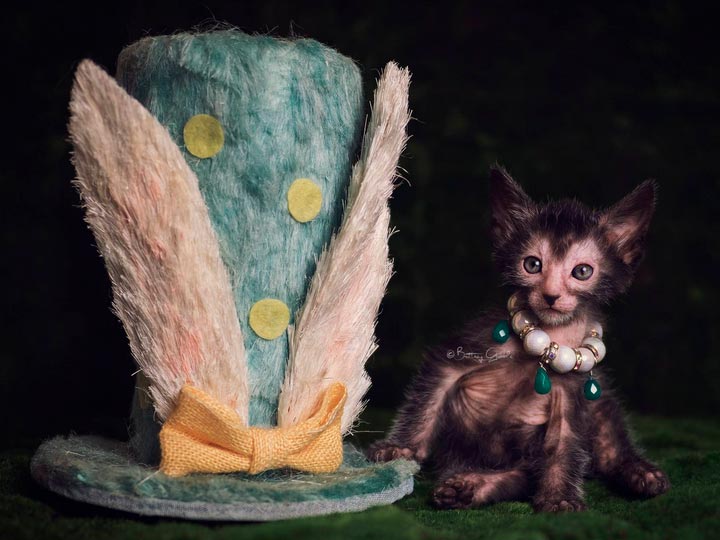
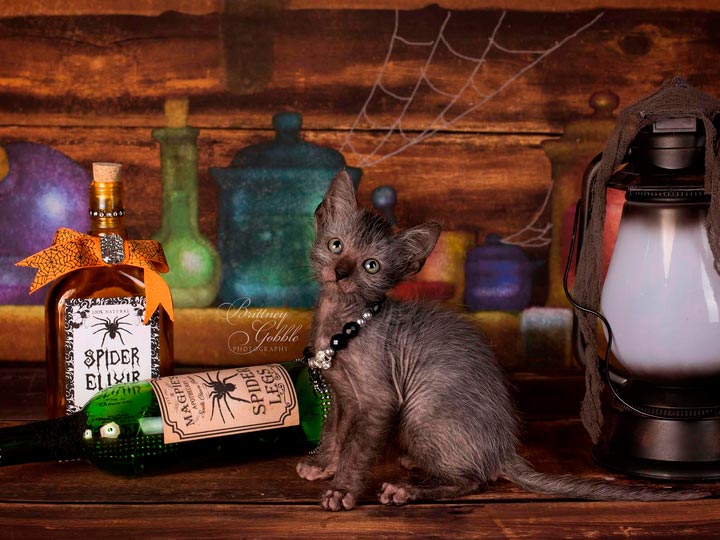
The gallery contains photos of Lykoi cats, male cats, and kittens. While Lykoi owners and breeders praise their friendly nature, they continue to emphasize their unique characteristics.


Add a comment