
Ligfol for cats
Ligfol is a next-generation stress corrector with immunostimulant, antioxidant, and hepatoprotective properties, effectively used in cats for a variety of ailments. This unique medication was developed by the Russian company Ligpharm, which has its own research and production center. The medication has long earned the trust of veterinarians and pet owners.
Content
General description
The medication is produced as an injectable solution. However, the instructions state that the drug can be injected and used for irrigation and wound cleaning. Ligfol is a clear, brown liquid (a dark brown tint is acceptable). The medicinal liquid is packaged in clear glass bottles of 1 and 100 ml. Purchasing larger bottles for cats is generally impractical; they are intended for farm animals. The 1 ml bottles are packaged four at a time in plastic tubes, and then placed in a cardboard box. Pharmacies sell bottles individually, so there's no need to buy a full package.
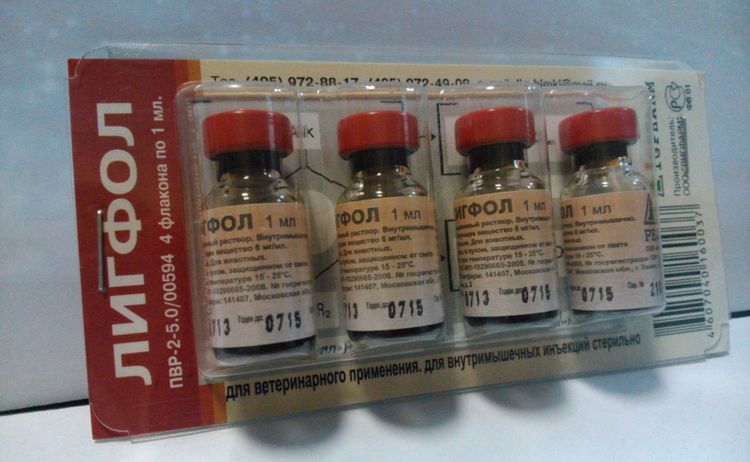
The product's key feature is its humic substances, which are obtained through a chemical reaction from wood fibers. The composition also includes the following components:
- sodium chloride;
- sodium pyrophosphate decahydrate;
- demineralized water.
Please note! To preserve the medication's unique medicinal properties, store it in a dark place at a temperature between 10 and 25 degrees Celsius.
Price
For cats, it's more reasonable to purchase Ligfol in small bottles (1 ml each); the price for such a bottle ranges from 170 to 200 rubles. A 100 ml bottle costs 1800-1900 rubles. The medication is sold in many veterinary pharmacies, so purchasing it is usually straightforward.
Operating principle and properties
Ligfol has a fairly broad spectrum of action, affecting various systems and organs. It can activate the immune system at the cellular level and stimulate interferon synthesis, which helps build resistance to viruses, bacteria, and fungi. The drug's components participate in the formation of active oxygen and blood cells.
The innovative drug has the following effects on the body:
- strengthens and restores immunity after immunodeficiencies and various illnesses;
- stimulates tissue regeneration;
- normalizes liver function;
- removes toxic substances from the body;
- has a positive effect on metabolic processes;
- improves the functioning of the reproductive system;
- increases vitality in older animals.
The medication has pronounced antitumor properties, so it is often used in combination therapy for oncology.
Ligfol is a low-hazard substance. It has no toxic or embryotoxic effects and does not cause allergic reactions or addiction.
Indications for use
The drug's range of uses for cats, as well as other animals, is quite broad. It is included in combination therapy for the following conditions:
- for diseases of the liver and pancreas;
- for infections caused by viruses and bacteria;
- in cases of poisoning and toxicosis;
- when infected with ectoparasites (ticks, fleas, lice eaters);
- for helminthic infestations;
- for fungal diseases;
- in oncology.
The drug is also used to strengthen the immune system, prevent infectious and other diseases, and improve overall health. It is also used to improve reproductive function to produce healthy offspring. Ligfol can be used for kittens with developmental delays and for older animals to improve their vitality and overall health.
Since the components of the drug improve regenerative processes, it is used in the following cases:
- after surgery:
- in case of fractures;
- for lacerations;
- for burns;
- in case of frostbite;
- for trophic ulcers;
- for purulent inflammations, etc.
Ligfol can also be used as a stress corrector to prevent negative reactions to stressful situations. It is recommended for use in the following situations:
- during transportation;
- when moving;
- when visiting a veterinary clinic;
- when the owner leaves;
- when guests arrive, etc.
The medication is also used to enhance the body's response to vaccination. This results in more robust and long-lasting immunity against infectious diseases.
How to apply
According to the instructions, the Ligfol dosage for cats is calculated simply: 0.1 ml of solution per kilogram of body weight. However, the dosage regimen may differ depending on whether the drug is used for treatment or prevention. Injections are administered intramuscularly.
The most commonly used application schemes are:
- To boost immunity against infectious diseases, two injections are given, two days apart. If necessary, two or three more injections are given, but every five days.
- If your pet has chemical or food poisoning, injections are given every three days. Three injections are usually sufficient, but the number of treatments may be adjusted by your veterinarian.
- If worms are detected, the medication is administered 2-3 days before deworming and then on the day of deworming. To speed up the recovery of any toxicity that may occur during deworming, 2-3 more injections are given at 5-day intervals.
- To prevent potential adverse effects of stress, Ligfol injections are given 1-2 days before an event that could trigger changes. During long-distance transportation, the medication should be administered every 2 days.
- For benign tumors, a course of 6-8 injections is administered once a week. Depending on the animal's condition, the course is repeated after 2-3 months. For malignant tumors, injections are given every 3 days. Depending on the disease progression, 5 to 10 injections may be required. The course is repeated several times a year. Ligfol helps animals recover faster after chemotherapy and surgery.
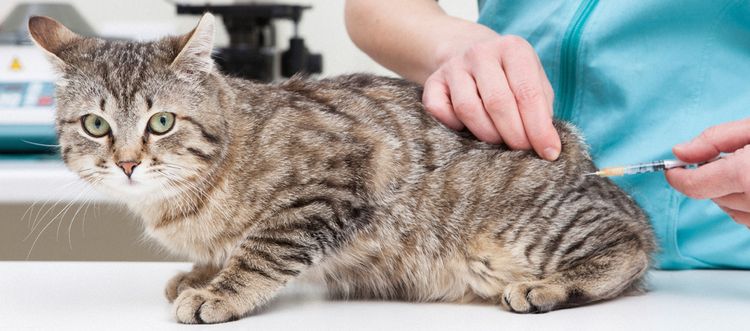
To prevent complications after surgery and speed up the recovery process, the medication can be used as an injection or topical treatment. It is recommended to administer the injection a few days before surgery, followed by 1-2 additional injections after the procedure, spaced 1-2 days apart. The sutures can also be treated with the solution 1-4 times daily. For irrigation, the medication is diluted in equal parts with water for injection. The procedures are repeated until the wounds begin to heal. If the skin integrity is compromised (burns, wounds, trophic ulcers, etc.) external use can also be combined with injections.
Please note! It is recommended that a veterinarian determine the Ligfol application regimen. They will take into account the individual characteristics of the animal, the progression of the disease, and other factors.
Contraindications and side effects
The instructions state that there are no contraindications for Ligfol, so it can be used on cats of any age and breed. The product is suitable for young kittens and older pets, as well as pregnant and lactating females.
Injections of this medication may be painful. Any discomfort subsides within 5-10 minutes after the injection. No special precautions are necessary. The medication has no other side effects.
Owner reviews
Oksana, owner of a 15-year-old cat:
"Our cat was diagnosed with a tumor on her tongue. We used Ligfol for treatment (as prescribed by the doctor). Her condition improved noticeably after a week of treatment. She even tried to eat on her own. The medication significantly extended her life. The doctor noted that if the cat had been younger, she might have had a chance of a full recovery."
Lyudmila, owner of a Maine Coon:
"At age 17, our cat was diagnosed with cancer. Marquis was fading before our eyes. The doctors were at a loss and talked about euthanasia. At one clinic, a veterinarian recommended Ligfol. After the injections, the cat noticeably improved and became more active. He lived for another two months, and then died. The disease was in its final stages, so there was no chance of recovery, but I'm grateful to the drug for giving our kitty another two months of life."
Veterinarian Reviews
Ksenia, a veterinarian with 10 years of experience:
"I'm skeptical about medications like this. I wasn't sure about Ligfola at first, until I heard several positive reviews from clients. I decided to give it a try. It doesn't always help with cancer, but for poisoning, immune system support, or infectious diseases, the results are usually noticeable."
Andrey, a veterinarian with 15 years of experience:
"This is another scam from the manufacturers, a placebo. Its effectiveness against cancer has not been proven. We don't use it in our practice because we consider it a waste of time and money. I would recommend that pet owners avoid doctors who prescribe Ligfol for tumors."
Read also:


Add a comment