
Italian Greyhound (Small Italian Greyhound)
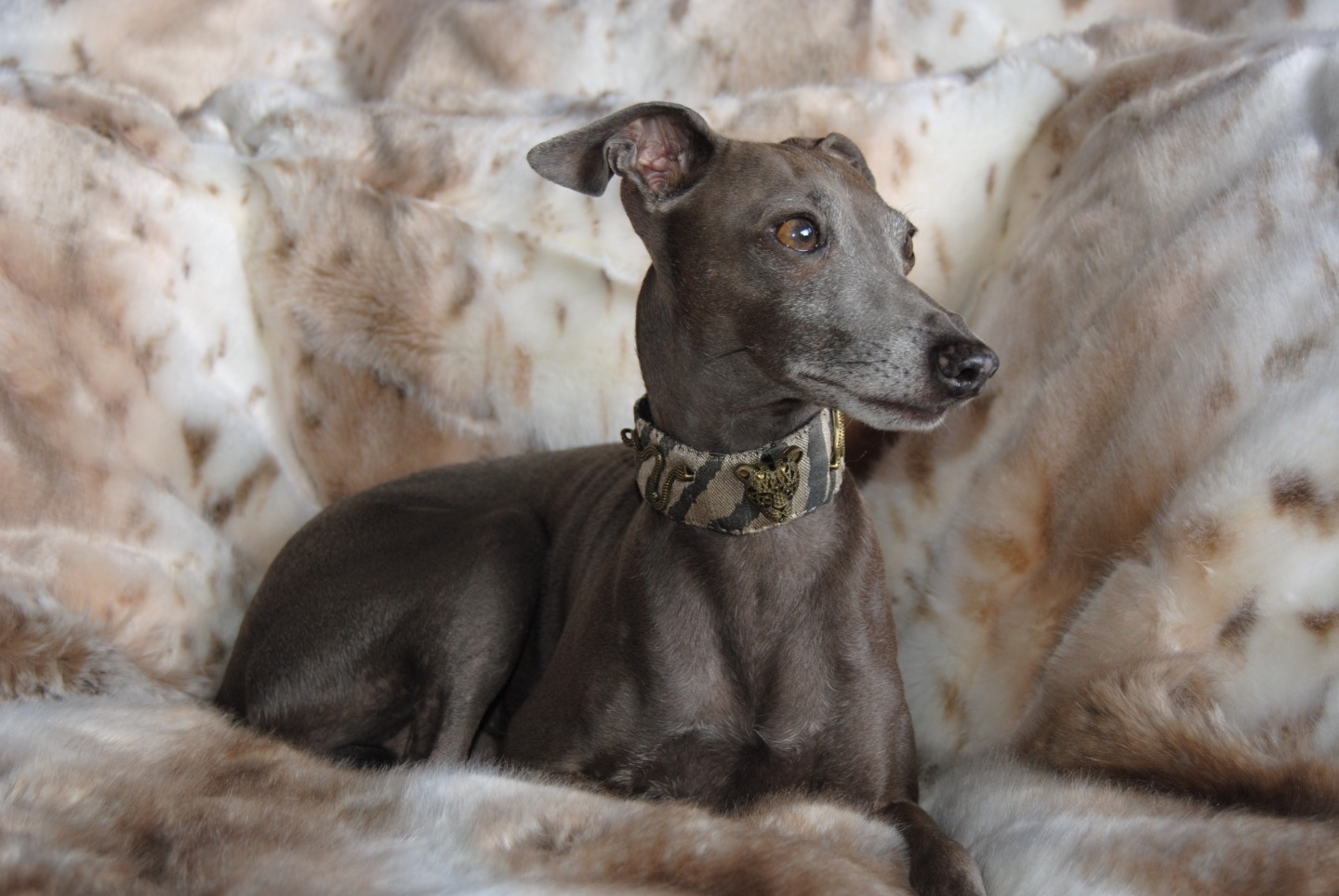
The Italian Greyhound is a small toy dog that retains excellent athletic qualities, possessing the hunting spirit and remarkable sprinting ability typical of sighthounds. The breed's name derives from the French word "lièvre," meaning "hare," because rabbit-hunting with Italian Greyhounds was a favorite pastime of medieval noblewomen. The breed's official name is the Italian Greyhound, or Petit Italiano, and its country of origin is considered to be Italy.
Content
History of origin
The origins of the small Italian greyhound go back to the times of the pharaohs and Caesars, but virtually no reliable facts about the breed have survived.
Some historians believe that Italian Greyhounds were developed by the Egyptians. From Ancient Egypt, around the fifth century BC, the breed reached Rome, where it became a favorite among local dignitaries. From there, the dogs spread throughout Europe and became favorites of the nobility.
But even if this version were confirmed, the breed would hardly have been renamed and called the African Greyhound, since its modern appearance was established in Italy at the beginning of the 20th century through crossbreeding. whippet And miniature pinscherThis allowed the greyhound type to be preserved and its small size to be maintained. This was done with the goal of restoring the purity and population of greyhounds, which were on the verge of extinction as a result of inbreeding and refinement.
Video review of the Italian Greyhound (Small Italian Greyhound) dog breed:
Appearance and standards
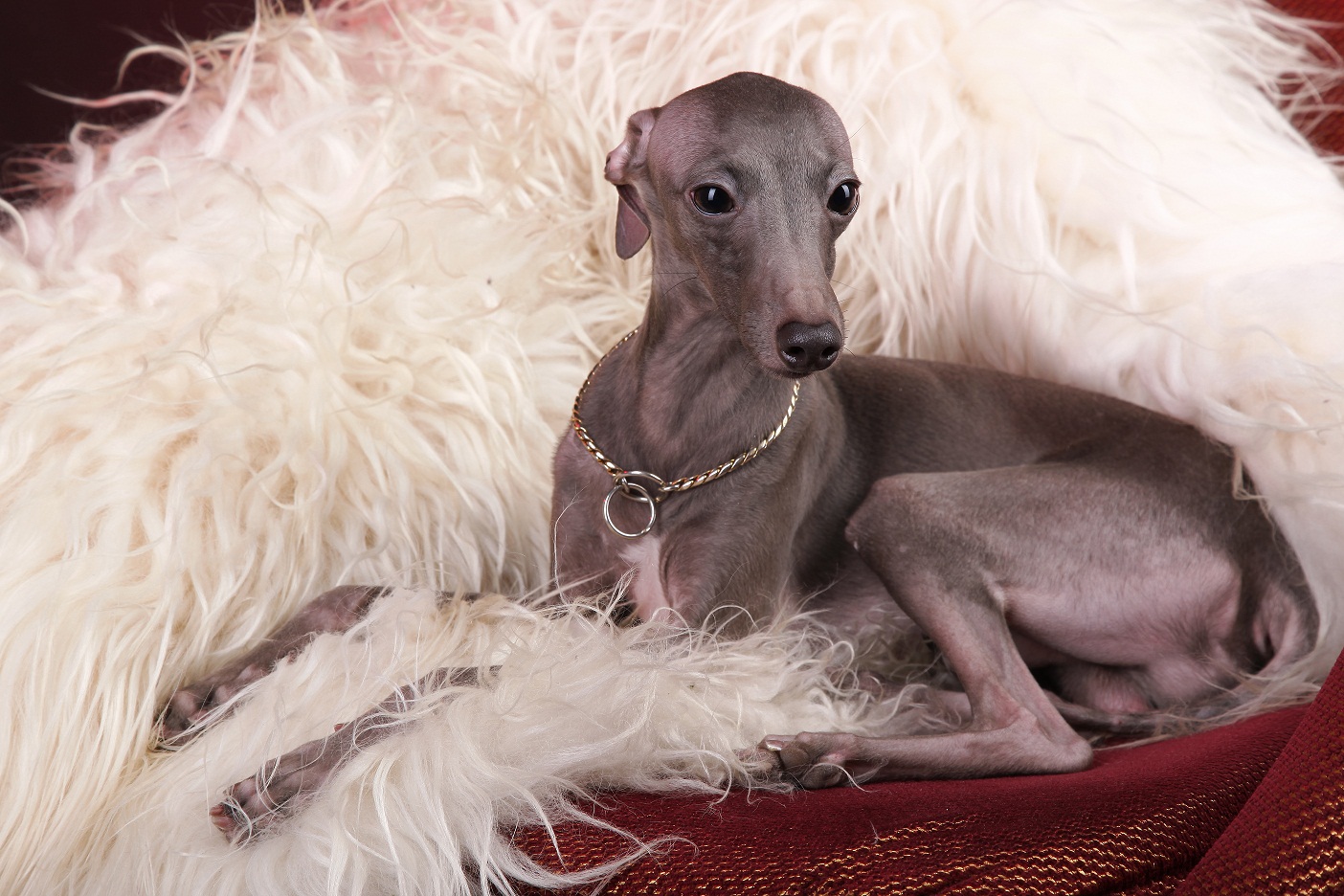
To those who've never interacted with an Italian Greyhound, the dog appears slender, resonant, and translucent, fragile, slightly trembling from the cold, and downright hungry (as evidenced by its gaze, in addition to its build). But don't believe your eyes! Breeders claim these dogs are more reminiscent of a cannonball: strong, flexible, and swift, with a streamlined body.
Excerpts from the standard
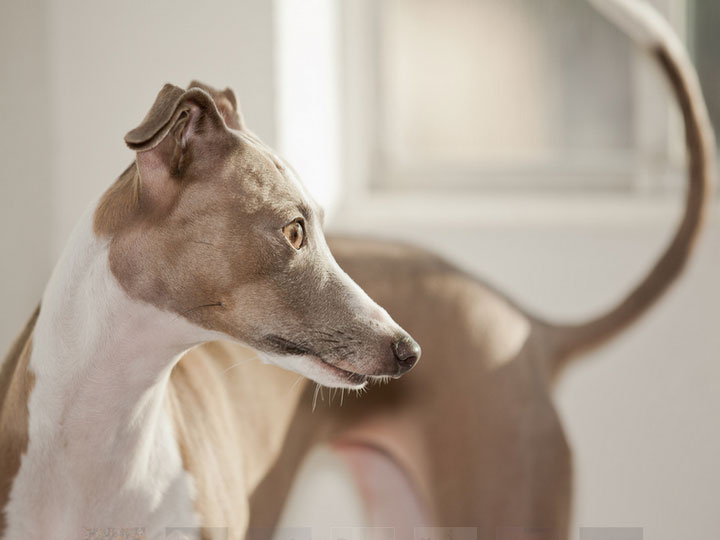
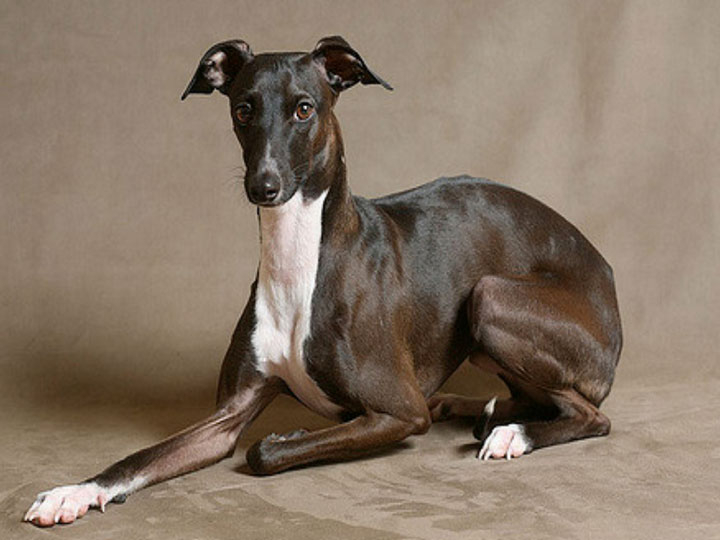
The Italian Greyhound has a lean, fine-boned, well-muscled constitution. Its weight ranges from 2.5 to 4.5 kg. Its height at the withers is up to 38 cm. Its head is long, tapering toward the nose. It has a scissor bite. Its ears are mobile, semi-drooping, and set wide apart. They become erect when alert. Its eyes are slightly convex, oval, and set straight. The iris color ranges from dark brown to light hazel. Its neck is set high and long. Its chest is deep. Its belly is tucked up toward the groin. Its back is arched. Its tail is thin, long, and set low. When at rest, it is lowered or tucked between the hind legs; when moving, it is raised and carried below the back. The front and hind legs are long, lean, and parallel. The dog's movements, like the entire appearance of the Italian Greyhound, are swift, straightforward and graceful.
Breeders often hear questions about miniature Italian Greyhounds, including what kinds there are and how much they cost. There's a lot written online, but the only reference is the standard, which clearly states: there are no varieties of Italian Greyhounds! Standard sizes (height and weight) are general requirements for all dogs. Of course, no breeder is immune to producing puppies with growth deviations, but these are neither miniatures nor standard breeds; they are called defects.
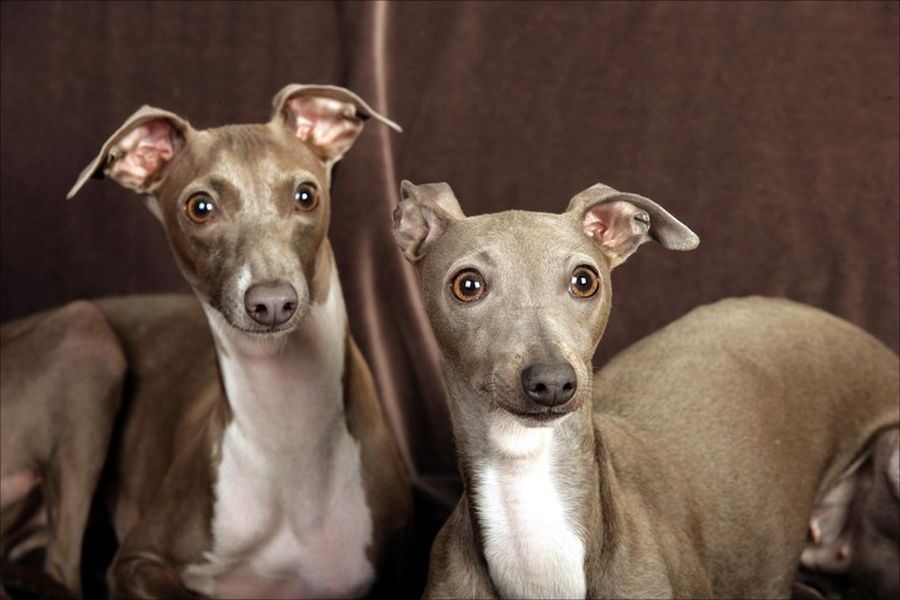
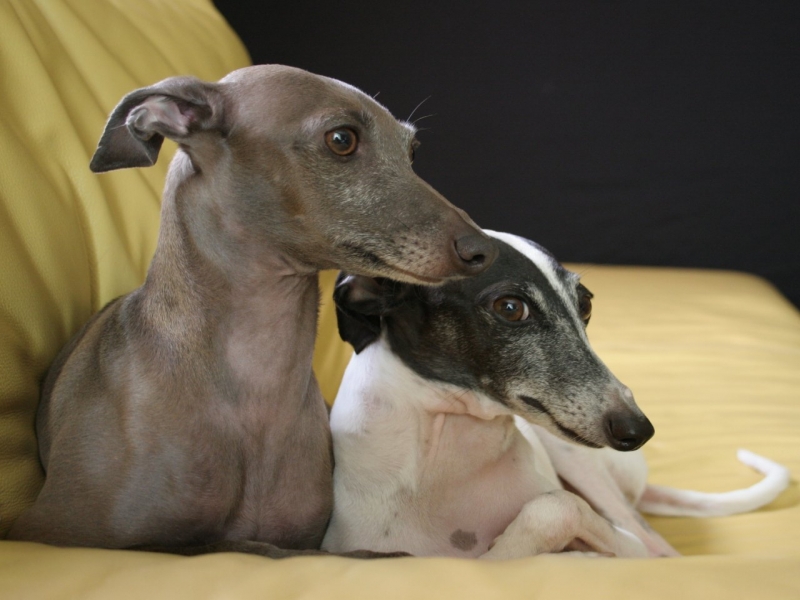
The coat is short and dense, shiny, very soft to the touch, and lies close to the taut skin. Acceptable colors include gray, blue, black, fawn, lilac, or red in any shade. White and mixed colors are also acceptable, with the exception of brindle or black and tan.
Character
Italian Greyhounds are very friendly creatures with a lively temperament, an innate sense of tact, and excellent intuition. Their name best describes their character; most Italian Greyhounds are playful, easygoing, and cheerful. They are affectionate and submissive dogs, very attentive, and form strong bonds with their owners. Breed flaws include a certain hesitation in making decisions and nervousness, while vices include malice and cowardice. A distinctive characteristic of the Italian Greyhound is its ability to read its owner's mood. While it won't insist on attention, it will always happily support any idea.
Italian Greyhounds get along well with other animals and can even befriend cats, if the cats are willing. They may sometimes chase smaller companions, perceiving them as prey. They are loyal to children, but not particularly affectionate. It's best to keep an Italian Greyhound away from very young children, thus protecting both of them.
In general, the Italian Greyhound's psychological profile can be described as unrestrained, choleric, and unusually active. Dogs of this breed are very energetic and quick-witted. However, it's important to remember that constant stress can lead to neurosis.
The Italian Greyhound is a perfect fit for families with a calm, relaxed atmosphere, and where the owner has the patience to train the dog and time to walk it.
Training Italian Greyhounds
In reality, an Italian Greyhound puppy can be a challenge for an owner. A dog that's untrained and dependent, like a child, is bursting with energy, overflowing with enthusiasm, and eager to explore the world, including by chewing.
When dealing with a small and capricious greyhound, the owner will need a strong character, endless persistence, and iron patience; otherwise, the dog will take over and exploit the owner. Training a puppy begins within minutes of its arrival in the home, and categorically prohibits any behavior that would be forbidden to an adult dog. Any misbehavior should be followed by appropriate and timely punishment; this will help instill in the pet respect for people and the understanding that actions have consequences.It is important to remember that loud shouting can frighten a dog, and unfair punishment will not have the best effect on its character.
Training Italian Greyhounds should include a general course; the rest is up to the owner. Italian Greyhounds reach full physical and mental maturity relatively late: females at 1-1.5 years of age, and males at 2 years of age. Until then, it's important to always be firm and consistent with your expectations. The reward for this challenging period will be continued interaction with a calm and balanced dog. Italian Greyhounds should be given moderate exercise. They love to run, but overtraining or testing their endurance is not recommended. Regular, long walks are just what they need. Italian Greyhounds also enjoy active play and light jogging.
Italian Greyhounds on the run
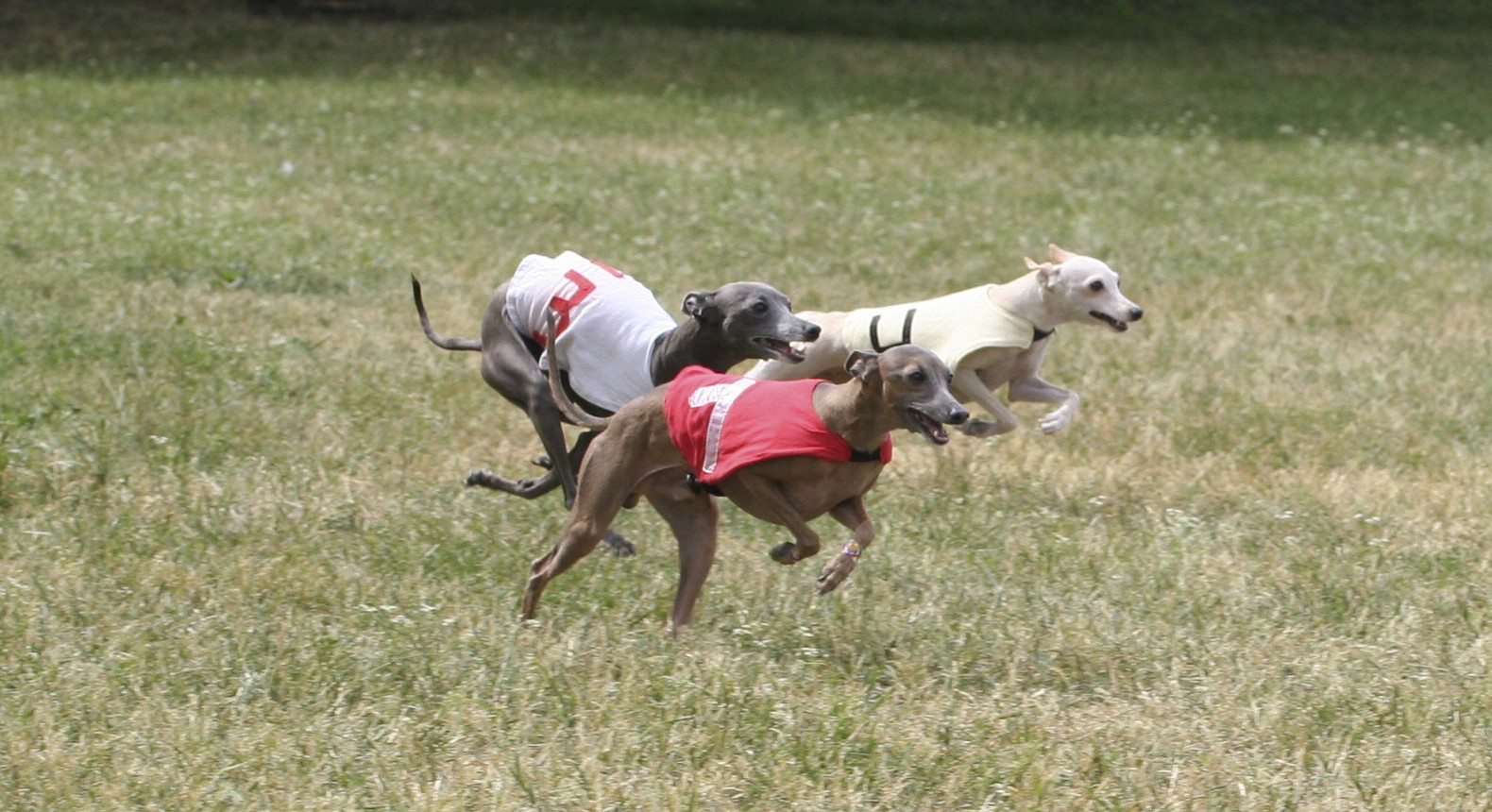
Italian Greyhounds are sighthounds to the core, and they run with the same zest as their larger brethren in Group 10 of the FCI classification. Those who have seen them at work will agree that they are small, swift rockets with extraordinary zest and excitement.
Running or coursing is the only way for greyhounds to realize themselves and awaken the slightly dormant instinct in their “sofa cushion”.
Maintenance and walking
Italian Greyhounds are purely toy dogs, although they do possess some hunting instincts, so they are only suitable for companionship. Keeping a small Italian Greyhound in a cage, let alone on a leash, should not even be considered.
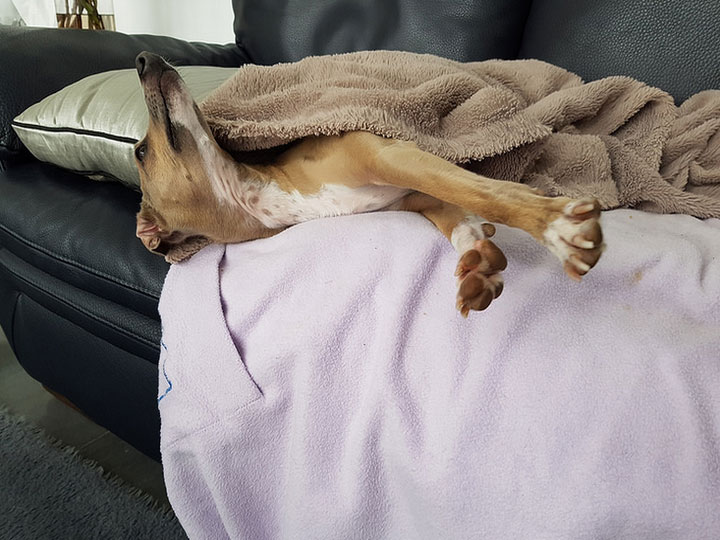
An Italian Greyhound will likely prefer to sleep under its owner's blanket, and it's preferable that the owner not push it around in their sleep. More independent individuals are advised to purchase houses and beds, which should definitely include a blanket.
Italian Greyhounds are very active and resilient. In warm weather, they can walk from dawn until late at night, covering kilometers, and in between, they enjoy galloping off-leash. As soon as cold weather and rain arrive, owners can take a break. They prefer to lie under a blanket, acting as a heating pad, and venture outside only briefly and only to run errands. Italian Greyhounds have an active metabolism, so many will require three walks a day. If this isn't possible, the pet will happily retrain to use a pad and will thank you for it in rainy or frosty weather.
Clothing and equipment for the Italian Greyhound
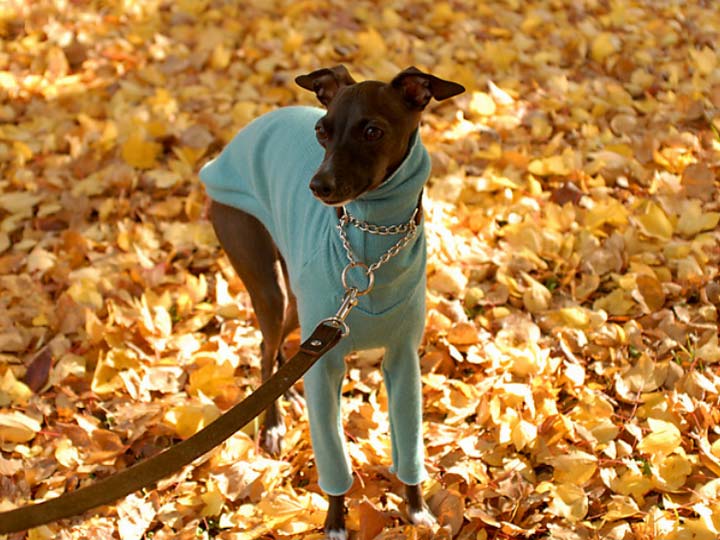
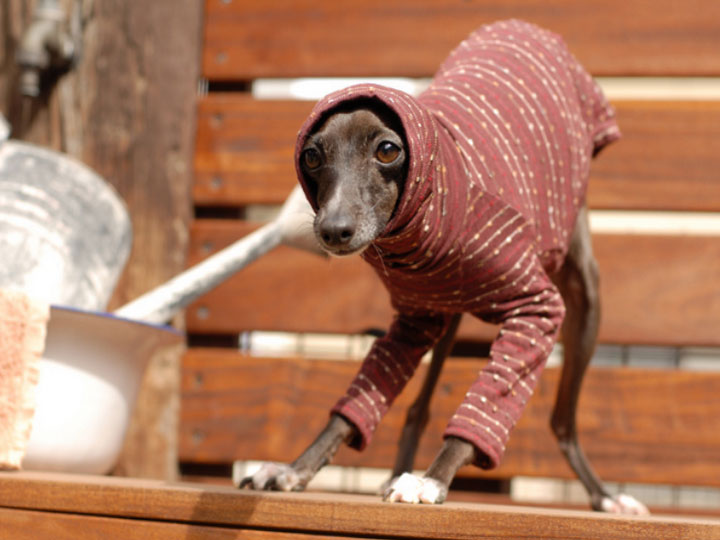
The Pygmy Borzoi is a delicate dog and is poorly adapted to moderate climates. In cold weather, it requires warm clothing. However, it should not only keep the pet warm but also be as comfortable as possible. The fewer fasteners and zippers the clothing has, the better.
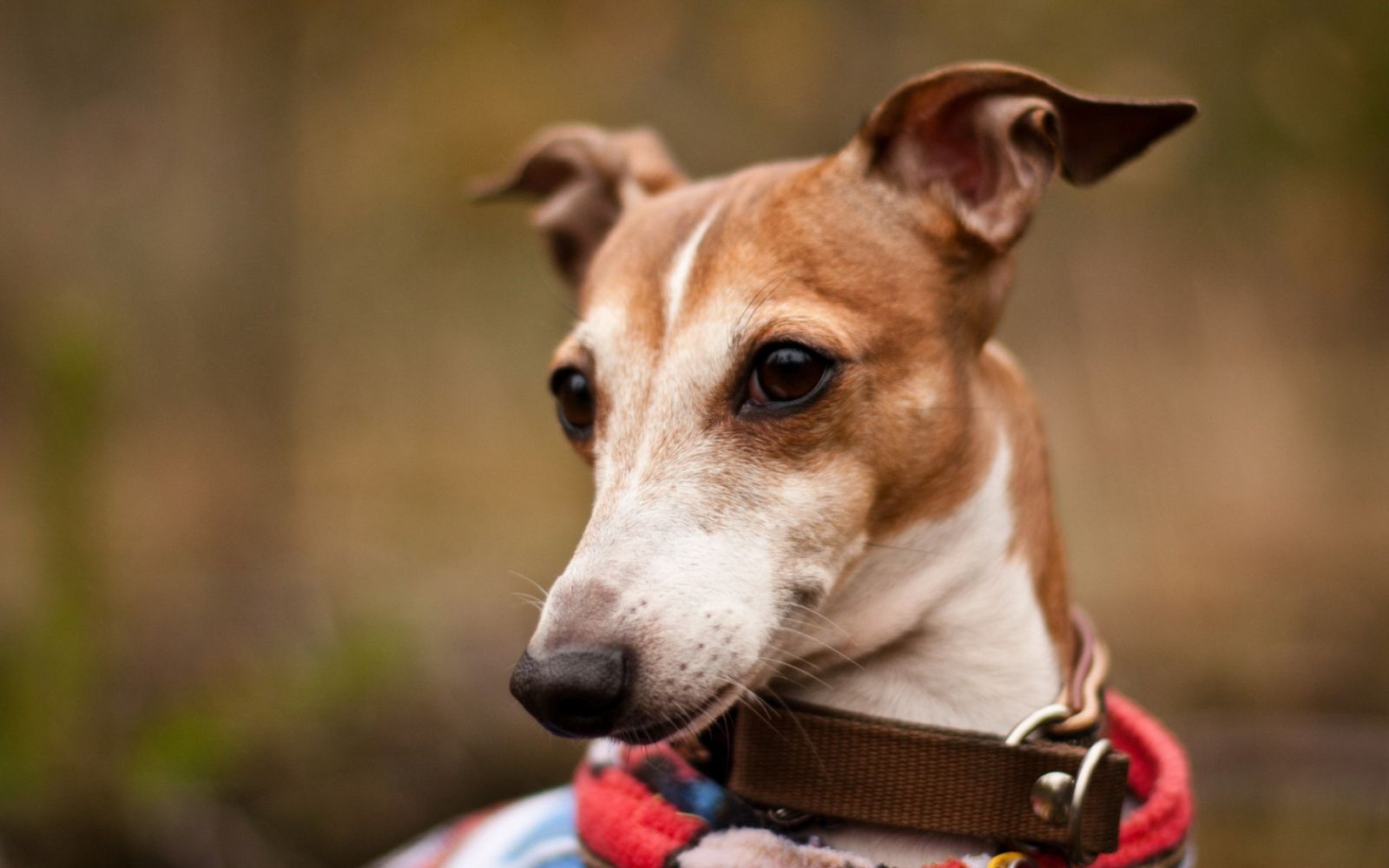
Autumn and winter are a great time to show off new clothes: sweaters, overalls, boots.It's best to buy a collar for an Italian greyhound with a slight flare in the throat area. Among greyhound breeders, this is called a "herring collar." This special shape minimizes discomfort and the risk of tracheal injury. The collar should be soft both inside and out, otherwise the fur will wear out very quickly.
Harnesses are rarely used for greyhounds. During the growth period, they are undesirable because they can affect the animal's development (sloping topline, weak bones, protruding elbows). Furthermore, greyhounds can easily unscrew themselves from a regular harness, and it's fortunate they don't suffer any injury in the process. Harnesses are convenient for greyhounds that are being trained for racing. Due to their body type, harnesses are needed, not standard ones, but "greyhound" ones. Such harnesses are rare in pet stores; you'll have to look for them at shows or online.
Care
Grooming an Italian Greyhound is simple. Several times a week, remove dead hair by brushing the dog with a special glove. Carefully monitor the condition of the ears, eyes, and teeth. If necessary, trim the nails. Bathe the dog infrequently, and when bathing, always use a moisturizing shampoo. In dirty weather, it's best to limit washing to just the belly and paws.
Diet
Many people prefer to feed their Italian greyhounds dry food. It does offer some advantages over natural foods. Prepared diets, especially premium and above, are balanced in nutrients and vitamins. Manufacturers also calculate the dog's daily ration based on its gender, age, and size. Proper feeding of an Italian greyhound is essential for maintaining its well-being. Puppies are fed up to five times a day, with the frequency of feedings gradually decreasing over time.
Italian Greyhounds are very prone to fussing over food, which can cause many owners to panic. Afterwards, they'll happily eat whatever's offered, and, by the way, they eat quite a lot, considering their size.
For an adult dog, two meals a day with constant access to fresh water is ideal. If you prefer to feed your dog commercial food, it's definitely worth choosing high-quality holistic foods or at least super premium foods.
Health and life expectancy
Generally, these dogs are healthy and genetically sound, although there are some health conditions that are more common in the breed. Slightly protruding eyes increase the risk of glaucoma, cataracts, corneal dystrophy, or retinal atrophy. Excessive dry skin can cause patchy baldness. Epilepsy is sometimes seen. Males can develop cryptorchidism. The main problem in puppies from 3-4 to 7-8 months is bone fragility. At this age, they can actually break a leg for no apparent reason, but fortunately, this usually resolves. The puppy grows into a healthy, strong adult dog.
Vaccination, deworming, treatment for external parasites and other necessary veterinary health measures must be carried out on time.
The health of Italian greyhounds largely depends on feeding and living conditions. Life expectancy is 12-15 years.
Choosing a Greyhound Puppy and Price
Buying a four-legged friend is a joyful and intriguing event, and the first meeting with a pet remains etched in the owner's memory forever, so choosing a puppy should be taken very seriously. Those who are already certain they want an Italian Greyhound should attend several dog shows in advance, where they can get to know the breed, its lineages, specific kennels, and speak directly with the breeders.
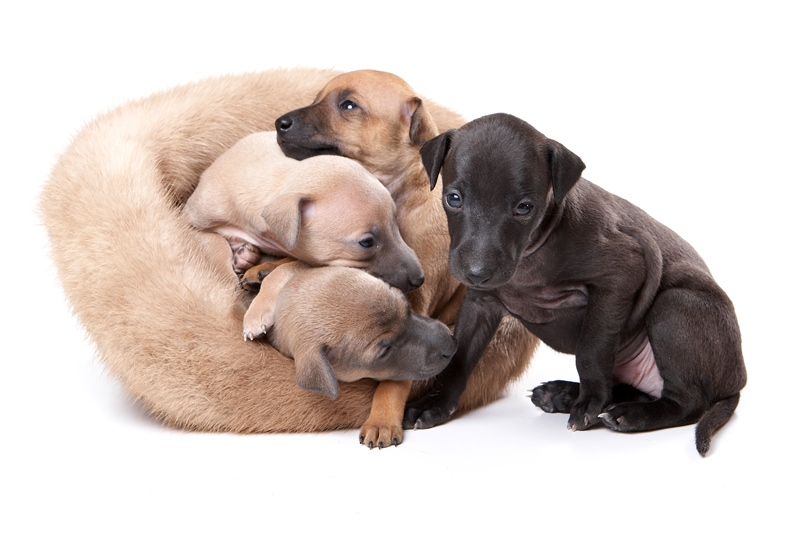
When visiting a puppy show, it's important to assess their living conditions. Unlike other breeds, Italian Greyhound puppies don't closely resemble adults, making the choice significantly more difficult. The only reference point is the parents' pedigree. However, you can seek the help of an experienced, independent expert. In any case, the puppy should be examined. Movement should be free, the fur, ears and eyes clear, the belly soft, and the nose moist. The puppy should be inquisitive and active. Be sure to inquire about vaccinations and antiparasitic treatments, and ask about feeding.
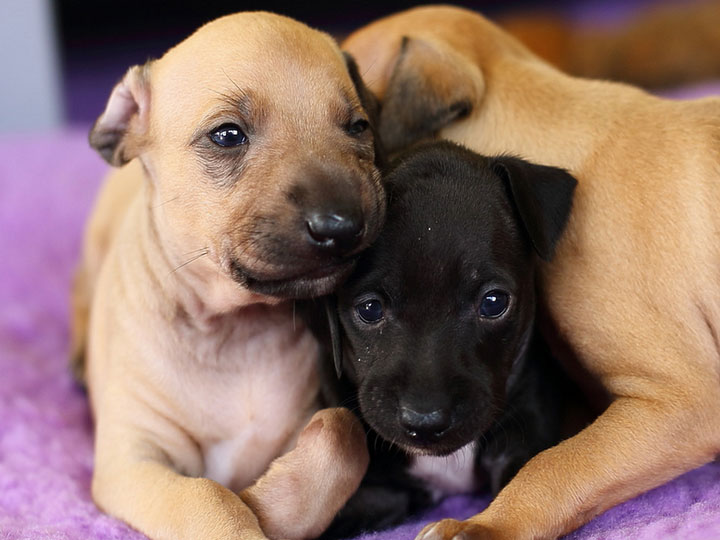
The fact that a litter typically contains no more than four puppies, along with a number of other factors, makes the price of an Italian Greyhound puppy quite high. Dogs not suitable for show or breeding (i.e., pet-class) sell for $350 or more, while puppies with show and breeding potential start at $1,000.
Photos
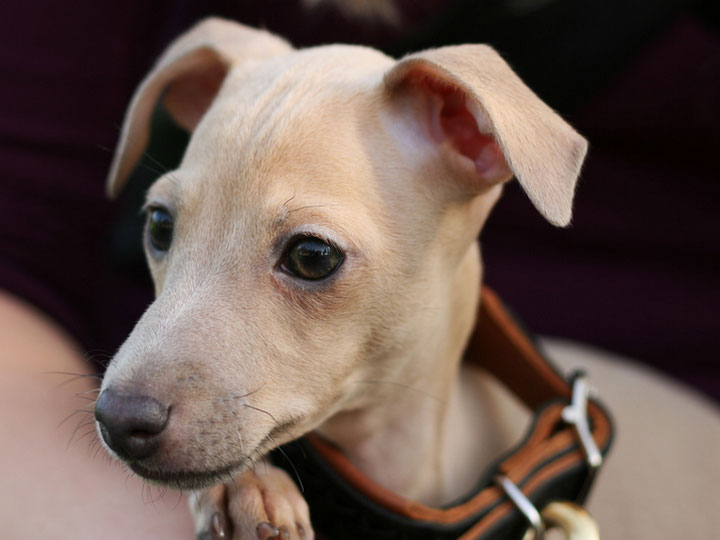
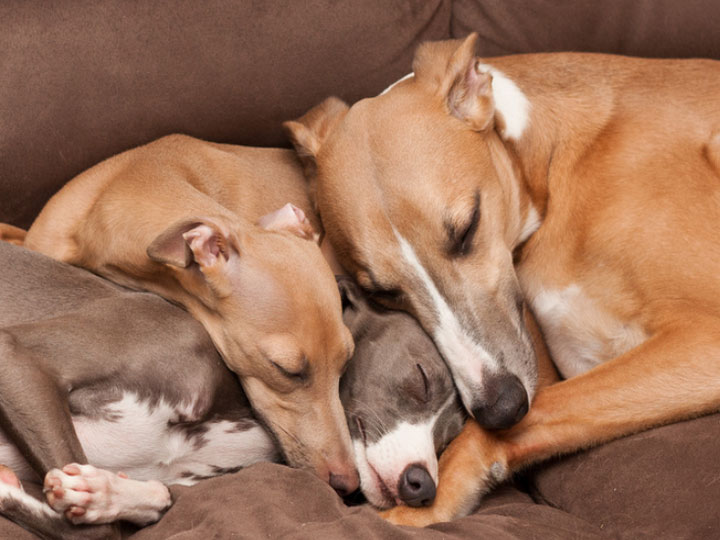
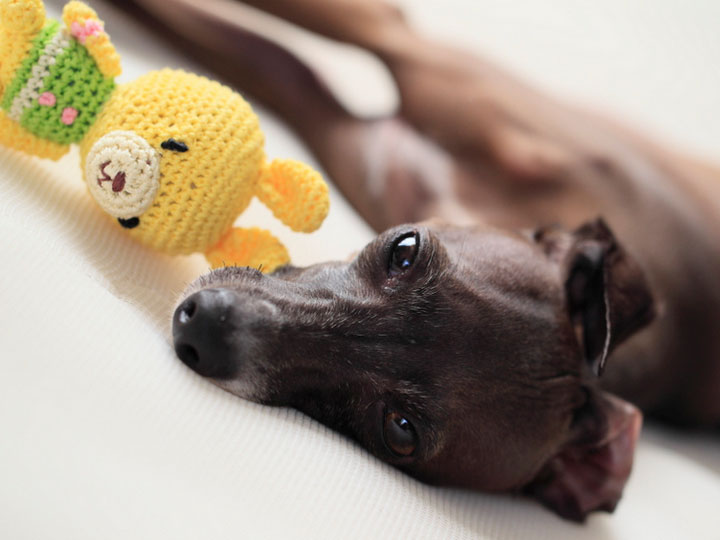
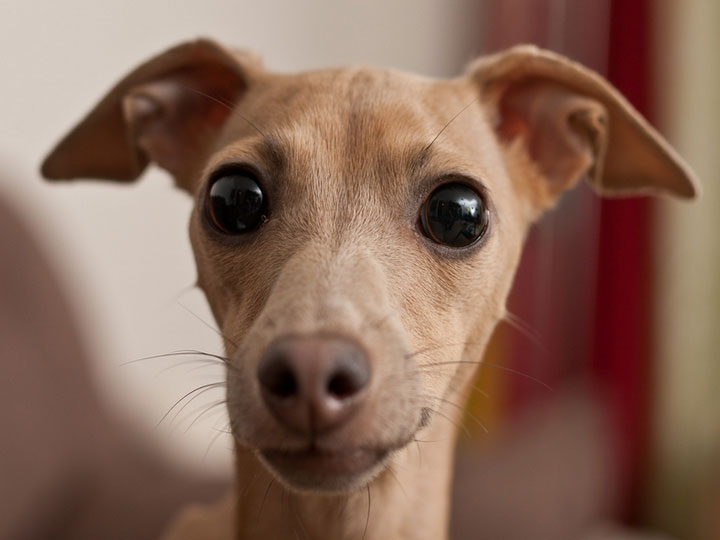
Photos of the Italian Greyhound (Small Italian Greyhound):
Read also:
- Spinone Italiano (Italian Wirehaired Pointer, Italian Griffon)
- Greyhound
- Bracco Italiano (Italian Pointer)


Add a comment