
Flying dog
The fruit bat is a mysterious animal, surrounded by many superstitions and myths. For a long time, it was considered a harbinger of evil spirits. For example, in Scotland, it was believed that their unexpected flight heralded the coming of the Witches' Era, while in Oxford, it was believed that if a fruit bat flew three times over a house, someone would soon die there.
Today, many people have reconsidered their attitudes toward these mysterious nocturnal fliers, and some even keep them as pets, comparable to guinea pigs or hamsters. Fruit bats are kept and bred in many zoos, allowing for the study of their diet, behavior, and care. This knowledge is beneficial for those who want to keep an exotic pet at home.
Description
The fruit bat is a mammal with a pointed snout, small oval ears, claws on the index fingers of its forelimbs, and a short or absent tail. Their size varies greatly: the largest can reach 45 centimeters in length with a wingspan of 1.7 meters, while others range from 6 to 17 cm. Their fur is brownish in color, with a noticeable lighter tint on the lower part of the body. Their natural habitat extends to the tropical and subtropical latitudes of Africa and Asia.
Fruit bats have membranous wings and are capable of virtually silent flight at night, covering up to 100 kilometers during the night. However, they always return to the same sleeping spot. They become active after dark, but during the day they become virtually motionless, often hanging upside down from a tree or rooftop, concealing their bodies within their wide membranes. In high temperatures, fruit bats can use their membranes as a fan, thus protecting themselves from the heat.
When you see a photo of a fruit bat, you might think it's a subspecies of bat, but that would be a mistake, despite their striking similarities.
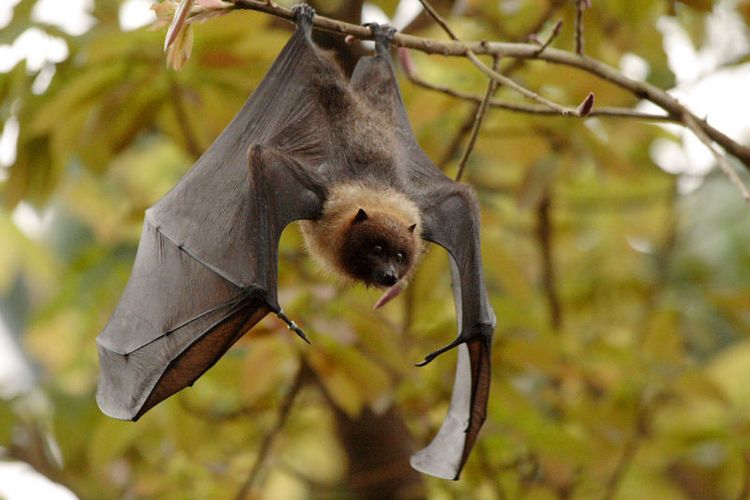
The main difference between fruit bats and flying foxes is the lack of a specialized "radar" (echo sounder) that allows them to navigate well at night and hunt. However, they have better eyesight and a more developed sense of smell, which helps them find food. Another difference from mice is that they are vegetarians, feeding on ripe fruit, flower nectar, and pollen.
These animals reproduce throughout the summer, and the offspring usually consists of one (rarely two) cubs. At first, the mother carries the cub on her back, but soon the cub learns to hang on its own, and even then, the mother continues to nurse it.
Peculiarities of home keeping
Despite their exotic appearance, fruit bats are easy to care for. These animals require companionship for comfort, so keeping several animals, or at least a pair, is ideal. When keeping a single animal, the owner must devote plenty of time to interacting with and taking their exotic pet for walks. Their small size allows them to be kept in a small cage, provided they are given regular walks outside. However, if space is available, a mesh enclosure with a raised ceiling and a back wall where they can hang out is recommended. These animals do not tolerate direct light, so there is no need to use a bright lamp in their enclosure.
After a daytime nap, fruit bats wake up in the evening and begin actively moving around their cage—this is feeding time. They can be fed a selection of juicy fruits, chopped into small pieces: oranges, bananas, plums, grapes, pears, etc.
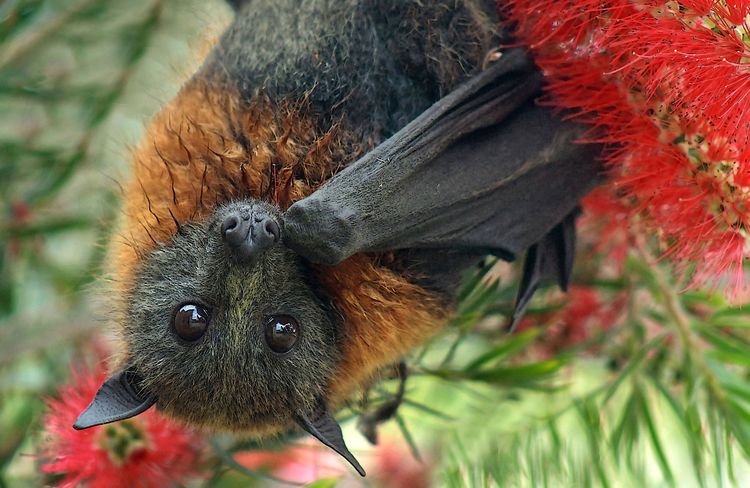
It is often reported that fruit bats' favorite treat is figs, but in reality, it turns out that banana pieces are the first thing to disappear from the feeder.
Thanks to this diet, the fruit bats' excrement doesn't have a strong odor, but the cage will still need to be cleaned daily due to their feeding habits: they chew the juicy fruit pulp, swallow the juice, and spit out the remains.
In captivity, fruit bats live up to 20, sometimes even 30 years. They reproduce well, producing offspring twice a year: in the fall and spring. Three months after birth, the young are able to fly and feed themselves.
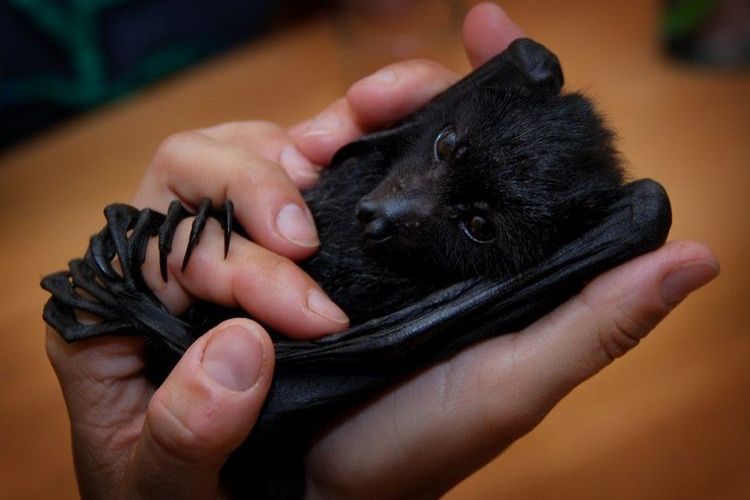
Their sweet appearance, sociability, lack of odor when kept indoors and generally low maintenance costs, and long lifespan make Nile fruit bats, though exotic, practically ideal pets. However, owning one comes at a hefty price. The price of a fruit bat ranges from 10,000 to 15,000 rubles.
Read also:
Read also:


Add a comment