
Leonberger is a dog breed
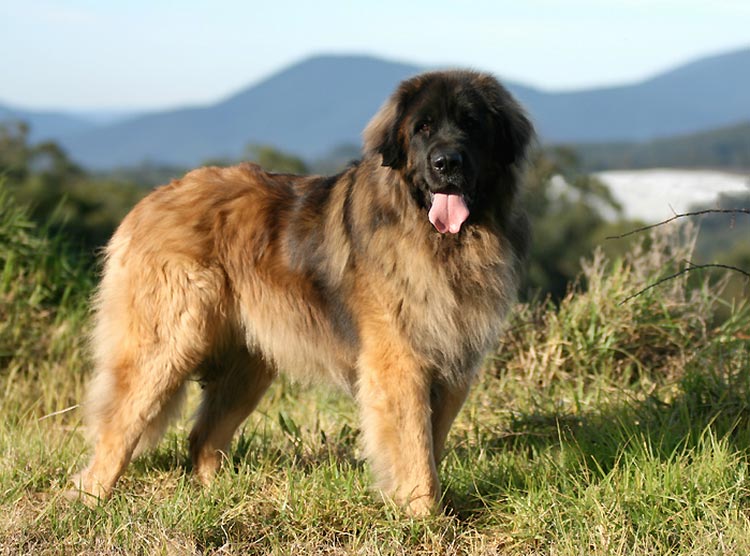
The Leonberger is a large dog with a formidable appearance and a kind soul. Originating in Germany, these dogs have recently become increasingly popular. This is due to their attractive appearance, good character, and willingness to obey their owner.
Content
History of origin
The Leonberger breed is relatively young. Development began in the late 1730s. The founder of the breed is considered to be Heinrich Essig, a Leonberg official who was also a cynologist and accomplished breeder. Heinrich decided to develop a breed that would honor the city's name and resemble a lion, as this animal is the symbol of Lemberg and is depicted on its coat of arms.
The new breed was started when Henry crossed the Landseer (a variety Newfoundland black and white color) with St. BernardLater, Pyrenean Mountain Dogs played a role in the formation of the breed. Initially, Leonbergers were predominantly white. They incorporated the best qualities of the original dogs and quickly gained popularity, especially among the upper class, to which their creator belonged. By the late 19th century, Essig's dogs were widely used throughout the region for guard and draft work. The wars and post-war period of the 20th century had a negative impact on the breed. Very few true Leonbergers remain, but thanks to the efforts of enthusiasts, they have been preserved. The breed is recognized by the FCI.
Video review of the Leonberger dog breed:
https://youtu.be/4JD6vaCqxyU
What does a Leonberger dog look like?
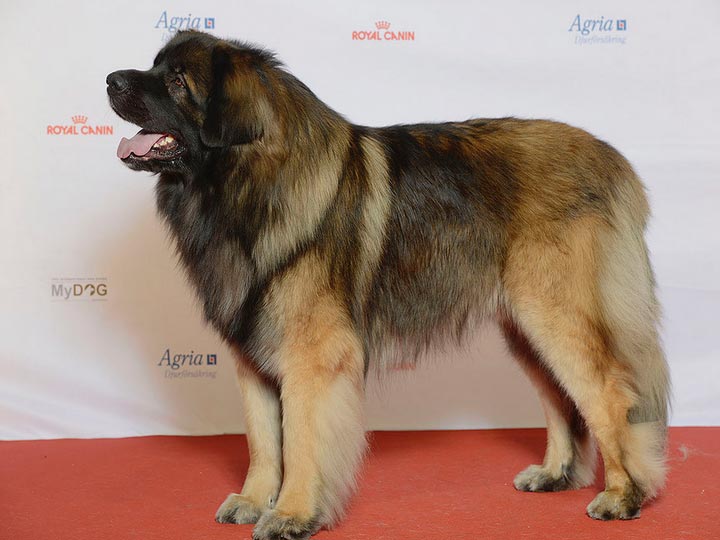
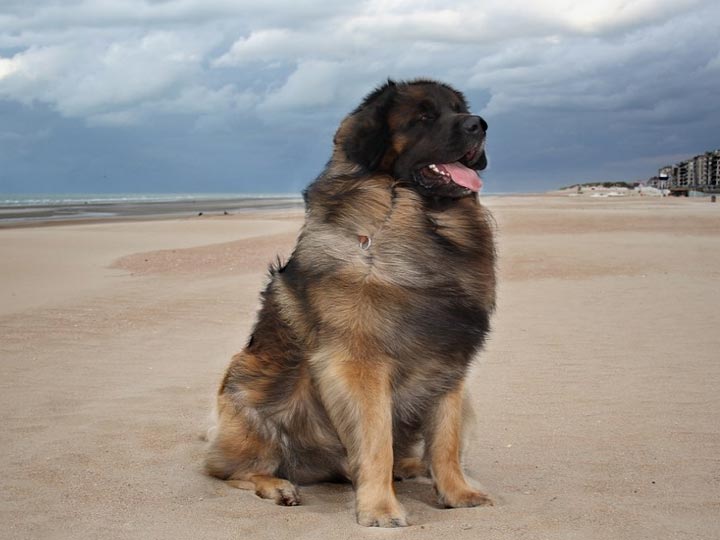
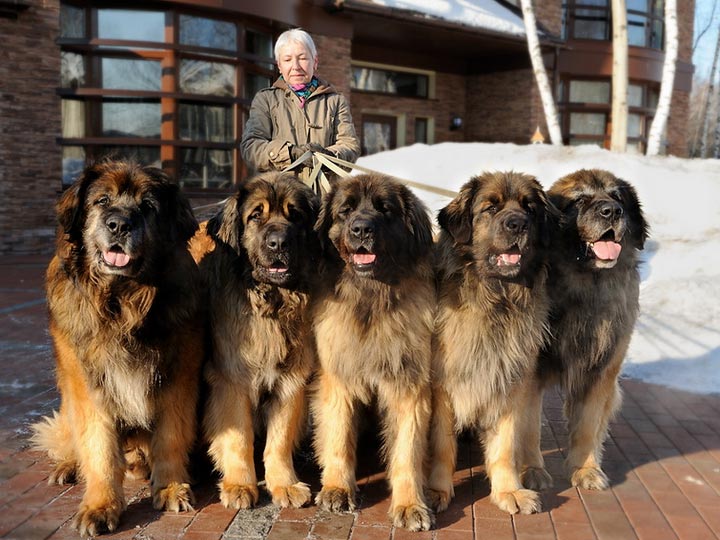
The Leonberger, as intended, turned out to be a large, strong, and muscular dog. At the same time, he is elegant and beautiful. This dog is distinguished by a strong, proportional build, almost square in format, with a length-to-height ratio of 9:10, and a chest depth equal to half the height at the withers. Sexual dimorphism is well-defined. Males stand 72-80 cm tall, while females stand 65-75 cm. Weight is not specified in the standard.
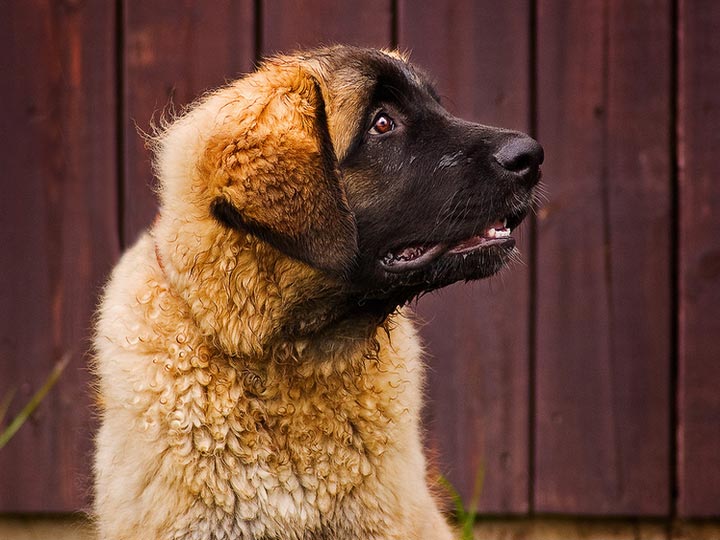
The head is rather elongated. The ratio of the muzzle to the skull is 1:1. There are no folds on the forehead, and the skin fits tightly everywhere. The skull is slightly domed, massive but not heavy, and proportionate to the body. The width at the back is significantly greater than at the eyes. The stop is distinct, and the muzzle is fairly long and blunt. The bridge of the nose is of equal width along its entire length. The nose leather is slightly convex and black. The lips are tightly fitting, with no sagging corners. The jaws are strong and the bite is correct. The eyes are brown, oval in shape, medium in size, and set neither too close nor too far apart.
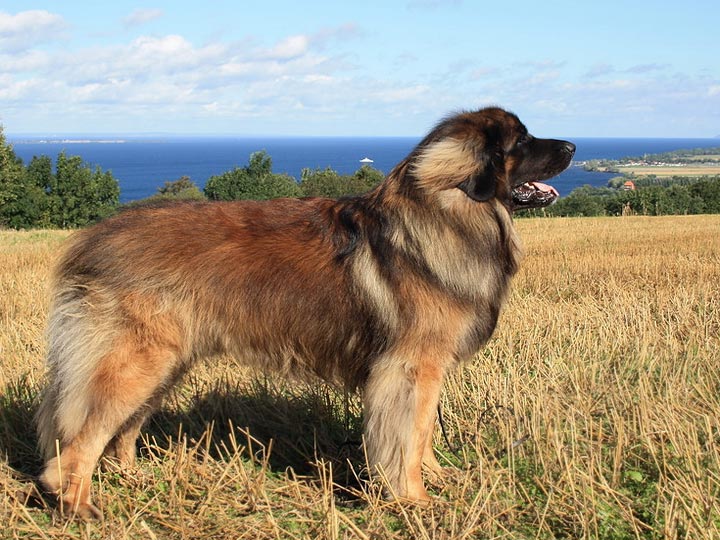
The neck blends smoothly into well-defined withers without dewlap. The back is straight and broad. The croup is smoothly rounded, sloping toward the tail. The chest is deep, massive, and oval. The underline is slightly tucked up. The tail is covered with feathering, hangs down when standing, and is slightly curved when moving, but does not rise above the topline. The limbs are strong, muscular, and correctly positioned.
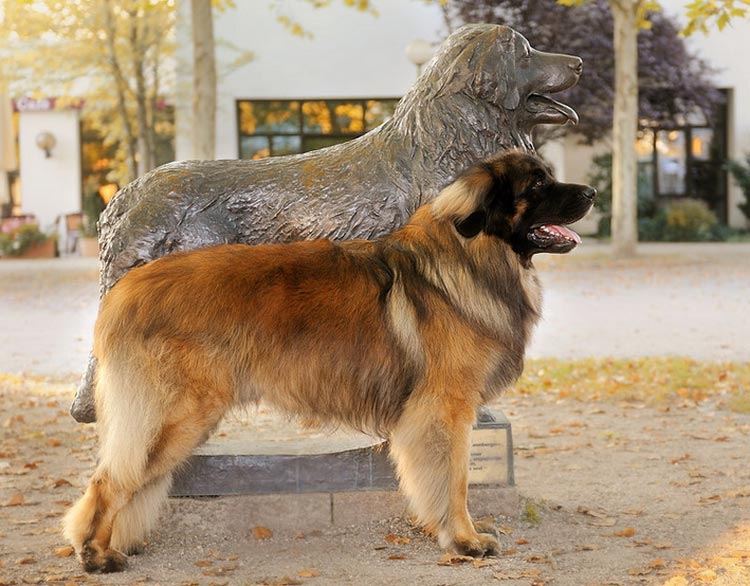
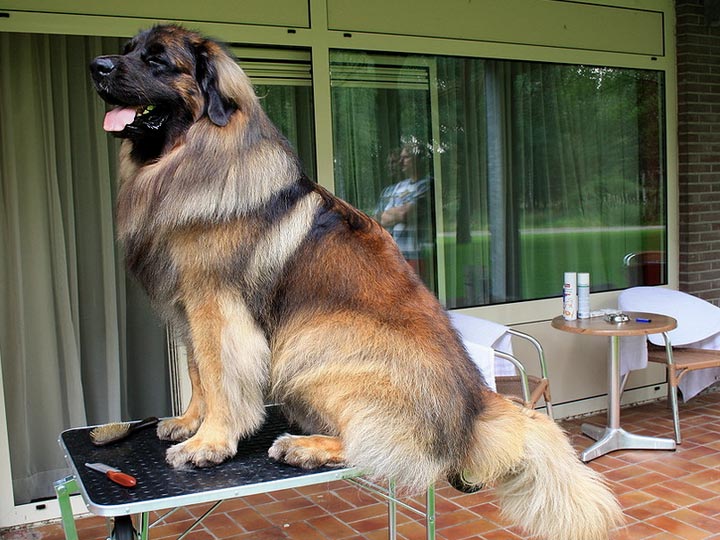
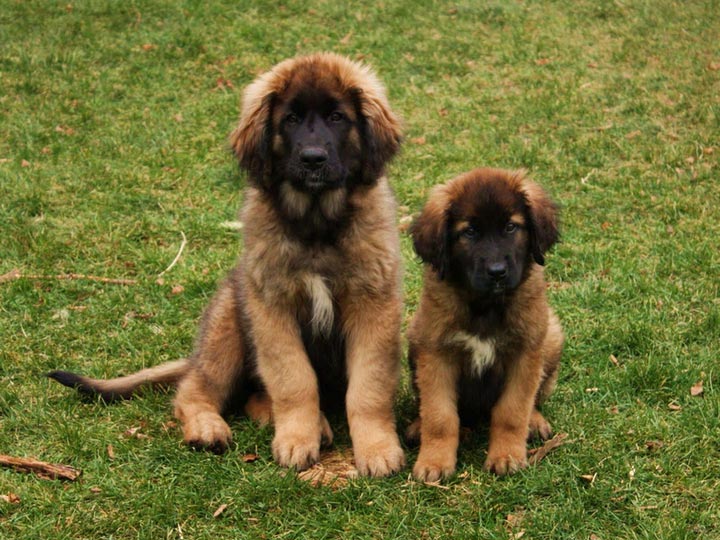
The coat is coarse to moderately soft, very dense, lies close to the body, and never breaks down the back. The dog's outline should not be obscured, despite the dense undercoat. Slight wavy topcoat is permissible on the chest. The feathering is well developed, with a particularly pronounced ruff in males. Feathering is also present on the fore and hind legs. Colors include yellow, red, sandy, and any combination thereof. Any color must be complemented by a black mask. A white spot on the forehead, chest, and white hairs on the toes are permitted. Dogs have lighter coloring on the underside of the tail, feathering, belly, and ruff. The topcoat may have black tips.
Character
The Leonberger has earned a reputation as an ideal family dog, easily handled both at home and on walks. It is friendly, even with children, neither shy nor aggressive, and remains a fearless and obedient companion in any situation.
The Leonberger's essential character traits include self-confidence, self-esteem, a willingness to obey, resilience to external stimuli, a good memory, and trainability. These dogs have a playful and lively temperament.
Leonbergers excel as guard dogs and companions. This breed shares many similarities with St. Bernards and Portuguese Mountain Dogs. They are highly intelligent, responsible, and will never harm their owners. Thanks to all these qualities, as well as their ability to navigate well and react appropriately to extreme situations, Leonbergers make excellent guard dogs.
The Leonberger values and loves its family, is devoted to them, and will defend not only one owner but all their loved ones with its life. At the same time, the dog is balanced and calm. It understands its own strength and would never harm a kitten. This dog will not bark unnecessarily.
Training
Leonbergers are very trainable. They love praise from their owners and strive to earn it. However, their abilities are not as outstanding as those of service breeds. At times, the dog can be slow, and less often, stubborn and unwilling to obey commands out of spite. Leonberger training begins early, as early as 3-3.5 months.
First, they teach simple commands and ensure their precise execution. Once the dog has mastered these, they move on to the General Training program. Dogs can be trained for guard and protection duties, but this is rarely done, as the Leonberger is valued above all for its calm and good nature, and it will always defend its owner if necessary.
Content Features
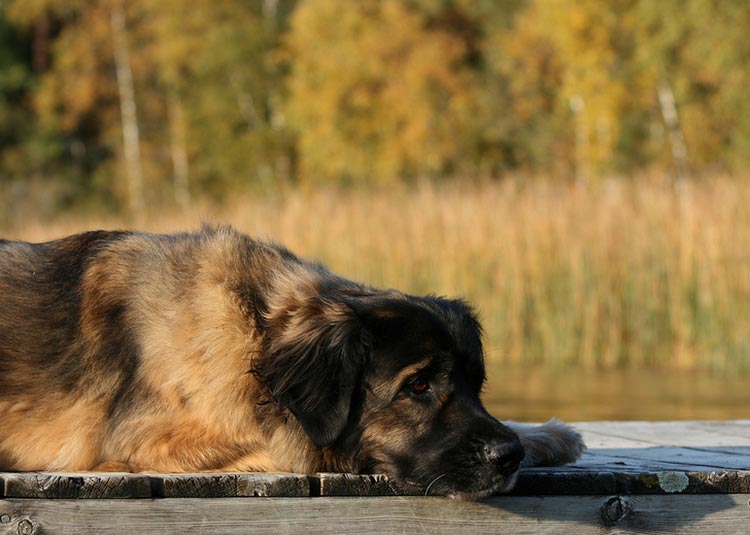
The Leonberger is remarkably well-suited to outdoor life. Furthermore, this large, active dog is not recommended for apartment living, unless it's given long daily walks. Furthermore, living in a small apartment with such a furry giant is inconvenient. A Leonberger should be given a spacious enclosure with a large, insulated kennel in the yard of a private home.
Keeping a dog on a leash or locked in a cage all the time is not an option – it should be able to roam freely around the property and be more than just a guard dog, but a family member who receives daily attention.
The Leonberger is a moderately active dog. While he'll remain calm and unobtrusive near his owner, he'll become as playful as a puppy when invited to go for a walk. However, this won't last long—this large dog tires quickly. These dogs aren't suited for long bike rides, but with proper training, they can join you on a light jog.
Care
Grooming is anything but simple. Even something as simple as brushing requires considerable time. Leonbergers are bathed infrequently, usually once every 3-4 months, sometimes more frequently if necessary or if a show is imminent. Leonbergers' ears are inspected and cleaned as needed every 2-3 weeks.
Diet
A balanced diet is essential for any dog's health. Leonbergers are large and heavy, so they eat a fair amount, so the quality of their food must be high. Most owners opt for a natural diet. The mainstay of their diet is cereals and meat, with the addition of vegetables and greens. Fermented milk products, eggs, and occasionally seafood are added. During the period of active growth, vitamin and mineral supplements are required, as prescribed by a veterinarian. If desired, the dog can be switched to a commercially prepared food. Naturally, its quality should be at least premium. It's also important to ensure that the food is suitable for large and giant breed dogs.
Health and life expectancy
Leonbergers are very hardy dogs. Efforts are underway around the world to maintain excellent health and strong immunity in dogs. Unfortunately, some diseases predisposing large breeds are difficult to avoid. These include:
- Hip dysplasia;
- Entropy of the eyes;
- Osteosarcoma;
- Adrenal dysfunction;
- Eosinophilic osteomyelitis.
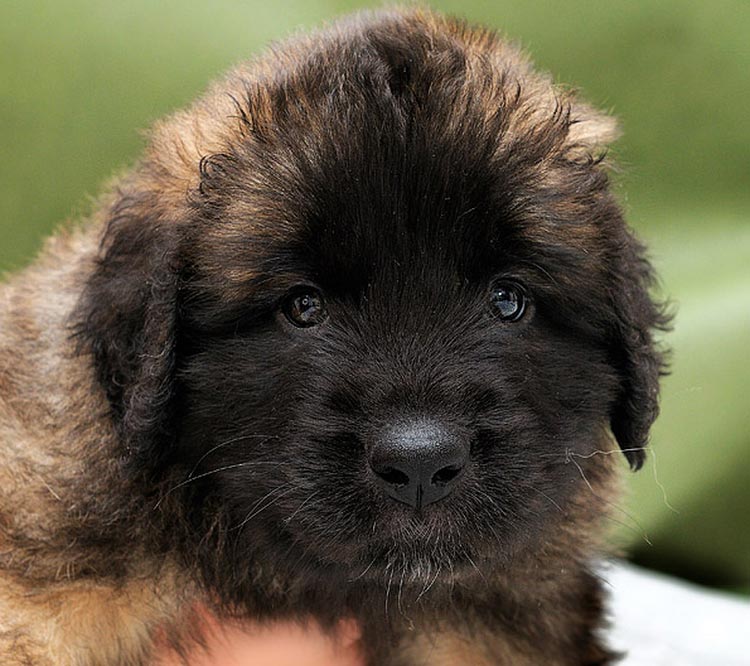
Leonbergers are susceptible to infectious diseases and have a poor tolerance for worm infestations when young, so it's crucial to receive all veterinary preventative care promptly. Their lifespan is typically 10-12 years.
Choosing a puppy. Prices
Leonbergers are rapidly gaining popularity in Russia and other CIS countries. Kennels can now be found outside of the capital cities, but they are still few and far between. If you decide to get a puppy, be prepared to reserve one and wait a long time.
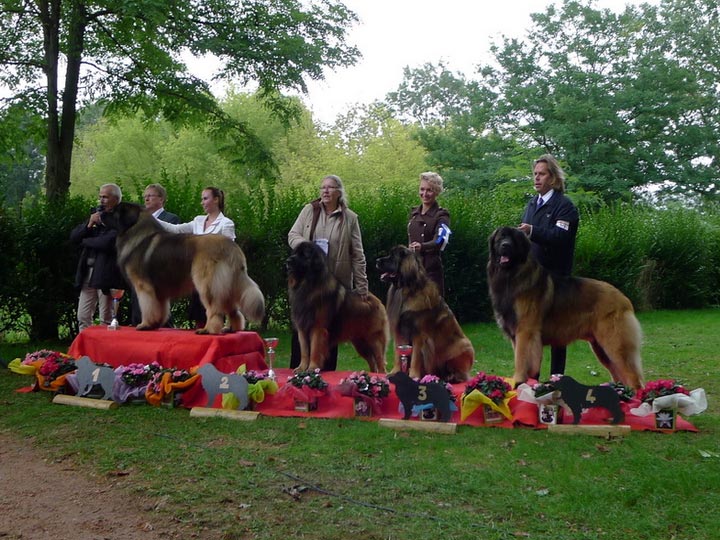
If you're looking for a dog with potential for a show career or breeding, it's best to seek advice from a canine expert at the club or ask a breeder for help. Unfortunately, choosing such a dog is always a gamble. For example, the Leonberger, currently the mascot of the National Breed Club and a multiple world champion, was the smallest puppy in the litter.
The average price of a Leonberger puppy is 40,000 rubles. The high price is due to the breed's small population and the high demand for puppies. In this case, we're talking about dogs with a good pedigree from quality breeders. Sometimes, Leonberger puppies born from unplanned or accidental matings between hobbyists appear on the market. These typically sell for no more than 10,000 rubles.
Photos
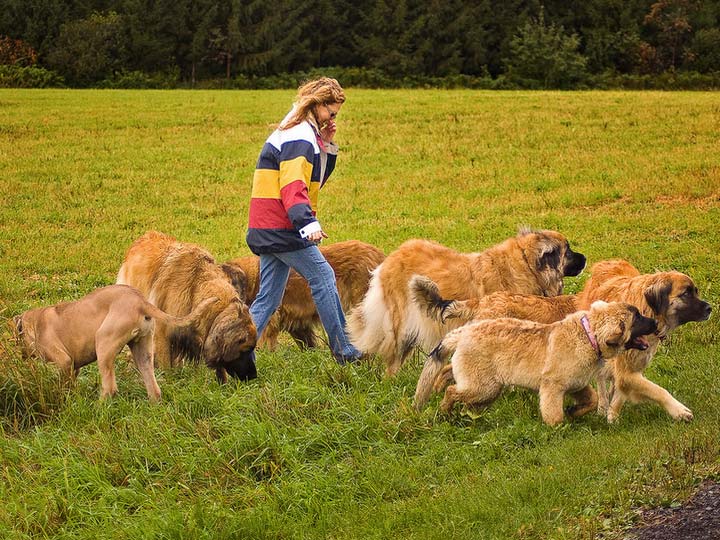
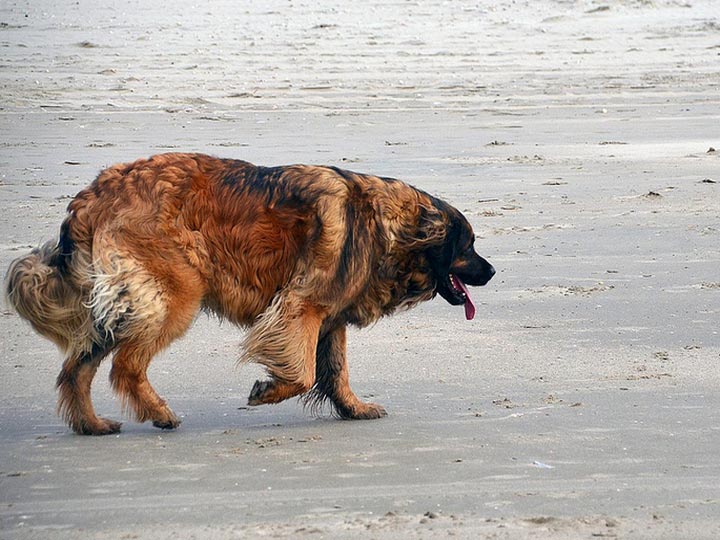
Photos of Leonberger puppies and adult dogs are collected in the gallery:
Read also:


Add a comment