
Lakeland Terrier
The Lakeland Terrier is a small hunting dog breed developed in the Lake District of England. Originally, these compact burrowing dogs hunted alongside hounds and also caught rats and foxes on farms. Although they are rarely used for their intended purpose today, they have proven themselves to be loyal companions. Their friendly nature, trainability, wiry, low-shedding coat, small size, and cleanliness make Lakeland Terriers ideal for home or apartment living.
Content
History of origin
The English Lake District is famous for its working terriers. Here, farmers, hunters, and lumberjacks developed their own "breeds" and named them after the region: Cumberland, Patterdale, Ullswater. As for Lakelands, dogs of this type were encountered in the lake valley as early as the early 18th century. The English treated their four-legged helpers with great care and meticulously recorded their pedigrees. According to records, the Lakeland Terrier was established as a distinct breed in 1732. Old English Black and Tan Terriers contributed to its development. Irish Terrier, Bedlington Terrier, fox terrier, Dandie Diamond Terrier. Interestingly, matings with Welsh Terriers, which look like lakes, were not welcomed.
The name Lakeland Terrier, by which the breed is known today, was given in 1921. In 1928, the breed was officially recognized by the English Kennel Club, and in 1954 by the Fédération Cynologique Internationale (FCI). The first Lakelands appeared in Russia only in the late 1990s.
Appearance
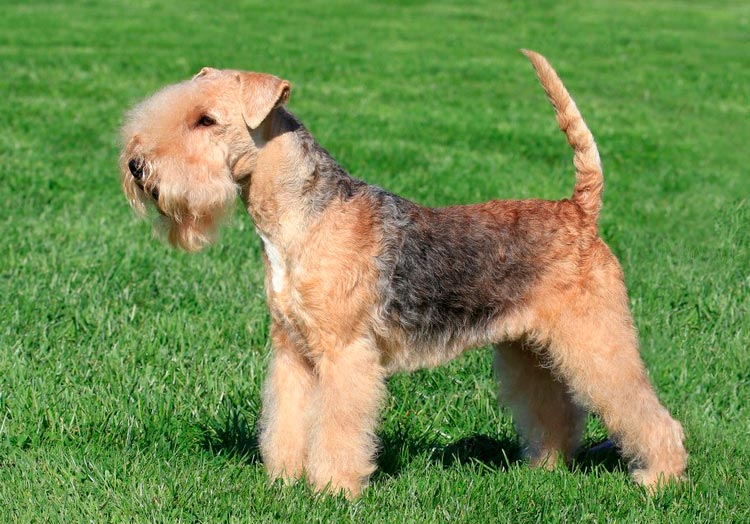
The Lakeland Terrier is a small, strongly built dog with a square frame and a relatively narrow body and high legs. Its gait is flexible, straightforward, and free. Gender is clearly differentiated. Males are shorter than females and are typically 2.5 cm taller. An adult dog stands 37 cm at the withers and weighs approximately 7.5 kg. The Lakeland Terrier has a strong frame and a proportional, harmonious build.
The head is rectangular and proportional. The skull is moderately wide and flat. The muzzle is strong with a straight nasal bridge. The stop is weak. The eyes are small, set straight, fairly wide apart, and oval in shape. Eye color ranges from dark brown to dark hazel. The ears are small. The pinna is an equilateral triangle, curved slightly above the skull line, with the tips pointing toward the outer corner of the eye. The nose is black, but may be brown only in liver-colored dogs. The lips are well pigmented. The jaws are strong, the teeth are relatively large, meeting in a straight or scissor bite.
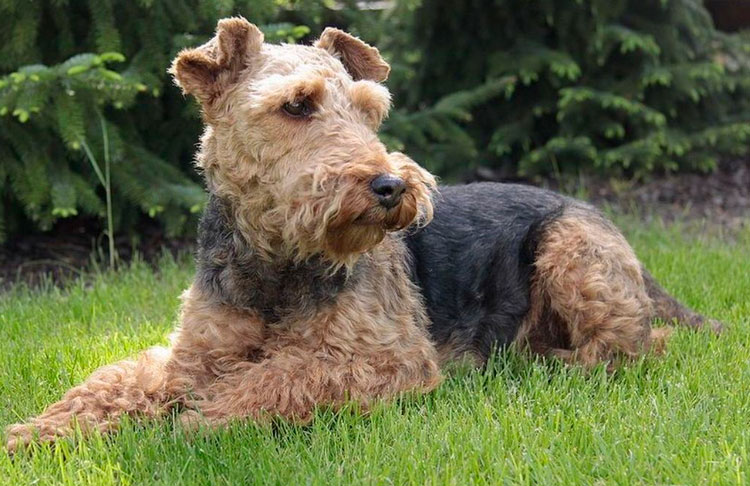
Because of their varied color palette, Lakeland Terriers are often confused with other breeds. Saddlebacks with Welsh Terriers or Airedales, black with Miniature Schnauzers, red with wheaten terriers.
The neck is long, dry, and strong, gradually widening toward the high withers. The topline is level. The chest is relatively narrow, deep, and oval, reaching to the elbows. The ribs are well sprung and elastic. The loin is strong and short. The belly is moderately tucked up. The tail is set high and is usually docked. When the dog is standing in a show stance, the tail should be level with the occiput. When moving, it is desirable for it to be held high and slightly curved forward. The legs are relatively long, strong, with good bone and developed muscles, slightly dry. The nails are strong and black. Dewclaws It is customary to remove them. The paws are compact, round, and directed forward.
The coat is double, consisting of a stiff, wiry outer coat and a soft, close-lying undercoat, which should not be longer or denser than the outer coat. The short coat is straight; when the hair exceeds 1 cm in length, it begins to curl slightly. Colors can be divided into two types: solid and saddle. Solid colors include black, blue, red, liver, and wheaten. Saddle colors can be black, blue, liver, or "gray" (created by interspersing red or wheaten hairs in a black, blue, or liver saddle).
Character and behavior
The Lakeland Terrier is a small dog with a big ego. This is a major advantage and makes it a true friend and companion, ready to stand by its owner through thick and thin. The Lakeland is hardy, active, cheerful, lively, determined, and self-confident. It is very intelligent, easy to train, and forms strong bonds with its owner and other family members. It gets along well with children, especially if raised in their company. However, it doesn't always appreciate the intrusive attention of small children. It is wary of strangers, but not aggressive, and has strong watchdog qualities. If necessary, it can bite.
Another distinctive quality of the Lakeland is courage. It was this courage that once enabled this working dog, although not particularly large, to engage in combat with animals far superior in strength and agility. The Lakeland Terrier gets along well with other pets in the house, including cats, small rodents, and birds. However, this doesn't mean the dog won't chase such creatures outside. Relationships with other dogs vary. Both at home and on walks, the Lakeland Terrier tries to avoid conflict, but will not back down if attacked aggressively. Petty squabbles over dominance sometimes arise between males.
Education and training
Training a Lakeland Terrier requires patience and time from its owner, but the results are well worth the effort. A dog that learns at least basic commands will be obedient, responsive, and easy to maintain.
The English consider the Lakeland Terrier one of the most intelligent breeds, but when training, it's important to remember its original purpose—to work independently. It's this independence and self-reliance, sometimes mistaken for stubbornness, that poses the greatest challenge in training. If the owner becomes the puppy's mentor and leader, is consistent and patient, they will receive a dog willing to go to great lengths for its owner. Lakeland Terriers quickly learn both good and bad habits and can easily assume a leadership position in the family if allowed.
Content Features
Thanks to its small size and fur, which is practically does not shed The Lakeland Terrier is ideal for indoor or apartment living. Year-round outdoor living is possible, provided the dog is not left to its own devices, kept in a crate, or chained. Close contact with the family is essential for Lakeland Terriers. They are comfortable traveling by any means of transportation. Owners are also pleased with the fact that Lakelands are very hardy and adapt quickly to new environments.
The Lakeland Terrier is suitable for young and old people, families with children, to everyone who is ready to devote a lot of time to training a dog.
A Lakeland Terrier requires good physical and mental stimulation. It needs plenty of exercise and free run time to stay in shape. A dog that doesn't do anything more than short walks around the house can develop bad habits over time or become bored and unenthusiastic.
The Lakeland Terrier is happy to join in any active endeavor. Well suited for sports, they never turn down long walks over rough terrain. They can be a great companion for jogging and even cycling. Most Laikas love to swim and won't pass by a body of water.
Care
The difficulty of grooming a Lakeland Terrier depends on the dog's intended purpose, whether it will participate in shows or be kept as a family pet. The Lakeland Terrier's coat consists of two layers: a wiry outer coat and a soft undercoat. The wiry outer coat must be plucked regularly, while the undercoat is brushed. Its density varies with the season. Even after a walk in the rain, the Lakeland Terrier's coat dries and looks clean.
If you clip a Lakeland Terrier, its color will become dull and its coat will become thin and fluffy. It will no longer perform its primary function—protecting the dog from the elements and keeping it warm and dry.
TO trimming Dogs are trained from puppyhood. Show dogs are clipped every 20-30 days. Immediately before the show, they are clipped twice: 45 days and 10 days before. Domestic dogs, which need to be attractive for walks in the front yard, can be trimmed every 2-3 months. Bathe the dog as needed, usually after trimming, to remove any remaining overgrown hairs.
With proper grooming, a Lakeland Terrier will stay warm in winter and comfortable in summer. The dog will look well-groomed.
In addition, care includes regular inspection of the ears and coat, brushing of teeth and trimming of nails.
Nutrition
Lakelands are generally not picky eaters and easily adapt to the type of food offered. These may be natural products Or prepared foods. Most breeders and owners prefer the latter option. The modern variety of foods allows you to choose the optimal diet that suits your dog's age, lifestyle, and taste preferences. If you choose a natural diet, the diet is formulated according to standard guidelines. The total portion should be approximately 3-5% of the dog's body weight. Approximately 60% should come from meat and by-products, with the remainder consisting of grains, dairy products, vegetables, and fruits, and sometimes eggs and fish. Puppy nutrition has many nuances, so the diet should be formulated with the help of a breeder or veterinarian.
Health and life expectancy
Lakeland Terriers generally have good health. Most dogs rarely get sick and only need to visit the veterinarian for annual preventative vaccinations. However, the breed is susceptible to hereditary diseases:
- predisposition to dental and gum disease, as well as dental malformations (incomplete edentulism, snack, other);
- dislocation of the patella;
- hip dysplasia;
- dislocation of the lens.
Life expectancy is usually 13-14 years.
Who should get a Lakeland Terrier?
This breed does not require complex and frequent care, so it is suitable for many owners, but it is important to take into account the peculiarities of its character.
Recommendations for those who decide to get such a pet:
-
Beginners should evaluate whether they are ready for daily active walks and regular training with an active and restless pet.
-
The Lakeland Terrier is suitable for an apartment, but it is advisable to have a safe place nearby where the dog can run and stretch its legs.
-
The small and proud terrier gets along well with families with children, as long as the children are respectful of the pet and its belongings—its toys, bowls, and bed. It's best if the children are old enough to handle the dog themselves.
-
Active retirees will also find this breed a good companion, especially if they enjoy outdoor walks or Nordic walking.
-
The Lakeland Terrier may be an alternative to the Airedale Terrier for those who want a small dog but are not prepared to keep a large pet.
-
The breed is ideal for people with an active lifestyle and an interest in dog sports.
-
The dog thrives in the countryside, but is not a yard dog or guard dog. If you need a serious guard dog, this breed is not suitable.
-
Like many terriers, the Lakeland continues to be used as a working dog, although it is less well known among hunters.
-
Allergy sufferers should be careful: the breed's fur can sometimes cause irritation, depending on the individual characteristics of the person.
Choosing a Lakeland Terrier Puppy
The Lakeland Terrier is not a commercial breed, but it's not so rare that finding a puppy is impossible. In Russia and the CIS, there are kennels that occasionally produce planned litters. Pups are often reserved in advance.
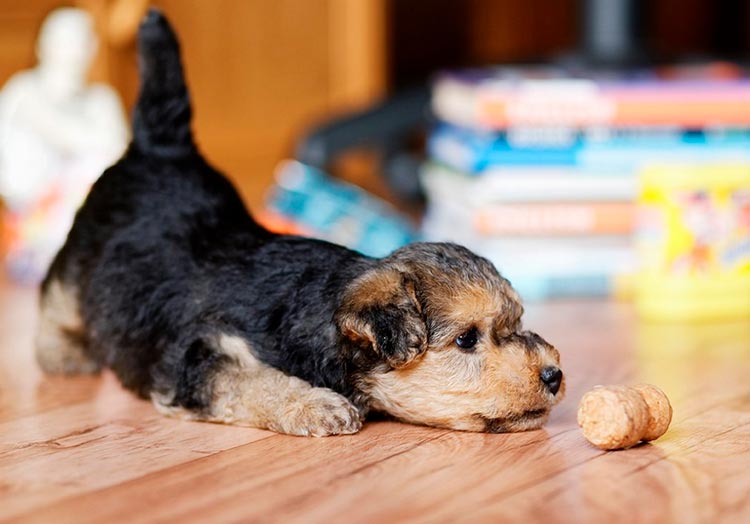
Before adopting a puppy, you need to make sure its parents are healthy, have good temperaments, and are stable. The parents' achievements don't guarantee that all puppies in a litter will become champions. They are all born with very different personalities and colors, and their coat types may vary slightly. It's virtually impossible to see a future champion in a 2-3-month-old puppy. First of all, you need to choose a healthy puppy that's reasonably well-fed, energetic, curious, and friendly. It shouldn't show signs of aggression or shyness when meeting a stranger. A Leika puppy's coat should be roughly the same length all over its body; it's coarse to the touch, but not as coarse as an adult dog's. The bite should be correct, and the legs should be strong. The tail can be docked where permitted. Tails are docked at 3-5 days of age, so the decision to dock the tail is left to the breeder or discussed in advance.
Price
The price range varies. It depends on a number of factors: the kennel's location, the value of the breeders, and their titles. While their titles don't guarantee a puppy will grow up to be a champion, they do allow them to sell for a significantly higher price. The average price for a Lakeland Terrier puppy is 35,000 rubles.
Photos
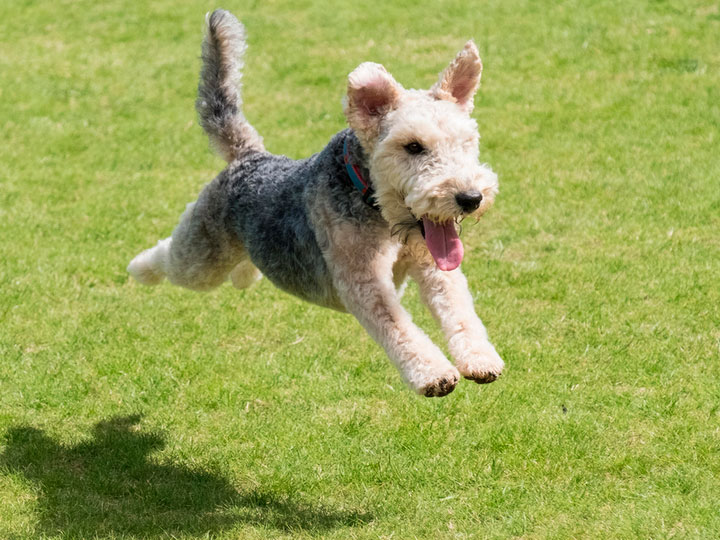
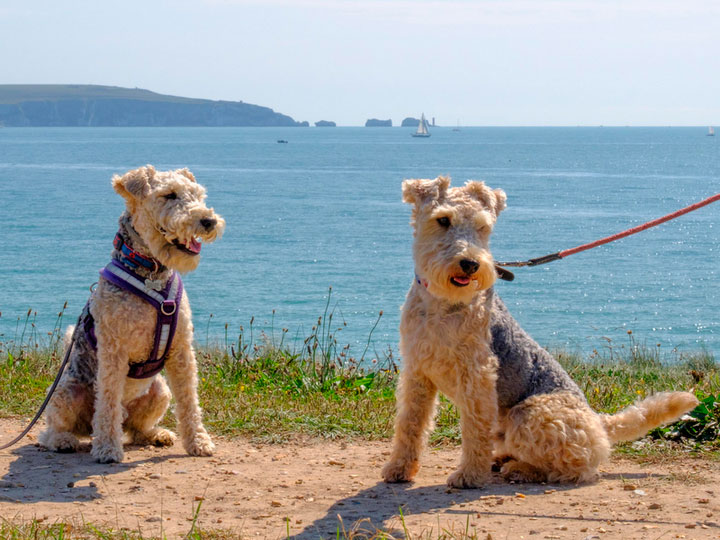
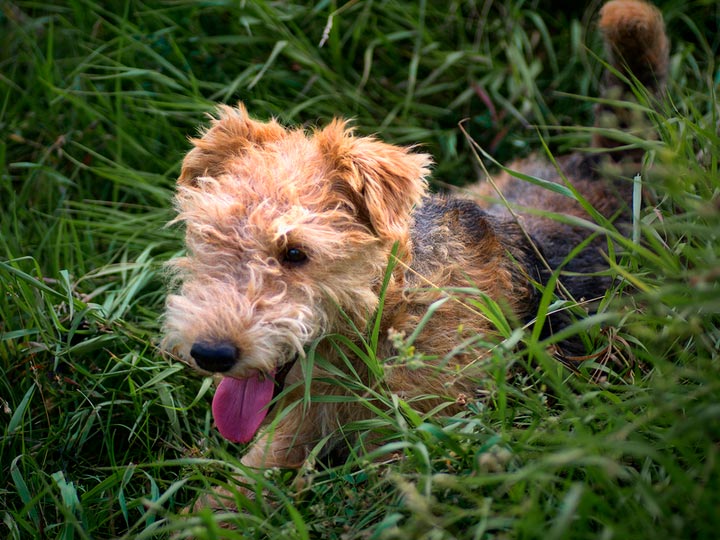
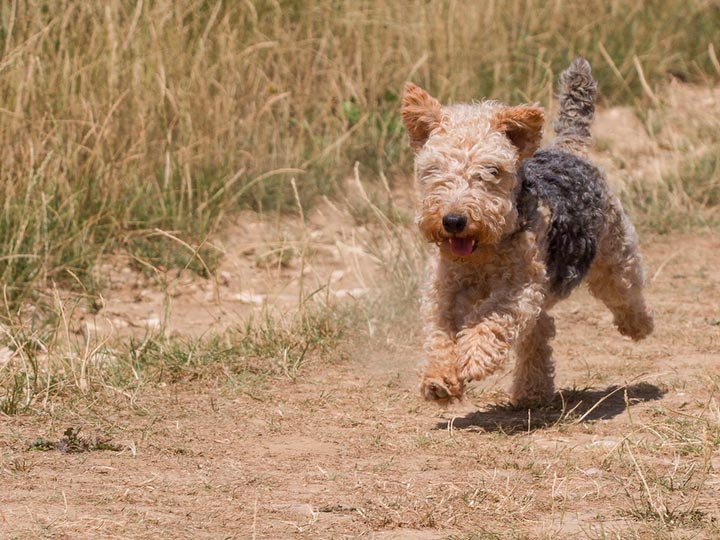
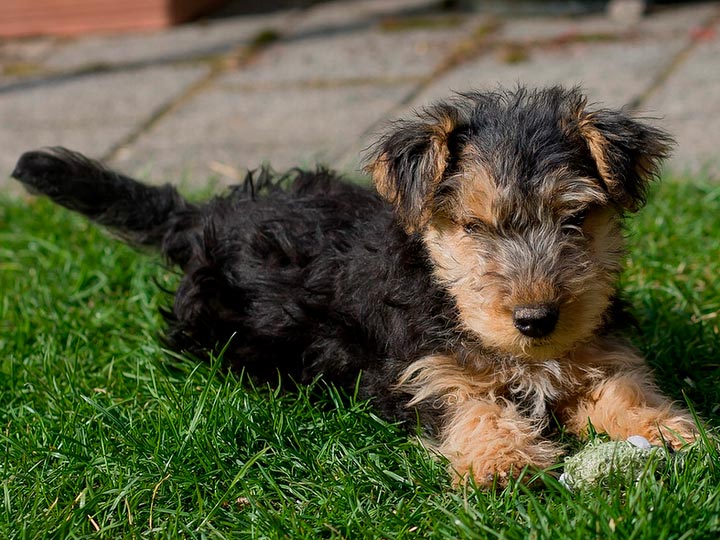
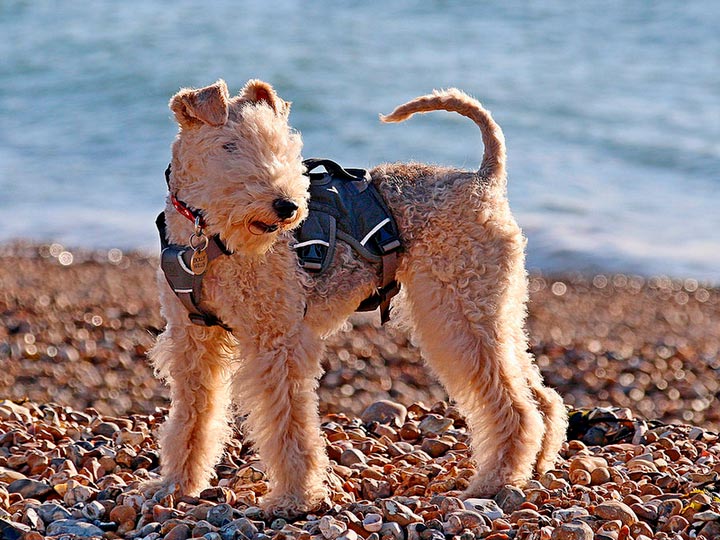
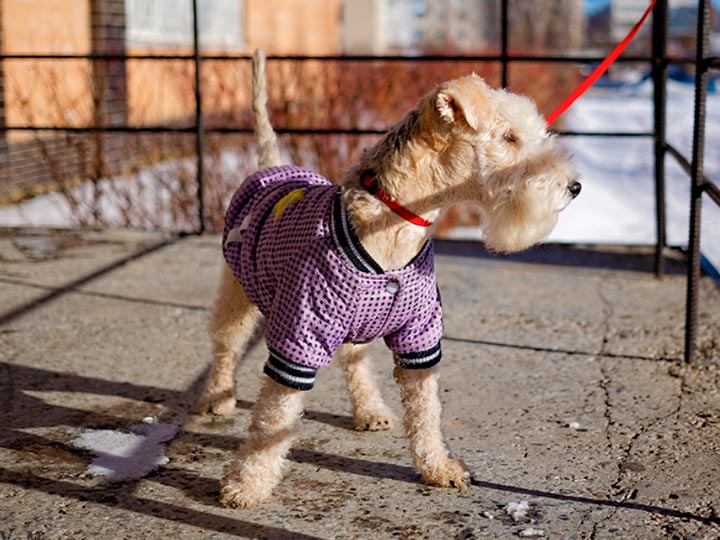
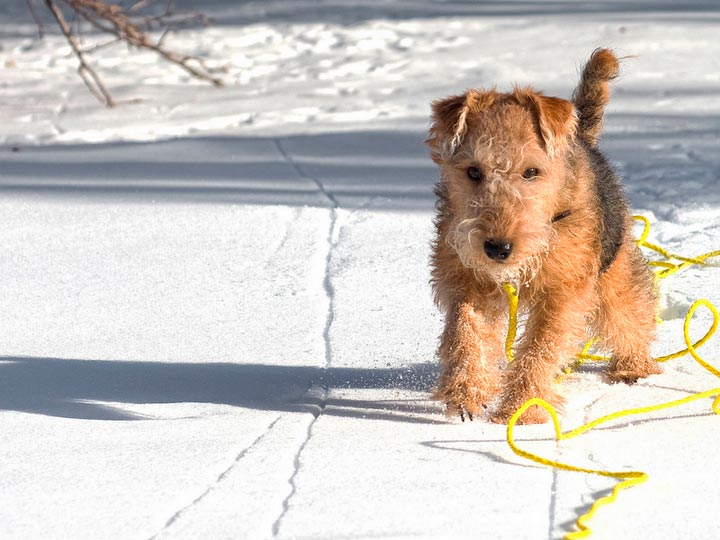
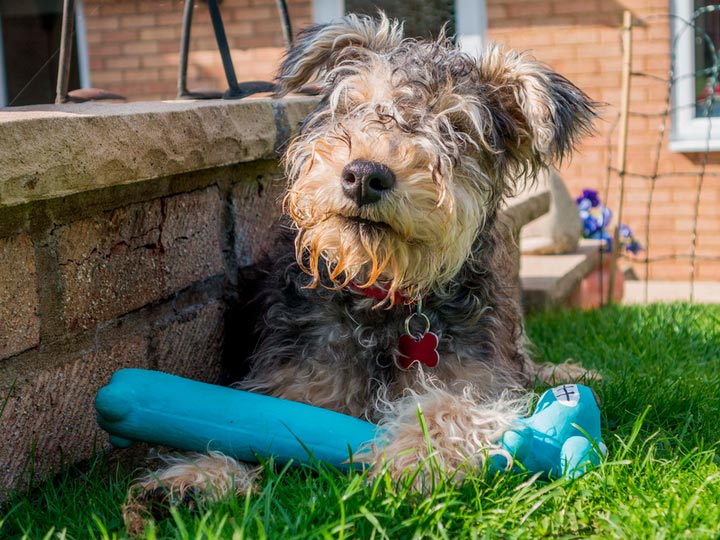
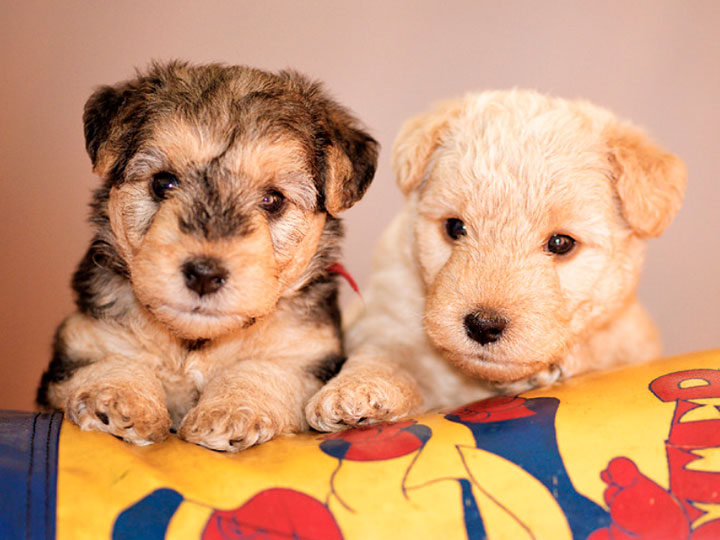
The gallery contains photos of Lakeland Terrier puppies and adult dogs.
Read also:


Add a comment