
Leukemia in cats: treatment and symptoms
Leukemia (also known as leukemia, leukemia, or hemoblastosis) is considered a dangerous and incurable disease. This malignant condition affects the hematopoietic and lymphatic systems, initially localizing in the bone marrow and gradually replacing healthy hematopoietic centers with altered cells. This pathology occurs in many mammals, but the causes for its development vary between humans and animals. In cats, leukemia is exclusively viral in origin, and all breeds are susceptible to infection, regardless of age or physiological condition.
Content
Pathogen and mechanism of disease development
Feline leukemia is caused by the RNA-containing oncogenic retrovirus Feline leukemia virus (FeLV). The disease is transmitted through direct contact with an infected animal, as well as through airborne droplets, urine, or saliva.
Important! The feline leukemia virus is not dangerous to humans. In humans, leukemia most often develops as a result of exposure to radiation or chemicals, while the infectious form is caused by the T-lymphotropic virus Deltaretrovirus, which only affects primates.
When the FeLV virus enters the body of a healthy animal, three pathogenesis (development mechanism) options are possible: leukemia, which differ significantly in the degree of danger and life prognosis:
- The cat will become a lifelong carrier of the infection, but will not develop the disease due to the lack of favorable conditions for the virus to reproduce. According to statistics, the introduced virus is inactivated in 60% of animals.
- The virus will remain latent (hidden) in a cat's body until its activity is triggered by an illness, stress, or medications that weaken the immune system. With a sufficiently strong immune system and adequate treatment, the animal will experience a mild form of leukemia, after which it will develop immunity to the virus.
- After the incubation period (which can range from a few days to 6-8 months), the cat develops a severe form of leukemia. The disease is chronic, characterized by the development of anemia, severe kidney and liver problems, and tumor formation. Due to a weakened immune system, diseases of the digestive, respiratory, reproductive, genitourinary, and skin systems often occur. Leukemia can lead to pathologies that can quickly lead to death, such as: infectious peritonitisIn acute leukemia, a cat may die within 2 to 4 years, even with symptomatic therapy.
Symptoms
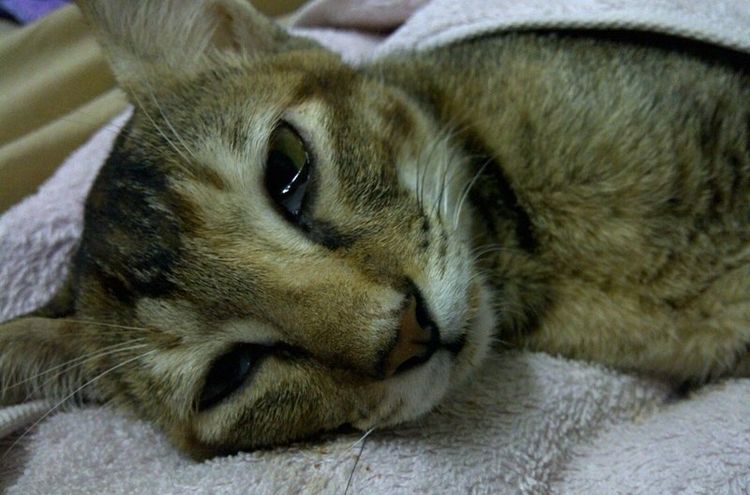
There are no specific signs specific to feline leukemia virus disease. Symptoms that indicate its development may include frequent, seemingly unexplained illnesses. The animal may become apathetic, lose weight, experience digestive problems, and the mucous membranes of the pharynx may turn pale.
With further development, when leukemia develops into a tumor form, the clinical symptoms become more obvious:
- the cat often vomits and has diarrhea;
- fever symptoms are observed, the temperature remains at a subfebrile level;
- breathing is difficult;
- tests show a sharp drop in white blood cell count;
- Ascites (fluid accumulation in the abdominal cavity) may be detected during examination.
Important! Feline leukemia and infectious feline immunodeficiency (caused by the lentivirus FIV) often produce similar clinical presentations; the main difference is that leukemia can cause malignant tumors. Therefore, timely differential diagnosis is crucial.
Diagnostics
Modern hematological, histological, and imaging methods are used to diagnose feline leukemia. The following blood tests are performed:
- Clinical. In cats with leukemia, the hemoglobin in the blood is low, the ESR level is elevated, and a large number immature or modified leukocytes; Enzyme-linked immunosorbent assay (ELISA). Detects viral waste products;
- Immunofluorescence. Allows detection of antibodies to the virus and identification of its type;
- Using the polymerase chain reaction (PCR) method, this technique can detect the presence of the RNA-containing virus even at minimal levels in the blood.
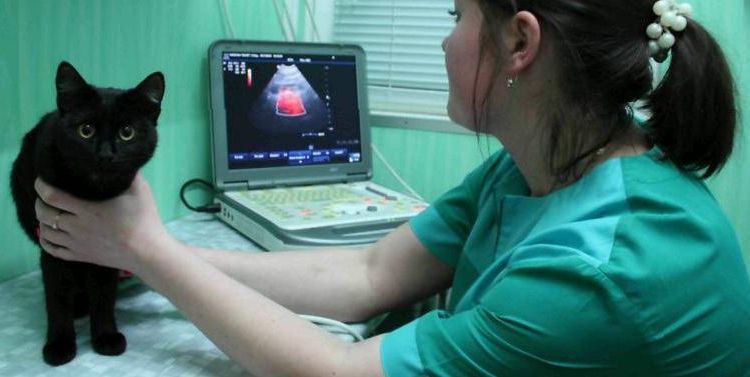
In addition to laboratory tests, ultrasound, MRI, X-ray, laparoscopy, and gastroscopy are used when necessary. These procedures allow for the detection of tumors or organic changes in organ structure.
Important! Laboratory tests for FeLV (ELISA) and PCR (PCR) should be performed twice, three months apart. If both tests are negative, the cat is healthy. If the first test is positive, the animal should be isolated until the second test is performed.
Treatment
When a cat is diagnosed with viral leukemia, treatment is aimed at relieving symptoms and strengthening the immune system. These measures won't make the animal healthy, but they will prolong its life and improve its quality.
The standard treatment regimen includes the use of antiviral agents (Azidothymidine), broad-spectrum antibiotics (usually penicillin group drugs), immunomodulators (Interferon, Feliferon, Raltegravil), as well as vitamin and mineral complexes.
Severe forms of hemoblastosis are treated in hospital using chemotherapy (Vincristine) in combination with supportive care. Blood transfusions provide a good, but short-term, effect. For a lasting result, the procedure must be repeated every two weeks. In some cases, if the cat's condition is extremely severe and the prognosis is clearly poor, veterinarians recommend euthanasia.
Preventive measures
The best way to prevent feline leukemia is vaccination. The cat is injected with a dose of the killed FeLV virus. The vaccine takes effect within three weeks and provides protection for up to a year.
Kittens are vaccinated between 6 and 12 months of age, and again 2-3 weeks later. Until this age, they are protected from retrovirus by antibodies acquired through their mother's milk. Before vaccination, kittens are required to undergo a diagnostic test for FeLV. The Russian-made Leukocel vaccine is most commonly used for vaccinating against feline leukemia.
Preventive measures that can and should be followed at home focus on hygiene. FeLV, like all viruses, is susceptible to adverse external influences, such as temperature fluctuations, ultraviolet light, and disinfectants. Therefore, the pet's living space, sleeping bedding, and eating utensils should be kept clean and, if possible, periodically disinfected with special products. After contact with other animals, cat owners should always wash their hands or use an alcohol-based solution.
https://www.youtube.com/watch?v=_uHLP5JvqcE
- Lymphoma in cats: treatment and symptoms
- Cucumber tapeworm (dipylidiosis) in cats: treatment, symptoms
- Anemia in cats


Add a comment