
Laika (dog)
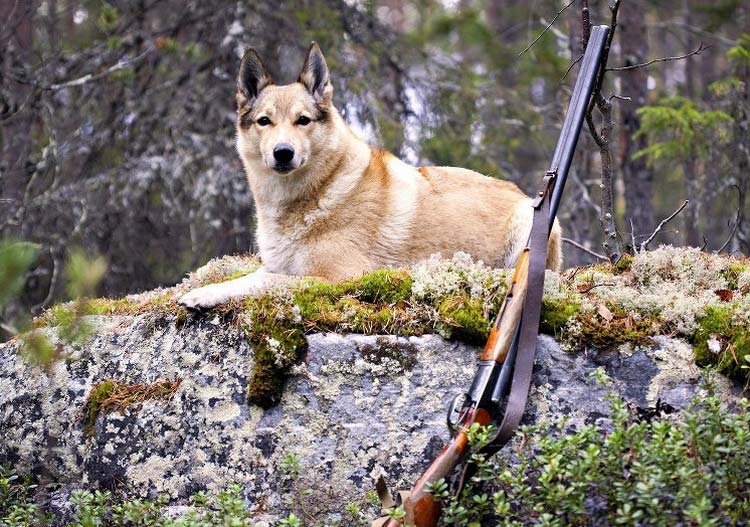
The Laika is a very common hunting dog. Its popularity lies not only in its beautiful appearance, but also in its versatility, endurance, and ease of maintenance. It has an amazing ability to adapt to any natural environment. In fact, the Laika is not a distinct breed, but rather a general term for several breeds of hunting and sled dogs.
Content
History of origin
Throughout the vast North, there are numerous Laika varieties, so-called "offspring." The number of main types approaches ten (Zyryan, Finnish-Karelian, Vogul, Cheremis, Ostyak, Tungus, Lappish, Samoyed, and Yakut). These include the Northeastern sled dogs and the Norwegian Eldhund.
They all differ significantly in their exterior and internal characteristics, which is entirely natural. Laikas, found in different geographic areas, have different origins and purposes, but their primary role, of course, remains assisting in hunting. As Dmitrieva-Sulima rightly noted, there has never been a single "Siberian" Laika. In fact, their name was acquired relatively recently; previously, Laikas were called "yard dogs," "pointed-eared dogs," or "northern dogs." Laikas' hunting qualities have always been highly valued, but the dogs were also strictly selected. While in Western Europe, hunting was the preserve of aristocrats, in the Russian north and Siberia, it was the primary means of survival.
In the late 19th century, hunters and cynologists G. Poplavsky, M.G. Dmitrieva-Sulima, and Prince A.A. Shirinsky-Shikhmatov decided to establish the selection and breeding of the Northern Ostrushka. They promoted the breed, studied and classified Laikas, maintained large kennels, and, traveling throughout northern Russia, sought out and purchased the best examples of "domestic" dogs.
In 1925, the first Laikas were approved and shown three years later at the First All-Union Exhibition, after which they became very popular among hunters. During the Great Patriotic War, they were often used as sled dogs, mine-detection dogs, and demolition dogs. During the final years of World War II, approximately 65 kennels were established to breed hunting dogs, including Laikas. Between 1947 and 1949, five standards, albeit temporary, were adopted for the Karelian, Finno-Karelian, Khanty (Ostyak), Mansi (Vogul), and Komi (Zyryan) breeds.
The most popular subspecies include West Siberian LaikasThese dogs are the result of crossing Khanty individuals with the Mansi type. At one time, they were a shepherd's best friend, helping people survive in harsh natural conditions.
Laika breeds
Russian aboriginal Laika breeds:
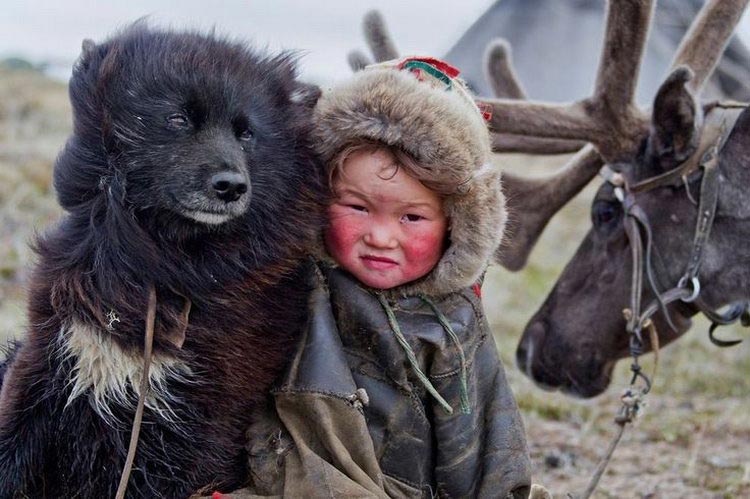
- Nenets chamomile (deer Spitz);
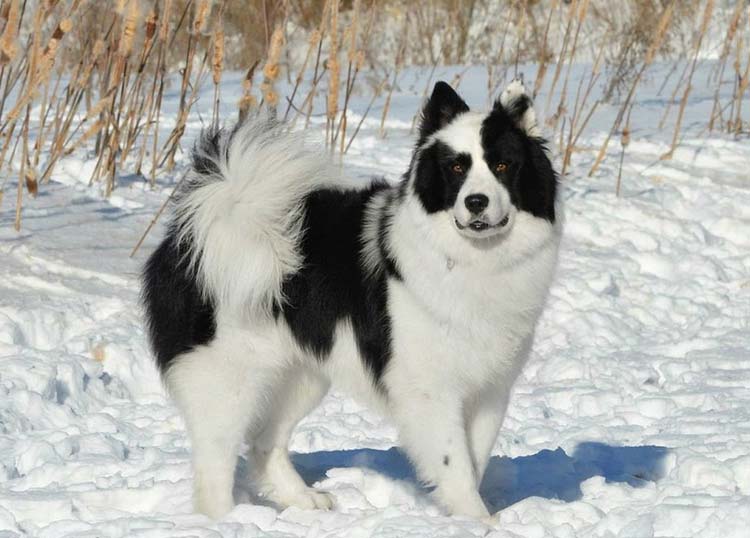
- Yakutian Laika;
- Evenkin Laika;
None of the aboriginal breeds are recognized by the FCI, only Yakutian Laika In 2006, it received recognition from the RKF.
Russian factory breeds:
- Russian-European Laika;
- East Siberian Laika;
- West Siberian chamomile;
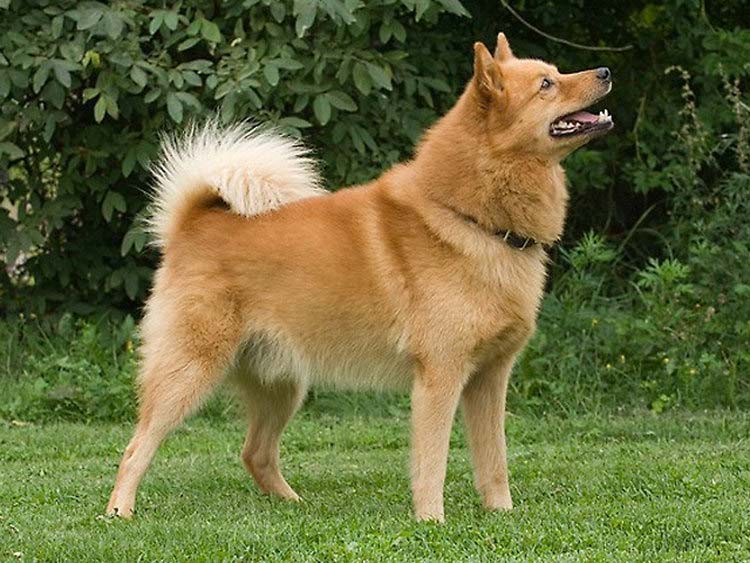
- Karelo-Finnish Laika (In 2005, by agreement between the Finnish Kennel Club and the RKF, the Finnish Spitz was recognized as an identical breed).
All Russian factory breeds have received recognition from the FCI.
European Laika breeds:
- Finnish Spitz (Finnish Bird Dog);
- Karelian Bear Dog;
- Norwegian Elkhound;
- Norwegian Buhund;
- Norrbotten Spitz;
- Yamthund;
- Swedish Elkhound;
- Xelleforsxund;
All breeds except the Swedish Elkhound and Helleforshund are recognized by the FCI.
Video review about likes:
Purpose and use in hunting
All likes (except Samoyed(They are used as sled dogs) are excellent hunters, and this was emphasized during breeding. They are used to hunt almost any game, from small birds to ungulates. They have also proven themselves to be excellent guard dogs.
The Laika is a versatile hunting dog. Its primary function is to track and bark at prey. This allows the Laika to pinpoint the game's location and distract the hunter.
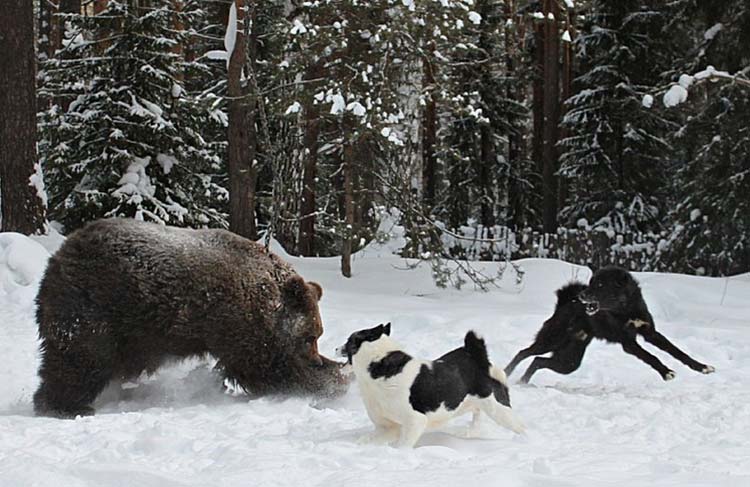
Laikas are distinguished by their extensive search capabilities, well-developed upper and lower sense of smell, a clear and resonant voice, and an innate hunting instinct. Most dogs can track an animal within 10-12 hours and can also watch it for hours. Laikas excel not only as solo dogs but also in driven hunts and drives. Well-trained, experienced dogs can easily hold off a bear or block a boar until the hunter arrives.
Laikas are most often used to hunt ferrets, mink, foxes, weasels, badgers, raccoons, raccoon dogs, and martens. Less commonly, they hunt wild boar, elk, or bear. In Europe, Laikas are also actively used to hunt lynx, roe deer, and wildcats. They are also often used to hunt waterfowl. These dogs easily prowl reed beds, flush out coots and ducks, and are unafraid to enter water. They bring back trophies and scavenge wounded game.
Common features in the appearance of Laikas
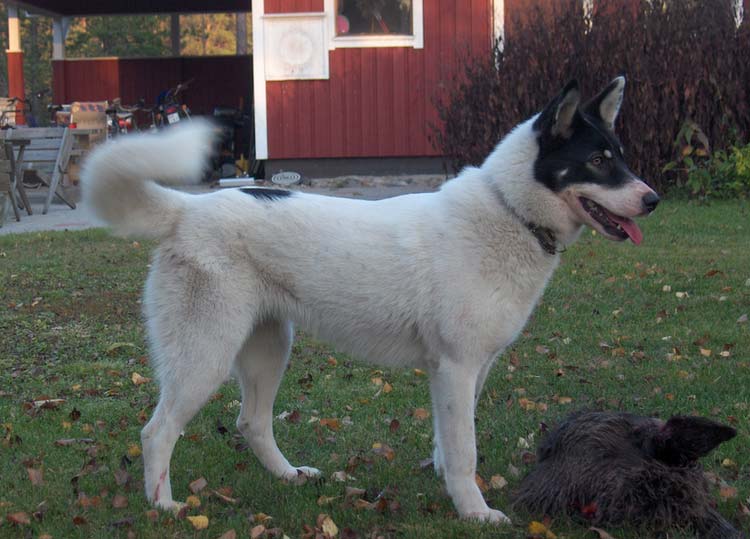
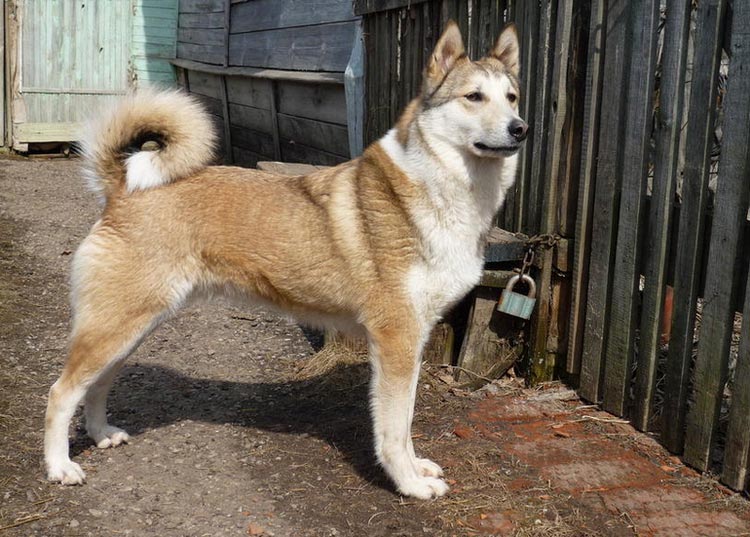
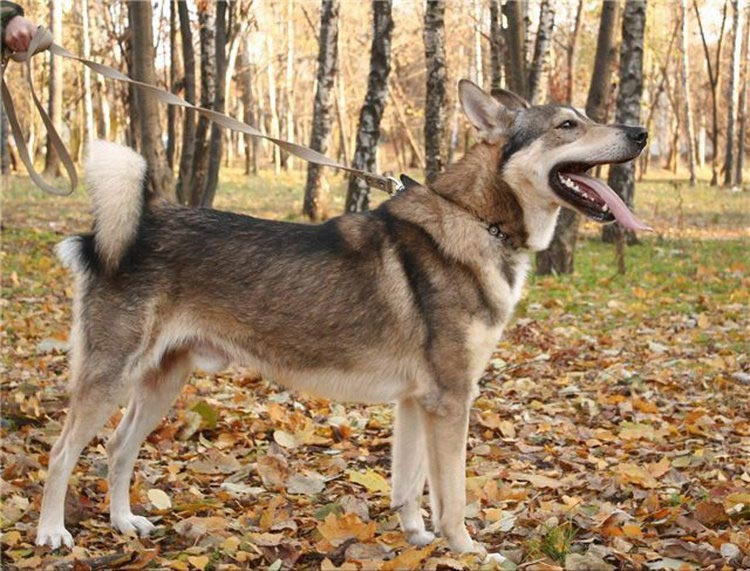
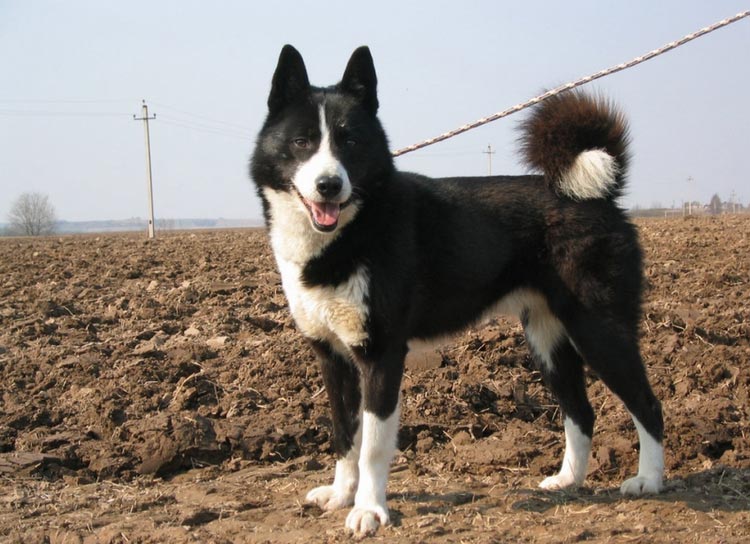
The head is elongated and wedge-shaped, with a pointed muzzle. The eyes are slightly slanted and are usually dark in color. The ears are always erect and small to medium in size. The neck is strong, muscular, and elongated, blending smoothly into a deep chest. The coat is double, with a straight, coarse outer coat and a dense undercoat. The tail is always bushy, but the manner in which it is carried varies, although it is most often curled. All other characteristics—size, build, angulation, paw shape, and tooth structure—vary greatly among Laika breeds.
Character
Laikas have a remarkable character and unique hunting instincts. They are highly intelligent, disciplined, quick-witted, and clean dogs. They are capable of making independent decisions and calculating situations in advance. While most dogs serve as assistants on a hunt, the Laika is the unwavering leader. They are completely independent and yet very attached to their owners. Freedom-loving and sociable, Laikas are never arrogant and do not tolerate unfair treatment.
In most cases, Laikas are very stubborn and willful. While they are generally friendly, aggressive specimens do occur. Undesirable traits can sometimes be corrected. They get along well with other dogs, although there may be some fights between males. They generally chase away other people's cats, but tolerate their own. They are interested in birds and small animals only as potential prey.
Hunting qualities of the Laika
The unique quality of Laikas, which distinguishes them from other hunting breeds, is the ability to comprehensively utilize their inherent characteristics.
- Walking speed refers to the time it takes a dog to cover a hunting area. Walking speed and running style depend on the dog's personality and psychology.
- Sense of smell is a natural trait that is passed down through generations. The owner's task is to maintain it.
- Tenacity means the dog's persistence in searching for a scent, the ability to follow it further until it spots its owner.
- Barking is an innate quality of Laikas, which they use with great enthusiasm, right up until the hunter arrives. The dog's voice is clear, resonant, and powerful.
- When tracking an animal, a Laika can use both its upper and lower sense of smell, which can be improved by proper training of the animal.
- Obedience is also a basic characteristic of the breed, as it determines the dog's ease of use in hunting.
Dogs can only be tested and compared in a comprehensive manner, as experts do.
Education and training of a husky
Training a Laika requires considerable persistence. These dogs are strong-willed and dislike being submissive. It's worth noting that Laikas need to be trained, not trained to be completely obedient. Hunters have noted that dogs that were trained with a strong focus and discipline performed worse in the field than those raised as companions. Laikas only need to know and follow basic commands; they should generally be independent.
Laikas are not only independent, but also extremely sensitive creatures. Therefore, training them, especially in urban areas, is a labor-intensive process. Teaching the dog the basics requires patience and perseverance. Furthermore, training is complicated by the dog's excitability and hyperactivity.
It's best to begin training your Laika from the moment the puppy arrives. However, don't restrict its natural curiosity and activity; it should run, play, and learn to overcome obstacles. While constant repetition and reinforcement of commands is the norm for other dogs, it's not advisable to overwork it. Excellent results can only be achieved with the right approach to this self-sufficient dog. Trust is essential, which means only guidance and correction.
Maintenance and care
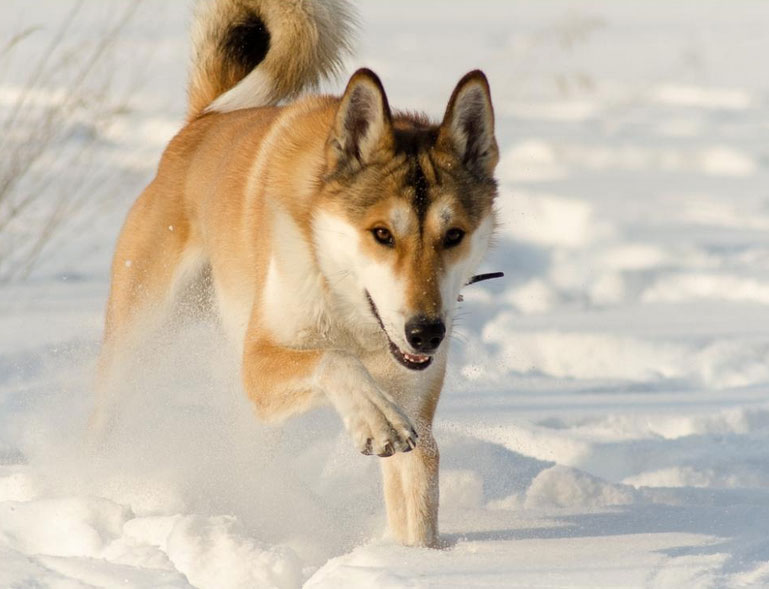
Laikas are completely undemanding when it comes to living conditions, are undemanding when it comes to food, are hardy, and adapt easily to their surroundings. Their main drawback in urban environments is their independence and autonomy. When walked off-leash, a dog can easily run great distances from its owner, chasing a cat or tracking a squirrel. Laikas are fairly clean and rarely need to be bathed. They are brushed regularly.
If you're thinking of buying a husky, you need to prepare for the arrival of your new tenant well in advance. It's best if you have your own country house with a designated outdoor area for keeping your husky. If you have a house but haven't yet prepared the area, you can build one. enclosure with a booth Inside. This is the optimal housing option for a dog. It is not advisable to keep a husky on a leash or indoors.
Freedom, space, daily long exercise, active games and hunting – this is the minimum that huskies need for a happy life.
A husky puppy will be cold in winter, so let it inside. Provide a place for it to rest and eat. Choose a warm corner away from dampness and drafts. Avoid accustoming your dog to a sofa or bed. You'll regret that moment of weakness many times over; it's almost impossible to get the dog off its favorite spot. Furthermore, claws will damage the upholstery.
It's best to keep a husky in the yard of a private home; it's an active dog that requires a lot of exercise, and it's quite difficult to provide it with quality exercise in an apartment.
Diet and health
Laikas are completely unfussy eaters, rarely picky, and aren't prone to overeating or food allergies. They can be fed natural food or commercially prepared foods appropriate for their breed, adhering to the portion sizes indicated on the packaging. If a Laika leads a busy life, they'll need more food than less active dogs of the same size. However, the main rule is to avoid overfeeding, but also avoid restricting their food intake.
Laikas are very strong, healthy, and resilient dogs. It's worth noting that each breed is susceptible to certain hereditary health problems. Their lifespan is 10-13 years.
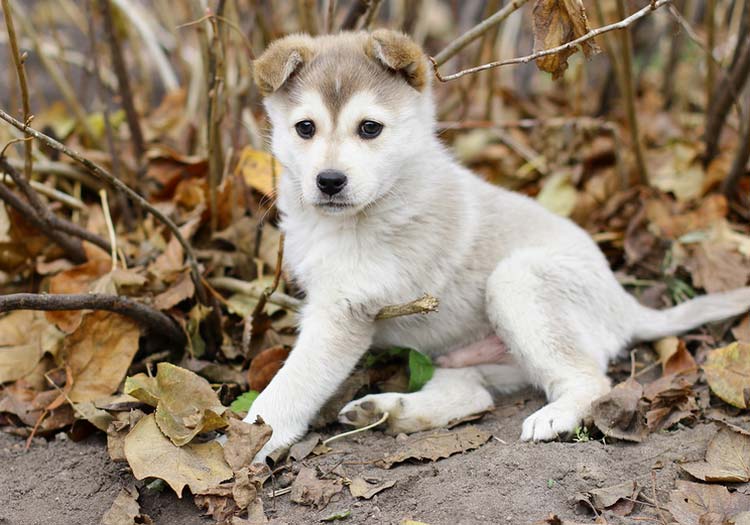
How to choose a Laika puppy
If you've decided to get a Laika puppy, you first need to decide on the breed. All Laikas are distinguished by exceptional working qualities, but it's important to consider the dog's temperament, appearance, living conditions, and the type of hunting for which you're choosing it.
Next comes the question of gender. Female dogs are generally more docile and attached to their owners. They are more balanced and persistent in their work than male dogs. They have one drawback: they go into heat twice a year, but this doesn't always fall during the open season. Male dogs don't have this problem, but upon smelling a female dog in heat, they may abandon their pursuit and begin looking for a mate.
When the Laika population was isolated, hunters often relied on certain traits when selecting a puppy, traits that many today question. It is believed that a Laika should have as few scars as possible on the palate, and its color should be black. A Laika's working potential was also determined by its claws: if they are pure black or white, the dog will excel at hunting small animals; if they are variegated, it will work on large game; but the best option is claws of different colors. A beard on a puppy indicates the presence of foreign bloodlines, but such dogs often excel at hunting large game. Among black dogs, preference was given to "two-eyed" dogs—those with red markings above the eyes. Ears should be medium-sized; small ones are typical of lazy dogs. The presence of dewclaws indicated that the dog would be suitable for hunting birds or mink.
The main factor in choosing a Laika puppy is the ability to acquire a puppy from proven hunting sires. Furthermore, the consistency of its working qualities should be proven over several generations. A dog with good genetics has a better chance of becoming an excellent hunting companion. Buying a dog without a pedigree is like buying a pig in a poke. And of course, it's important to find a reputable breeder who knows their dogs well and can help you choose.
At one month of age, you can already test which puppies have the keenest hearing. Simply snap your fingers while the puppies are sleeping and see who reacts first. Olfaction is tested in the same way, but instead of snapping, place a bowl of food next to the sleeping puppies. Reactions to a loud bang while they're awake will also vary: one puppy will be startled, another won't react, and a third will investigate—the one you should give preference to.
Photos
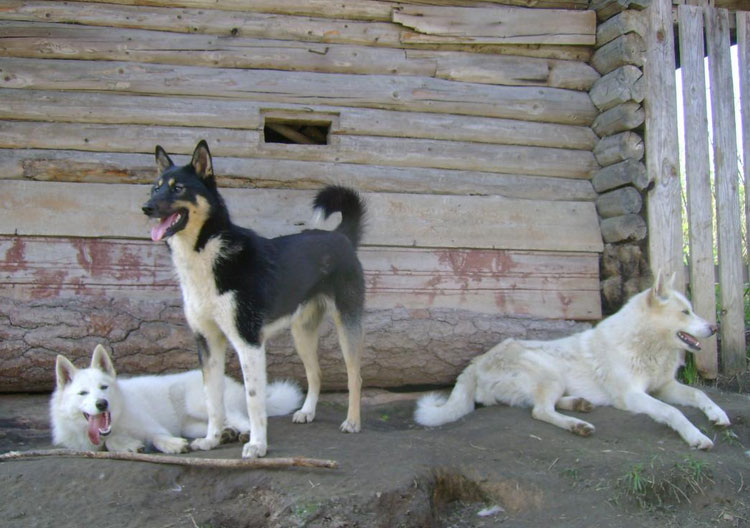
Photos of Russian Laika breeds:
Read also:


Add a comment