
LaPerm: male and female cats
LaPerm The Koehl cat is a remarkable breed. Its origins began in 1982, on Linda Koehl's private farm in America. It was there that a hairless kitten was born, sporting a distinctive tiger-like pattern and long, curly whiskers.
Content
History of the breed's origin
After some time, the kitten began to grow curls. This greatly interested the farm owner and inspired her to develop a new breed, which soon became popular in Australia and Europe. LaPerm cats were brought to South Africa and South Africa by explorer Johann Laprecht in 1992, and the breed received official recognition and a standard in 1997.
Currently, the LaPerm cat breed is registered by four organizations, and this is already a serious statement of their recognition in the global community.
General characteristics of the breed
What do cats of this breed look like? What is their personality like?
Appearance
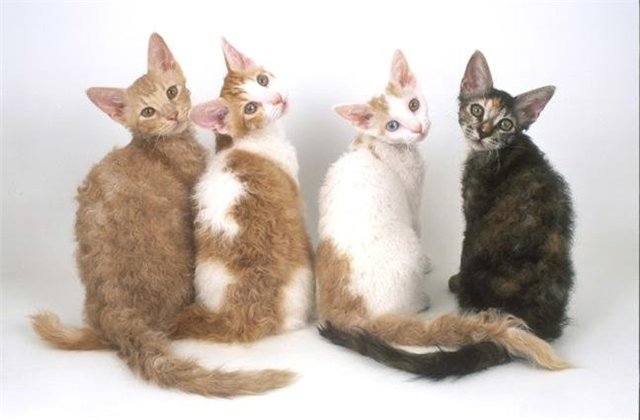
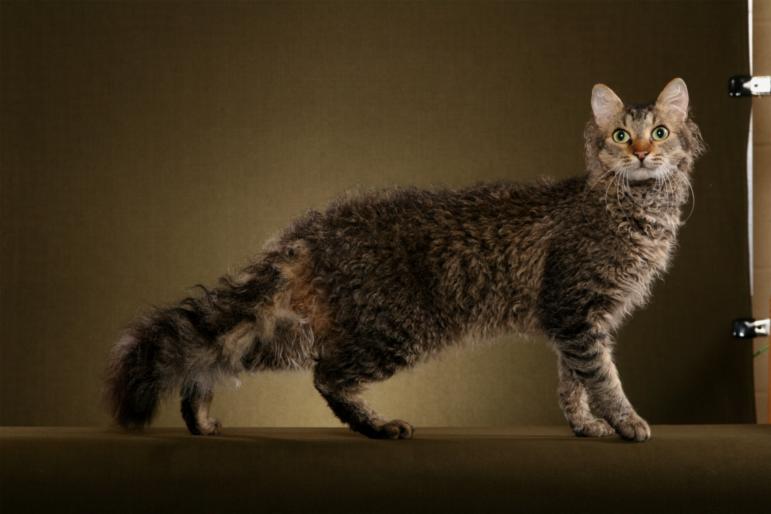
LaPerm males have a slender, strong body of medium size, typically larger than females. Their magnificent coat consists of curls and spirals, extending from the cats' ears to their tail. It has a silky texture that changes with age and varies between sexes.
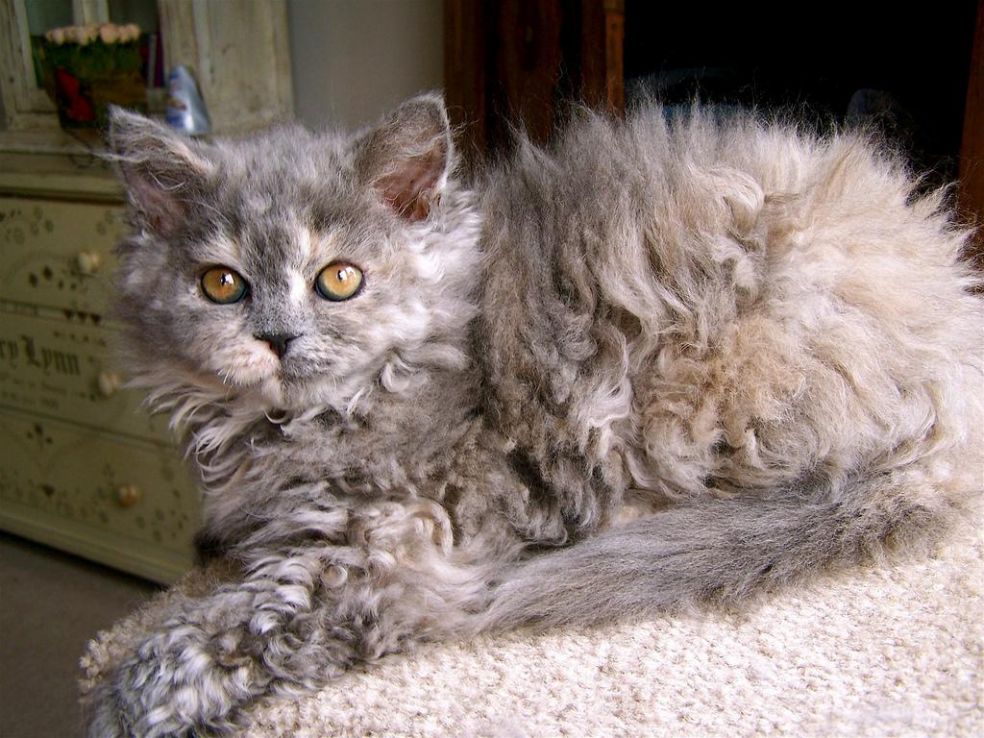
The coat does indeed resemble a curly fur coat and feels like soft mohair. However, in some short-haired LaPerms, it can be coarse with elastic hairs. The undercoat is sparse, and the outer coat, light and airy, lies loosely against the body.
At shows, judges blow on the cats' hair to assess its quality and condition, ensuring it flutters freely. LaPerm kittens are rarely born with the same curls as their parents; they are more often born with straight or baldBut later, almost all cats develop curls, although some cats still have straight fur.
Many kittens, born with curly hair, soon lose their fur, eventually becoming bald. Don't be alarmed; it will grow back even thicker later. It's difficult to predict what an adult cat's coat will be like until the kitten is over four months old. Therefore, it's not recommended to buy a show-quality cat before this age.
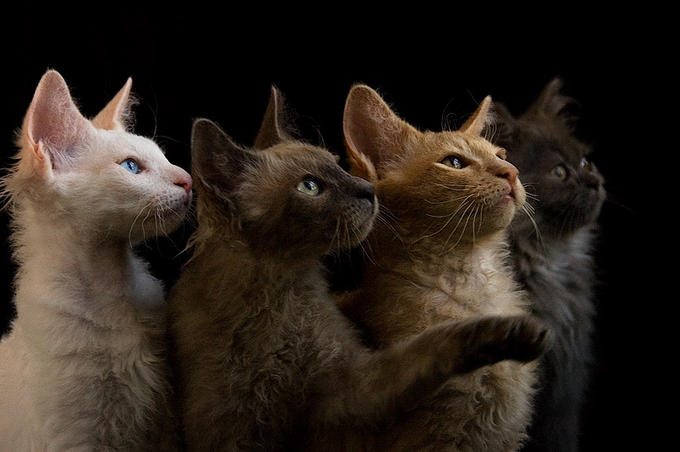
LaPerm cats have particularly beautiful fur on their tails, which resembles a plume. LaPerm cats have wedge-shaped heads, a round muzzle, a short, upturned nose, and high cheekbones. Their ears are large, slightly drooping, and set wide apart. LaPerm cats have large, almond-shaped eyes.
LaPerm cats have no specific coloring and can mate with domestic cats of any color to produce offspring.
These animals weigh 2.5-4 kg. They take a relatively long time to mature, up to 2 years.
Character
LaPerm cats are very friendly by nature and make excellent companions for both adults and children. Their friendliness is also evident with other pets, including dogs.
This is an inquisitive cat breed. Not only do they enjoy participating in their owner's activities and exploring their surroundings, but they also watch television with interest. They are a sociable breed, so they don't tolerate loneliness well.
A LaPerm kitten should be socialized with other people from an early age. This will help it avoid being afraid of your friends, and they will be able to play freely with it. Kittens quickly warm up to children and happily participate in their games. Just be sure to ensure your kittens don't harm them, for example, by pulling their tail or curls.
They differ from other breeds in that they don't love people for a "full bowl": communication and love are more important to them. LaPerm cats are very sensitive to their owners' affection and attentive to human speech.
They're not very talkative, but if they're upset, they can make loud "meow" sounds. LaPerm cats are freedom-loving, so they prefer to live in a private home with a garden plot and a spacious yard. If a cat lives in a small apartment, it's essential to take it for frequent walks to get some fresh air. This breed's ancestors were excellent hunters, so they retain their hunting instinct.
Health
If you get a LaPerm cat, you should immediately stock your first aid kit with ectoparasite medication. Fleas can cause allergies. Avoid handling your cat by the scruff of the neck—this area is very sensitive. Keep your cat up-to-date on vaccinations and visit your veterinarian.
The LaPerm breed is not susceptible to hereditary diseases and genetic abnormalities.
Care instructions
Despite the LaPerm cat's lush, curly coat, grooming it is quite simple. Brushing their coat once a week with a soft brush is sufficient, and bathing is only necessary when it gets dirty.
After bathing, be sure to dry the animal thoroughly.
LaPerm cats have no undercoat and never shed, making them safe for allergy sufferers. If you decide to exhibit your cat, simply spray the cat's coat with water beforehand, and it will instantly become fluffy.
Periodically, rinse your pet's eyes with a warm solution of boric acid or chamomile using a cotton swab. During the first few months of their life, their mother will provide them with careful care, and then it's up to you to take care of them.
Don't forget to trim your kitten's claws regularly and keep their ears clean. If they become dirty, gently clean them with a cotton swab. It's important to acclimate your LaPerm kitten to these activities from an early age to avoid stress.
And most importantly, love your cat! Try to show him your love by gently petting him and watching TV together – this will make him feel very happy and will delight you with his playfulness and curiosity.
Feeding
LaPerm cats are expensive and not yet very common, but it is already known that they are not at all picky about food and happily eat the same food as other, less refined breeds. However, it is important to remember that the food should be balanced, high-quality, and fresh.
LaPerms don't require any special treats at all. As infants, the best nutrition for them is mother's milk. If, for any reason, the mother is unable to provide them with food, it is recommended to purchase special formula from a specialty store.
Never feed young cats cow's milk! After feeding, be sure to massage the kitten's tummy with a cloth soaked in milk – this will improve digestion.
First feeding of kittens:
- boiled chicken yolk;
- chopped boiled beef;
- minced chicken.
Only when cats are well established can you begin to accustom them to adult food.
Please remember that LaPerm cats, like many other cat breeds, should not be fed garlic, onions, chocolate, grapes, alcohol, sugar, or artificial sweeteners. Never overfeed your pet to avoid obesity.
The nuances of choosing a kitten and its cost
There are few catteries that professionally breed this breed, but it is entirely possible to buy a LaPerm kitten. It is recommended to purchase kittens after they reach four months of age. Only after this time do many of them develop a coat and the characteristics of the true breed become apparent. Of course, there are male cats, curly from birth, but this is rare. They also become "naked" after birth, but become covered with curls by the age of two months.
Please note: all of these babies' fur should already be in small curls. Check that necessary vaccinations were made in a specialized clinic, affixed and dated in the veterinary passport.
Ask the breeder about the cat's habits, play with it, and interact with it. A purebred representative of a rare breed will cost you a pretty penny. Make sure the contract includes, for example:
- mandatory castration/sterilization;
- participation in exhibitions is indicated.
LaPerm kitten price
Russian cat lovers are increasingly showing interest in the LaPerm's distinctive appearance, and on cat forums, curious people inquire about the price of a LaPerm, often disappointed by the difficulty of acquiring an animal of this breed. However, many, on the contrary, are spurred on by a keen interest in acquiring the coveted cat, no matter the cost. The high price of a LaPerm kitten, endowed with amazingly long, curly fur, also causes despair among potential buyers. Depending on their appearance, kittens cost between $500 and $4,500.
Video review of the La Perm cat breed
Read also:


1 comment
Cat lady
Where can I buy them?
Add a comment