
Lancashire Heeler
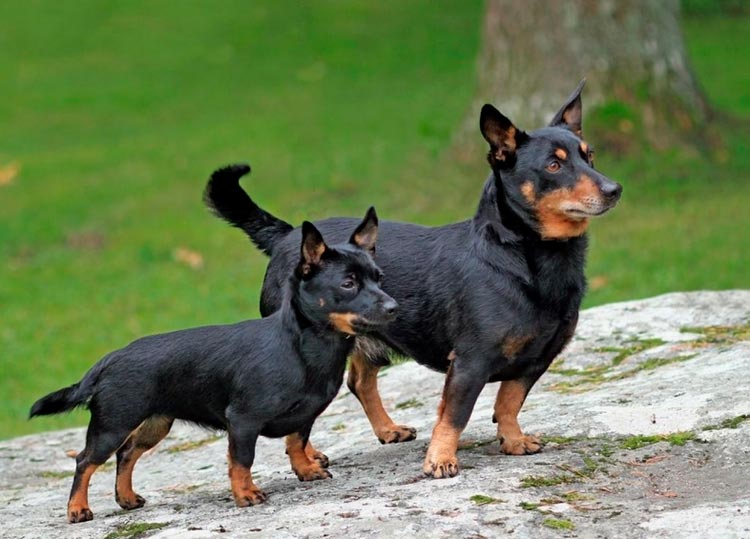
The Lancashire Heeler is a miniature herding dog and a wonderful companion. In Lancaster County, these dogs were used for farm work for several hundred years, but the breed was not successfully preserved and was fully revived in the late 20th century. Lancashire Heelers are energetic, friendly, and sturdy herding dogs that combine the qualities of a sheepdog and a terrier.
Content
History of origin
In the past, the Lancashire Heeler was used to drive cattle to market or pasture. It is agile and short enough to avoid hoof kicks. When not herding cattle, the dog would hunt rabbits and rats on farms. The breed's origins are believed to be in Lancashire, where small herding dogs, known as Ormskirk Heelers, were bred near the town of Ormskirk. This small shepherd is believed to be a cross between a Lancashire Heeler and a Lancashire Heeler. Welsh Corgi and the Manchester Terrier, which appeared when Welsh farmers and their short-legged dogs drove cattle to markets in the northern counties.
By the early 20th century, Lancashire Heelers had disappeared. They only survive today thanks to the breed's resurgence in the 1960s and 1970s through crossbreeding. cardigan welsh corgi With Manchester Terrier and selection of the best representatives. The breed is still in its infancy, so active organizations urge breeders to approach breeding responsibly and not ruin decades of work with incompetent selection.
The International Cynological Association (ICA) only provisionally recognized the Lancashire Heeler breed in May 2016. Since the fall of 2016, the RKF has been stamping export pedigrees.
Purpose
Today, the Lancashire Heeler is rarely used for herding cattle, although it is marketed as a versatile farm dog. Its sturdy, compact size makes it an effective herding companion. It herds cattle deftly, grasping them by the hocks. In fact, the word "heel" translates from English as "heel." It is adept at catching rats and mice and can guard a farm from small predators. Its alertness and courage make it a good watchdog. It can also be a family dog and a companion for active people.
Video about Lancashire Heeler dogs:
Appearance
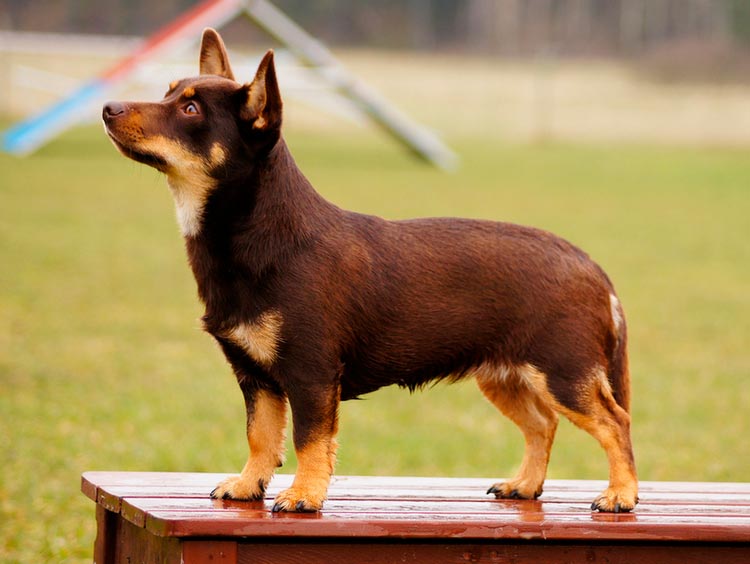
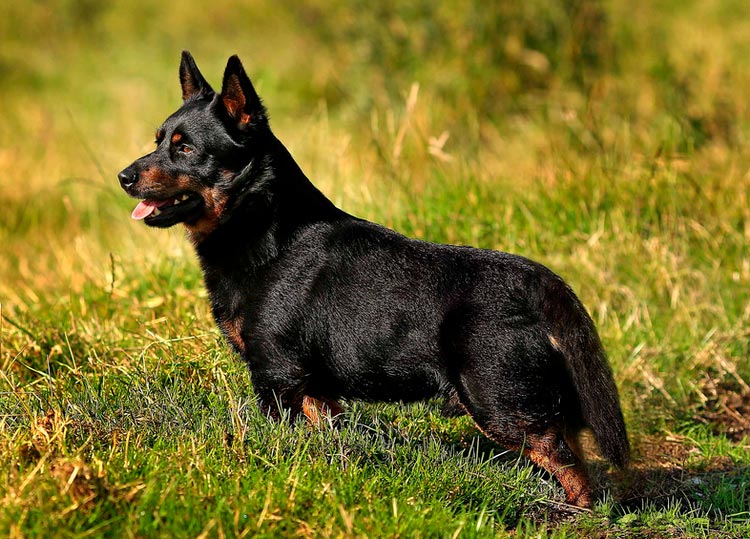
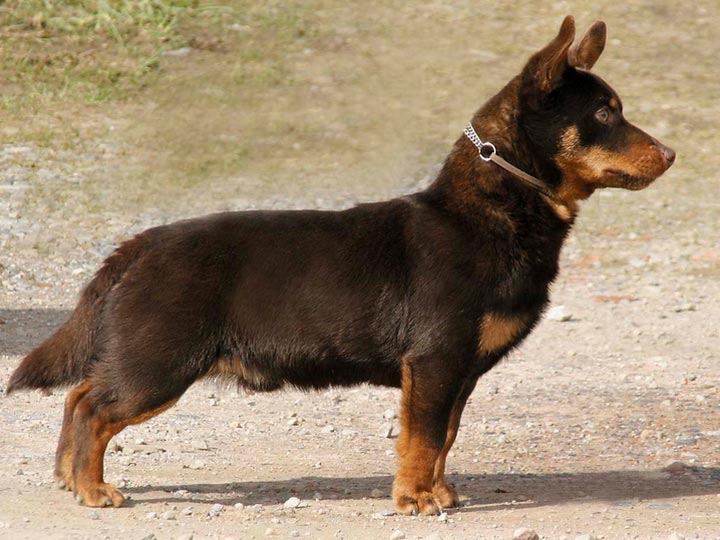
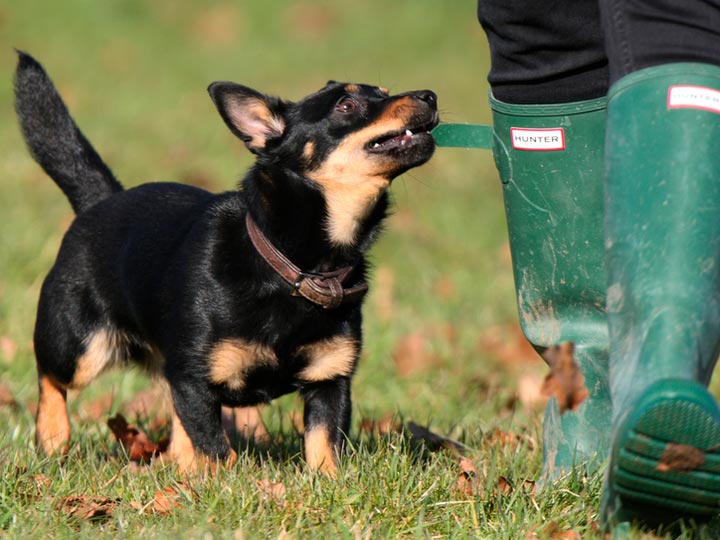
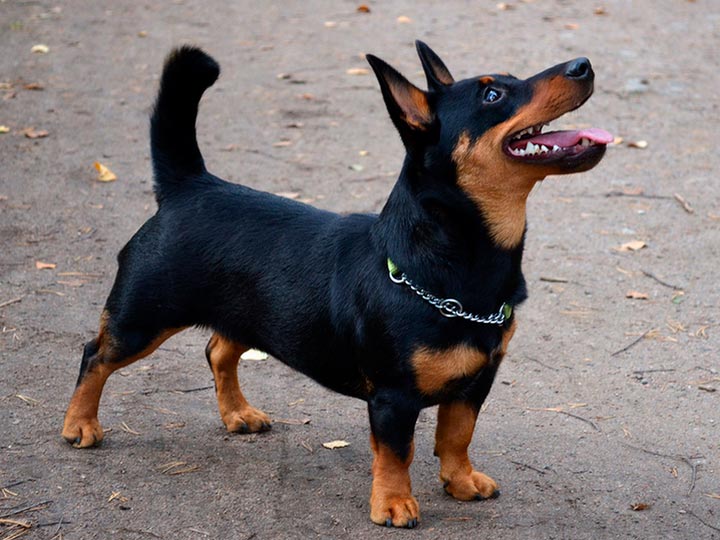
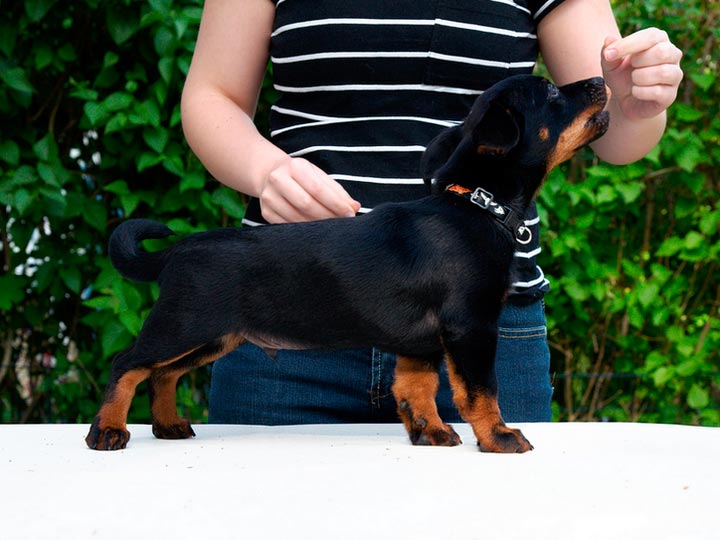
The Lancashire Heeler is a small, strong, sturdy, alert, energetic dog with a short, black or brown and tan coat, expressive, intelligent eyes, and short, corgi-like legs. corps somewhat elongated, the body length exceeds the height by 2.5 cm. The height at the withers of males is 25-30 cm.
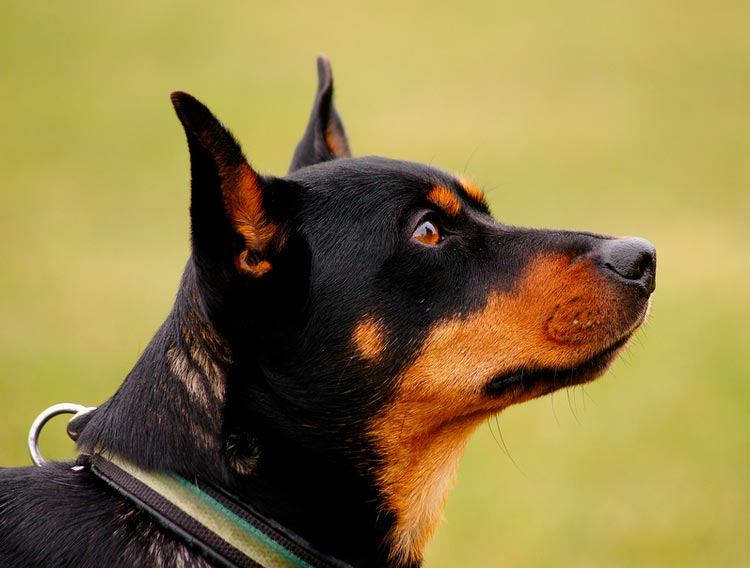
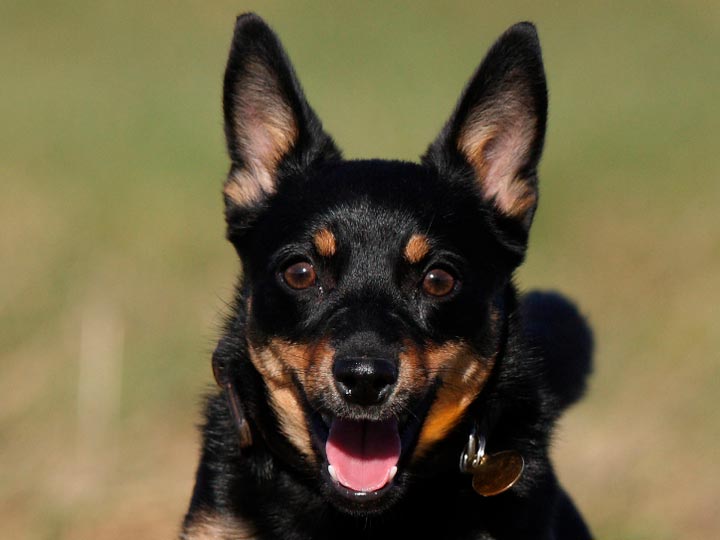
The head is proportionate to the body. The planes of the muzzle and skull are parallel. The skull is broad and flat, tapering toward the eyes, which are set fairly wide apart. The stop is moderately pronounced, located midway between the occipital protuberance and the earlobe. The muzzle tapers to a black or brown nose. The jaws are strong, with firm teeth meeting in a perfect scissor bite. The eyes are medium in size, almond-shaped, and dark in color. In brown and tan coats, they may be light brown. The ears are erect or raised on cartilage. Drop ears are undesirable.
The neck is of medium length. The topline is level, the back is strong. The chest is long, and the ribs are well sprung. The tail is set high. When excited, it may be carried over the back in a slight curve, but not in a ring. The forelegs are sloping, with the elbows close to the ribs. The bone is wide. The pasterns are slightly turned outward. The hind legs are well muscled and well angulated. The metatarsus is vertical. When viewed from behind, the legs are parallel, both while moving and standing. The paws are small and well knit.
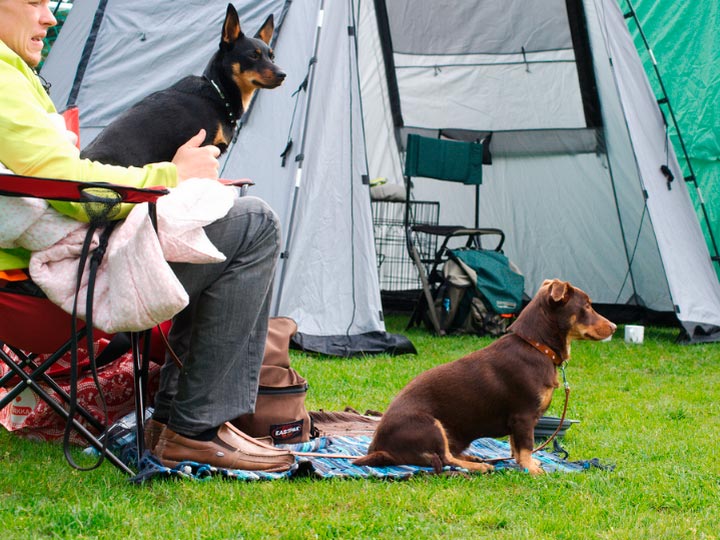
The dense coat protects the dog from all weather conditions. It consists of a short, dense, smooth, and harsh-to-the-touch topcoat and a softer, dense undercoat. The coat is slightly longer on the neck. The undercoat should not show through the topcoat. The coat is black and tan or brown and tan. The color may fade slightly with age. White markings are discouraged. A small white spot on the chest is undesirable but acceptable.
Character and behavior
Lancashire Heeler friendlyA high-energy dog who loves to be busy and is willing to stay busy for as long as possible. It forms strong bonds with all family members, thrives on human attention, and is always at the center of events, knowing what's happening, where, and when. It's very alert, alerting its owner to anything suspicious with a loud bark. It's indifferent or wary of strangers, but friendly upon closer acquaintance. Rarely, hysterical, timid, or insecure dogs have been observed among Lancashire Heelers, and these are immediately excluded from breeding.
Lancashire Heelers are very responsive to affection and attention, and are sociable. They get along well with other pets in the house, although conflicts with dogs of the same sex are rare. Also, caution should be exercised when introducing a Heeler to small animals, as they may trigger their prey drive and the desire to chase.
The cattle dog also possesses the instincts of a ratter and a rabbit hunter. Courageous, cheerful, and very attached to its owner, it strives to please in every way and craves close contact. Without work, it withers.
The Lancashire Heeler tolerates short periods of solitude well if it's busy working. For example, a dog living on a farm, where it has no restrictions, but if it's an apartment pet and its owners are away for long periods at work, the dog will suffer, may develop bad habits, become destructive, or become disobedient. The Heeler is very sociable and companionable, and thrives on the company of people and other dogs. It's best suited for families. with school-age children and older. Only because very young children are not suitable playmates for a dog and could harm it.
Education and training
The Lancashire Heeler learns quickly, but also possesses intelligence, stubbornness, and a mischievous ingenuity. Training and education should consist of short, engaging sessions with positive reinforcement. Learning begins early and continues throughout life. The Heeler should be well-versed in its place in the pack, which will prevent it from developing "big dog syndrome." Proper socialization is equally important, especially for dogs living in cities. This will allow them to react appropriately to crowds of people and animals and behave well in a variety of situations, including unfamiliar ones.
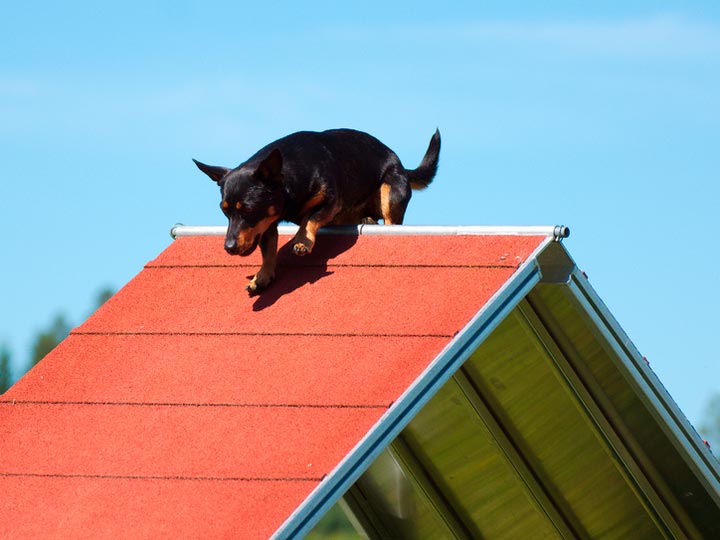
The Lancashire Heeler's uses are virtually limitless, but these dogs are most often seen competing in herding trials. If desired, they can master agility, flyball, and other sports, and pursue a show career.
Content Features
The Lancashire Heeler is completely undemanding in terms of maintenance. It adapts to city life in an apartment, but is happier in a private home with a yard where it can walk and work. Theoretically, it could be considered a free-range yard dog. Lancashire Heelers who live on a farm and are used for their intended purpose usually sleep wherever they like, and seek shelter from the cold and wind in a hayloft or barn.
By nature, the Lancashire Heeler is very playful and energetic. It's good for the dog to have opportunities to regularly release this energy. A minimum of two walks is necessary, one of which should last at least an hour. Walks should include active playtime with the owner and other dogs, obedience training, and some time to run free.
Regular lack of adequate physical activity inevitably leads to excess weight gain, even with a properly balanced diet.
During the cold season, the Heeler does not require any insulation; its thick undercoat provides additional warmth; many owners wear overalls to protect against dirt.
Care
The Lancashire Heeler requires little grooming. Seasonal shedding is quite heavy, but the rest of the year, with weekly brushing, hair loss is minimal. Bathing is recommended infrequently, once every 2-3 months. Dirty and wet fur develops a distinctive odor that is absent in a clean dog. If your Heeler lives in an apartment, you can bathe them more frequently, provided you use the right products. Other essential hygiene procedures include regular grooming. ear cleaning, teeth and nail trimming.
Nutrition
Lancashire Heelers are rarely picky eaters. Owners can choose the most convenient feeding method. This can include natural foods or prepared dry food. The key is to ensure the diet is appropriate for the dog's age, activity level, and physiological condition. It follows standard guidelines. As for prepared foods, diets for small dogs with normal or active lifestyles are suitable.
Health and life expectancy
The Lancashire Heeler breed is susceptible to a number of hereditary diseases that are now quite widespread:
- Primary lens dislocation;
- Collie eye anomaly;
- Hereditary cataract;
- Patellar dislocation;
- Some dogs are severely allergic.
The presence of genetic diseases is due to the small gene pool, so according to the rules of the English Kennel Club, close inbreeding with a coefficient greater than 6.25 is prohibited during crossbreeding. Testing for the presence of genetic markers for the diseases listed above, with the exception of allergies, is also mandatory. Life expectancy is usually 9-15 years.
Choosing a Lancashire Heeler Puppy and Price
The majority of Lancashire Heeler breeds are concentrated in the UK, Sweden, and Finland, with Norway, Holland, and the United States significantly behind in terms of kennels and dogs. In Russia, you can occasionally find ads for puppies of this rare breed. Kennels exist in Moscow and St. Petersburg, and representatives of the breed are also available in other cities. It's worth noting that Lancashire Heeler puppies are not cheap, rarely dropping below 70,000 rubles.
Unscrupulous scammers often pass off similar-looking mongrels or corgi crosses as Lancashire Heeler puppies.
Potential owners should be aware that the only proof of a puppy's pedigree is its pedigree papers. Puppies are branded and issued a birth certificate at 45 days of age. By the time they reach their new home, they must be dewormed and vaccinated according to age.
Photos
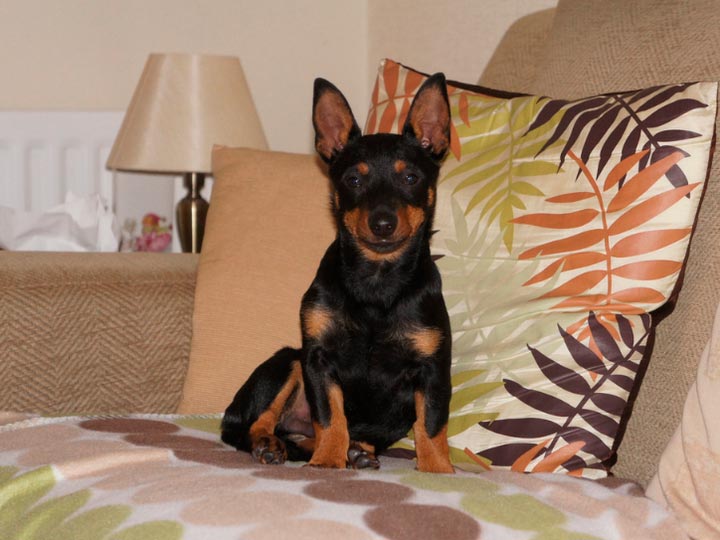
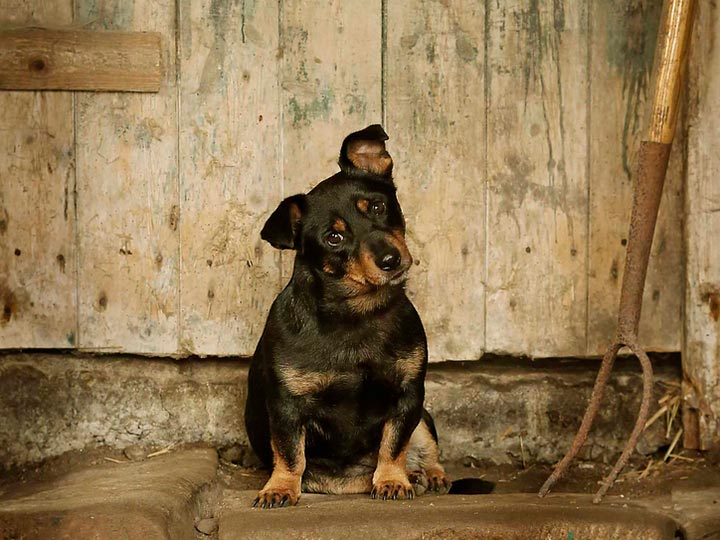
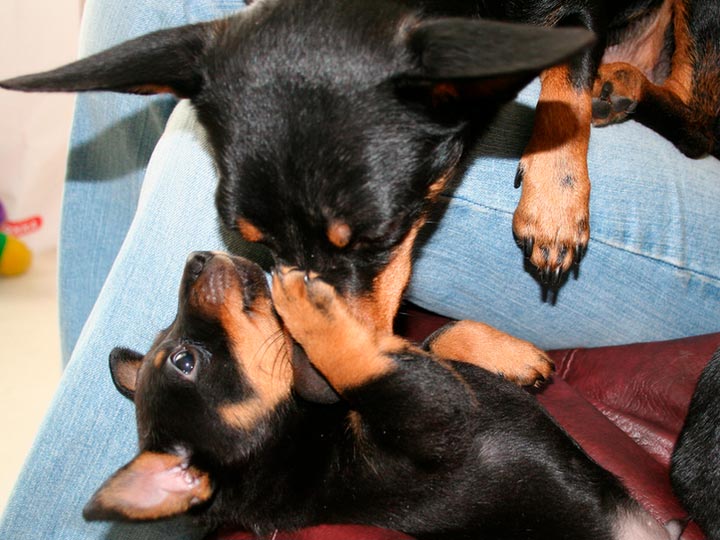
The gallery contains vibrant photos of adult, adolescent, and Lancashire Heeler puppies.
Read also:


Add a comment