
Australian Labradoodle (Australian Cobberdog)
The Labradoodle is a crossbreed of two well-known and very popular breeds: Labrador And poodleLabradoodles are also sometimes used to refer to a new Australian companion dog breed known as a Cobberdog. Both Labradoodles and Cobberdogs are friendly family dogs, intelligent and quick-witted, energetic and playful. Their high intelligence, combined with their sociability and lack of aggression, make them ideal for use as guide dogs. Many Labradoodles inherit the poodle coat type and are therefore considered conditionally hypoallergenic, but let's take things one step at a time.
Content
History of origin
The history of the Labradoodle began in the 1980s, when Wally Conron, a veterinarian with the Royal Guide Dogs Association of Australia, decided to cross a Standard Poodle with a Labrador to create a guide dog for people with disabilities who also suffered from wool allergies.
In an interview, 85-year-old Conron recalls that no one wanted to take the mixed-breed puppy, so he and his colleagues resorted to a ruse. Animal care professionals came up with the name "Labradoodle" and claimed it was a new breed of guide dog. A line of people formed. Soon, Labradoodles ceased to be specialized dogs; puppies were sold as pets. Breeders and fancier clubs emerged.
The emergence of Labradoodles ushered in a new era in dog breeding, one that swept America and became known as "designer breeds." Following Conron's successful experiment, dog breeders began producing all manner of crossbreeds, among which the Labradoodles became particularly popular. puggle, Maltipoo, Pomsky And some others.
From Labradoodles to Cobberdogs
Serious Ladbradoodle breeding began in 1989 under the guidance of Beverly Manners, a canine specialist, breeder, and director of the Rutland Manor breeding research center. Beverly worked for the Australian Guide Dog Association, specializing in German Shepherds. She had extensive experience training dogs and recognized numerous challenges in her work. First, there was the lengthy training process. Training a guide dog takes approximately two years. Second, there was incompetent breeding, which led to a host of hereditary diseases, as well as mental and behavioral issues. Third, there were allergies and asthma in disabled individuals who needed a dog but were unable to obtain one.
Labradoodles are often abbreviated as "doodles" around the world, but this term isn't accepted in all countries. For example, in English, "doodle" translates as "blockhead." Not every owner would call their pet this. And in Australia, the word is actually urban slang for "genitals."
The Labradoodle is destined to be the ideal guide dog. It possesses innate intuition, quick learning ability, a strong bond with its owner, a hypoallergenic coat, odorlessness, and minimal shedding, as well as a stable temperament and genetic health. Beverly spent a long time selecting the breeds that would be suitable for the job, eventually adding American and English Cocker Spaniels, Soft Coated Wheaten Terriers, and Irish Water Spaniel bloodlines to the Labrador-Poodle hybrids.
The popularity of mixed-breed dogs and the constant confusion between designer and Australian Labradoodles prompted Beverly Manners to rebrand her breed. Since 2012, it has been called the Australian Cobberdog.The popularization of Labradoodle-Cobberdogs as guide dogs was facilitated by the breed's creator's connection with Susan Lehrs, founder and director of a training center for dogs for people with disabilities. She was impressed by the speed and effectiveness of her puppy training. Thanks to her support, the Australian Cobberdog breed was officially registered by the Australian Canine Federation in 2012 and accepted into the registry of canine organizations worldwide.
Video about the Australian Cobberdog (Australian Labradoodle) dog breed:
Labradoodle or Cobberdog: What's the Difference?
In simple terms, a Labradoodle is a cross between a Labrador and a Poodle, while a Cobberdog is a dog breed that originated from Labradoodles and is still sometimes referred to as an Australian Labradoodle.
Hybrids or crossbreeds, also known as "designer breeds," are especially popular in America, somewhat less so in Europe, and have only recently begun to be bred in Russia and the CIS. Crossbreeding is not common. First-generation dogs are already unpredictable. They can inherit traits from their parents in any order, and subsequent matings can produce puppies that bear no resemblance to their parent breeds. Furthermore, they lose one of their key positive traits—hybrid vigor, which ensures their robust health. Of course, they can develop hereditary diseases if both parents were carriers, but this is rare.
When breeding a Labrador and a Poodle, it's impossible to predict what traits the puppies will inherit, how tall they'll grow, which parent they'll resemble in build, and whose coat type they'll inherit. Their temperament is more or less clear, as it's somewhat similar to that of the parent breeds. Labradoodles are intelligent, friendly, and people-oriented, non-aggressive, but can exhibit guard qualities. As for hypoallergenicity, that's more of a marketing ploy. Some puppies inherit the Poodle's coat type, shed lightly, and can live with people who suffer from asthma or fur allergies, but their numbers are so small that it's impossible to say all Labradoodles are hypoallergenic.
The Australian Labradoodle, also known as the Cobberdog, is a nearly fully formed breed, developed through the crossbreeding of six dog breeds. Over a long period of time, only puppies that met the breeder's requirements for appearance, character, and health were selected from litters. Only these puppies were bred, resulting in a stable, hereditary type.
While the outcome of a mating between two first-generation Labradoodles is unpredictable, a mating between two Cobberdogs is highly likely to produce puppies of a specific type. To avoid the confusion that has arisen in the world around mixed-breeds and the new breed, a breeder of Australian Labradoodles decided to rename them Cobberdogs. The name was chosen deliberately. In Australian, "cobber" means "friend," "comrade," or "companion."
Video about the designer Labradoodle (Labrador-Poodle crossbreed):
Appearance
As mentioned above, the appearance of mixed-breed dogs can vary. However, traits of the parent breeds are always recognizable. Their build usually resembles a Labrador, and their coat is usually derived from a poodle.
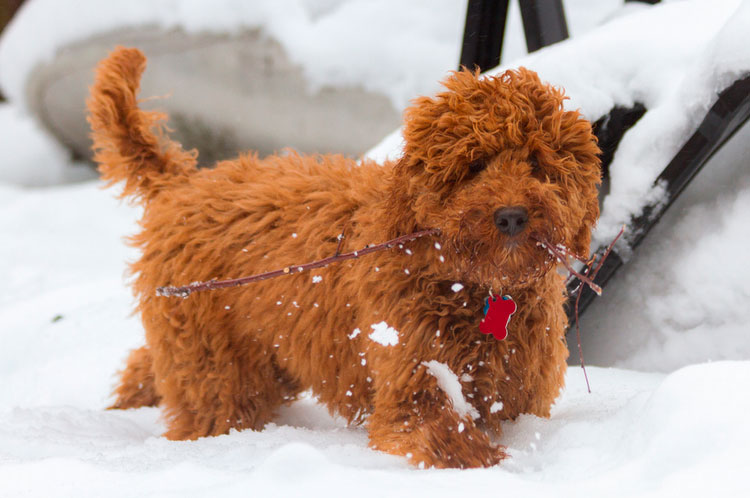
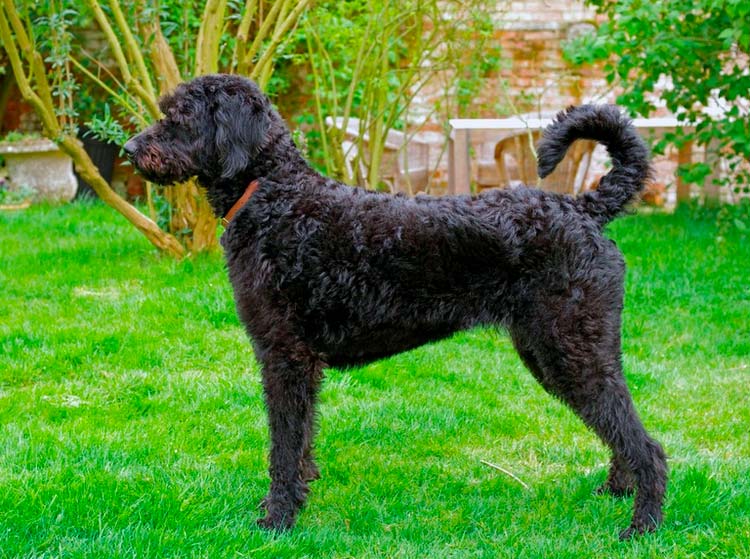
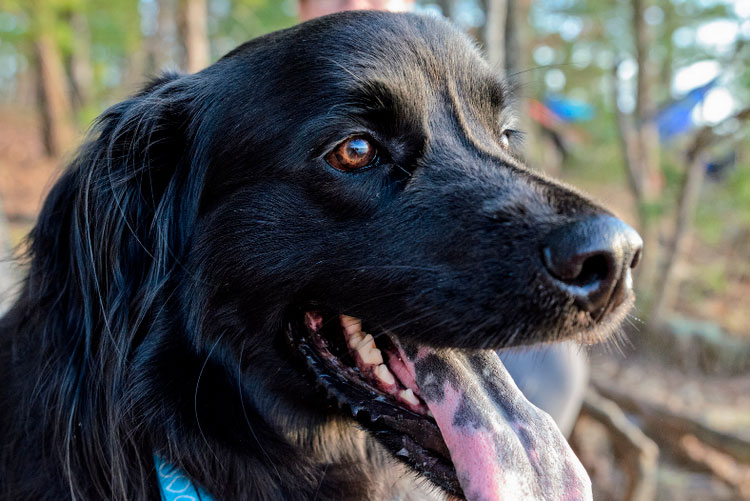
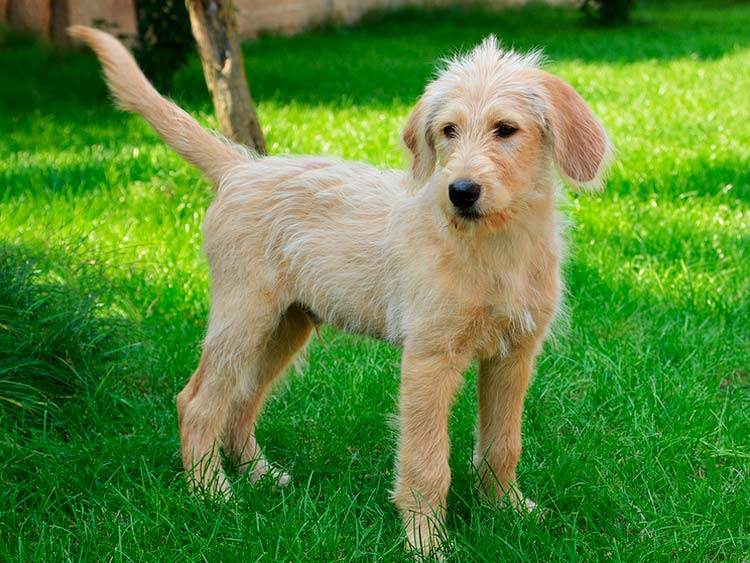
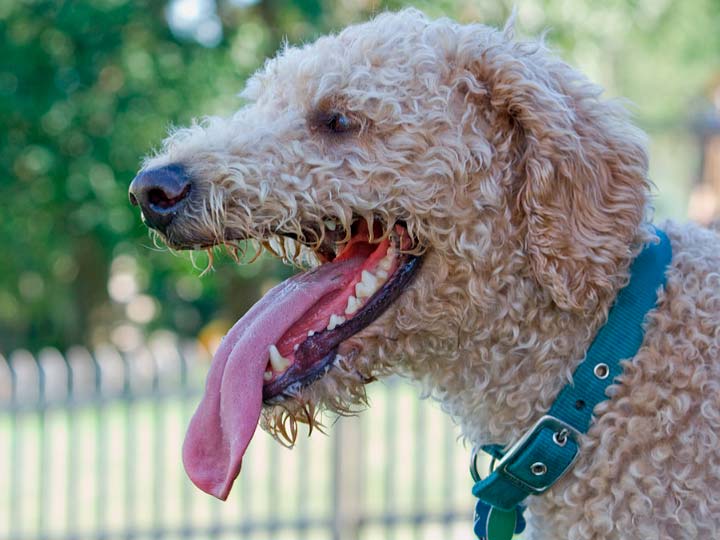
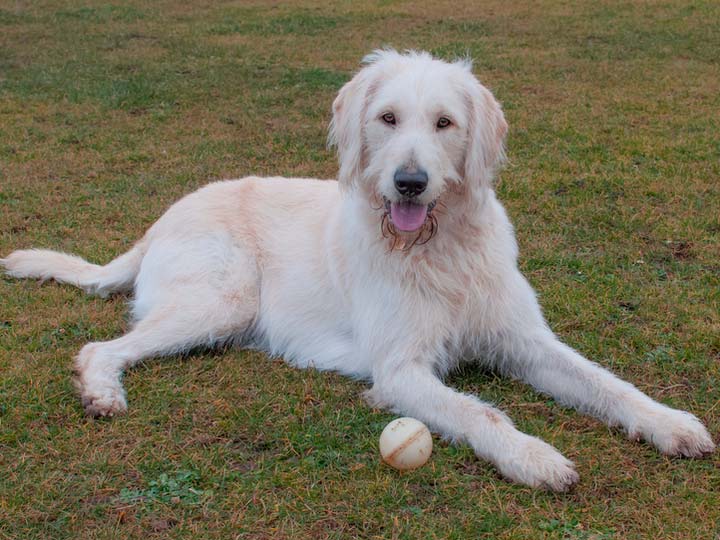
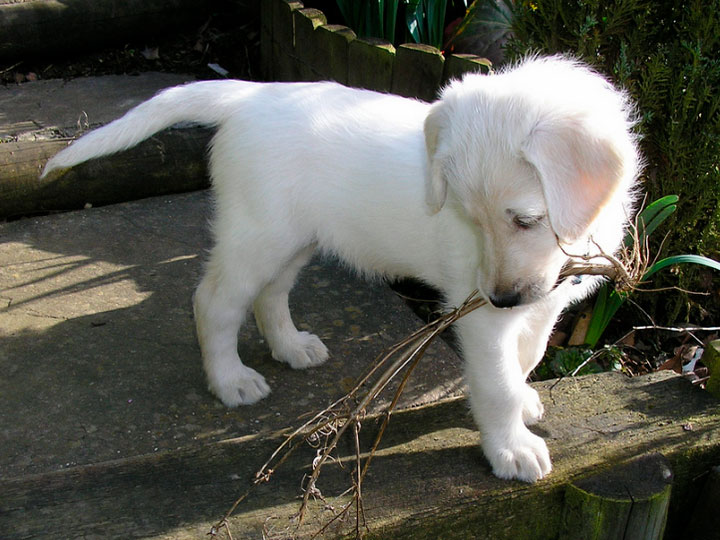
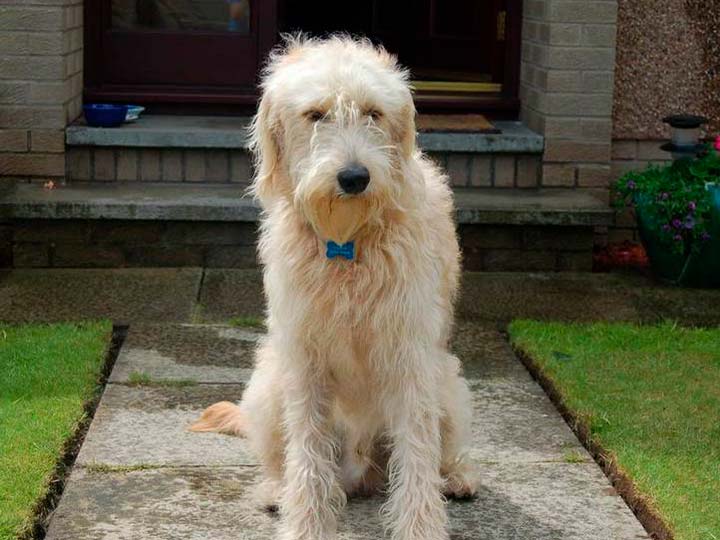
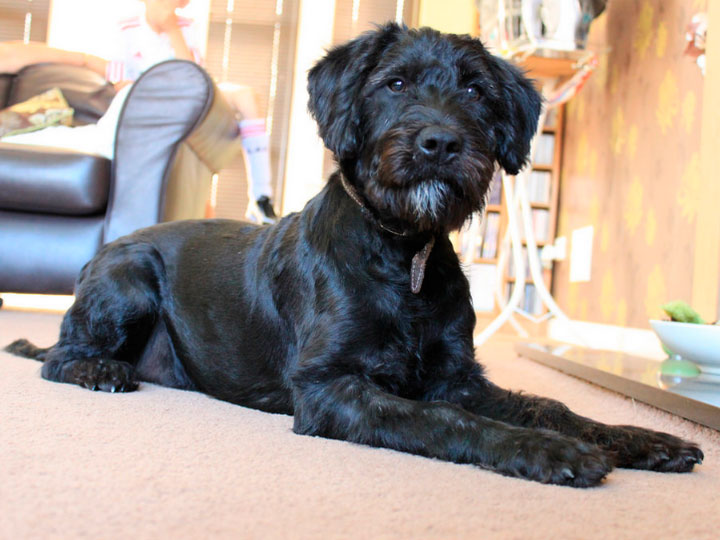
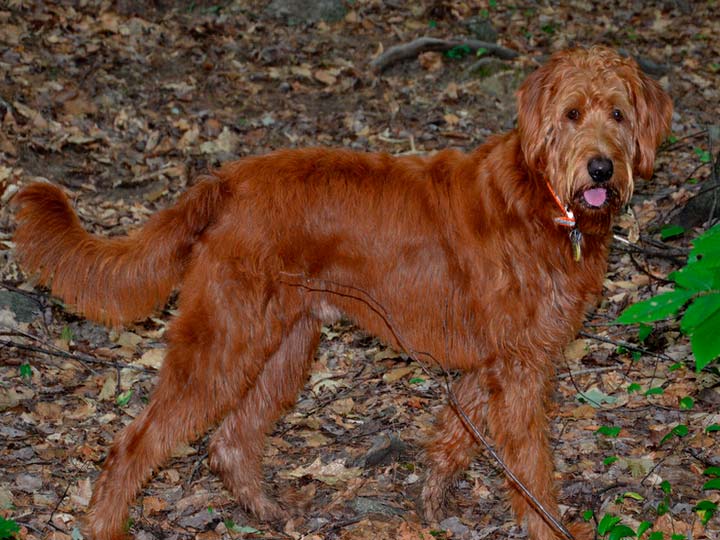
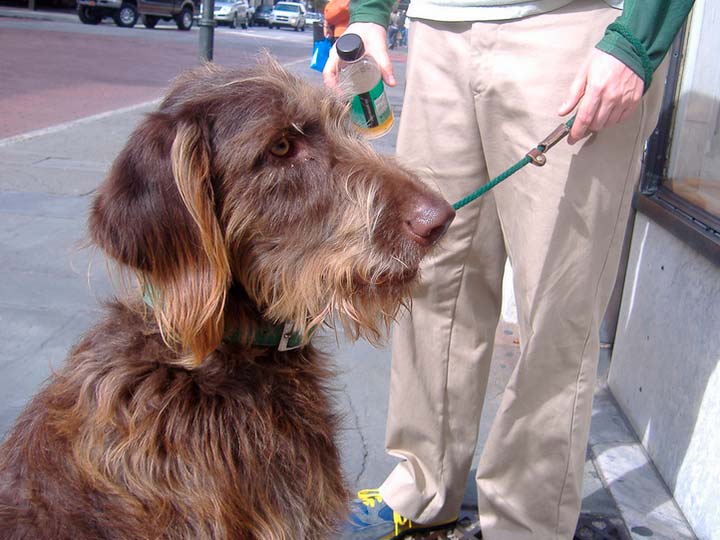
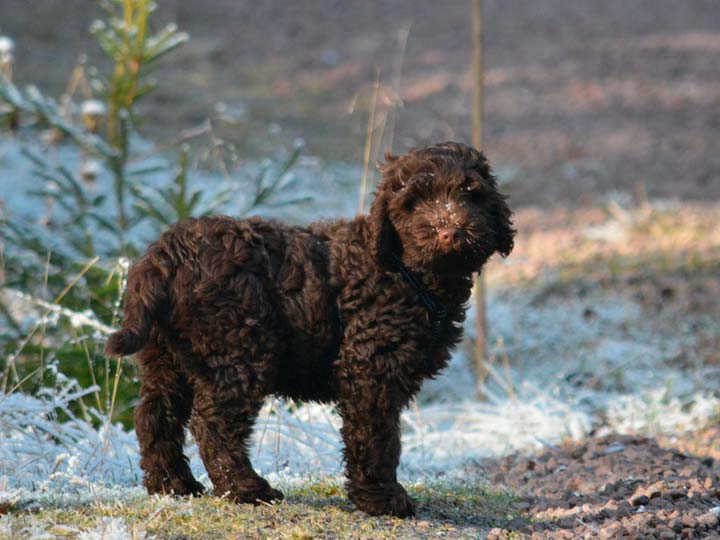
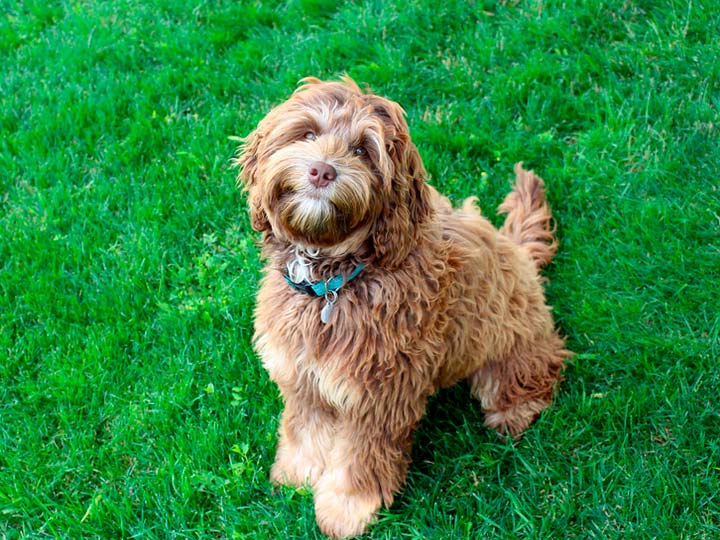
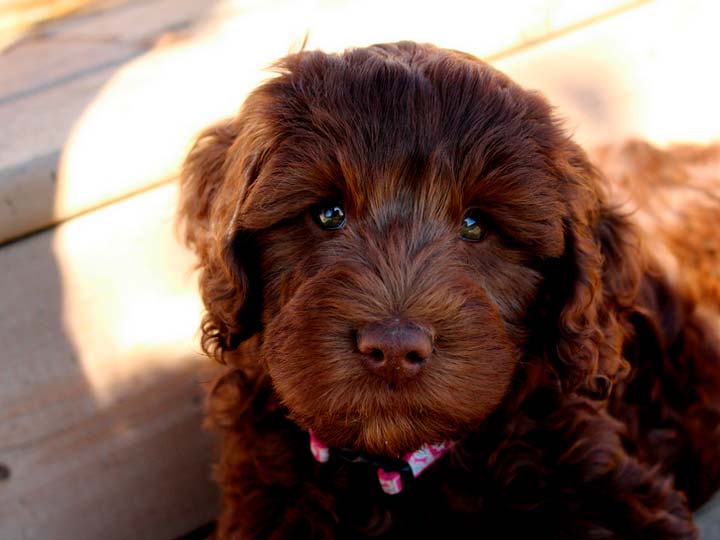
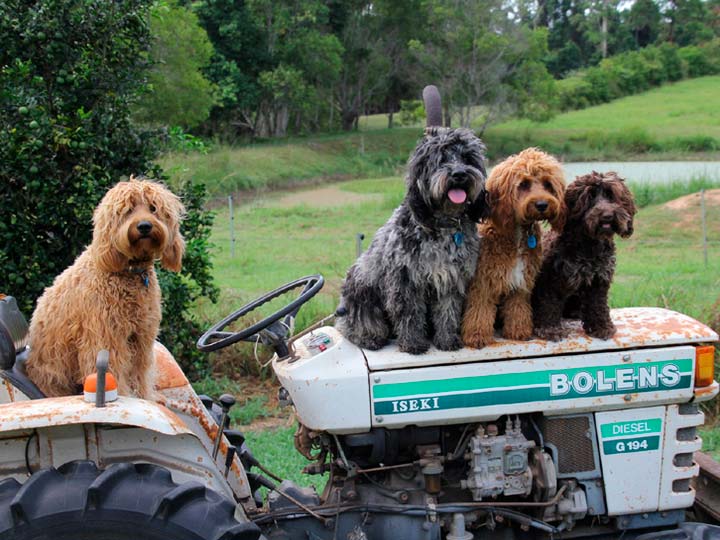
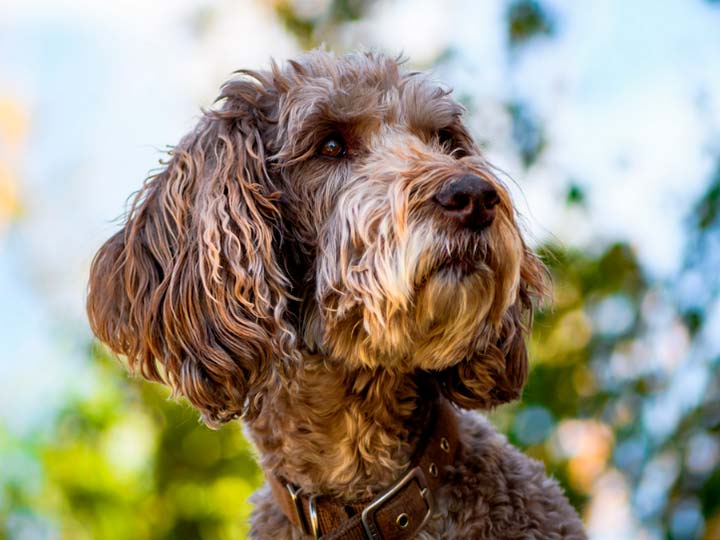
The gallery contains photos of Labradoodles, clearly demonstrating the diversity of mixed breeds. The Australian Cyberdog is already practically established and even has its own standard.
The Australian Labradoodle is a graceful, balanced, athletic dog, not too heavy, with a profuse coat that has no distinctive dog odor and sheds virtually nothing. The body is roughly square, with the length slightly exceeding the height.
Labradoodles are typically medium-sized, with a height of 40-60 cm and a weight of 20-25 kg. Cobberdogs come in three sizes:
- Miniature 35-40 cm
- Average 40-50 cm
- Standard 50-61 cm.
The head is proportionate to the size of the body. The length from the tip of the nose to the inner corner of the eye is slightly less than from the inner corner of the eye to the back of the head. The nasal bones are flat and wide. The skull is slightly rounded. The stop is well defined. The forehead and the bridge of the nose form an obtuse angle. The eyes are open, with a confident, friendly expression, round or oval in shape, and set wide apart. The color of the iris depends on the coat. A Cobberdog's eyes should never be covered by hair. The muzzle is rather wide than narrow. The lips fit tightly with even pigmentation. The bite is scissor-like. The nose is very large, fleshy, with wide-open nostrils and rich pigmentation, but not necessarily black. The ears are drooping, slightly raised at the base; the auricle is thin, open inside, without an excessive amount of hair. The outer surface is covered with long, silky hair.
The neck is elegant, slightly arched, and of moderate length. The topline rises slightly above the loin. The croup slopes moderately toward the tail. The body should be completely free of excess; nothing should attract attention. The chest is of medium width and depth, with well-sprung ribs, providing a normal chest size without creating visible fullness. The hindquarters are moderately angulated. The tail is sabre-shaped. The legs are straight and parallel to each other.
The Labradoodle's coat is its defining feature: it lacks an undercoat and therefore sheds virtually nothing. The coat is wavy, without large curls, soft to the touch, and lightweight. It hangs loosely over the body, forming a short beard and mustache on the muzzle, and always has open eyes. Several colors are acceptable: black, white, silver, gold, red, brown, chocolate, liver, blue, and lavender.
Character
The Labradoodle is a very friendly and affectionate dog with a unique intuition, a keen sense of human emotional and physical needs, a desire to please its owner, and a highly trainable nature. It thrives on close human contact, which is evident in all its behavior. All of these qualities make it a good friend for children. Even the smallest and most intrusive children will be treated well by Labradoodles, provided they are raised with children of varying ages. They get along very well with other animals, including cats and dogs. Mestizos They often have hunting instincts, which manifest themselves in the desire to pursue birds and small animals.
The Labradoodle is always cheerful and playful, confident, calm, and sociable. They adapt well to new situations and environments and have a keen sense of humor. They can be cunning at times, but they never seek to dominate or manipulate others.
The Labradoodle is completely non-aggressive and therefore cannot guard its owner or property. However, it is curious and alert, making it an excellent watchdog, always alerting its owner to the arrival of guests or other unusual occurrences. It will not bark unnecessarily.
Education and training
The fact that a Labradoodle is intelligent and quick-witted doesn't mean it doesn't need training. From the first day a puppy comes home, it needs regular and consistent training, at least for the first year of its life. Only then will it grow into an obedient, controllable dog that understands its owner's wishes.
The Australian Cobberdog has one interesting trait that not all dogs, particularly Labradoodles, have: he seeks out eye contact with people.
Labradoodles absorb knowledge very quickly when taught by humans. They respond best to positive reinforcement. When approached harshly or physically, they often become confused, withdrawn, and nervous.
Content Features
The Labradoodle is a companion and family dog that should live close to humans and only that way. Even in warm climates, keeping a Labradoodle outdoors is unacceptable. Cobberdogs were bred to be their owner's constant companions, their four-legged shadow. Left alone for long periods, these dogs wither and can develop bad habits or mental health issues.
When it comes to activity, Labradoodles will be as active as required. In large families with small children, these dogs can fully realize their athletic potential, playing with the children for long periods, being loyal companions on hikes, and sometimes even jogging companions. If a Labradoodle lives with a person with disabilities or the elderly, they will adapt to these demands and become a lapdog, lying down at their side until asked otherwise.
Labradoodle hypoallergenicity question
As mentioned above, there is a significant difference between first-generation Labradoodles and Australian Cobberdogs. Mixed breeds don't always inherit the poodle coat type, and therefore can shed and smell. Cobberdogs have a unique coat type that is odorless even when wet and lacks an undercoat. It sheds very little and is truly hypoallergenic for many allergy sufferers. It's important to note that allergies can be caused not only by hair, but also by dander or saliva. In this case, any dog, even a hairless one, will cause an allergic reaction.
If you buy a regular Labrador-Poodle crossbreed, it's not a guarantee that it will have the truly non-shedding, hypoallergenic coat type.
Care
Grooming a Labradoodle isn't difficult, but there's one important detail worth noting. While a dog without an undercoat doesn't shed, its guard hairs can and will shed periodically. Old hairs will fall out, and new ones will grow. To control this process, the dog needs to be brushed regularly. This will help remove overgrown hairs with a brush, rather than waiting for them to fall out on their own, and will also act as a pleasant and beneficial massage for the skin. Furthermore, weekly brushing will prevent mats from forming. Every few months, the hair around the eyes, under the ears, and on the legs, as well as the anus and genital area, should be lightly trimmed. Bathing should only be done when absolutely necessary. Occasional brushing and dry brushing are often sufficient to maintain a neat appearance.
To make grooming easier, some owners trim their Labradoodles' coats short.Ears are inspected weekly. Excess wax is removed with a cotton swab or a special lotion. Excess wax is removed from the corners of the eyes as needed. Nails, if they don't wear down on their own, are trimmed as they grow.
Nutrition
There are no specific feeding recommendations for Labradoodles. They require a complete, balanced diet developed according to standard guidelines. They can be fed commercially prepared foods above the premium level. In rare cases, Labradoodles may develop food allergies or intolerances to certain foods.
Health and life expectancy
Both Labradoodles and Australian Cobberdogs boast robust health. These crossbreeds thrive thanks to what's known as hybrid vigor. The mixing of dissimilar genotypes reduces the risk of hereditary diseases. As for Cobberdogs, their breeding was carried out with health in mind. Labradoodles typically live for 13-14 years. Small dogs can live up to 16-17 years, while larger dogs typically live a few years less.
People who breed Labradoodles responsibly use only purebred dogs that are healthy and free of hereditary diseases for mating.
Choosing a Puppy: Cobberdog or Labradoodle?
I'd like to reiterate that the Australian Labradoodle, now properly known as the Australian Cyberdog, is a distinct breed, close to official recognition by the Fédération Cynologique Internationale (FCI). This is the result of years of focused, selective breeding, and not simply a Labrador-Poodle crossbreed, albeit valuable breeding stock.
The world's two leading cobberdog breeders are located in Australia, called Tegan Park and Rutland Manor.
It's a good idea to decide in advance what kind of dog you're looking for: a Labrador-Poodle mix, which is relatively inexpensive and often found on the market, or a true Australian Labradoodle, also known as a Cobberdog. This dog is bred to be a companion and guide dog. Cobberdog breeders can be found in St. Petersburg and Moscow, Poland, England, and several other European countries, in the United States, and, of course, Australia. Recently, private breeders have begun to appear.
Since Cobberdogs are not registered with the FCI, breeding animals and their puppies must be registered with other associations. Most domestic breeders are members of the Australian Labradoodle Club of Europe (ALAEU) or its equivalents: the Australian Labradoodle Association of Australia (ALAA) or the American Labradoodle Association (ALA). It's best if the kennel maintains contact with the breed's founder and registers its dogs with the Australian Labradoodle Association (MBDA). Mixed breeds, however, are not registered anywhere and, therefore, cannot have any documents other than copies of their parents' pedigrees.
Most Australian Labradoodle breeders and kennels sell their puppies to be spayed/neutered to prevent the uncontrolled breeding of a new, not yet fully formed breed.
Price
The price of a Labradoodle/Cobberdog at a breeder, if we're talking about a true purebred dog with Australian roots, starts at 70,000 rubles. First-generation Labrador-Poodle crosses typically cost no more than 50,000 rubles. Abroad, a puppy can be found for 25,000-30,000 rubles, but shipping costs will add up.
Photos
The gallery contains photos of Labradoodle puppies and adult dogs. The majority of the album is devoted to mixed-breed dogs. The last four photos feature Australian Cobberdogs.
Read also:


Add a comment