
Kuvasz (Hungarian Kuvasz)
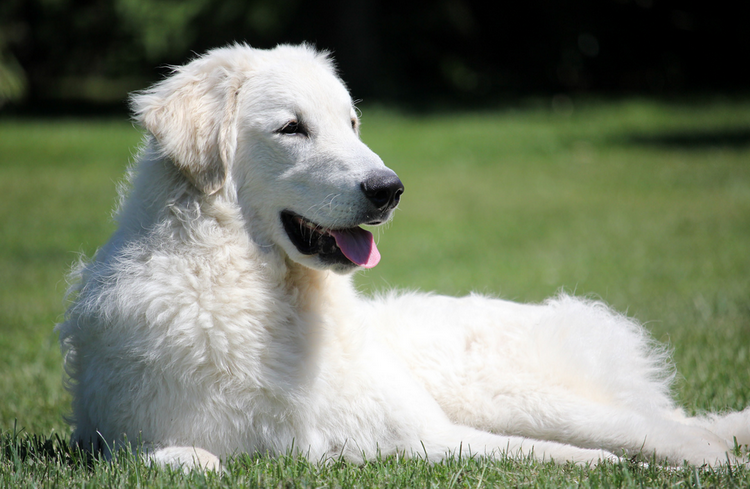
The Hungarian Kuvasz, or simply Kuvasz, is a breed developed to guard livestock, homes, and property. It is likely the oldest of the white herding dogs. It is completely undemanding in terms of living conditions and can be used as a guard or bodyguard.
Content
History of origin
Like the Komondor, another Hungarian breed, the Kuvasz most likely arrived in the Carpathian Basin during the Great Migration Period. The origins of these dogs are still debated. Some believe the Kuvasz's ancestors hailed from Tibet, while others see similarities with Turkish Akbash. In the surviving references to Hungarian dogs, notes about the Kuvasz and commanders, but the authors note that some dogs have short hair, while others have long hair. Apparently, these two breeds are closely related, which subsequently split into two independent lineages.
The breed's popularity was fueled by the fascination of the Hungarian King Matthias I with the white, short-haired dogs. Kuvasz were bred at court and used as guard dogs and hunting dogs. Their medium-length coats made them more versatile than Komondors.
The Hungarian Kuvasz was first shown as a distinct breed in 1863. The dogs attracted interest from those in need of guard dogs and shepherds. The breed suffered significant losses during World War II, after which the Kuvasz population numbered approximately 30 breeding specimens. The Hungarian Kuvasz was recognized by the International Cynological Association in 1954.
In Russia, the Hungarian Kuvasz is known only to connoisseurs and specialists. The breed was first introduced to the general public in 2007.
Video about the Hungarian Kuvasz dog breed:
Appearance
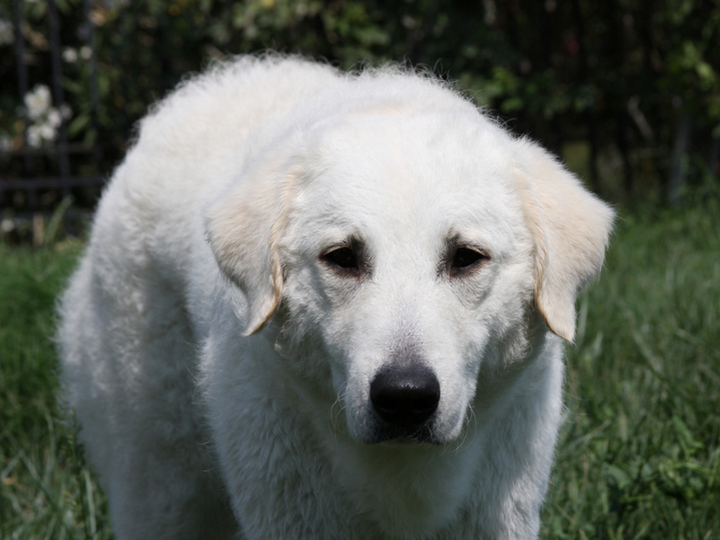
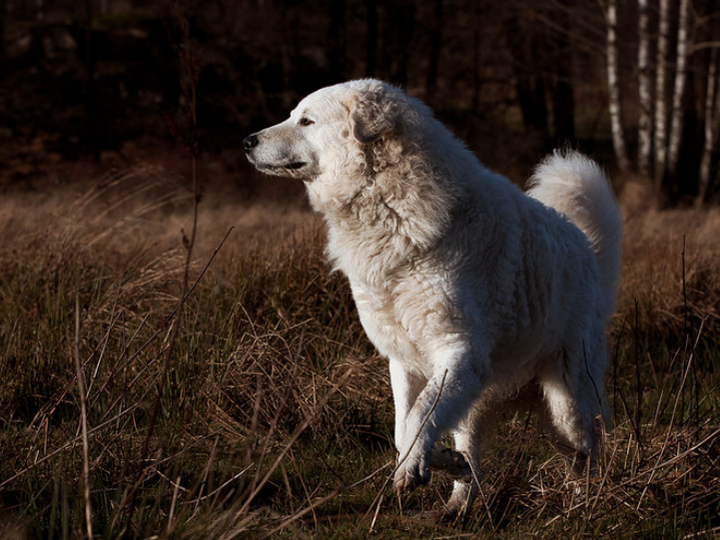
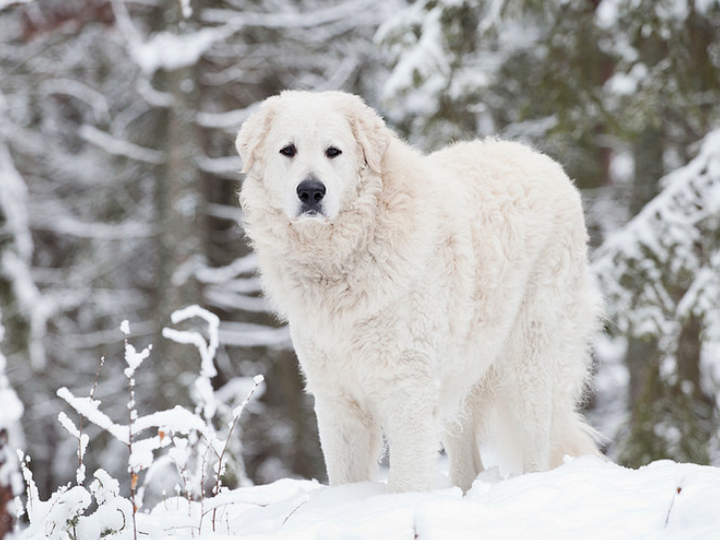
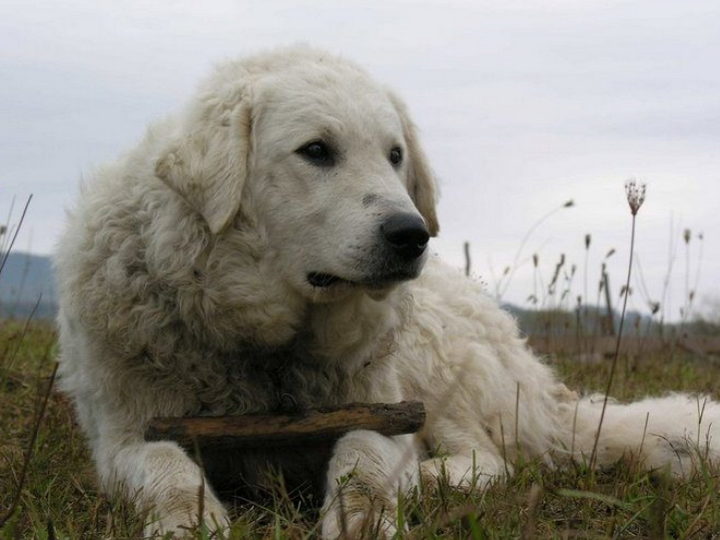
The Hungarian Kuvasz is a strong, powerful dog with a thick, slightly wavy white coat. Its appearance exudes strength and nobility, its proportionate build, and strong skeleton without any signs of coarseness. Its body type is dry and robust. Its format is close to square. The Kuvasz's outward tirelessness testifies to its endurance and ability to work.
The head is open and not knobby. It is the shape of the head that distinguishes the Kuvasz from other related breeds; it is lean and dry, coarser and denser in males. The top of the skull is wide with a pronounced longitudinal furrow and nuchal crest. The stop is weakly defined. The nasal section is long and wide. The nose leather is well-defined and black. The bridge of the nose is straight, without a hump. The lips are dry, pigmented, and fit tightly to the strong jaws. The dentition is complete. The bite is correct, with a scissor-like shape. The eyes are medium in size, almond-shaped, dark brown, somewhat narrow and oblique. The eyelids fit tightly to the eyeball and are pigmented. The ears are set low, deflected at the base, shaped like the letter "V," and never uncurled or straightened.
The neck is short and muscular, set at an angle of 25-30 degrees to the horizontal. The body is rectangular. The withers rise noticeably above the back. The back is broad and of medium length. The loin is strong and short. The croup is heavily coated, giving the impression of being overdeveloped. The chest is broad and full. The sternum is slightly protruding. The underline is slightly tucked up. The tail is set low, pointing downwards, with the tip possibly curling upwards. When excited, it rises to the level of the back. The forelegs are straight, parallel, and set moderately wide apart. The hind legs are parallel and set moderately apart. The position of the legs, as described in the standard, is of great importance. The paws are oval.
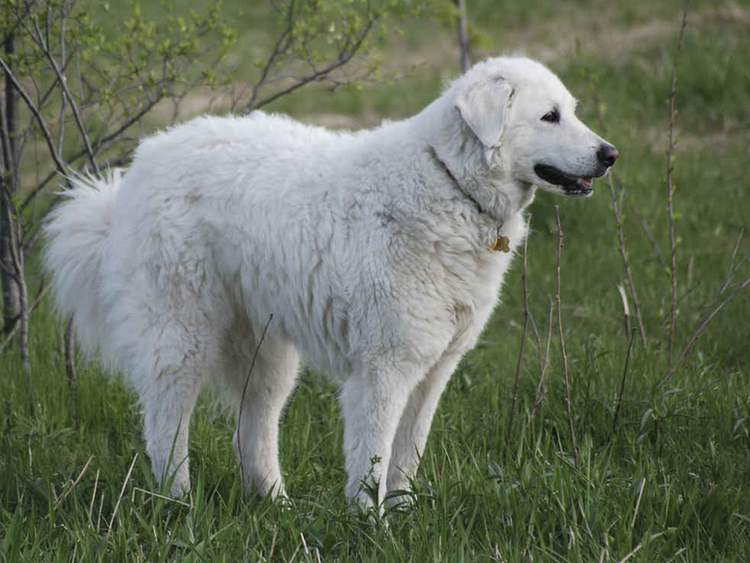
The skin is well-pigmented, gray, and dry. The coat is wavy, medium-hard, and prone to matting. The undercoat is softer than the outer coat. On the head, ears, front and inner sides of the legs, and paws, the hair is short, straight, and dense. It forms a ruff around the neck and curls on the thighs, forearms, and body. The length of the fur on the body reaches 12 cm. The tail is well furred along its entire length; the fur can reach 15 cm. The colour is exclusively white, with whitish ivory permitted. The nose leather, eyelids and lips should be well pigmented, the pads black or dark grey, pink spots are allowed on the gums and palate.
Character
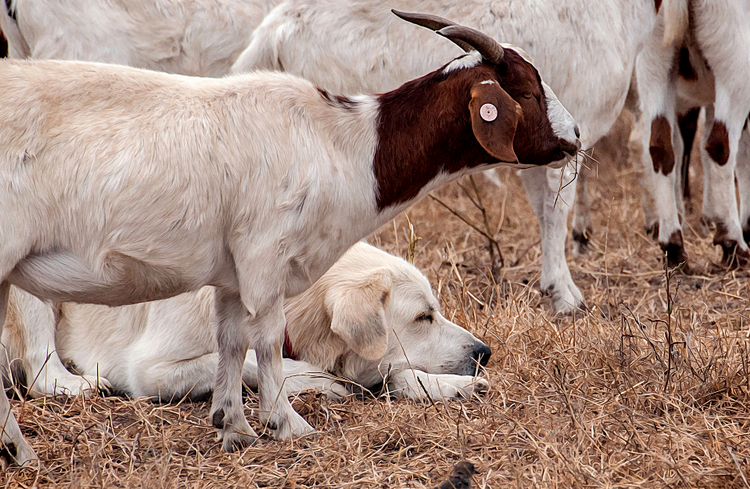
The Hungarian Kuvasz is a courageous guard dog that will give its life to protect the people, territory, and other objects entrusted to it. It possesses strength, exceptional intelligence, vigilance, and nobility. Independent in its work and proud, it will not tolerate mistreatment. Loyal and trusting of its owner, it can leisurely stroll around the territory for long periods, sometimes appearing to laze around, but at all times, the Kuvasz is aware of everything happening around it. When necessary, it quickly goes into active defense. It is generally non-confrontational and tries not to provoke quarrels with its fellow dogs. It gets along well with other pets, including poultry and livestock. The Kuvasz performs its work with honor and does not attack or bite without provocation. Relationships with children depend on the degree of socialization and the conditions in which the Kuvasz puppy is raised. If a dog has been with a child since early childhood, it will show concern and protect the child; otherwise, it may be aloof. It views older children as equals.
The Kuvasz is ideal for guarding territory and objects. In terms of working qualities, ease of maintenance, character, and trainability, it is comparable to Caucasian Shepherds, Rottweilers, Central Asian Shepherds, and similar breeds.
The Kuvasz has a very deep, staccato, and ringing bark, interspersed with growls, but it won't bark needlessly. It develops a strong bond with one person and is reserved with guests. With strangers, it is usually wary or aggressive. In unfamiliar territory, it remains alert but reserved. It can be aggressive toward dogs of the same sex.
Education and training
The Kuvasz does not require protection training; its guarding instinct is genetically ingrained and manifests itself already in puppyhood. However, it is important to introduce a young Kuvasz to its surroundings and family from a young age. Socialization should be a major focus. Kuvaszs living on farms independently become acquainted with other animals and people, birds, sounds, and smells. Dogs kept in confined spaces lack this opportunity; their introduction to the outside world depends entirely on their owner. Comprehensive socialization helps raise a balanced, self-assured dog that clearly sets boundaries, understands its responsibilities, and fearlessly fulfills them. The Kuvasz is a breed with average trainability and responds well to regular, short training sessions.
Stories about Kuvasz aggression and inappropriate behavior are quite unfair to these noble dogs. Naturally, individuals who haven't been properly trained may behave inappropriately, but this is entirely the responsibility of the owner.
Like most other guard breeds, the Kuvasz doesn't have a strong retrieving instinct and prefers to avoid monotonous work and public performances. The best way for it to expend energy is to do its job. For this reason, it's not recommended to train Kuvaszs to perform circus-style or useless tricks. At the same time, a puppy that has received careful upbringing and training will grow into an obedient, manageable dog that will unquestioningly follow its owner's orders.
Content Features
The Hungarian Kuvasz is suitable for outdoor living. While it can be confined to a pen for short periods, it should be free-roaming outside for most of the day. It should be able to constantly patrol the property and monitor the boundaries. A dog raised with love and affection should not be tethered; it will not leave the protected area or betray its family. In rare cases, males may leave their property in search of love, especially if a female in heat lives nearby, but they quickly return. Kuvaszs can live indoors, but are absolutely not suitable for apartments.
Care
Kuvasz grooming varies greatly depending on whether the dog is a show dog, a pet, a bodyguard, or an outdoor watchdog. First and foremost, it's the regularity of grooming. Kuvaszs shed heavily, especially during the shedding season, so indoor dogs require daily brushing. Furthermore, their coat is prone to matting and tangling, making grooming and cleaning procedures significantly more challenging. Owners of show dogs must work hard to prevent tangling and matting.
Kuvaszs are bathed as needed, usually after the seasonal shedding period, if they are heavily soiled, or before shows. Their ears are inspected and cleaned periodically. Outdoor dogs are brushed and bathed much less frequently, and in cold weather, bathing is not recommended at all.
Nutrition
The Hungarian Kuvasz can be fed both natural and commercial food. It is a moderately active breed, and its diet is developed according to standard guidelines developed by cynologists for medium-sized working breeds. Commercial dry food is selected based on the dog's size, age, and physiological condition. Breeders and owners agree that a natural diet is more suitable for the Kuvasz.
Health and life expectancy
The Hungarian Kuvasz is a strong, hardy dog that, when properly trained, well-groomed, and fed a balanced diet, exhibits high adaptability to various climates and is relatively unhealthy. The breed is susceptible to a number of hereditary diseases:
- Hip dysplasia;
- Deafness;
- Cataract and glaucoma;
- Thyroid dysfunction;
- Joint diseases (mainly in adulthood).
The Kuvasz typically lives for 10-12 years. It requires routine veterinary care and preventative treatments. It's recommended to have the dog examined annually, especially in adulthood.
Choosing a puppy
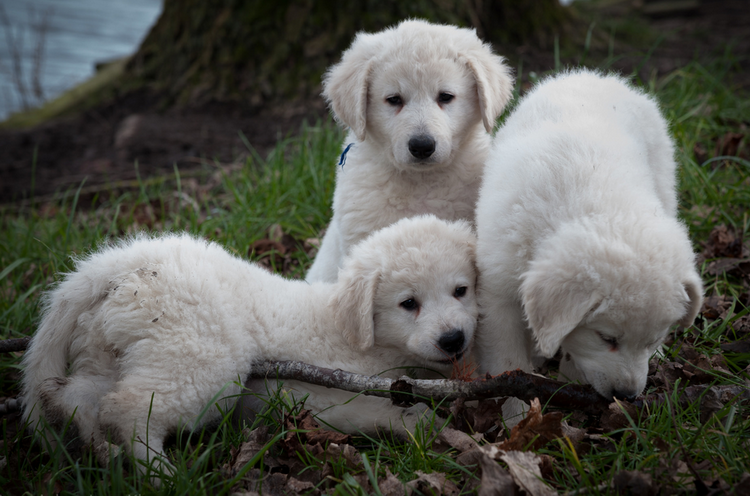
If you're looking for a truly working dog, it's best to buy a puppy directly in Hungary. A good-quality dog can also be found in major cities in the CIS, but this will be very expensive. The Kuvasz is a non-commercial breed, and litters are rare, so puppies often have to wait and be reserved in advance. In Hungary, you can sometimes find ads for Kuvasz puppies without papers, but given the serious nature of the breed and the need for a well-balanced dog, such offers are not worth considering.
Regarding gender differences, males can be more stubborn and independent, some attempting to dominate and requiring a firm hand, while females are more docile and family-oriented. Both types perform equally well. When choosing a puppy from a litter, pay attention to its conformity to the standard, its habits, and its temperament. The puppy should not show aggression or shyness toward people. It's good if puppies have the opportunity to roam freely in a spacious area. By 2.5 to 3 months, when they are ready to be picked up, they should have received age-appropriate vaccinations, a tattoo, and a birth certificate (a puppy's document proving its origin). In Europe, microchipping is also mandatory.
Price
The price of a Hungarian Kuvasz puppy varies widely. In Russia and the CIS, Kuvasz are rare, allowing breeders to maintain high prices: 35,000-50,000 rubles. In Hungary and neighboring countries, where the breed is more common, a puppy from working parents can be purchased for 20,000-25,000 rubles. Promising Kuvasz puppies for show and breeding will cost two to three times more. It's not uncommon to see ads for puppies without a pedigree, at a nominal price.
Photos
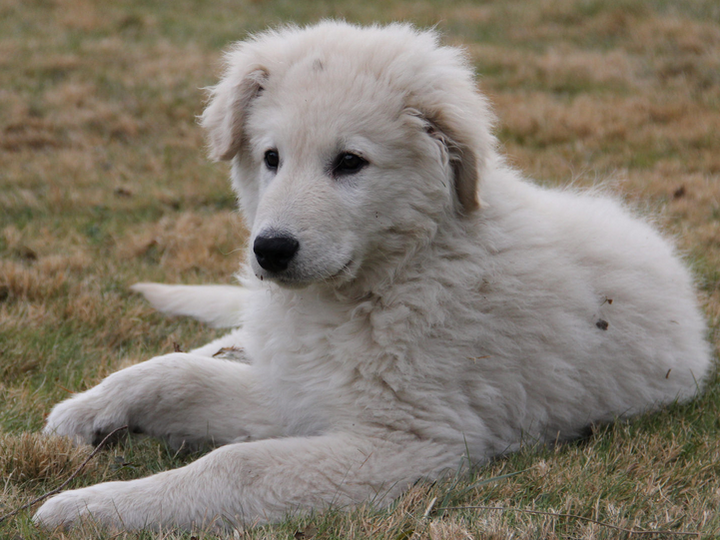
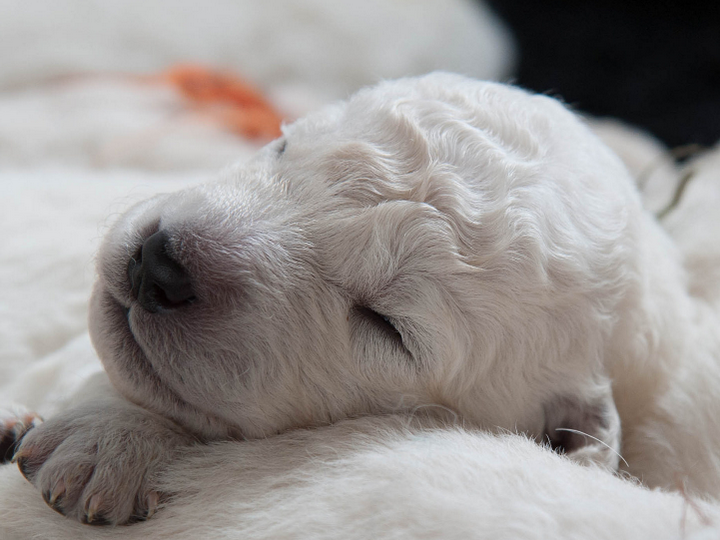
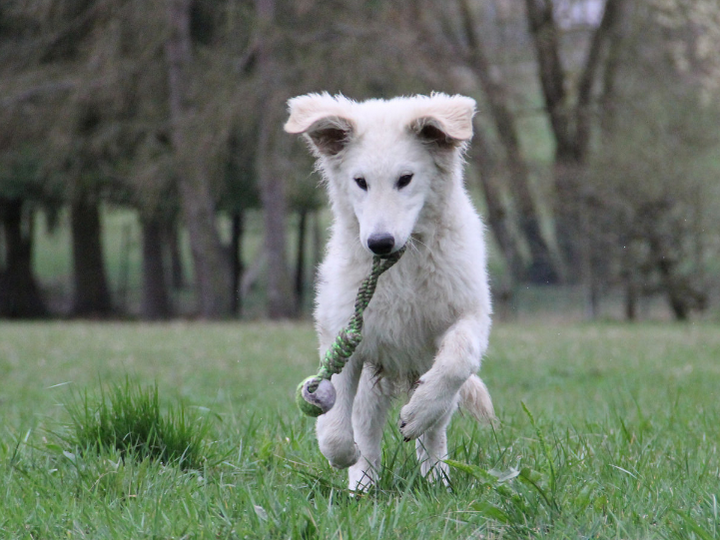
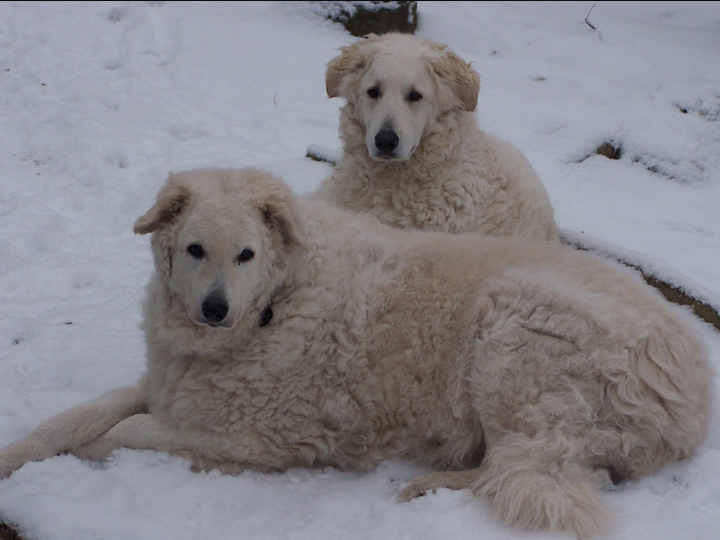
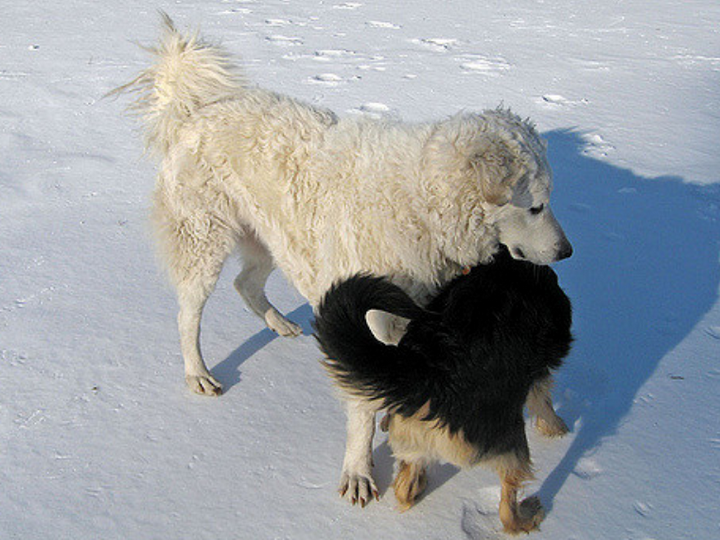
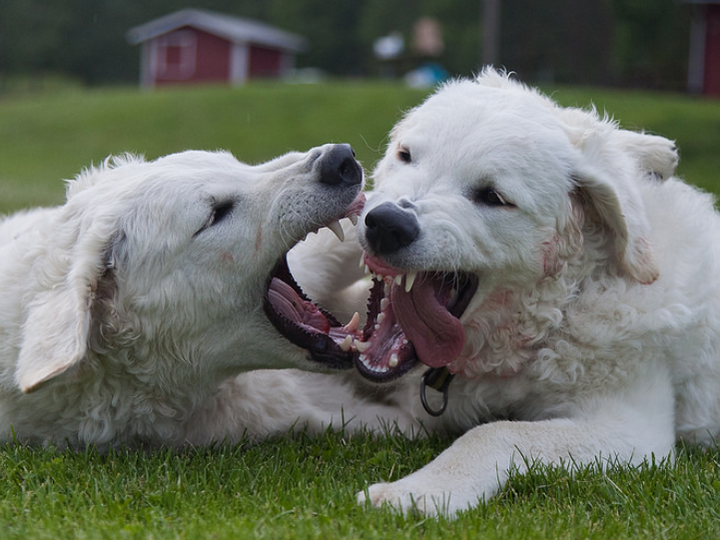
The gallery contains photos of puppies and adult dogs of the Hungarian Kuvasz breed.
Read also:
- The World's Angriest Dogs: Top 10
- Hungarian Vizsla (Hungarian Shorthaired Pointing Dog)
- Mudi (Hungarian Shepherd)


Add a comment