
Kurzhaar (German Shorthaired Pointer) is a dog breed
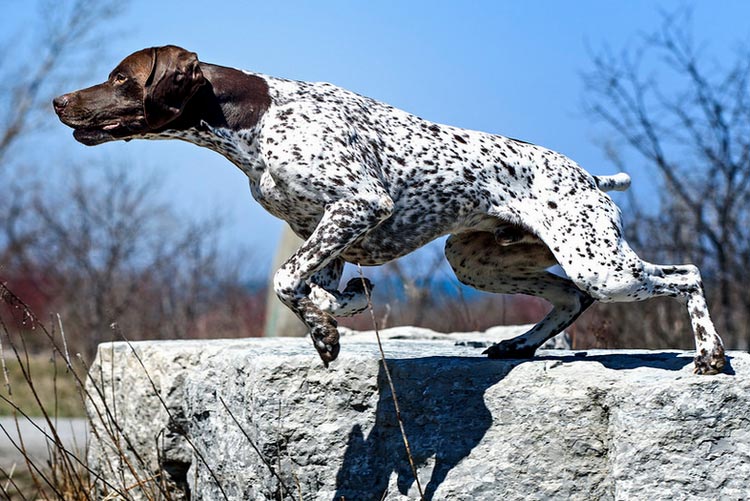
The Kurzhaar is a German breed of hunting dog from the continental pointer family, very popular and well-known not only among hunters but also among the general public. Kurzhaars have a striking appearance and exceptional intelligence; they are passionate and tireless in their work, and calm and good-natured at home.
Content
History of origin
The Kurzhaar owes its origins to German breeders who, with their characteristic meticulousness, spent centuries developing a versatile hunting dog. The breed's name comes from two German words: kurz, meaning "short," and haar, meaning "hair."
The breed's history begins in Mediterranean countries, where dogs of this type were used for tracking and catching birds, as well as for falconry. Pointers arrived in Germany from Spain, Flanders, and France, and their distinguishing characteristic was their ability to point game. This trait became even more sought after with the advent of guns in the late 18th century. In Germany, Mediterranean pointers were crossed with local breeds that specialized in attacking and retrieving game. However, a more versatile hunting dog was in greater demand, one that could not only point but also retrieve and retrieve birds or other game. By the late 19th century, Kurzhaars were already excelling in this task. However, their appearance was far removed from that of today's phenotype. These dogs were heavier, had a thick throat dewlap, a swaying back, and soft paws. They worked more slowly and calmly. German pointers were actively crossed with pointers to lighten the appearance.
In 1872, breeding work with the Kurzhaar was nearly complete, and a stud book was opened. Seven years later, the first standard was compiled, and the final version of the Kurzhaar breed description was approved in 1912. In a relatively short period of time, the Kurzhaar acquired its modern appearance, and breeders to this day follow the motto: "versatile, noble, reliable, and easy to breed."
Video review of the German Shorthaired Pointer dog breed:
https://youtu.be/hjYWfcrJ7vI
Appearance and standards
The Kurzhaar's appearance gives the impression of a noble, swift, hardy, and powerful dog, which it truly is. Its build is harmonious, with correct posture and smooth lines. The dogs are medium in size. Sexual dimorphism is pronounced, with males being more powerful and robust than females. The average height is 60-65 cm. The standard defines the Kurzhaar as a versatile hunting breed.
Head and muzzle
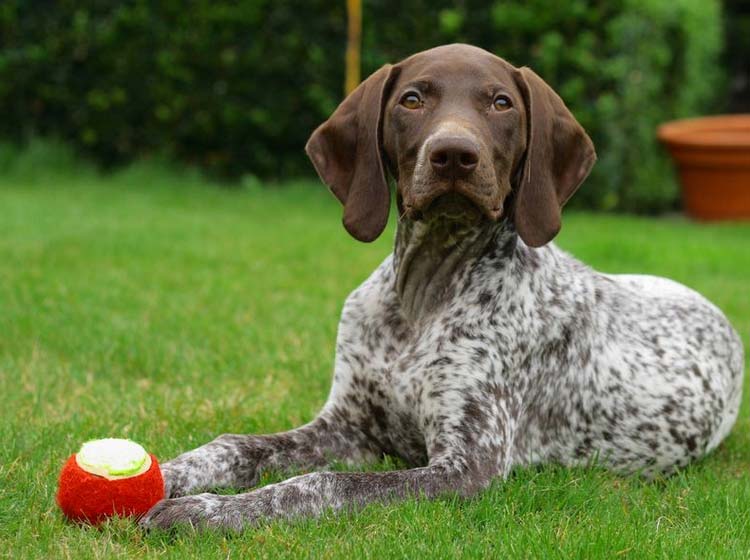
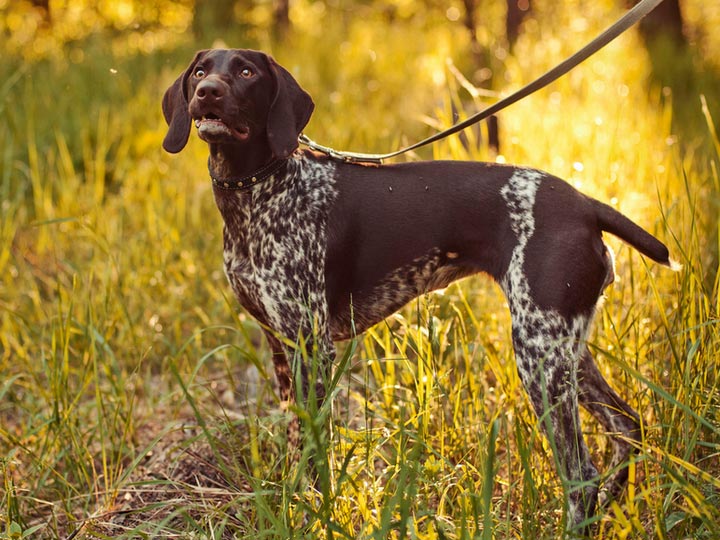
The head is clean, with clear outlines, appropriate for the dog's size and gender. The skull is slightly rounded and moderately wide. The muzzle is long and broad. In profile, a slight hump on the nose is noticeable, more pronounced in males. The eyes are medium in size and dark brown. The ears are set high and wide, medium in length, flat, and drooping. The nose leather protrudes slightly, the nostrils are mobile and wide, and the color is usually brown, but can be black in black dogs. The lips are tightly fitting, well pigmented, and almost vertical at the front, then gently curve. The jaws are strong, with a perfect scissor bite.
Frame
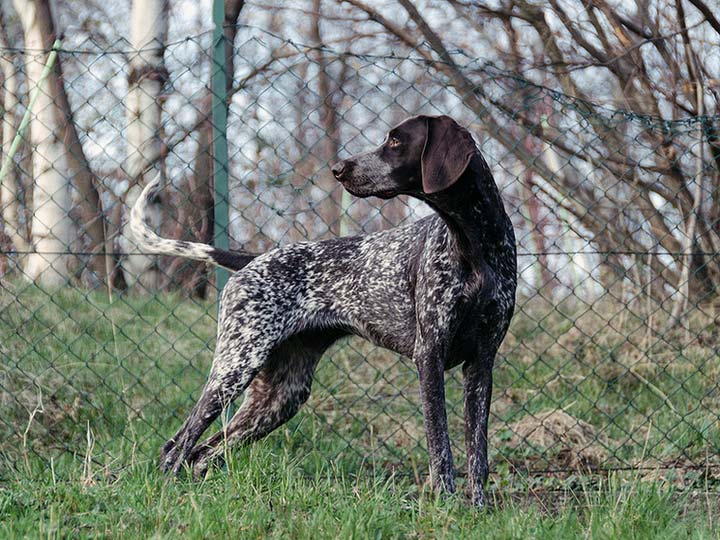
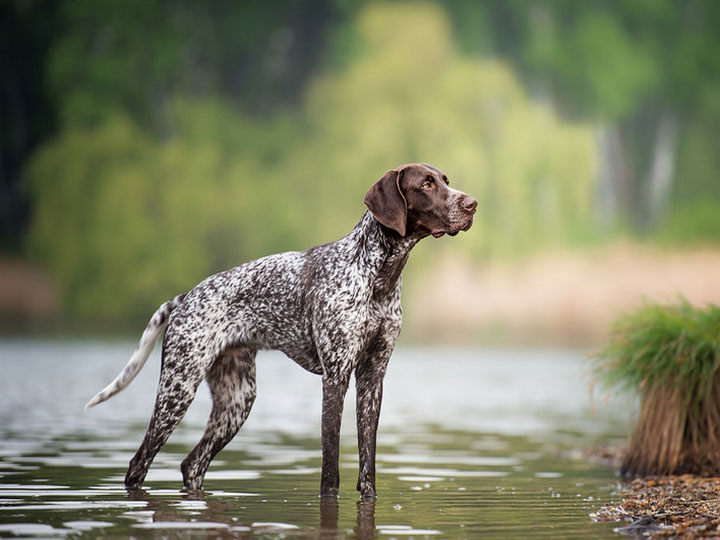
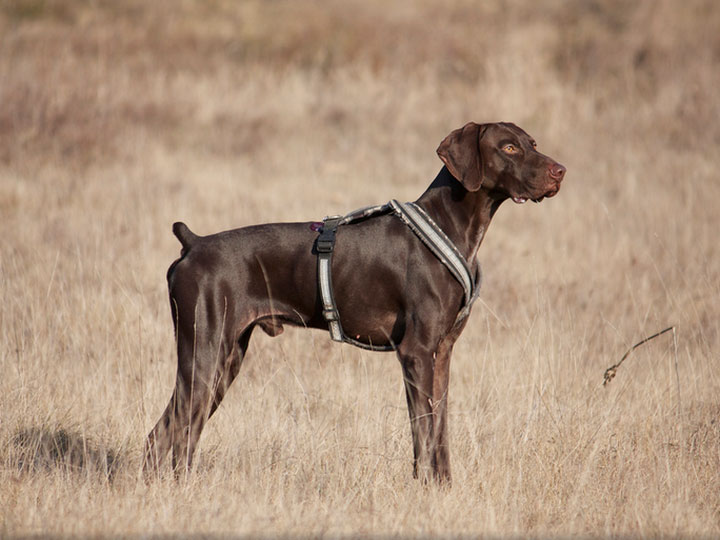
The height at the withers slightly exceeds the length. The withers are well defined. The topline is straight and slightly sloping. The back is strong, with a straight or slightly arched loin. The tail is set high, strong, and of medium length. When at rest, it hangs down; when moving, it is carried horizontally, but not higher than the back. The tail is docked approximately halfway, but can also be left natural; straight or sabre-shaped, it should reach the hock. The appearance of a Kurzhaar with and without a tail can be seen in the photo below. The chest is more developed in depth. The legs are parallel, positioned under the body. The paws are arched, the toes are tightly closed, with strong nails and coarse pads.
Coat and colors
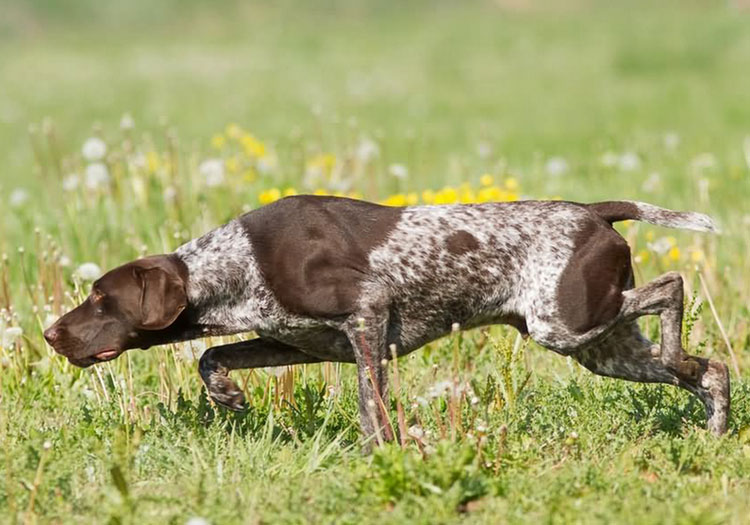
The coat is dense, short, and harsh and coarse to the touch. It is slightly finer and shorter on the head and ears, and slightly longer on the tail. Several colors are permitted.
- Solid brown;
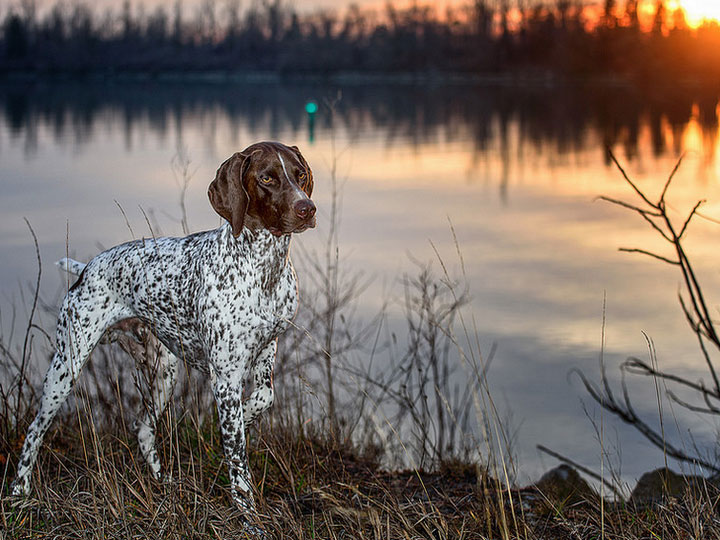
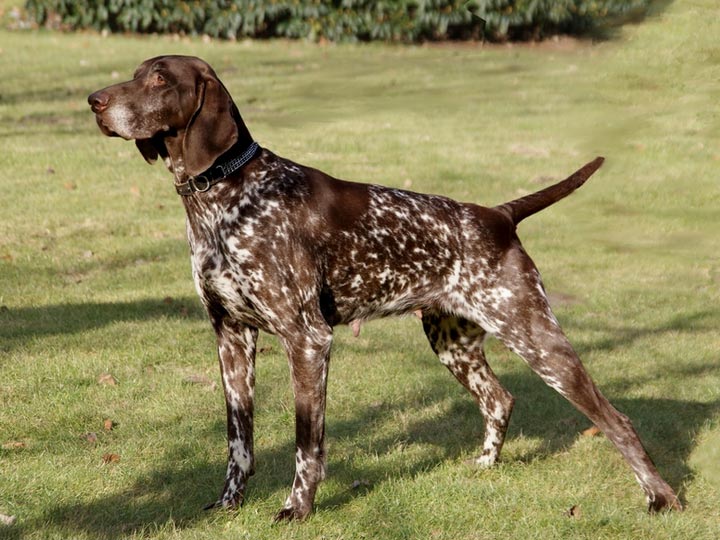
- Brown with speckled or white markings;
- Dark brown speckled;
- Light brown speckled with white or brown markings;
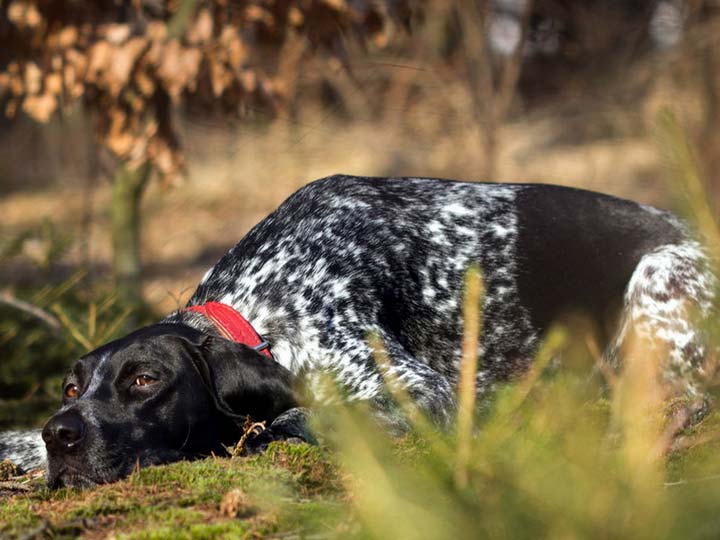
- Black color with brown spots or speckles.
Character
In domestic situations, Kurzhaars are very docile, obedient, calm, and sociable. They are non-aggressive, peaceful, and friendly. They are somewhat reserved in their displays of affection and are wary of strangers. Kurzhaars do not bite, but they love to bark, making them excellent watchdogs.
The Kurzhaar is a one-owner dog.
The Kurzhaar may seem calm, even somewhat phlegmatic. Unlike spaniel And setterHe's not playful, doesn't particularly enjoy playing with children, and doesn't overwhelm his owners with his attention and excessive affection. But as soon as the conversation turns to walks, and especially hunting, the dog transforms and becomes a tireless, eager assistant who, no matter how tired, won't sit down until the job is done. In everyday life, the Kurzhaar is unlikely to impress with the same intelligence as on the hunt.
Education, training and coaching
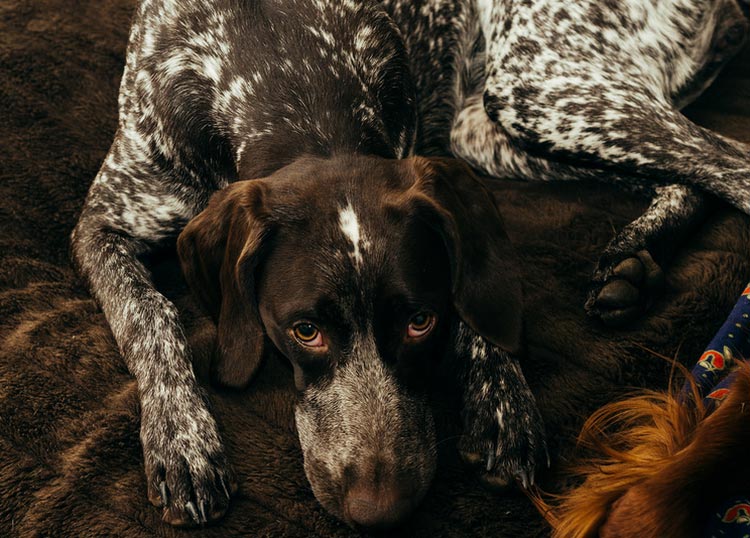
A Kurzhaar puppy should begin training as early as possible, patiently waiting for the dog to comply. Commands should be short and consistent. Avoid deceiving the dog, and positive results are always reinforced with treats and praise. Work with a pointer should be done daily, and lessons should not be too long. Commands are first practiced at home, then outside, and only then can an obedience test be conducted, letting the dog off the leash. During the growing period, special attention is paid to socialization, introducing the puppy to different animals and people, sounds, and smells.
Some Kurzhaars are prone to dominance, so it is important for owners to establish their leadership and maintain this position.
There is no greater disappointment than to see your work being senseless and unmanaged. dogs on huntingOf course, much depends on genetics, but even more so on the owner's investment in their pet. No effort or time should be spared in training a Kurzhaar. In pointers, most working qualities are ingrained and passed on by inheritance. The goal of training a Kurzhaar is to fully develop the dog's natural talents and desirable characteristics.
Hunting with a Kurzhaar
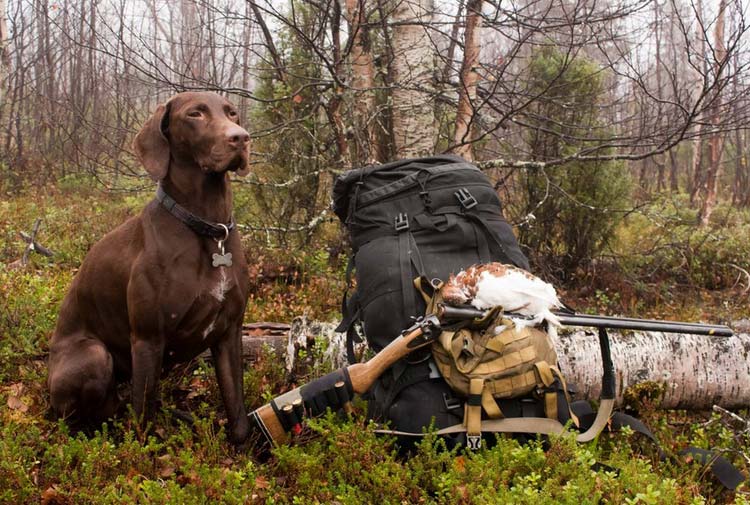
The Kurzhaar is a prominent representative of the continental pointing group. Its primary targets are field and marsh game. Hunters consider hunting woodcock, a particularly interesting and exciting activity.
The Kurzhaar is a multi-functional hunting dog that can point, track, locate and retrieve a variety of game, from pheasant to deer.
In Europe, hunting with Kurzhaars is common. Russian hunters, however, are more conservative. Nevertheless, it's perfectly possible to use a Kurzhaar, for example, on hares. They won't chase them, but they can follow scents and are quite good at sniffing out wounded game.
Content
Kurzhaars are not suited to living outdoors year-round and require constant human interaction. A private home is the ideal environment for this dog. Apartment living is possible, but the owner will need to devote a significant amount of time to walking them.
Physical activity
The Kurzhaar requires regular, moderate exercise. It should also be allowed to roam freely from time to time. Puppies and unruly dogs often run away from their owners. It's best if the dog just runs around and returns, but in its excitement, it can accidentally run into the road, which can end badly.
A Kurzhaar that lacks exercise may be shy, aggressive, or have other behavioral problems.
Grooming a Kurzhaar
As envisioned by German breeders, the short-haired pointer requires minimal grooming. If the dog lives indoors, weekly brushing will minimize hair loss and promote natural coat renewal. During heavy seasonal shedding, daily brushing is recommended. Kurzhaars do not require frequent bathing. If necessary, simply wiping the coat with a damp cloth is sufficient.
Floppy ears should be regularly examined and cleaned as needed to remove wax and debris. This is an important part of preventing ear infections. As for oral hygiene, you can train your puppy to brush his teeth or just give him special treats and toys.
Diet
Feeding a German Pointer has its own unique requirements. This energetic and active dog requires a more calorie-dense and nutritious diet, especially during work or cold weather. They can be fed natural foods or commercially prepared foods. Performance and health largely depend on the quality of their diet and routine. German Pointer puppies up to six months should eat five times a day. From six to 12 months, three times a day. Adult dogs are fed twice a day at the same time. Kurzhaars are prone to gaining excess weight., so you shouldn't overfeed them.
If your dog eats natural food, be sure to supplement its diet with vitamin and mineral supplements. When it comes to dry food, it's best to choose premium and super-premium brands that offer diets for active dogs or athletic dogs.
Health and life expectancy
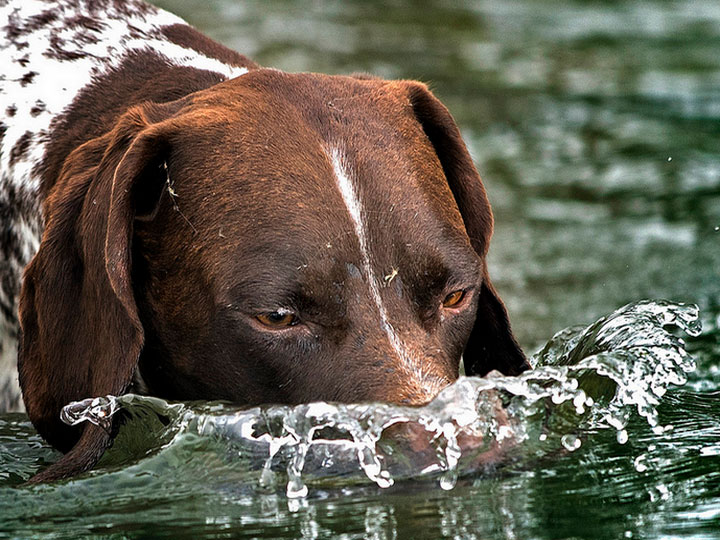
Kurzhaars are strong and resilient dogs that easily adapt to various climates, hunt effortlessly in windy weather, and dive into the water for birds before the first frost. To maintain their well-being and health, they need the same preventative measures as other dogs, including annual vaccinations against infectious diseases, regular treatment for internal and external parasites, and, of course, a balanced diet.
The breed is predisposed to a number of genetic diseases:
- Raw eczema;
- Hypothyroidism;
- Otitis;
- Granuloma;
- Epilepsy;
- Von Willebrand disease;
- Melanoma;
- Entropion;
- Cataract;
- Bloating and intestinal bloating;
- Hip dysplasia.
The average lifespan is 12-13 years. Even in adulthood, these dogs remain active and hardworking.
Choosing a puppy and the price of a Kurzhaar dog
The key to choosing hunting dogs is not their color, but rather the working characteristics of the parents, their temperament, behavior at home and on the hunt, and their performance. The likelihood that puppies will inherit the necessary qualities from a good pairing is significantly higher.
Typically, Kurzhaar breeders are also hunters, so they can offer a puppy that meets specific requirements, provide support in raising and training, and advise on nutrition and maintenance.
The average price for a Kurzhaar puppy is 25,000-30,000 rubles. Mature puppies that have already proven themselves can cost more, as can puppies from elite breeders or imported dogs. There are many offers on the market for puppies without pedigrees, often including mixed-breeds. Buying a dog from unverified sellers based on photos should be avoided altogether, or at least exercise extreme caution.
Photos
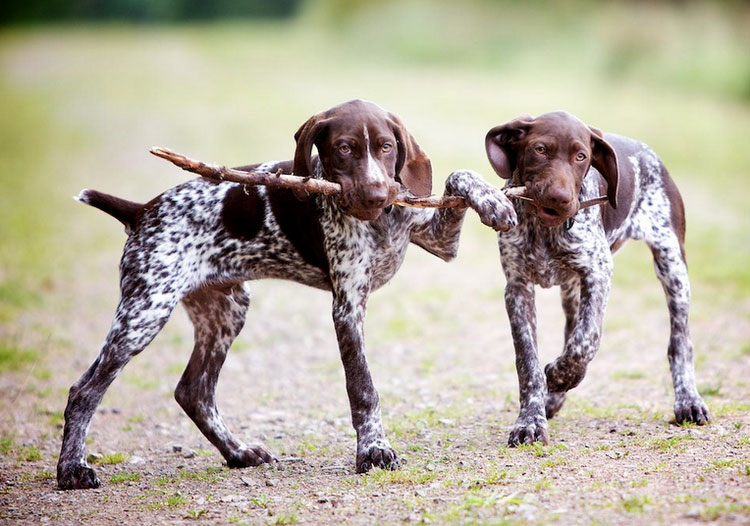
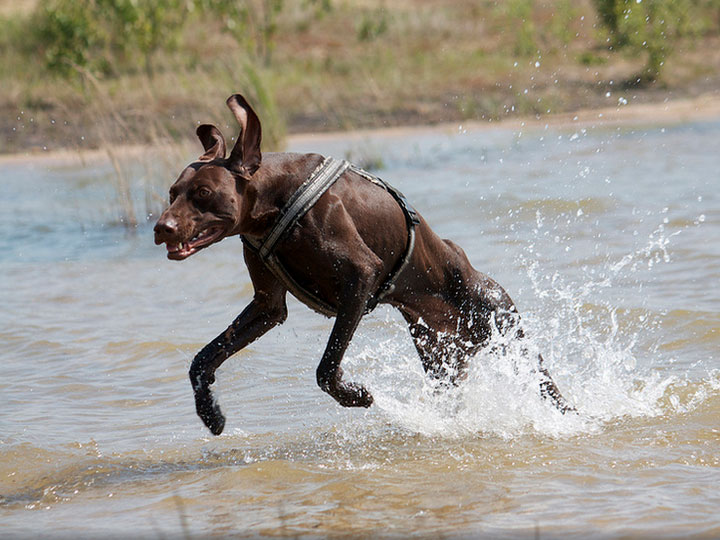
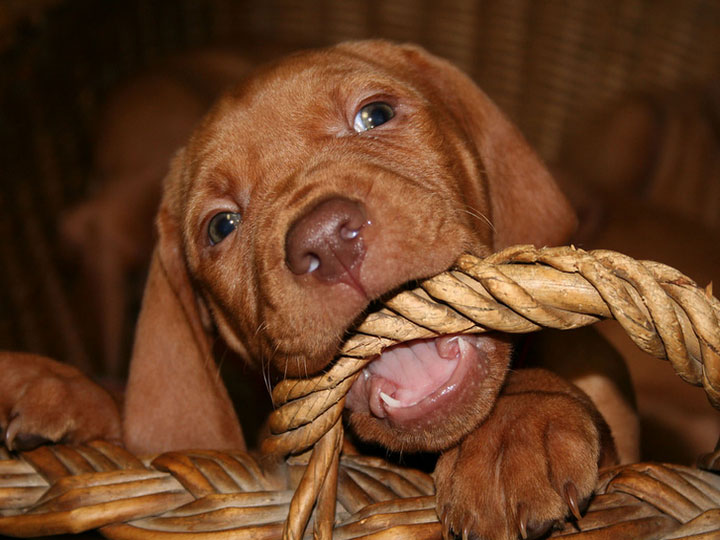
Photos of Kurzhaar puppies and adult dogs are collected in the gallery:
Read also:


Add a comment