
Coursing for dogs: what it is and its features
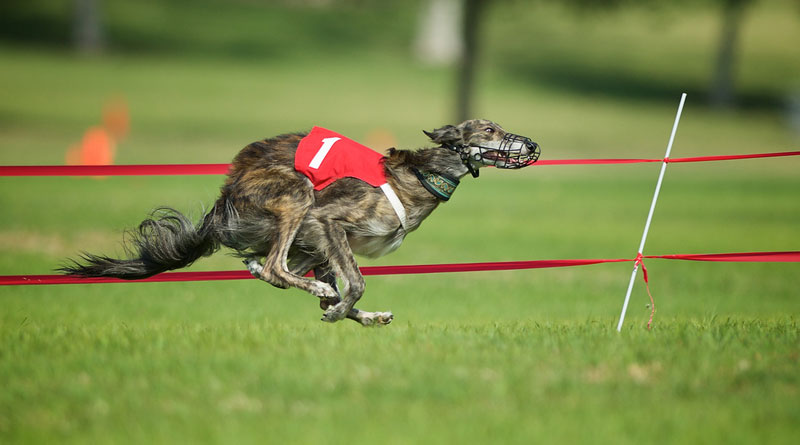
Coursing is a sport for dogs whose conditions closely resemble real hunting. These competitions are held primarily for hunting breeds to maintain and develop their working abilities. Chasing a mechanical lure helps compensate for lack of exercise, reduces the risk of musculoskeletal disorders, and prevents excess weight gain. Intense physical activity allows dogs to release pent-up energy, which has a positive effect on their emotional state and behavior.
Content
Historical background
In its modern form, coursing is a system of training and competition using specialized equipment, the average cost of which is approximately 40,000 rubles. Such trials have effectively replaced traditional hunting, which was once particularly popular in the UK. In the past, aristocrats would pit their greyhounds against foxes and hares, warming them up for more serious hunts of larger game such as deer or wild boar.
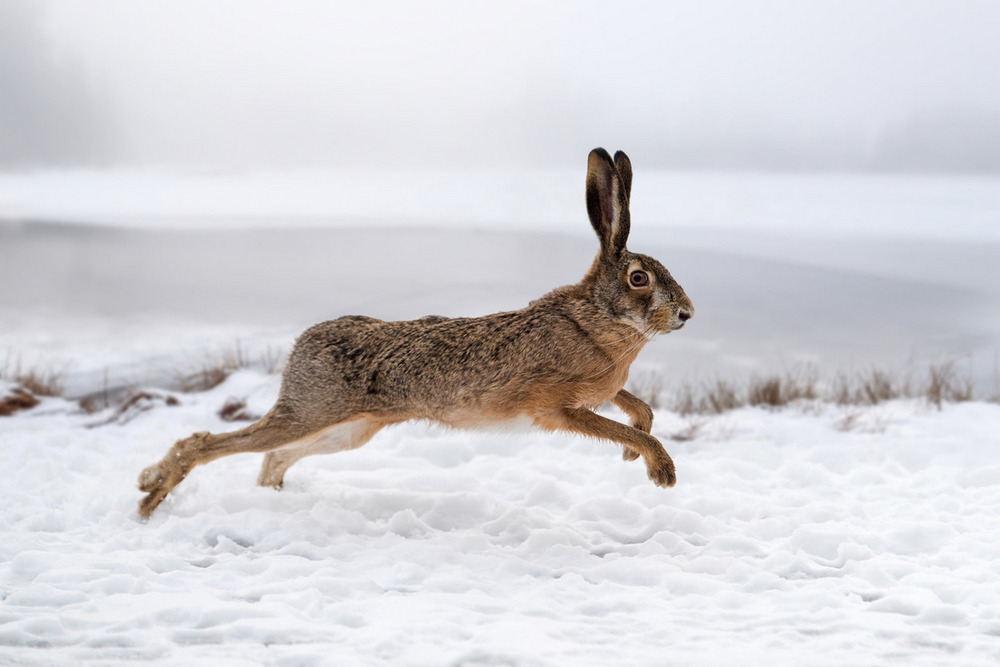
During hunts, nobles often placed bets on the working abilities of dogs. These wagers gave rise to a national sport. As early as the 16th century, the Duke of Norfolk developed rules for hare-chasing competitions. This was reportedly done at the request of Elizabeth Tudor, Queen of Great Britain.
The aristocracy's widespread passion for hunting led to a sharp decline in wild animal populations, leading to restrictions on hunting in many countries. Today, instead of a live hare, an imitation is used—a piece of natural skin or a bait made of fabric or plastic.
The equipment for training and competitions consists of two main parts:
- an electric motor equipped with a coil;
- baits, about 40 cm in size.
The motor and the lure are connected by a cable that is stretched across the field. To ensure the racing action is as natural as possible, special rotating rollers are used to change the direction of the "mechanical hare." The operator adjusts the speed of the lure during the lure coursing. Thanks to the invention of the machine, the oldest sport for hunting breeds has become safe for wild animals.
The rollers should not attract the attention of runners by being brightly colored or glinting in the sun. Therefore, the roller system is coated with a non-glare, neutral-toned paint.
Benefits of competitions
Regular training has a positive effect on pets:
- maintain good physical fitness and provide the necessary mental stimulation;
- direct the release of energy into a safe channel - reducing the risk of damage to furniture and aggressive behavior;
- help bring the owner and dog closer together;
- relieve the owner from having to run long distances with the pet during walks.
Coursing for dogs is a spectacular sport that satisfies the thrill of the hunt. Off the field, a well-trained dog will not disobey and will not react to moving objects, such as stray cats or plastic bags.
What breeds participate in competitions?
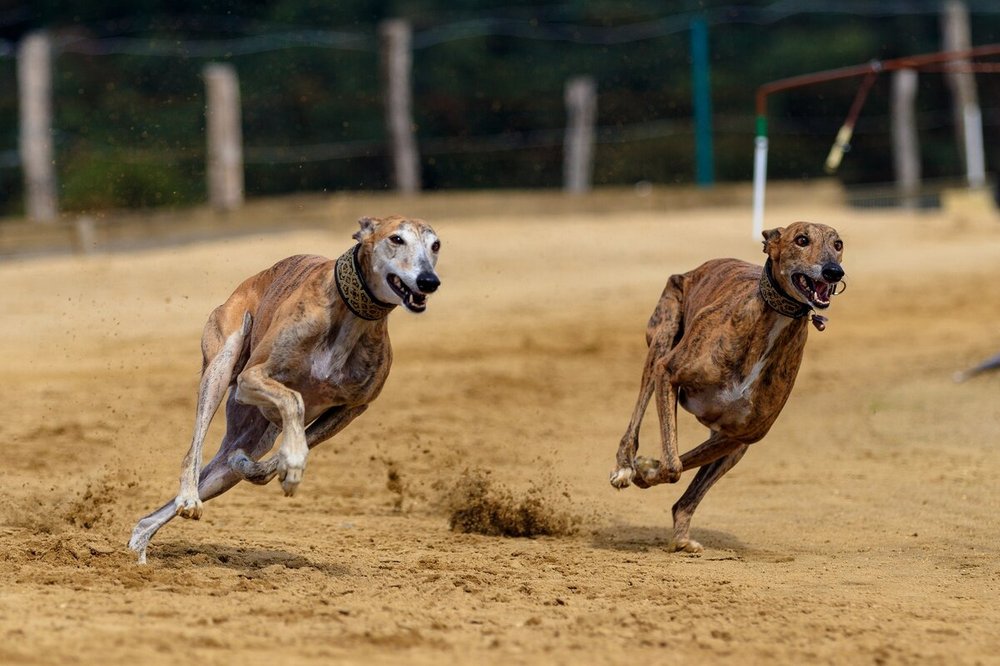
Lure coursing is a sport designed for sighthounds such as Irish wolfhounds, Italian greyhounds, and greyhounds. However, this doesn't mean other breeds can't compete if their health permits. Even heavy, short-muzzled breeds, which aren't suited to fast and long runs, can benefit from the sport, provided they receive proper training. For these breeds, solo training under the supervision of a professional trainer is recommended.
Test rules
Dog coursing takes place on a spacious field with established obstacles. The course is designed by event organizers, following the following general rules:
- route length – from 400 to 700 m for whippets, greyhounds, basenjis;
- for others – from 500 m to 1 km.
The track is sure to include turns, including sharp ones.
The winner is determined according to the following criteria:
- Speed.In lure coursing, who crosses the finish line first isn't important—what matters is how the dog performs over the course. Judges look for the dog's running style, range of motion, and dedication on the track. The greyhound's signature gallop is especially prized—low, smooth, and wide, often described as "skimming the ground." A sharp, powerful final burst of speed when the dog strikes the lure is an added bonus.
- Maneuverability.One of the key parameters that distinguishes a strong competitor. It evaluates the dog's ability to instantly adapt, change direction, and confidently navigate sharp turns without losing momentum. The more precise and flexible the performance on difficult sections of the course, the higher the final score.
- Intelligence.This criterion reflects the dog's ability to think while chasing. Judges look for tactical maneuvers: whether the dog attempts to close the distance, cut corners, anticipate the bait's trajectory, and block its escape routes. Essentially, they are evaluating the effectiveness of the chosen hunting strategy.
- Endurance.It's not just the start that's important, but also the dog's condition at the end of the race. Maintaining the pace, avoiding significant exhaustion, and overall fitness at the finish are all factors to consider.
- Enthusiasm.This is an indicator of hunting passion and motivation. Perseverance in the chase, the desire to catch the bait despite missed shots and temporary setbacks, and total immersion in the process without losing interest are highly valued.
Up to 20 points are awarded for each point. The winner is not the participant who reaches the finish line first, but the dog who receives the highest score across all criteria. Competitions are often judged by several professionals. The result is determined by summing up all the points awarded or by averaging them.
Who is allowed to compete?
Only healthy animals are permitted to participate. A veterinary check is conducted beforehand, including a blood test for doping substances and an examination. Participants with doping, injuries, abrasions, or general signs of illness are disqualified from the race. Disqualification from the competition is possible for straying from the course or for aggression. Females in heat, during pregnancy, and during lactation are temporarily excluded. Separate races are held for male and female dogs.
Safety precautions
Owners are responsible for maintaining safety. Injuries to other animals will result in fines. After a third violation is recorded and paid, the pet is permanently disqualified from competition.
To avoid injury, it is necessary to use leashes before the test, hold the participants in muzzlesA harness is only permitted for pacing—a leisurely walk after completing a route. It is recommended to carry a first aid kit with antiseptics, analgesics, and bandages.
Owners must also adhere to safety precautions. For example, avoid holding a hot dog's collar with just a couple of fingers instead of the entire hand. A nervous animal can suddenly twist away, causing sprains or fractures in the person holding it. If your hand can't fit under the collar, loosen it slightly.
Equipment
To participate in the test, you will need special equipment:
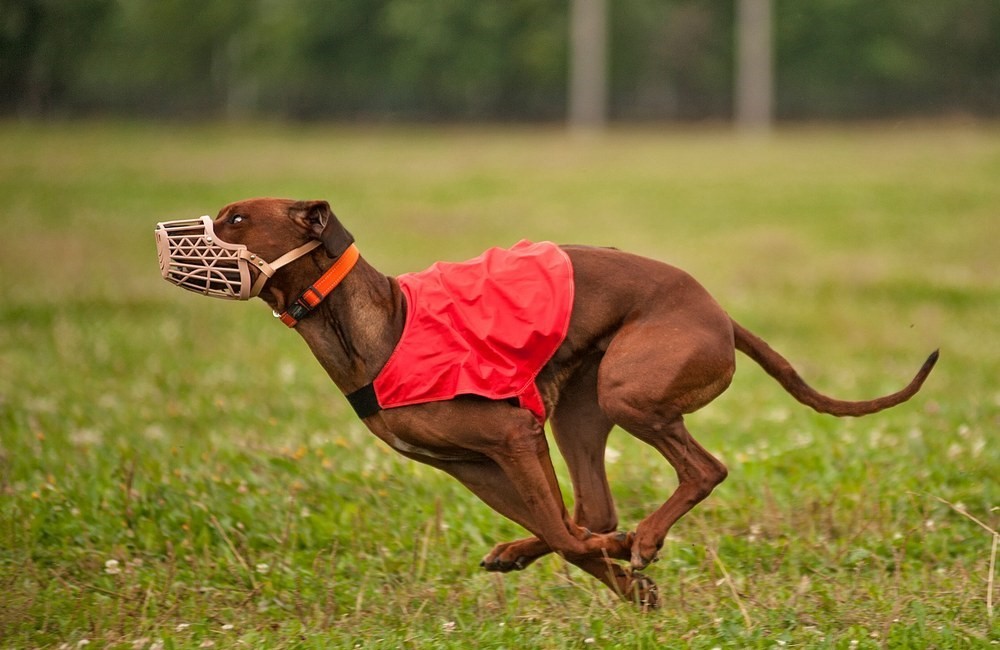
- A running blanket covers the chest and major muscle groups. A ready-made or custom-made blanket can be used. A number is attached to the blanket, which can be white, blue, black, or red.
- A coursing muzzle prevents bites from other dogs and injury to the pet itself. Common injuries include jaw damage and broken teeth caused by a sudden jerk on the rope by the operator when capturing prey. A coursing muzzle is purchased specifically for coursing; it allows mouth breathing and mouth opening; the design only provides a restraining bar at the top. Plastic muzzles are recommended for small breeds, and metal muzzles are available for medium and large breeds.
Animals without special equipment are not allowed to compete.
Preparation
Training is carried out after fulfilling several conditions:
- The animal's claws are trimmed to prevent injuries that can occur when running fast.
- Bring one of your favorite toys. When your pet isn't inclined to run after a standard bait, you can tie a familiar object to the rope instead of a "hare."
- No food is given in the evening if the activity or competition takes place in the morning. Before an evening race, participants are given half their usual breakfast portion or no food at all. In any case, it is not advisable to feed meat on this day. The last meal should be no later than 6 hours before the start. Feeding is permitted 15 minutes after the finish.
- Take water and a bowl to the field. In cold weather, keep warm water in a thermos. Avoid drinking before the run, immediately after the race, and between stages. The recommended time is no later than 15 minutes before the start and no earlier than 10 minutes after the finish. You can use a sprinkler to refresh your mouth immediately after the run to ease the strain on your heart muscle.
Before a competition, it's best for the owner to take the dog for a run to loosen up the muscles and massage the paws and body. Afterward, a leisurely walk is recommended to help restore breathing.
When do training begin and are people allowed to take part in tests?
Small and medium-sized breeds begin training at 6 months of age. Large breeds are trained from 8-9 months due to the later development of their cardiovascular system. Training is conducted under the supervision of a coursing specialist—professional dog clubs now offer such services. However, by the time training begins, the puppy should already be housetrained to wear equipment accustomed to running on uneven terrain.
Animals over 15-18 months of age are eligible to compete. There is no age limit for participants—if in good health, their athletic career can last up to 10 years. Athletes with heart, joint, or pulmonary problems are required to retire, as extreme stress poses a risk to their health and life. Therefore, racing and training are not conducted in hot weather, when the temperature exceeds 25°C.
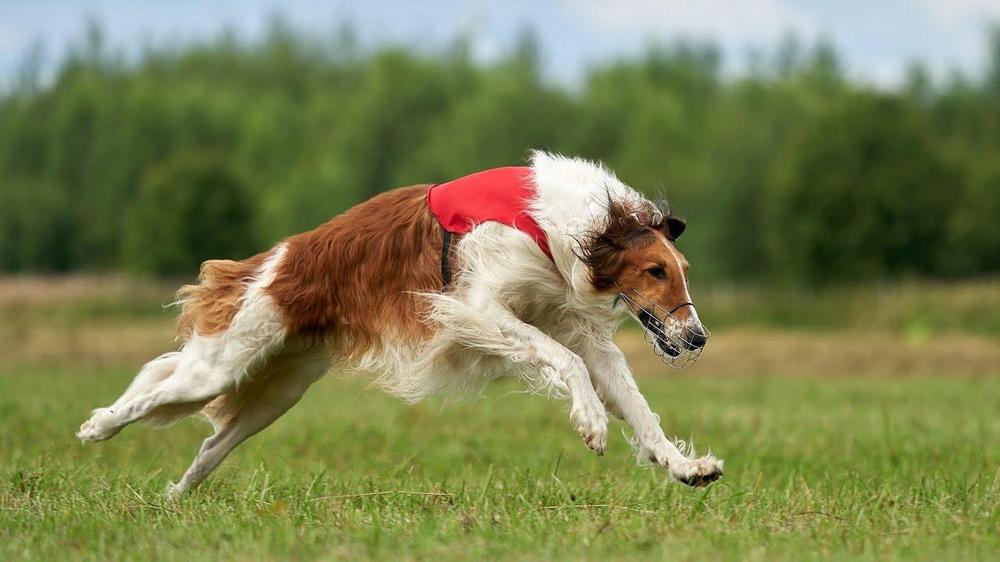
Lure coursing is popular in Russia—Russian championships and cups are held annually, according to a schedule approved by the Russian Cynological Federation. Only dogs with a pedigree are allowed to compete. Previously participating dogs must have a qualification booklet, which records information about their previous achievements.
Read also:
- How to teach a dog commands: a list of commands
- General dog training course without a trainer
- How to train a dog to wear a muzzle


Add a comment