
Kurilian Bobtail: male and female cats
Kurilian Bobtail It's difficult to confuse the Kuril with other breeds, as it has a distinctive feature—a short tail. These cats are known by various names: Kurils, Kurilians, bobtails, and Kurbobiks. This is one of the youngest and most promising breeds, already enjoying enviable popularity, and this combination is extremely rare. Well-mannered and intelligent, with a wonderful personality, the Kuril is a perfect fit for almost any family.
Content
History of origin
The breed's origin story doesn't evoke the twittering of tropical birds, the hubbub of Babylon, or the chants of Egyptian priests. One day, people from the mainland arrived on the Kuril Islands and found a beautiful cat. That would have been the end of it. Bobtailed hunting cats have long inhabited the Kuril Islands and Sakhalin, but it wasn't until the mid-20th century that military personnel and geologists began bringing these beautiful creatures with pompom tails to the mainland.
Some people mistakenly called them Japanese bobtailsDespite their superficial similarities, these two breeds are completely different in character, temperament, and even tail genetics. A little later, longhaired and shorthaired cats from the islands of Iturup and Kunashir were brought to the mainland – they became the basis for the process of developing standards for the Kurilian Bobtail. Thanks to T. Bocharova, L. Ivanova, and several other enthusiasts, a new breed was introduced to us. In 2009, the WCF officially recognized the semi-longhaired and shorthaired Kurilian Bobtails (English. Kurilian bobtail), a standard was developed and approved for them.
The Kurilian Bobtail breed name is straightforward. In the official nomenclature, many cats are called bobtails. cat breeds with short tails"Bob" translates from English as "pompom," and "tail" means "tail." The prefix in front indicates the place of origin.
Breed description and standards
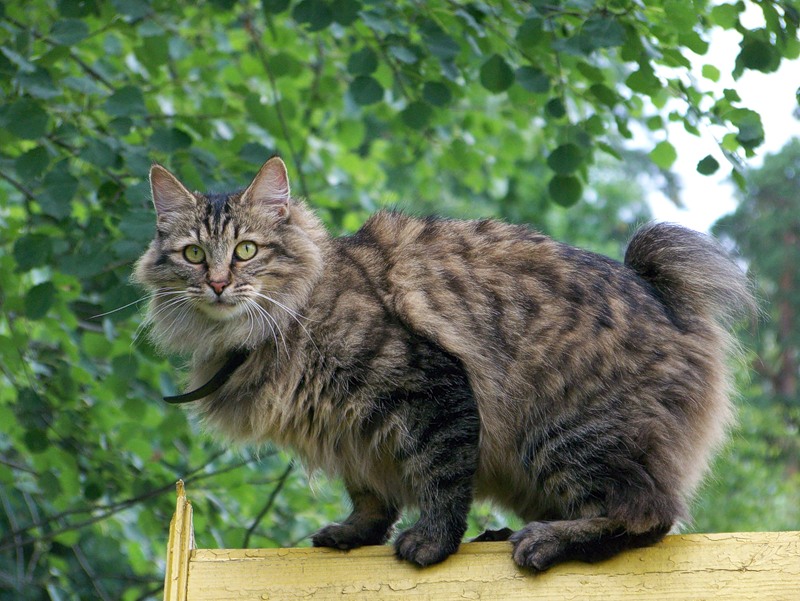
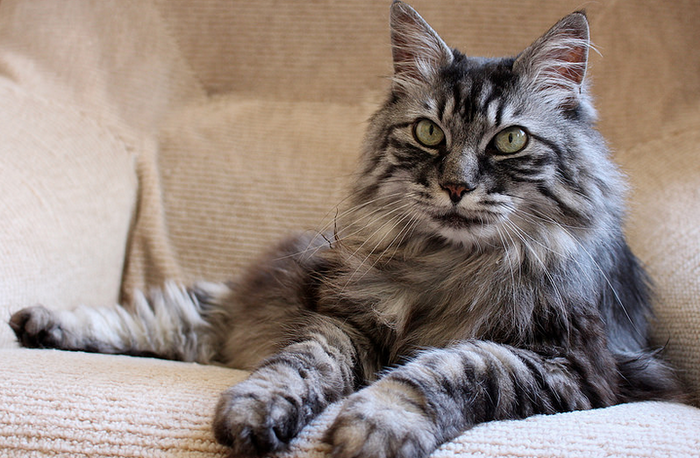
A description of the breed should begin, of course, with its appearance. Kurilian Bobtails are medium-sized, massive, yet very graceful. Males are larger than females. Their unique body structure allows them to be excellent jumpers. Viewed from the side, a male Kurilian Bobtail strongly resembles a small lynx.
Head and muzzle
The Bobtail's head is triangular, with a flat forehead that tapers smoothly to a straight nose. The cheeks are flat, and the cheekbones are high. The muzzle is narrow with a strong chin. The cats' eyes are oval, small, and set obliquely. The ears are large to medium in size, set straight and high.
Frame
The Kurilian Shepherd's body is square, powerful, strong, and compact, with well-developed muscles. Their hind legs are longer than their front legs, resulting in a slightly raised croup, giving them a lynx-like appearance.
Coat and colors
Kurilian Bobtails come in short-haired and long-haired varieties:
- The short coat with a moderately developed undercoat lies close to the body. The coat is dense and slightly harsh to the touch;
- Longhaired dogs have medium-length fur with abundant guard hairs and a very dense, dense undercoat. The coat should not be plush. A collar, breeches, and ear tufts are essential.
All colors are permitted except Abyssinian, colorpoint, or a combination of these with white. Bicolor (two-colored cats) and agouti (a wild ticked pattern) are preferred.
The Kurilian Bobtail's distinctive tail
A common question at cat shows is, "Why were cats' tails docked?" We can reassure anyone who's wondering—nobody docked them; it's simply a genetic mutation occurring naturally. The bobtail trait is either dominant or semi-dominant.
According to the standard, the Kurilian Bobtail's tail should not exceed 8 cm.
It's worth noting that each Kurilian Bobtail has a tail as unique as a fingerprint. This unique structure is determined by the number of vertebrae, their mobility, the angles of the joints, and their relative positions.
Conventionally, tails are divided into types:
- The spiral tail consists of 3-15 vertebrae arranged with sharp angles, forming a spiral-like structure. It can be curved dorsally, with several of its vertebrae either tightly adjacent to the sacrum or in a completely different direction. Furthermore, the intervertebral joints can be both mobile and immobile. They can be a combination of both mobile and immobile joints.
- The stump tail consists of 2-8 deformed and shortened vertebrae. The intervertebral joints of the tail are immobile, and the vertebrae themselves can be positioned in any direction.
- The tail consists of 5-10 vertebrae that form an obtuse angle. The intervertebral joints can be fixed, mobile, or a combination of both.
- A retracted bobtail is a tail with no defects for the first 5-7 vertebrae. Toward the end, a "squiggle" forms, consisting of several deformed vertebrae.
Character
Kurilian Bobtails are independent and self-sufficient, confident, and even-tempered. Mutual respect and equal treatment are key to a friendly and warm relationship.
Psychological portrait
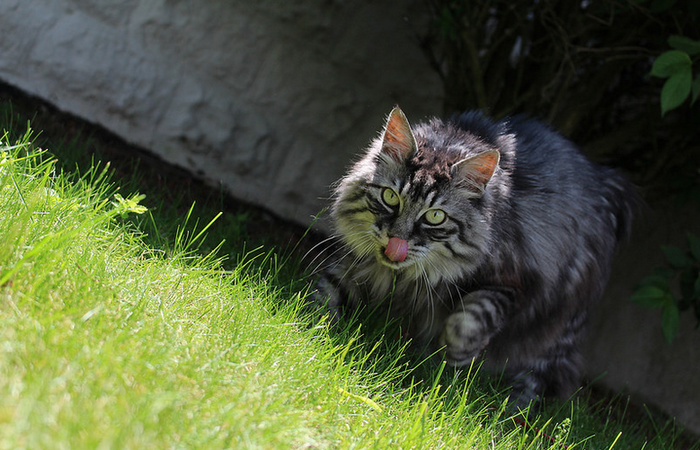
Bobtails have a very strong personality; they are fearless, tolerate solitude well, and are rarely aggressive or shy. They are gentle and affectionate with family members and will be indifferent to strangers. Kurilian Bobtails are intelligent and clean. Rarely will they present any problems in communication or maintenance. Furthermore, they are very intelligent; very soon, your pet will begin to respond to you in their own cat language, which you will understand perfectly. Representatives of this breed are loyal, affectionate, and charming. Thanks to their wild origins, bobtails are excellent hunters and sometimes even fishermen. If you decide to get a Kurilian Bobtail, you should be prepared for it to be the leader among other animals in the house.
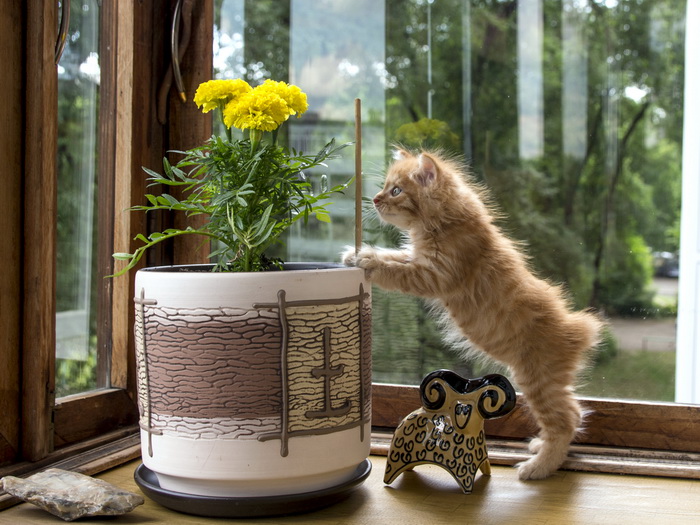
Kittens are very playful and curious, often mischievous. They require a lot of attention, love, and care. As they grow older, they become calmer, more thoughtful, and somewhat lazy.
Cohabitation with other animals
Kurils are naturally non-aggressive and calm, but they also won't give up their territory. In relationships, they take a dominant position or live as equals; there are usually no other options. Therefore, when it comes to cohabitation, much depends on the neighbor's character, how they behave, and the conditions they agree to live under. Of course, this doesn't apply to small pets and birds; a born hunter will never consider potential prey equal to themselves.
Maintenance and care
Kurilian Bobtails are moderately active cats that can thrive in an apartment, but to be completely happy, they need free access to the outdoors or frequent walks. If this isn't available, consider installing a play structure.
Content
You'll often hear breeders say that cats of this breed don't spray, and there's some truth to this. While most Kurils don't spray urine, suffering from urinary incontinence, they may engage in other mischief. For example, they may scratch wallpaper or leave puddles in inappropriate places. Another characteristic is that they don't have a distinctive odor. If you walk into a house with 5-6 Kurils, you won't notice any distinctive cat odors.
Care
Bobtails require basic grooming, even for long-haired members of the breed. Their coat has a unique structure and is exceptionally practical: it doesn't mat or get dirty. proper nutrition In the absence of stress, cats shed virtually nothing during the off-season. Despite this, brushing them at least once a week is recommended. This removes dead hair, makes their coat shinier, and provides a pleasant and beneficial massage for their skin. Eyes and ears are checked periodically, but there's no need to clean them unless absolutely necessary. Trimming the claws of these independent hunters is also undesirable, so it's important to accustom your kitten to a scratching post. Keep in mind that if your cat has free access to the outdoors, she'll sharpen her claws on trees, so she might not bother with a simple device made of a board and rope.
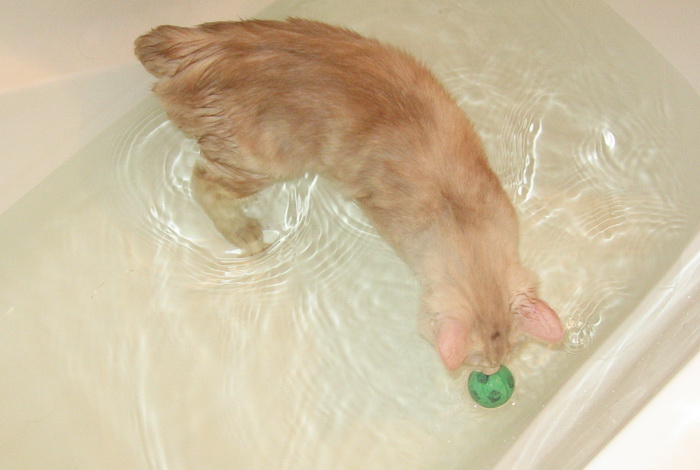
Bathing Kurils frequently is not recommended. This is only done before shows or when they are very dirty. Many bobtails truly enjoy water, but few show a fondness for bathing.
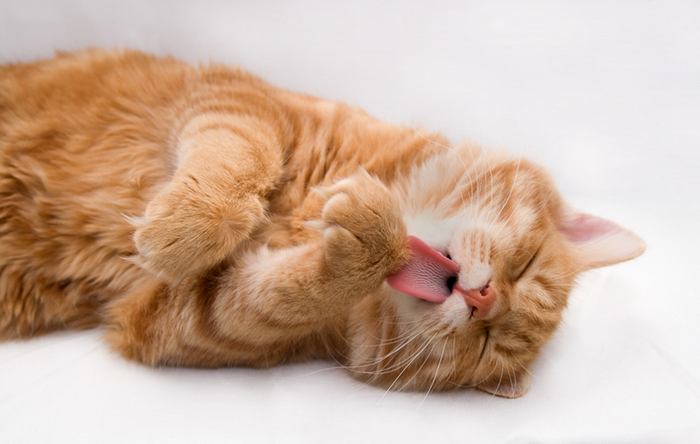
To avoid frightening the kitten, place it in a filled bath and gently lather it, then rinse off the foam with clean water prepared in a bucket, without turning on the tap or shower.
Nutritional Features
Until recently, Kurilian Bobtails weren't exactly known for their comfortable apartment life. This young breed is also indigenous, not artificially bred, so it's recommended to feed them a natural diet.
Feeding natural products
The diet should consist primarily of lean meat and offal (beef tripe, liver, lung, etc.). All of this should be thoroughly washed and frozen or scalded with boiling water. The Kuril breed loves fresh fish, especially sea fish. It's best to give boiled fish no more than once a week. Egg yolk or raw quail egg should be fed no more than twice a week. Fermented milk products can be given as tolerated, as a supplement to the main diet. It's best if the cat eats vegetables, fruits, greens, or at least green grass, which should be grown locally. Vegetable porridges are also offered in addition to the meat-based diet.
When feeding natural food, it is advisable to supplement the diet with vitamin and mineral supplements.
Feeding industrial feeds
If you decide to feed a Kurilian Bobtail dry food, it's best to transition the kitten to it no earlier than 5-6 months. Furthermore, it should be a super-premium or holistic food based on locally sourced ingredients and free of starch.
- Nutram Total Grain-Free is a holistic food for healthy adult cats, available in different flavors;
- 1st Choice VITALITY INDOOR – balanced food for indoor cats with carefully selected ingredients;
- Sanabelle GRANDE – complete food for adult cats (recommended for large breed cats);
- Arden Grange Adult Cat is a grain-free food for adult cats, available in different flavors;
- Josera JosiCat – complete cat food with beef;
- Royal Canin Exigent Protein is a food for cats that are picky about the ingredients in their food.
Due to the specific characteristics of their bodies, Kuril cats should not be given special diets for the prevention of urolithiasis without a prescription. While these cats are easy-care, the opposite is true when it comes to nutrition. Kuril cats should be fed a balanced and high-quality diet.
Health and life expectancy
Overall, this is a strong and hardy breed. This is likely due to natural selection and the absence of human intervention in breeding. However, they do have a few characteristics that are important to be aware of.
- Research suggests that the mutation responsible for the short tail isn't associated with genetic abnormalities and doesn't impact quality of life. However, bobtails are more likely to experience rectal prolapse, or the formation of so-called "rose tails." This condition typically affects young kittens. Predisposing factors include poor nutrition, infestations, constipation, and diarrheaWhether the predisposition is inherited has not yet been determined.
- Kurilian Bobtails have a urine pH of 7-7.5, not 6-6.5 like that of ordinary cats. Therefore, they rarely develop alkaline urolithiasis, but they do develop acidic stones. Any medications for preventing urolithiasis or specially formulated foods for most cats are absolutely not suitable for them.
- They are also prone to tartar formation, especially those that eat soft natural food.
Other health problems are usually related to improper care and maintenance. Don't forget about routine vaccinations, deworming, and other preventative measures. These are necessary even for cats that never go outside.
The average lifespan of Kurilian Bobtails is 13-14 years.
Choosing a kitten and price
Like many other kittens, Bobtail kittens are born blind and open their eyes only after two weeks. Around a month old, their eyes begin to change color. The typical gray-blue color for kittens becomes permanent by the age of one, while in cats with bright green eyes, this can take up to two years. From the age of one month, kittens begin to receive solid food and are litter-trained, as their mother no longer cleans up after them. At this age, kittens also receive their first worming treatment. The first vaccination is given at two months and repeated three weeks later.
Kittens can move to a new home no earlier than 3 months old, having learned all the intricacies of apartment living. At this age, they weigh about 1.5 kg.
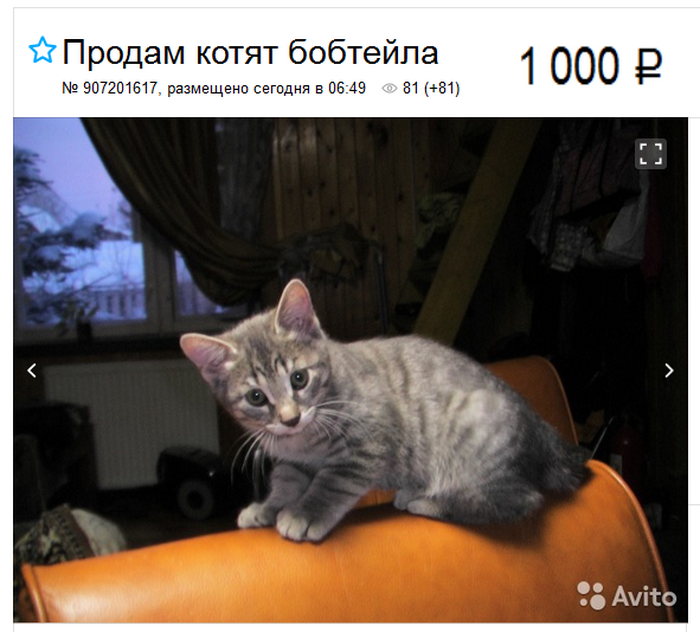
Crossbreeding with other breeds is prohibited, but you can't control your heart, and sometimes kittens with short tails are born from matings in which one parent is a Kurilian Bobtail. These kittens are usually offered for cheap and are advertised as Kurilian Bobtails. Be careful if you're looking for a pet of this breed, not just a cat with a bobtail.
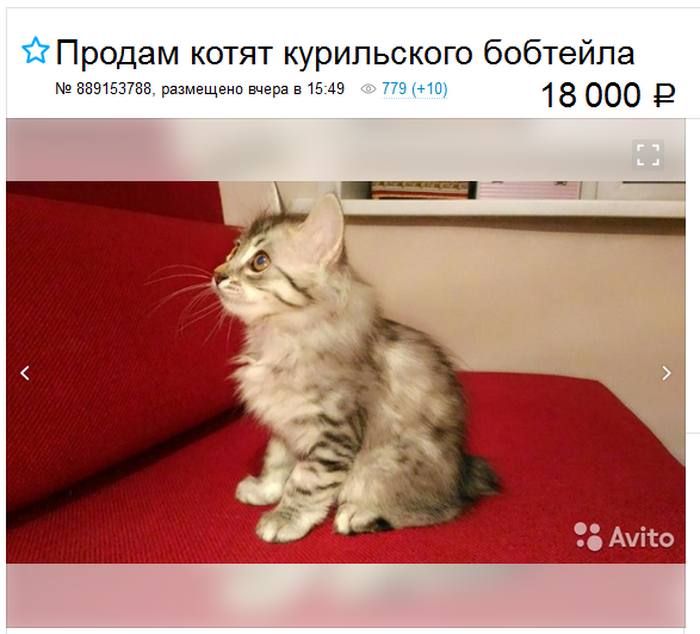
Almost all kittens retain their baby fluffiness until they are 4 months old. To determine whether a kitten will have short or long hair in the future, you need to pay attention to its parents.
The average price of a Kurilian Bobtail kitten from a cattery ranges from 15,000 to 20,000 rubles.
Photos
Photos of Kurilian Bobtail cats:
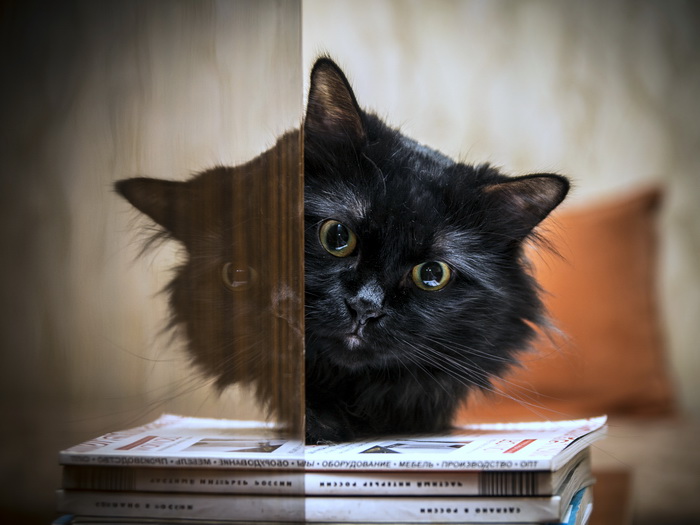
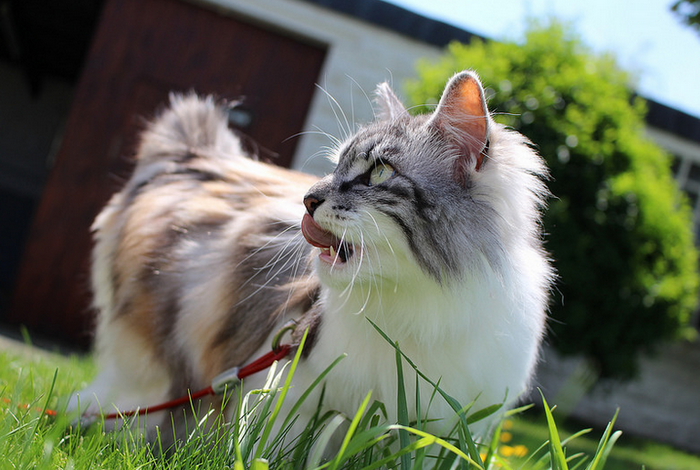
Video review of the Kurilian Bobtail cat breed:


1 comment
Larisa
The Kurilian Bobtail is the most wonderful feline creation. I can't even imagine a cat with a tail anymore. He's a miracle—his personality, his habits, his gait, the unusual tactile sensation when petted, his behavioral idiosyncrasies, his unusual sounds, his devotion, and his lack of aggression—all of this is my Kurilian Bobtail. He's even won over my husband, who couldn't stand cats in the apartment.
Add a comment