
Curly-Coated Retriever
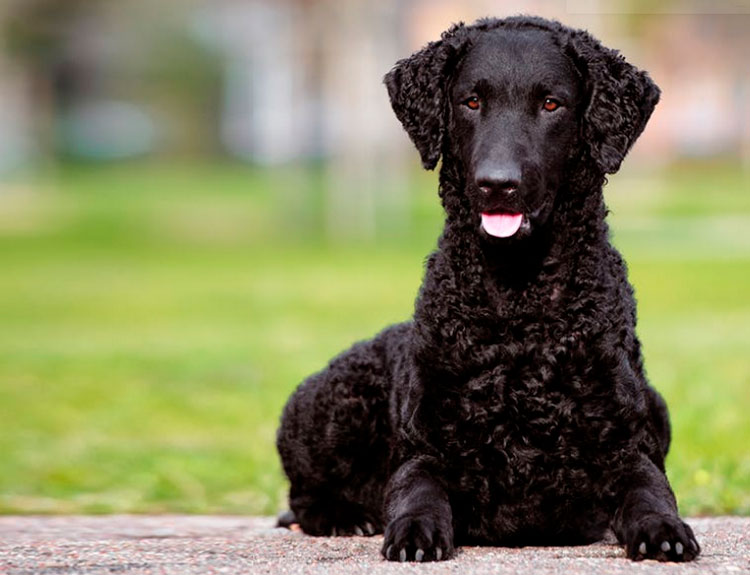
The Curly-Coated Retriever is an elegant, well-balanced dog with a dense, curly coat that protects it while working in dense brush and icy water. The breed originated in Great Britain and is used for hunting game birds and waterfowl. Today, the Curly-Coated Retriever is also considered a sporting, family, and companion dog. Another name for the breed is the Curly.
Content
History of origin
Retrievers appeared on the canine scene in the early 19th century, much later than setters and spaniels. Curlies were among the first representatives of this family, which today comprises nearly a dozen breeds. They quickly gained love and recognition. Precise data on their origins is scarce. One line traces the breed back to small Newfoundlands or the dogs of St. John, according to another - to Irish Water Spaniels. It is likely that the formation of the curlies also involved setters, poodles, Labradors, spaniels.
The Curly-Coated Retriever was first shown at a show in 1860. The first Curly-Coated Retriever Club was founded in England in 1896, and the first standard was published in 1913. After the war, the Curly-Coated Retriever almost disappeared, but the breed survived. It was recognized by the Fédération Cynologique Internationale in 1954 under the name Curly-Coated Retriever. Today, it remains rare and few in number.
Appearance
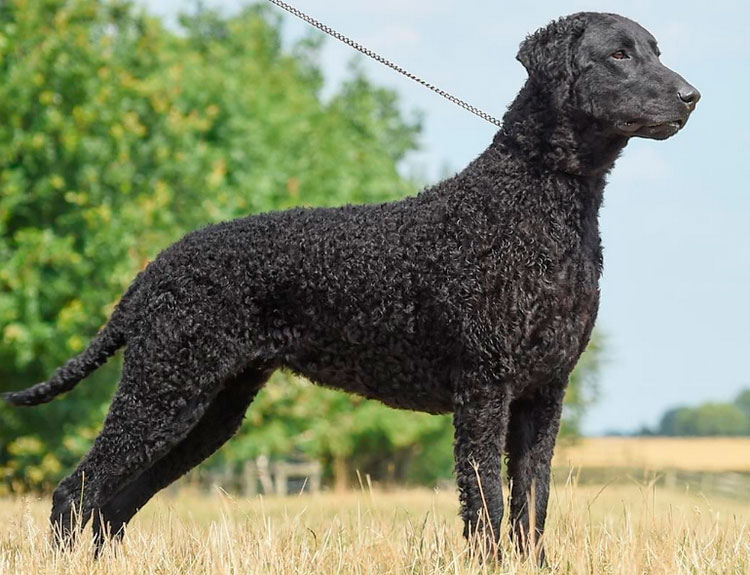
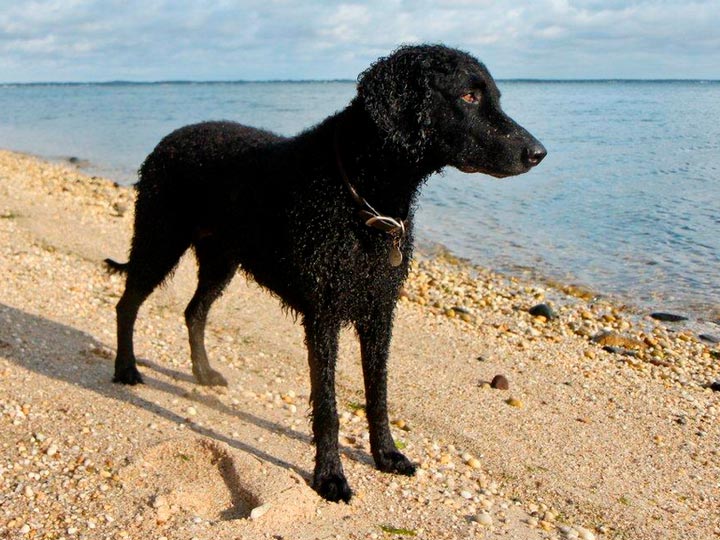
The Curly-Coated Retriever is a sturdy, powerful dog with a distinctive curly coat. Its height and sturdiness do not preclude a certain elegance. Sexual dimorphism is well-defined. The height at the withers for males is 67.5 cm (26.5 in), and for females, 62.5 cm (24.5 in).
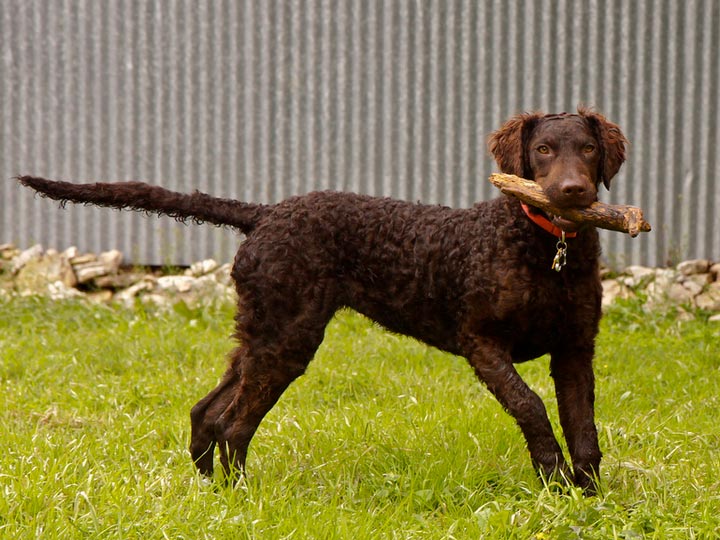
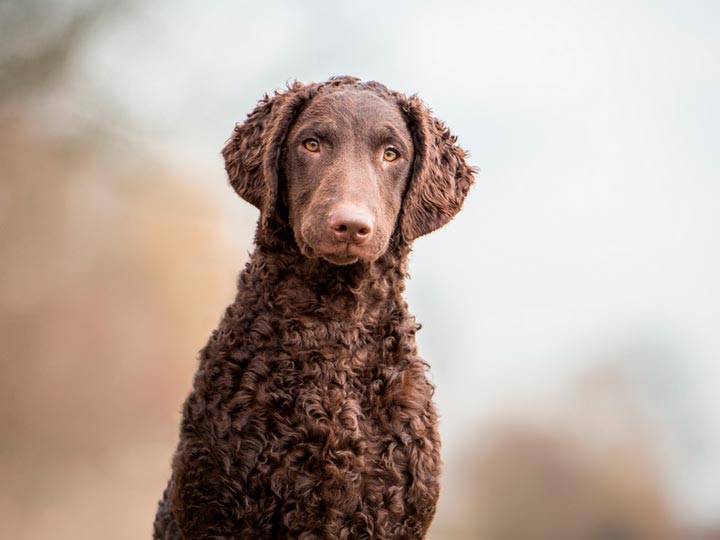
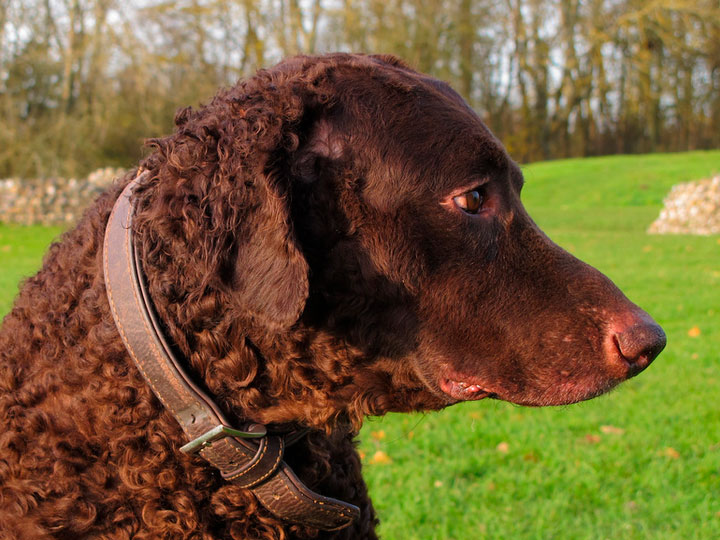
The head is wedge-shaped and proportionate to the body. The skull and muzzle are of equal length, with parallel toplines. The stop is slightly defined. The nose is black or brown, depending on the coat color. The jaws are strong, with a scissor bite. The eyes are oval, set obliquely, fairly large, and varying shades of brown, which should complement the coat color. The ears are relatively small, set close to the skull, just above the eye line, and covered with hair that forms small curls.
Curly isn't the only retriever with curly hair. A similar coat can be found Chesapeake Bay Retriever.The neck is slightly arched, strong, without dewlap, and of medium length. The topline is horizontal. The back is level and strong. The loin is broad and short. The chest is oval, reaching to the elbows, deep, and well sprung. The underline is moderately tucked up. The tail reaches to the hocks and is carried level with the back when moving, forming a harmonious continuation of the topline. The forelegs are well placed under the body, straight and parallel. The feet are strong, rounded, and compact, with well-arched toes. The hindquarters are muscular and strong, with moderate angulation at the stifle and well-defined hocks.
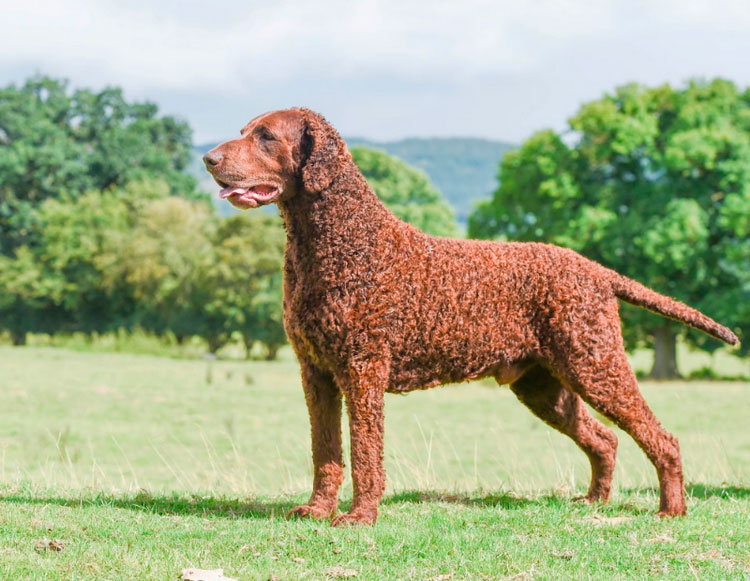
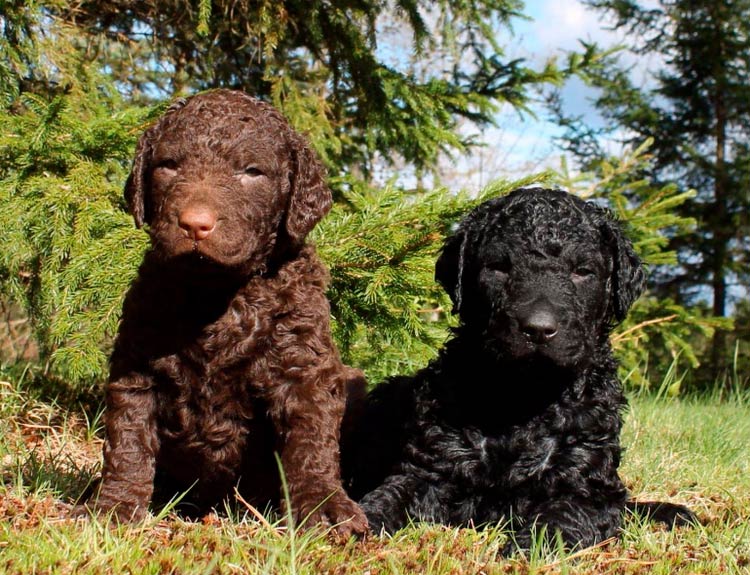
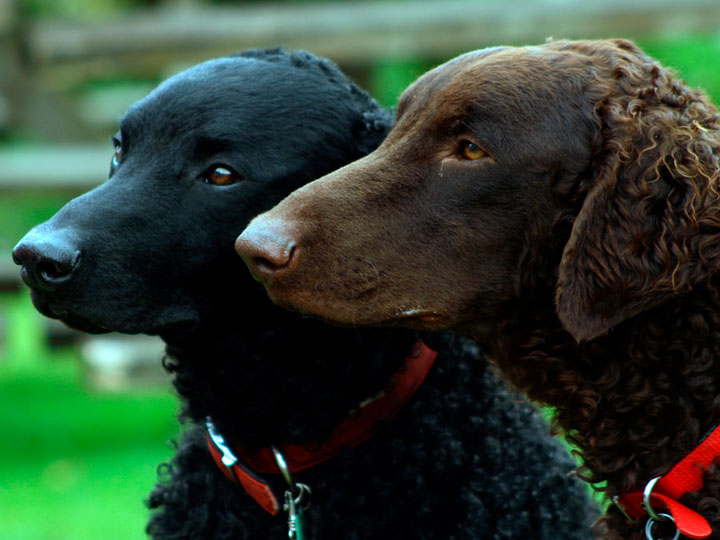
The coat consists of a short guard hair, which forms tightly curled, small curls that lie close to the skin. The hair on the head, muzzle, and lower limbs is short and smooth. Only two colors are permitted:
- Black;
- Brown.
Character and behavior
According to the standard, the Curly-Coated Retriever is a balanced, intelligent, and reliable dog, self-confident, friendly, and independent. Although very bold, it can appear reserved, as it is not as outgoing as, for example, a Labrador or Golden Retriever.
Curlies form strong bonds with their owners and family members, always seeking to be the center of attention. They require attention from their owner, but to a lesser degree than other retrievers. They get along well with older children, making tireless playmates. They can be a bit rough around the edges with small children, so interactions between the dog and a small child should always be supervised. They are generally wary of strangers. When in other people's territory, they can be wary of strangers, but in their own, they are vigilant guards. Some Curlies are capable of guarding, but most are not aggressive and will retreat under strong pressure. They exhibit varying degrees of self-confidence, independence, love of freedom, and stubbornness.
Curlies get along well with other animals they've grown up with. However, living peacefully with a house cat or a parrot doesn't mean the dog will be less active in chasing the neighbor's cats or less enthusiastic about retrieving birds from the water.
The Curly Coated Retriever is playful, obedient, and cheerful, making it a good family dog and companion for active people.
The Curly-Coated Retriever is a talented working dog. However, it's important to keep in mind that it matures relatively slowly, physically and psychologically. It often takes until 2-3 years for it to begin productive hunting and become capable of cooperation. As teenagers, all that's on their minds is frivolity and mischief.
Education and training
When training a Curly-Coated Retriever, owners need to find a balance. Being too harsh and demanding can cause the dog to become withdrawn and refuse to work. Being too gentle can cause it to become unresponsive to demands.
The Curly Coated Retriever was bred to assist the bird hunter, to retrieve, and he is good at that.
Curlies are a highly intelligent breed. They are quite independent and intelligent. They don't strive for unconditional obedience or circus tricks. During training, avoid excessive repetition, as this can cause the dog to lose interest. Training should be made as interesting and varied as possible.
Content Features
The Curly-Coated Retriever is suitable for house or apartment living, but only if the owner provides the dog with sufficient exercise. Outdoors, the Curly-Coated Retriever is very active; indoors, an adult dog is usually calm. Young Curlies can be fidgety, overly energetic, and prone to damage. In European countries, Curlies are more often kept outdoors in spacious enclosures with insulated kennels or free-roaming on property.
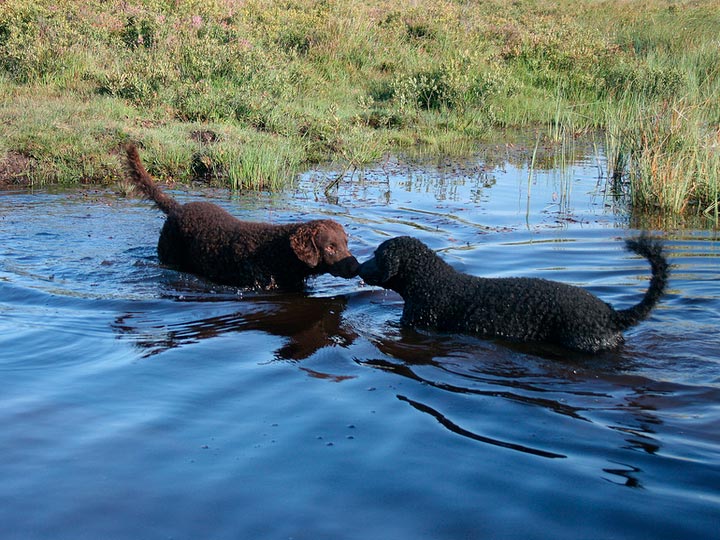
The Curly-Coated Retriever is an athletic, hardy dog that enjoys a variety of exercises, games, and long walks. They love water and are excellent swimmers. They are intelligent enough to enjoy various tasks and exercises that require speed, scent, and ingenuity. With proper training, Curlies can show good results in flyball or agility competitions.
Care
The Curly's coat consists only of guard hairs; there is no undercoat. It has a very mild odor. Shedding is moderate, seasonal and associated with ovulation, with females being slightly heavier. Generally, grooming is not labor-intensive. Brush before bathing. It is important to thoroughly comb out or remove any mats that begin to form. Don't worry about the curls becoming loose; after bathing, the dog will air dry and they will become dense again. Trimming is not required. Occasionally, trimming tufts of hair between the toes is recommended to create a neater appearance. Bathing is recommended once a month or slightly more frequently.
The ears are inspected and cleaned regularly. The eyes are wiped as needed. It's best to accustom the dog to having its teeth brushed from an early age, and have it brushed weekly. The nails are trimmed as needed, usually every 3-4 weeks.
Health and life expectancy
Most Curlies are in good health.Life expectancy is usually 9-13 yearsThere are reports of dogs living to 15-17 years. However, the breed cannot be considered healthy due to a number of hereditary diseases. These occur with varying frequencies in different lines:
- Hip dysplasia;
- Eye diseases (cataract, corneal dystrophy, distichiasis, entropion, ectropion, retinal dysplasia);
- Heart disease;
- Epilepsy;
- In adulthood, malignant tumors are not uncommon (adenocarcinoma, lymphosarcoma, fibrosarcoma, mast cell tumor, hemangiosarcoma, melanoma, osteosarcoma);
- Degenerative joint diseases;
- Arthrosis;
- Elbow dysplasia;
- Patellar dislocation;
- Induced collapse (an autosomal recessive disorder that presents with hyperthermia, muscle weakness, and even collapse after intense exercise or excitement).
Curly-Coated Retrievers are predisposed to gastric torsion. Owners should adjust their daily routine and feeding schedule to minimize the risk of this dangerous condition.
Where to buy a Curly-Coated Retriever puppy
The majority of Curly-Coated Retrievers are concentrated in England. There are also numerous dogs and kennels in Australia, Canada, and New Zealand. Scandinavian countries also boast a relatively high-quality breed. The first Curlies appeared in Russia in the early 21st century. The modern breed is primarily made up of dogs imported from Finland and their descendants.
Price
The average price of a Curly-Coated Retriever puppy in Europe is 1,200 euros. In Russia, ads for Curly-Coated Retriever puppies for sale occasionally appear on forums and sites like Avito. The average price is typically 45,000 rubles.
Photos and videos
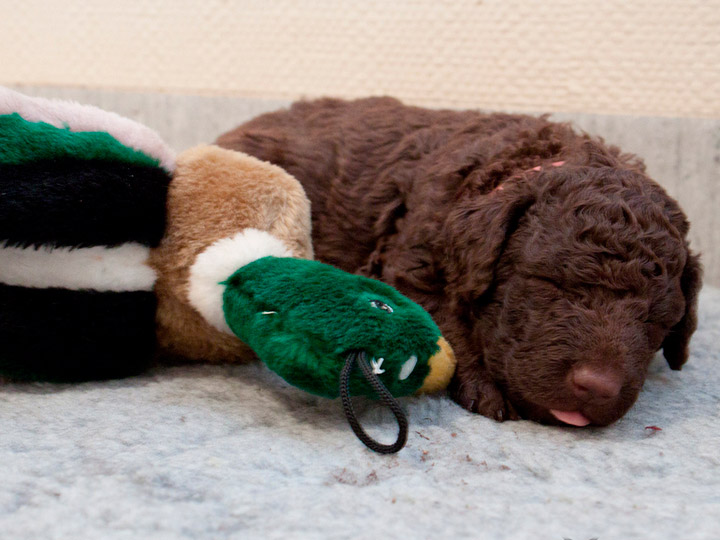
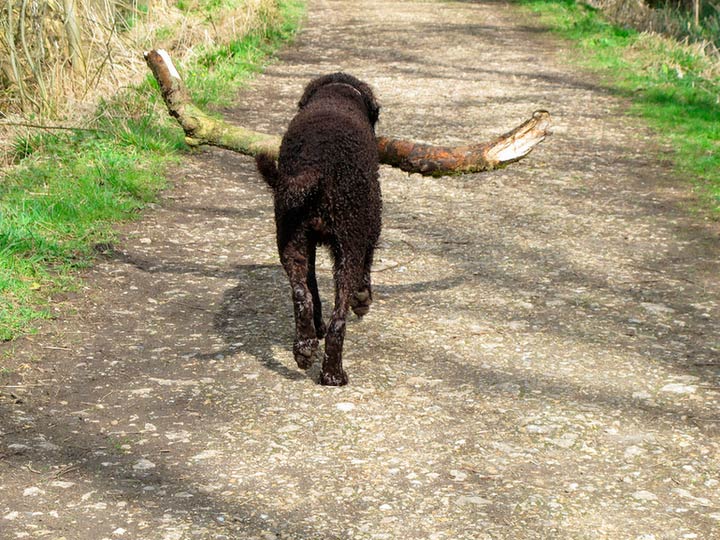
The gallery contains photos of dogs of the Curly Coated Retriever breed.
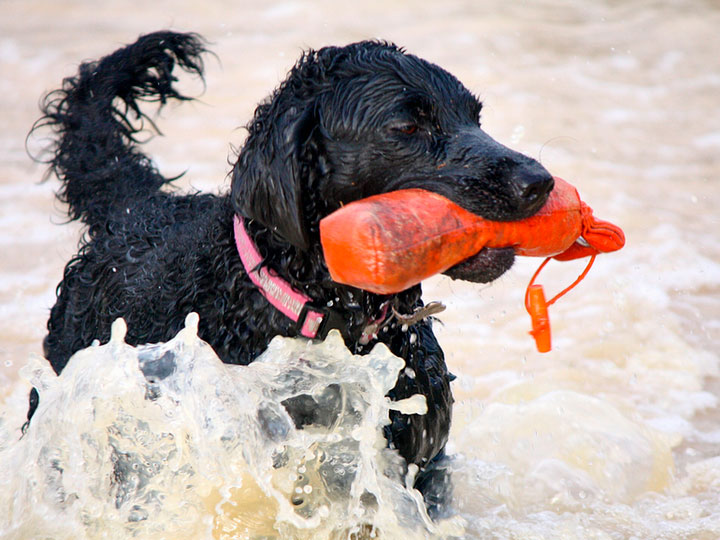
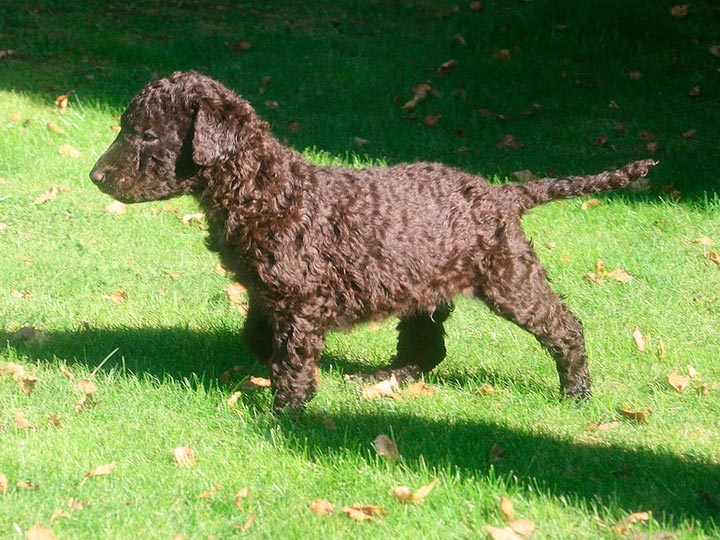
Video about the Curly Coated Retriever breed
Read also:


Add a comment