
Ear and tail docking in dogs
Not all breeds are eligible for surgical docking. Even breeds traditionally docked with ears and tails are not always eligible. The final decision is made by the pet's owner, and it depends on many factors.
Docking is definitely carried out if the dog is going to take part in competitions, because during most of these events, points are deducted for non-compliance with the exterior, and in some of them, an undocked animal may simply not be allowed to participate.
Owners should remember that docking, while not the most complex procedure, is still a surgical procedure, so before taking this step, it is necessary to thoroughly familiarize yourself with all the requirements and nuances.

Content
At what age should docking be done?
There are several opinions regarding the best time to perform this procedure. Three acceptable periods are identified:
- up to two weeks of age;
- from 7 to 13 weeks;
- from 3 months to six months.
Up to 2 weeks
Veterinarians advocate this period, believing the procedure at this age to be more humane, as the pain experienced by young puppies is not as severe as after they leave infancy. Furthermore, the puppies are still in close contact with their mother, which minimizes the healing period and reduces the risk of complications.
However, at such an early age, blood vessels don't function as smoothly as they do later, so bleeding from the wound may continue for longer. Another disadvantage is that at such early stages, the animal's muzzle and body proportions are not fully formed, so later, discrepancies in the results may emerge between the primary goals of docking.
From 7 to 13 weeks
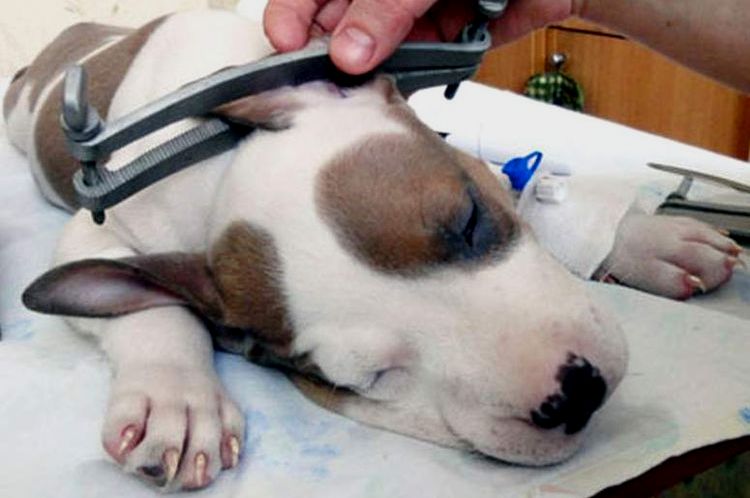
At this stage of development, the puppy's cartilage tissue has not yet undergone residual hardening, making it softer and easier to excise. Furthermore, large scars do not form at the cut site, as the tissue's regenerative capacity is high and healing occurs fairly quickly.
From 3 months to six months
Sometimes, docking a dog's tail and ears earlier is not possible. Health issues or other factors may prevent this. In such cases, the procedure is postponed until a later date.
At this age, there is a risk that the wound surface will form a large scar or wrinkle during healing, which will have a sharp negative impact on the pet's appearance, jeopardizing the dog's show potential.
If the surgery is performed at this age, the only option is general anesthesia followed by suturing for a better cosmetic effect.
As a dog gets older, the risk of complications increases, which is highly undesirable. The older the dog, the more important the veterinarian's qualifications become.
Optimal timing
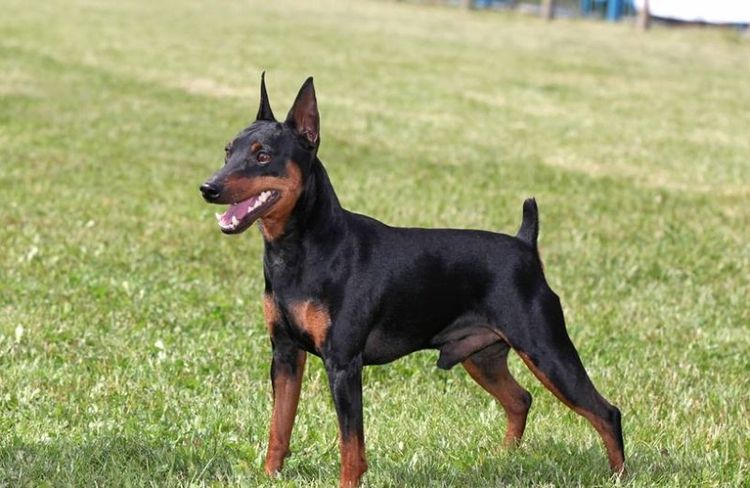
Most veterinarians say that it is best to crop ears before 13 weeks of age, but not earlier than 14 days from birth: this will ensure an ideal result.
As for such an operation on the caudal vertebrae, it must be performed within 3-10 days, since at this age the cartilaginous bones of the spinal extension are most pliable, and pain is reduced to a minimum.
Types of docking
There are 2 options that are the most common:
- without surgical intervention (by compression);
- with surgical intervention.
By means of tight squeezing
This method is rightly considered the least traumatic, but it can only be used on puppies at an early age.
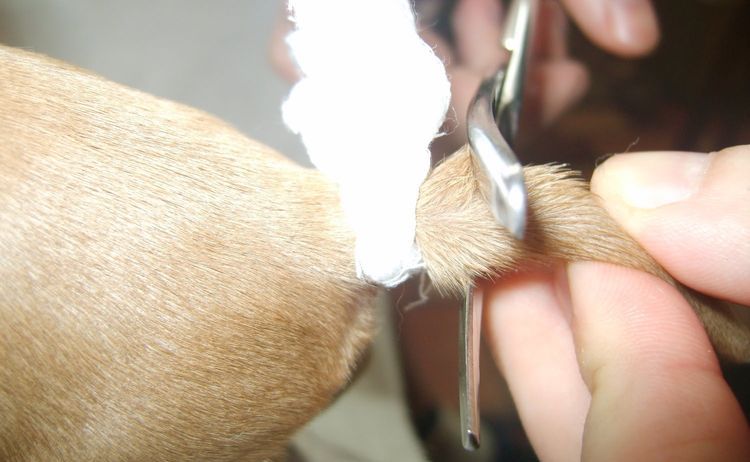
The tail skin is moved as far as possible toward the base, after which a band or elastic is tightly secured to a specific vertebra. This compression cuts off the blood supply to the isolated portion of the tail, preventing the tissue from receiving nourishment. Within a few days, the tip dries out and dies completely.
Cutting off
This option is most often performed in clinics in sterile operating room conditions, although home visits are also possible.
All manipulations are performed by 2 people: one securely fixes the dog and compresses the incision site, and the second performs the surgical excision.
Preparation
Before docking, your dog must be examined by a veterinarian. If there is the slightest doubt that your pet is completely healthy, the procedure should be postponed until the dog has fully recovered.
Preparation immediately before the manipulation consists of the following:
- 12 hours before, stop feeding the puppy, but you can give it the same amount of water as usual.
- Local anesthetics are used for puppies, and general anesthesia is used for adults.
- The hair is shaved smoothly from the site of the future incision, and then the area is thoroughly disinfected with special solutions.
- The dog is placed on a table, after which the front legs are fixed in a forward position, and the hind legs are extended backward. In older puppies, the lower jaw is also fixed.
How does the operation take place?
After the dog is stabilized at the tail clipping site, the skin is pulled back as far as possible toward the base of the tail. Some veterinarians also use a tight tourniquet to secure the skin. It's best to clip the tail in one motion, after which the skin is clamped to stop the bleeding. The wound is dusted with a special powder.
In some cases, a veterinarian may recommend suturing. Although this increases the cost of the surgery, it's important to take this advice seriously.
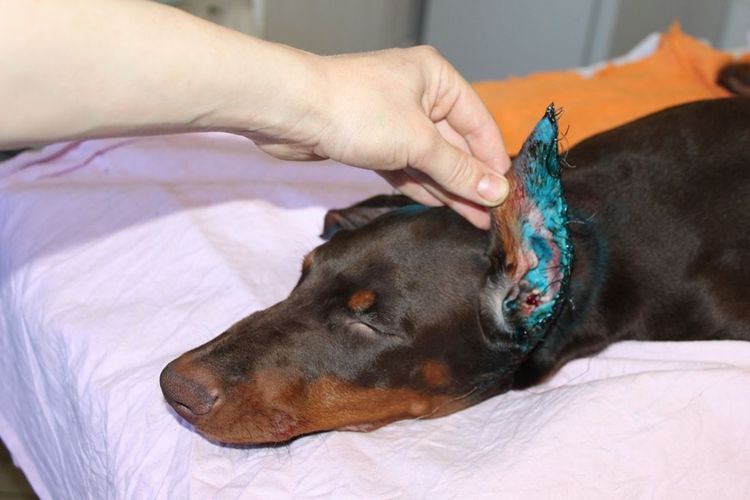
The ear's proportions are first measured and a small incision is made in the appropriate location. A special clamp is then placed on the ear and the outer portion is cut off using the template. Sutures or bandages are then applied.
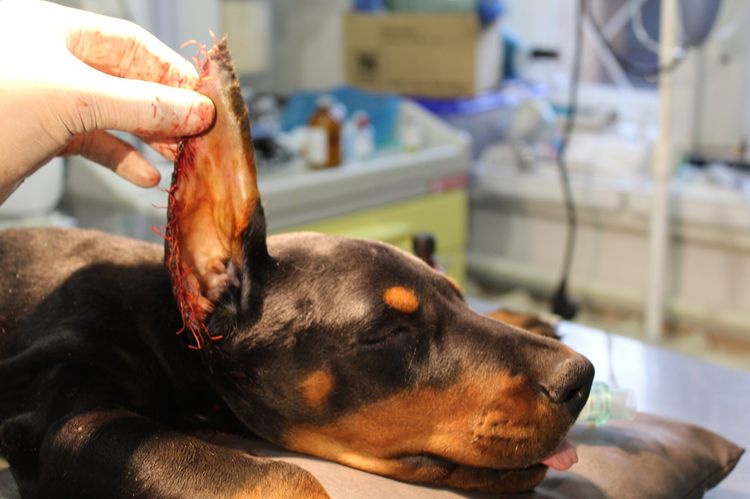
After the surgery, the animal is placed in a protective collar to prevent it from scratching or injuring the fresh wound.
Complications
Wound healing usually takes 1-2 weeks, after which the dog must be shown to a veterinarian who will monitor the results.
But complications sometimes arise after docking. These aren't always due to the surgeon's skill or quality of work; sometimes they arise due to the dog's individual health or inadequate post-operative care.
The most common complications:
- Bleeding. In puppies, this occurs in the most extreme cases, and the risk of bleeding increases sharply with age. Bleeding may not stop immediately after surgery, but may occur some time later in the case of scar tissue.
- The formation of a large scar and thickening of the upper part of cropped ears. The risk of this complication is directly related to the dog's age; thickening is almost never observed in puppies.
- Inflammatory processes in the suture area. This complication occurs when the wound becomes contaminated, the suture dehisces, or the animal has a weakened immune system.
If your pet's health deteriorates in any way, it should be immediately shown to a veterinarian, preferably the one who performed the docking.
Price
Ear cropping at veterinary clinics starts at 100 rubles. In elite veterinary clinics, the cost can reach 1,500 rubles. Tail cropping costs between 300 and 5,000 rubles.
The price primarily varies depending on the timing of the operation: for older dogs it is always higher.
When checking the price, it's important to check whether the cost includes all medications that will be used during the surgery. General anesthesia is also more expensive, especially if performed by a veterinary anesthesiologist.
In any case, it is better to give preference to an experienced veterinarian who regularly performs such manipulations.
Read also:


1 comment
Elena
1500? We were told that ear cropping would cost us 10,000. The puppy is 6 months old.
Add a comment