
Coonhound
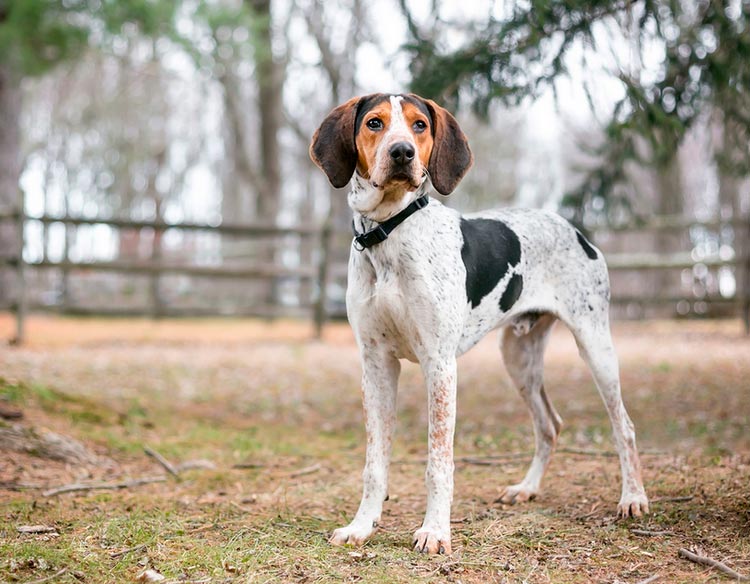
The word "coonhound" in the breed's name refers to the dog's specialization—its ability to hunt diurnal and nocturnal game, which hides in trees. There are six such breeds. All were developed in America and later grouped under the same name—the coonhounds, or raccoon hounds. Members of this group are similar in many ways, but each has its own distinctive characteristics.
Content
History of origin
During the colonial period, many breeds of dogs were brought to the United States. Among others, these included hounds from England, Ireland, France, and Germany. However, they proved unsuited to hunting native game and were unable to restrain nocturnal and crepuscular animals that climbed trees.raccoons, lynx, opossum, black bear, puma).
The word "coonhound" is derived from the English words "coon" and "hound", literally: "raccoon hound".
This led to the development of so-called treeing hunting and subsequent selective breeding of hounds. Dogs were selected with an excellent sense of smell and the ability to work independently, but most importantly, they had to be able to follow a scent on the ground and not lose it if the animal climbed a tree. Coonhounds were bred primarily in the southeastern states of Georgia, Kentucky, Tennessee, and Virginia.
Dog breeds in the Coonhound group
The group includes six dog breeds, all of which have been recognized by the United Kennel Club (UKC) and the American Kennel Club (AKC):
- American English Coonhound (Red-Ticked Coonhound);
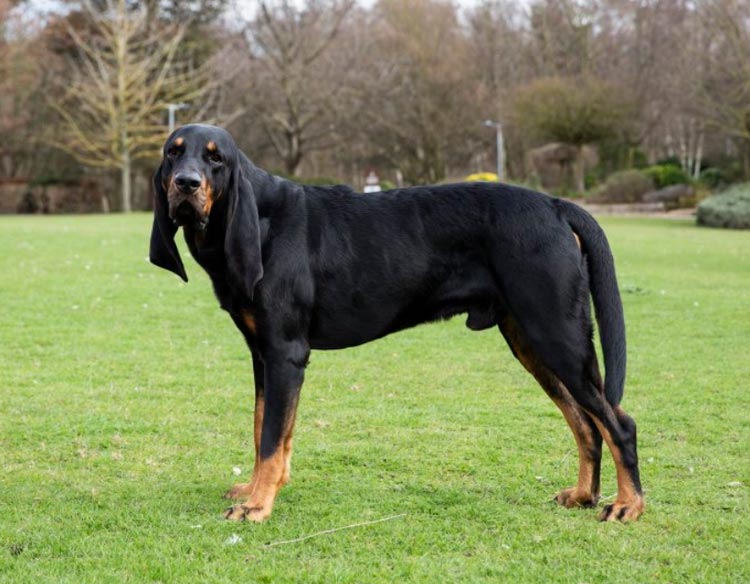
- black and tan coonhound;
- Blue Spotted Coonhound;
- Plott (Plott's coonhound);
- red coonhound;
- Treeing Coonhound (Walker's Treeing Coonhound).
There is a seventh breed, the Leopard Hound. In 2012, it was accepted on a provisional basis into the UKC Rare Breeds Trust. These dogs are also capable of hunting raccoons, but are not officially classified as coonhounds.
Official recognition of the Coonhound
All six coonhounds are recognized by the United Kennel Club (UKC). The Black and Tan Coonhound was the first to be officially registered in 1900, followed by the Red Coonhound in 1902. In 1905, the American English Coonhound, known for its wide range of colors, was recognized. Two separate breeds subsequently emerged from it: the Bluetick Coonhound and the Treeing Hound, in 1946 and 1945, respectively. In 1946, the Plott Coonhound also received official recognition. In 2008, the UKC registered the American Leopard Hound.
The American Kennel Club was the first to register the black and tan hound in 1946, and only at the beginning of the 21st century did it register all the others: the Plott (2006), the Red and Blue Spotted (2009), the American English (2011), and the Treeing Hound (2012).
Only one coonhound is recognized by the Fédération Cynologique Internationale (FCI)—the Black and Tan. Its standard was published in 1946.
Hunting with a Coonhound
Coonhounds are strong, hardy, and energetic dogs that can follow a trail that stretches for miles through swamps and dense brush.
In the northern states of the United States, coonhounds are traditionally used for night hunting of raccoons, but this is primarily for sport.
Hunters typically follow the hound on foot, using its voice as a guide. However, trackers are increasingly being used these days. Coonhounds have a loud, clear, and accurate call. They can work alone or in packs. Coonhounds' primary prey hides in trees. The hound finds it and, leaning against a tree trunk, barks, indicating its location to the hunter. When hunting raccoons, opossums, and other nocturnal animals that hide in the canopy, the hunter's success depends entirely on the hound's talents and skills.
According to trainers, 30% of Coonhounds are not capable of hunting, 50% have average abilities, 20% are excellent hunters, and only 1% show outstanding results.
Coonhounds: General Characteristics
All coonhounds are energetic, strong and hardy dogs of above medium to large size, strongly built with well-developed muscles and short to medium length hair.
They are balanced, non-aggressive, and quite intelligent, with a distinct hunting instinct. They enjoy long walks and value freedom of movement. They are not well suited to apartment life. They require careful training and competent supervision. Without the opportunity to hunt or engage in other activities, they develop various behavioral problems.
In everyday life, they are calm and friendly, not aggressive towards strangers. They get along well with children and other animals. Without proper training, they can chase neighbors' cats, dogs, and other small animals. They are often prone to wandering and excessive barking. They may howl when bored.
They don't require complex grooming. Occasional brushing is sufficient for their short coat, and a little more frequently during shedding season. Regular bathing can solve the problem of their distinctive dog odor. Owners should also monitor the condition of their eyes, teeth, and ears.
Coonhounds are relatively healthy dogs. Their life expectancy is 11-13 years. Breed-specific health problems are rare. Hip and elbow dysplasia are common. They are also prone to ear and eye infections. Other health problems are often related to improper feeding or poor living conditions.
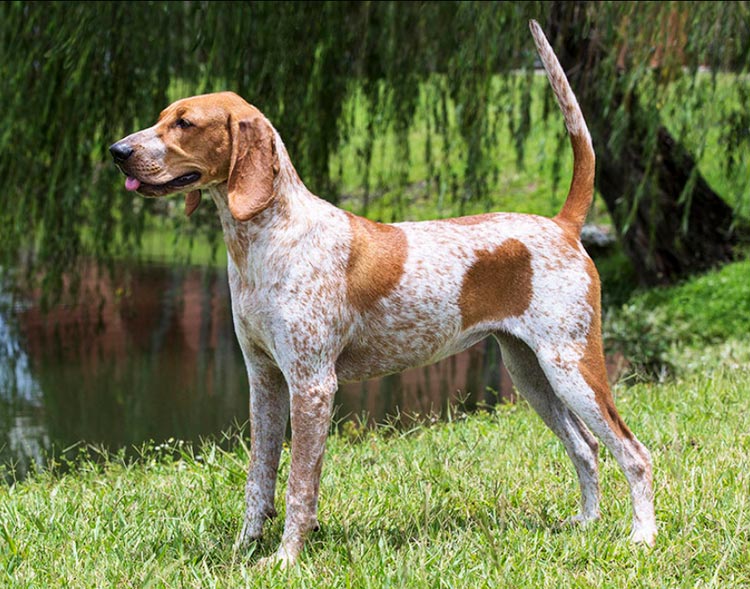
American English Coonhound (Red-Ticked Coonhound)
The American English Coonhound is believed to be a direct descendant English foxhounds, which were imported to the United States in the 17th and 18th centuries and retrained as hunting trines in the southeastern states. Known for their speed, endurance, intelligence, and athleticism.
The American English Coonhound has a strong build, deep chest, and strong back. Overall, the dog appears balanced, without any exaggeration.
- Height: 58-66 cm;
- Weight: 20-29 kg.
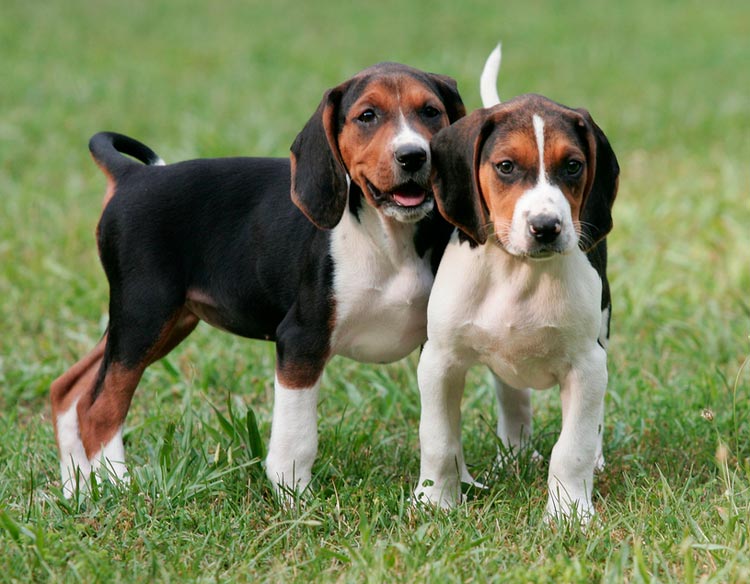
The head is broad and medium in length. The eyes are dark brown and set wide apart. The ears are set fairly low and drooping. The flews cover the lower jaw. The coat is medium in length and harsh.. Colors: red-speckled, blue-speckled, tricolor with speckles, red-white, black-white.
The American English Coonhound is even-tempered, energetic, friendly, confident, sociable, and loyal. It enjoys hunting and long walks. It gets along well with children when properly trained. It thrives in a pack with other hunting dogs. It has little watchdog ability, and no protective skills. It is wary of strangers. The American English Coonhound is fairly easy to train and eager to please its owner, but it is also not without its own opinions, tenacity, and some independence.
Black and Tan Coonhound
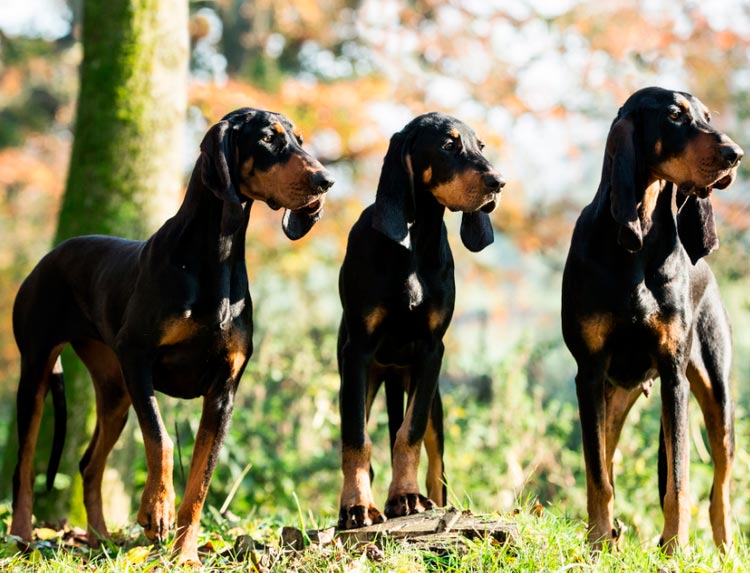
The Black and Tan Coonhound was developed by crossing the Virginia Black and Tan Foxhound and bloodhoundIt hunts solely by scent. It is primarily used to hunt raccoons. However, its courage, strength, and endurance also allow it to hunt deer, bear, wolf, and puma.
The Black and Tan Coonhound is a fairly large, muscular dog with long ears and a noticeable double fringe on the neck. Its appearance gives the impression of strength and agility. Sexual dimorphism is well-defined.
- Height: 58-69 cm;
- Weight: 18-34 kg.
The Black and Tan Coonhound has a lean, strong head with low-set, long ears and friendly dark eyes. The limbs are strong and powerful. The tail is set low. The body is square. The coat is short but dense. The coat is jet black with rich red tan markings located symmetrically above the eyes, on the sides of the muzzle, on the chest, legs, and under the tail.
The Black and Tan Coonhound is calm, gentle, good-natured, and unobtrusive. It doesn't like to be left alone for long periods of time. It's quite tolerant with children and can work closely with other dogs.
Bluetick Coonhound
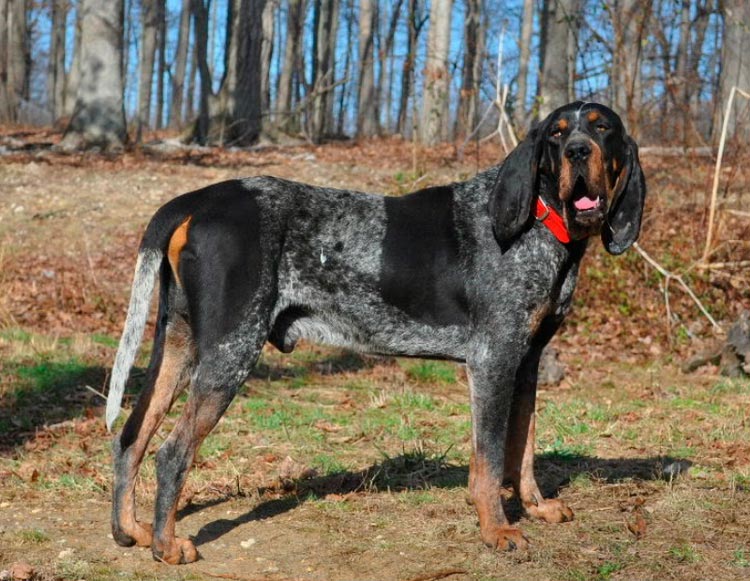
The Bluetick Coonhound was developed in the 20th century by crossing American, French, and English hunting dogs. Like other coonhounds, it is a hardy, energetic dog with a strong hunting instinct. In addition to its sense of smell, it uses its keen eyesight. It can work at any time of day, even in impenetrable thickets.
The Blue Coonhound is a powerful yet elegant dog with a well-proportioned build and high adaptability. Sexual dimorphism is well-defined.
- Height: 53 69 cm;
- Weight: 20-36 kg.
The head is fairly long and heavy. The muzzle is square. The ears are long, narrow, and pointed at the tips. The eyes are round and dark brown. The body is strongly built, muscular, and slightly sloping. The limbs are strong, and the paws are cat-like, with well-arched toes. The coat is short but very dense. The coat is tricolor: black and white with red tan markings. Its "blue" appearance is due to the black speckles on the white background.
The Bluetick Coonhound is the mascot of the University of Tennessee.
The Bluetick Coonhound is energetic, hardy, and active, requiring regular exercise and physical and mental stimulation. It is quite friendly, not only with its own people but also with strangers. It makes a great hunting companion and a good family dog.
Plott (Plott's coonhound)
It specializes in hunting large animals such as bears, wild boar, lynx, and mountain lions, but can also track raccoons and opossums, and can hunt coyotes and wolves. The Plott is very different from other coonhounds. It descended from hunting dogs brought from Germany to North Carolina by the breed's creator, Henry Plott, in the 18th century. According to some sources, he brought several Hanoverian hounds with him and protected them from outcrosses.
The Plott Coonhound is the national breed of North Carolina.
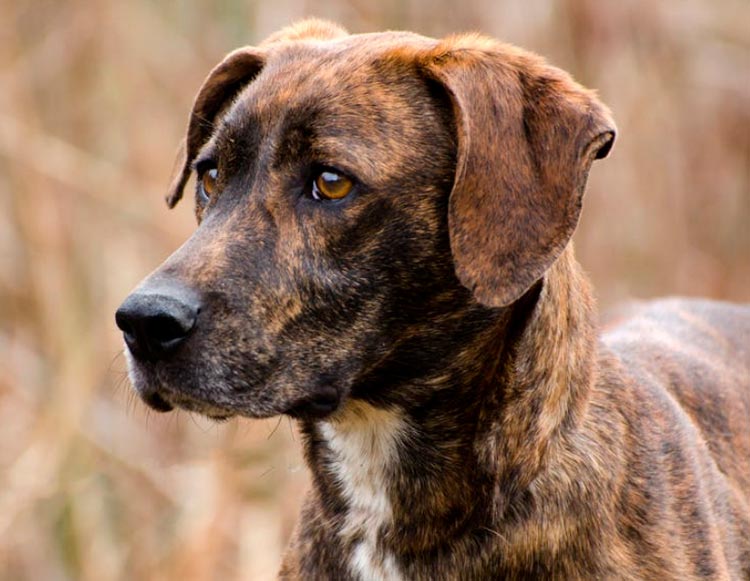
The Plott is an athletic and muscular hound of medium size, strongly built, with a distinct brindle colouring.
- Height: 55-71 cm;
- Weight: 18-27 kg.
The coat is smooth, fine, medium texture, short to medium length, and glossy. Possible colors: yellow, red, brown, black, gray, and blue.
The Plott works well alone or in a small pack. Sensitive, reliable, and patient by nature, it makes a good companion and companion. It possesses tremendous speed, strength, and endurance. It is courageous and firm enough to pursue and hold large game.
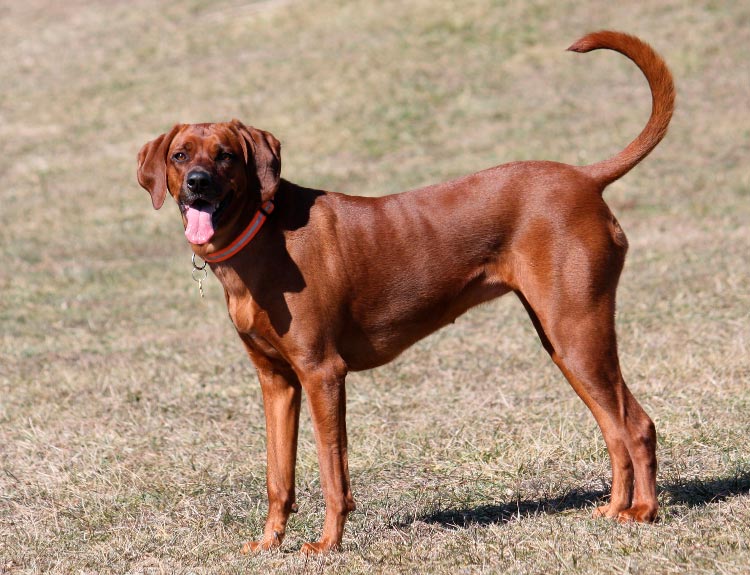
Red Coonhound
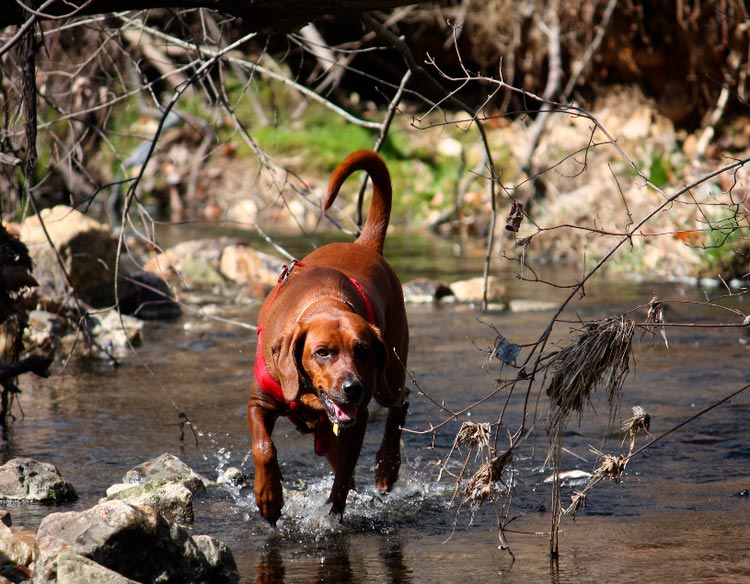
The Red Coonhound's ancestors are English hounds and possibly Irish setters, from which it may have inherited its coloring. It is used to hunt raccoons, but can also pursue larger prey. The breed gets its name from its short, shiny, rich red coat.
A Redneck Coonhound became the main character in the Walt Disney Production film The Dog Who Thought She Was a Coon (1960).
The Red Coonhound has a strong, well-built body with a deep chest, straight, long legs and a high-set head.
- Height: 53-69 cm;
- Weight: 25-32 kg.
The eyes are as dark as possible. The ears are drooping, reaching to the nose. The paws are large, with very dense pads and webbed toes. The coat is short, smooth, and lies close to the body. The color is a solid red. Small white spots are allowed.
The Red Coonhound is energetic, cheerful, and affectionate. It is the calmest of all the coonhounds, but this doesn't stop it from being a passionate hunter. Among family members, it is loyal and friendly, with a distinct sense of humor. It gets along well with other animals, especially if raised with them. It adapts better to home life than other coonhounds, but will miss long, regular walks.
Treeing Coonhound
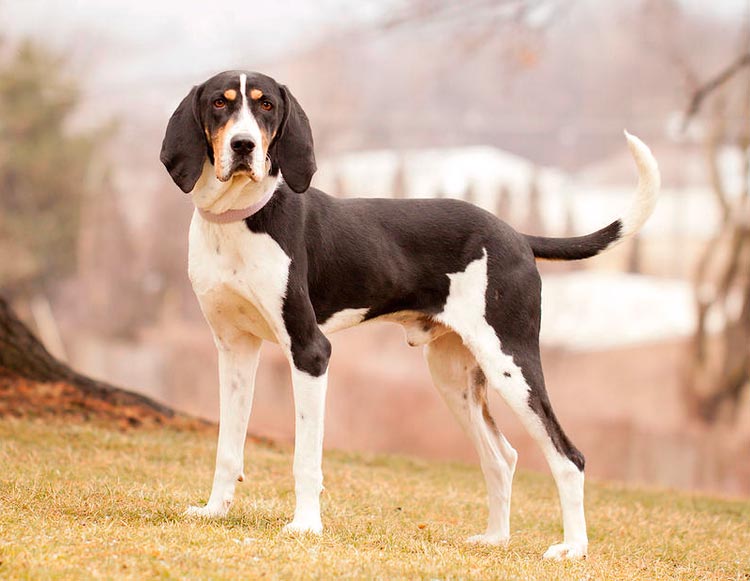
Another name for the breed is the Walker Treeing Coonhound. It's clear that the breed was developed by a specific person, or rather two: Kentucky breeders John Walker and George Washington Maupin. The breed was developed to hunt raccoon, but is also used to hunt mountain lion, bear, and deer. The Treeing Coonhound is an American favorite among coonhounds.
The Treeing Coonhound has the appearance of a working dog, being strong, lean and agile.
- Height: 58-65 cm;
- Weight: 23-32 kg.
The skull is broad with a long muzzle and long, drooping ears. The eyes are dark with a soft expression. The legs are straight and fairly long. The paws are compact and cat-like. The coat is fine, smooth, and glossy. The coat is tricolor, but bicolors are also found: black and white and brown and white dogs.
The Treeing Coonhound is friendly, even-tempered, intelligent, and self-assured. Gentle among family, it enjoys human company and gets along well with children. In the forest, it is a tireless and passionate hunter, and at home, it is a quiet, comfortable companion.
Leopard hound
The Leopard Hound is believed to be a descendant of Spanish hunting dogs crossed with Mexican ones. Early settlers brought them to America from Mexico to hunt bears.
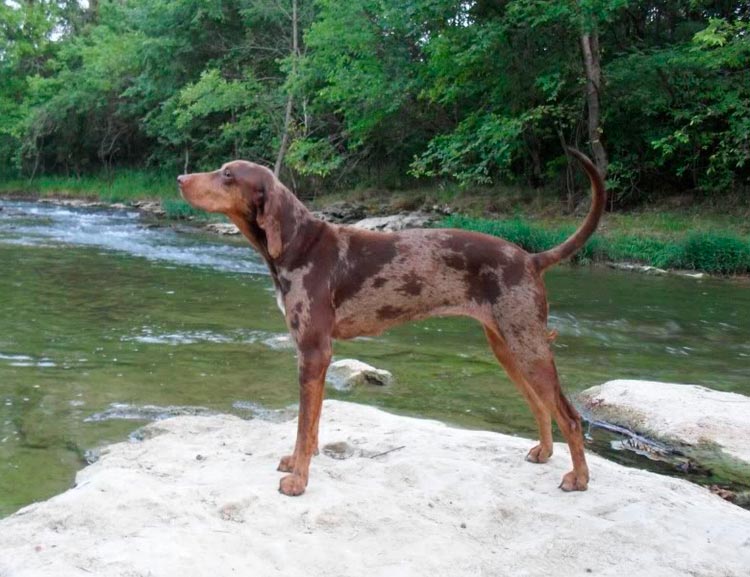
The Leopard Hound is a powerful, agile dog of medium to large size. Its body is somewhat elongated and its legs are quite long.
- Height: 53-60 cm,;
- Weight: 16-34 kg.
The head is broad, with long, drooping ears. The tail is set low and straight, and can be of any length. The coat is short. There are three possible colors: solid, leopard, and brindle. Because of its coloring, the leopard hound is often confused with Catahoula Leopard Dog.
The Leopard Hound is known for its eagerness to please its owner, making it trainable, easy to keep, and easy to control during hunting. Leopard Hounds can follow both cold and hot scents, hunt day and night, and utilize their sense of smell and sight, making them extremely versatile. They easily adapt to various weather conditions and navigate any terrain. They possess exceptional courage, endurance, and tenacity.
Where to buy a coonhound puppy, price
Outside the United States, coonhounds are rare. The exception is the Plott, which is quite common in Germany. In the United States and Canada, the average cost of a coonhound puppy is $500.
Read also:


Add a comment