
Curly cat breeds
The diversity of cat breeds is astounding. Every cat lover can find the perfect pet: fluffy or hairless, small or large, leopard print or calico. And those who appreciate unusual animals can choose a curly-haired cat: some have neat, wavy fur, while others have unruly, chaotic curls.
Content
Characteristics of curly cats
Most members of the curly-haired cat group are collectively known as Rex cats, denoting the presence of the rex gene, which causes curliness. The defining characteristic of this group of animals was a natural gene mutation that occurred in various breeds from different parts of the world. They attracted the attention of both ordinary people and breeders, who succeeded in preserving and consolidating the curliness as a distinctive trait. Through various crossbreeding techniques, they were able to produce curly-haired pets with a variety of appearances.
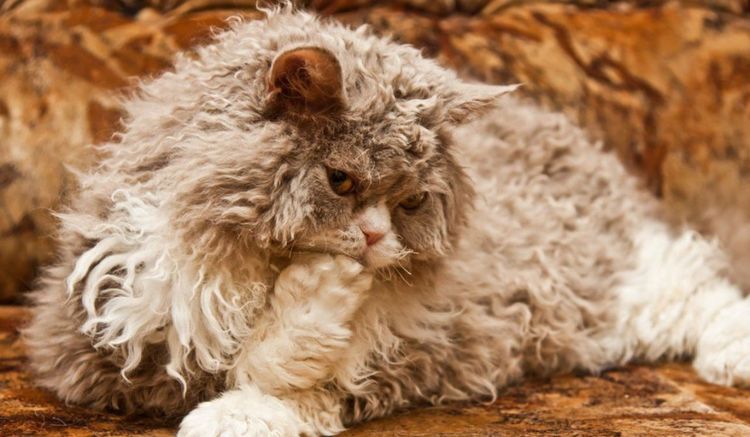
A distinctive feature of all curly-haired cats is the absence of a specific odor associated with their fur and the absence of a shedding period. However, they still require regular brushing (at least twice a week). When grooming their curls, it's also important to remember that using a hair dryer after bathing can cause the curls to become unraveled.
Curly cat breeds
Curly cats are not one breed, but a whole group, each of which has its own origin story and other characteristics.
Cornish Rex
This breed The Cornish Shorthair is considered fully formed and the oldest, as its history began with the birth of a litter of kittens in Cornwall, UK, back in 1950. One of these kittens was covered in wavy, fine hair. To further develop the breed, Cornish Shorthairs were crossed with domestic, British Shorthair, and Siamese cats, resulting in a graceful animal with a lean build, large ears set on an elongated muzzle, long paws, and a tail. Their distinctive feature is that their coat lacks guard hairs, and is formed from a single undercoat, which, due to its waviness, gives the animal a "karakul" appearance.
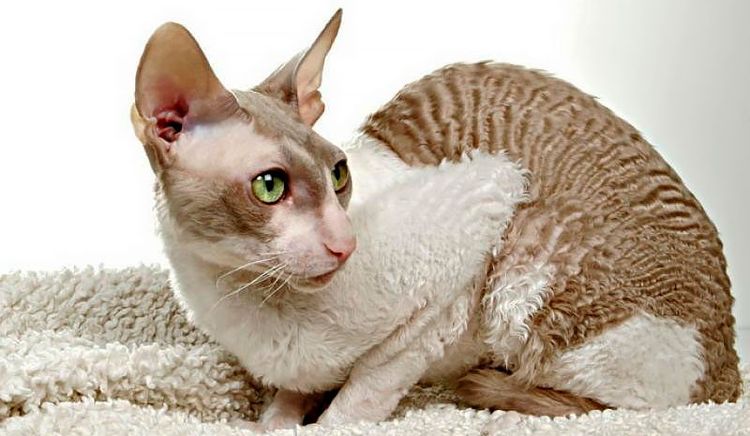
Cornish Rex cats thrive on human interaction, making them ideal pets for families or people willing to devote a significant amount of attention to them. They are sociable and intelligent animals, and can even be trained to obey commands and retrieve small objects.
Devon Rex (Devonshire Rex)
Despite the fact that Devon Rexes Similar in age and appearance to the Cornish, they have nothing in common. They have a completely different mutation gene responsible for curly hair, so crossing a Cornish with a Devon produces kittens with smooth coats. Their appearance is very unusual and graceful: a small, flat head with large, slanted eyes, a slightly upturned nose, and wide-set, large ears, along with long, fragile limbs. The body is practically devoid of guard hairs and topcoats, and the wavy "scribbles" are formed solely by the undercoat.
For reasons that remain unexplained to date, even allergy sufferers do not experience allergic reactions to Devon Rexes.
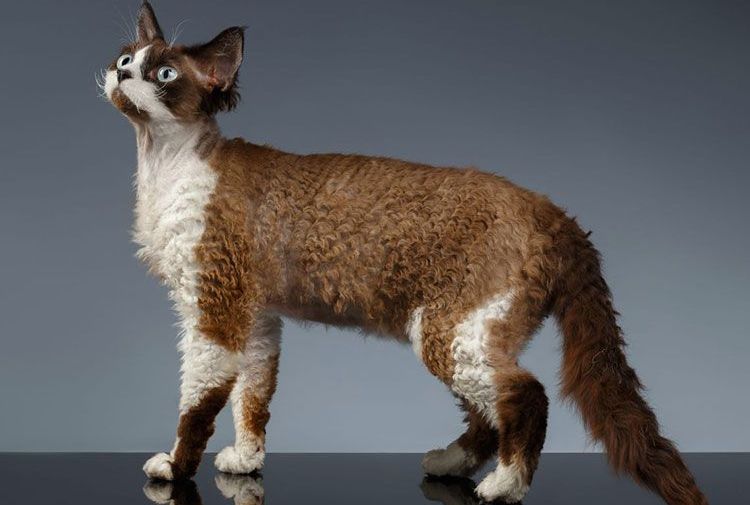
Devon Rexes are very intelligent and active, and are also easy to train. They love to climb and jump, for example, from the backs of sofas and armchairs. However, they are very sensitive to hypothermia and drafts, so they are best suited only for city apartments.
Selkirk Rex
The breed's history began in the United States in 1987, when a female cat had a curly-haired kitten. She was adopted by Jerry Newman, a Persian breeder, and later bred with her own pedigreed male cat. Three of the six kittens born were curly-haired. Selkirks come in short- and long-haired varieties, and the degree of curl is influenced by various factors, including the time of year, climate, and the pet's hormone levels. Varying degrees of curliness are tolerated until the age of two: for example, kittens born with curly hair may become smooth-haired within a few days, only to regain their curls a few months later. It's also possible for kittens with normal coats—a "Selkirk Rex Straight"—to appear in the same litter.
Coat type of a newborn kitten Selkirk Rex It is easy to tell by the whiskers: the curly ones will have curled whiskers, while the smooth ones will have straight whiskers.
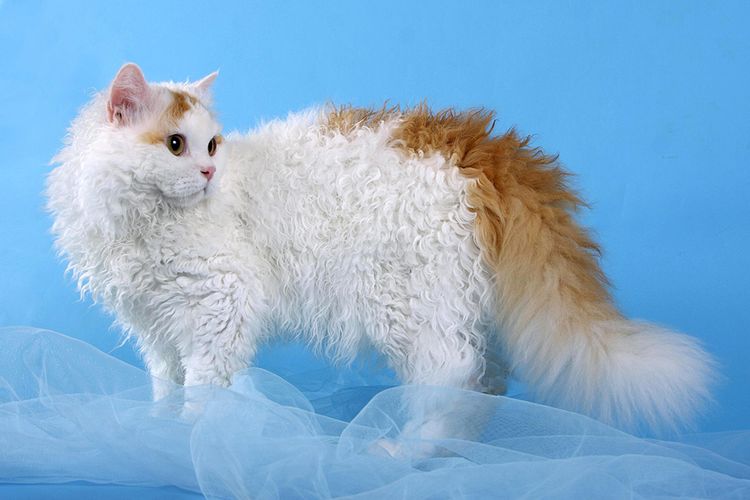
Selkirk cats are known for their calm and reserved nature, but they don't tolerate loneliness well and love to purr. They are not afraid of strangers, become attached to their family (including children), and coexist well with other cats in the same household.
Ural Rex
This independently developed Russian breed is possibly one of the oldest populations of curly-coated cats in the world. Old-timers recall seeing curly-haired pets in the Sverdlovsk region even before the war. They were then considered sick and were often destroyed, leading to the extinction of this species for some time. A rebirth Ural Rexes The first incident occurred in the 1980s, when Mura, a cat from the city of Zarechny, gave birth to three kittens, two of which had unusual curls. Today, they are muscular, strong pets with almond-shaped eyes and a classic muzzle and ears. According to the standard established in 1994, Ural Rexes come in two varieties:
- with dense, short silky hair that covers the entire body with elastic wavy curls;
- with semi-long, thick hair with less pronounced waviness, but with a more prominent mane and curls on the tail.
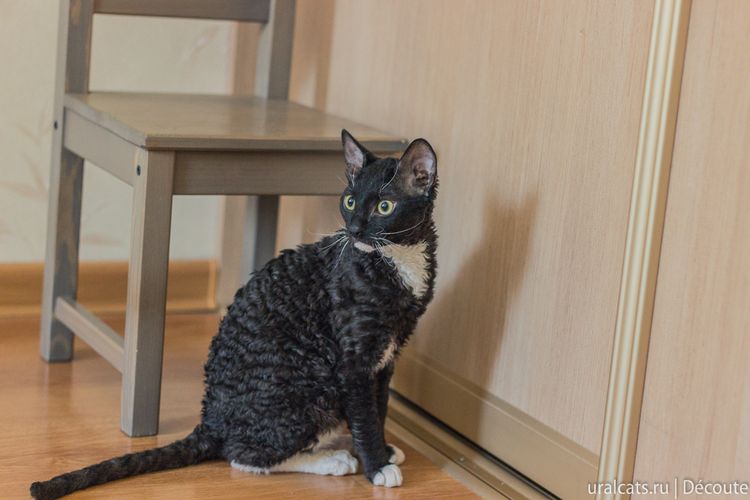
Ural Rexes have a balanced, docile character, are highly intelligent, and are always able to accurately sense their owner's mood and understand what is expected of them.
Herman Rex
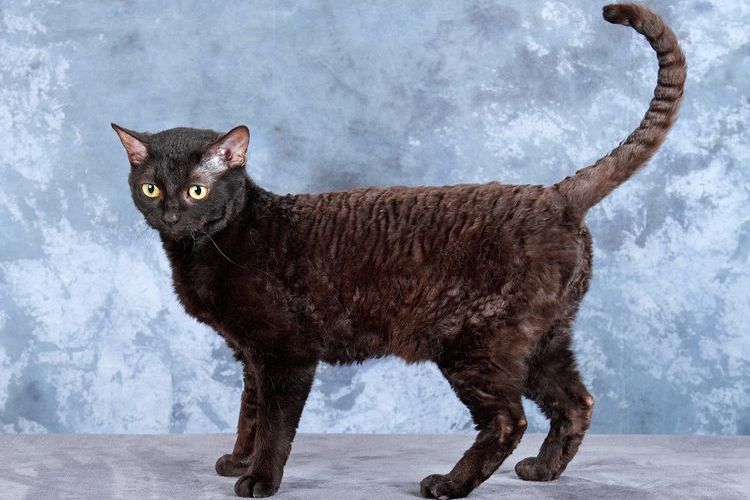
Another line of the Rex group, it originated in Germany as a result of crossing Turkish Angoras and Russian Blues. They have a muscular, solidly built, medium-sized body, a round head with proportional eyes and large ears. German Rex cats have no undercoat, and their short, intricately curled fur is very soft and pleasant to the touch.
Representatives of this breed are very inquisitive, active, very talkative, and constantly making various sounds. They prefer to be the center of attention, so they are often individualists who do not get along well with other pets.
Bohemian Rex
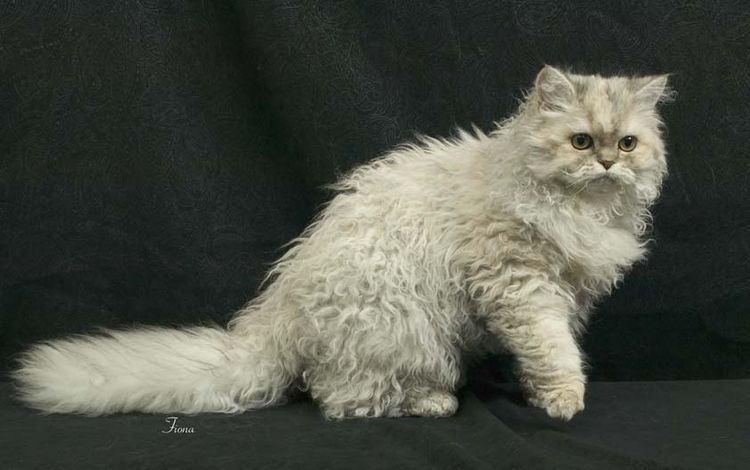
These pets originate from the Czech Republic, where in the 1980s, a Persian breeder suddenly had several curly-haired kittens. They were so impressed by the kittens' playful appearance that they decided to preserve and strengthen this unusual trait. The result is a breed similar to Persians in every way, except for their fur: Bohemian Rexes Bohemians have a medium to very long coat with numerous curls randomly distributed over their bodies. They have a muscular body, short, strong limbs, and a coloring similar to Persians. Representatives of the Bohemian line are distinguished by a sedate, affectionate nature and love to spend a lot of time in their owner's arms.
LaPerm
Name LaPerm The word "permanent" can be translated as "permanent" (perm is part of the word "permanent," meaning a long-lasting curl, and "la" is a French prefix), which accurately reflects the appearance with its many spirals and ringlets. This is an independent line that first appeared in the United States in 1982, when a completely hairless kitten was discovered in a litter on a farm in Oregon. Her owner was in no hurry to get rid of the unusual kitten, and soon she grew curly, silky fur, earning her the name Curly (from English "curly"). Her offspring produced similarly strange kittens, which were born hairless and later developed curls and even curly whiskers.
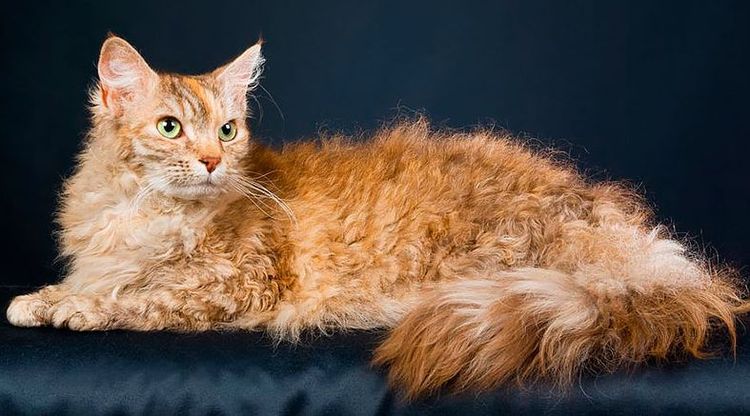
LaPerms can have short or semi-long, soft, noticeably curly fur. They are very sociable and affectionate, making wonderful companions, but at the same time, they remain true predators, retaining their natural hunting instinct.
New breeds
The enduring popularity of pets with unique curls has driven breeders to develop new lines of curly-haired cats. These include the Skookum (also known as the dwarf LaPerm), a relatively new breed created by crossing a LaPerm with a Munchkin. It is the latter that gives Skookums their miniature size. They have a sturdy body, short legs, and long, curly fur. These cats tend to be quiet and have a calm, even temperament, but they also enjoy running around the house and playing with moving objects.
Currently, the following variations are being developed at the experimental selection stage:
- Maine Coon Rex – giant Maine Coons with incredible curls;
- Manx Rex – cats without a tail and curly fur;
- Ruffle - an attempt to create a Cornish Rex with curled ears by crossing it with an American Curl.
It is possible that over time, representatives of new, more amazing breeds will appear, with a unique genetic line and a unique appearance and character.
Read also:


Add a comment