
Xoloitzcuintli (Xoloitzcuintli) - what is this Mexican dog like: hairless, bald or crested?
The Mexican Hairless Dog, or Xoloitzcuintle, often evokes mixed feelings when first encountered. Not everyone is thrilled. However, the breed's fan base is growing every day, as the Xolo has a good temperament and one significant advantage over other breeds: it doesn't shed.
Content
History of origin
The Xoloitzcuintle originates from Central America. The breed's history dates back to pre-Columbian times, when the Mayan, Aztec, and Calima civilizations dominated. Numerous ceramic dog figurines have been discovered during excavations, some dating back over 2,000 years. These relics are proof of the close bond between humans and Xolos that has existed for centuries.
The breed's name derives from two words: Xolotl (the name of an Aztec god) and Itzcuintli (dog). Therefore, Xoloitzcuitli means "dog of the god Xolotl." In mythology, the axolotl was responsible for communication between the world of the gods and the dead, a sort of mythological courier. The Native Americans believed that the dog conveyed the soul of the deceased to the conductor, so the animals were buried with their owners. The Native Americans used the Xolo in various rituals and ceremonies, for medicinal purposes, and as a primary source of meat. Their meat was considered a delicacy and was purchased for special occasions.
The Xoloitzcuintle's history spans thousands of years, but it wasn't until the 1950s that the breed was officially registered in Mexico. These were mostly indigenous dogs, and they didn't generate much interest. Furthermore, there was no standard by which to judge the breed. The first standard was adopted by the Mexican Cynological Federation in 1956. The rural dog from the Balsas Valley served as the model. The standard subsequently changed several times. In the late 1960s, the miniature variety was legalized, and standard dogs were divided into medium and large sizes.
The breed is rightfully considered a national treasure of Mexico.
In 2007, a new stage in the breed's development began with the addition of another variety to the standard - the coated Xoloitzcuintle, which had been excluded from breeding for 50 years.
The mysterious word "xolo" was first heard in Russia in the early 1990s. That's when the first Mexican hairless dogs arrived in the country, brought by breeder Luis Mojarietta with the assistance of Lyudmila Chursina. In 1996, a national hairless dog club was established, encompassing three Xoloitzcuintle breeds: the Peruvian, the hairless, and the Chinese Crested. Since the turn of the millennium, the breed has spread throughout the country, and by 2015, kennels had opened in virtually every major city in the CIS.
Video review of the Mexican Hairless (Xoloitzcuintle) dog breed:
Appearance
Modern Xoloitzcuintlis are as graceful and distinctive as they were in centuries past. Their harmonious appearance, movement, and proportions reflect their natural origins.
Mexican dogs come in 3 sizes:
- Mini height 25-35 cm;
- Average height 36-45 cm;
- Standard 46-60 cm.
In addition, there are two varieties in the breed:
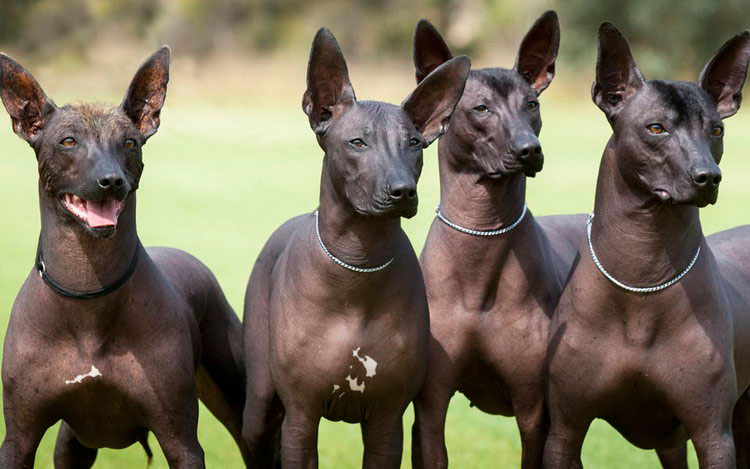
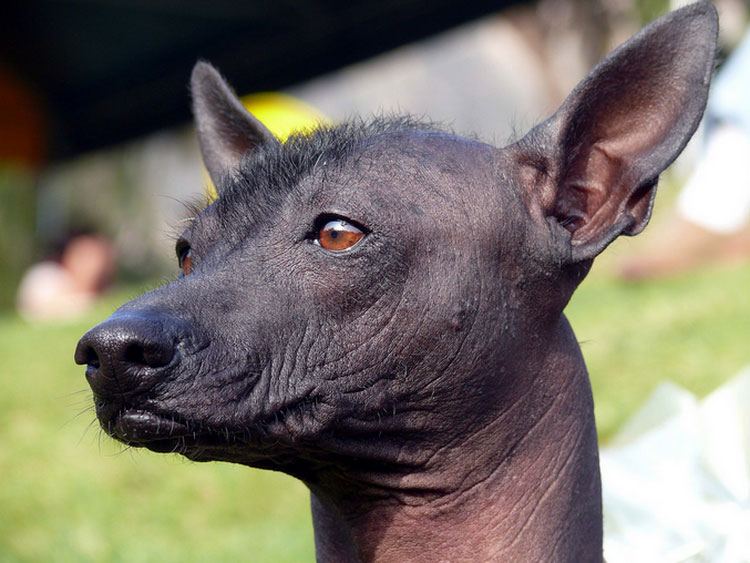
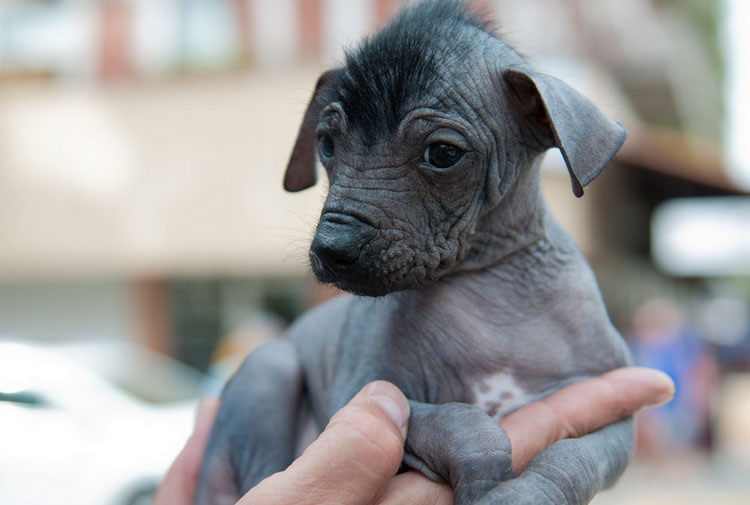
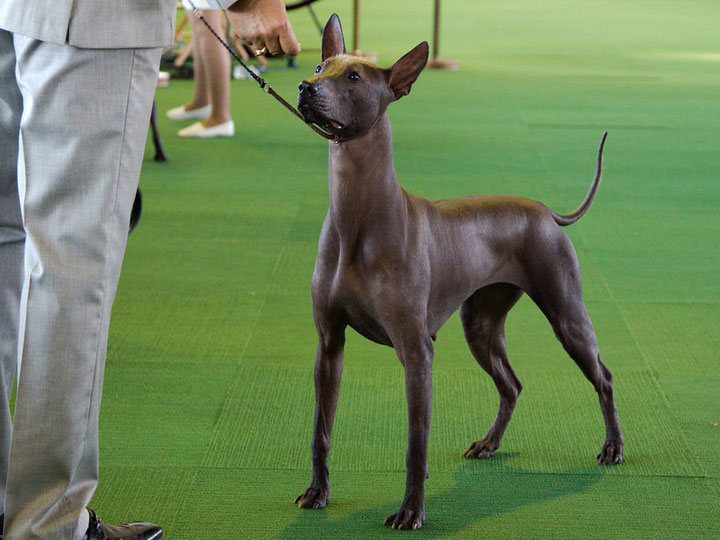
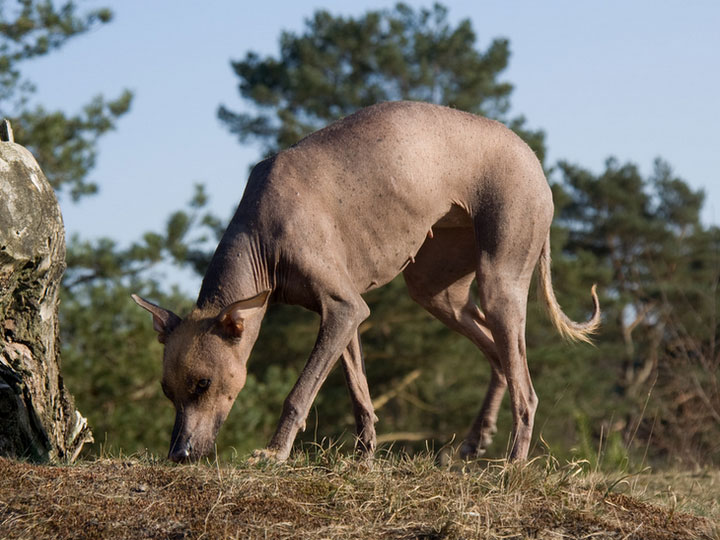
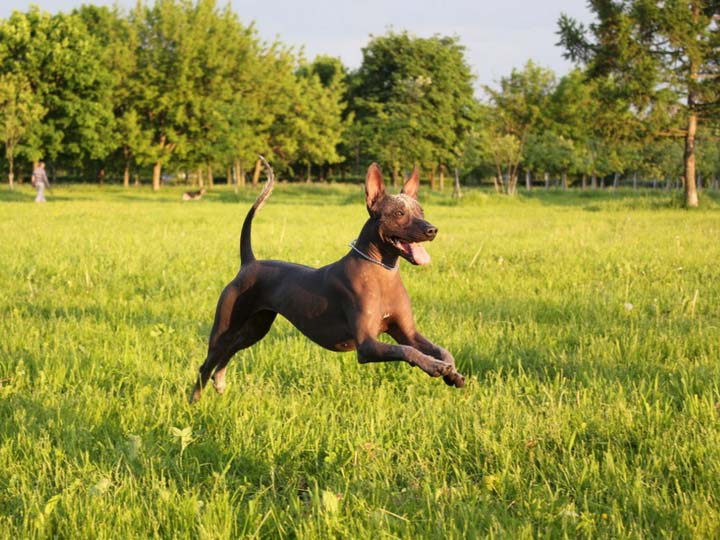
- Hairless dogs. They are completely hairless, with the exception of a short mohawk on the head and sparse short hair on the paws and tail. The hair forming the crest should not exceed 2.5 cm in length. Hairlessness is not penalized. The skin of hairless varieties is particularly important. It is fairly dense, elastic, and does not form folds or dewlaps. Only young puppies have folds on the body, which smooth out with age. The skin can be smooth or rough to the touch. The skin color is uniform and rich, with dark shades (black, graphite, gray, red, liver, bronze, and fawn) being preferred. Markings of any color, including white, are permitted.
- The coated Xolo. An exact anatomical replica of hairless dogs, but covered in short hair. Their dental formula also distinguishes them. The coated variety has a completely fine, short coat, smooth and even, with no undercoat. The coloring is preferably the same as the skin color of the hairless variety.
The skull is broad and wedge-shaped, with a well-defined occipital protuberance, tapering toward the muzzle. In profile, the muzzle and skull are parallel, with square, strong jaws. The tongue is usually pink but may have black spots or stripes. The lips are dry and tight. The nose is dark, but may be spotted or brown in certain coat colors. The almond-shaped eyes are medium in size; their color varies depending on coat color and ranges from black to light amber. The ears are long, erect, and tilted slightly forward.
In the hairless variety, a full set of incisors is preferred, but missing canines, molars, incisors, and premolars, as well as over-extended teeth, are not penalized. Many dogs do not have deep tooth roots. The coated variety should have a complete dentition, with a scissor or level bite.
The neck is smooth, dry, slightly arched, and thin, set high. The body is well-proportioned. The topline is absolutely straight and level, the croup is slightly convex, sloping at a 40-degree angle. The chest is long and deep, and the tail is a smooth continuation of the croup – thin, long, and tapering to a point. The abdomen is moderately tucked up, the limbs are strong, straight, and well-muscled.
Important proportions:
- The distance from the withers to the elbow is equal to or slightly less than the distance from the elbow to the ground.
- The length of the body is slightly greater than the height, with an approximate ratio of 10:9; in females the body is slightly longer.
- The muzzle and skull are approximately the same length.
Character
The Mexican Hairless Dog has a quiet, calm temperament. They are cheerful, sociable, and highly intelligent. They are incredibly loyal to their owners, typically favoring one person in the family but not neglecting others. While not known for aggressive behavior, they are quite alert, making them not only wonderful companions but also excellent watchdogs.
Of course, representatives of the same breed vary greatly in personality, but there are common traits. All dogs are even-tempered, playful, cheerful, and forgiving. However, they can be jealous and easily offended. They are very gentle and affectionate with their own people, but wary of strangers. Xolos are good at reading people's moods. They are very sociable and affectionate, and will never miss an opportunity to be near their owner or to participate in all their activities.
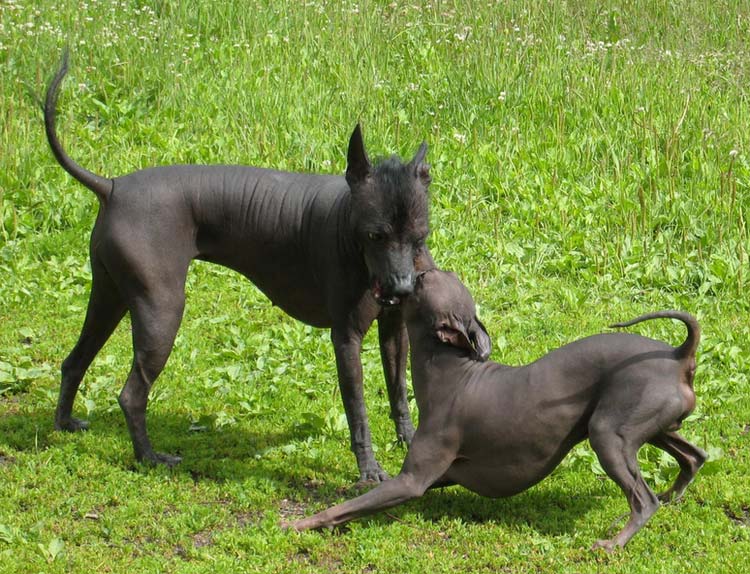
They get along well with other animals in the house and are friendly with dogs and cats. They are moderately tolerant of small children, but will happily play with older children all day. In short, serious and simple, they are perfect for people who value obedience and predictability in dogs.
Trainability
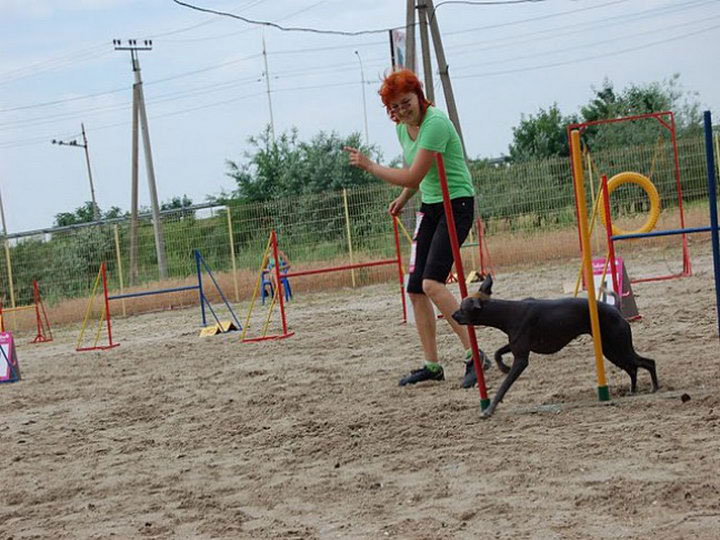
Xolos are very intelligent and quick-witted. They quickly learn house rules and strive to follow them to avoid upsetting their beloved owner. They are easy to train, especially with positive reinforcement. Their obedience, intelligence, and energy make these dogs excellent companions for sports. Xolos are increasingly seen competing in agility, freestyle, and sometimes even lure coursing.
Content Features
The Mexican Hairless Dog is ideal for apartment living. It doesn't take up much space, doesn't shed, and is quite calm. It rarely messes up or damages things, especially if given enough time for walks and play. The only caveat is that these dogs have a distinctive odor emanating from their skin. It's not particularly strong, but it's still present. Regular bathing can help minimize the problem. Xolos rarely bark, which will certainly please neighbors. This miniature breed isn't suitable for those who dislike shivering dogs. They become cold when the temperature drops just below room temperature, and shivering also occurs during periods of stress.
Very sensitive people should be prepared in advance for frequent comments and opinions from rude strangers about their dog's appearance.
Unprotected skin tans very quickly in the sun, so sunbathing should be done sparingly. In summer, it's best to walk in the shade. Sunscreen can be used. Because of this, Xolos are much lighter in winter than in summer. In cold weather, many owners apply sunscreen to their sensitive ears, paw pads, and genitals.
Wounds and scratches a dog may receive while walking are easily visible. Scars from these wounds are also visible to the naked eye. However, on the plus side, fleas don't live on dogs, and ticks are very easy to spot after a walk.
Is the breed hypoallergenic?
Don't believe breeders who claim Mexican Hairless Dogs are allergy-free. Typically, an allergic reaction isn't caused by the fur itself, but by proteins found in sebum, saliva, urine, sweat, and epithelial cells. In this case, they easily pass from the skin into the environment. The only way to determine if a dog is allergic is to spend some time with the dog.
Choosing clothes for hairless dogs
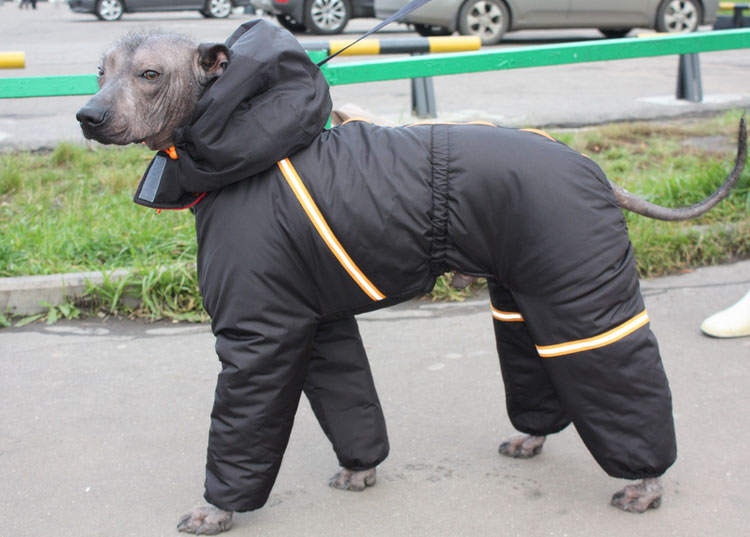
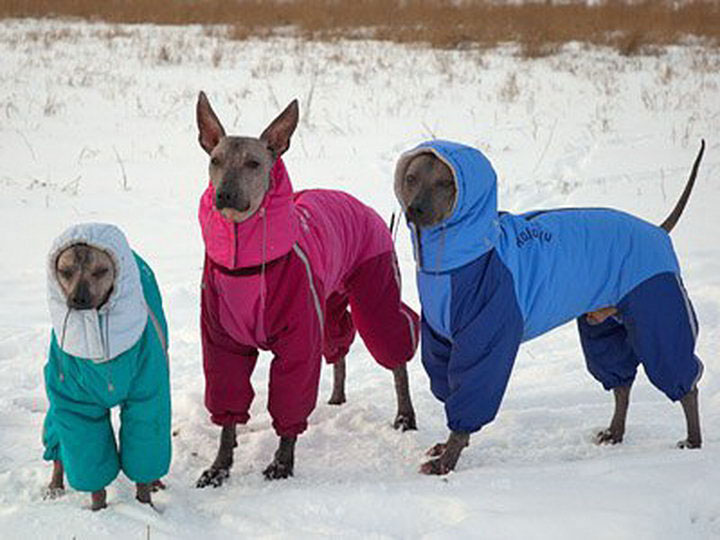
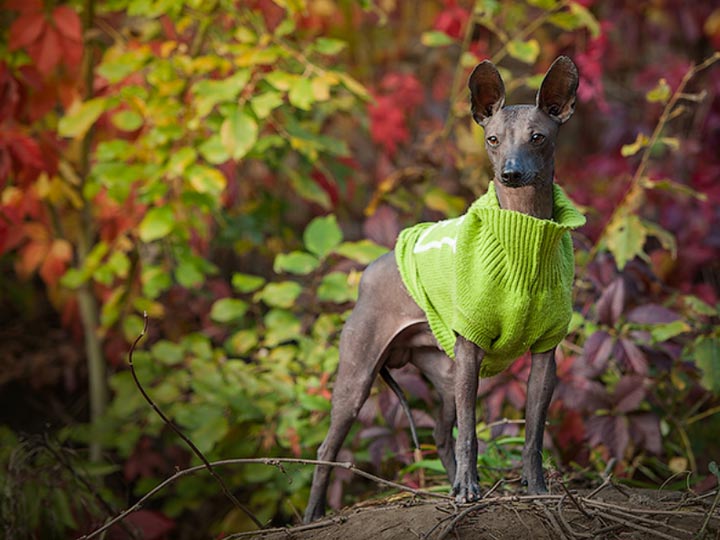
Clothing is a necessary measure for a hairless dog. The good news is that dogs accustomed to it from puppyhood don't mind new clothes. With the onset of the first cold weather, they are dressed. Cold weather forces you to invest in extra warmth: you'll need not only a good jacket, but also a hat and perhaps some boots. It's crucial that clothing fits properly—it allows the dog to move freely, but isn't too loose.
Care
A dog's exposed skin requires special attention. It's tough, elastic, and can be smooth or rough due to pores and immature hair follicles. It's recommended to bathe dogs with shampoo no more than once a month. If your dog gets very dirty, it's best to rinse them off in the shower. To prevent dry skin, apply nourishing oil, cream, or baby oil after bathing.
Grooming for the coated variety of the Mexican Shepherd is largely similar. The only difference is that the skin is oiled only in exposed areas. Bathing is less frequent, approximately every 2-3 months. The coat is combed weekly with a fine-tooth comb.
Pay special attention to the condition of the oral cavity, brush your teeth regularly, preventing the formation of plaque and tartar, which accelerate tooth loss.
The Mexican Hairless Dog's ears should be erect. However, due to their large size, they rarely stand up on their own. From three months of age, the puppy's ears are secured with adhesive tape and massaged to help them stand up. The ears are cleaned as needed.
Diet
Due to the congenital absence of some teeth and short roots, the size and hardness of Xoloitzcuintle food require special attention. It's also important to consider that most Xolos are allergic, so food and other ingredients are carefully selected. Most breeders prefer to feed their dogs natural food. However, dry or wet commercial food is also available. Xolos are prone to gaining excess weight.
Health and life expectancy
Despite their hairlessness, the Mexican Hairless Dog is a hardy, strong, and healthy animal that can easily withstand heat and temperatures above -5 degrees Celsius. While the breed is not known to be prone to hereditary diseases, there are health issues that owners often encounter. These include dental and dermatological problems caused by allergies or improper grooming. During adolescence (6-8 months), dogs often suffer from acne. This can be managed with lotions for problem skin or a veterinarian-prescribed product. Exfoliating scrubs are often helpful in removing blackheads.
Breeding Features
The gene responsible for hairlessness is dominant. Despite this, two hairless dogs can produce coated puppies. Furthermore, mating hairless dogs results in a 25% chance of homozygous puppies, which die in the womb or are born nonviable. Given the rarity of the breed and the impossibility of ensuring the necessary genetic diversity, the Federation allows the use of coated dogs with good anatomy, descended from hairless parents, in breeding (but not in shows).
Sometimes, two hairless dogs produce a semi-powderpuff—the dog's body is mostly covered in fur, but there are large bald patches, usually on the back, sides, and belly. Such a dog's appearance is not what one would call attractive.
Choosing a Mexican Hairless Dog Puppy and Price
Just 10-20 years ago, no one had even heard of Mexican Hairless Dogs. But today, finding a breeder and buying a puppy in the CIS countries is no problem.
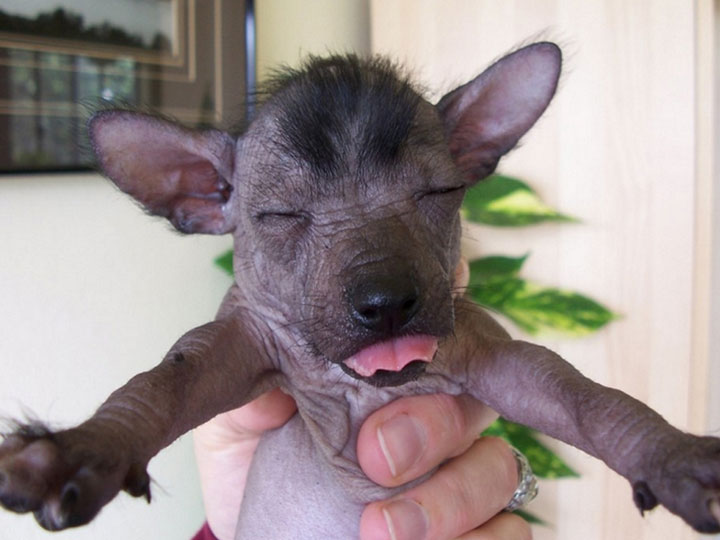
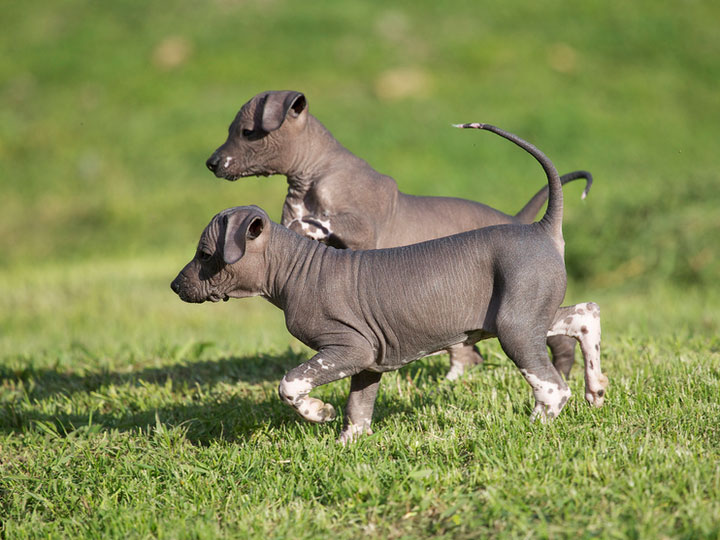
Buying a good puppy begins with choosing a breeder. The breed is relatively new and very complex. Numerous nuances must be considered to ensure healthy offspring, so the breeder you choose should be knowledgeable about genetics. The dogs' living conditions, the appearance of the parents, and the puppies, which should be healthy, well-fed, and active, will tell you a lot. Even young puppies must meet the standard, and if the standard states, for example, that a solid coat and skin color are preferred, don't trust a breeder who claims that their dogs with solid spots are true to their original coloring. Xolo puppies may have a light fuzz on their bodies, which will disappear after the puppy shedding period. The body and coat color does not change with age, but may become slightly brighter.
When choosing a pet, pay attention to the number of teeth. If there are very few baby teeth, there may be even fewer permanent teeth.
Mexican Hairless puppy prices vary widely. A puppy from a breeder will cost an average of 40,000 rubles. Standard-sized dogs are usually slightly cheaper than miniatures. The breed is not very numerous, but undocumented dogs are already being sold. However, their price is typically no more than 10,000 rubles. The price of a coated variety, if not suitable for breeding, usually does not exceed 5,000 rubles.
If you haven't found a Xolo puppy that you like, consider breeds such as: Chinese Crested, American Hairless Terrier, Peruvian Hairless Dog.
Photos
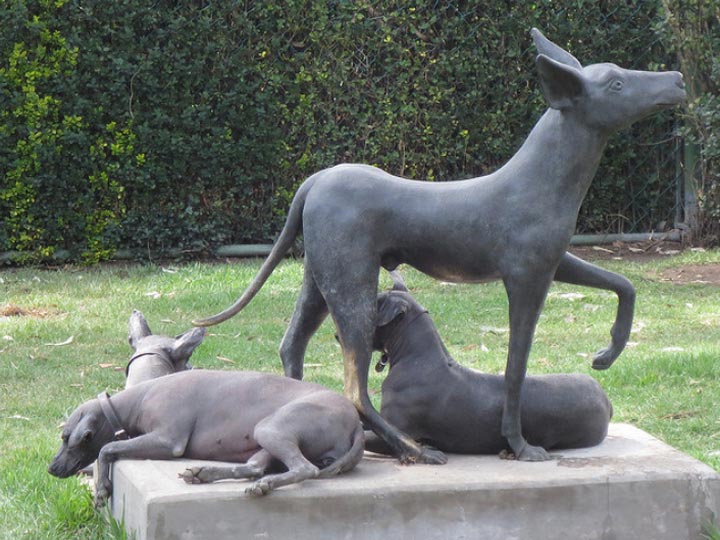
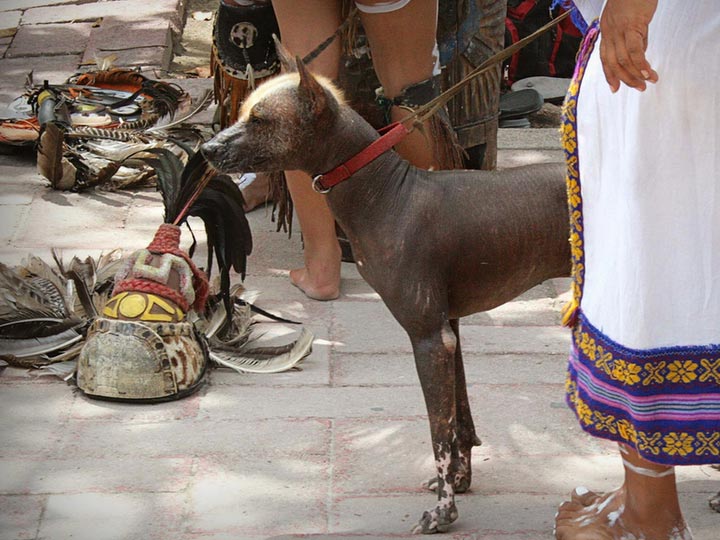
Photos of Mexican Hairless Dogs. Small and large, dark and light, crested, bald, and furred—there's something for every taste.
Read also:


1 comment
Angelica
Sorry for the 4 stars, I wanted to give it 5, but I just poked my finger that way.
The article is wonderful, very interesting and informative, thank you!
Add a comment