
Blood in a cat's urine: causes and treatment
Urine is a liquid excretion that removes foreign substances and metabolic waste from the body of humans and animals. Normally, this bodily fluid is clear and straw-yellow in color. The appearance of blood in a cat's urine can be caused by both natural, harmless causes and diseases. This phenomenon is medically known as hematuria (the Latin word for blood is "hemma," and "urina" is "urine").
Causes of hematuria
A reddish tint to urine isn't always a sign of a dangerous disease. This color can occur after a cat eats vegetables containing the plant pigment carotene (such as carrots and beets). Once the pigment is eliminated from the body, the urine will return to its normal color. Physiological causes of hematuria also include factors related to the reproductive function of the cat (specifically, the female cat, not the male cat):
- heat. Urine takes on a pinkish tint due to the mixing of bloody vaginal discharge, which is often observed during estrus.
- Postpartum period. Within a few days after the kittens are born, the cat's uterus begins to clear itself, and bloody discharge or even clots of blood from the uterus will end up in the litter box and mix with urine. If this continues for more than a week, concern should be raised.
In cats, hormonal activity gradually declines after sterilization, and these substances may still be present in the animal's blood for 1.5 to 2 months, causing bloody discharge. This is temporary and requires no treatment. Hematuria in a neutered cat is much more serious: after defertilization, the ureter narrows in male cats, which can lead to an exacerbation or development of urolithiasis.
Conditions that can cause hematuria in cats include:
- Pathologies of the kidneys and urinary tract. Damage to organ tissue and capillary bleeding are often accompanied by pyelonephritis and chronic renal failure (chronic renal failure), cystitis, urethritis, urolithiasis.
- Injuries. Free-ranging animals are most at risk of developing post-traumatic hematuria.
- Neoplasms localized in the genitourinary system. Painful urination and blood in the urine can be caused by an enlarged tumor, either benign or malignant.
- Systemic diseasesLiver disease, infectious diseases, and heart failure can trigger the development of hematuria in cats.
- Endoparasites. Bacteria, helminths, and some types of arthropods can infest any of a cat's organs, including the kidneys and bladder. Damage to these organs results in capillary bleeding and blood entering the urine.
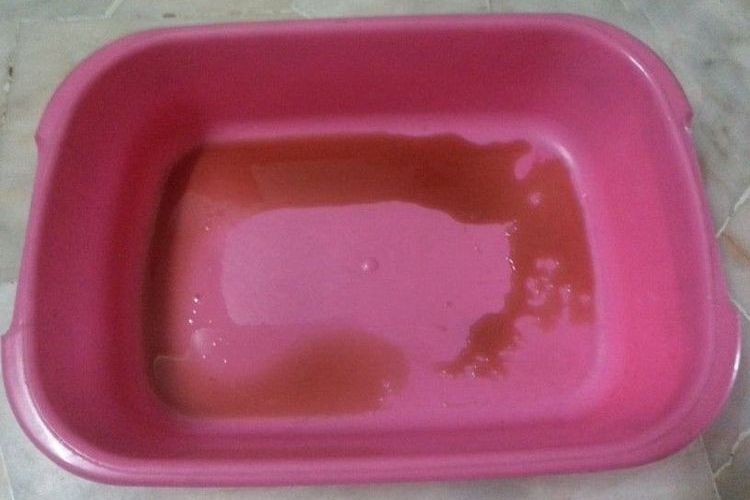
Symptoms of hematuria
Blood in a cat's urine can be detected by the urine's color, which takes on an unnatural brownish or pinkish tint. If hematuria is not physiological in origin, it is accompanied by symptoms of an underlying disease:
- general weakness, apathy,
- poor appetite,
- pain during urination (the cat often sits in the litter box, but has difficulty finding a comfortable position),
- pallor of the mucous membranes,
- digestive disorders,
- elevated temperature.
Diagnostics
If blood is detected in a cat's urine, a diagnosis is made based on the owner's medical history and laboratory data from urine and blood tests. The presence of purulent exudate, pathogenic microflora, and red blood cell and white blood cell counts are determined.
Urine collection is performed in the morning, no earlier than 3-4 hours before the sample is due for analysis. It is recommended that the cat not be fed for 12 hours before the sample is collected.
To make an accurate diagnosis, in addition to laboratory tests, your pet may undergo an x-ray and/or ultrasound examination of the urinary system.
Treatment
The veterinarian prescribes a course of treatment based on the results of diagnostic tests. Treatment for hematuria is aimed at eliminating its cause and relieving its symptoms.
If blood in a cat's urine appears due to a catarrhal process in the kidneys or urinary tract, pain-relieving medications, anti-inflammatory medications, and antispasmodics are prescribed. If necessary, medications may be used to correct the acid-base balance and restore daily diuresis if it has been disrupted.
If hematuria is caused by an infectious disease, the cat is prescribed a course of antibiotic therapy. Depending on the type of pathogen, broad-spectrum antibiotics, penicillin, or cephalosporin drugs are prescribed.
In addition to medication, your veterinarian may prescribe a therapeutic diet for your pet, excluding dry food and other foods that are difficult to digest. Your cat's diet and feeding schedule will be discussed with your veterinarian. Constant access to fresh water is essential.
Preventive measures
Pathologies that can cause the appearance of blood in a cat's urine can be prevented by following a few simple rules:
- do not let the cat outside unattended;
- regularly deworm your pet and treat it against ectoparasites;
- Bring your cat to the veterinarian for a preventive examination on time.
It's best to feed your cat natural food, but if you prefer canned cat food, choose premium food that doesn't contain additives, preservatives, or flavorings that are harmful to your cat's body.
Read also:
- Leptospirosis in cats: symptoms and treatment
- Hemobartonellosis in cats: symptoms and treatment
- Kitten's eyes are festering: causes and treatment
-550x428.jpg)


Add a comment