
Cryptorchidism in dogs: what it is, symptoms, and treatment
Cryptorchidism is a condition in which one of the male reproductive organs, the testicle, is located not in the scrotum, but in the peritoneal cavity or inguinal region. Cryptorchidism in dogs develops during the development of the genitourinary system; this anomaly accounts for 7-13% of all cases of anatomical abnormalities in male dogs.
Content
Types of cryptorchidism
The testicles are paired, oval-shaped, leathery organs located in the scrotum where sperm production occurs. During fetal development, the testicles are located near the kidneys and are connected to the scrotum by a muscular ligament, the gubernaculum testis. In the first week and a half to two weeks after birth, this ligament shortens, drawing the testicles into the scrotum, where they will remain for the puppy's entire life.
In most puppies at one and a half months of age, the testicles have already descended into the testicular sac.
The testicle can be relatively mobile due to the elasticity of the ligament and easily descend through the still-open inguinal canal. This phenomenon is called pseudocryptorchidism, which usually disappears during puberty.
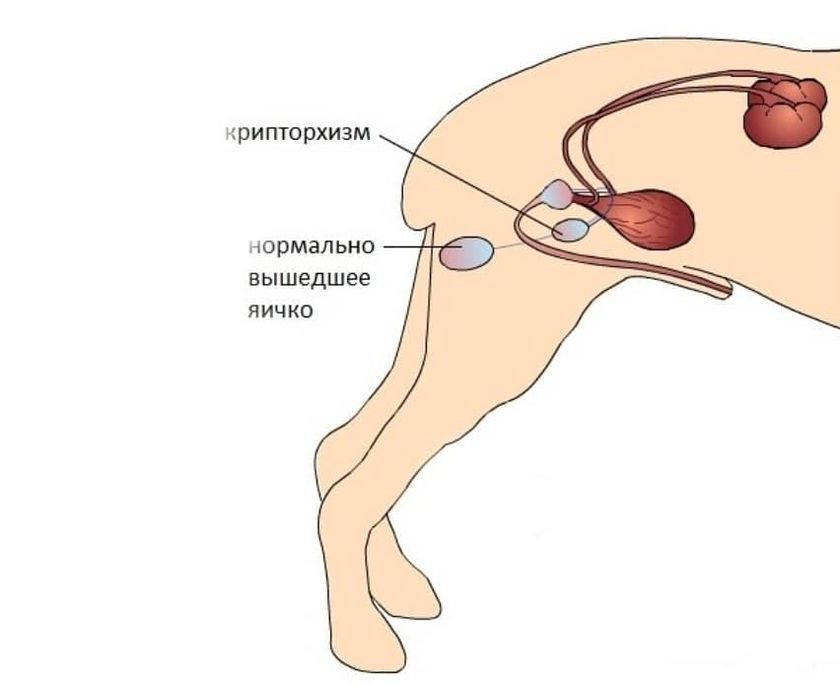
There are two types of abnormal testicular migration into the seminal sac: ectopic and retention. Ectopic is a type of abnormal testicular placement where the testicle exits the abdominal cavity and becomes lodged in the abdominal or perineal muscles. Retention occurs when the testicle remains in the peritoneal cavity or at the entrance to the inguinal canal.
Depending on the degree of damage, cryptorchidism in dogs can be bilateral or unilateral (bilateral and monolateral), that is, one or two testicles may be missing from the scrotum.
The dangers of cryptorchidism
In warm-blooded animals, the temperature in the scrotum is lower than the average body temperature. Therefore, abnormal positioning of the testes leads to decreased sperm production and viability, reduced or complete cessation of spermatogenesis, and, in some cases, to the development of life-threatening conditions and diseases.
Thus, an undescended testicle is easily subject to mechanical damage, and torsion of the spermatic cord can occur, accompanied by severe pain due to vascular compression and soft tissue entrapment. Cryptorchidism also often causes prostate cysts, hyperplasia (tissue growth) of the anal glands, and the development of inflammatory diseases such as orchitis or epididymitis.
Constantly overheating the testicles can lead to the development of various tumors. For example, cryptorchidism in dogs can result in:
- Sertolioma is a tumor that produces estrogens, the increased levels of which lead to feminization syndrome in male dogs.
- Seminoma (spermatoblastoma) is a malignant neoplasm.
- Leydigoma is a hormonally active tumor that provokes the production of testosterone.
Causes of pathology
Depending on the period of development of the pathology, cryptorchidism is divided into embryonic and postembryonic (that is, congenital or acquired).
The development of embryonic cryptorchidism in puppies can be caused by a deficiency of the androgen hormones gonadotropin and testosterone, as well as infectious diseases suffered by the female during pregnancy. As a result, the puppy may develop anatomical defects:
- the testicles are completely absent or have not reached normal size during development;
- the spermatic cord is too short;
- the inguinal canal is not wide enough;
- the scrotum is underdeveloped;
- the testicle is too large.
The causes of the postembryonic form of anatomical pathology may be injuries to the groin area that impede the process of testicular migration or diseases that cause inflammation of the genitourinary system.
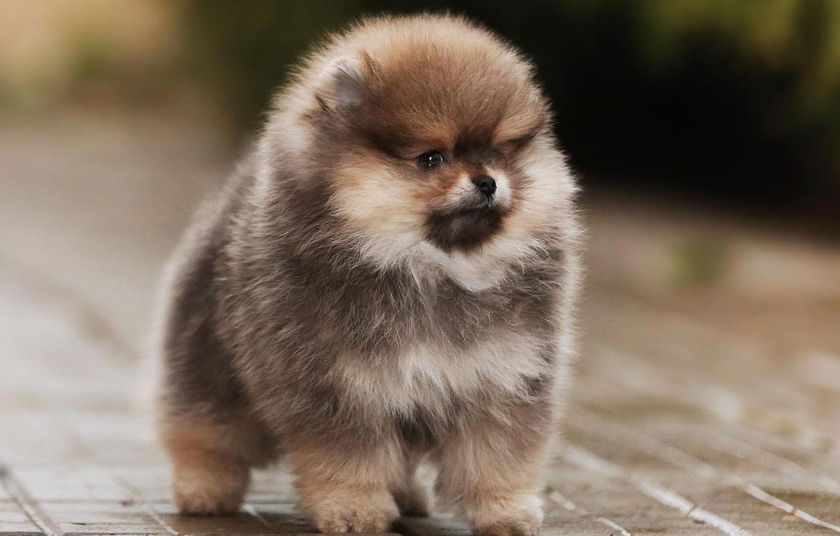
There are dog breeds with an increased risk of developing cryptorchidism, with mixed breeds being less prone to this condition.
Many owners of purebred dogs know what cryptorchidism is in dogs:
- Chihuahua;
- poodles;
- pugs;
- bulldogs;
- Staffordshire and Yorkshire Terriers;
- dachshund;
- Pekingese;
- Spitz.
Diagnostics
If cryptorchidism is suspected, the dog is first examined and the inguinal area is palpated. If an ectopic testicle is detected in the inguinal canal, an attempt is made to manually lower it into the scrotum. In cases of pseudocryptorchidism, this is quite easy.
If the testicle is located intra-abdominally, external examination and palpation will yield no results. In this case, the testicles are located by ultrasound or laparoscopy. However, ultrasound diagnosis of cryptorchidism is not always reliable, as scrotal fat or enlarged lymph nodes can mimic a testicle.
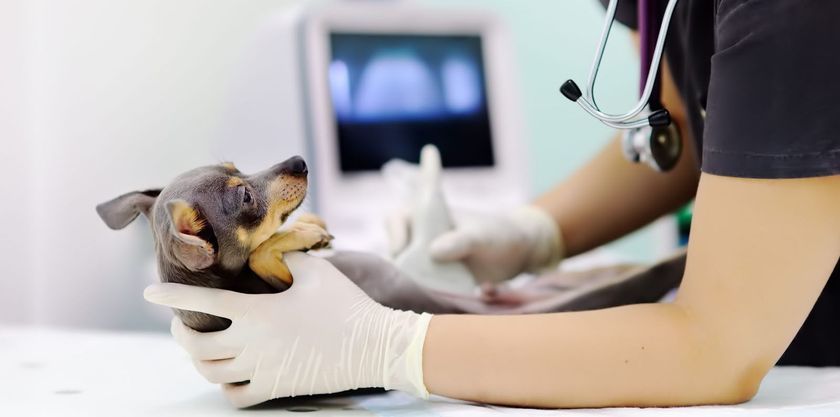
One reliable method for differential diagnosis of cryptorchidism is a blood test using gonadotropin. It measures the level of the androgen hormone testosterone before and after a gonadotropin injection. A higher testosterone level in the second sample, taken an hour later, is considered a sign of cryptorchidism.
Treatment
If a dog is diagnosed with cryptorchidism, the treatment method depends on the type of pathology detected during examination, the location of the testicle, its size, and the cause of the anomaly.
Therapeutic treatment
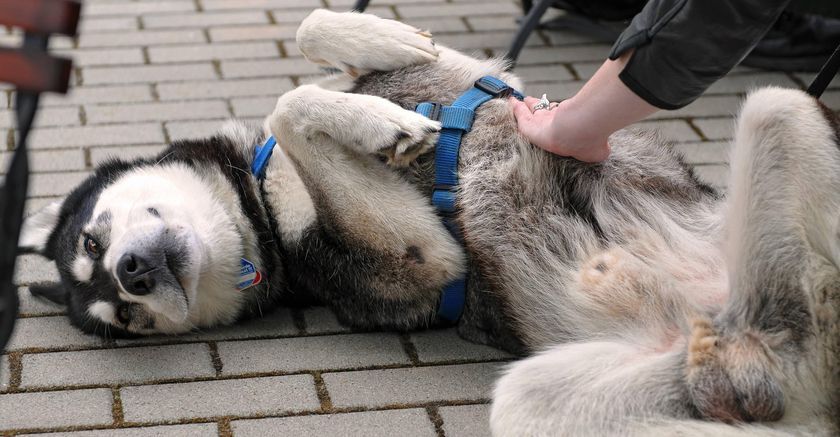
Treatment of cryptorchidism without surgery is possible if the cause is an endocrine disorder, such as insufficient production of androgen hormones (testosterone, luteotropin), which are responsible for testicular migration. If the puppy is under 6 months old and the inguinal canal is not yet closed, massage and hormone therapy may be prescribed for a cryptorchid dog.
Massage should be performed as frequently as possible, which will gradually draw the testicle into the scrotal sac. Hormonal therapy involves using medications that increase production of the hormone that promotes testicular descent. These hormones are human chorionic gonadotropin, which is similar to luteinizing hormone and is secreted by cells of the pituitary gland, and gonadotropin-releasing hormone, which is produced in the hypothalamus.
In most cases, cryptorchidism in dogs is treated surgically. It can cause serious complications, and male dogs with any form of cryptorchidism should not be used as breeding stock, even if they retain fertility.
Preparing for surgery
Before planned surgery for cryptorchidism, you will need:
- 3-4 weeks before the operation, vaccinate the male dog against infectious and parasitic diseases;
- 1.5-2 weeks before, carry out deworming;
- to select the correct dose anesthesia and to assess the animal’s condition 2-3 days before the scheduled operation, take a biochemical and general blood test, and a urine test;
- if necessary, undergo an X-ray examination and echocardiography or screening ultrasound of the heart;
- treat the dog within 2-3 days from ectoparasites;
- the day before the operation, wash the animal with shampoo; if the dog has long hair, it must be combed out;
- The last meal should be 12 hours before the operation, and it is advisable to limit drinking for 6 hours.
Animals that have not been diagnosed with infectious diseases and have not had any history of exacerbation of chronic diseases are allowed to undergo surgery.
Progress of the operation
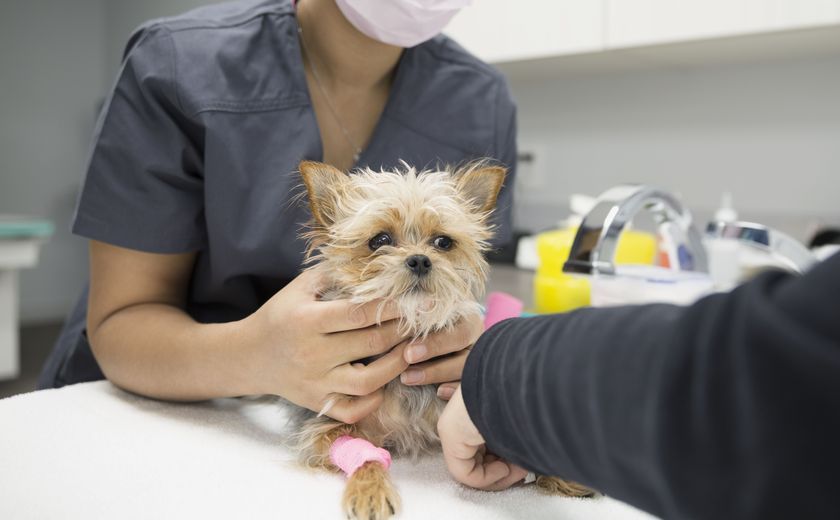
There are two surgical treatments for cryptorchidism in dogs. The first is orchiopexy, the forced lowering of the testicle into the scrotal sac. This technique is rarely used today, as it does not always prevent recurrence. Cryptorchidism in dogs is usually treated by orchiectomy—removal of the testicles. The resection is performed under general anesthesia, and the technique chosen depends on the location of the testicle.
For inguinal cryptorchidism, the surgery is minimally invasive and lasts 15-20 minutes, like a standard castration. If the testicle is in an intra-abdominal (abdominal) position, orchiectomy in a cryptorchid male dog is an open surgery, lasting 30 to 60 minutes.
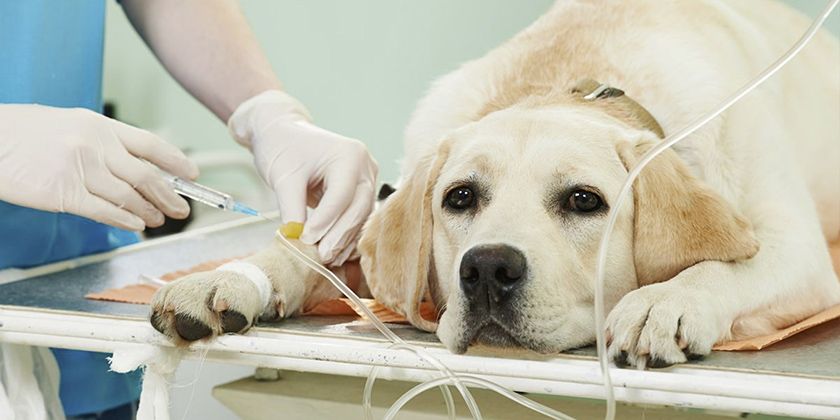
Stages of the operation:
- Premedication is the preliminary medicinal preparation for general anesthesia. Analgesics, antihypertensives, and anticholinergics are administered, which suppress vagal reflexes and reduce smooth muscle tone.
- Induction of anesthesia. Inhalation (mask), intravenous, or endotracheal anesthesia may be used.
- Preparing the surgical site. Hair is removed and the surgical area is treated with antiseptics.
- Surgical access to the intra-abdominal testicle. This is performed by incising the skin and muscles overlying the testicle. The dissected blood vessels are ligated or coagulated. The testicular vein and artery are ligated and then dissected at their junction with the testicle.
- Extirpation (removal) of cryptorchid testicle.
- The wound is closed layer by layer with continuous or interrupted sutures, avoiding skin tension. Monofilament or polyfilament absorbable sutures are typically used, so there is no need to remove the sutures.
Even if a dog has unilateral cryptorchidism, the second, normal testicle is removed in the same way, since it is most often hypertrophied, and the dog will not be used to produce offspring.
Postoperative period
After the surgery, the dog is hospitalized, where it can remain for several days, although this is not required. Recovery from anesthesia takes between half an hour and two hours, and the anesthetic medications can be completely eliminated from the body within six hours to half a day. This depends on the complexity of the surgery, the dog's age, and its condition. The dog can be fed and watered 5-7 hours after recovery from anesthesia.
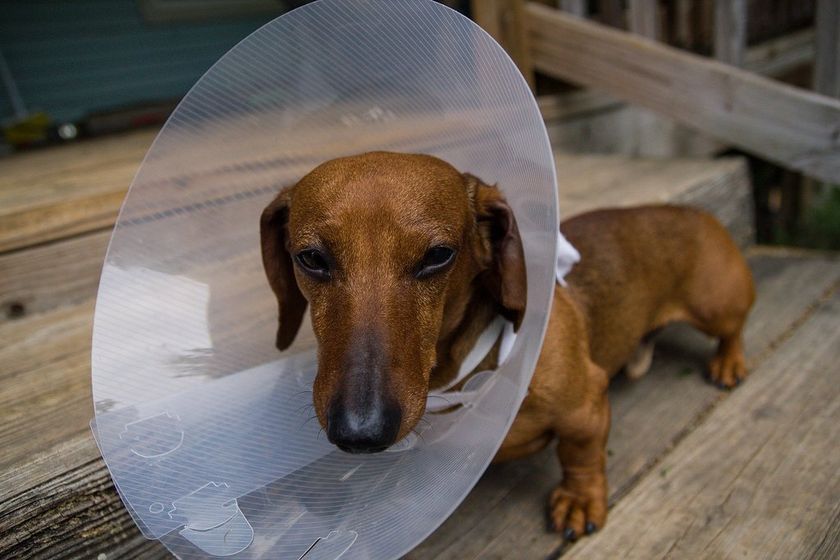
For 10-14 days, the sutures should be treated twice daily with antiseptic solutions, sprays, or ointments prescribed by your doctor. Painkillers should be used during the first 24 hours if necessary. To prevent contamination, licking, and damage to the sutures, it is recommended to place a protective collar or postoperative blanket on your dog—a bandage whose shape can be adjusted with fasteners.
The animal can be bathed 2-3 days after the sutures have completely dissolved. Any physical activity, including long walks, should be avoided for the first week.
The prognosis for surgical treatment of cryptorchidism in dogs is positive. The castration procedure has no negative impact on health. Male dogs retain their normal physical activity. Owners of neutered dogs often note that their pets lose their natural aggressiveness and become more friendly after castration.
Read also:


Add a comment