
Red spots on a cat's body
The condition of your cat's skin can be a good indicator of its health. If you notice red spots on your cat's body, it's time to visit the veterinarian to rule out a number of underlying conditions.
Reasons
Many skin conditions in animals are very similar. Veterinary medicine identifies five main causes of red spots on a cat's body.
- Dermatitis.
- Ringworm.
- Eczema.
- Demodicosis.
- Bedsores.
It can be difficult for the owner to determine the underlying cause of the red spots, as owners often notice the redness as a secondary symptom. A veterinarian will conduct a comprehensive examination and prescribe treatment.
First, the condition of the coat is assessed. It often loses its shine, is easily pulled out, or falls out profusely. The skin is palpated to determine whether it is dry or moist and whether it has lost elasticity. Body temperature is always measured during the examination. After the external examination, a skin scraping is taken to detect infections and invasive diseases.
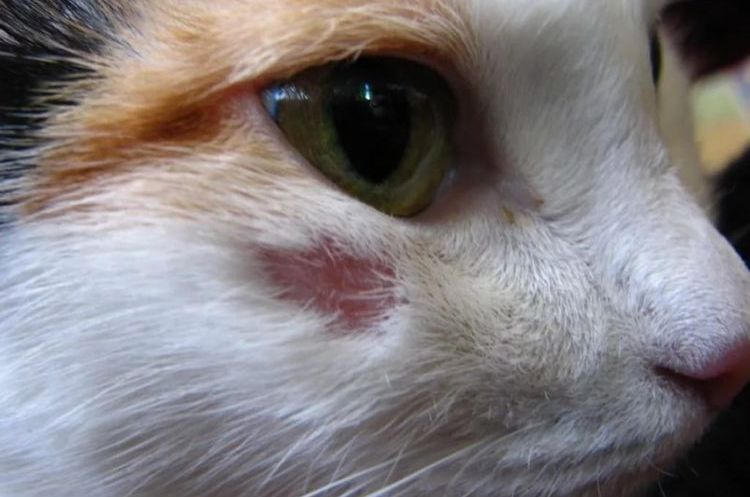
Dermatitis
The word "dermatitis" often covers a number of conditions. Most often, the appearance of red spots on the neck and behind the ears is caused by flea dermatitis. The cat's skin becomes unbearably itchy, reddened, and even ulcerated. Many owners are unaware that common fleas can cause serious skin conditions in their pets.
It's not the fleas biting the animal that are scary, but the cat's reaction to the parasite's saliva, which results in intense itching. Sometimes, even after the parasites have been eliminated, the redness persists. A wound eventually develops at the site of the scratching, which, if not treated promptly, can develop into an erosion. But sometimes, a small papule surrounded by a flat red border simply appears at the bite site.
Acute allergic reactions can be difficult to spot, especially if your cat has thick, long fur. With chronic flea allergy dermatitis, the red spots are more noticeable, as itching is often accompanied by hair loss.
Seasonal diseases include: atopic dermatitis – a reaction to an external irritant. With allergies, red spots appear not only behind the ears but also on the belly. A food reaction often causes a red nose or red spots above the eyes, where the hair is thin. Swelling may occur in the itchy areas. Atopic dermatitis most often affects cats aged 1-3 years. To treat your pet, it is necessary to eliminate the cause of the condition and prescribe antihistamines.
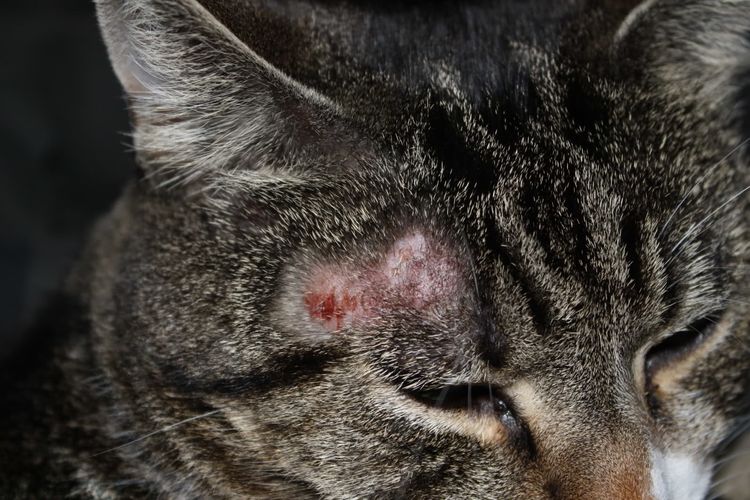
Ringworm
An infectious disease caused by the fungi Trichophyton and Microsporidium. Lichen It's dangerous not only for animals but also for their owners. It's quite difficult to suspect ringworm, as its main symptom is the appearance of bald patches on a cat's body, and this is far from the first stage of the disease. The most common affected areas are the face, behind the ears, paws, and tail.
Observing your cat's behavior can help you recognize the condition. In the first few days after infection, the animal will begin scratching itself. Upon examination, you may notice a red rash, which inexperienced breeders often mistake for dermatitis. The cat will become more irritated with each passing day, and the itching will intensify. While dermatitis causes itching all over the body, ringworm only affects specific areas.
The third stage is characterized by the appearance of scales and crusts, and the fur becomes greasy. When the disease becomes obvious, hair loss begins. The disease can be recognized even before bald spots appear: small red spots merge into spots. When infected with trichophyton, the spots take on a clearly defined circular shape, while when infected with microsporidium, large areas of skin are affected without borders.
At the first suspicion of ringworm, you should consult a veterinarian. Even in the early stages, affected areas will glow green under ultraviolet light. There's a catch: not all types of ringworm exhibit this reaction. What can be done to completely rule out this dangerous disease? A skin scraping is taken in a laboratory.
Experts do not recommend treating ringworm on your own. Vaccination is recommended when the skin becomes red. Injections are given both after infection and as a preventative measure. Topical treatments prescribe ointments with antifungal action.
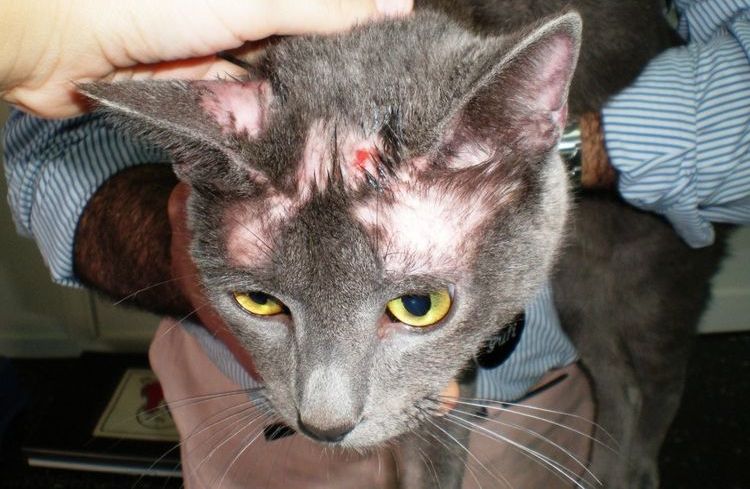
Demodicosis
The disease develops as a result of an infestation with a subcutaneous mite. The pathogen penetrates the epithelium, feeding on its cells. As with ringworm, the most common areas affected are behind the ears and on the paws. Initially, a small red spot appears at the bite site, followed by a bump that eventually grows and begins to fester. Hair loss is not always present, only in advanced stages. Most often, the hair becomes brittle and grows less densely.
Diagnosis is based on the results of a deep scraping. Treatment is with sulfur-based ointments. Anti-scabies shampoos containing chlorhexidine are used for bathing. Treatment will require a long period of time: from 1.5 to 3 months. Ivermectin is administered subcutaneously as prescribed by a doctor. Demodicosis is a disease that affects animals with weakened immune systems, so to prevent recurrence, it is important to provide your pet with a high-protein diet and vitamins.
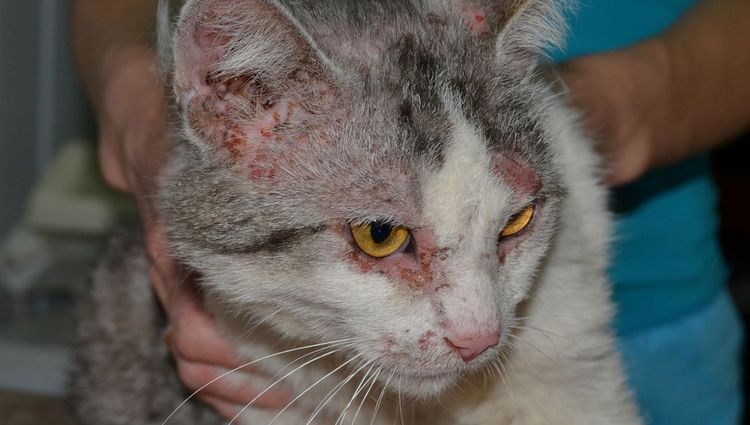
Eczema
This condition is characterized by redness of the upper layers of the epithelium. These dry, red patches are a sign of the onset of eczema. Diagnosing the condition at home is difficult, as it most often affects animals with long hair. Eczema is most easily detected when papules and rashes appear.
Unlike other diseases, eczema doesn't require a trigger. It develops as a result of external and internal factors. The former include:
- Mechanical damage to the skin (scratching, rubbing).
- Chemical exposure (inappropriate shampoo, use of ointments).
- Hypothermia or overheating.
Internal causes of eczema development include neuroses and diseases of internal organs (thyroid gland, stomach, ovaries).
The disease lasts for 3-4 weeks in cats. Treatment begins with eliminating the underlying cause. Vitamin therapy, antibacterial agents, and bromine-based sedatives are recommended. Furosemide is used to remove toxins. If the disease progresses from red spots to crusts and ulcers, the affected area is shaved off, the wounds are treated with alcohol, and salicylic ointment is applied.
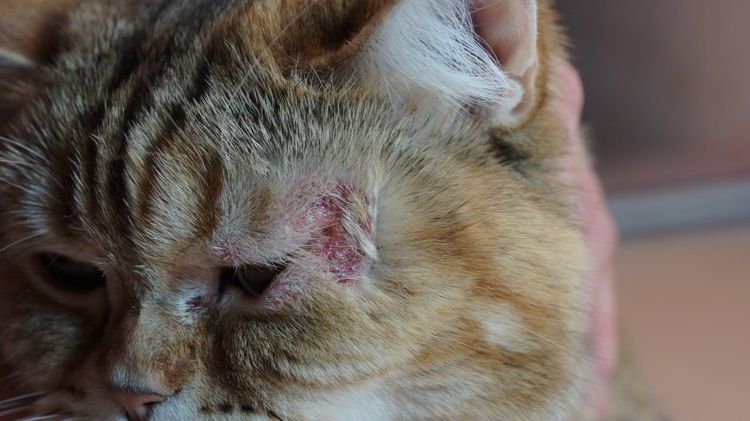
Bedsores
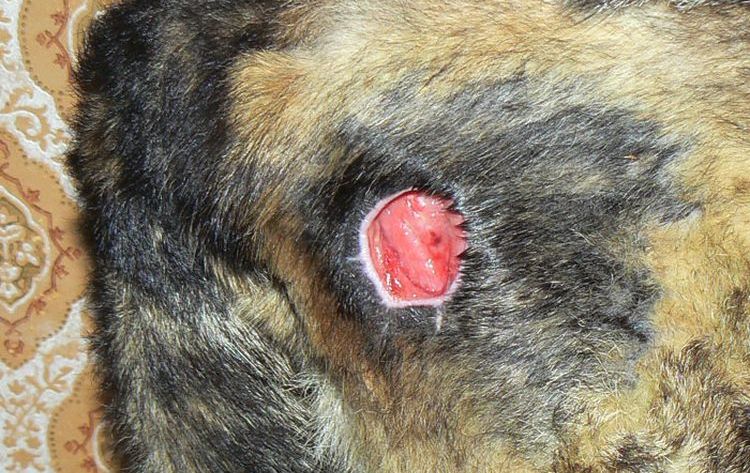
A condition common in older animals. If a cat lies down for a long time, large red spots form on its skin. At first, the affected areas are hot to the touch, but then the temperature drops, indicating the beginning of the skin necrosis process. The red spots turn brown and eventually ulcerate.
Bedsores are treated like regular wounds: they are treated with camphor alcohol and lubricated with brilliant green. Timely changes in the pet's position are essential.
Read also:
- Scabs on a cat's neck and body: causes and treatment
- Sores on a cat's body: causes and treatment
- Chin Acne in Cats: Causes and Treatment


Add a comment