
Skin parasites in dogs
Skin parasites in dogs cause a lot of trouble for both the animals themselves and their owners. It's not just the constant itching from the bites, but also the healing scratches, as well as the risk of contracting intestinal parasites or a serious infectious disease (such as typhus, which is carried by fleas).
Content
What types of skin parasites are there?
Skin parasites in dogs include more than just fleas, which are no longer surprising. They also include lice, ticks, and mites. Ticks, in turn, are divided into skin (blood-sucking) and intradermal (scabies) mites.
All these insects differ not only in appearance, but also in how and where they breed. Some easily "migrate" from dogs to humans, causing a host of problems for them as well. Lyme disease or tick-borne encephalitis, demodicosis – these are just a few of the diseases that can develop in humans due to “canine” skin parasites.
Fleas
Dark brown bloodsuckers that can be seen with the naked eye on an animal's skin. But don't think they're easy to spot. These parasites are very fast, and it's extremely rare for large numbers of them to inhabit an animal. They compete fiercely for territory, so it's rare to find more than a couple dozen on a pet. This only happens if the conditions are unsanitary and the owner doesn't care about their four-legged friend.

Dogs can harbor "dog," "human," and "cat" fleas simultaneously. These insects are extremely agile jumpers. A single leap can easily reach up to 30 centimeters in height. Their length is also approximately the same. For such a small pest (one to four millimeters in length), this is an enormous distance.
Fleas aren't just harmful because of their bites; they also cause injury to the dog itself, attempting to remove the bloodsucker by biting or scratching. As a result, the skin becomes covered in scratches, bites, and rashes from both the dog and the flea. Everything becomes inflamed, itchy, and swollen. A dog can only become infected with typhus from a flea if it bites and ingests the parasite.
It lays eggs outside the animal's body, somewhere dark and cool (a crack in the floor, a basement, dark corners). If you notice any small, moving white insects on the animal, it's most likely lice or lice.
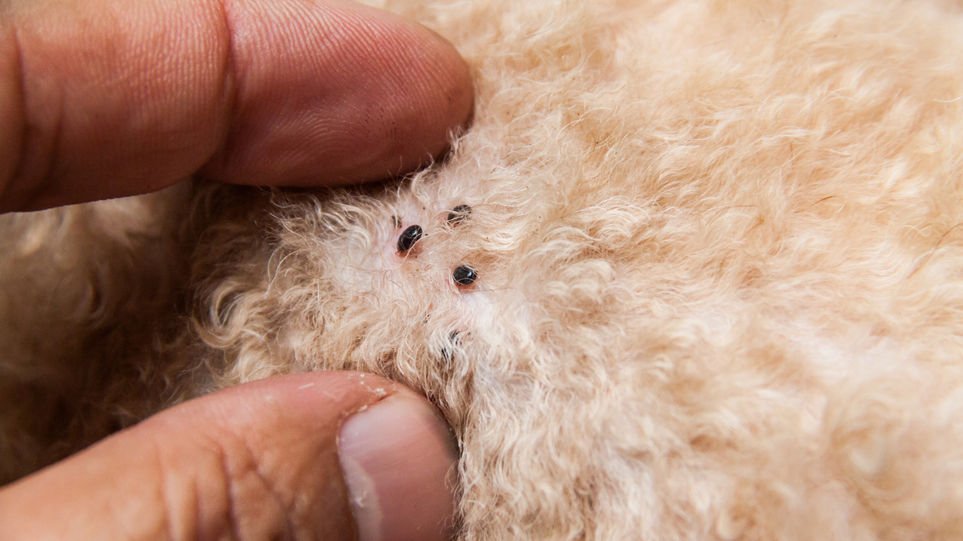
Lice
These skin parasites in dogs are also bloodsuckers and, like fleas, are visible to the naked eye. However, lice are almost transparent. They hatch their "babies" on the animal itself; more precisely, they attach the nits at a certain distance from the hair root using a special glue. Many people mistakenly believe that their dog has developed dandruff, and they start vigorously washing and brushing their pets. But nothing helps. So they start feeding them vitamins, reading advice on forums that it's an allergy (to cosmetics, food, medication, or something else), and treat their pet specifically for allergies. And again, no results.
What should have been done? Right, go to the vet right away, who will immediately tell you the dog has siphunculatosis. They'll also tell you what to wash, treat, and comb. It's essential to disinfect the area and all items, but some items are easier to get rid of right away and replace with new, uninfected ones.
In addition to dandruff, the dog experiences anemia, exhaustion, itching, dermatitis, eczema.
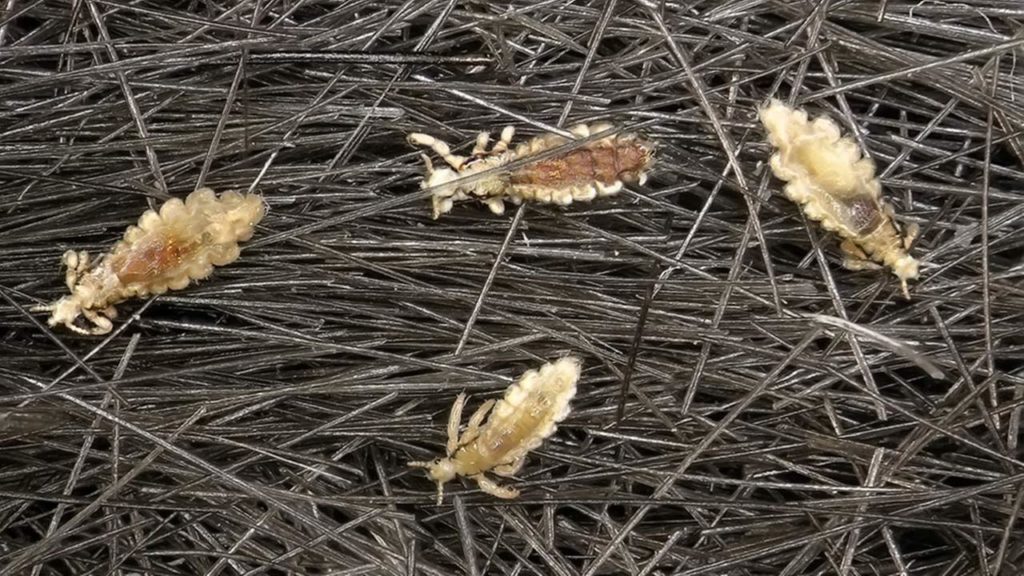
Ticks
Unlike fleas, an animal can become infected even after a tick has attached itself. This skin parasite injects pathogens (the most common being Babesia, the causative agent of piroplasmosis) into the dog's bloodstream through its saliva. Furthermore, ticks are very small and agile when hungry. But as they satiate, they swell tenfold in size. This is where many people make the mistake of plucking out the engorged tick with tweezers or their fingers, applying cream or oil, hoping the jaws will open. However, in most cases, the jaws actually close even tighter. Removing the parasite without surgery is impossible.
It's a mistake to think that ticks can only lie in wait for you in the forest. Low bushes are a favorite ambush spot. These bloodsuckers don't neglect grass either. Don't forget about the wind. The same tick could be sitting on a blade of dry grass, a leaf, or even crawling onto a piece of paper. A gust of wind carries the insect to a place where there aren't even any bushes.
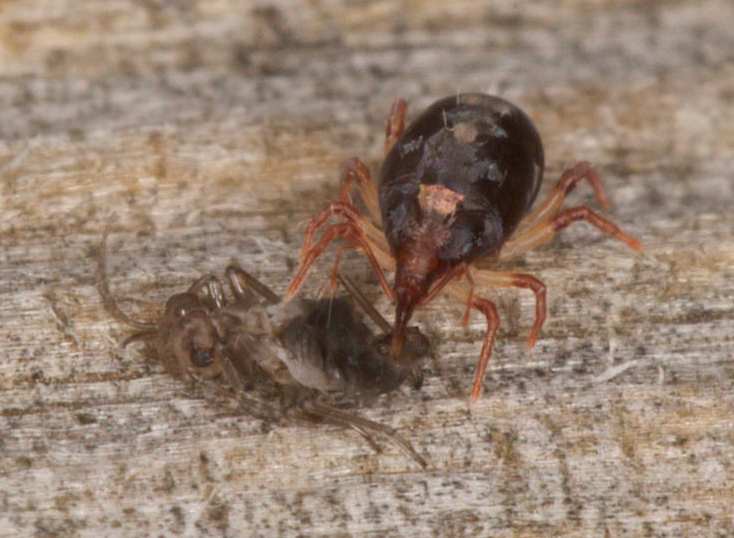
Mites can infest not only the skin's surface but also its interior, causing mange (sarcoptic mange, demodicosis). The danger is that these diseases are transmitted to humans, and completely eliminating the pathogen isn't always easy. Demodex mites are particularly difficult to get rid of. This mite is extremely tenacious, causing not only severe itching but also hair loss and dermatitis. Skin lesions can spread very quickly. Treatment is expensive and time-consuming. Collars or drops are ineffective.
Scabies mite
Red mange in dogs, also known as follicular mange, is one of the most common diseases caused by skin parasites in dogs. The causative agent of the disease is scabies mite – a tiny insect that hides in the hair follicles of a pet’s skin.
One of the first signs of the disease is bald patches with a slightly reddish tint. The most common initial sites are the eyes and elbows. At this stage, the dog experiences no significant discomfort. Itching may be absent altogether. Over time, the bald patches expand. The skin turns from reddish to a coppery red. This is why the disease is called "red mange," but in severe cases, the skin may actually be gray or bluish.
By this time, the ticks' activity reaches its peak—the dog begins to suffer and scratch. Scratching only makes matters worse. The ticks continue to be active at the scratch sites, infecting them. Eventually, patches of skin with multiple pustules form in the affected area. Now, in addition to the ticks, dangerous microorganisms are active there.
The disease progresses slowly, potentially lasting for years. If the animal is not treated during this period, it will most likely die. However, there are also plenty of cases of dogs surviving without any outside intervention.
Ticks die outside the host's body within 2-3 days. Therefore, there's no need to discuss any special disinfection methods for the room where the infected animal was kept.
When the disease is primary, detecting the mite is quite difficult. To do this, you need to visit a veterinary clinic. There, they will take a skin scraping and examine it under a microscope, but even this does not guarantee 100% detection of a skin parasite in a dog. Sometimes, the test is repeated several times.
Many remedies have been developed to rid animals of scabies mites:
- ointments;
- solutions;
- suspensions.
Let's take a look at the most popular ones on the market:
- Benzyl benzoate. It looks like an ointment. It comes in 10% and 20% strengths.
- Spregal. This aerosol is the only product approved for use in pregnant animals.
In addition to the main medications, depending on the situation, the veterinarian may prescribe healing and sedatives.
How to tell if your dog has skin parasites
Most parasites are difficult to spot, but their waste products are telling. Although almost every pet owner knows what fleas look like, the easiest way to tell if a dog is infested is by its behavior. The animal will scratch furiously and bite out the fleas.
Mites are less active (except for scabies), but they are still easy to detect. Simply feel your pet's skin and inspect any suspicious bumps or lumps. Your pet may also be able to help you find the parasite by scratching the bite site.
Now, regarding the scabies mite and other skin parasites whose activity is initially asymptomatic. I think you already understand that in such cases, a visit to the veterinarian is the only way to determine the underlying cause of the disease and nip the parasite's development in the bud.
How to protect your dog from fleas and ticks?
You can protect your pet from fleas and ticks with special drops and collars. These can be purchased at veterinary pharmacies or pet stores. Just be sure to read the ingredients. Some are only suitable for adult, healthy dogs, while others can be used by puppies or pregnant or nursing females. However, it's still best to consult your veterinarian. They will be able to advise you on which is best for your dog.
You can also rely on the opinions of other users. For example,Foresto collar Reviews are positive both online and among veterinarians. This collar is also recommended by owners of hunting dogs whose work requires them to spend a lot of time in the woods. There are similar manufacturers that supply pet stores with high-quality products that are not only safe for animals but also effectively repel ticks and fleas.
However, it's important to understand that to "kill" skin parasites on dogs, special shampoos (against fleas, lice, and biting lice) should be used, but ticks are best removed at a veterinary clinic. One wrong move and your pet could get a tick's head stuck in the skin. This can cause severe inflammation, often leading to pus. Furthermore, the tick will be immediately examined in a lab. If it carries Babesia, the animal will be immediately prescribed specific treatment that will save its life and prevent complications.
Any questions? You can ask our website's staff veterinarian in the comments below, who will answer them as quickly as possible.
Read also:


8 comments
Paul
Hello, I have a mongrel dog and I noticed that the inside of its ears are covered in some kind of parasites, like ticks but they don't look like them. I tried to clean it, but the dog doesn't let me. Today I looked and saw a rash around its eyes. Can you tell me what to do?
Tatyana Shmonina - veterinarian
Hello! You need to take your pet to the veterinarian and have a scraping from the affected areas sent to a lab to identify the parasites so we can prescribe effective treatment.
Irina
Hello! My 12-year-old Boston Terrier has small bald spots on his paw. They're white and flaky, like dandruff. They don't hurt or itch. I applied Flucarcil. He's also itching on his belly. There aren't any bald spots, but there are what appear to be white flakes. I'm afraid to take him to the vet. It's always very stressful for him. He also has heart problems. Could it be an allergy? Please help me with some advice.
Daria is a veterinarian
Hello! If you don't want to take your pet to the clinic for an examination, call a veterinarian. Without seeing your pet in person, no veterinarian can make an accurate diagnosis. There's no information about the diet, living conditions, treatments (deworming, anti-skin parasite treatment), or medications (vitamins, supplements). Even if they've already applied ointment, a scraping won't provide any information. You should rule out fungal infections, allergic reactions, endocrine gland problems (since your pet is elderly), problems due to an unbalanced diet and lack of vitamins, and a reaction to parasites. In any case, an in-person examination and more detailed information about the pet's lifestyle are necessary.
Tatiana
We have a Dachshund, we found him a little over a month ago, skin and bones, no hair on his belly and paws, the skin is like an elephant's, thickened and folded. At the veterinary clinic, they told us that it is advanced dermatitis and most likely subcutaneous mites, but they did not take a blood test or skin scrapings. They prescribed prednisolone and ciprovet, we drank all of this, after a while we dewormed the dog, but the dog continues to scratch a lot and chew on something on itself, although 4 weeks ago we gave a tablet of Simparica, what should we do?
Dasha is a veterinarian
Hello! So, if you were diagnosed with a subcutaneous mite, why didn't you prescribe treatment? Advocate, Inspector, or Strongold drops, as directed, once every 7 days up to 5-7 times. Bravecto or Frontline Nexgard are also acceptable. Even the simplest and most readily available in even the most run-down clinics, Ivermectin/Ivermek, and similar medications are available. We apply chlorhexidine locally, then apply avermectin ointment, and supplement with vitamins. Then, symptomatic or supportive treatment (if needed) is recommended.
Evgeniya
Hello, I'm in a terrible situation. We were visiting relatives and discovered that our dog was covered in tiny bumps under his skin. These are most likely mites. His paws are incredibly painful, and he's having a hard time walking, likely arthritis. Is it possible to give him Brovecto in this case?
Dasha is a veterinarian
Hello! Is your dog elderly? It's best not to give it anything without an examination. Bravecto has contraindications. Therefore, kidney, liver, and heart problems must be ruled out. Also, it's important to differentiate between subcutaneous mites (there are several types). This can't be done without a veterinary examination. A more gentle course of medication may be needed; it all depends on the animal's health.
Add a comment