
My cat is vomiting yellow liquid: what should I do?
Vomiting of any kind in a cat is a clear sign of a health problem. In this case, the owner's primary responsibility is to determine the underlying factors and provide assistance, as the animal's health and future survival may depend on the timeliness and correctness of the response.
What causes the yellow color?
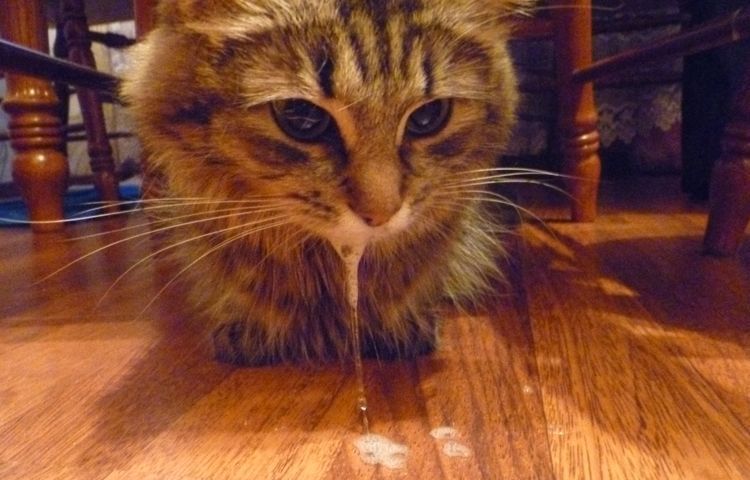
Yellow vomit indicates bile, which should not be present in a healthy cat's stomach, has entered the cat's stomach. It quickly irritates the stomach lining, as it is a harsh substance for the gastrointestinal tract. In this case, the vomit takes on a rich, bright yellow color and a distinctive odor.
Important! Sometimes the yellow color of vomit can be caused by the presence of dyes in commercial feed, but in this case, the vomit will have a grayish-yellow hue rather than a deep yellow.
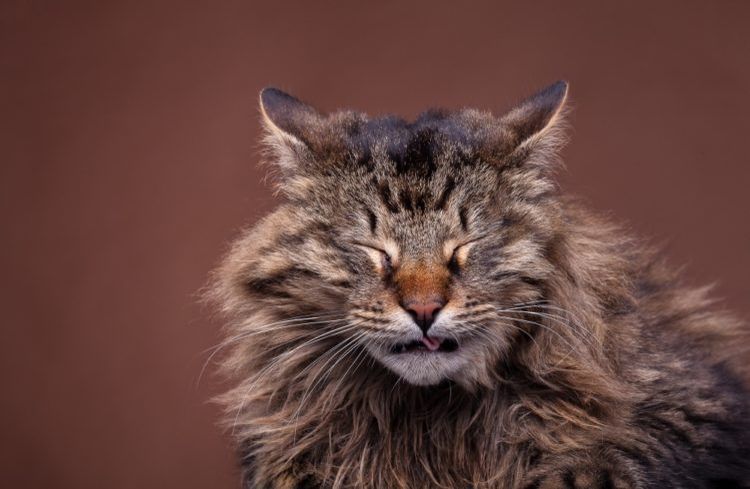
If your cat is vomiting yellow liquid, it is important to consider:
- time and conditions of the first vomiting;
- frequency of vomiting;
- the amount and consistency of vomit;
- presence of appetite and desire to drink;
- last meal;
- the possibility that the cat swallowed something inedible or spoiled;
- the appearance of other symptoms;
- chronic diseases of the pet;
- vaccination and deworming.
If you need to contact a veterinarian, this information will help you quickly understand the situation and make the correct diagnosis.
Causes of vomiting bile
The first thing to know is that vomiting is always a symptom, not a disease in itself. Therefore, identifying the underlying cause will help relieve the urge to vomit. Possible causes include:
- Foreign body ingestion. A pet may find an inedible object on the floor or grass, mistaking it for food. If the object is small, it is usually passed along with the feces. In other cases, the body actively produces bile acids, accelerating the digestion of substances in the stomach, and the excess may be expelled along with vomit.
- A sudden change in diet to a higher-calorie diet. In such cases, the liver hasn't yet had time to adapt to the new regimen, so the cat sometimes vomits a yellow, foamy liquid containing bits of undigested food.
- Helminth infestation. In severe cases, the body attempts to eliminate the parasites through vomiting, which may also contain parasites and blood.
- Digestive problems. Rapidly swallowing large pieces of food, feeding stale or fatty foods, or feeding large quantities of eggs can cause digestive problems, resulting in bile in the vomit.
- HepatitisIt is accompanied by yellowing of the mucous membranes, refusal to eat, increased body temperature, the release of dark urine, diarrhea, and vomiting of yellow liquid.
- Liver failure. The animal develops an unpleasant odor from the mouth, constant nausea and fainting, and the whites of the eyes turn yellow.
- PlagueA dangerous disease characterized by fever, diarrhea, lethargy, and frequent vomiting with bile secretion, accompanied by intense muscle tension throughout the body.
- LipidosisA disease associated with the accumulation of excess fat in the liver, which results in liver dysfunction, inflammation, and toxin accumulation. In this case, the cat rapidly loses weight, stops eating, and vomits yellow fluid.
- Gallbladder dysfunction. These problems are quite rare in cats, but the first sign is vomiting of a yellow liquid consisting entirely of foam.
What to do
If vomiting is a one-time occurrence, there's no cause for concern. However, if it persists for a long time or occurs regularly, specific measures should be taken:
- Remove food. For example, if vomiting is caused by a change in diet, it is recommended to withhold food for about 24 hours to allow any uneaten food to be eliminated through vomit or feces.
- Give your cat plenty of fluids to avoid dehydration. This doesn't guarantee stopping vomiting, but it does help flush out bile from the stomach, minimizing irritation of the mucous membranes and preventing further inflammation.
Advice! If your pet starts vomiting again after drinking water, give them small amounts of water every 30 minutes. This method of drinking usually doesn't provoke further vomiting. Pure water or chamomile tea are good for rehydrating.
Under no circumstances should you self-medicate or give your pet medications intended for humans: an irritated stomach can be further damaged by such medications, leading to additional complications.
If vomiting does not stop within 24 hours, you should take your pet to the veterinarian immediately, as severe dehydration can cause death within 48 hours of the onset of illness. The veterinarian will examine the cat to determine the cause of the vomiting and prescribe the appropriate treatment. Medications typically prescribed include antispasmodics and sorbents. A strict diet is also included during treatment.
You can also ask our website's staff veterinarian a question, who will answer them as quickly as possible in the comments box below.
Read also:
- My cat is vomiting white foam: why and what to do
- My cat vomits after eating: why and what to do
- What to do if a cat is vomiting?


244 comments
Xenia
Hello! Could you please advise? My cat is two and a half years old. She is spayed and eats dry food—Royal Canin for spayed cats. She is vaccinated according to schedule and was treated for fleas and worms three or four months ago.
Two weeks ago, my cat vomited yellow mucus with undigested food for the first time (almost immediately after eating). This didn't happen again until last night. Yesterday, he vomited yellow mucus without food. And this morning, he vomited a smaller amount of the same yellow mucus and a small amount of food. Can you tell me what this could be? Should I take him to the vet?
Daria is a veterinarian
Hello! How is the shedding going? Does your pet occasionally vomit up licked hair? In this case, rare episodes of regurgitation shouldn't cause panic; simply start giving malt paste and other medications daily to facilitate the removal of hair from the gastrointestinal tract. If vomiting is occasional, don't panic.
If it happens several days in a row or more than three times a day, there's severe dehydration, the animal is lethargic, or refuses food or water, then take it to the vet immediately. And it's time for flea and worm treatment. It's clearly time.
Valeria
Hello, my cat is 5 months old. I feed him Felix and occasionally (once every two weeks) a raw chicken head. Two days ago, I gave him this head, and he ate about half of it with gusto, but either during the night or in the morning, he vomited everything he ate, and then about six times over the next 24 to 24 hours, vomiting yellow liquid.
He lies motionless, turns up his nose when he eats, and I feed him water with a syringe. He's always active, even hyperactive. We have another older cat, nine months old, who was sick a week before this incident. Could the little one have picked it up and then gotten sick?
Daria is a veterinarian
Hello! It all depends on what the older cat was sick with. If it was infectious, then yes, there is a risk, especially if the animals are unvaccinated. It's possible that the younger cat was vomiting because of her diet.
It's unbalanced. Those same bones could damage the stomach or intestines, collect there as "debris," and obstruct their flow. This is why vomiting is frequent. Vomiting too frequently, which requires a doctor's examination and diagnosis. Six times a day and a refusal to drink fluids is a bad sign.
IV drips may be required to replenish water and salt balance.
Kalinich Yulia
The cat won't eat anything, only drinks water. He's vomited three times, and the third time it was yellow. My mom and I don't know what to do in this situation. Is there any medication we can give him? Or should we see a vet?
Daria is a veterinarian
Hello! Giving medications at home on your own is not only not advisable, but also prohibited. You could worsen the illness and obscure the clinical picture, making it difficult to make a definitive diagnosis.
Moreover, there's a risk of giving medications that aren't suitable for pets (cats have a very long list of drugs prohibited for human use). If the animal doesn't eat for a long time, it will require intravenous fluids and symptomatic treatment (including antiemetics).
An ultrasound and X-ray may be required to rule out foreign bodies in the gastrointestinal tract, inflammatory processes, etc.
Daria
Hello, my cat is 4 years old, neutered, and has been eating Monge trout food for about a month and a half now. Everything is fine. On October 14, 2022, he vomited four times in three hours and had mucus-filled diarrhea four times.
We went to the veterinary clinic, gave him a 1 ml injection of Serenia, prescribed Diarkan Sah Cube, Polysorb, Caniquantel plus tablets, told him to dissolve everything in water and pour it into the cat. We arrived, some time passed, and started giving these medications. The cat was salivating profusely, so we decided not to give the medications.
On December 2, 2022, the cat had a one-time bout of diarrhea with mucus, but he ate, drank, and played just as usual.
Today (November 7, 2022) the cat started vomiting bright yellow liquid without food, just liquid at 11-12:00 twice, and at night twice in a row at 23:40
What to do?
Daria is a veterinarian
Hello! An ultrasound, a blood chemistry panel, and an X-ray if needed. Caniquantel is not necessary daily. It's for worms. Serenia is an antiemetic and improves gastrointestinal motility. Polysorb is a simple absorbent, something like activated charcoal. Diarkan is an antimicrobial, but...
The cat's dose is half a cubic meter. It's possible this reaction was due to an overdose. Furthermore, if a biochemistry panel hasn't been done, administering this medication without first confirming the liver and kidneys are healthy is very risky. It's important to find the cause of the problem first, rather than immediately prescribing antibiotics. If vomiting is frequent, it's best to start an IV to replenish fluid and electrolyte balance.
Alexandra
Good afternoon! My cat is 1.5 years old. Today was the first time she vomited yellow, liquid stool with hair. About two months ago, she vomited dry, hairy stool. Since then, nothing has bothered her. Should I be concerned about this one-time liquid vomit? What if it happens again? She's a bit lethargic now, sleeping.
Daria is a veterinarian
Hello! It's not uncommon for cats to vomit once, especially if they shed heavily. Remember the antiparasitic treatment. If it's been a while, give it a rest. Is there always food in the bowl? Could the vomiting be due to hunger (there hasn't been any food in the bowl for a long time)? If it's a long-haired cat, try malt paste (the original, not a generic).
It helps remove and strengthen hair. Comb your pet to remove shedding hair. However, lethargy is a warning sign. Take their temperature, observe them closely, and if symptoms worsen, consult a veterinarian.
Sitora
Hello. Our kitten hasn't eaten anything for two days now and is burping yellow. Her litter box has become very infrequent. Please advise what to do, as there's no vet in our city.
Daria is a veterinarian
Hello! The animal's age is not specified. Has it undergone any preventative treatments (vaccinations, deworming, flea treatment)? If so, when and what? What is the animal fed: commercial food (manufacturer), natural food (from the table or something prepared separately, and what specific foods are included in the diet), or a mixed diet?
Questions: Does the kitten have access to the outdoors or come into contact with other animals? Could the kitten have ingested a foreign object? Is the kitten having difficulty defecating? How is their drinking habits? Has their body temperature been measured? There are many causes of vomiting, and without even a basic medical history, it's impossible to narrow the list down to at least five possible ailments.
Shav
Hello! My cat is 1.5 years old and spayed. A week ago, he noticed he couldn't pee, then started passing blood in his urine. We took him to the vet, and it turned out he had urolithiasis.
She was prescribed Ciprinol 75 mg once a day and Cyston, half a tablet twice a day. She vomited food last night, refused food and water today, and just now vomited bile and developed diarrhea (so far, just one loose stool). I suspect it's because of the Ciprinol; I didn't give her any today. Please tell me what to do.
Daria is a veterinarian
Hello! Ciprinol tablets are available in 250 mg, 500 mg, and 750 mg strengths. However, there is no 75 mg tablet. If your cat was prescribed 75 mg, you would need to divide the tablet you purchased.
You need to check how much active ingredient is in the tablet itself and calculate the single dose. You may have overdosed, which is why you're vomiting. If you experience these symptoms, you should consult your doctor so they can either adjust the dosage or change the medication.
But apparently, the medication was prescribed on the very first day of treatment; no urine titration was performed, nor was a bacterial culture performed after the cystocentesis. And Cyston is considered homeopathy—let's just say it's not used as primary therapy. Such medications have no evidence base in veterinary medicine.
Nastya
My cat has the same problem. A day ago she vomited yellow water in the evening. I thought the food wasn't working and put in some new food, but she won't eat it and her sides are sunken in. She hasn't eaten it all day.
Daria is a veterinarian
Hello! New foods are never introduced abruptly, even medicinal ones. Always gradually add them to the existing diet to gradually acclimate the body to the new ingredients and taste.
Don't worry about the flanks. Nothing bad will happen within 24 hours, as long as the animal is drinking. You could say it's a one-day fast. But the main thing is that the next day she doesn't pounce on the food and gobble it all up. You should feed her little by little after the fast.
Irina
Good afternoon.
The cat is a year old. We started taking him for walks two months ago. He started eating grass actively. After the third walk, his poop was slightly more runny than usual, with one long blade of grass.
Today is the third day the cat has been vomiting. About two weeks before, the urine became less abundant and dark yellow.
At first there was a foamy translucent liquid with a green tint and one long blade of grass. Then he pooped light yellow feces, but still of a normal shape (not diarrhea).
I couldn't eat for several hours, but I drank water.
On the second day, he didn't eat. At 5 p.m., during a walk, he started spitting up long, foamy saliva, and a little later, he was spitting up yellow liquid with a single blade of green grass. He was lethargic.
At 9 p.m., he ate some liquid food, but only a little. Half an hour later, he started drooling again, and then vomited a yellow, runny mess of food. His poop was the same amount as the one he'd vomited.
On the 3rd day he didn’t eat and drank little.
He asked to go for a walk, and outside, he started drooling foam and having diarrhea again. He licked a little of his liquid food and drank. In the morning, he vomited yellow liquid again. His urine remains dark yellow.
He refuses to eat, even though I can see that he wants to.
Drinks a little water.
Daria is a veterinarian
Hello! Your cat needs to be examined to rule out poisoning from some kind of grass. The cat may have eaten some grass that affected its liver, causing vomiting and loose, lighter-colored stools. If the animal isn't eating and isn't drinking well, then not only detoxification but also intravenous fluid therapy is needed.
It's possible the animal is having digestive upset because of the grass. Cats often eat it to "cleanse" their stomachs of licked hair. But this "cleanse" took a long time. Drip, drip, and then some more drip.
Rita
Hello, my 5 year old cat (British-Scottish) started vomiting digested food a couple of months ago, that is, mostly liquid, yellow mush (he eats Roly Canin Gastrointestinal dry food).
Besides vomiting, I started experiencing fainting spells. It didn't happen every time, only a couple of times. I'd burp and collapse, which lasted about 20 seconds. Afterward, I felt fine, stretched, and ate and drank. I went to the doctor for an ultrasound, biochemistry, and cardiac ultrasound, and they checked for adhesions. They didn't find anything serious. They diagnosed gastritis, and if I vomited again, they told me to take omeprazole for 7-10 days.
But vomiting still appears frequently, after omez there is no vomiting, but everything repeats itself after about a week, and the fainting attack also repeated, I don’t know what to do anymore) Thanks for the answer
Daria is a veterinarian
Hello. Try switching to a different brand of food. It's possible it's not the right one for you. You also need to assess the nature of the fainting spells and what's accompanying them. How long ago was your cat dewormed? What flavor are you using? Some people vomit when they taste bird food, or tuna, but not salmon, or vice versa. Every animal is different.
And even a therapeutic diet should be selected individually.
Asya
Good afternoon! We brought our kitten to our foster home on Wednesday evening. He hid under the sink and didn't come out for a day. We brought him food and water in the bathtub, but I'm not sure if he's okay with it or not.
On Saturday afternoon, he vomited, and part of the bag came out. He vomited five times, and the hair came out with water. What should I do? Should I run to the clinic?
Daria is a veterinarian
Hello! Of course! The animal had a foreign body in its gastrointestinal tract. This is extremely dangerous. Abdominal surgery may be required. Frequent vomiting is an attempt to remove the foreign body.
Christina
My cat had been vomiting white foam for three days. She stopped eating and only drank a small amount of water. We went to the vet. The vet took her temperature—37.5°C, which was normal—and examined her abdomen. He said there were no irritants in the stomach or rectum. We did an ultrasound. The ultrasound showed that her stomach was clean, with no foreign objects, only a small amount of fluid (gastric juice) and a small amount of feces.
They prescribed IVs and injections: Subcutaneous drip infusion every 1 hour. Serenia - 1 ml, Sodium chloride - 1 ml, Ringer's solution - 1 ml, Dufalight - 1 ml, Quamatel - 20 mg, Baytril 2.5% injection - 1 ml, Veracol - 1 ml, Liarsin - 1 ml. Afterwards, they sent me home, saying that my cat's appetite should return.
At home, my cat slept all day, didn't even touch her food, and was sensitive to sounds. We went back to the clinic today and were prescribed the same treatment plus a Microlax enema. She's still sleeping, lethargic, and won't touch her food. Could you tell me what could be wrong? Why isn't there any improvement? Perhaps we should switch clinics?
Daria is a veterinarian
Hello! Despite veterinary ethics, I'll say this anyway. 1 ml sodium and Ringer's IV drips are powerful. What's the point of such IVs? They don't even come close to replenishing the electrolytes lost through vomiting. Verakol and Liarsin are homeopathic medications with no evidence of effectiveness; in my opinion, they're just an unnecessary "hole" in the animal's system. These medications are useless!
Sorry, but they're just wasting money. An antiemetic (Serenia), an acid suppressant (Quamatel), and an antibiotic have been prescribed. Dufalight is controversial. It's also believed that to replenish the necessary nutrients, several times more than the instructions recommend is needed.
There's no real diagnosis, and treatment is complex (too many medications, some of which aren't even used in veterinary medicine because they lack evidence). Get a blood test and, if possible, an endoscopic examination of the stomach lining. I think a blood test and a complete blood count will clarify a lot.
Natalia
Hello!
Please tell me
We adopted a domestic kitten at 3 months old on February 1, 2022.
He ate well, played, and this evening he slept for a long time for 4-5 hours and then vomited undigested food at 8:10 pm
At approximately 9:50 pm, I vomited yellow stool with small pieces of food.
Should I see a doctor? He's not drinking water right now and he's refusing to eat either.
He lay down again and lies there
Daria is a veterinarian
Hello! Ideally, you should take the temperature to determine if it's infectious. Have you had any parasites removed? Has the dog been vaccinated? Has contact with other animals been avoided?
If vomiting recurs or the condition noticeably worsens by morning, be sure to seek medical attention and examination. If preventative treatments are not taken, serious problems may arise and specific therapy will be required. Self-medication is not recommended.
Vladislav
Good night! We adopted a cat from the street a week ago. She was very thin and immediately started eating a lot. Three days later, she stopped eating and drinking, started vomiting white foam, and had diarrhea with a specific smell and a light burgundy color. A day later, we bought anti-diarrhea and deworming suspensions. After 24 hours of taking the anti-diarrhea suspension, her stool changed color to the color of the food we were force-feeding her with a syringe.
But the vomit changed color to yellow, they told me to give her some deworming medication in the morning, she started drinking water on her own on the 3rd day after taking the anti-diarrhea suspension, can you tell me if we are moving in the right direction?
Daria is a veterinarian
Hello! That's not entirely true. All animals found on the street should be examined by a veterinarian first. This is to rule out dangerous zoonotic diseases (those common to humans and animals). These include not only dermatophytosis (or ringworm, as they're commonly known), but also infectious diseases.
If the diarrhea doesn't stop, you shouldn't try to eliminate the parasites until the stool returns to normal. Plus, if the animal is vomiting, how are you going to give it the suspension? It will vomit it back up, and it won't be effective. Force-feeding the animal is also a bad idea, as it will cause more harm. It's possible it overate in the first few days, and due to wandering and frequent hunger, it has already developed gastritis or pancreatitis (or other gastrointestinal diseases). A light, nutritious diet is essential.
The animal should probably be given IV fluids now to replenish fluid loss due to diarrhea and vomiting. Antibiotic therapy may be necessary if inflammation is detected (a complete blood count will reveal this). If the vomiting is yellow, the liver may also be involved (an ultrasound and biochemical analysis will provide a more accurate diagnosis).
Without test results and additional instrumental examinations, even a preliminary diagnosis is extremely difficult to make, much less prescribe therapy with medications and doses.
Catherine
Hello. My cat is a year and a half old. He may have eaten something on Sunday, possibly a chicken neck or gizzard. He hasn't eaten or drunk since Monday. He vomits a yellow, foamy liquid every 2-3 hours, sometimes longer. We saw the vet yesterday, and she prescribed pancreatin, 1/4 tablet with food, and told him to drink broth.
I also gave him an injection of an antispasmodic and an antiemetic. We got home, he perked up a bit, drank some water on his own, then about an hour later he vomited, then slumped down again. He mostly sleeps or dozes. On Tuesday evening, I force-fed him 5 ml of broth, and crushed a pancreatin tablet into it.
He vomited two hours later. He also vomited during the night. In the morning, we gave him an antiemetic, Sapverin or whatever it's called, and I don't remember the exact name, along with pancreatin and water. About five minutes later, he vomited again, yellow liquid with foam. Then I fed him broth in the morning, and he vomited again during the day. I'm going to take him for an ultrasound tomorrow. What can I do to ease the discomfort? Maybe a little No-Spa injection subcutaneously and some saline? We're also planning to continue giving him broth, but I'm just afraid he'll start having cramps and then vomit. His stomach is already hurting, and he's got some tiny red spots.
What can I give? What antispasmodic, pain reliever, and antiemetic?
Daria is a veterinarian
Hello! Didn't they give you any antiemetics at the clinic? Serenia, Cerucal, and metaclopramide are all suitable. But! This is assuming there's no poisoning, as vomiting helps remove toxins from the gastrointestinal tract. Has a foreign body been ruled out in the esophagus, stomach, or intestines? Is there any stool at all? It's possible that it's not vomiting, but regurgitation.
These are different concepts. It's quite possible that the cervix has become cross-sectioned somewhere, becoming a foreign body, causing a blockage (complete or partial) of the gastrointestinal tract. This explains the vomiting after every meal (the food simply has nowhere to go, essentially leaving the intestines "without an exit").
Natalia
Hello! Could you tell me what's going on with my cat? He doesn't poop, but strains in the toilet (or poops a small pea). He vomits periodically, once every 3-4 days. He drinks a lot, but seems healthy. He barely eats.
Daria is a veterinarian
Good day! First of all, it's important to analyze the feeding: is it natural food or commercial? If commercial, which manufacturer? If natural, then describe the menu down to each food item: is it monotonous or is it given a lot of different things, how much meat does it get? What about vomiting? What is it like?
How's the pet's appetite? How long has it been feeling unwell? Is there blood in the stool? It's important to rule out intestinal neoplasms or partial intestinal obstruction by a foreign object or hairball. If the stool is very dry and compacted, change the diet immediately and introduce soft food. You can give Lactulose/Duphalac (1-2 ml per day, depending on the cat's age and weight) to SOFTEN THE FEECES. Lactulose works by attracting water to the feces, so don't overdo it. Otherwise, you'll get diarrhea. However, you should definitely adjust the diet!
katalevcenko23@gmail.com
My cat has been vomiting for four days now, the urges are not very frequent, about 1-2 times a day, constantly drinking water, like for about 2 days now, he refused food, I have no money, I don’t know what to do, he is rapidly losing weight, the vomit is yellowish, but not bright, more transparent with foam, what should I do, help, and also his pupils are constantly dilated ...
Daria is a veterinarian
Hello! Have you ruled out head trauma? Neurological problems? Poisoning? Dilated pupils could be due to severe pain, poor lighting, or a malfunctioning nervous system. Without a history, it's impossible to rule out at least five differential diagnoses. It's important to provide as much information as possible about the animal, its history, and its illness, including when it began, how long it's been going on, what medications were given, etc.
Elena
Hello. My cat is 5 years old. He was found as a stray when he was a year old. He was neutered, had some teeth removed, and was developing gingivitis. We did an ultrasound, and everything was normal. He was living normally. But a week ago, he started vomiting white foam, odorless, and had a normal appetite.
Five days ago, we gave him a deworming suspension. Even though I applied it to his fur in June, he vomited it almost immediately. He started losing his appetite. Now, on the third day, he's not eating anything and is vomiting a yellow, mucous, foamy mass. He pees in the toilet. He sleeps all the time. He vomits twice a day. He drinks water.
Daria is a veterinarian
Hello! It's been three months since the last treatment, and the topical drops have been working for one month. My cat is 5 years old, so the suspensions are more suitable for babies. It's better to get the tablets. What about feeding and vaccinations? How are things with walking? What's his stool like? How's the feeding? What exactly?
Tatiana
Hello! My cat sometimes vomits yellow water. He only eats raw chicken necks (frozen). I dewormed him on time, and I did that recently. He vomited a couple of days ago and didn't eat anything. Then I gave him some liquid food, and he ate and started eating the necks again. Now he's vomited again and won't eat any vitamins or necks. Maybe I should switch him to food? (Although I wouldn't want to.) Thank you for your help!
Daria is a veterinarian
Hello! You'd be hesitant to switch your pet to kibble, but do you think it's okay to feed your pet only necks? Does it contain enough vitamins, micro- and macronutrients? What about taurine, which cats need for healthy kidney and heart function? And carbohydrates for energy? If you don't want to switch to kibble, switch your pet to a NORMAL, natural diet, balanced and varied.
Moreover, frozen food is not given to animals. To reduce the risk of parasite infestation, meat is at least lightly cooked beforehand. This process doesn't lose any nutritional value, but it's at least a little safer. If you need help formulating a diet, consult a veterinary nutritionist (yes, such specialists exist). They can calculate how much of each food item to feed per day to ensure your pet gets all the necessary nutrients.
Julia
Hello, a month ago we pulled a kitten out of a pit. He looked like he was just born, his eyes were still closed, and he was small. There was pus on his eyes. We washed his eyes. He had a very good appetite and ate milk and boiled chicken. But we went on vacation, so he stayed in the entryway. When we arrived, the kitten was still there. We took him home and washed him. When we washed him, it became very noticeable that he was just skin and bones; he was very thin, and his spine was easily palpable. He had a very good appetite and ate milk and fish soup with pleasure.
We have had him at home for 4 days, yesterday everything was fine, but today he is completely lethargic, doesn’t play and I noticed that he has nothing to eat.
Just yesterday he was jumping to his bowl, but now he's not drinking or eating anything. I noticed a bright yellow liquid on the floor in the toilet, like a broken yolk, both in consistency and color, and a strong smell. It's a very thick liquid. I've never seen anything like it before. He always slept at our feet at night. I just woke up and found him out the door and curled up on the floor. His nose is warm and not wet, and his mouth has an unpleasant odor. What should I do? The kitten is probably about a month or two old.
Anna y
Good afternoon. I came home from school, I was gone for about 8-9 o'clock, and my cat vomited up a yellow liquid with pieces of canned tuna (the kind for humans). I gave him the first dose yesterday evening, and today I gave him the second dose this morning. He's 6 months old and has never vomited before.
Daria is a veterinarian
Hello! Canned tuna (like any canned food) contains a huge amount of salt! It's too salty even for humans, and for pets, it's a nightmare. And it can be very dangerous. Secondly, tuna is both in its own juice and in oil. If this canned food was also in oil, then it's understandable why the kitten vomited. This diet is completely unsuitable for a kitten. It needs to be completely changed before serious gastrointestinal problems (including liver problems) occur.
Lyudmila
Hello.
On March 29th, the cat was diagnosed with urolithiasis.
The catheter was inserted after the bladder had been emptied.
There was blood in the urine.
The next day the urine was clear.
They prescribed an injection
Ceftriaxone, Dicynone, Noshpa, Combipelen.
Erwin the Cat.
They scheduled it for five days.
Everything was pierced.
Yesterday I started vomiting whenever I ate anything.
Doesn't eat or drink.
I give him something to drink from a syringe.
Lost weight.
There is no diarrhea.
He goes to the toilet with a little strain.
Temperature 39.
I tried to eat and immediately threw up.
There is no constant vomiting, only if he eats at least a little.
Tell me what's wrong with the cat?
The clinic is already closed!
I just don’t know what to do!
Daria is a veterinarian
Hello! Ideally, you should give an antiemetic injection (cerucal, metoclopramide). If you can get it at this time, try serenia (although not all veterinary pharmacies even carry it due to production and delivery issues). Another possibility is that the antibiotics triggered gastritis, which is causing the vomiting.
What exactly are you feeding? Dry food or not? Don't force food. Let them drink. If they're on natural food, make broth (no salt or spices, just broth). If they're on commercial food, wait until morning. Just make sure they drink water. A 24-hour fast won't do any harm.
Tatiana
Good afternoon! My cat stopped eating and started vomiting. First, there was some foam, then something green or brownish with fur. She only drinks tap water, nothing else. She's lost a lot of weight. Could you tell me what to do? Does she need any medication? It's been like this for about 6 days now.
Daria is a veterinarian
Hello! My pet has been vomiting for six days, and you still haven't taken him to the vet for a definitive diagnosis? There are so many possibilities, how can I make a definitive diagnosis?
It could be a gastrointestinal issue. Could it be intestinal parasites (when was the last deworming done)? Maybe the cat licked a lot of hair, causing a blockage in the intestines, leading to reverse peristalsis (hence the vomiting)? Maybe there's something wrong with the feeding. Have you checked the cat's body temperature? What are you feeding it? When were the last treatments, and what was the treatment? Are there any houseplants in the house that the pet could have eaten?
Pauline
I forgot to add, maybe this also matters. Vomiting most often happens towards night, less often in the morning.
Pauline
Hello!
My cat is two years old. Since the new diet, she's been vomiting regularly, almost every other day. Sometimes it's just white foam, but more often it's a yellow, clear liquid, also foamy. No impurities. For about a year, she's only been eating ProBalance Immuno, a dry food. Her stools are fine, about once every two days. Occasionally, there's blood, but she's had this since she was a puppy; she has a stomach ailment.
Of the many different foods we've tried, ProBalance is the only one that responds more or less well. She drinks well and is quite active. It's hard to say about her appetite, as the food is very filling, so she eats little by little, but sometimes she doesn't touch it for almost the entire day. She's not thin, just normal. However, this vomiting is concerning, especially since in the two years she's been with us, she's only vomited once, and that was our fault for feeding her bad food.
And it started with the new year... Maybe it's worms? It's been a while since we last treated her, about six months, I think. I know she needs to be taken to the vet, but we live in a remote area, and the nearest doctor is 100 km away, so it's not that easy.
Daria is a veterinarian
Hello! Of course, parasites need to be treated immediately. And at least once every three months. Start with that. Secondly, what exactly do you feed your pet? How is it kept (walked, treated, exposed to other animals)? Are there any houseplants that your pet eats? Is it shedding (could it have licked itself)? Does it vomit before or after eating?
How often per day? Is the vomiting debilitating? How is he eating? Drinking? How is his stool? What is his body temperature?
Oksana
Help, my cat has been vomiting bile since Thursday evening. She won't eat anything and started drinking on Saturday. We're giving her chicken broth, but Poti keeps throwing up. How can I treat her? I can't afford to go to the vet yet. Please help!
Daria is a veterinarian
Hello! We need more information about your pet: age, diet, living conditions, vaccinations, deworming, and whether it's indoors or litter box use. What's its temperature? Does it have an appetite or just vomit? How does it use the litter box? Does it have bowel movements? Is the vomit only bile or something else?
Have there been any previous health problems? Have any medications been recently administered? Are there any readily available houseplants, and if so, which ones? Has poisoning been ruled out? Could the pet have ingested an inedible object? Is the abdomen tender to the touch? As you understand, it's impossible to make a diagnosis based solely on "vomiting bile" without a medical history, much less a physical examination.
Konstantin
Hello. My kitten is 6 months old. He has been vomiting bile for 3 days. He doesn't eat or drink anything. He sits or lies down all the time. There's a chance he ate a hair elastic.
Daria is a veterinarian
Hello! Bring your pet to the clinic for an X-ray immediately! It's important to rule out intestinal obstruction, especially if your pet isn't defecating or is restless when using the litter box. If the diagnosis is confirmed, abdominal surgery may be necessary. It's not guaranteed that the intestines will clear the foreign body on their own.
In any case, delaying treatment or self-treating without diagnosis is extremely dangerous to your pet's life and health. If an X-ray shows no foreign body, then a biochemistry panel and an ultrasound of the liver and pancreas will be ordered.
Julia
Hello, my cat has been burping yellow liquid for the second day now. Please advise what to do?
Daria is a veterinarian
Hello! What is your pet's age, environment (is it outdoors or not), diet (natural food or commercial food, how often are they fed daily or constantly in a bowl), and weight (is it obese or emaciated). How often does your pet vomit? Before or after feedings? If after, how often?
Is it just bile or undigested food? Have your cat had vaccinations and deworming treatments, and when? Have you given any medications: vitamins, antibiotics, or any pills? Any treatments? Do you have houseplants? If so, can your cat eat them?
Valeria
Good evening. My cat is 3.5 years old. On January 1st, he stopped eating and started vomiting. We gave him an antiemetic injection on November 2nd, but it didn't help. If he eats anything, he vomits it within an hour, followed by yellow foam. The vet recommended Polysorb. He's completely lost his appetite today; he won't even drink.
Daria is a veterinarian
Hello! It's crucial to rule out a foreign body in the intestines (especially if the animal is unable to defecate) immediately. This can be determined by X-ray. If everything is clear, then a blood test should be performed. Liver and pancreatic pathology should be ruled out. If vomiting occurred before eating, gastritis could be suspected.
Now we need to figure out the liver and diet. What are you feeding? Are the portions too large? Is the animal transmitting any of the irritants? Have you tried giving Almagel A half an hour before feeding (it numbs the stomach lining, coating it, making eating less painful)? And what did you give her for vomiting?
Galina
Good night!!! Help! My cat is 10 months old. He vomited something yellow, just once. All his vaccinations were done on time, according to schedule. He's now active, played with the child, and is wandering around empty bowls, meowing. Should I see a vet? Can I feed him a little? What could it be?
The day before, we introduced a new wet food, which, as the store said, had a lot of meat. Previously, we fed dry and wet food from Royal Cone.
Daria is a veterinarian
Hello! If vomiting was a one-time occurrence and does not recur, there is no particular reason to panic. Yellow vomit in animals eating dry food sometimes occurs if the food contains dyes (but the vomit will also contain undigested or partially digested food). If the vomiting was only foamy yellow liquid, there is a risk of liver rebellion.
But again, a one-time vomiting isn't that scary. Give your cat more water and a little food. And remember how long ago the deworming was last done, and whether the cat ate any houseplants. Were any medications or drugs given before?
Tatiana
Good evening! We have a Scottish Fold. She's been vomiting for two days, but not often. She's been vomiting a little food and yellow liquid. She sleeps well and has stopped playing. She's 6 years old. We haven't changed her food.
And she started licking her back paws and belly vigorously. She doesn't go outside; she's lived in an apartment her whole life. She eats and drinks normally. She's been treated for worms and fleas.
Daria is a veterinarian
Hello! Have your pet's liver and pancreas checked with an ultrasound, and have them check his kidneys. The fact that you haven't changed his food is one thing. What exactly you're feeding your pet is another matter.
How long ago were the treatments (for parasites, for example)? And it doesn't matter that the animal doesn't go outside. You bring home a ton of germs on your shoes: helminth eggs, bacteria, viruses. Therefore, preventative treatments (deworming and vaccinations) should always be done on schedule, regardless of whether the animal is indoors or out for a walk.
Stalin
We bought food that now has added protein and all the cats are throwing it up.
Igor
Hello, my cat's eye is a quarter swollen with blood after eating, she constantly vomits, has no appetite, doesn't drink water, only dairy products, and sleeps constantly. It all started after she ate fish and choked on a bone. We removed the bone and it got stuck in her gum! I don't even know what to do. Maybe the fish thing is just a coincidence?
Daria is a veterinarian
Hello! It's very difficult to read without any punctuation. I can't tell if my eye is swollen shut or if I'm vomiting blood. I need to rule out a foreign body in my throat/esophagus. Perhaps not everything was removed. Is there increased salivation?
Coughing? Anxiety? The bone could have severely injured the gum, leading to serious inflammation (perhaps even stomatitis; a thorough oral examination is necessary). If the animal hasn't eaten or drunk for a long time, IV fluids are necessary. And a course of antibiotics and anti-inflammatory medications to relieve swelling and pain.
Marina
Hello, my cat has been vomiting yellow liquid for 2 weeks. I think it's after a vaccination. He's happy and has no fever. What should I do?
Daria is a veterinarian
Hello! Has vomiting bile persisted for two weeks after the vaccination? No, that's impossible. The maximum time animals feel unwell after a vaccination is three days (usually, the animal only feels unwell for the first day). Look for a different cause: perhaps improper feeding or gastrointestinal inflammation.
Have you had any parasites checked? What vaccinations have you received? Is there a fever right now (what's the temperature in degrees, not just a nose check)? Are there any abnormal mucous membrane colors? What exactly are you feeding your pet (what does the diet consist of)?
Marina
On February 29th, I gave my cat a rabies shot. He started vomiting on the third day and has been vomiting yellow fluid ever since. He's happy and has no fever. What should I do? Please give me some advice.
Daria is a veterinarian
Hello! Your pet needs a thorough examination. First, check its diet (to ensure it's complete and balanced). Then, get a blood test and an ultrasound. Rule out gastrointestinal problems (not just liver and pancreas issues). Have you treated for parasites?
Since there was no fever, the vaccination was not to blame. The only possible cause was gastrointestinal problems (exacerbation of chronic illnesses), but this usually occurs when an unhealthy animal is vaccinated.
Olga
Hello, my cat is in late pregnancy and has been eating poorly for the second day, only drinking liquids. Yesterday, she vomited three times during the day, some time after drinking liquids. Today, she vomited yellow liquid without foam. What could be the cause?
Daria is a veterinarian
Hello! Loss of appetite can occur just before labor. Sometimes vomiting and loose stools can occur (again, just before labor, a day or two beforehand). But not for several days in a row. Have you treated for parasites? What are you feeding your cat (feeding during pregnancy)? Has she gone outside?
How's her body temperature? It's good that she's drinking, but if you're pregnant and experience any of these symptoms, you should go to the doctor immediately. An ultrasound is essential to rule out pregnancy-related issues and vomiting due to intoxication or a serious inflammatory process.
Julia
Hello. My cat vomited yellow liquid yesterday morning and this afternoon. She hasn't eaten wet food for the past two days, only a little dry food. What should I do?
Daria is a veterinarian
Hello! First, it's important to understand why your pet is vomiting bile. What exactly are you feeding (name of food)? How long has it been since you last treated for parasites? Are your pet vaccinated against viral infections? Is there a fever? How is their stool? How is their drinking? How often does they vomit? Are there any other clinical signs of illness?
Are the visible mucous membranes and whites of the eyes yellowish? Are there any chronic illnesses? Or has the cat recently been ill? Was the vomit only bile or any other impurities (food, hair, foam, blood)? Is the wet food always fresh? Has poisoning been ruled out?
Natalia
Hello. My cat was dewormed on December 15th. I found worms in his stool that looked more like fly worms. The clinic told me to repeat the test in two weeks. Yesterday, he vomited a yellow mass with some small particles three times during the day. He was always playful before. Now he's refusing to eat and is sleeping. We only feed him Royal Maine Coon food, both dry and with pouches. He's 1.5 years old.
Daria is a veterinarian
Hello! Repeat deworming should be performed 10-14 days after the initial treatment. Vomiting can be caused by a worm infestation, but it can also be the result of a nutritional disorder (perhaps the spider has been out for a while, perhaps it has eaten something – a houseplant, someone in the household has given it extra food from the table, or the animal has stolen something spoiled).
You should also consider whether the animal has been vaccinated. Has the possibility of infection been ruled out? Are there any other symptoms besides vomiting? Has it recurred? Have any other medications been given?
Zalifa
The first time he vomited, he vomited undigested food, and half an hour later he vomited bile with no strong odor and a very small amount of white foam (not much). About 20 minutes later, he vomited bile again. He won't drink or eat. Before the first vomiting episode, he ate dry food and sausage (most likely stale).
Daria is a veterinarian
How long has the animal been vomiting (in days)? And approximately how many times a day? The question of deworming and vaccination remains open. The first thing to do is give an antiemetic (Serenia, Cerucal, Metoclopramide, etc.), followed by an adsorbent (charcoal, Polyphepam, Enterosgel). Giving an adsorbent right away may cause vomiting again.
Then administer a Ringer's-Locke IV (the equivalent in human pharmacies is Ringer's Lactate) to restore the water-salt balance. If you can't get an IV, at least administer Ringer's subcutaneously.
Daria is a veterinarian
Vitamins would be good, and for appetite stimulation – Vitosal, Katosal, or Phosphosal (optional). The dosage for a cat is about 1 ml once a day (it's quite painful). Tonocard or Antitox/Averon – for intoxication (your veterinary pharmacies may have other medications). Tonocard is also suitable for shock and helps support your pet.
But it's essential to administer B12 supplements (including Vitosal/Katosal/Phosphosal and Tonocard) to support the liver (since there's bile vomiting). And sort out your diet! It's either feed or spoiled table food.
Masha
What should I do if a cat who is 1.5-2 months old vomits yellow liquid, sometimes with foam, walks around lethargic, sleeps and lies in one place, sometimes I take him to drink water, he drinks enough
Daria is a veterinarian
Hello! Have you dewormed your kitten? How and when? What are you feeding it (natural food or commercial food)? What exactly? Vaccinations? Vomiting before or after feeding? How often? What medications have you given it yet? Does it have a fever? Are there any other symptoms? What is its stool like?
Elena
Our cat is 2 years old. He doesn't have any puppies and eats special food for neutered cats. Occasionally, we give him a piece of raw meat. We got a puppy and recently got his first vaccination, and since then, he's been vomiting yellow fluid multiple times a day (at least 15 times) and won't eat or drink. Could the vaccination have affected him this way? P.S. We also have a 4-year-old male cat who's doing fine.
Daria is a veterinarian
Hello! Okay, wait. Who got their first vaccination? Write that the puppy is being born. Then about the vaccination. Did the cat only get his first vaccination at 2 years old? A cat can also start vomiting due to stress (after all, it's a new pet).
It's possible the puppy could have infected her with something. Fifteen times a day is frequent vomiting. Antiemetics were needed (at least metoclopramide, a human medication, or a veterinary medication like serenia). A foreign body also needs to be ruled out. Vomiting bile can also be due to hunger (maybe the cat stopped eating?).
Anastasia
Hello! My kitten is 5 months old and has been vomiting for two days. First, there was white foam, and now there's yellow liquid. Three days ago, we used flea treatment with drops, which caused him to vomit white foam all night.
We went to the vet, but since we live in a small town, we can't get a proper diagnosis. They diagnosed poisoning and prescribed glucose injections and an antiemetic antibiotic. But the cat started vomiting yellow fluid. We don't know what to do now. He's not drinking or eating, and he's lethargic. Please tell me how to help him.
Daria is a veterinarian
Hello! My first question is: what antiemetic antibiotic was prescribed to you? Are you sure you're not mistaken? An antibiotic is an antimicrobial drug. What's it used for in cases of poisoning?
And antiemetics are a completely different group. And what exactly did they prescribe? Perhaps Cerucal? The yellow vomit is already mixed with bile (because the kitten isn't eating, the stomach is empty). What exactly did you treat for fleas? Did you overdose during the treatment? What did you feed him before (could it be food poisoning)? I understand you administered glucose subcutaneously. How much and how often?
Daria is a veterinarian
Detoxifying medications (Detox, Antitox, and others) should have been administered immediately, and the animal should have been given plenty of fluids (frequently, but in small amounts; saline solutions are abundant in human pharmacies—Rehydron, Vetom 1.1, for example). Ideally, IVs should be used to reduce the toxin concentration in the animal's bloodstream. But if IVs aren't possible, then at least saline solutions should be administered subcutaneously (5% glucose or 0.9% sodium chloride are suitable, also available in human pharmacies).
To stimulate appetite, use Catosal (1 ml is sufficient). Don't force-feed! This will only induce vomiting. For vomiting and diarrhea, you can also look for Serenia at your local veterinary pharmacy.
Bogdan
Hello. I have a kitten under one year old. He doesn't get out of bed in the morning and refuses to eat (he sniffs and then vomits yellow water). Yesterday at lunchtime, he jumped out of a tree, not quite successfully, but he walked and acted as usual. How can I help him?
Daria is a veterinarian
Hello! The safest course of action is to take your kitten to the vet to firstly ensure that all internal organs and bones are intact and there are no internal injuries. Secondly, we need to determine the cause of the bile vomiting. Gastritis, pancreatitis, and liver problems are suspected. I'm also interested in what exactly you feed your kitten (90% of the time it's Whiskas, Kitekat, Friskies, and similar cheap treats). How long ago was your kitten dewormed, and have you done so? Are there any age-specific vaccinations?
Is there a fever? Don't force-feed, but do give fluids (small amounts and often).
Svetlana
Hello, my cat is 1 year and 10 months old. She's vomiting yellow liquid and isn't eating anything, but she's drinking. She usually eats dry food, Perfect Fit, but then I switched to Purina. When she ran out of dry food, I started giving her Whiskas packets. She ate that for a couple of days, and then started vomiting. What could this be? She doesn't go outside.
Daria is a veterinarian
Hello! Well, Whiskas by itself isn't the best option for feeding an animal. The transition to a new food should be gradual: about 4-5 days. But it seems you've suddenly switched from a good food to another, then to a third brand, and not even the best one at that. Such clinical signs may be related to digestive problems caused by improper feeding.
Besides, have you been treating parasites lately? Switch your cat to a high-quality therapeutic food (for animals with gastrointestinal diseases or sensitive digestion). Forget about Whiskas, Kitekat, and Friskas once and for all. For digestion, use Fortiflora. Now, give the cat special saline solutions (Rehydron, Normhydron). Give Vitosal/Phosphosal/Katozal injections as an appetite stimulant and metabolism booster. If vomiting is frequent, use an antiemetic. And finally, get a diagnostic to make sure the problem isn't liver or pancreas related.
Julia
Good afternoon! My cat is 15 years old. He started vomiting a couple of days ago, stopped eating, and is drinking a lot of water. He feels weak. Is it possible for a specialist to draw blood for a test at home? Could you please advise on the cost?
Daria is a veterinarian
Hello! Blood tests can be taken at home (for biochemistry). General blood tests can also be done, but there's more hassle with a smear test on-site. Only the specialists at the clinic you choose can advise you on the price. Prices vary across countries, regions, and clinics (public and private). Public clinics may refuse to make home visits, but private clinics are often more accommodating.
Masha
Hello, my cat eats normally, as usual, a little. We give him horsemeat and some bags. He walks with me, doesn't have direct contact with other cats, but he rolls around in the grass, sniffs trees, and cuddles. He's become more active. Sometimes he just drinks, sometimes after meals with dry food. After vomiting, he demands water. He drinks normally. What should I do?
Daria is a veterinarian
Hello! Are the bags from the same manufacturer as the dry food, or a different one? How long ago was the deworming done? Direct contact with other animals isn't necessary to contract an infectious (or parasitic) disease. Simply coming into contact with objects contaminated with the pathogen (bowls, toys, soil, grass, your shoes and clothing, especially if other animals have been rubbing against you outside). I can only suspect stomach/pancreatic/liver issues. A blood chemistry test and an ultrasound are needed.
Anna
Hello, My cat is 6 years old. She used to vomit hairballs. We bought her hairball digestion pills, but she doesn't eat them. Then she started vomiting her food. This happened while I was away. For the last three days, she's been vomiting a yellow, foamy liquid in the mornings. At first, I thought she'd wet herself, but then I realized it was vomit. When we first got her, we fed her Pronature, a Canadian cat food.
Then we moved, and the only food available here was Matiz. We've been feeding her Matiz for three years now, but sometimes when I'm away, she gets cheap Whiskas, and then we buy her a Matiz again. She doesn't eat the food very well; she didn't eat it well at first, but she ate ProNature better. Is it the food? Should I just change it? Or is the vomiting already so severe, is it more serious? We're planning to see the vet in a few days.
Daria is a veterinarian
Hair digestion? How's that possible? Hair is digested, apparently, and some magic pills help? I understand toothpastes, which are used to improve hair removal from the gastrointestinal tract (like malt paste, cats eat it quite happily). You can't change food so abruptly, especially feeding super-premium food, and then suddenly switch to a terrible budget one.
And then you'll be surprised when your pet shows signs of gastritis. Now you'll have to switch them to a therapeutic (for a sensitive gastrointestinal tract) super-premium and holistic diet. How long has it been since they dewormed them? Take them to the vet for an examination. But they'll most likely recommend deworming them and switching them to a healthy diet. If gastritis is confirmed, they'll prescribe treatment.
Anastasia
Hello. I'm a year-old male cat, neutered. We haven't given him any deworming treatment this year. He's been eating porridge and chicken breast. He's started refusing food, drinking water, and spitting up yellow foam 2-3 times a day. Last year, he was diagnosed with kidney failure. We treated him, and he's improved. He refuses special food. What should I do? Can you tell me if I can handle it myself?
Daria is a veterinarian
Hello! You need to take your pet to a veterinary clinic, get a blood test for biochemistry, and rule out a relapse. Renal failure cannot be completely reversed; you've likely supported its function temporarily. So now we need to understand its condition. An ultrasound might be necessary.
Frequent vomiting (and if your pet has also started losing weight) could be a symptom of kidney failure. But it wouldn't be a bad idea to also have their liver checked (they didn't specify the pet's age, so I suspect it's just age-related).
Anastasia
My cat is 16 years old. Today we gave him blood and gave him a sodium chloride, Dufalight, and anti-vomiting IV. The IV should be given twice a day for 6 days.
Can a cat eat fish if he shows interest?
Daria is a veterinarian
Hello! After providing medical care, did the veterinarian give you any recommendations regarding feeding and care for your pet? I don't know what medical conditions you have. You can give a small amount, but don't forget about carbohydrates (cereals, vegetables). It's best to feed easily digestible foods to avoid putting strain on the pancreas and liver.
Don't overfeed, otherwise you'll trigger another bout of vomiting. Once the blood test results are in, you'll know the condition of the organs and how they're functioning.
Anastasia
Received the tests; urea 21.99 (normal 7.0-15.0), creatinine 287 (53.0-150.0), glucose 4.25 (3.61-6.22), ALT 194 (10.6-60.0), alkaline phosphatase 79 (8.0-76.0), GGT 1 (0-10), total protein 74.2 (56.0-77.0), albumin 32.5 (28.0-35.0), calcium 3.35 (1.95-2.29), phosphorus 1.73 (1.03-2.13), total bilirubin 5.5 (5.1-10.0), magnesium 0.63 (0.82-1.10), potassium 4.4 (3-5.2), sodium 130 (147-162).
Daria is a veterinarian
Hello! Pay attention to the kidneys! Get an ultrasound to check them (the changes may still be reversible, and it might be possible to treat the animal instead of requiring lifelong medication). I don't see any evidence from the AST results (to fully understand the liver issue). But it looks more like the animal has kidney problems (renal failure).
This could be the reason for the vomiting. Has he lost weight? Has his coat gotten worse (is it dull, is it falling out)? Did the doctor tell you anything when he gave you the results?
Anastasia
Hello. My cat vomited a yellowish, translucent liquid early this morning. There were a couple of pieces of food that had fallen apart. Before this, she ate nothing but dry and wet food. Today, she's barely eaten anything. I'm worried.
Daria is a veterinarian
Hello! How old is your pet? What kind of food does it have? When was the last deworming done, and what was the last time? Does it go outside? Has it been vaccinated? What's its body temperature? Check the visible mucous membranes, what color are they? Could it have been poisoned (by taking it out of the trash, eating flowers, flea and tick treatments, maybe drops)?
Svetlana
Hello, please help, my cat is a Scottish fold cat. He has been vomiting for two days, sometimes foam, sometimes bile. By evening, his color had changed and become a little brighter. He doesn't eat, and if he drinks a little water, he immediately vomits. What should I do?
Daria is a veterinarian
Hello! You need a checkup. First, we need to rule out a foreign body (how does the cat defecate?). Second, what are you feeding (is it a brand of food or natural food, and which exactly?). Third, how is the deworming progress? What's the cat's body temperature? Constant vomiting is unacceptable, as it can lead to death from dehydration.
IVs are needed. Drink only small amounts frequently, otherwise vomiting will occur again. Examine the mucous membranes and conjunctiva of the eyes. Is there any icterus (yellowing)?
Anna
Good afternoon. Our cat is a little over a year old and has been vomiting bile for three days now, and he won't eat or drink anything. We took him to the vet yesterday, and they said he ate something bad. They gave him an IV and a shot to give before bed. But he's still vomiting. Is this normal?
Daria is a veterinarian
Hello! Do you consider the possibility that your pet might have eaten something unhealthy? Does it have diarrhea or just vomit? What do you normally feed it? As I understand it, no tests or ultrasounds were performed, and the diagnosis was made "by eye." In some cases, vomiting can last for several days. But it's very important to rule out liver and pancreatic problems (like frequent, yellow vomiting).
Try adding pancreatin or creon to the diet, and also add the probiotic supplement Fortiflora to the food, which will help restore intestinal microflora and improve digestion.
Anna
Good afternoon, we bought a British shorthair cat, she hasn't eaten anything for about a week, apparently she's in shock after the move, but today we noticed she's vomiting yellow. What could it be? I'm worried.
Daria is a veterinarian
Hello! Of course, vomiting bile will occur if the animal hasn't eaten for a week. Gastritis can also develop. Ideally, a blood chemistry panel should be done, a physical examination should be performed, and an ultrasound of the liver and pancreas should be performed. For stress, KotBayun/Fospasim/Stop-Stress and other homeopathic sedatives should be administered.
Now, he'll most likely need IVs, as he's unlikely to be able to eat on his own with the vomiting. At the very least, a cerucal injection would be helpful for the vomiting. Based on the test results and examination, medications for the liver, stomach, and pancreas (if needed) will be prescribed. What have you been feeding the cat? Perhaps it's something unusual for him, which is why he hasn't eaten? Have you asked the previous owner about feeding him?
Anna
Hello, we took our cat to the vet, but he didn't say anything, just said there was something hard in his intestines and it should come out on its own. He's been vomiting before, first on Friday with foam, then from Saturday until today with yellow vomit. He's not eating anything, only a little yesterday, and he drinks occasionally. They prescribed anti-vomiting shots, which we've been giving him since yesterday, but nothing's helping.
I passed blood in my stool today. They told me to get an X-ray, but they don't have one in our area. We called clinics, but they don't have doctors on site or the equipment. What should I do? What could it be?
Daria is a veterinarian
Hello! The first thing that comes to mind from the symptoms you described is a foreign body in the intestines (hence the vomiting, prolonged absence of bowel movements, and a hard abdomen). Now you need to monitor your pet's well-being. X-rays are ideal in this situation to rule out a retained foreign body, a tumor, volvulus, and other serious pathologies.
What do you mean, what kind? Maybe the animal was constipated? That's why it had a hard tummy (dried feces can be felt through the abdominal wall) and blood in the stool (scratched mucous membrane, trauma to the rectum). What should I feed it?
Arina
Hello, my kitten is a little over a month old. He's stopped eating and drinking for the last two days. He vomits yellow fluid after eating or drinking milk. His nose is dry and he's become lethargic. We took him to the vet, who told us to give him an antiparasitic pill. A day has passed, and he's still not eating and is vomiting.
What to do?
Daria is a veterinarian
Hello! What are you feeding your one-month-old kitten? You may be feeding it the wrong food and inappropriate nutrition for its age, which is causing its deteriorating health. Store-bought cow's milk? It's not very suitable for kittens (especially the fatty milk). Give it rehydron (available at human pharmacies) little by little, literally half a teaspoon (draw it up into a syringe without the needle). This solution helps combat the effects of dehydration caused by vomiting.
Vomiting yellow may indicate liver or pancreatic problems. Don't force-feed! Just give your baby fluids (an IV may be needed).
Marina
Hello, I'm asking for help with my 5-year-old white Persian cat. He was diagnosed with kidney failure two years ago. Based on his tests, he was treated. In November, an ultrasound showed polycystic kidney disease and a large liver cyst. His tests were normal. The ultrasound technician said that it was incurable and that the kitten would live for 6 months. Please tell me how to help. He is very kind and is treating himself. We are giving him Renalvet, Shitofoz, and Renal NP.
Elevated amylase, glutargin, pancreatin, Renal, kormTM, refuses to dry out. Sometimes we give Renal in pouches. He eats poorly, asks for milk, fish, I gave him a couple of times because I didn't have money for food. After milk, the next day he vomited a yellow liquid with foam. The next day, there was a lot of liquid again, it looked like urine. I started giving him a decoction of pine needles and tried feeding him a mixture of bear ears, dandelion, and alfalfa until he vomited. He drinks hard stool, urine with a smell, and has lost a lot of weight. He often sits under a radiator. He doesn't eat meat. Please tell me how to help him.
Daria is a veterinarian
Hello! I'm sorry, but you're forcing everything you can find at home onto your sick animal! Your veterinarian recommended dietary therapy to help your pet live as long as possible. You're feeding it natural food (and mixing natural food and commercial feed is not recommended, especially for sick animals).
Besides, natural food is fatty! Milk is already not recommended for adult cats (they don't have the enzymes to break it down), and you're giving it to an animal with liver and pancreatic problems. And "old wives' tales" will kill the animal prematurely. Polycystic disease can't be cured with medication. Follow the recommended treatment and feeding regimen; don't shorten your pet's life.
Marina
Hello, we're buying dry cat food, formerly Var Liba, now called MERA. We switched to it 20 days ago. He was eating it well, but one day he vomited yellowish foam. He was feeling normal: playful, asking for food, but eating less of it. Two days after vomiting, he again vomited yellowish liquid with foam and small clots of blood. It was just a little bit, but it was there. His nose is cold and slightly wet, but he feels fine. Before switching food, we gave him Milbemax deworming tablets.
I'm contacting this site to get a rough idea of what's going on and why my cat is reacting this way. I don't trust veterinary clinics.
Thanks in advance.
Daria is a veterinarian
Hello! Why don't people trust veterinary clinics? More likely, forums and websites? At the clinic, you can simply get a blood test and biochemistry panel, and an abdominal ultrasound. A biochemistry panel will reveal any liver or pancreatic issues. An ultrasound will confirm or rule out any pathologies. Is vomiting before or after eating?
The presence of blood indicates a breach in the mucous membranes. Gastritis or an ulcer may also be present. Understand, no matter how much you distrust them, a thorough general examination is essential. A diagnosis cannot be made by eye.
Catherine
Hello, I have a Scottish Fold cat that is 1 year old. I was feeding her Felix before, but then I decided I needed to buy good food. I've been feeding her Orijen and Pro Plan pouches for two weeks now, and yesterday she vomited yellow liquid twice, became lethargic and barely ate. Today she ate as usual, but she barely eats dry food.
What could this be? Should I give Origin? Maybe natural food would be better?
Daria is a veterinarian
Hello! Don't switch to natural food unless you can properly balance proteins, fats, carbohydrates, taurine (without which your cat will develop internal organ problems, as cats don't produce it in their bodies), minerals, and vitamins. Consider a line for animals with gastrointestinal issues. Vomiting may be caused by a sudden change in food.
Observe your pet. If vomiting occurs repeatedly (several times a day), take them to a clinic for an examination, complete a blood chemistry panel, and perform an ultrasound of the liver, kidneys, pancreas, and intestines.
Ksytkina
Hello! My 8-year-old cat has bladder and kidney problems, including sand. We had a checkup three months ago, and they did blood tests and an ultrasound. The diagnosis was confirmed, but his kidney function was unsatisfactory. He received an antibiotic injection, tablets (he ate them with his food for five days), and Semintra drops. We started using the drops and switched him to Royal Canin Urinary therapeutic food. Everything was fine until he refused the food and immediately vomited the contents of the drops after each dose.
We tried a number of therapeutic foods: Renal, Hypoallergenic, and Urinary from other brands, but the cat ate every meal for about three days, after which he flatly refused. We stopped feeding Semintra because he was vomiting.
Now he only eats his favorite Gourmet wet food and the regular (non-medicated) food that he was fed before.
There are also problems with water. He refuses to drink from his bowl and seeks water from the toilet or from our cups.
He goes to the toilet normally, pees every day and several times, and has a bowel movement about once every two days, which worries me.
Periodically (but not every day) he vomits gastric juice (yellow vomit), but not much, this is also alarming.
He was treated for worms by a lawyer four months ago. However, he's still active, running, playing, and purring, but he's lost a little weight, about 500 grams (he now weighs about 4 kg).
Could you please tell me what's the best course of action when my cat isn't eating the medicated food at all and isn't taking the drops? Plus, vomiting is very concerning.
Daria is a veterinarian
Hello! Why are you jumping around so much between different foods? 50% of the success of treating urolithiasis is strict adherence to a diet with limited magnesium and phosphorus intake. But you're jumping between all the different lines of therapeutic foods, only to end up with a less-than-ideal one. With urolithiasis, it's important for your pet to drink plenty of fluids.
Wet food is best, as dry food cuts water intake in half. Vomiting may be a sign of early kidney failure—get a blood test done immediately. Vomiting isn't necessarily due to gastrointestinal problems. Additionally, deworming should be done every three months. Advocate drops should be used once a month.
Ksytkina
Thank you so much for your reply! We're going for a test tomorrow morning to address the issue.
He also refuses to eat wet medicated food. We started giving him Gourmet to get him to eat at least a little, and it's the only thing he doesn't refuse. Surely it's impossible for a cat to refuse absolutely all food? What would you recommend in this case?
Daria is a veterinarian
Hello again! Well, I need to find some therapeutic food she likes. My old lady was also picky; she didn't like food for spayed cats. I found a solution: I mix Hill's and Pro Plan. She won't eat Hill's alone (it's too fatty, tasteless, very filling, and she doesn't need much to feel full), but if she eats just Purina, she'll eat the whole pack.
And when I mix it 1:1, she eats normally: slowly, doesn't overeat, and doesn't develop allergies (I've only had a reaction to Hill's fur). At first, while her gastrointestinal tract adjusted, she had some issues (she's an old lady, after all, and her parents didn't want to constantly feed her good food, so they were "sinning" with Felix, so after Sonya moved in with me, the transition to a healthy diet was abrupt). But now she eats with gusto.
I spent months searching for the perfect combination of foods and flavors for her (she's allergic to poultry, doesn't like rabbit, tuna made her stool very foul, and her mouth smelled strongly of fish, so we settled on salmon). She also turned up her nose and refused. But now she's gotten used to the menu; she won't even try other foods or flavors; she'll scream and starve until you give her her favorite. So you'll have to find a healthy food, too, through trial and error.
Take a little bit of food at a time and see how he eats.
Olga
Good afternoon.
We have a problem. The kitten is almost 5 months old, a Scottish Shorthair.
When we first got him, we fed him natural food, then switched to prepared food (Grandin Holistic dry food) and Super Premium and Holistic wet food. He's been on that food for a little less than a month. He has a history of coronavirus. A week ago, there was a drop of blood in his stool that came out after he had a bowel movement. We tried to give him less dry food and more wet food. Everything has returned to normal.
This morning, she vomited yellow vomit with a small amount of foam. It's also possible she vomited overnight (there are dried yellow stains on the litter box). The night before, she was given an egg yolk and a little cheese before her main feeding (I didn't know about this), and half an hour later, she ate some Mealfeal veal pâté. She's been active and hungry (she's been enjoying the chicken shesir). Should I immediately suspect something serious, or should I keep an eye on her?
Daria is a veterinarian
Hello! A single episode of vomiting is not a cause for panic. Only if it occurs five times a day, if it contains blood or other impurities, or if there is a fever or other symptoms.
The vomiting may have been triggered by a feeding schedule error. Explain to your pet that their digestive tract is already sensitive (coronavirus can remain a carrier for months, sometimes even years, if the immune system is weak), so it's important to follow the feeding schedule. Don't mix different brands of food. Choose one brand and feed it. Observe for now.
Olga
Okay. Thanks for your answer.
If such episodes recur, what feeding schedule should I follow immediately after vomiting? Is wet food better, or dry food as well, or should I continue with the current schedule?
Daria is a veterinarian
Moist, in small quantities. Feed small portions frequently (small meals). Observe. Giving too much at once will trigger vomiting again. Also, the food should be light and not overload the gastrointestinal tract. Add a probiotic to restore intestinal microflora.
Tatiana
Hello! My 5-year-old cat stopped eating about a week ago. He only drinks a little water. He was vomiting yellow vomit. I gave him deworming medication.
Daria is a veterinarian
Hello! I need a blood chemistry test to assess the liver and pancreas. What are you feeding your pet at your usual times (before the refusal)? How many times has she vomited? How are her stools?
katerinabest1@bk.ru
Good afternoon
Scottish kitten, 5 months old.
We came home from work, she slept, then got up and vomited yellow (bile) twice.
Today we didn’t feed her soft food as usual, we only left her with dry food (Brit care), she doesn’t like it.
There didn't seem to be any diarrhea, the nose was cold, the tongue and eyes seemed normal.
This happened 1.5 months ago, she also vomited yellow stool twice, I thought she had licked some fur. We didn't give her anything for a day and everything seemed to be ok.
Now we also removed all the food and gave her a third of a teaspoon of Polysorb. Of course, not everything got into her.
I started to worry because she was lying there looking sad.
Could this be because there was only food she didn’t like and she practically didn’t eat it?
Or from wool?
I'm very worried.
Now I gave her something to drink and put her to bed. I'll see how it goes in the morning.
Daria is a veterinarian
Hello! Give him some malt paste if he's prone to spitting up hair. Have you had a parasite treatment lately? Now, give him more frequent water intake; don't force-feed him. Did you suddenly change his food? Perhaps he ran out of one pack and you gave him a different one?
Was there a sudden change in diet? Was she vomiting only bile? Was there any undigested food? A blood chemistry panel is needed, and then an ultrasound may be necessary. But we need to determine whether this is a one-time symptom or whether there are underlying liver problems.
katerinabest1@bk.ru
There were no drastic changes, except for the fact that I spent a day without wet food. Apart from these 2 instances, there were no further problems with stool or vomiting.
We dewormed him a month ago and there was nothing.
I only vomited bile, like foam around the edges, I vomited a little.
I was thinking about malt paste, but I can’t say with certainty that there is a tendency to regurgitation; there has never been anything other than bile.
She's sleeping now, should I wake her up to give her something to drink?
And if tomorrow, after fasting, vomiting does not recur, is there any point in going to the clinic?
Thank you.
Daria is a veterinarian
Hello! Malt paste is needed not only to remove hair from the intestines without problems, but also to strengthen it (to prevent it from falling out). Don't wake the animal; let it sleep. You still need to take it to the vet for a biochemistry test. Believe me, this can help assess the condition of the internal organs and how they are functioning. And a comprehensive biochemistry test can also help determine whether there are any liver problems.
Isuzu
Hello. Could you please tell me, my kitten is 3 months old, and he's been eating nothing for two days now. He's completely apathetic and sits and tries to sleep. If he sleeps, it's on his paws. Previously, he slept either sideways or on his back. He went to the litter box three times in the first day, had a small bowel movement on the third day, but not much, and went to the toilet three or four times.
And yesterday he vomited yellow foam. We feed him Whiskas for kittens, and sometimes we put some cereal nearby... So, the night he got sick, I barely gave him any shashlik during the day. Stupid guy, he really begged for it. I'm taking him to the clinic today. Please tell me what exactly to do first? When I picked him up, they said they gave him a flea treatment.
Daria is a veterinarian
Hello! A flea shot? That's new =) But seriously, Whiskas isn't food, especially for kittens. It offers no benefit, only a risk of future health problems. Switch your pet to a normal diet. Get rid of parasites. In general, have a biochemical and complete blood count done at the clinic. Assess the condition of the liver and pancreas. Then you'll decide what to treat. Get rid of parasites, if you haven't already. No "supplementing" with food from your table, especially fried or fatty, unhealthy foods. They could upset the liver.
Julia
Hello! My cat is 13 years old. She had a fever of 39.3°C (102.3°F), wasn't eating, drinking, or going to the bathroom. I took her to the vet the next day. They examined her, told her to do an ultrasound, gave her a fever injection, and gave her antibiotics. They did an ultrasound, and I had a blood test. The complete blood count was normal, but the biochemistry showed elevated ALT (62%), AST (60%), and UREA (12.6%).
Creatinine 165, alkaline phosphatase 87. Temperature 37, they gave me cefralex injections, after which I started to feel bad, I sleep all day, eat poorly and go to the toilet. Today I vomited yellow and smelled of medicine. They did an ultrasound twice, they didn’t understand that there was something near the gallbladder and it was taking its shape, in 10 days I need to do another ultrasound. The recommendations were: Hepatolux suspension 0.4 ml orally 2-3 times for 30 days. Healthy kidneys 1 tablet 3 times a day. 30 days. Liarsin (in syringes) 0.3 ml subcutaneously once a day for 5-10 days. Ceftriaxone (1 g) diluted in 5 ml of 0.5% novocaine. Inject subcutaneously once a
0.5 ml daily for 5-7 days. Please tell me what could be happening near the gallbladder and what antispasmodic and choleretic medication she can take. Thank you.
Daria is a veterinarian
Hello! Your pet has already been prescribed a choleretic medication called Hepatolux. It contains artichoke, which promotes bile flow. However, you'll need to take it as a course for at least a month, maximum three. Artichoke is good for clearing the gallbladder, which can lead to a ravenous appetite and frequent trips to the bathroom. As for antispasmodics, simple No-Spa and papaverine are suitable.
Regarding the area near the gallbladder, that needs to be looked at. It could be distorted, there could be something inside, or maybe a tumor. Have you been feeding your cat raw fish? Are you treating parasites regularly? What about the kidneys? You described changes as only in the liver. But the kidney values are also significantly elevated.
Inna
Hello! Please help! My cat is 8 months old. He's an indoor cat and doesn't go outside. We've never taken him to the vet. He's been vomiting bright yellow foam all day today. He's not eating or drinking anything, hasn't had a bowel movement all day, and is lethargic and hasn't even meowed.
I'm desperate, terrified of losing my beloved cat, as we don't have good veterinarians in Yessentuki. Out of the kindness of our hearts, we've already buried more than one stray cat thanks to our veterinarians. I'm asking for your help.
Daria is a veterinarian
Hello! So, take your pet to the neighboring city! He's vomiting bile! The lack of bowel movements, vomiting, and loss of appetite COULD BE a symptom of intestinal obstruction. The kitten may have swallowed something inedible (it's New Year's, maybe a piece of tinsel/tinsel/cotton wool, or something else). He's probably not up to date on his vaccinations either. But hurry to the clinic for an X-ray.
If intestinal obstruction or torsion is confirmed, surgery is the only solution. If a surgeon doesn't intervene promptly, intestinal necrosis will occur, followed by rupture and leakage of intestinal contents into the abdominal cavity. This will lead to peritonitis and death. Liver problems may also be present. However, without biochemical tests and X-rays/ultrasound, a definitive diagnosis and treatment are impossible.
Inna
We took our cat to the vet today. His temperature was 105.7 degrees Fahrenheit (41.7°C). They gave us an injection to bring the temperature down, along with an antibiotic and an anti-vomiting medication. I was so panicked that I couldn't remember a single medication. Afterwards, they sent him for an ultrasound and blood work. The results will be ready tomorrow. The ultrasound revealed that his pancreas is not working properly and that his kidneys are slightly larger than normal (4.0, while they should be around 3.3.0). Today is the second day that our cat hasn't been drinking or eating, and he hasn't gone to the litter box.
Vomiting continues about every two to three hours, yellow mucus with foam. If I force-feed my pet, how many ml should I give him and how often should I do this? I just gave him 5 ml, but after 5 minutes he vomited again. I'm very afraid of losing my pet.
Daria is a veterinarian
IVs will be needed. Subcutaneously, in the withers area, at least glucose or other saline solutions (saline solutions are best, to maintain the water-electrolyte balance) should be given. Cerucal or Serenia was most likely given for vomiting. Renal failure can cause vomiting. But pancreatitis is more likely, since the ultrasound didn't show the pancreas's appearance.
The biochemistry results will provide a clearer picture of which organ is not functioning properly. If vomiting is frequent, administer fluids with extreme caution. Reduce the fluid intake at a time (instead of pure water, use Regidron solution—easily available at pharmacies) to 2-3 ml, but with intervals of 10-15 minutes.
Inna
Thank you so much for your prompt response and help! I'll run to the pharmacy now to get some rehydron solution. Could you tell me if I should give the cat anything to eat for now? I've removed all his bowls for now, except for water, even though he won't drink it. What would be the best way to feed him after a two-day fast?
Daria is a veterinarian
Avoid feeding while vomiting. This will only trigger another bout of vomiting. Only give fluids. As the symptoms improve, gradually introduce low-fat broths and thin porridges with water, but in small portions. It's best to combine these with probiotics and prebiotics. FortiFlora is excellent; it helps restore intestinal microflora and improve digestion.
Inna
Daria, it's been three days since our cat hasn't eaten or drunk, and he's vomiting 6-7 times a day. The vomit has changed color from bright yellow to slightly brown, as if stained with blood. He's passive, constantly lying down, and meowing when picked up. We got his test results today, and the doctor explained that his white blood cell count was elevated at 1.1 (since it's been one day since he got sick). They said it looked like pancreatitis. He hasn't gone to the litter box for three days now. The doctor gave us an antibiotic injection, vitamins, and a scruff injection for dehydration, as well as Smecta. But he's not feeling any better.
I'm desperate, I don't know what to do. Besides, the holidays have started, and our doctor left for the weekend, leaving us with other doctors at another clinic. But I'm terribly worried that they might ruin him, as changing doctors could negatively impact us. I'm thinking about stopping the treatment, maybe he'll recover on his own, because I'm afraid they'll inject him. This evening I gave him a quarter of a bottle of Smecta. Please help me, I beg you, I'm so scared and desperate.
Daria is a veterinarian
Wait, you wrote that you had a biochemistry test! What does leukocytes have to do with this then? Leukocytes are a part of a complete blood count. And it can't indicate pancreatitis. Where are the biochemistry results?
Why go to the clinic if you want to cancel treatment yourself? How does Mezim help with pancreatitis? In such cases, pancreatic enzymes are prescribed—pancreatin, Creon (start with 10,000 IU, then reduce to 5,000). The blood is mixed in, which is very bad. It's possible the animal has a stomach ulcer or a mucosal injury (did it chew on any bones by any chance?). X-rays and gastroenteroscopy are urgent!
Inna
I apologize, we give a quarter of a bottle of Mezim, not smecta, twice a day.
Inna
Daria, help! Our cat is now vomiting blood. What could be wrong? I've searched the internet and it says either a foreign body in the stomach or gastritis. Shouldn't an ultrasound show a foreign object or gastritis? Should we get another X-ray? Or repeat blood work?
I'm in shock, my hands are shaking with terror, and I'm so scared I have no one to turn to because there are no good specialists. Could it be that blood has been appearing in my vomit when I'm secreting bile these past two days? Or is it gastritis? Today is the third day, and we're not feeling any better, only worse. We haven't even had a bowel movement for three days. Please help!!!
Daria is a veterinarian
I immediately wrote to you—run for an X-ray to rule out a foreign body in the intestines, and that it's Christmas time and cats are eating tinsel/garlands, stealing sausage skins from the trash, and other "interesting" things. You were expecting a biochemistry report. This might not be noticeable on an ultrasound; maybe the hard stool cast a shadow, and that's why the clinic overlooked it. Gastritis is unlikely to be diagnosed on an ultrasound. A gastroenteroscopy is better—it provides a color image, after all. It might not be gastritis, but an ulcer.
But the lack of stool—I initially recommended ruling out an intestinal obstruction or volvulus. This explains the complete refusal to eat or drink, as the animal "understands" that food won't move anyway. I don't know if your clinics are open on New Year's... But you don't have time to wait. If it's truly an intestinal obstruction or volvulus, then urgent surgery is necessary.
Inna
Daria, good morning!
Yesterday we finally had to go to a different vet. They gave us a hemostatic injection, an antibiotic, vitamins, a bunch of other shots, and to prevent dehydration. After the appointment, he finally went to the litter box. After that, Kot vomited three more times. For the first time that night, we slept peacefully; he didn't vomit even once. (I'm incredibly happy.)
We donated blood for biochemical and detailed analysis, and also did an ultrasound.
The ultrasound didn't show his pancreas. The biochemistry panel showed normal results, but the full analysis showed elevated white blood cell counts. They explained it to us as inflammation in the body, and that it could be distemper. We're not giving him table food. But I blame it on the fact that I've been feeding him different brands of food for the last two weeks, not even realizing it was a bad idea. Could such complications develop from improper feeding?
Daria is a veterinarian
Hello! It's strange that the biochemistry panel is normal, but the doctor didn't like the pancreas (supposedly there were changes). The fact that he had a bowel movement is good. More wet food, water, and probiotics are recommended. The bowel movement needs to be stimulated. If it's distemper, they should have prescribed serum and immunostimulants.
Feeding different foods or sudden changes can cause digestive upset, especially if the food is of poor quality. How is your pet feeling now?
Inna
Good morning! It's Monday.
On the 31st, things started to feel much better. He didn't vomit once for a day and a half, but on the morning of January 1st, he vomited again, but the vomit wasn't yellow and bloody anymore, but greenish with some streaks (which really scared me). We syringe-fed him Agusha and also gave him Enterosgel and Mezim. By evening, he vomited twice more, but it was pale yellow, perhaps because he started drinking water on his own.
On January 2nd, our cat woke us up with his plaintive meowing, asking for food. We gave him a small amount of turkey meat, as he wasn't used to eating natural food, so we sprinkled some dry food on top. He didn't eat it, but a minute later, he came back and gobbled it all up. He's running and jumping as usual, even biting during play, and purrs when his back is scratched.
Today is our last day of injections. His condition seems to have returned to normal. But I still have questions: what happened to him, and what illness did we contract? And now I don't know what and how to properly feed my pet.
Daria is a veterinarian
A veterinarian who has seen the test results and ultrasound can tell you exactly what's wrong. I still don't like the yellow and green vomit. It looks more like liver or pancreatic problems. Give probiotics (Fortiflora, Linex, bifidobacteria). Enzymes like Creon or pancreatin. Feed dry food WITHOUT ADDING NATURAL FOOD.
Choose super-premium or holistic food for animals with sensitive digestion. Feed small portions, but feed frequently to prevent overeating (otherwise, vomiting will occur again). Provide plenty of clean, filtered or boiled water.
Alex
Hello, Daria! I'd like to contact you regarding our cat. He's been vomiting for three days now. He's four years old. He vomits light-colored, yellowish mucus, six to seven times a day. He's an indoor cat and doesn't go outside. I noticed he has a good appetite, but he hasn't gone to the bathroom for three days. 🙁 We went to the vet, and he gave us an injection in the scruff of the neck.
This morning we gave him a dewormer (for animals), and we were told it might be parasites. And he keeps nibbling on something before he vomits, even though there's nothing there 🙁 Our whole family is worried. He's sleeping now, a bit lethargic. But I should note that his tail sticks up when he walks. He really loves our "Tyoma" baby meat food; we gave it to him and he was so happy, but today we gave it to him and he threw up.
Daria is a veterinarian
Hello! Have you had your pet's abdomen palpated? Have you had an X-ray? Rule out a foreign body in the stomach or intestines, or a volvulus. If none of these are present, you should give a laxative or an enema. Sometimes constipation can cause vomiting. Have you had blood tests done? The liver or pancreas can cause this type of vomiting.
But a diagnosis can't be made without biochemistry and an ultrasound. Are you feeding only tema, or are other foods also included? Cerucal can be used for vomiting if things are really bad. And give small, frequent doses of plain water or rehydron (available from a human pharmacy).
Irina
Good night.
Please tell me what could be wrong with my cat. She's been lethargic for two days, hasn't eaten or drunk anything. I've been giving her small amounts of water myself, and she's vomited yellow liquid twice. At first, I thought it was food stress because we were feeding her boiled gobies and then we gave her some food, but I cooked fish again, and she still won't eat.
Daria is a veterinarian
Hello! Your pet needs a checkup: a complete blood count and biochemistry panel to assess the liver and pancreas, rule out kidney problems, and rule out parasites and infections. An ultrasound would also be helpful to assess the gastrointestinal system. Take the temperature (if it's elevated, be sure to rule out infection, especially if the pet hasn't been vaccinated). Do not prescribe any medications yourself, as the diagnosis is unknown.
Don't force-feed; you can only give water, but only in small amounts. Even if you don't change the diet so drastically, you're provoking digestive upset and stress in the animal. Another question: what kind of food are you feeding?
Hope
Hello, my cat is almost three years old and he is vomiting yellow water. Before this he had diarrhea, I gave him smecta and everything went away, but today he vomited twice.
Daria is a veterinarian
Hello! It's not the symptoms (clinical signs) that need to be addressed, but the underlying cause. To do this, you need to undergo an examination (complete blood count and biochemical tests, and ideally, an ultrasound and gastroenteroscopy).
Perhaps the animal has a serious liver problem that needs treatment, and you're giving it an absorbent. What does the animal eat? Does it have access to the outdoors? Are they vaccinated? Are they dewormed?
Anastasia
Good night!
We have the following situation: a young cat (1.5 years old) gave birth to six kittens (the cat was dewormed before the birth, and when the kittens were two months old, we kept one). Five months later, the cat was spayed. On the fifth day, I noticed that she was twitching, had a high temperature (40°C), and was vomiting. I immediately rushed to the vet. There, they gave her an antipyretic injection, an antibiotic, and an IV, took a complete blood count, did an abdominal ultrasound, and tested for viruses. This is how she was treated. The test results showed that she had coronavirus, in an unknown form.
On the fifth day, she felt better and started eating on her own. We continued the antibiotic regimen for a couple more days, and things seemed to be improving. But a couple of days later, she got worse. She started vomiting yellow fluid and didn't eat anything, and the treatment continued as before for four days.
She's feeling better again, but our 5-month-old kitten isn't vaccinated. She most likely contracted the same coronavirus. She was fine until today, but this evening she was vomiting yellow. She's showing the same symptoms as her mother. I hope that's not the case. How can I save the baby? Should I vaccinate her, or won't that help? Should I separate them to save them? Please tell me what to do. Sorry for the jumbled text, I'm really nervous. Thank you.
Daria is a veterinarian
Hello! Vaccinations are not recommended if the animals are already sick. Only clinically healthy animals are vaccinated. Treat both. There's no point in separating them. The animal is vomiting bile because the virus has "stirred up" the liver, as blood is pumped through the liver for cleansing. The viruses have settled and triggered inflammation. IVs (not glucose, but saline solutions), a course of antiviral medications, immunostimulants/modulators, antibiotics (to prevent bacterial growth due to a weakened immune system), and probiotics are needed.
Review your pet's diet; it should be as light as possible to avoid overloading the gastrointestinal tract. Disinfect the house daily (look for Ecocide disinfectant at veterinary stores; add it to the water and wash the floors and bowls, then rinse thoroughly with clean water).
Rally Anderson
Hello. I have a mother cat and three kittens, all about 3-4 months old (all female). The kittens haven't been dewormed or vaccinated yet. The only change is that three days ago we started feeding the kittens and their mother loose food of unknown origin. A few hours ago, I noticed one kitten was profusely discharging bright yellow foam from its mouth, and now the same kitten has vomited. He's acting lethargic, sitting in one place, thirsty but not drinking.
After I tried to give him something to drink, he threw up again. The same thing happened with the second kitten, but the third one is fine. I immediately removed the food and left the water. It's evening now and I can't take him to the vet. Please tell me what to do. Thank you very much.
Daria is a veterinarian
Hello! Charcoal, Enterosgel, Smecta, water, water, and more water (Rehydron, Vetom 1.1 instead of water), you can also give a probiotic (budget options include Bifidumbacterin, Linex, or a more expensive, high-quality option, FortiFlora). Throw away the food. Never change the diet abruptly. Only super-premium food (no lower) should be used. Deworming should be performed only after the kittens have recovered, and vaccinations are a must.
Leah
Hello! Here's the situation. Two weeks ago, my cat vomited fur and yellow foam. He's 3 years old, and we haven't changed his food. Last night, he vomited again, only yellow foam, twice. He seems fine, running and playing. How dangerous is this for his health? Should I be alarmed? Thank you.
Daria is a veterinarian
Hello! Standard questions: deworming, vaccinations, feeding, housing, is the dog allowed outside, what's its body temperature? It's impossible to say whether it's dangerous or not without a blood chemistry test and ultrasound. If the biochemistry is normal, then the cause needs to be looked at in the diet and housing.
Valentina
The cat is vomiting after an IV. She drinks water and vomits it. She sniffs food and vomits it.
Dasha is a veterinarian
Hello! What's the diagnosis? What were the IVs given? They didn't just bring him to the clinic for no reason. How long has the vomiting been going on? What are you feeding him (specifically, what kind of food)? Vaccinations? Deworming? Body temperature? What's the color of the mucous membranes (conjunctiva, oral mucous membranes)? What tests have you done? Could you please provide more information about the animal?
Alena
Hello, my cat is a Cornish Rex, 8 years old. We found her on the street, nursed her back to health, and vaccinated her. I asked for a male cat 2.5 weeks ago. She has no children, but it's unknown. She was fed the same food, and then ran out. We bought a new one, almost identical to the old one, but the packaging is wrong. She didn't want the food.
Just yesterday evening, I fed her chicken. It had to be boiled! This morning, she vomited yellowish vomit. It was all over her bed. I gave her more chicken without noticing, and she came back and puked again! There were small pieces of chicken and a little bit of foam on the floor! She didn't seem to have a fever. WHAT'S WRONG WITH HER?!
Dasha is a veterinarian
Hello! It's so hard to read this jumbled comment, especially without punctuation. I couldn't even understand the first part: whose children are they, whose, what kind of cat, and who was fed the same food (the cat, the cat, or the children). I can only guess that you bred an 8-year-old stray cat (for some reason) and that you ran out of the usual food. What were you feeding her before? You didn't mention the manufacturer of the food! When was the last time you dewormed her, and what was the product you used?
What does "there doesn't seem to be a fever" mean? What does that mean? Please state the temperature. If you want to know what's wrong with your pet, take it to a veterinary clinic for an in-person examination and follow-up tests (complete blood count, biochemical blood test, ultrasound, gastroenteroscopy). A cat could have anything from poisoning and gastritis to an infectious disease, and vomiting is just one of the few symptoms.
Nellie
Hello. My cat has been feeling unwell for three days. It started when he swallowed a piece of meat that was too big. He immediately vomited it back up. I cut it into smaller pieces and gave it to him. He ate it. A couple of hours later, he developed diarrhea and vomiting. He started refusing food and wasn't drinking. We took him to the vet. He received three injections in the scruff of the neck, three in the stomach, a glucose drip, anti-inflammatory medication, and dehydration medication. We brought him home, he took a nap, and then started asking for food. He ran to the refrigerator, meowing.
But he nibbled just a little bit of the baby food. (The doctor told him to give him Agusha.) He went hunting and caught a dragonfly. We thought he'd recovered. But... He threw up again. That is, for the second time that day. The next morning, the cat threw up again after eating and drinking. We took him to the vet. They repeated the procedures... sent him for tests. We'll go get them done at 10 a.m.
After the doctor's appointment, the cat really perked up and was even more hungry. He ate normally. He licked the plate clean, ate some green peas... he loves them. He went to bed. About 6-7 hours after eating, he threw up again. But it looked like it was less than he'd eaten. Vilimo must have digested something. It's obvious he's not feeling well, but he looks fine. He's asking for food. He's a 9-year-old Sphynx cat. His stool was runny and brown... his urine was normal in color, but less than usual.
He barely ate or drank... apparently he had nothing to go to the bathroom with. Everything he did was in the toilet. He runs up. His nose is wet. His skin turns orange every summer because he's tanned. In the folds of his skin where the sun doesn't reach, it's like a normal pink cat. His mucous membranes seem normal. His stomach isn't hard... He vomited yellowish (I'm afraid it's his liver and pancreas... I'm so scared, I can't sleep. Has anyone else had this...)
Dasha is a veterinarian
Hello! So why didn't you get some tests done right away? A biochemistry panel is a must. It will help us understand what's wrong with the animal and which organ is affected. What kind of food does the animal eat? What does the cat's diet include? When were the last dewormings and vaccinations, and what were they? Did you take their temperature, or do you use their nose to determine their health?
If the clinic has the capacity, also get an ultrasound to definitively rule out or confirm the diagnosis. Also get a complete blood count (and don't forget a blood sugar test).
Nellie
Everything's gotten better. Yesterday, some strings came out with his stool. They weren't worms; he must have eaten something non-organic. We gave him Smecta every two hours and food for cats with stomach issues. The vomiting stopped the day before yesterday... Yesterday, he ate a little bit twice. He slept all day.
And today at 7am he started waking us up with a wild scream of "GIVE ME EAT!" and runs around, running, and playing as if nothing had happened. His bowel movements have also returned to normal. He's come back to life. He eats royally usually, but sometimes he gets a few pieces of chicken or meat. And he eats various vegetables. A piece of cucumber, he likes green peas, corn... not much, he'll eat a tablespoon and that's fine. We don't feed him from the table, but we give him the occasional bite. He can even eat a piece of marshmallow.
The funniest thing is, he didn't lose weight after four days without food. We're not giving him much to eat now...we're afraid. But he's been ravenously hungry. We're giving him little by little...we still had tests done, and everything is normal. Only his white blood cell count was slightly elevated. The inflammation was due to a foreign body. This time, it's a positive story.
Snezhana
Hello. My cat is not even a year old yet. He's four months old. He used to eat like crazy and be active. But now he hasn't eaten anything for a couple of days. He's been vomiting a yellow, foamy liquid.
And there's something like grass in this liquid. But he hasn't lost weight. Everything seems fine at first glance. What could it be? I fed him Whiskas for kittens. (Maybe the landlady I rent the apartment from also feeds him something... I don't know.) I'm really worried about the cat.
Dasha is a veterinarian
Hello! Whiskas? Throw the food away (or rather, throw it in the trash). No wonder he started vomiting. It's not food, it's disgusting. First: when was the last deworming and vaccination? Second: have you taken your cat to the vet or are you still waiting? Third: how many times a day does he vomit? How does he drink? Are the mucous membranes and whites of his eyes normal pink or yellowish?
Ideally, take your pet to a clinic for a complete blood count and biochemical analysis. Based on the results, an ultrasound may be required. Deworm (if not already dewormed), and change the kitten's food to a normal, but high-quality one (Purina Proplan, Hill's, Monge, and other super-premium and holistic foods). Believe me, if you feed good food, the kitten will no longer want to "snack" from your neighbor's hand. Please answer my questions and describe how the kitten is feeling now. From there, we'll figure out how to help the little one.
Valery
Hello! My cat has been vomiting bile for two days. He's not eating. X-rays show nothing. He's been on IVs for gastritis for two days now. It's been no use. His biochemistry is normal, but his liver function tests are slightly elevated. He has no fever. He's not turning yellow. He's been vaccinated. Before he got sick (he had diarrhea, which went away), he was given six injections of the antibiotic tylosin. We tested him for infection in St. Petersburg, and he was found to be negative.
I drove to Moscow for 10 hours and couldn't handle the journey very well. He seemed fine when I arrived, but I wasn't eating well (we thought it was stress). I went to the bathroom normally. But then this morning it started... They're already sharpening a scalpel...
Dasha is a veterinarian
Hello! What did you eat before the trip? Would you like to show the biochemistry results? It's not enough to simply say "liver counts are elevated." We need to know which ones and how many times, plus the relationship between them. Did they do an ultrasound? Just an X-ray? And why are they sharpening the scalpel? What was the diagnosis? They don't just put an animal on the operating table without a reason. Did they prescribe anything? At least something to stop the vomiting? Did they give you an IV?
leliki1966
Test results: urea-10.62
creatinine 168.71
about bilirubin -1.78 ast- 254.48 alt-152.99 pf-
29.91
glucose 5.07 vol protein 71.18 albumin 27.78 globulin-43
alb/glob-0.6 lipase27.76,
pancreatic amylase-1196
Pancreatitis was diagnosed. I was given Gordox glucose, Novocaine, Duphalact, Gamavit Katazol, Vit, papaverine, intramuscular papaverine, and Enterosgel. I came back from the IV and he vomited bile twice. What should I do?
Dasha is a veterinarian
It's best to sign up with just one name; I can't keep track of everyone's email address (I get dozens of messages a day on this site). Regarding the analysis:
Let's start from the beginning. Creatine is elevated. Significantly. This indicates kidney problems, possibly muscular dystrophy or hyperthyroidism. The urea-to-creatinine ratio indicates developing kidney failure.
The liver enzymes are indeed very high! Have you had a liver ultrasound? Have you tried any medications before, or given the cat anything on your own? Be honest! Because such high levels could indicate toxic hepatitis due to medication, or liver tumors (maybe even stones blocking the bile ducts).
That's why a liver ultrasound was necessary. Did you get an X-ray with the contract?
However, the AST to ALT ratio may indicate problems not with the liver, but with the heart or muscles. The cat has no shortness of breath, no swelling, no cyanosis of the mucous membranes, or, conversely, excessive pallor? Did the veterinarian at the clinic not suspect such pathologies and immediately jump to pancreatitis, even though the amylase level is at the UPPER limit of normal, but I wouldn't say it's exceeded.
Valery
Creatine - it says 168.71, but the analysis says the norm is 90-180
Dasha is a veterinarian
Different laboratories have different "normal" values depending on the equipment and diagnostics they use. Our normal range is 70-160, while with older equipment, 40-130 was considered normal. Therefore, it's important to know what the laboratory you choose considers "normal." However, the urea to creatinine ratio is still not very good.
leliki1966
It started on Sunday. At the clinic, they diagnosed me with gastritis and prescribed three IVs. It didn't improve, but worsened (I was vomiting more and more often). I urgently needed to go to another clinic—they diagnosed me with pancreatitis...
Dasha is a veterinarian
Of course, diagnoses may vary until the animal is fully examined. A biochemistry panel has been completed, but an ultrasound and X-ray need to be repeated. Based on the biochemistry results, the liver, heart, and pancreas should be examined (since pancreatitis is already suspected), and the degree of inflammation should be assessed. The inflammation needs to be addressed quickly, and whether enzymes are needed to aid digestion.
What do you feed them? Write out the full menu. What you fed them before, and what you feed them now.
Detailed information on the products. What was used. I can't believe they didn't give the animal anything at all, and then suddenly, overnight, these liver enzyme levels spiked. There were probably some symptoms before. Either it was triggered by the feeding, or self-medication, or the use of some dietary supplements/medications/antibiotics/anthelmintics. Think about it! We need to urgently find the cause that led to such a serious condition.
Valery
The test results came back - everything is almost normal except for lymphocytes - 0.07. Any particularly dangerous infections? Hasn't been outside? Hasn't been in contact with cats? Pancreatitis? He went to the bathroom this morning, normal stool. But the ultrasound says his bowels are congested again. Pancreatic necrosis is not detected. The cat can barely walk. We're trying to give him a little from a syringe. Amylase is almost normal.
Dasha is a veterinarian
Lymphocytes can be so low due to kidney failure, chronic liver disease (your cat's triad may also be suitable here), and circulatory failure (the cat eats poorly, vomits, which means dehydration, the blood thickens and moves worse through the body).
And a cat doesn't even have to be outside to catch an infection. Your shoes are a source of infection. You walk outside, step in the urine/saliva/feces of a stray/sick/recovered cat, and come home. You put your shoes down. The cat comes over, sniffs, and licks them. That's how they become infected. That's why pets need to be vaccinated, even if they don't go outside.
Valery
Is it difficult to answer?
Dasha is a veterinarian
24-hour shift. I don't sit at the computer all day long; I have plenty of real patients. So, forgive me for not being able to respond to messages right away; I have to wait. I came back after 24 hours, got some sleep, and got right to work.
Valery
He's eating natural food. Today he was diagnosed with pancreatitis. He's been given Gordox, Novocaine, Gamavit, Glucose, and Duphalac, Katazol Vit. He's also been injected with papaverine, Acilok, and Cerucal. He's been on IVs for 5 hours—we just got home and he's vomited bile twice. What should I do and where should I go?
Dasha is a veterinarian
Hello! What do you mean by "natural"? Please share the menu since we're looking for the cause of the illness.
Gamavit—what's the point of injecting it? It's just a useless drug (homeopathy), an extra hole in the body. It can be discontinued.
Cerucal can be replaced with serenia.
Duphalac in an IV? A laxative given orally? Are you sure it's not Duphalight?
Were you expecting a miracle, an instant recovery? Now you need to put your pet on a special diet, give the pancreas rest, and administer enzymes to support it. Continue IVs and antiemetics. Serenia is only available at veterinary pharmacies, while Cerucal is available at human pharmacies. BUT, it can be administered twice a day, provided vomiting occurs more than five times a day (and there is no diarrhea).
Valery
My wife called and the ultrasound diagnosed triaditis. There are no peristaltics. How can I get her going again? She's not eating anything and is getting weaker. They added an antibiotic. Do you have an electronic copy?
Dasha is a veterinarian
Well, at least we've made a diagnosis. We've found that the liver is the cause. We'll quickly go over the treatment plan, and then your veterinarian will select medications and adjust the treatment plan.
Antibiotics are prescribed for a long course (8-12 weeks) until liver enzymes return to normal (biochemistry is helpful here). Which antibiotic have you been prescribed? There are several options for selecting the drug, dosage, and frequency of administration. Ideally, bile should be collected and tested for sensitivity to the antibiotic. This would be the ideal option, as the selected antimicrobial will "work."
If there is no bile obstruction, then it is necessary to use ursodeoxycholic acid (UDCA) + taurine (since bile acids in the blood exceed the norm more than once), since taurine is excreted from the body in the urine in this state.
S-adenosylmethionine on an empty stomach (I warn you, this is a dietary supplement), has anti-inflammatory and antioxidant effects.
Prednisolone may be prescribed. Daily IVs are essential to lower bile enzyme levels in the blood (but no glucose!!!!), supplement with B vitamins, and sometimes vitamin K1 may be prescribed. Feed easily digestible food through a tube (or with a syringe without a needle). Hill's IV fluid is also an option (it's excellent for severe illnesses and after surgeries; it's liquid).
Valery
I'm writing Valery, but for some reason it comes out as leliki1966 - sorry. What city are you in?
Valery
amylase is elevated - 1196
Anya
Hello. We have the following problem: she vomits porridge like iron, and won't eat anything, and has lost a lot of weight.
Dasha is a veterinarian
Hello! I understand you used T9/autocorrect on your phone/tablet, because I can't figure out what kind of porridge (I suspect it's a cat, after all) the person is vomiting with iron (I can't even guess what exactly that person is vomiting).
Please write normally, what exactly is wrong with the animal, its age, gender, how long has this been happening (since it has lost a lot of weight), what you feed it, when it was vaccinated/wormed, what medications have already been given, when exactly it vomits (before or after eating, what does the vomit look like), have you sought help from a veterinarian?
Valery
The food consists of 50% chicken heads, 30% breast meat, and 20% vegetables. Everything is ground in a meat grinder and frozen. Then it's defrosted and fed in 200-250 gram portions. On September 17th, he had diarrhea. We took him to the clinic. An ultrasound showed enterocolitis. We gave him an antibiotic injection, tylosin, papaverine, and smecta rehydron. His stools returned to normal. He ate the same food. Until Saturday. Then, on Sunday, it started…
They didn't give anything on their own.
We're just continuing the IVs. We're giving him Enterosgel. We're going for an ultrasound in 30 minutes. He's rarely vomiting now—right after the IV, right on the table. Immediately after the IV and before the injections. He's gotten really bad, he can barely walk. He'll pass out and lie there, hunched over. We had a cardiac ultrasound before the castration (July)—normal. No shortness of breath. It's Dufalight, not Duphalac. It's a complete disaster. I don't know what to do. Which clinic should I rush to in Moscow?
Dasha is a veterinarian
Hello again! I'm not from Moscow, but I enjoyed working with the specialists at the White Fang Clinic (we've spoken at many conferences and seminars). Don't take this as advertising; I'm sure there are plenty of other good veterinary clinics. Have you ever been offered a diet to rest your cat's gastrointestinal tract and reduce the strain on the pancreas and liver? A 200-250g serving is, I'm sorry, a bit much for a cat.
This is considered a NORMAL portion for a human, but you're giving it to a cat. Moreover, you're getting too much protein (do the math: 50% chicken + 30% breast), which puts a huge strain on the kidneys. Carbohydrates are extremely low (only 20% vegetables). But that's not important. The animal needs a balanced diet. Switch it to a therapeutic dry food.
Valery
He died. His amylase was normal on Friday, but his white blood cell count was 0.75. Two ultrasound technicians didn't see any necrosis. His test for especially dangerous bacteria was negative. He was vaccinated. He had a bowel movement in the morning. And he died. What's this? Was he unvaccinated? Were they giving him IVs and antibiotics? You can't see necrosis on an ultrasound. He didn't do an autopsy. It's just terrifying.
Dasha is a veterinarian
Please accept my condolences. Losing a pet is always stressful. It's a shame they didn't perform an autopsy. They would have known for sure why the animal died. Your diagnosis is too confusing. They diagnosed colitis, then pancreatitis, then triaditis, and finally pancreatic necrosis.
Based on my biochemistry, I suspected muscle breakdown and muscular dystrophy (the high ALT level indicates this), but the vomiting of bile and the ultrasound and medical examination results suggested liver problems (although the ALT/AST ratio suggested heart and muscle problems). Could it be that the cat was drinking heavily and urinating frequently and excessively in recent months? Pancreatic necrosis and such a serious condition don't develop overnight.
Olya
Hello! We adopted a cat, and we don't know anything about her: her name, what she ate, how old she is, etc. We've had her for a month. For the first two weeks, she ate nothing but milk. She refused to eat dry Kitekat, and the kids fed her sausage and cooked meat. She ate those, but not much. Then she started burping yellow foam. She's almost completely stopped drinking milk and water, vomits once a day, and has lost weight. Can you tell me what's wrong with her? How can I help her?
Dasha is a veterinarian
Hello! Your pet needs an urgent in-person examination. Complete blood count and biochemistry should be performed. Rule out gastritis, liver damage, and pancreatic damage. Do not feed KitKit (or Whiskas, Felix, Darling, Meow, or other cheap foods), and do not give sausage or milk (cats can only eat fermented milk products, not fresh milk).
Give low-fat broths WITHOUT SALT OR SPICES to feed. If vomiting is frequent, give special solutions that restore the water-salt balance (Rehydron and its analogues). But be sure to consult a doctor! Get a diagnosis.
Tatiana
Hello! We recently got a kitten. He's not eating on his own yet, so we're syringe feeding him. But today he started vomiting. He vomited yellow liquid. He'd only eaten yesterday at 11:00 PM. Today, he's already refused food. It's been over 19 hours. What could it be and how can we help him?
Dasha is a veterinarian
Hello! How old is the kitten? Where did it come from? Have you treated it for parasites? Vaccinations? What have you fed it? Has its temperature been taken? Have you taken it to the vet? Have you tried any medications yourself yet?
Use a syringe without a needle to at least give Regidron and Vetom 1:1 to maintain normal water and electrolyte balance. More information about the kitten would be helpful to prescribe at least symptomatic therapy until you get to the clinic.
Vlad
Dasha, good afternoon. Please help, I'm about to give up. My cat started vomiting yellow fluid a month ago, so we took him straight to the clinic, ran some tests, and diagnosed him with pyelonephritis. We used IVs for a week, and it went away.
Two weeks passed, he started vomiting. We had him tested again, and his AST and ALT were both twice as high, suggesting a liver issue. We've been giving him saline, metronidazole, and rheosorbilact IVs for a week now, along with electrolyte injections from Human, and glutargin and thiotriazoline. He started eating, but he vomited again. I don't know what to do anymore. I can post the results here.
Dasha is a veterinarian
Hello! Are you vomiting bile due to pyelonephritis? Perhaps you've got the diagnosis wrong? Could it be pancreatitis, cholecystitis, or something else? Pyelonephritis is a kidney disease. Please share your test results. Have you had an ultrasound?
Vladislav
Dasha, good afternoon. Here are the test results from July 26th, with the normal values in parentheses.
They said it was pyelonephritis 100%, I was surprised and that there were also problems with the liver.
They did an ultrasound and said my liver and kidneys were enlarged. They didn't give any conclusions.
We've been giving him saline drips all week, and then metronidazole and rheosorbilact again. The cat still vomits. They prescribed glutargin and thiotriazoline injections, and electrolyte and enterosgel for Human. It's all useless. If this clinic can't teach me anything, I don't even know where to go. Please tell me what to do. I'll do everything myself. I'll arrange for the IVs, bring my own medications, or give him injections. Thanks in advance!
No. Indicators Result
1 Total protein, g/l 64 (55-75)
2 Albumin, g/l 36 (25-38)
3 Globulins, g/l 28 (30-37)
4 Protein coefficient, od. 1.3 (0.7-1.1)
5 Urea, mmol/l 8.1 (3.3-9.0)
6 Urea nitrogen, mg% 15.5 (9.25-16.5)
7 Creatinine, µmol/l 156(45-135)
8 AST, U/L 84(10-50)
9 ALT, U/L 93(10-55)
10 De Ritis Index (AST/ALT), units 0.9 (0.5-1.2)
11 Alkaline phosphatase, U/L 43.5 (10-60)
12 a-amylase, g/h×l 158, 1 (80-160)
13 Total bilirubin, μmol/l 7.2 (1-7)
14 Direct bilirubin, µmol/l 5.5 (up to 25%)
15 Indirect bilirubin, μmol/l 1.7 (75%)
16 Glucose, mmol/l 7, 3 (3, 4-5, 65)
17 Calcium, mmol/l 2.0 (2.2-3)
18 Inorganic phosphorus, mmol/l 0.7 (0.9-2.0)
19 Ca/P, units 2.9 (1.7-2)
20 Cholesterol, mmol/l 3.0 (3.6-6.6)
Hematological examination
Indicators Result
1 Hemoglobin, g/l 197 (100-160)
2 Hematocrit, % 58.0 (34-48)
3 Erythrocytes, 1012/l 8, 75 (5-8)
4 MCV (10-15/l) 66, 29 (60-80)
5 MCH (10-12 g) 19.09 (27-31)
6 MCHC% 28.79 (33-73)
7 Color index, units 0.95 (0.86-1.05)
8 SEU, mm/g 7 (up to 13)
9 Platelets, 109/l 157 (150-600)
10 Leukocytes, 109/l 10.3 (8.5-10.5)
Leukocyte formula, %
11 Basophils 0 (0)
12 Eosinophils 8 (2-5)
Neutrophili
13 Myelocytes 0 (0)
14 Uni 0 (0)
15 Band cells 8 (2-6)
16 Segmented 64 (45-70)
17 Lymphocytes 18 (20-40)
18 Monocytes 2 (2-6)
Dasha is a veterinarian
Hello! The biochemistry shows that the liver is definitely damaged. It looks like toxic hepatitis (perhaps they gave her medications without consulting a veterinarian, or didn't follow the dosage, or maybe they gave her an overdose of an anthelmintic). Is her diet getting enough protein? Is she eating a low-fat diet? As for the kidneys, I suspect chronic kidney failure; an ultrasound is essential.
Eosinophils are high: rule out allergies and parasites (by the way, has the cat been fed raw fish? Is there any yellowing of the visible mucous membranes?). A general blood test shows a leftward shift in the neutrophil group; if the band neutrophil count is up to 13, then it's a simple regenerative shift (a good sign). Hemoglobin may be high because liver problems have impaired red blood cell destruction. It's a good idea to track how the blood has changed over time during treatment.
Vladislav
Dasha, good afternoon. No, we don't give him any medication ourselves, not even anthelmintics. We don't give him fish, only raw veal occasionally. We also did a gastroscopy and were told there are a lot of hairballs in his stomach and an ulcer. The mucous membranes aren't yellow. He ate for a couple of days, then started vomiting again and won't eat anything. Yes, you're right, they diagnosed him with stage 2 chronic renal failure. They prescribed him rheosorbilact, amoxicillin, phytolit, urotropin, Cliny hair removal paste, bifidum, and carboxylase again. It's no use; he vomits and won't eat.
Dasha is a veterinarian
Hello! I prefer malt paste (I have a very long-haired cat, and right now shedding is in summer, so malt paste is the only thing that helps. The fur doesn't mat, and everything comes out). We're changing the diet: dry food from the gastro series (premium is also possible, BUT with low protein, as this puts extra strain on the kidneys), or light porridges and soups without added spices, salt, or fatty foods. The ulcer needs to heal.
Add Almagel A, oak bark decoction (an astringent), and flaxseed decoction (an enveloping agent) are also good. She'll vomit because her stomach hurts. She needs a light, easily digestible diet. If anything happens, let us know, and we'll adjust the treatment plan.
Vladislav
Good afternoon, thank you very much! Could you tell me how many Almagel cubes should I give him? He doesn't want to eat anything yet.
Vladislav
Good afternoon. Thank you very much! How many Almagel cubes should I give him? He doesn't want to eat anything yet.
Agatha
My Sphynx cat has been vomiting yellow fluid once a day for two days now. Why is that and what should I do?
Dasha is a veterinarian
Hello! Your pet needs a checkup. Tests should be performed: complete blood count, biochemistry panel, abdominal ultrasound, and gastroenteroscopy. Rule out liver and pancreatic problems. Diet should be adjusted. Do not self-medicate; all medications should be administered only after a confirmed diagnosis.
Amina
Why does a cat vomit yellow liquid? What could be causing this? It doesn't happen often, but it's alarming.
Dasha is a veterinarian
Hello! My cat needs a checkup. A complete blood count and biochemistry panel, an abdominal ultrasound, and a gastroenteroscopy are needed. We're looking for liver disease, pancreatitis, and other digestive system pathologies. What are you feeding him? How long ago was the parasite treatment last done, and with what? When exactly does he vomit (before or after eating)? What do his mucous membranes look like (pale, normal pink, or yellowish?)
Lyudmila
Good day! My cat is 6 months old and has been vomiting after eating for two days now. I can't figure out why. He's been eating the same food. We stopped feeding him food and left him with only water, but he's vomiting bile.
Dasha is a veterinarian
Hello! When was the last time you dewormed your pet? Was it vaccinated? What kind of food were you feeding it? Don't keep it on water alone for long periods of time. No more than 12 hours. You can replace the water with chamomile tea or a 1:1 Vetom solution. It's advisable to take your pet to a vet to rule out gastritis, pancreatitis, or liver damage. A treatment plan should be selected based on the diagnosis.
You can give Almagel A, Cerucal for vomiting (if there's diarrhea, replace Cerucal with Serenia), and a little No-Spa. But this is only symptomatic therapy; you need to find the cause and eliminate it completely. Then the animal will fully recover.
Julia
Hello! My cat is 7 years old. It appears she was poisoned by poor-quality meat. She had diarrhea one day, and now has been vomiting yellow fluid for the second day. She has an appetite and is happy, but she vomits after every meal. The first day she vomited frequently, and now she's vomited twice in a day. What should we do? She's spayed.
Dasha is a veterinarian
Hello! What are you feeding your cat? Where did she find the poor-quality meat? Did you give her charcoal? Regidron or similar for dehydration? Does she drink chamomile tea? What are you giving her now? After the poisoning, she should only eat bland food because her digestive tract isn't ready to function properly yet.
12 hours of fasting + water or chamomile tea ad libitum during this time (and then continue for another 10 days) + charcoal (1 tablet per 10 kg of body weight) an hour before or after feeding + probiotics/prebiotics. A blood test for biochemistry would be a good idea. A liver ultrasound and gastroenteroscopy are ideal. Rule out gastritis, pancreatitis, and liver problems.
Marina
Hello, my cat hasn't eaten or drunk for two weeks. The first few days, he vomited both white and yellow vomit. He barely walks, crawling from place to place. We went to the vet, where they diagnosed poisoning and gave him IVs for a week. He had a temperature of 36°C (96°F), which returned to normal after the IVs. His mouth was initially red, but now it's yellow, as are his eyes and ears. He was prescribed rehydron for the first few days, but most of what he was given came right back up.
I can't see another doctor, and I can't get him tested. Our village is small. Please help. The cat is young, 1.5 years old. Thanks in advance.
Dasha is a veterinarian
Hello! You don't have the means to get tests done, and I'm not good at guessing. Yellowed mucous membranes indicate liver problems. But problems could be caused by poisoning, inflammation, infection, parasites, or damage from self-medication, dangerous medications, or high doses of approved medications—how can I know if there's no medical history at all? What else was the animal given? Vaccinations? Deworming? What kind of food? Any other symptoms?
Marina
No vaccinations, no self-medication, only prescribed medications, and non-food feedings, mostly chicken, fish, milk, and broth. Now, when we even try to give him water, he sniffs and starts chewing on things in his mouth, but he still won't drink.
Irina
Hello. My cat has been vomiting yellow liquid for over a week. She won't eat, so I have to give her water myself. We went to the vet, and he said she might have gastritis. What could it be?
Dasha is a veterinarian
Hello! So, what did the doctor prescribe? Did they really do nothing other than diagnose me visually? Did they do a blood test? Did they rule out liver and pancreatic problems? What medications did they prescribe? You're probably giving me too much water, which is why you're causing vomiting again.
Little by little, and you'll no longer need water, but rather a rehydron-like product to restore the water-salt balance after dehydration. Bring your pet in for a proper diagnostic immediately.
Vyacheslav
Hello, my cat has been vomiting for seven days now. He probably ate two pickled mushrooms. We went to the vet, and they started an IV because he refuses to eat. He tolerated the IV well, but after they gave him antibiotics, he started vomiting again (yellow vomit). Could my cat have liver disease and an allergy to antibiotics? Should I stop the injections? What's the treatment?
Dasha is a veterinarian
Hello! My cat has been vomiting for a while after the poisoning. The cause needs to be looked for elsewhere. Is it possible to get a blood test for biochemistry and an ultrasound of the cat's internal organs? Could you tell me how old the cat is, what you feed him, and when was the deworming done? What color are the mucous membranes and conjunctiva of his eyes (is there any yellowing)? Why are antibiotics even needed for poisoning? What's the point? Definitely avoid antibiotics; switch to a therapeutic diet and have the cat examined further.
Vladimir
My cat has an ear infection, and treatment has begun. He hasn't eaten for two days, and today I noticed he's vomiting bile. What should I do?
Dasha is a veterinarian
Hello! What are you treating? Are you giving antibiotics intramuscularly (intramuscularly) rather than orally (tablets, powders, capsules)? Have you ruled out a drug overdose? Have any previous liver or digestive problems been noted? Bile vomiting can also occur due to hunger. Try light, low-fat broths (without salt or spices) given with a teaspoon or a syringe without a needle. Don't force-feed (force it down the throat), but try a little broth. Maybe eat your favorite food?
Christina
My Persian cat periodically vomits a "baby surprise"-colored vomit, closer to yellow, but you can't tell he's sick. He plays, eats well, and goes to the bathroom normally, but sometimes he has diarrhea. What should I do?
Dasha is a veterinarian
Hello! Your pet needs to be examined. A complete blood count and biochemistry panel, ultrasound, X-ray, and gastroenteroscopy are required. Vomiting won't just happen. It's important to rule out inflammatory processes in the digestive tract and address liver function. Do not self-medicate. Treatment should be prescribed by a veterinarian after an in-person examination, testing, and diagnosis.
hope
Hello. My cat is two years old and has been vomiting for six days, but she won't eat or drink water. After the first day of illness, I went to the vet. The doctor said it was poisoning, gave her two injections, prescribed Ciprolet, Polysorb, and Enterosgel. I'm doing everything as prescribed, but the vomiting doesn't stop. At first it was just yellow, and now it's green. She pees but doesn't have bowel movements. Help, what's wrong with her?
Dasha is a veterinarian
Hello! Consult a different veterinarian. Yellow vomit is already a sign that the vomiting contains bile. Green is a particularly bad sign. Has she been recovering recently, or since the first day of vomiting? The animal urgently needs an ultrasound (or X-ray, if possible), and a blood test (complete blood count and biochemistry) to understand the current state of the animal and the condition of the liver. The vomiting has been going on for too long to indicate poisoning.
And there would have been diarrhea, not just vomiting. Remember what events triggered this behavior? Was it a walk outside, did it eat something, was it dewormed recently, or something else. Such prolonged vomiting can't appear suddenly and without warning signs.
Ilyas
Hello, my cat has green vomit and can't go to the toilet normally. He goes to the toilet constantly. If you touch him by the tail, he starts to squeal.
Dasha is a veterinarian
Hello! Take your pet to the vet URGENTLY! Green vomit is no joke (unless your pet has been eating grass, houseplants, or other plants before, but you can tell if the vomit is uniform and green, or if there are green specks).
The longer you wait, the less likely your cat is to survive. Get an ultrasound and X-ray to rule out intussusception, a foreign body in the gastrointestinal tract, or a blockage. Check the liver and pancreas. Get a blood test. Act quickly and don't wait for everything to go away on its own!
Marina
Good afternoon. My cat has been vomiting for about five days now, initially throwing up hairballs. I started giving her hair removal paste. She didn't vomit for one day, but last night she started vomiting again. She ate oatmeal mixed with rice and chicken, literally a medium portion, and then threw up at 4 a.m., all that came out was mush. She also discovered a fungus a couple of months ago, and it was treated. She still has bumps on her neck, and she scratches constantly.
Dasha is a veterinarian
Hello! First, to understand the vomiting, it's necessary to conduct a gastrointestinal examination (there may be inflammation or a foreign body lodged). Is the cat having bowel movements? How is the abdomen? Is it bloated or not? Is it painful? You can't make a diagnosis on your own. A veterinary examination is essential (complete blood count, biochemistry panel, X-ray, gastroenteroscopy). Second, when was the last time the cat was dewormed? Third, what kind of fungus is it? Ringworm? Why hasn't the animal been treated yet?
If you strictly follow all your veterinarian's recommendations, ringworm can be treated within 1.5 months (after a month, the sores subside to a minimum). In your case, the lesion is spreading and persisting, causing your pet significant discomfort. Or does your pet have another fungal infection (what diagnosis did your veterinarian make)?
Antonina
Hello! My one-year-old cat, until he was neutered, stopped eating and has vomited a yellow, foamy liquid several times. He eats purines, occasionally treats meat, fish, raw carrots, and a teaspoon of low-fat sour cream when he asks for it. He doesn't go outside. There was also some mucus in his stool. What could this be? Worms?
Dasha is a veterinarian
Hello! Is the vomiting occurring several times a day or for several days? Before or after meals, or is there no relationship with food intake or time of day? Is the cat long-haired or short-haired? Does it shed heavily? Are there any traces of hair or food in the vomit? Your cat should be taken to a vet for an examination, palpation, and blood tests. Why do you suspect worms? Has it been a while since you've had a parasite treatment? Before deworming, consult a veterinarian (it's important to rule out inflammatory processes in the digestive system).
Alla
My cat eats Royal, but last night she apparently ate some hot-smoked fatty lard from the table. She was trying to eat all day, but it all came out. She doesn't eat anymore, but she keeps passing bile. She's been hungry and lethargic all day. I'm really worried.
Dasha is a veterinarian
Hello! She's vomiting because she's eating the wrong food. Don't worry. Give her white charcoal, Mezim (for digestion), Carsil (for the liver), or maybe Linex or other probiotics.
Instead of water, you can add chamomile tea. Don't add food; instead, use something light (a meatless broth, without seasonings or salt, not fatty, just liquid). Remember what it was like after poisoning: you don't feel like eating for several days and feel nauseous. My cat is in the same situation. You need to help restore digestion.
Roma
Hello, my cat has been vomiting yellow liquid for 3 days (yesterday we went to the vet, he didn’t really say anything, they gave the cat 5 injections and gave me one injection, they told me to give it 3 divisions (not cubes) twice a day in the leg) today is the 3rd day, the cat basically doesn’t eat anything, I feed him water and milk from a syringe (I just put a drop in his mouth or smear sour cream near his mouth, he licks it all off), but the cat still vomits some time after eating or drinking.
What should I do? When will the vomiting stop? And how else can I help him with the moderator? The cat is 1 year and 3 months old, he recently started going for walks outside on his own. Before this, he was sitting at home. He only eats Felix, pate, he likes snowballs, and sometimes sweets and cookies. Postscript: The doctor said he was poisoned.
Dasha is a veterinarian
Hello! Let's start by saying that you're feeding your pet absolutely the wrong food (Felix—just like Whiskas, Friskies, Kitekat, Darling, and other cheap ones). Switch to a proper, high-quality diet—Hill's, Pro Plan, Purina, Royal Canin, and others.
No cookies, sweets, pâté, or other foods from your table. You're ruining your pet's stomach! Overfeeding them like this can lead to gastritis and other digestive (and even metabolic) issues. Not only will they vomit after eating, but they'll also develop diarrhea. Don't give them milk. While your pet is vomiting, give them oatmeal with water, rice broth, or porridge with water, or plain broth (no salt or seasonings!).
Don't let the animal outside. I'm sure you haven't vaccinated it. Deworm it quarterly. Keep an eye on the animal. It would be a good idea to let me know how it's doing now.
Valentina
Hello! Please help! My cat is vomiting yellow vomit. It started today, every hour, seven times already. She's not drinking, has urinated once, but hasn't had a bowel movement. A week ago, her temperature spiked, so we went to the vet. They gave her IVs for two days, and 4-5 stools. They then prescribed Ciprovet, one tablet twice a day for 15 days.
The cat ate and drank, went to the toilet, took Ciprovet for 3.5 days, and on the 2nd or 3rd day, she started playing, hunting, and purring. On the 4th day (after the 7th pill), she started refusing food yesterday, and today she started vomiting bile in equal amounts. It looks like poisoning, a drug overdose... The cat is 7 months old, weighing 2.7 kg.
Dasha is a veterinarian
Hello! What was your diagnosis? Why was Ciprovet prescribed? You didn't specify what other medications you prescribed, what dosage, or what course of treatment. Why didn't you take your cat to the vet? Even if the vomiting was indeed due to an overdose, you should perform a gastric lavage, start a detoxifying IV, and administer charcoal or other absorbents. Or maybe it's a liver issue?
A blood biochemistry test will reveal the exact problem. You can give charcoal now (half a tablet the first time, then another 1/3 a couple of hours later). Ideally, however, you should take your cat to the vet as soon as possible.
Elizabeth
Hello, please help me in any way you can.
The cat has been vomiting since yesterday evening, first what was in his stomach, then bile, he doesn’t eat anything, drinks a little water, is very lethargic, trembling all over, his temperature is normal, he goes to the toilet.
It will only be possible to take him to the clinic tomorrow afternoon, but he is already feeling bad. Please advise me on how to ease his situation a little so that he can hold out until then.
Dasha is a veterinarian
Hello! Prescribing medications without a diagnosis is extremely dangerous. Prescribing an antiemetic, for example, can only make the situation worse. What if the animal is poisoned? Vomiting is a way to get rid of the toxin. If it's a foreign body, surgery may be required. How did this all start? What did the animal eat? When was the deworming done?
Could he have picked up something inedible or spoiled (maybe he goes outside, and the trash can is accessible)? Perhaps white charcoal/Polypharm or other sorbents to absorb toxins from the intestines, or No-shpa to relieve spasms. Cerucal can be used for vomiting. What's his temperature? Have you taken his temperature rectally? Check his mucous membranes (in his mouth, conjunctiva) and see what color they are.
Elena
Tell me if my cat has yellow mucus and elevated bilirubin in the blood, how can I lower the bilirubin and relieve the jaundice in my cat?
Dasha is a veterinarian
Run to the doctor! Your liver isn't just signaling; it's already ringing alarm bells that there's serious problems! We need to look not for ways to lower bilirubin, but to identify and eliminate the cause of its rise. It could be an infection, a bile duct obstruction, inflammation of the gallbladder, inflammation or degeneration of the liver, or even parasitic infection.
Find the underlying cause DEFINITELY! Once the underlying cause is addressed, the jaundice and bilirubin problem will resolve itself (to speed up elimination, hepatoprotectors, charcoal/smecta or other adsorbents, Linex/Creon/Bifidumbacterin, or other digestive aids will be prescribed). IVs will be administered to lower bilirubin levels and detoxify the body as a whole. But understand that self-medication will only harm your pet (high bilirubin levels in the blood kill brain cells, poison the body, and the pet will die without qualified care).
Add a comment