
My cat vomits after eating: why and what to do
Rarely has a pet owner not encountered a situation where their cat vomits undigested food after eating. Often, owners ignore this, hoping the problem will go away on its own. However, is it worth risking their pet's health and life? Vomiting can be caused by a variety of reasons, from simple overeating to serious gastrointestinal problems. Therefore, ignoring such symptoms is dangerous. It's important to closely monitor your pet's condition, as in some cases, they may require emergency treatment.
Content
Why does a cat vomit undigested food after eating?
The gag reflex occurs when the abdominal muscles and diaphragm contract, forcing ingested food out through the esophagus. This food consists of undigested particles mixed with gastric juice. Vomiting is the body's protective response. A single gag reflex is not cause for concern. A recurring gag reflex requires an examination.
Reasons why a cat vomits after eating:
- Overeating or eating too quickly. Cats living together in the same house often engage in competition, with each trying to eat as much as possible during feeding time. This often involves greedily gulping down large pieces of food. The stomach is unable to accommodate them and they are rejected.
- Low-quality food. Cats' enzymatic pathways are designed to require large amounts of complete protein. If the food lacks it, the nutrients are not absorbed, and the animal expels the food through vomiting. This explains why cats vomit after eating budget-priced dry food. Most inexpensive foods contain no more than 3% meat. The protein deficiency is compensated for by-products. These by-products, as well as various additives and preservatives found in cheap foods, can trigger vomiting.
- Poisoning. In this case, the body seeks to rid itself of contaminated food. Vomiting is often accompanied by diarrhea to speed up bowel cleansing.
- The presence of infectious diseases, disruption of the digestive tract in the form of intestinal inflammation, pancreatitis, colitis, gastritis.
Another reason why a cat vomits after eating may be parasitesIn this case, there is a change in stool, runny nose, and cough.
My cat is vomiting – what should I do?
Don't panic if your cat vomits after eating only once, and the animal's condition is normal—its nose is cool, its mood is cheerful, and its eyes are bright. This means it's healthy, and the problem was most likely caused by overeating.
If vomiting occurs repeatedly, especially if the stool contains blood or mucus, or if the cat's condition worsens, it's important to take the pet to the veterinarian. If immediate treatment is not possible, first aid is required. This consists of a fasting diet and limited water. After vomiting has stopped, the cat should be given small amounts of easily digestible food every two hours, such as pieces of boiled chicken, baby food, or cottage cheese. After two days, if vomiting has stopped, the cat should be returned to its normal diet.
When a cat periodically vomits after eating, what should you do? Medical attention is essential. There's a high risk of dehydration and nutrient loss. Frequent vomiting can be a sign of serious gastrointestinal problems or an infectious disease.
Recurring vomiting in a cat after eating may indicate the need for deworming medication. For preventative purposes, deworming medication is administered every 3-4 months.
If vomiting persists, it's important to have your pet examined at a clinic to ensure prompt treatment, if needed. Delay, inattention, and irresponsibility on the part of owners often cost their pets their lives.
When to see a doctor
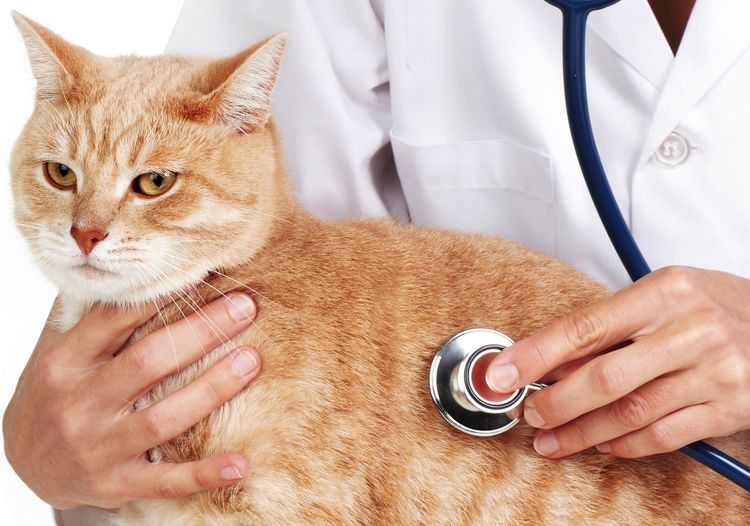
The reasons why a cat may vomit undigested food can be quite serious. The severity of this symptom's health impact is determined by the frequency of the episodes, the content of the vomit, and the pet's overall health. Signs such as a rapid deterioration in condition or refusal to eat should raise concern. It's best to immediately take your pet to a clinic or call a veterinarian.
Emergency medical care is required in cases where:
- Vomiting continues for more than a day.
- The cat vomits after each feeding or independently several times a day.
- Vomit, along with pieces of undigested food, contains blood, mucus, bile, and other impurities not associated with the food consumed.
- Loss of appetite. A particularly alarming symptom is when the animal refuses not only food but also water.
- Restless behavior of the pet, desire to be alone, salivation, tearfulness.
The cause of your cat's condition can only be determined through a professional examination by a veterinarian. After conducting the necessary tests, they will establish a diagnosis and develop a treatment plan.
How to cure a cat
The owner's hope that the problem will resolve on its own is often dashed. Losing time increases the risk of losing the pet. Self-medication is also not recommended. It's impossible to determine the cause of a cat's vomiting after eating at home. Some medications, if used inappropriately, only worsen the animal's condition. Treatment should be carried out under the supervision of a doctor.
In cases of poisoning, adsorbents are prescribed to prevent toxic substances from spreading through the bloodstream. Traces of parasites detected in vomit require deworming. If gastrointestinal dysfunction is present, the doctor prescribes a course of treatment including astringents, anti-inflammatory medications, and a special diet. If the animal refuses to eat for a long time, intravenous drips are administered.
Vomiting in cats caused by infection is particularly dangerous. A timely diagnosis is not always possible. Without treatment, the pet may die within a few days. After laboratory test results are received, the necessary medication, such as immunoglobulins or special serums, is determined.
A cat's life and health depend entirely on the caring and responsible nature of its owner. It's essential to closely monitor your pet's well-being, noting and immediately responding to any signs of illness, including vomiting undigested food. This is the only way to ensure a long life for your pet, who will reciprocate your love and devotion.
Prevention
We've covered why a cat might vomit food after eating, and now let's look at how to reduce the risk of this problem.
The basis of prevention is compliance with the basic rules for keeping pets:
- Cats require regular deworming, whether they live exclusively indoors or have access to the outdoors, as parasite eggs can be brought into the home on shoes.
- Proper nutrition is key. Feeding table scraps can lead to illnesses over time. If you don't plan to feed commercial pet food, consult a veterinary nutritionist to formulate a balanced diet.
- To prevent vomiting of hair and the formation of mats, it is important to brush cats regularly, especially during shedding season.
- Preventive vaccination helps protect pets from many viral diseases that cats can contract even when kept indoors.
- It is also necessary to prevent the animal's access to household chemicals and poisonous plants to prevent possible poisoning.
Any questions? Our veterinarian will answer them as quickly as possible in the comments below.
Read also:


145 comments
Maria
What if a sphinx stole a piece of sausage? Is that really scary?
Christina
Good evening. I have a three-year-old lop-eared cat. A week after his neutering, he started vomiting undigested food after eating and even after drinking water. The vomit was beige foam, and once it was reddish with an orange tint. We went to the vet, and an ultrasound showed enlarged kidneys. The X-ray showed nothing, but at the hospital they gave him an enema.
Biochemical analysis: urea 15.9, AST 69.5, amylase 1118. Clinical: erythrocytes 10.6, hematocrit 60, ESR 2, eosinophils 9, segmented neutrophils 74, lymphocytes 16, platelets 210.
He was diagnosed with neuropathy and gastropathy. We gave him Cerucal injections and two intravenous drips of Ringer's solution. We're giving him Quamatel tablets and Hepatovet syrup. We slowly started feeding him Gourmet kitten pate. Everything was fine, but two days later we added regular Gourmet canned food, and again the cat vomited up all the food undigested. Could you please tell me what to do? Is this related to the neutering, or is it a poisoning, or is the food inappropriate?
I gave my cat diluted Enterosgel again and am not letting him eat, although he would love to. He still has an appetite. Please help me with any advice I need, thanks in advance!!!
Daria is a veterinarian
Hello! Why did you give the cat an enema? Does vomiting happen on an empty stomach by any chance? Did you do a gastroscopy (endoscope)? Has gastritis been ruled out? Did you do a pancreatic ultrasound? Is pancreatitis suspected?
Now I'd recommend feeding food for animals with gastrointestinal diseases. About half an hour before feeding, you can give Almagel A (to numb the stomach lining and prevent vomiting of undigested food).
For vomiting (nausea), you can give an injection of Cerucal (if it's readily available and still in production) or Serenia (not always available at veterinary pharmacies, but it's a Cerucal analogue) or metoclopramide. Does your cat experience nausea at normal times (signs include frequent licking and swallowing)?
Victoria
Hello. My cat is 6 months old, a Sphynx. Nothing had ever bothered her before, but then she started going into heat after calming down. She became lethargic, slept constantly, and a couple of days later she vomited completely undigested liquid food, seven hours after eating. There was nothing in the vomit except food, no blood, no foam.
Refuses water. Stool this morning was formed.
Tell me what to do?
Daria is a veterinarian
Hello! If there are no other health issues, the temperature is normal, there are no other symptoms of illness, and vomiting was a one-time occurrence, then I would recommend deworming as a preventative measure (you never know what the animal might have picked up or eaten). Choose broad-spectrum medications. I hope the animal has been vaccinated.
The length of time the animal has been away from home is also important. It's important to closely monitor your pet for a week or two. If any other symptoms appear, rush to the vet immediately.
Elena
Hello, my cat is almost 8 years old and has been eating Acana since he was a kitten. Recently, he's started vomiting undigested food and his litter box has become very smelly, something he never had before. What should I do?
Daria is a veterinarian
Hello! The most obvious answer is to see a doctor. Unfortunately, it's impossible to make a diagnosis based on these two symptoms alone, as there are numerous differential diagnoses. Gastritis (since the vomiting is undigested) and enteritis (since the stool smells foul) could be a possibility, and pancreatitis can also be suspected. An infection could also be suspected (some bacteria impart a strong odor to stool, most often sour, and liquid stool may contain mucus, bubbles, and even blood).
It's possible that intestinal parasites (deworming should be done regularly: at least once every 3 months) or protozoan parasites are causing foul-smelling stool. It's also possible that the quality of the food has deteriorated or is no longer suitable for your pet. Try switching to a "sensitive digestion" food.
Elena
Please advise if I need to switch my cat to a different food, and what dry food is best to choose? He is a neuter and almost 8 years old.
Daria is a veterinarian
Hello! Much depends on your region (country), city, availability of veterinary pharmacies or pet stores, and, of course, their selection. Don't forget your budget. Not everyone can afford expensive pet food. If we're talking about budget-friendly brands of super-premium therapeutic pet food, you might want to consider Royal Canin (but not Russian-made ones!).
Only European (check the quality certificate), Hills, ProPlan. Not bad options. My old lady has been on Hills for about 10 years, and I periodically switch to ProPlan when she gets tired of the Hills taste =)
Elena
I'm considering holistic foods like Orijen, Go Natural, Nau Natural, and super premium Sanabel. Which one should I choose?
Daria is a veterinarian
If pet stores and veterinary pharmacies offer a wider selection, and you're budget-conscious, consider holistic foods from Europe and the United States (Canada, in particular). The transition should be gradual (not a sudden one-day transition, but a gradual one: replace 25% of the old food with the new one daily, monitoring your cat's reaction and well-being).
If there is a tendency to cystitis or urolithiasis, it is better to switch the animal from dry food to canned or semi-moist food from the same manufacturers.
Dasha
Hello! My mixed-breed cat is 8 years old, neutered, eats dry food, and lives exclusively indoors. He's been vaccinated. He's never been sick and tested negative for coronavirus. He vomited last night after sleeping. A little while later, he vomited again. Then twice more early in the morning. The vomit contains undigested food or only liquid. He drinks water normally, isn't lethargic, but is hungry—he really wants food. His stool was normal yesterday, but today there's nothing left. The other cat is completely normal.
There was nothing to poison him with. In three hours, it will be 24 hours since the incident began. We haven't given him food yet, we only gave him charcoal through a syringe—he didn't throw that up. If he gives him food, he comes back almost immediately. Wet food comes out in about 20 minutes. The cats don't have food aggression—dry food is always freely available, so they don't compete to gorge themselves. Please help.
Daria is a veterinarian
Hello! Is the vomiting only after eating or regardless of food intake? A foreign body in the gastrointestinal tract and intestinal volvulus should be examined to rule out this condition, as bowel movements stopped within 24 hours and vomiting is present.
If a foreign body and volvulus are not confirmed, then gastritis and pancreatitis must be ruled out. Vaccinations were mentioned, but deworming was not mentioned. If the cat has long hair, it would be a good idea to also give him malt paste. It's possible that hair has accumulated in the intestines and "blocked" the lumen. In any case, a checkup is necessary.
Elena
Hello, my cat is 4.6 years old. She's been vomiting undigested food for 3-4 days now. She has a good appetite and has lost a little weight. Her fur has become dull, but she's still active and playful. We can't visit the vet for the next 3-4 days. However, she's started vomiting about 2 hours after eating. I've changed her food, but the same thing is happening again. We're very worried about her.
Daria is a veterinarian
Hello! If you're concerned, you should definitely take your dog to the vet and have him get a blood test to rule out or confirm liver or pancreatic problems (with gastritis, vomiting of undigested food usually begins within half an hour to an hour after eating). How is he drinking water?
Have the mucous membranes (mouth, conjunctiva) acquired a different color (for example, jaundice)? Is there any swelling? How long ago was the parasite treatment last done, and what medication was used? What exactly are you feeding (what brand of food)? Are you supplementing with table food? Are you giving any supplements (vitamins, minerals)?
Vetch
Good day! My cat is 9-10 months old. A week ago he weighed 4 kg 100 g, now he's 3.5 kg. For the last four days, he's been vomiting once a day, sometimes water, sometimes scraps of food. He's become less active in the last two days, and his appetite has completely disappeared. He only drinks water and has stopped purring. He usually sleeps with us, but now he's stopped sleeping. Can you tell me what to do?
Daria is a veterinarian
Hello! What should I do? Run to the veterinary clinic! The animal needs IVs to prevent dehydration. Force-feeding is prohibited, and the animal's strength will need to be maintained through IVs. Diagnosis and testing are essential. Rule out poisoning and an infectious disease (especially if the pet hasn't been vaccinated).
Vetch
You almost always have the same answer: “Run to the veterinary clinic!”
Then why these comments at all?!
Daria is a veterinarian
Hello! Well, you're right – ALMOST always. Because most owners report symptoms such as "vomiting, diarrhea, lethargy, refusal to eat." Half of all infectious and parasitic diseases, and almost all gastrointestinal diseases, present with such clinical signs.
How can you prescribe treatment remotely, without seeing the animal (without additional examination results)? Tell me honestly, if you call the clinic and say, "I'm lethargic, I have no appetite, I'm vomiting, what's wrong? I won't go to the doctor, but please prescribe treatment for me."
No doctor will diagnose or prescribe treatment remotely. The risk of making a mistake when making a diagnosis remotely is high. Should you take responsibility? After prescribing treatment for pancreatitis, for example, the animal may turn out to have a viral infection because the owner either forgot to tell them or didn't notice the symptom.
Suspecting an intestinal ulcer or protozoan parasites due to bloody stool can also miss tumors or foreign bodies in the intestines. Therefore, to save the animal's life, an in-person examination by a veterinarian is essential in any case.
Natalia
My cat is 7 years old, an indoor cat. Today she's been vomiting after every meal, about every minute. Her nose is cold, and she's active. What could be wrong? Please tell me. We won't be able to get to the clinic until tomorrow. I'm so worried about her.
Daria is a veterinarian
Hello! So, don't feed him for now, just give him water. He'll definitely need to go to the vet tomorrow. First of all, we need to rule out a foreign body in his stomach (maybe he ate a toy, or maybe some string, film, or something else).
Then, rule out gastritis and mucosal ulcers. Helminthiasis or infection is unlikely to cause such rapid vomiting, and the vomiting wouldn't be "tied" to food intake. A thorough examination is essential.
Irina
Good afternoon
My cat is a 10-year-old Angora. He sometimes vomits due to excess hair. Today is the third day he's been vomiting undigested dry food. Sometimes, when he has nothing left to vomit, he vomits yellow or white fluid. But he's not lethargic; he's cheerful. He refuses hair removal paste. We dewormed him in the summer (he doesn't go outside). Should I see a vet or should I limit his food intake and deworm him for now?
Daria is a veterinarian
Hello! You should definitely see a veterinarian to rule out or confirm gastritis. It's possible that the frequent hairballs and vomiting have caused inflammation in the stomach lining (or perhaps the diet isn't balanced yet).
Not only symptomatic therapy will be needed, but also a switch to a nutritious diet and vitamins to strengthen the coat. Brush him more often to reduce the amount of hair he gets on his skin. It's surprising that he refuses malt paste, as it smells nice and tastes good to cats.
Irina
Hello, Dasha! My cat is 3.5 years old. About a year and a half ago, he vomited for the first time. This has been happening again, about 1-2 times a month. His mood and behavior haven't changed. He's been affectionate and sociable, and within 10-15 minutes of vomiting, he'll return to his food bowls and everything is fine.
Then the attacks started to become more frequent—2-3 times a week. I took her to the vet last summer. They did blood tests and an ultrasound. The doctor said everything was normal and prescribed De-Nol "to try just in case." We took it for a week. Nothing much changed. Sometimes she wouldn't vomit for a week, then every day for a few days in a row, then everything was fine again for a few days.
We vaccinate on schedule and deworm him. I feed him super premium and holistic formulas. His vomit contains nothing but food—no blood or mucus. He drinks normally, pees normally, has normal bowel movements, is in a good mood, is friendly, and is ready to play when offered. Lately, he's been vomiting literally a minute after eating, whereas before, it would take at least 15-20 minutes. He vomits mostly after wet food, very rarely after dry food.
I haven't tried not feeding him canned food at all, because he lies down in the place next to the bowl and looks sad:), I interpret this as asking) I would take him to the vet again, but each of our trips is terribly stressful for him.
He even wets and poops from fear :( I understand that it is impossible to make an accurate diagnosis based on the description. Perhaps you can recommend some qualified, good visiting doctors? Or suggest something else for us? Thank you!
Daria is a veterinarian
Hello! Tip number one: It's important to rule out gastritis. Vomiting may be caused by irritated mucous membranes. If your cat is shedding, it's possible that the fur is irritating the mucous membranes. Tip number two: Reduce feeding portions. Simply feed more frequently (so that he eats the same amount per day), but make the portion sizes smaller.
He might be overeating, which is why he's vomiting. He might be eating very quickly, which is why he's eating much more. Have you noticed if he's vomiting in the mornings? He might be too hungry before feeding.
Natalia
My cat vomits frequently, but there's no blood or bile. We feed him Purina ONE. He's a 3.5-year-old Scottish Fold cat. He vomits sometimes even on an empty stomach. Sometimes he stops asking for food, sometimes he does, but not as much as before.
I know about the doctor's appointment, but I don't have the time. We've tried starving him for a while (then he vomits foam), but sometimes he eats normally, accompanied by pankeratin. We've reduced his food intake, giving him less than usual, but more frequently.
We're basically panicking. What could be the cause? Behavior changes include: he's started going outside less (we live in the countryside), although he used to love it, and he seems to be salivating more (he doesn't drool, but when he licks himself, he's started slurping excessively, which wasn't the case before). This has been going on for about a week and a half. When it first started, he'd vomit hair, but now he doesn't.
Daria is a veterinarian
Hello! Honestly, responses from owners like "we're worried, but we can't take them to the vet because we don't have time/don't trust these 'specialists'/don't want to/don't have the money," etc., undermine any real desire to treat their pet. If a person were sick with similar symptoms, even the busiest of schedules would find the time.
Based on the symptoms you described, I can only suspect gastritis or pancreatitis (though I'm more inclined to believe gastritis, as vomiting occurs on an empty stomach, often with foam). Switch your dog to the Gastrointestinalis series (it would be good to also feed him wet food to make digestion easier).
Still, it wouldn't hurt to see a doctor. I can't prescribe a treatment plan without a diagnosis (what if there are other symptoms you haven't described, or what if it's another illness).
Elena
Hello! My cat is 4.5 years old; she was spayed two years ago. Over a month ago, she vomited. I went to the vet. Her temperature was normal. We did an X-ray with contrast and a complete blood count. A foreign body was ruled out. The test results (as the vet said) were generally normal, with the only difference being an ESR of 60. She was given antibiotics, then prescribed Tsekloferon, which was given. They prescribed Fasmulgel and Omez, but these medications caused vomiting again. We ruled them out.
The only thing is: she drinks water constantly (and pees constantly) and has an appetite, asks for food, but can't eat it. She'll lick a little jelly and that's it (she uses Perfect food for sensitive digestion and for sterilized cats, as well as Royal Canin pate). I went to the vet again, and they told me to force-feed her (she's become very lethargic, lost a lot of weight, sits on her hind legs, and hides). I started feeding her with a syringe, half a teaspoon every 3-4 hours.
(They also gave her a shot of cirucal and no-shpa.) She had a bowel movement (about 8 hours later), as usual. She started asking for food again, so I fed her. She started hiding again, didn't bother her overnight. And in the morning she threw up again. The vomit was runny and yellow.
Diagnosis: suspected gastritis or some kind of infection. That's how it was explained to me. If possible, please tell me what to do and how. Thanks in advance.
Daria is a veterinarian
Hello! Have you had a blood chemistry test done? That would be a good way to assess the liver and kidney health. If you're vomiting yellow fluid, you should suspect liver, pancreatic, or stomach problems. But vomiting can also occur with kidney failure. Ideally, you should also get an abdominal and pelvic ultrasound. How long ago was the parasite treatment last? What is the diet?
Have your cat received age-appropriate vaccinations? Have you tried Serenia (a veterinary medication prescribed for vomiting and diarrhea)? My concern is that my cat has started drinking a lot. If the frequency of visits to the water bowl has increased sharply, as have frequent bathroom visits, then diabetes should also be ruled out.
Elya
Hello! My cat vomits after eating, not right away. It happens often, every three days. We went to the vet for vaccinations, he felt her stomach and her, and said everything was fine, and to feed her in small portions. I did that, but it feels like she's saving it all up and then throwing it up all at once.
Last time I found a white worm in my vomit, I gave her one dose of dewormer. Should I repeat this in 10 days?! Or should I change my doctor?! And see a different one.
Daria is a veterinarian
Hello! Wait, was the animal vaccinated first and then dewormed? Did the vomiting start after the vaccination, or did the veterinarian vaccinate the animal despite its poor health? What exactly was used to deworm it? Repeat deworming is essential! The interval is 10-14 days. Especially since the presence of intestinal parasites has been confirmed. What are you feeding the animal?
How often do you feed? Is there a clinic in your city that can perform blood tests and ultrasounds? Ideally, a gastroenteroscopy would also be performed to rule out gastritis.
Christina
Hello, my 18-year-old spayed, fold-eared cat vomited soft food 6-7 hours after eating it, and developed diarrhea. I decided to stop feeding her soft food for a couple of days and instead fed her water and dry food.
Everything returned to normal. I decided to give him half a pack of soft food four days later, but the situation repeated itself within the same timeframe. We dewormed him in the summer.
What could this be? Please tell me.
Daria is a veterinarian
Hello! Well, that was a long time ago in the summer. Parasites are treated QUARTERLY! That is, every 3 months. So the first step is to treat the parasites. The second is that the food itself might not be working. Maybe the body has gotten used to dry food, or maybe the manufacturer/flavor/ingredients just aren't working.
Maybe you changed it abruptly. For now, feed super-premium or holistic food from the Gastrointescinale series (for gastrointestinal issues). Feed for 2-3 months. Since it's been that long, the problem isn't stomach-related; you most likely need to look for intestinal or liver/pancreatic issues. It also depends on the type of vomiting: impurities, whether the food is indigested, etc.
Olikfred
Hello. I have a two-year-old neutered Scottish Fold cat. He's been chewing on slippers for a while now, causing nausea and vomiting, but he's always passed. During the New Year's holidays, we lost track of him, and either slippers or tinsel got the better of him. Maybe he got poisoned, we don't know.
Vomiting lasted for about two days, with residual food also passing naturally, and no diarrhea. He drank water on his own, but not much. He was a bit weak. On the third day, he ate some Perfect Fit liquid food for a sensitive stomach in the morning, drank milk and water, and became active. I came home from work to check on him at lunchtime, and he vomited twice. In the evening, he asked for food again, and we put him back on the same food, and after a while, he vomited again, but this time undigested. We don't know what to do, please help.
Olikfred
I drank water but didn't eat
Daria is a veterinarian
Hello! The first thing you should pay attention to is bowel movements. Is it present or not? That is, there is vomiting, but no stool appears in the litter box. This is cause for panic—a foreign body may be in the intestines, causing a bowel obstruction. This can only be resolved surgically.
It's a different story if vomiting is associated with gastritis, pancreatitis, and other inflammatory processes in the gastrointestinal tract. A foreign body in the stomach can also trigger vomiting. There are countless causes of vomiting, including renal failure, hyperthyroidism, hepatobiliary disease, intoxication, HIV, FeLV, lymphoma, parasites (both intestinal, gastric, and cardiac), and many, many others. Only after an examination can the problem be differentiated.
Svetlana
Good afternoon. Could you please tell me what to do? We have a female Bengal. She's seven months old. She was dewormed on December 12, 2018, and had her scheduled vaccinations on December 25. Yesterday, she started burping up undigested, brown food. Her stool is normal. She's drinking well and is active. I gave her a quarter of a charcoal bottle at night. She threw up again this morning.
Super premium food. Savarra and N&D dry. Royal Canin kitten pate. Raw beef every other day. We haven't given him anything new. What could it be? A vet visit is obvious, but my husband is on shift, and I'm still with a small child.
Daria is a veterinarian
Hello! Rule out gastritis, pancreatitis, and liver problems. You were feeding good food, so why bother with natural foods? Besides, why give Royal Canin if you're feeding high-quality, superior foods?
Give him malt paste; he may be shedding, licking his fur. It's not digested in the stomach, but it irritates the mucous membrane, which can trigger a gag reflex. Give him probiotics (they won't hurt), enzymes (pepsin, pancreatin/Creon, for example). And take him to the vet as soon as possible.
Alice
Hello. My cat is vomiting large puddles of liquid mixed with her food. The first time she vomited was on New Year's Eve, and it was all over her bedding. At first, we thought she'd wet herself, but then we thought she'd simply drunk a lot of water, which is why she was so nauseous. Last night, she vomited again, a large puddle of liquid, orange-tinged, mixed with her food. The puddles were huge, and she hadn't been drinking any water—I removed the water in the evening, and she hadn't had any during the day.
Lately she has been eating worse, I thought that she was being picky and competing with the other pet, and she drinks very rarely for a long time - recently she drank water, I thought it was because of competition, because she drank a lot!
(he competes with the bird, doesn't eat bird food, tries to steal water from the bird, so I give them water and take away their water so they don't drink from the same bowl) The cat had gastritis not long ago from dry Proplan, we treated it with Tykveol and Liv52 - on the advice of doctors, we fed it baby food.
Could it be gastritis again? What illnesses cause such large puddles of burp? The cat often asks for food, but doesn't eat, or eats reluctantly. We feed it jarred gourmet pâté. We don't know the cat's exact age, but the vets said she's middle-aged. Will changing her diet help?
Daria is a veterinarian
Hello! Yes, gastritis could have returned, especially if it was caused by excessive hydrochloric acid production. Never take water away from a cat eating dry food. It's wet food now. But it's better to switch to the Gastrointestinalis series. Omez (omeprazole, Losek, Ultop) should be given as a gastroprotector at a dose of 0.75-1 mg/kg of body weight twice daily, as well as Almagel. Make the diet transition gradually.
You can add enzymes (pepsin, creon/pancreatin, festal, for example). It would also be a good idea to get a biochemistry panel and a fasting blood sugar test to rule out diabetes, since he drinks a lot. A biochemistry panel would help determine if all his organs are functioning properly.
Natalia
Please advise, my 3-year-old cat, not spayed, has started vomiting her food and has loose stools. We feed her alternately Purina One dry food and Sheba wet food. We haven't changed her diet or introduced any new food.
It seems like it started out of nowhere. We didn't feed her yesterday, gave her wet food today, and she threw it up two hours after eating. Her stool is better today, but it's still soft. What can I do?
Daria is a veterinarian
Hello! I have standard questions about deworming and vaccinations. Is it possible that someone is feeding her table food? Ideally, a complete blood count and biochemistry profile would be required. She's currently on a 12-hour fast, with water/Vetome 1.1 available freely. Charcoal should be given half an hour before or after feeding. I should introduce the probiotic Fortiflora into her diet.
If possible, get some Serenia: it's good for diarrhea and vomiting. If not, try Cerucal for vomiting and Smecta for diarrhea. This should help your pet until the 8th, then take him to the vet for a diagnosis. If diarrhea and vomiting are frequent, give him Regidron, small amounts at frequent intervals. This will help restore the water-salt balance.
Tatiana
Hello! I have two kittens, a boy and a girl, 6.5 months old (brother and sister). I spayed the boy two days ago. He came out of anesthesia well, went to the toilet, played, ate and drank the next day as usual. On the second day, he started vomiting. First, he ate in the morning, threw up a couple of hours later, and then almost immediately after eating (20 minutes maximum). Moreover, it is obvious that he is hungry, going to the food bowls, looking for something.
I tried giving her wet food, and the same thing happened. I also noticed slight convulsions, or rather, trembling throughout her body, but not constant, more like bouts (I don't know how to explain it properly, it's a shame I can't add a video).
The girl ate the same thing, she's fine.
I live in China and, unfortunately, I don't speak Chinese, so it's difficult to communicate with the vet through a translator. It's nighttime now, and I'll be going to the clinic in the morning, but I'm asking you, could you tell me what this could be? What should I look for at the vet? What tests are needed, etc.?
Daria is a veterinarian
Hello! Have you treated your cat for parasites? What are you feeding him? Side effects or complications are extremely rare in males after this surgery. There are several possibilities: either poor tolerance of the medication (maybe you're using antibiotics after castration? Maybe the anesthesia, if it was an injectable, is being eliminated from the body), or a worsening illness (perhaps gastritis) has occurred due to the loss of strength. Take the animal's temperature.
Tatiana
Yes, they gave antibiotics after the surgery, they gave the injection 10 minutes after the cat came to.
I don't know what kind of anesthesia they used, they took me into the operating room still alert, and returned me asleep after the castration. They still didn't answer my questions clearly.
I feed dry and wet food, dry Wellness, wet Pure Paws (we don’t sell this here, it’s a Thai brand, not cheap, but not the most expensive either).
I'm also not sure about the parasites. I told them about it when I got vaccinated (I wrote it down in a translator), and they said, "Yes, yes, everything's OK." But I can't say for sure what exactly is OK and whether they're dewormed or not :(
It's impossible to buy any medications on your own here, without a veterinarian's recommendation:(
Daria is a veterinarian
How is the cat feeling now? Are the symptoms recurring or have they resolved? If it's a one-time occurrence, it's most likely a reaction to the medications administered (possibly an antibiotic intolerance). If it continues, an examination is needed.
Get a complete blood count, biochemistry panel, and ultrasound. Has the cat had any injuries? Could he have hit his head anywhere? Is his coordination impaired?
Tatiana
Yesterday everything was fine all day, but he ate almost nothing. In the evening he ate a bigger meal and threw up again.
There were no injuries. Apart from vomiting, nothing seems to bother him. He plays, runs, goes to the toilet, everything is as usual.
Daria is a veterinarian
Is he overeating by any chance? Have the cramps gone away? I'd like to have his stomach examined (gastroscopy), and have his blood tested for a complete blood count and biochemistry (amylase and liver enzymes, and kidney function).
I'd like to rule out gastritis, pancreatitis, and liver problems. The cramps could be related to stomach or liver problems, or even intestinal colic (very severe pain). Vomiting almost immediately after eating is typical for these conditions. And it wouldn't hurt to detoxify for parasites as a preventative measure.
Tatiana
We went to the vet yesterday. They took a swab from his anus, measured his temperature, did a blood test, and looked for an ulcer—nothing, all the tests were normal. They gave him an IV and three injections. I don't know what exactly it was; everything was in Chinese, and the translator couldn't translate the names of the medications.
The cramps were diagnosed as possibly nerve inflammation and that we'd need a vitamin B drip. They sent us home and told us not to feed or drink anything, and to come back in the morning. It's morning now, and I woke up and saw three pools of vomit again, just like greenish water.
Daria is a veterinarian
Well, if it's greenish, you need to check your liver. Is the cat vomiting bile? Giving it fluids is cruel. Especially since it vomited. Just eat small amounts frequently, so as not to trigger another bout of vomiting.
I don't know what medications to recommend, as I'm unfamiliar with the selection in that country. Wait for the blood results (I hope they do a biochemical test).
Christina
Hello, my cat is 10 months old. We fed him meat, egg yolk, and baby food. Then we bought Purina dry food. He vomits constantly. What should I do?
Daria is a veterinarian
Hello! Did you switch to a new food abruptly? Was there a gradual transition? Does he vomit before or after meals? Is it undigested food right away or after some time? What does the vomiting look like?
And the standard questions: has your cat been dewormed and vaccinated? For future reference: too many yolks is not recommended; whites are better, as they're more easily digested. But you also shouldn't feed them protein-only foods, as this can damage their kidneys. Carbohydrates (cereals, vegetables) are essential if they're on a natural diet.
Anastasia
Hello. My cat is 5 years old and is a very picky eater. He only eats dry Happy Cat Ente (a felinologist selected the ingredients based on his diet, as he was previously on Now Natural food and had trouble going to the bathroom. After switching to Happy Cat food for 3 years, his bowel movements have been fine, but he started vomiting frequently. Sometimes, everything is fine for a month, and then every other day he might vomit undigested food once a day right after eating. He drinks and eats normally.
That is, then maybe an hour later he comes to eat again and everything is fine, he feels good too, he is active, I give him malt paste, sometimes he vomits fur, but this is immediately noticeable, but the frequent jumping off of food ... and as soon as I get ready to take him to the vet, everything immediately becomes ok with him and stops vomiting, and then it happens again, I will still take him to the vet, but what could it be (besides gastrointestinal and liver diseases?)
Daria is a veterinarian
Hello! First of all, we need to rule out gastrointestinal inflammation, liver damage, and pancreatic damage. If everything is normal, which is highly unlikely given the vomiting immediately after eating undigested food, then they'll conduct further examinations. A biochemistry panel and an ultrasound will be ordered. It doesn't matter whether he's feeling well or not; they'll take him for testing. There's a 95% chance it's gastritis, pancreatitis, or liver problems.
Is your cat overeating? Does he devour his food greedily? Does he vomit undigested food more often in the morning? Have you tried feeding him small portions but frequently?
Catherine
Hello. My cat vomits periodically after eating. I feed her dry Royal and liquid Whiskas. She usually vomits after quickly swallowing, but for the second night, I've noticed her vomiting after only a small amount of food. I don't know what to do. I also give her Dreamys cat treats. Her nose is normal, she acts normal, and she goes to the toilet.
I'm very worried. There are no signs of worms in the vomit. She just ate and threw up again, and 10 minutes later she went back to crunch on the food. Any advice?
Daria is a veterinarian
Hello! You're mixing foods from different "classes": a cheap one and a more or less good one. Plus, you're disrupting your pet's feeding schedule by giving them treats. You won't find signs of worms in the vomit. They're not in the stomach (if the animal is already vomiting worms, the extent of the infestation is severe). You need to take your pet in for an in-person examination to rule out/confirm gastritis/pancreatitis.
Deworm, adjust and balance the diet (eliminate Whiskas and other treats). If gastritis is confirmed, medication will be required.
Catherine
The thing is, we don't have good vets, and they certainly don't do any tests; they don't have that kind of service. The only option is just to take her. I haven't dewormed her in a long time. Can you tell me which pill is best and if I can give it now? I want to feed her baby food for now, but I don't know which one, and can I give her dry royal with it?
I'm really worried because two years ago I almost lost her to a worm infestation. I'll never forget that night. It dragged on for a very long time, and it just wouldn't be morning enough to fly to the vet. She'd only just finished her period, but I haven't let her outside in five years and I never will. I want to spay her.
Daria is a veterinarian
Veterinary pharmacies offer a wide selection of anthelmintic medications. It all depends on your budget. You can choose inexpensive ones like Praziquantel, Bars, or Praziquantel. Alternatively, you can opt for better, more expensive, broad-spectrum medications like Drontal, Milbemax, and others. You can also try drops like Advocate, Inspector, Strongold, or Frontline—they target not only skin and subcutaneous parasites but also intestinal helminths, and unlike tablets, they won't come into contact with the stomach lining.
But you still need to change the diet to a normal one (preferably super-premium or holistic food from the "Digestion"/Gastrointestinal" series). If you want to switch to baby food, then you won't need to feed dry food anymore, and you'll need to supplement the diet with vegetables and cereals to ensure enough fiber and carbohydrates (energy). A 12-hour fasting diet is recommended, with free access to water (can be replaced with chamomile tea, Vetom 1.1), and charcoal/enterosgel 3-4 times a day for up to 7 days. However, if your cat has gastritis, you'll also need to address it, and choose a treatment plan accordingly.
You can't sterilize a weakened animal. Treat it first, then operate.
How is the animal feeling now?
Catherine
That's when Milbemax was prescribed to us, so I'll get it. I stopped giving her treats and everything is fine; she goes to the bathroom normally. I'm giving her food more often and in smaller amounts. She drank a lot of water on the first day, I don't know why. Can vets diagnose gastritis without diagnostics (ultrasound, tests, etc.)?
Daria is a veterinarian
They can do a preliminary diagnosis. Palpation is a possible option, but this is a tentative diagnosis, not a definitive one. Drinking water is good, let him drink it. He's restoring his fluid balance. But it's better to add rehydron or Vetom 1.1 to the water. Take him to the doctor. If the diagnosis is confirmed, they'll prescribe treatment. Give him softer foods now, which are easier to digest. You can give him Almagel A or Omez/Omeprazole, but these aren't the only treatments needed for gastritis.
But if it's the pancreas, then completely different medications are needed. Understand, I can't guess or prescribe therapy without seeing the animal and the examination results.
Catherine
Okay. Thank you.
Daria is a veterinarian
get well
Galya
Hello! My cat has been vomiting frequently for a couple of weeks. We went to the vet and they said it was because her food was too loose. I gave her pancreatin for a while, but now I've stopped. Today she vomited again, but it's probably because she ate too much. How can I prevent stomach problems? Should I change her diet? Should I give her more pills? Worms?
Dasha is a veterinarian
Hello! Before I answer your questions, please answer mine. What are you feeding him now? How much food do you feed him at a time? How long ago was the parasite treatment last, and what medication was used? Was he vaccinated, and with what? How is his bowel movements? What color is the vomit (and what impurities are present)? Did the vet recommend pancreatin, or did you decide on your own? What dosage did you give him? Does he shed his fur?
ekaterinazosimenko
I forgot to add that I gave Smecta twice. Afterward, my stool was more formed once. But that was a day ago.
Dasha is a veterinarian
It just made my stool more constipated, but it won't address the underlying cause. Stop taking Smecta, and everything will go back to normal. You need to be examined and treated comprehensively, not symptomatically.
Is your cat stealing food other than Hill's? Is someone else feeding him something else? Are you deworming him on schedule? It wouldn't be a bad idea to have a gastroenteroscopy done to check his stomach and intestines, and the condition of his mucous membranes.
Catherine
I should have been deworming for a month now. But now I'm in a flare-up and I'm afraid to deworm.
ekaterinazosimenko
Good afternoon. Situation:
1.5 year old cat, vaccinated.
I started having loose stools 5 days ago, 1-2 times a day.
His behavior, well-being, and eating/drinking are normal for a healthy cat. We only feed him HILS for his sensitive digestive tract. Other foods are unsuitable. Last time, after his neutering, we tried to switch him to food for spayed cats (which resulted in pancreatitis).
Overall a healthy cat, except for the diarrhea.
I started giving pancreatin. According to the old treatment regimen.
Same old story. Then I gave him some Malt paste (he's very fluffy), and half a day later he threw up a bunch of fur.
After two days, the diarrhea stopped. But now, he hasn't had any bowel movements at all for a day. And then he threw up undigested food again. All of it. I decided to eliminate food for a day. If that doesn't help, should I go to the doctor?
Dasha is a veterinarian
Hello! A day without food is too much. 12 hours is enough, 18 hours at most (and even then it's too much). Give them plenty of water. Honestly? If your pet has a history of pancreatitis, it's best to see a vet, get some tests done, and get an ultrasound. It could be worsening. Pancreatin has the lowest enzyme dosage.
Creon is stronger. But the doctor will advise the dosage at the appointment, provided the diagnosis is CONFIRMED. I don't like to discuss dosages remotely, because then self-medication begins without an examination.
Then it turns out that the diagnosis the owner made based on articles they read online or advice from neighbors is completely different. Treatment, of course, doesn't help, and the animal gets worse. And the doctor is to blame for not treating the pet IN ABSENTIA. That's why I advocate in-person visits and testing.
Anna
Good afternoon. Could you please tell me? My cat ate some foam rubber on the night of September 28th. Early in the morning of September 29th, she vomited up some of the foam rubber, and there was some in the litter box as well. That day and the next, she barely ate any food, only chewing on it.
We took him to the vet, but she didn't find anything. She just said his throat was swollen. They gave him an injection for the swelling. We fed him 5-6 hours later, and he vomited again. It was a huge amount, like he'd been eating all his food for the day, and it was barely digested. He hasn't gone to the bathroom for two days. What should we do? They prescribed Vaseline oil, but we gave it twice, with no results.
Dasha is a veterinarian
Hello! Urgently go to a clinic with an X-ray! Symptoms of intestinal obstruction (vomiting, loss of appetite, no stool for several days). Vaseline won't help if you need it, especially not foam rubber, which absorbs everything.
Vaseline oil might not even be absorbed. And laxatives are contraindicated for bowel obstruction, as they can lead to intestinal volvulus or even rupture of the intestinal walls. This problem can only be solved surgically, but it's important to know where to look—an X-ray is helpful!
Anna
Hello. We haven't taken our cat outside. But she started going to the bathroom. At first, she had loose stools, but after about the third time, she had normal stools, and her appetite returned.
Dasha is a veterinarian
Hello! Keep an eye on her, her appetite, and her bowel movements. If you suspect any illness, rush your pet to the vet as quickly as possible. Keep an eye on what's in the litter box. It's possible that not all the foam has come out yet, and that's dangerous.
Feed light foods to avoid over-stressing the gastrointestinal tract. If you're feeding natural foods, choose foods with higher levels of indigestible fiber to "cleanse" the intestines and normalize peristalsis.
Natalia
Good evening, my 3-year-old Oriental cat was dewormed with fenpraz 4 days ago... since about July, and gradually increasing in frequency, especially over the last three days, every two hours of one meal she comes out Hills-ID, undigested food is vomited, the stool is fine, and recently her urine has been bloody. We treated her with Baytril, we are continuing treatment. The ultrasound showed gastritis, well, like you were vomiting... This worries me, I feed her soaked Hills-ID to slow her down, I feed her on a schedule 4 times a day.
The omelaza test shows less than 500, so I'm adding 20 Creon M capsules to her food, but I see it's not helping her digestion. How can I help her with at least one problem, like vomiting? Her mood and appetite are fine for now, but I really don't like it.
Dasha is a veterinarian
Hello! I'd like a blood biochemistry test (since you know the amylase results, you should know the other indicators as well). So far, I see pancreatic issues, but! Low amylase levels can also indicate hepatitis (and thyrotoxicosis, meaning your thyroid needs to be checked, as an underactive thyroid slows your metabolism).
How many units of Creon do you give per dose? You can start with 10,000, every meal or before feeding, to help the enzymes be absorbed better. But let's look at the biochemistry. And it's advisable to get an ultrasound (liver, pancreas, thyroid).
Kate
Good afternoon. On Wednesday, September 19, we spayed our 8-month-old cat. The next day, she was running around, eating, and going to the bathroom without any problems. On Friday morning, she started vomiting. First, she threw up food, then at lunch, she threw up more food, then put the food away, then she vomited bile a couple of times, and in the evening, she vomited white foam. She vomited about six times that day, every three hours.
At 11 PM, she started vomiting. She was fine all night. At 4 AM, I gave her a spoonful of liquid Proplan, which she ate with pleasure. Then at 8:30 AM, I gave her another spoonful, which she ate again and purred. At 10:00 AM, we were sick again. What should we do? We go to the bathroom, she has an appetite, but she's vomiting.
Dasha is a veterinarian
Hello! This behavior is strange and doesn't look like a post-operative complication. It's likely the illness was present before the surgery, but it's become more pronounced due to the pet's weakening. Did you take his temperature? How long ago was the deworming done? What was the diet before the surgery (what exactly, please, detail)? Did you give him anything after the surgery? Did you give him any injections?
Didn't you treat it? Could the cat have grabbed something and poisoned herself? Didn't you at least try giving her charcoal?
Valeria
Hello! My 2-year-old cat vomits undigested food after eating late at night and sometimes in the morning. How do I treat this?
Dasha is a veterinarian
Hello! Is your dog vomiting undigested food in the morning, but he's eating late? That's not good. Get a gastrointestinal exam: gastroscopy, x-ray, ultrasound. Blood tests for biochemistry. Have you had parasite treatments recently, and what were they using?
What are you feeding? Gastritis, pancreatitis, and other inflammatory processes in the early stages of the gastrointestinal tract should be ruled out. Treatment should only be initiated after diagnosis. A therapeutic diet will be required.
Lydia
An elderly, blind, stray cat is being treated with levomethicin, refuses to eat, and is vomiting. What can be done?
Dasha is a veterinarian
Hello! Why do I need eye drops for a blind cat? Has he been blind for a long time, or are his eyes full of pus? Why chloramphenicol? Tobramycin drops are better; they help fight severe bacterial eye infections. Have you dewormed him? What kind of vomiting is he experiencing?
Foam? Bile? Or something else? What's the stool like? Body temperature? The symptom of "vomiting" alone doesn't make a diagnosis.
Elena
Hello! A day and a half ago, I applied Advantage flea drops to my cat's scruff. I followed the instructions, but he managed to turn around and licked some of the drops off. Every subsequent meal resulted in regurgitation: food and white foam. Yesterday, he ate baby cottage cheese and baby meat puree, and everything was fine. Today, when he ate on his own, everything was also fine.
I just gave him a few small pieces of cooked sausage from my hand, and he jumped off again. The instructions for the flea drops say the medication lasts from 1 to 4 days. Please evaluate the situation from a specialist's perspective. Could this reaction be a continuation of the poisoning from the drops? I'm very worried about my cat. He's 2 years old. I don't want to take him to the vet, he's very sensitive and stays indoors. Thank you in advance.
Dasha is a veterinarian
Hello! This looks very much like poisoning. Since the cat reached up and licked it, it's clear you weren't following the instructions. You need to apply it to an area out of reach of the tongue. You should have given the cat charcoal right away, so all the toxins could settle. Give more water to dilute the poison by increasing the volume.
If you overdose, you may need to see a doctor immediately (you will need IVs and detoxification therapy).
If you're not afraid to take risks, give the charcoal now (3-4 times a day, an hour before or after feeding). Observe the animal. Check the mucous membranes (they're not anemic (pale), or, conversely, excessively blood-filled (bluish). Is there excessive salivation? Is the abdomen painless?
Nadezhda99
Good evening, Daria. We adopted a kitten a few days ago, bought him at the market, and since then we've been having problems. The first day, he was constipated and couldn't go to the bathroom without pain, meowing constantly. We gave him Microlax, and he went to the bathroom, but his stools were of varying shapes and colors.
After that, he went to the bathroom several times with diarrhea. Since yesterday, he's been vomiting almost after every meal, but it's a clear liquid that looks like drool. The kitten is 1.5-2 months old, very active, and has no fever (his nose is cold). He was also dewormed yesterday. We don't want to take him to the vet; they told us to wait 10 days after the deworming medication, and then we can come back. I hope you can help us, because we're at a loss.
Dasha is a veterinarian
Hello! Let's get this straight: Do you DON'T want to go to the vet, or did someone stupidly tell you that you need to go 10 days after deworming? Your pet NEEDS to be seen! You need an examination, complete blood count and biochemistry, an ultrasound, and a gastroenteroscopy. You need to rule out gastritis, enteritis, and other inflammatory processes in the gastrointestinal tract.
What are you feeding him? Have you tried balancing his diet and adding some plant fiber? You need to address his food first to normalize his bowel movements.
Elena
Hello! I have a 7-year-old shorthaired mixed-breed cat. She was spayed five years ago. I feed her only 1st Choice dry food for spayed cats, specifically for weight management. Last summer, I started having problems with her fur: it started matting and looked like dandruff. I trimmed out the mats and brushed her fur, and it seemed to have cleared up.
But now the fur has started to mat again. Maybe she's lacking some vitamins or should she change her food? Please advise.
Dasha is a veterinarian
Hello! Change the food. My long-haired cat has the same reaction to Royal Canin and Hill's—she'll immediately develop dandruff and mats after eating. I switched to a different food and everything went back to normal. It's some kind of allergic reaction. You can also give her malt paste to strengthen her coat.
Maria
Hello! I am a 3-year-old Scottish cat, spayed.
I only feed him the Farmina series and occasionally give him liquid Whiskas (half a pack a day). After the last evening feeding, half a packet of liquid, he started vomiting during the night, and it's been going on for 24 hours now. First, all the indigestible material came out, then everything else... He periodically drinks water, then licks himself, and after each action, a minute later, he starts vomiting again. The vomit is clear (like after drinking water) and has white foam.
During the day, I didn't notice, the cat ate dry food and immediately it all started again. She drinks water, and within a minute, everything comes out.
Now I have removed all the food and water.
I dewormed my cat 2 months ago (end of April)
Last July I vaccinated her (Defensor and Felocel)
There shouldn't be worms, it's an infection, ..I don't think so either...there's no fever and no diarrhea, ..and the stomach, as I understand it, is inflamed.
Please tell me, to avoid unnecessary stress for the cat, i.e., to avoid taking her to the vet, can I restore her condition at home? What medications should I use for treatment?
Thank you in advance!!!
Dasha is a veterinarian
Hello! How will you treat it without a diagnosis? It looks like gastritis, but an in-person examination by a doctor is still needed to make a FINAL diagnosis. Give the animal back its water! You can't take away a pet's water when it's vomiting.
You can use chamomile tea instead of water to help relieve some inflammation. Stop feeding Whiskas! Forget about cheap pet food altogether. Switch to a good Gastro food (for at least 2 months).
The simplest medication is Almagel (half a teaspoon an hour before feeding, three times a day for three weeks). Emprobio, Nux vomica, or other probiotics are also available. Veracol helps restore the mucous membrane (according to the instructions, twice a day for 10 days in a row).
Katozal as a metabolism booster (1 ml intramuscularly twice daily for 10 consecutive days). For vomiting, give cerucal or serenia. Are you ready to take on the responsibility of comprehensive treatment for your pet, without a precise diagnosis, and administer injections several times a day yourself?
Alina
Good afternoon! My cat is a mixed-breed, domestic, unvaccinated, 3-year-old. She was spayed in February of this year. After her spaying, we started feeding her Pro Plan dry food for spayed cats with turkey. In April, I decided to diversify her diet, changed the flavor, and bought 500g of rabbit, which she ate well.
Then I returned to the "turkey" food. After a few days of taking it, she vomited undigested food. I decided to stop playing with the food's flavors. But then I noticed she was vomiting once a week, then twice a week. On Friday (May 18, 2018), she had a bowel movement and was very active. She had contact with the street (she ran outside and spent about 30 minutes there. When I went to pick her up, she was sitting next to a pregnant stray cat).
In the evening after eating, vomiting of undigested food.
I took away her food for the night, leaving only water. On Saturday (May 19, 2018), she asked for food in the morning, I poured her some food, and she vomited again. After that, we immediately went to the doctor. We did a complete blood count, which showed no abnormalities; we did an ultrasound – no abnormalities, everything was fine; at the clinic, we gave her injections: Cefazolin, an antiemetic, and Ringer's solution.
The doctor prescribed Pro Plan Delicate and Pro Plan E/N wet food. We're continuing antibiotic therapy at home, along with Cerucal and Phosphalugel. After the clinic visit and treatments, the cat is very lethargic and eating poorly. Could you please tell me what this could be?
Dasha is a veterinarian
Hello! Gastritis is a possible possibility, but you claim your ultrasound and lab results are normal. A gastroenteroscopy wouldn't be a bad idea. Have you had a blood chemistry panel done? What are the results (can you provide the numbers and results)? Have you had a dewormer recently? Have you had your temperature checked? How is your stool? Do you vomit only after eating? Do you vomit foam on an empty stomach?
Alina
Hello, Daria! We only did a complete blood count. I can't share the results because I received the results over the phone. We dewormed her around February, 3-4 weeks before her spay. Her body temperature is slightly elevated, 39.9°C (102.9°F), and she's feeling cold. She's refused wet food and is eating Pro Plan Delicate.
We've been continuing treatment for three days now; her stool is very loose, but there's no vomiting. On the first day of treatment, she passed a lot of long, stale grass. I've been concerned about her loose stool for three days now, but could this be due to the effects of the phosphalugel and cefazolin?
Irina
Good afternoon. My cat has all the same symptoms as yours. Exactly the same. How so? What should I do? Even the food is the same. Doctors at two clinics can't figure it out.
Alina
We've been to two different clinics, and no one knows anything. They offered to give us two tests for 2,500 rubles each to check for "terrible" infections.
Irina, almost 2 months have passed. Has your cat's health returned to normal?
Alexandra
Hello, my 15-year-old cat has been vomiting very frequently for quite some time. At first, it was just hair and food. Then he started vomiting even more severely, several times a day, and he stopped eating, only drinking water. I went to the vet, and they gave us three injections over three days (unfortunately, I don't remember what the injections were, but the vet said they help the cat develop a desire to eat).
After all this, the cat seemed to have recovered. He was thin when he wasn't eating, then he started eating, but he wasn't gaining weight. We thought it was all over, but a month passed and the same thing started again. The cat eats in small proportions and is still just as thin. He vomits water and food, sometimes with small clumps of yellowish fur.
I decided it was the food and stopped feeding him that food (we were feeding him Kitekat). I tried Whiskas, and he seemed to like it at first, but then he stopped wanting it. We decided to cook chicken, and he ate poorly again for two or three days. He's not neutered.
Dasha is a veterinarian
Hello! Let's start from the beginning: the food was incorrect from the start. It's not Whiskas or Kitekat. Switch to Hill's (prescription diet feline i/d) or RK Gastro. Feed this food for 3-6 months. Give malt paste (it helps with hair loss and makes it easier to eliminate already licked hair). Secondly, how long has it been since you dewormed your cat?
Milbemax or Drontal based on the animal's weight (do not overdose, as the animal is weakened). Blood tests and biochemical analysis should be performed. Rule out gastritis and liver and pancreatic problems. Treatment is prescribed only after diagnosis. No symptomatic medications (like three appetite suppressant injections). Combination therapy only.
Yesenia
Good afternoon! I have the following problem: my cat has never vomited before... and then with the arrival of spring it started. I haven't changed the food, only its subtype (Friskies: for domestic cats). One time I bought Friskies for sterilized cats and the cat started vomiting.
I switched it back, and nothing changed. She's not vomiting several times a day, but every other day. I thought she was spitting out fur. I also noticed a large amount of undigested food, no mucus, nothing. Just wet food.
The cat started asking for greens. We gave her sprouted oats. It seemed to have stopped, but this morning I found vomit again. She has an appetite and is moderately lazy. She sleeps normally and is playful. What's wrong?
Dasha is a veterinarian
Hello! First, let's start with the diet. Eliminate Friskies. It's not food (essentially, it's like constantly feeding Rolton or Doshirak). It's ok, but you shouldn't eat it all the time. Switch to a good food (currently, choose the Gastro series). Good food doesn't include Friskies, Whiskas, Kitekat, Darling, Meow, Felix, and other cheap options. Consider Hill's, Monge, RK (but not the Russian brand), Purina, or Pro Plan (just in case), and other super-premium foods.
Secondly, start giving Malt paste daily (it's great for removing fur, strengthening it, which reduces shedding). Thirdly, if vomiting continues daily, consult a veterinarian for an examination. How long has it been since your dog was dewormed?
Irina
Hello! I wanted to switch my cat (a Sphynx) to a holistic diet—I mixed Hills and Orijen. Everything was fine for three days, she ate even more voraciously than usual, but on the fourth, she vomited digested food, and then the next morning, when she ate again, she vomited it right away. Is this from the food? Thanks for your reply.
Dasha is a veterinarian
Hello! Your pet needs to be examined. We'll rule out gastritis. Have your Sphynx's blood tested for a complete blood count and biochemistry profile. The biochemistry results will give you a rough idea of where to look for problems. Then, depending on the situation, you can either have an ultrasound, a gastroenteroscopy, or just go home and switch to a different diet, as your pet is completely healthy.
Why are you switching to holistic products? They often have medicinal lines. Maybe you just chose the wrong food? Are there any indications, or is the animal completely healthy? Has it been dewormed lately?
Irina
Thank you very much. I decided to switch to a holistic diet; it seems to be the best. We recently had a blood test, but the cat isn't mine, it's my son's; I'm only staying with him temporarily, so I don't know about worms.
Do you think Hill's is enough? For some reason, the cheaper the item, the better she eats, but she ate Orijen with gusto. I guess I won't experiment with it anymore. Thanks again. We'll take her to the vet.
Valeria
Last week I went away for work. I left the cat with my sister. My sister fed the cat KitKat and Whiskas. She also said she gave her milk a couple of times (when she drank it herself).
This morning I woke up to the cat meowing again. So, she'll be home for three days now.
She only drinks running water. I feed her mostly Purina (dry food).
And today I noticed vomiting.
The first time it was yellow with pieces of undigested food. Since the vomit was dried, I think it was about 9-10 hours later.
The 2nd time she vomited water and food that she had just eaten, a lot of unchewed pieces (the food was round, about 5 mm in dry form) there were about 12.
At the moment I have removed the food and don’t know what to do next!
Dasha is a veterinarian
BUT! I recommend taking your cat to the vet for an in-person examination, getting some tests done, and ideally also having a gastroenteroscopy to rule out gastritis.Hello! How long exactly did your sister have the animal? It's possible this is a digestive upset due to the drastic change in diet (twice in one week). This puts a lot of stress on the body.
Try a 12-hour fast (remove all food overnight, leaving only liquids freely available). Instead of water, even chamomile tea (a teaspoon of flowers per glass of water) or Vetom 1:1 (a tea bag per half liter of water) are better.
The following day, give charcoal (preferably white) 1/3 of a tablet 3-4 times a day, one hour before or after feeding or other medications. Emprobio, Hilak Forte, or other probiotics/prebiotics should be given twice a day for up to 10 days. Katozal (0.5 ml intramuscularly) should be given twice a day for up to 10 days, and Veracol 1 ml intramuscularly for the same duration. Switch to food for cats with gastrointestinal problems. Deworm. BUT! I recommend taking your cat to the vet for an in-person examination, getting some tests done, and ideally also a gastroenteroscopy to rule out gastritis.
Marina
Good afternoon! About a week and a half ago, my cat started vomiting, became lethargic, and refused to eat. We went to the clinic, where examinations (X-rays and blood tests) revealed gastritis. We treated him with injections and IVs. We reran the tests, and everything is fine; his immune system is slightly weakened due to the coronavirus infection.
They prescribed immune-boosting medication. Everything was fine for a few days, and then the vomiting started again. What could it be? Could it be gastritis again, or could this be a symptom of the coronavirus?
Dasha is a veterinarian
Hello! How are your pet's stools? What are they eating? What medications have you been using? What immune booster are you giving them? Have they been dewormed lately? Deworming can also weaken the immune system.
How long ago did you have coronavirus? Gastritis often takes a long time to resolve, and treatment is long-term and complex. A feeding diet is tailored to these animals (especially those fed commercially produced feed), and the therapeutic feeding period can last up to six months.
Yaroslav
Good evening. My cat has been vomiting every 2-3 hours for the past 24 hours, first with white foam and now with bile. He's a British cat. The vet gave him some shots and told him to wait until tomorrow. But he continues to vomit bile periodically. What should I do?
The cat was castrated
Dasha is a veterinarian
Hello! What was the doctor's presumptive diagnosis? What exactly did they inject? An antispasmodic or antiemetics? I understand the dog isn't eating anything? Standard question: have parasites been treated recently? Has poisoning been ruled out (he couldn't eat anything from the trash, and he doesn't go outside)? Did they give blood? A biochemistry panel would be advisable to determine if there are any liver problems.
Or maybe the pancreas is out of order. Or maybe something else entirely. It's essential to find the problem, otherwise treatment won't be successful. And without tests, ultrasounds, or X-rays, it's impossible to pinpoint the problem. The rest is a guess.
Kate
Hello, tell me, what could be wrong with my cat? When she eats food or any other food, she vomits undigested food. If you give her a little, she doesn't burp normally. If you put her in a bowl, and as usual, she eats as much as she needs, then the whole apartment is covered in vomit. If you give her a little, everything is fine, but she has lost weight and cries constantly, but it's probably from hunger.
Dasha is a veterinarian
Hello! There are several possible causes. Vomiting could be due to gastritis, overeating, or problems with LARGE portions of food moving from the stomach to the intestines. In any case, a medical examination is necessary.
Have you dewormed your pet lately? What exactly are you feeding it? Have you given it any medications yourself (without consulting a veterinarian)? For now, you'll need to feed it small portions of high-quality, balanced food, and be sure to visit your veterinarian for a diagnosis. Otherwise, your pet will continue to vomit due to overeating.
Lily_A
Hello! My cat is 2 years old, a typical Siberian. He's been vomiting undigested food regularly (several times a week) for a while now. We've been giving him Malt paste regularly. We thought it was because of the food (we were giving him Proplan for sensitive digestion and Royal Canin), but we've now switched to Holistic Go, also for sensitive digestion.
Everything was fine for the first two months, then the vomiting started again periodically. Even though the cat seems to be feeling wonderful (jumping around the apartment, sneakily biting, and tearing up the wallpaper).
We dewormed him about three months ago, but it wasn't particularly successful (three of us couldn't get either the tablet or the suspension down his throat, so half of it ended up on him, not in him). Before this, we had more successful attempts at deworming him, but he still vomited. Could you please tell me what it could be?
Dasha is a veterinarian
Hello! Let's start by saying that anthelmintics should be administered strictly based on the animal's weight. Spending half of the dose on the animal is the same as giving nothing at all. Avoid suspensions (firstly, they are less effective, and secondly, it's more difficult to administer the entire dosage, as the animal spits it out and the owner sprays it). To prevent the cat from spitting it out, opt for tablets; apply the tablets directly to the back of the tongue.
Regarding vomiting: there are countless causes. But such regular vomiting indicates problems with the digestive tract. I would suspect gastritis, but an examination is necessary, as well as additional tests (complete blood count, biochemical blood test, gastroscopy, since changes in the mucous membrane are unlikely to be visible on ultrasound or X-ray).
Vlada
Good afternoon! Our cat has been vomiting for over a month. We spent over a week undergoing treatment at the veterinary clinic. Due to her nasty nature, we couldn't get her examined, so the doctor told us to treat her based on her symptoms. We gave her antibiotics, deworming medication, and vitamins. But she still continued vomiting two hours after eating.
We decided to give Mezim and Cerucal with meals. The cat's general condition has improved; she's hungry all the time, going to the bathroom, peeing, and pooping. However, she still vomits sometimes two or three times a day. It's either from hunger or I don't know why. She refuses dry food, so we switched to boiled chopped chicken with buckwheat. Could you please tell me what other food I can give my cat in this condition? What else can I do?
Maybe we should insist that the cat be anesthetized and examined?
Dasha is a veterinarian
Hello! Why do you need anesthesia? A muscle relaxant or sedative is sufficient. You can administer sedatives for a week to calm the animal. If the cat is under anesthesia, what's the point of an examination? Only for an X-ray. Palpation alone won't give a complete picture (an animal under anesthesia won't respond to pain).
Have they taken blood tests? Have they ruled out inflammatory processes in the digestive tract? What are they prescribing besides an antiemetic and Mezim? Without a full examination, it will be extremely difficult to find an effective treatment.
Vlada
Nothing else except Mezim and an antiemetic. They can't draw blood or do an ultrasound because she's thrashing and scratching. They tried taking her temperature, but she's torn to shreds. I'll try a sedative. She doesn't thrash at home; we've found common ground—we leave her alone when she's not feeling up to it. What kind of sedative or muscle relaxant should I use?
Catherine
Good evening. Could you tell me what could be wrong with my cat if she vomits undigested food every few days? She might vomit once or twice a day, or she might not vomit for several days. She only eats Perfect Fit for spayed cats. I don't give her table food. Before she vomits, she makes a sound that sounds like she's crying.
Dasha is a veterinarian
Hello! Your pet needs a checkup. It's important to rule out gastrointestinal inflammation. Has deworming been done recently? If your pet has long hair, try giving them malt paste to remove hairballs (sometimes they vomit hairballs along with undigested food). It's best to visit a vet for a complete blood count, biochemistry, ultrasound, and gastroenteroscopy to make a definitive diagnosis.
Julia
Hello! Can a cat be sick only because of packets (Whiskas, Friskas, Kitekat)? Other foods (soup, porridge, etc.) don't cause nausea.
Dasha is a veterinarian
Hello! Whiskas, Friskas, and Kitekat are not pet food, but cheap stomach fillers that cause more harm than good.
Switch to either a completely natural diet (without added oil, salt, or spices) or good-quality food. Cheap food and improper feeding can trigger gastritis, which can lead to vomiting (especially immediately after eating undigested food or on an empty stomach with foam). Change the diet before your pet develops a chronic condition.
Ivan
Daria, good afternoon. You mentioned above that you can feed your cat natural food. Could you tell me which is the best one available? Regarding food, it's either a scam like Whiskas (as you confirmed), or elite, but very expensive…
Dasha is a veterinarian
Hello! I wouldn't say super-premium food is too expensive. My old lady eats 1.5 kg of food a month (sometimes she eats less, even though she's a pretty big cat), so that's about $20 a month.
If I were to calculate how much I would pay for natural food for her: high-quality meat every day (she's allergic to chicken, can't eat pork, and 1 kg of beef costs $9-10), fish 1-2 times a week, buying vegetables, cereals, cottage cheese, sour cream, kefir/fermented baked milk, and giving her vitamins and minerals separately—it would be even more expensive.
Dasha is a veterinarian
And considering that you'll have to cook small portions daily (again, you'll need to find the time), it's not recommended to cook in advance, and if you take it out of the refrigerator, you'll have to reheat it to room temperature, making sure it doesn't spoil in the bowl. You can't give your own food, and you can't add salt, spices, vegetable oil, or sausages.
Feeding raw meat and fish is not recommended, as there is a high risk of parasites (you need to either boil it or freeze it for at least 3 days, and then at least scald it with boiling water when it thaws). If the cat has "problems" (age, neutered, previous urolithiasis or cystitis, kidney/overweight/gastrointestinal/liver issues), then it's incredibly difficult to perfectly balance the diet with natural food. For example, with urolithiasis/struvite, you need to monitor the magnesium and phosphorus levels in the food. You can't calculate how much
You have given these elements (large amounts of them provoke the appearance of stones).
Therefore, for me personally, it is easier to feed commercial food myself, and to prescribe diets with good-quality food (Hills, Pro Plan, Monge, Brit, and others) to my patients for prevention or treatment.
I hope I've answered your question as thoroughly as possible. If you have any further questions or want to learn more about the permitted products, please don't hesitate to contact me. I'll be happy to answer.
Flura
Can I ask a question?
Dasha is a veterinarian
Yes, you can. That's exactly what this section is for.
Elena Nikolaevna
Hello! Could Vitam injections cause vomiting? My cat is 8 years old and has a weakened immune system (we can't treat demodicosis).
Dasha is a veterinarian
Hello! Are you vomiting from vitamins and amino acids? You didn't overdose, did you? If so, there shouldn't be any side effects. How are you treating demodicosis (please write a treatment plan with dosages and duration)? Perhaps you overdosed on the medications (they're quite strong, as the demodex mite is very tenacious).
Did you prescribe treatment yourself based on advice from websites and forums, or did you take your pet to a veterinarian? Was the diagnosis made by a veterinarian after an examination and tests, or did you suspect it? You can help with the immune system with Ribotan or Immunofan (immunostimulants).
Anna
Hello, my 10-year-old cat sometimes regurgitates undigested food. Two months ago, he started burping and ate poorly for two days. A week later, he started eating a lot of grass and vomited a hair tie. He eats well, but is very picky. I feed him two cans of Shesir and dry Hills for urinary tract infections (he used to have frequent cystitis). The vet recommended giving him both as a preventative (my cat is a neutered male). I wanted to feed him only Hills, as canned food makes him lethargic and moody.
We only go to the vet in exceptional cases. He's feral and they sedate him. We did a blood test (while the rubber band was in his stomach) and it showed a mild infection, most likely (the vet said) in the urinary tract. I ordered a special urine sample to collect and submit to see if there's any ICD or diabetes. Could you tell me how informative the stool test is? I deworm him with Stronghold every 3 months as per the instructions. Thank you very much.
Dasha is a veterinarian
Hello! Well, you've certainly overdone it with the information =) You've written a lot, and in the end you asked about a stool test. A stool test isn't always informative, since female parasites don't reproduce constantly. And pinworm eggs can only be detected in stool when the female parasite is laying them.
That is, in one day there will be hundreds of thousands of pinworm eggs, and the next day there won't be a single one in the stool. Therefore, it's advisable to repeat the test several times. Strongold is a good product; I haven't heard any complaints about it not clearing out worms (if you follow the instructions).
Anya cat Vasily
Good afternoon, we've been suffering for six months now :(. I took my cat in for a checkup, they took urine and blood samples. They said there's an infection and his kidney function is slightly abnormal (not critical). They put him on a urine-based diet of wet food for two months.
He ate Hills for exactly three weeks, then when the packaging changed, the formula apparently changed and he refused to eat. He played, though, and his stool was fine. We switched to Royal Canin. He eats it with gusto, but he drinks a lot and vomits.
He doesn't play, he sits by his plate, waiting for food. His stomach is gurgling. They didn't look at his stomach during the examination (all tests were done under sedation), and told him to treat the cystitis first. He pees normally, three times a day. His blood work is normal. Everyone is very tired of his screaming when he asks for food. We don't have Purina, only Hill's and Royal...
Dasha is a veterinarian
Hello! Why the Urinary series? Why not Renal? Did you measure urine pH and select the food? Or did you just randomly feed it? Royal, if it's Russian, is slightly better quality than budget foods. You're unlikely to find the original.
My cat can't tolerate Royal at all (she's ragingly allergic even to hypoallergenic, and she doesn't like pure Hill's because it's practically tasteless). Get her blood tested, and if possible, get an ultrasound. Rule out pancreatitis and other inflammatory processes in the digestive system. Have her urine tested too.
Natalia
Hello! Could long gaps between meals (about 5-6 hours during the day) cause digestive problems in a 3-5 month old kitten? Diet from birth: mother-mother + Baby Kit Royal pate - Royal dry food + Royal wet food for kittens
Natalia
My kitten is 5 months old. He's been vomiting foamy fluid every three days for two weeks now, either immediately after eating food or on an empty stomach. He's active and doesn't seem bothered by it. We dewormed him twice in November and on January 15th with Prazitel, as per the instructions. He had his first vaccination last Saturday. The vet examined him and prescribed Almagel. We took it, but the vomiting persisted.
Could this be a sign of food intolerance? We started eating Royal Baby Kit, and since December, Royal Kiten dry and wet food.
Dasha is a veterinarian
Hello! It's possible the food isn't suitable. However, vomiting on an empty stomach indicates a digestive problem. I would also suspect gastritis given the history (vomiting on an empty stomach and white foam). Give Almagel A, or Omez, or omeprazole, or similar medications for gastritis. It's better to choose food for cats with sensitive digestion.
Instead of water, use a chamomile or oak bark decoction to reduce inflammation of the mucous membrane. See a veterinarian for follow-up. Don't expect immediate recovery (sometimes it takes a week or two).
Natalia
Hello! Could long intervals between meals (5-6 hours) cause digestive problems in a 3-5 month old kitten? Diet from birth: mother-mother + Baby Kit Royal pate - Royal dry food + Royal wet food for kittens
Alena
Hello! My cat is 2 years old. He recently had digestive issues, resulting in severe inflammation under his tail. We went to the vet, got some injections, and were told to stop feeding him Friskies and switch to Pro Plan for sensitive animals. I bought two flavors: chicken and fish. He'd been getting the chicken flavor for 2-3 weeks, and everything was fine, but one day I tried the fish flavor.
And as soon as he ate, the problems started again: the cat was vomiting, not eating anything, drinking only water, lethargic, so thin... and once he vomited blood. We ran to the vet, they gave him more injections, they said we'll see if this continues, I'm afraid it's something serious.
I think it's poisoning... or just a coincidence? I also think we were feeding him the wrong food, of course, cheap food, and now we're suffering and worrying... They also told us to give him chamomile. I'm giving him chamomile and also started Enterosgel... now he seems to be eating chicken food little by little.
But he threw up again... Maybe I should stop feeding him for now? Please tell me, maybe you can tell us something? What should we do? I feel so sorry for the cat...
Dasha is a veterinarian
Hello! You've correctly identified that you've been feeding your pet incorrectly. Friskies, Whiskas, Kitekat, and other cheap, to put it mildly, foods aren't good for animals. The chronic digestive issues were likely caused by poor quality food. If your pet doesn't like fish flavors, don't feed it. The plan itself might not be suitable.
Did you switch to the new food abruptly or gradually, adding it to the old one? What exactly did you inject? What was the diagnosis? When was the deworming done? Chamomile tea and Enterosgel are good. Does the vet suspect gastritis or enteritis?
Alina
Hello, my cat is 8 months old, weighs 3 kg. He threw up for the second time this month. He threw up at night while we were sleeping. I found him in the morning. We gave him deworming pills. The vomit was like pureed dry food, there was no mucus, blood, etc. in it, just pure food. The cat lives alone, there is no competition.
He doesn't seem to be eating quickly. Can you tell me what could be causing this? We're feeding him the same food, we haven't changed the food, the food itself is Whiskas, and we haven't given him anything unusual. He's very fluffy. I thought maybe it was because he swallowed hair, but there's no hair in the induced mass. Thanks in advance for your answer.
Dasha is a veterinarian
Hello! Change your cat's food. No Whiskas, Friskies, Felix, Darling, Kitekat, or other budget options. Switch to a good, high-quality, complete super-premium food (Royal Canin, Purina, Pro Plan, Hills, and others). Feeding Whiskas will ruin their metabolism and cause digestive problems.
Regarding long hair, buy "Malt-paste." It's a good product. It prevents hair loss and allows the licked hair to be passed in the stool (no clumps, no vomiting). What deworming pills do you give and how often?
Julia
Hello, could you please tell me? My kitten is 4 months old. He's been dewormed once, but recently he started vomiting after drinking milk, and then licking up what he vomited. Is this abnormal? I think he has worms again and needs to be dewormed?
Dasha is a veterinarian
Hello! First, how long has it been since deworming? What exactly was given and at what dosage? How many times (once or twice, as recommended)? What other symptoms? Second, it's not recommended to feed cats milk. Kefir, fermented baked milk, and other fermented milk products without additives are fine, but milk is not.
Starting at two months of age, it's less digestible and often causes dysbiosis. What else do you feed? Just milk, or something else? Provide a detailed diet plan, including deworming and vaccination dates (and medication names).
Lena
Hello! Our cat vomits after every meal, but she doesn't feel unwell. Could it be worms or something more serious? She vomits a brownish liquid.
Dasha is a veterinarian
Hello! If your pet is vomiting constantly and after every meal, you should definitely take them to a veterinarian to determine the exact cause and get at least a preliminary diagnosis.
Without a diagnosis, it's impossible to prescribe a treatment plan or give any recommendations. When you visit your veterinarian, be sure to tell them what you're feeding, when you last dewormed, when you last vaccinated (which anthelmintics and biologics), and what you're feeding. The more details you provide, the easier it will be to make a diagnosis.
Maine Coon
Hello, our cat was poisoned. He ran into the neighbors' apartment (they share a common hallway with two apartments, and sometimes both are open, so the kids run to each other) and ate some wet cat food. Thank God, he didn't vomit anymore. He didn't eat or drink until yesterday evening. We gave him activated charcoal and Atoxil (we called the vet).
Towards nightfall, he ate a little food and washed it down with water. Today, he's eating and drinking well, and went to the litter box. He's already running around the tops of the trees again, attacking and playing.
Dasha is a veterinarian
Hello! I'm so glad your pet is feeling better. It's good that the cat got off easy. He was lucky he ate the food (even if it wasn't the best quality) and not the poisoned bait. If you want to keep your pet healthy, don't let him into the playground. He could not only pick up the food there, but also pick up an infection (so please remember to deworm him every three months and keep him vaccinated according to the schedule).
Continue feeding charcoal for a few more days to completely remove toxins from the intestines. Feed light food (don't overload the intestines), plenty of water, and low-fat broths. And for prevention (the cat has long hair), give malt paste, which promotes the natural removal of hair from the digestive tract (it doesn't clog the gastrointestinal tract or cause hairballs). Wishing your pet good health.
Maine Coon
Hello. My Maine Coon cat is 1.5 years old. He's not neutered and dewormed. He vomited brown vomit with blood in it. This has never happened before. He eats mostly dry Royal Canin, meat, and chicken liver. He was playful all day, eating and drinking normally, but in small amounts. He used the litter box. He's recently lost weight, but he's started "walking," so we thought that might be why. What could it be?
Dasha is a veterinarian
Hello! Your pet needs to be taken to a veterinarian for an in-person examination. Vomiting blood is no joke, and the underlying cause needs to be investigated. Regarding weight loss, deworm with a good medication (Milbemax, Drontal, or similar), or take tablets (experience has shown that suspensions are less effective).
Don't mix natural foods with commercially produced food (not the best for metabolism). Did the vomiting occur again? Was it a one-time occurrence?
Add a comment